Currently reading: Why the Mini JCW is a brilliant swansong for petrol hot hatches

Petrol-powered John Cooper works is the last of the breed – and hilariously good fun

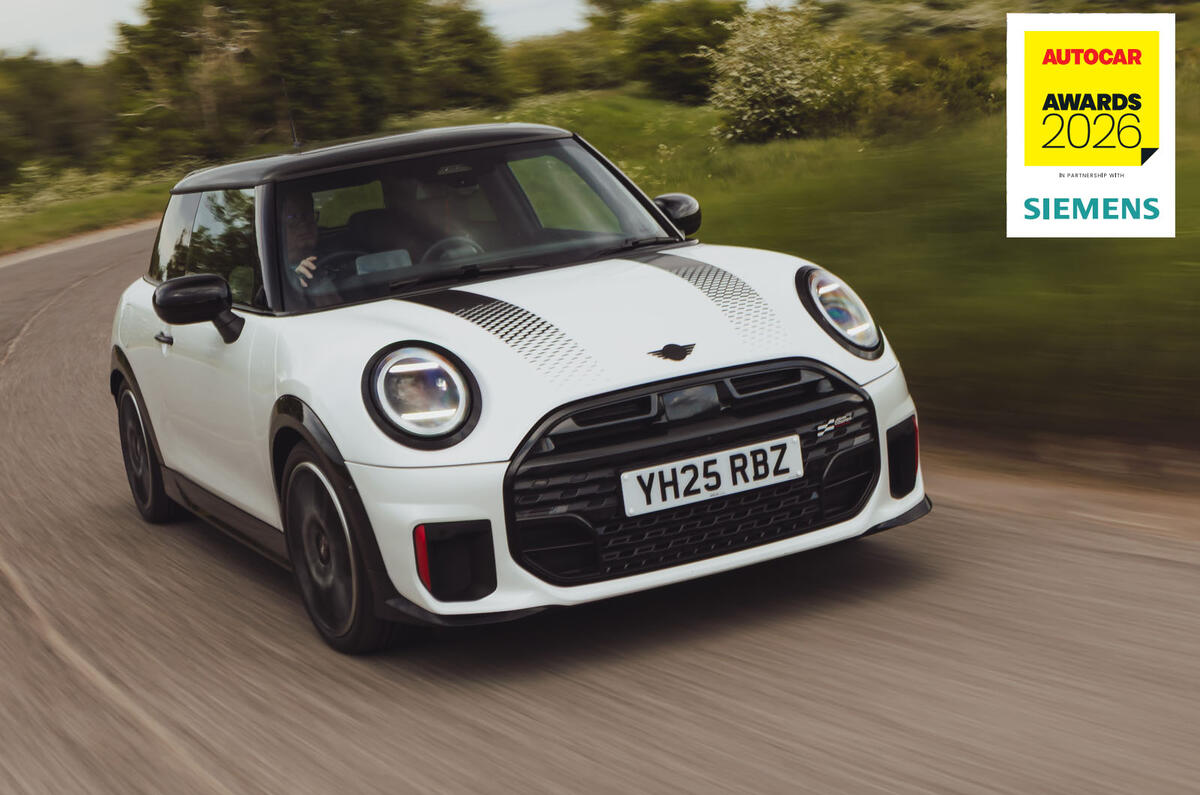
While it might have been tempting for us to pick some rare-groove luxury car or revered Italian performance machine as a shoo-in for our Future Classic accolade (awarded in association with our friends at Classic & Sports Car magazine), there's a surprisingly affordable new car that's staring us in the face this year.

Soon enough, it's going to become the very last petrol-powered hot supermini on the market - which surely makes it collectable in just about anyone's book.

For now, the Mini John Cooper Works has one avenue of competition for that status, because Toyota's on-again-off-again sales saga with the admittedly excellent GR Yaris hasn't quite finally blown itself out. But Toyota guides us to expect that car to depart before long, not to return. And even now, for as long as it is on sale, it's hardly a bargain, at £48,000.

The hot three-door Mini JCW, then, might already be regarded as the only truly compact, genuinely powerful, genuinely affordable and genuinely fun petrol-sipping hot hatchback there is left to buy.

It's powered by a fiercer version of the 2.0-litre turbocharged four from the Cooper S, turned up to 228bhp and a punchy 280lb ft of twist. It will do 62mph from rest in a whisker over 6.0sec (only a whisker behind its electric sibling) and 155mph flat out.

And it can be bought from just £33,550 - or more likely around £36,000 once you've picked the colour and options you like best. Still seems pretty reasonable for the price of a mid-sized, Chinese-brand electric crossover, right?

The Mini JCW is all about making life fun. While its busy, slightly restive ride can get a little wearing over long journeys and uneven country roads, it makes for indefatigable agility and liveliness when the car is at its zappy best.

That Mini doesn't make the car's stability control fully switchable any more may be a development that really keen drivers and track-day regulars won't appreciate.

But none of the Mini JCW's electronics are irksome, overbearing or hard to neuter, and the ESC isn't such a killjoy as to stop the car from swivelling its hips on a trailing throttle around roundabouts and hairpin bends and then snorting off into the middle distance with terrier-like abandon.

Join our WhatsApp community and be the first to read about the latest news and reviews wowing the car world. Our community is the best, easiest and most direct place to tap into the minds of Autocar, and if you join you’ll also be treated to unique WhatsApp content. You can leave at any time after joining - check our full privacy policy here.

Matt Saunders

Matt Saunders Autocar
Title: Road test editor

As Autocar’s chief car tester and reviewer, it’s Matt’s job to ensure the quality, objectivity, relevance and rigour of the entirety of Autocar’s reviews output, as well contributing a great many detailed road tests, group tests and drive reviews himself.

Matt has been an Autocar staffer since the autumn of 2003, and has been lucky enough to work alongside some of the magazine’s best-known writers and contributors over that time. He served as staff writer, features editor, assistant editor and digital editor, before joining the road test desk in 2011.

Since then he’s driven, measured, lap-timed, figured, and reported on cars as varied as the Bugatti Veyron, Rolls-Royce PhantomTesla RoadsterAriel Hipercar, Tata Nano, McLaren SennaRenault Twizy and Toyota Mirai. Among his wider personal highlights of the job have been covering Sebastien Loeb’s record-breaking run at Pikes Peak in 2013; doing 190mph on derestricted German autobahn in a Brabus Rocket; and driving McLaren’s legendary ‘XP5’ F1 prototype. His own car is a trusty Mazda CX-5.