Currently reading: Hot hatches on the charge: Cupra Raval VZ vs Alpine A290

Electricity is fuelling a hot hatch renaissance; can Cupra's newcomer dethrone Alpine's class leader?

How, exactly, could an Alpine A290 or the freshly arrived Cupra Raval VZ - electric hot hatchbacks in a rapidly broadening niche - be anything like a mid-engined supercar?

The answer is all about usability, which remains an insoluble problem for car brands trying to wean hot hatch customers off hydrocarbons and convince them that electrons are a viable alternative.

The hot hatch cherished usability as one of its founding strengths. The whole point of putting a performance engine into a humble hatchback and then transforming the rest of the design and mechanicals around it was to end up with a car that retained its practicality but gained a whole lot more. To produce something you could use, afford, drive every day and really enjoy doing so.

Electric iterations of this idea have so far certainly had comparable performance. Lately they've also started to become more affordable, to the point where, thanks to the UK government's Electric Car Grant, you could buy either of the EVs you see here for about the same price as one of the very last remaining combustion-powered hot superminis on sale, the Mini John Cooper Works.

But could you really drive one? Use one every day, in all the ways you'd expect to use a compact hatchback? It has proven a tough circle to square - for the Alpine A290 in particular.
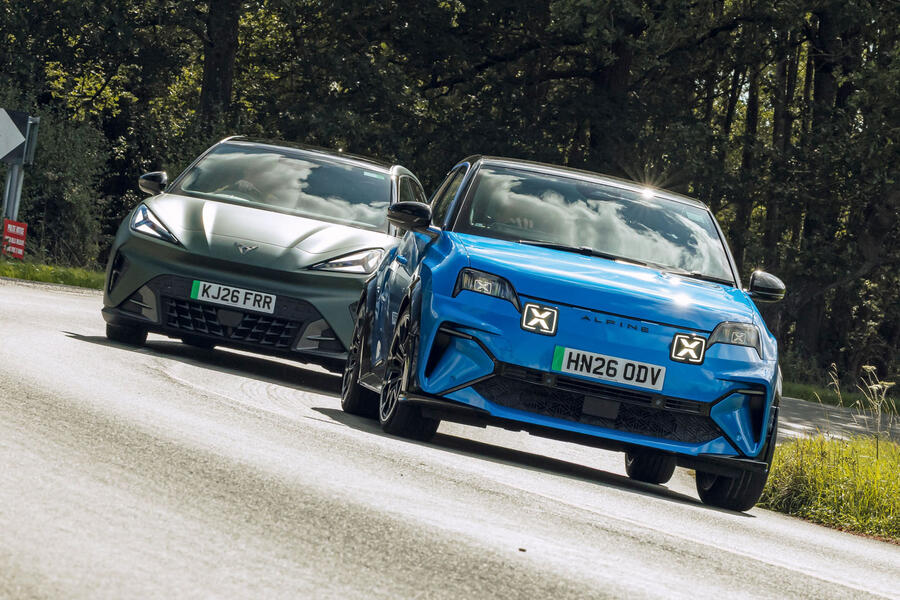
Cupra Raval vs Alpine A290

This is a car we warmed to instantly when it was introduced two years ago. But living with an A290 on our long-term test fleet last year brought some home truths to light.

The car's rear-seat space is tight enough to make a 10-year-old complain and its 300-litre boot is little even by supermini-class norms.

It's a small car, of course, so you might expect such things. But more restrictive still is a real-world range of only 140 to 150 miles at typical longer-distance speeds.

Tester after tester said the same thing: it's great to drive, but by the time you've got it anywhere, you're so preoccupied with where you're going to charge it that you're almost unable to enjoy it.

Can a hot hatchback afford to be needy? A bit of a diva? A luxury item to sit alongside your more useful real-world cars and reserved for short-hop amusement? That would seem to miss the point, if you ask me.

So here we are, ready to discover if a more serious, truly usable electric hot hatch can be found in a likely place. The Cupra Raval is the first car to arrive on UK roads built on the Volkswagen Group's brand-new B-segment EV platform: the MEB21.

Back to top

The VZ is the range-topping performance version and, like the Alpine A290, it has a familiar, hot hatch-typical mechanical layout: a single drive motor up front to put a little over 200 electric ponies through the front wheels.

Unlike the Alpine, it uses a twist-beam rear axle, rather than a fully independent multi-link set-up. And where the A290 has its motorsport-style hydraulic suspension bump-stops, the Raval counters with its inclined rear suspension mounts, DCC adaptive dampers and VAQ clutch-based, torque-vectoring front differential.

The Cupra is a sibling to the new Volkswagen ID Polo GTI, but while Wolfsburg and Martorell quarrel about who deserves the credit for the development of the key performance hardware, clearly there's plenty of it.

So where does it all lead? Has Cupra come up with an electric pocket rocket with more dynamic hustle and verve than Alpine's hitherto class leader? Just one with better ownership and usability qualities? Or are the differences between the cars on the latter score actually slight enough to make little or no difference?

First impressions

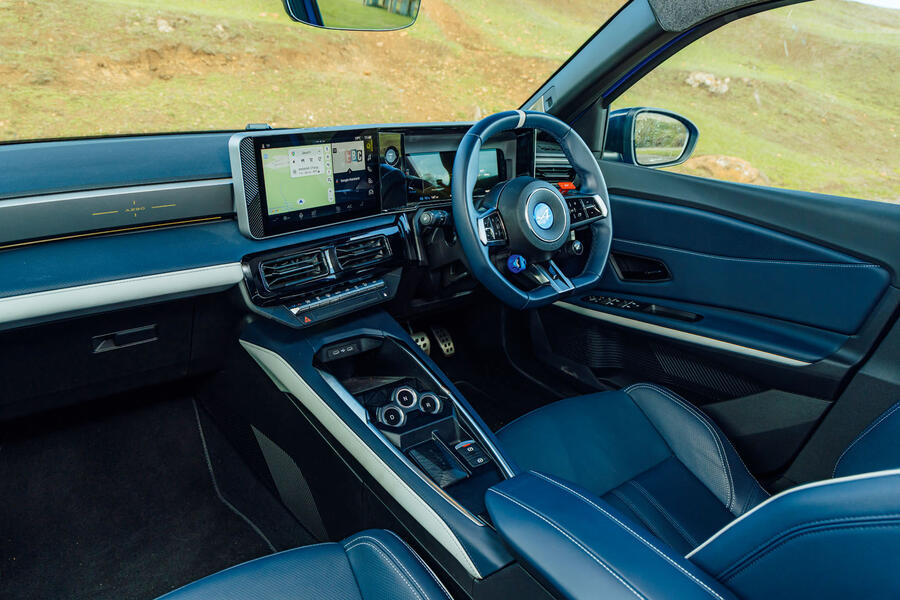
Alpine A290 interior

There's a little bit of premium-brand voodoo about the Alpine A290. It probably won't fully hit you when you look at photos of the car, but in the metal it's undeniable.

This car has true star quality, a desirability that only really great design delivers. It has a big-wheeled stance, alluring proportions and irresistible details, from the motorsport-chic driving lights to the mock-air-intake pressings in the back doors.

But I wonder if, in some ways, all of that actually works to erode the car's credentials as a convincing hot hatch.

There's a toy-like quality to it. Not one of a cheap toy, but something special and expensive, longed for over the writing of many a Christmas or birthday list.

It suggests somehow that the car doesn't belong in the realm of the everyday. It's like a perfect, individually wrapped chocolate or a colourful designer macaron: to be put on display, enjoyed on its own terms and treated as an indulgence, rather than as a car for getting down and dirty in the bustle and grime of the real world.

Back to top

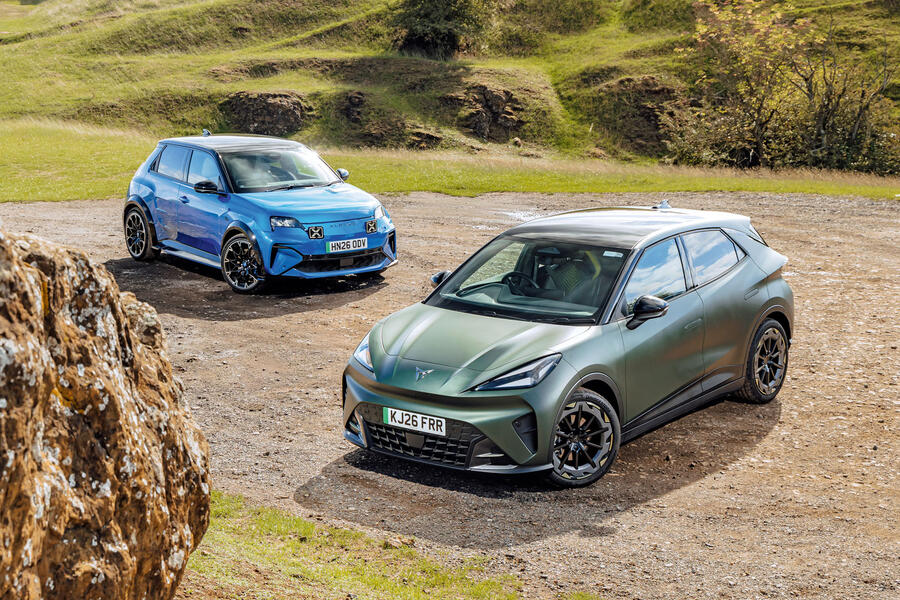
The Raval, smart though it is, has a very different visual character. Darker and more 'street', it looks like it wants to creep out of the shadows and surprise you. It's happy not to be the centre of attention and there's a stealthy menace about it that gels effortlessly with the traditional role of a hot hatchback.

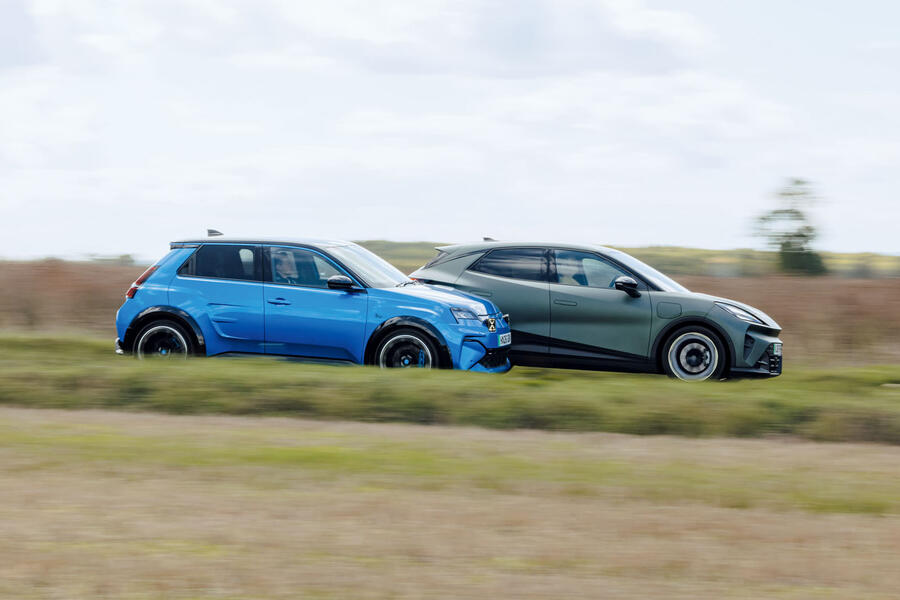
Alpine A290 and Cupra Raval

These things are subjective but, to my eyes, the Raval looks like it wants to be used and the A290 like it wants to be preened and admired.

The Cupra also has an interior that's notably more suited to versatile daily use than the Alpine's.

There’s a bulkiness about the Raval's exterior that the daintier A290 studiously avoids. Surprise, surprise: the Cupra is actually less than 50mm longer from nose to tail, and there's only 6mm between the two cars on roof height. It's a lot roomier, though.

Its driving position isn't quite as low-set or sporty-feeling as the Alpine's, but its second row is as usable as the A290's isn't. The Cupra's boot, meanwhile, can swell to 441 litres when you drop the false floor to its lower level - enough to swallow surprisingly bulky things.

The A290's, by contrast, shrinks to just 300 litres if you have the premium Devialet stereo, with its large subwoofer under the boot floor, as our test car did.

Back to top

You'd scarcely be confident of carrying anything much bigger than a smallish suitcase in there. I had to go back and compare the exterior dimensions of these cars several times. It's remarkable how much more useful space and versatility a Raval crams in.

You might think that it doesn't matter, that your electric runaround is 'just for fun' and you'd never choose one over another because it had more practical space. The truth is, sooner or later - usually sooner - real life has a habit of catching up.

From the driver's seat

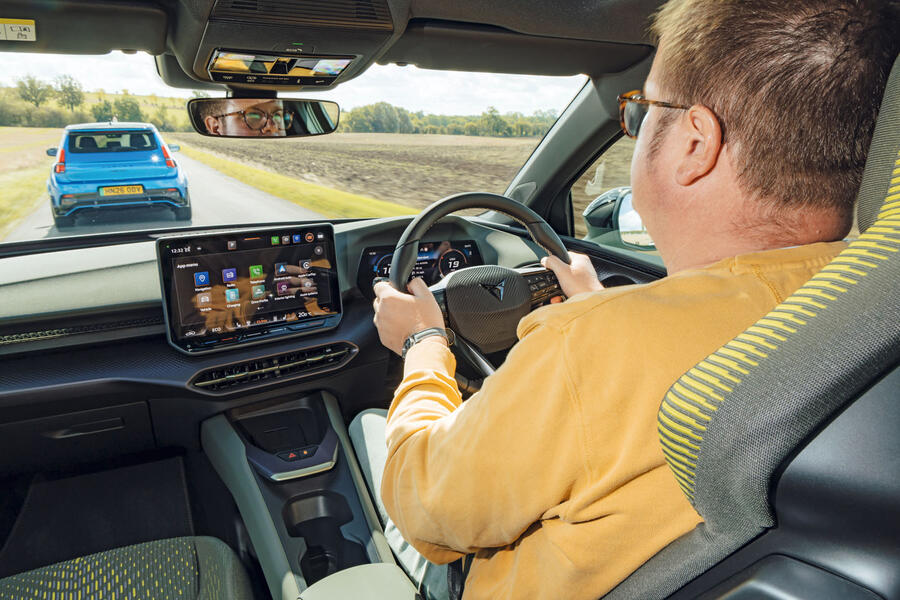
Matt Saunders driving a Cupra Raval VZ

When you're at the wheel, you know you're in a special place in either of these cars.

The Alpine's seat is lower and makes you feel marginally more at one with the car around you, but the Cupra's is more adjustable and supportive, so there are arguments to be made in favour of both.

The Raval's fascia materials are on average a bit shinier and cheaper-looking, and the A290's plusher and more tactile. Neither is a disappointment.

But you can forgive the Cupra its relative lack of frippery because it gives you all the right controls in all the right places: a twisty drive selection column shifter wand; paddles for regenerative braking control; some useful fixed HVAC and headlight controls and easy-to-prod buttons for drive mode selection; and an accessible one-touch menu on the central touchscreen for quickly disabling ADAS features when they begin to irk.

The A290 confounds the norm in some of these areas. It uses a rotary knob inboard of the steering rim for regen control, rather than paddles (its Renault 5 twin has gained regen paddles as part of its latest facelift, but the A290 won't follow suit - "because Formula 1", apparently), and it employs buttons rather than a stalk for drive, park and reverse.

The A290 is the lighter car of the two and you'd know as much from how it rides and controls its body movements, but you wouldn't really be able to tell based on how hard it accelerates. Both of these cars feel like potent, urgent hot hatchbacks when you really let them fly.

Back to top

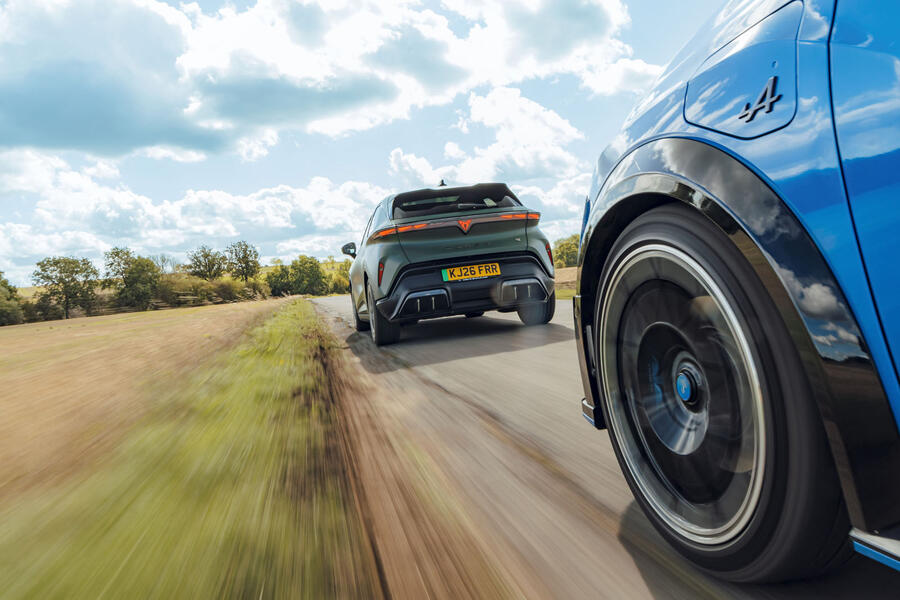
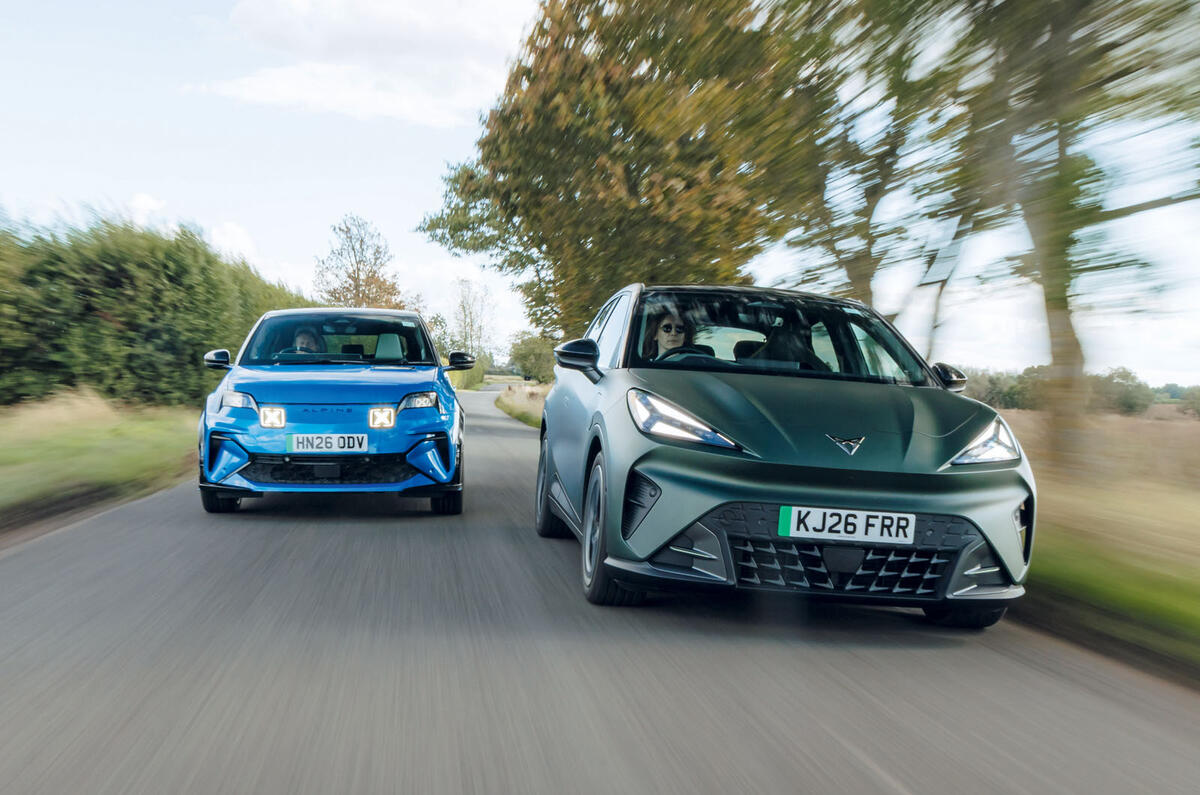
Alpine A290 following Cupra Raval

The Raval is probably the marginally quicker of the two because of the traction it develops and the way it can afford to dump more torque onto the road. The A290's getaway from rest feels more manicured and manipulated, before the taps fully open from around 30mph.

A model generation from now, I'd bet that the successors to both of these cars will have 'virtual gearshift'-style make-believe engine and gearbox systems like the ones already being used by Hyundai, Kia and Porsche EVs.

As daft as the idea may seem, they make a huge difference to the kind of driver involvement that any performance car ought to specialise in.

They're also a way to answer the persistent cries of performance EV critics who say that electric motors, by and large, still aren't interactive or exciting enough.

For now, the Alpine uses uncannily fluent, intuitive and natural-feeling agility and handling poise as its secret weapons. The Cupra, meanwhile, has its remarkably adhesive and pointy front axle, which seems to be given superpowers by a clever torque-vectoring diff.

You wouldn't imagine that two rivals of such similar positioning could have such different dynamic tricks up their sleeves.

The Volkswagen Group's VAQ active 'diff' (it's actually an override shaft for the open diff, downstream of an electronically controlled clutch) has been a feature of its GTI models for years, but I've never known it to have a more transformative effect than on the Raval VZ.

Back to top

Well, I have once, when I tested a prototype of the very closely related ID Polo GTI, which uses the same hardware.

While the Alpine seems to effortlessly pivot and flow its way around a corner, rolling a little but gripping a lot, and really evenly, and adopting a fast cross-country pace as if born to do it, the Cupra wants to be thrown in, barrelled at the apex and flung out the other side.

The Raval's diff just gives you another way to chuck it: either entirely with your wrists, or with your right foot, a whole load of instant torque and the grappling rotational oomph of the outside front wheel.

It's extraordinary how hard that outside wheel can work to yaw the car, turning it into a neutral attitude before you've even hit your apex, and making you able to bleed off positive steering angle really early and then just accelerate directly down the road.

It's very difficult to say which car is ultimately more fun. The Alpine's leanness, and the fluidity that flows from its light-touch tuning, is really distinguishing among fast EVs. The Cupra works harder for its composure on really testing roads but finds it in its firmer damping modes - and it really paints a grin across your face when you can hook up that diff. But the Cupra's completeness and usability is there, ready to seal the deal.

If all other things were equal, the A290 might just squeak this for its easy, lithe poise, but they are far from so.

The Volkswagen Group has entered the electric hot hatchback market and applied its familiar thoroughness and seriousness to the Cupra Raval VZ - while also not forgetting to make it great fun.

And what results feels like a bit of a coming of age: an electric hot hatch you can actually live with.

Verdict

Alpine A290 and Cupra Raval VZ

First place: Cupra Raval VZ

Old-school, diff-derived, asphalt-clawing FWD driver appeal in a smart, wellpriced, all-electric package you could actually use.

Second place: Alpine A290 GTS+

Back to top

A290 hasn't lost a shred of its lithe handling appeal or premium design lustre but it suddenly looks quite compromised in more prosaic, practical ways.

  CUPRA RAVAL VZ ALPINE A290 GTS+
Rating Four and a half stars Three and a half stars
Price £33,495 (after Electric Car Grant) £34,245 (after Electric Car Grant)
Engine Permanent magnet synchronous motor Separately excited synchronous motor
Power 221bhp 215bhp
Torque 214lb ft 221lb ft
Gearbox 1-spd reduction gear, FWD 1-spd reduction gear, FWD
Kerb weight 1615kg 1479kg
0-62mph 6.8sec 6.4sec
Top speed 109mph 105mph
Battery 56/51.7kWh (total/usable), NMC 55/52kWh (total/usable), NMC
Range 238 miles 226 miles
Economy 3.8-4.5mpkWh 3.8-3.9mpkWh
Max charging rate 135kW 101kW

What about new GTI rivals?

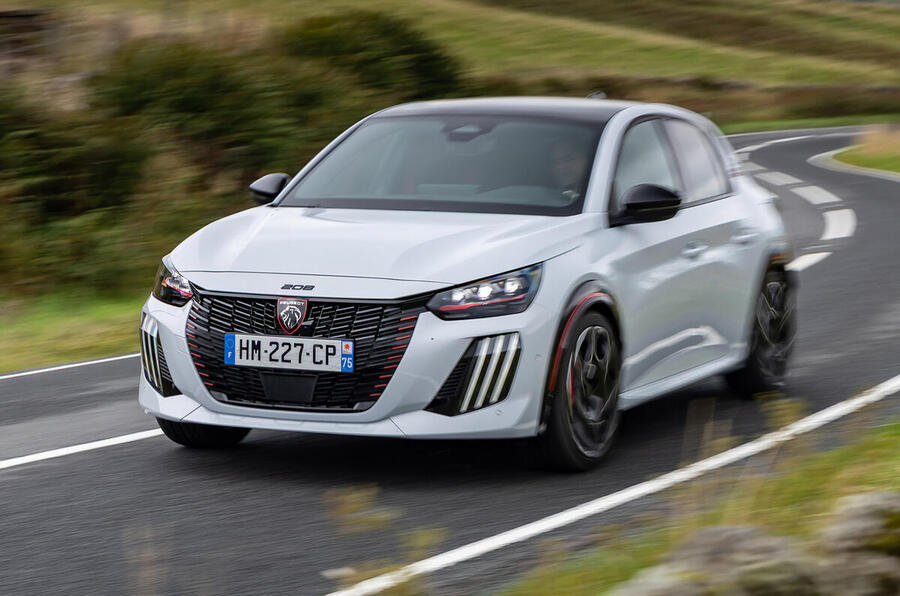
Peugeot e-208 GTI

This two-car comparison exercise could, almost, have contained 50% more intrigue and metal - and arguably would have been a four-car occasion, if only it had happened six months later.

In the same week that we carried out our back-to-back testing of the Raval and A290, Peugeot's press launch for the new e-208 GTI began near Loch Lomond.

As it happened, it wasn't quite possible to simply relocate our base of operations with the Cupra and Alpine to Scotland and turn our test company into a crowd.

But I did test drive the Peugeot less than 48 hours after having concluded appraising the Cupra and Alpine - and on at least similar UK roads.

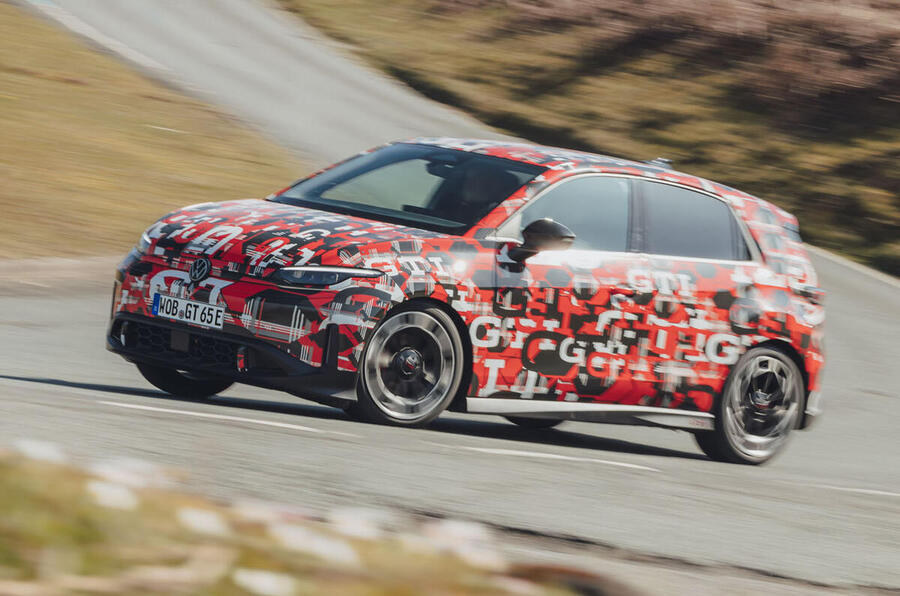
Back in May this year, meanwhile, I was fortunate to become one of the very first people outside of the employ of Volkswagen to test the new ID Polo GTI, when the company's chassis engineers brought a late prototype to the UK for us to run the rule over.

Volkswagen ID Polo GTI prototype

Back to top

Does that make me the best-qualified road tester in the world right now to name the new electric hot hatchback king? I'd have needed all four cars on the same road, at the same time, to be sure. But here goes nothing.

The Peugeot has got much of the Alpine's likeable compactness, plenty of motorsport-feel tautness in its body control and at least some of the outright traction and diff-derived purpose of the Cupra and Volkswagen.

It also has peak power to trump them all, though no paddle-shift regen control. For driver appeal on its own, it might rule the roost.

It would certainly be close. But usability matters almost as much as anything else to the typical hatchback driver and both the Polo and Raval bring new standards to the class for four-seat versatility, electric range and DC charging speed - and both are great to drive.

My instinct would be to pick the Polo, here and now - for its hot hatch pedigree, its completeness and its driver appeal.

Predicting back-to-back test verdicts is fraught with difficulties, but if any electric hot hatch deserves to rise to the top of this particular class, it's Volkswagen's.

Join our WhatsApp community and be the first to read about the latest news and reviews wowing the car world. Our community is the best, easiest and most direct place to tap into the minds of Autocar, and if you join you’ll also be treated to unique WhatsApp content. You can leave at any time after joining - check our full privacy policy here.

Matt Saunders

Matt Saunders Autocar
Title: Road test editor

As Autocar’s chief car tester and reviewer, it’s Matt’s job to ensure the quality, objectivity, relevance and rigour of the entirety of Autocar’s reviews output, as well contributing a great many detailed road tests, group tests and drive reviews himself.

Matt has been an Autocar staffer since the autumn of 2003, and has been lucky enough to work alongside some of the magazine’s best-known writers and contributors over that time. He served as staff writer, features editor, assistant editor and digital editor, before joining the road test desk in 2011.

Since then he’s driven, measured, lap-timed, figured, and reported on cars as varied as the Bugatti Veyron, Rolls-Royce Phantom, Tesla Roadster, Ariel Hipercar, Tata Nano, McLaren Senna, Renault Twizy and Toyota Mirai. Among his wider personal highlights of the job have been covering Sebastien Loeb’s record-breaking run at Pikes Peak in 2013; doing 190mph on derestricted German autobahn in a Brabus Rocket; and driving McLaren’s legendary ‘XP5’ F1 prototype. His own car is a trusty Mazda CX-5.