Currently reading: People have been complaining about noisy cars for 115 years

"Unsuitable devices for unnecessarily intensifying the volume" of cars have been around for a century

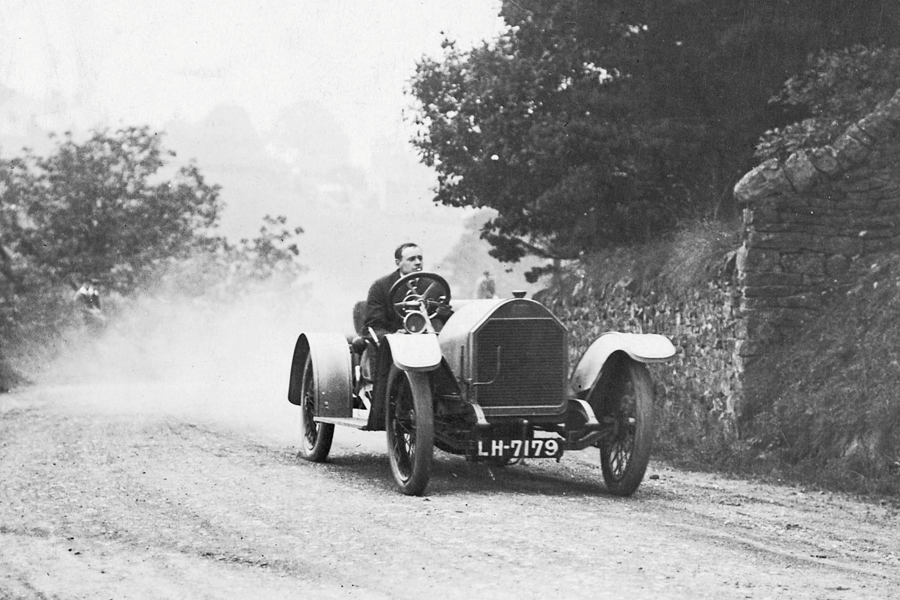
"The Commissioner of Police thinks it advisable to call upon all owners and drivers of motor vehicles to do what is in their power to reduce the annoyance caused, especially at night, by the use of unsuitable devices for unnecessarily intensifying either the timbre or volume of the sound emitted."

Anyone who has ever been woken at 3am by the droning and banging of a modified Audi RS3 or somesuch would second that plea – yet it's one that was circulated 115 years ago.

At that time, the only regulation governing vehicle noise compelled use of a horn at hazardous junctures. Little wonder there was a "growing volume of complaints against the nerve-racking, strident noises" of Britain's fast-growing motoring set.

We felt "the seriousness of car noises was greatly exaggerated", but regardless just five months later "the agitation culminated in the issue of a further regulation by the Local Government Board, prohibiting the use of cut-outs" – devices that let a car's exhaust gas avoid its silencer to boost power.

Enjoy full access to the complete Autocar archive at the magazineshop.com

This was "fairly sweeping, as it not only prohibits use of cut-outs but practically insists upon the use of silencers which shall deaden the noise of the exhaust blast very considerably" – all caused by those few "of caddish propensities".

Moreover, we complained, no curbs had been placed on the far greater irritants that were "lumbering traction engines that shake the very foundations of the houses they pass" and "iron-tyred horse vehicles of all sorts".
By summer 1928, traffic noise – described by one MP as "inflicting considerable suffering and being a general menace to health" – had come to the fore again. In just the past year, some 10,600 drivers had been prosecuted for excessive noise, and consequently a broad-based committee was set up to investigate. Its recommendation, delivered the next spring, was more regulation.

Thus, from August 1929, "use of any car which causes any excessive noise either directly or as a result of any defect, lack of repair or faulty adjustment or loading" was illegal.

There remained one big problem, though, as reader EJ Burrow noted: "Unless some method is invented for its reasonable enforcement, the law is likely to become a futile absurdity, more honoured in the breach than in the observance. The police seem utterly at a loss as to how to approach the subject."

Back to top

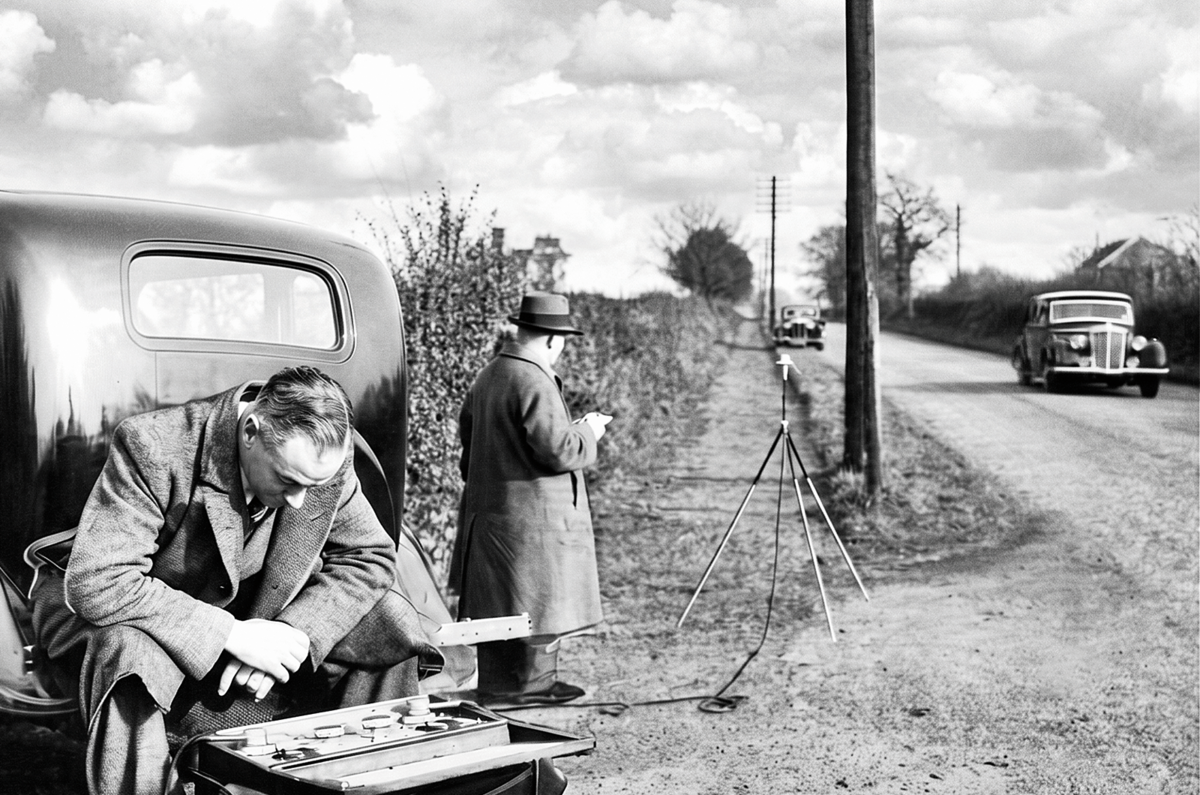
Clearly not all of them, though, as by the end of the year, 1282 people had been prosecuted under the act, despite noise being unquantifiable. That would soon change: in 1937, by which point "silence had rather fallen away from the golden standard", we enjoyed our first try of a sound measuring machine.

Already two units of sound had been devised: the decibel, a pure measurement of mechanical energy, and the phon, one of loudness to the human ear, accounting for variables in how it perceives differing frequencies.

The Ministry of Transport had recommended that no car should exceed 90 phons – slightly above the potency of sitting by an open window on an express train. The Wolseley saloons that we tested peaked at 77 when cruising at 30mph in top gear, 18ft from the microphone.

More regulation was introduced in 1955, as car ownership became democratised: "Every [ICE] vehicle shall be fitted with silencer, expansion chamber or other contrivance suitable and sufficient for reducing as far as may be reasonable the exhaust noise."

Yet, as an MP argued in 1959, "many vehicles are particularly obnoxious in this respect, especially motorcycles and sports cars. They probably do not make an excessive noise when they come from the manufacturers but, after having been improved in the view of the owners, a hellish noise is created which is completely unnecessary."

Back to top

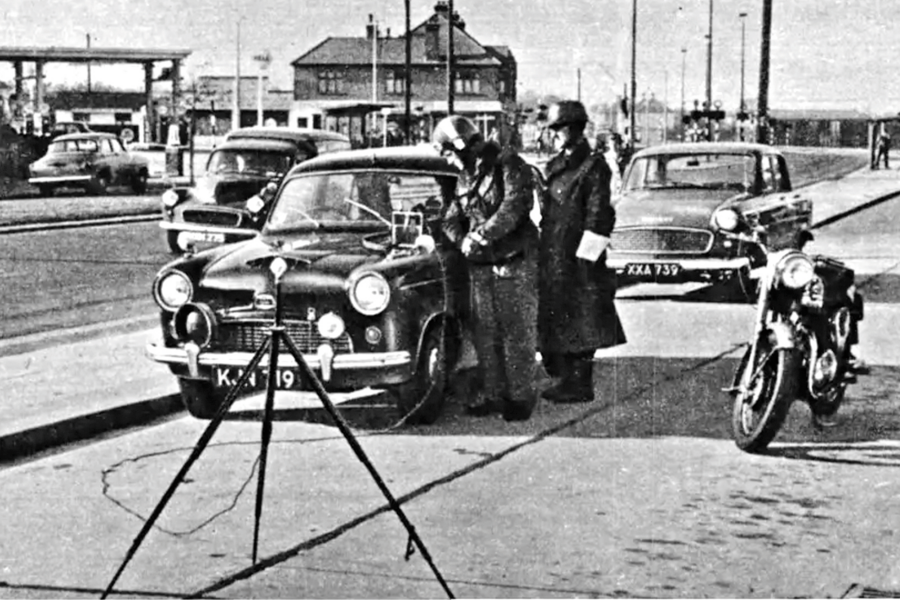
That winter we joined Southend Police as they employed a decibel meter to "remove the arbitrary nature of the assessment of the sound defined in the regulation". They set their threshold for warning or prosecution at 95dB – "slightly above the level inside a tube train". But the loudest we heard was 92dB, from a "notoriously noisy sports car driven at full bore in second gear".

Still, another government report on the issue was commissioned in 1960. An MP scoffed: "When I hear a sports car going through our streets with the tremendous roar which accompanies it, my main feeling is one of almost embarrassment that a grown-up should seek to show off in such a childish way." Well, quite.  

It was 1970 when 'excessive noise' crossed the boundary of objectivity in British law, being defined at 87dB.

Join our WhatsApp community and be the first to read about the latest news and reviews wowing the car world. Our community is the best, easiest and most direct place to tap into the minds of Autocar, and if you join you’ll also be treated to unique WhatsApp content. You can leave at any time after joining - check our full privacy policy here.