Currently reading: Lotus Emira to drop Toyota, AMG engines in switch to new hybrid V6

Revised sports car is due next year and will use new powertrain from Renault-Geely-owned Horse

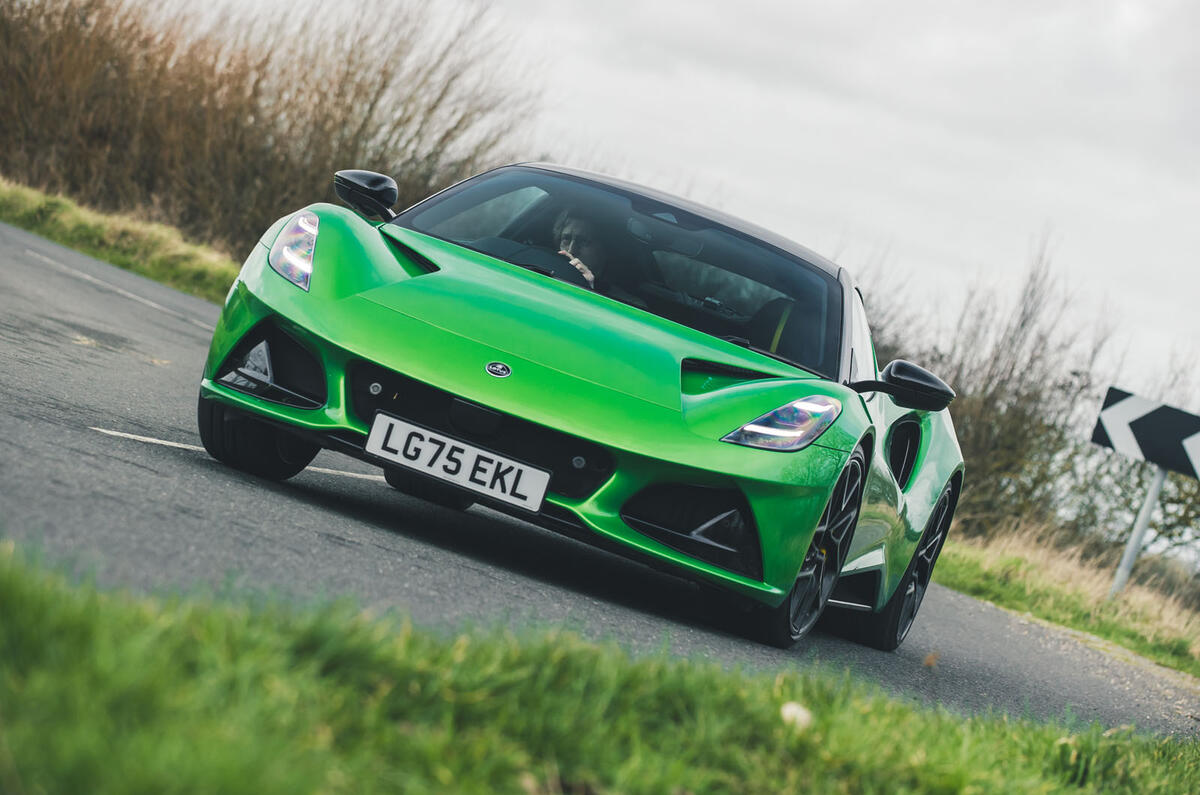
The updated Lotus Emira sports car will be the first to use a new 3.0-litre V6 turbocharged hybrid engine developed by Geely-Renault-owned powertrain company Horse.

The revised Emira, due in 2027, is part of a wider overhaul at Lotus that brings combustion-engine sports cars back to the fore, with a new V8 hybrid supercar codenamed Esprit leading the charge.

The Horse V6 will become the only available powertrain so will replace both the current Toyota-sourced V6 and AMG-supplied four-cylinder unit that currently powers the Emira, Lotus CEO Feng Qingfeng confirmed to Autocar.

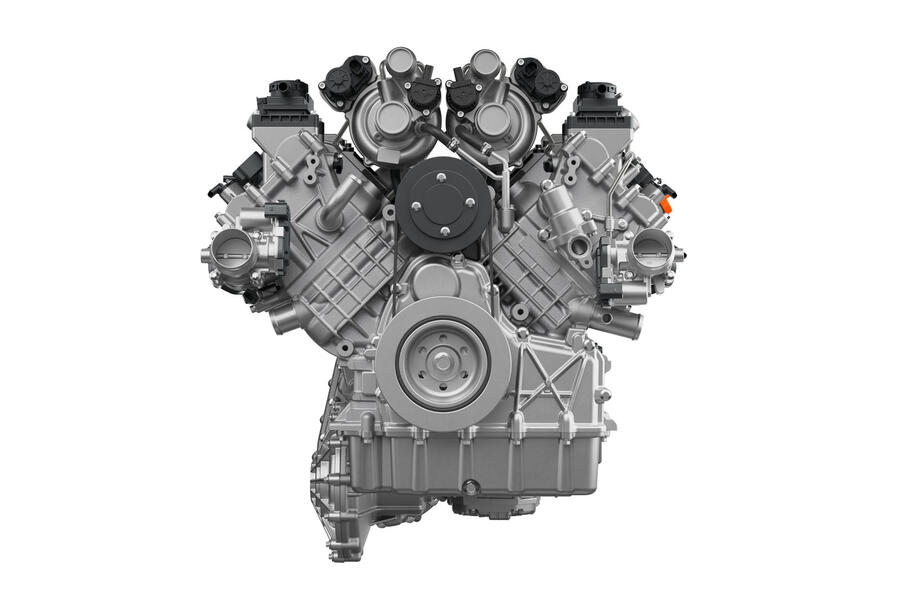
The Horse V6 develops up to 536bhp and 516lb ft but weighs just 160kg – making it around 10kg lighter than any other V6 on the market and only marginally heavier than many 2.0-litre four pots, said Horse CEO Matias Giannini.

The unit is mated to a four-speed automatic transmission with an integrated electric motor, giving the Emira an additional power boost while also reducing emissions.

Lotus extended the life of the Emira after deciding there was no market for the planned electric replacement, originally to be developed alongside Alpine for a launch previously planned for this year.

Lotus made the decision to focus on the six-cylinder partly due to reaction from the US market, which has driven demand for the Toyota-supplied V6. “They told us that they love the V6 engine, and actually the V6 version is our best-seller in the US market,” said Feng.
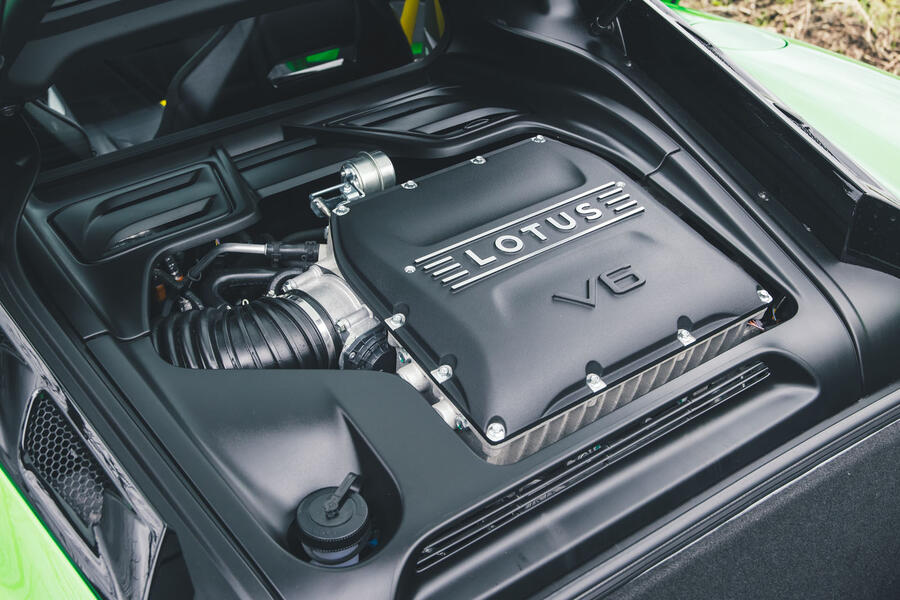
Lotus Emira V6

The continuation of the combustion-engined Emira is great news for Lotus’s historic production plant in Hethel, near Norwich, which will also build the V8 ‘Esprit’ supercar from 2028. Production sunk as low as 2000 cars last year after the US imposed an inflated 25% tariff on imported cars in March 2025.

Negotiations by the UK reduced the final figure to 10%, reviving production and making Hethel an attractive place to supply the US again. “The 10% tariff for UK-manufactured cars exported to the US seems acceptable to us,” said Feng. “It is actually more cost-efficient [using Hethel] than investing in a [new] factory.”

Lotus last year had to deny a well-sourced Autocar report that it planned to shut Hethel amid a wider push to cut costs at the money-losing company.

Lotus now aims to push Hethel close to its capacity of 10,000 with the combined production of both the new Emira and the V8 supercar, which is likely to take its Esprit codename into production.

Back to top

The current Emira was launched in 2021 on a much modified version of the outgoing Evora platform and has gone on to become Lotus’s best-selling sports car based on annual figures.

However, the V6 from Toyota was due to be replaced because it would have failed to meet upcoming changes to EU regulations, prompting Horse to create its own engine.

New Horse V6 is “powerful and lightweight”

Horse W30 V6

The engine will set new standards in the category, Horse CEO Matias Giannini told Autocar. “Being based on a smaller engine design is also a key reason why the V6 is so compact and light,” he said. "That's why it's so competitive, and it is the lightest and smallest hybrid V6 in the world right now. There's no hybrid V6 engine that fits in the package that ours fits."

The 3.0-litre unit, revealed at the Beijing motor show last month, is described as a "powerful and lightweight V6 engine" for use in mild- and full-hybrid vehicles.

It is the latest in a wave of new systems revealed by the fast-growing company, which was set up as a joint venture between Renault and Geely in 2024 to develop and supply electrified ICE powertrains for car manufacturers globally. Horse engines are already used in a variety of vehicles from Renault, Dacia, Nissan, Mercedes and others.

Giannini explained that the new motor was not initially in the product strategy when the company was founded two years ago, but has been developed efficiently using existing assets.

He said: "I love the big engines. When I came here, I didn't think that was ever going to be part of our journey, because there's so much to be done with that more commoditised powertrain: the three- and four-cylinder, up to 2.0-litre engines.

"But obviously, in a company like Horse Powertrain, there's a lot of car enthusiasts – so people would come to me and say: 'When are we going to have a V6?'

"And I would say: 'It's not the focus right now.' But that's the thing about an innovative company with car lovers: they made a way to convince me, and the way to convince is that the basis of the V6 comes from our simple four-cylinder technology."

Giannini's comments highlight the modularity of Horse's construction methods, which mean that all its engines can essentially be scaled up and down as needed. Such modularity has also allowed for the creation of a new V8, based on the V6, which will power Lotus’s new supercar.

Join our WhatsApp community and be the first to read about the latest news and reviews wowing the car world. Our community is the best, easiest and most direct place to tap into the minds of Autocar, and if you join you’ll also be treated to unique WhatsApp content. You can leave at any time after joining - check our full privacy policy here.

Felix Page

Felix Page
Title: Deputy editor

Felix is Autocar's deputy editor, responsible for leading the brand's agenda-shaping coverage across all facets of the global automotive industry - both in print and online.

He has interviewed the most powerful and widely respected people in motoring, covered the reveals and launches of today's most important cars, and broken some of the biggest automotive stories of the last few years.