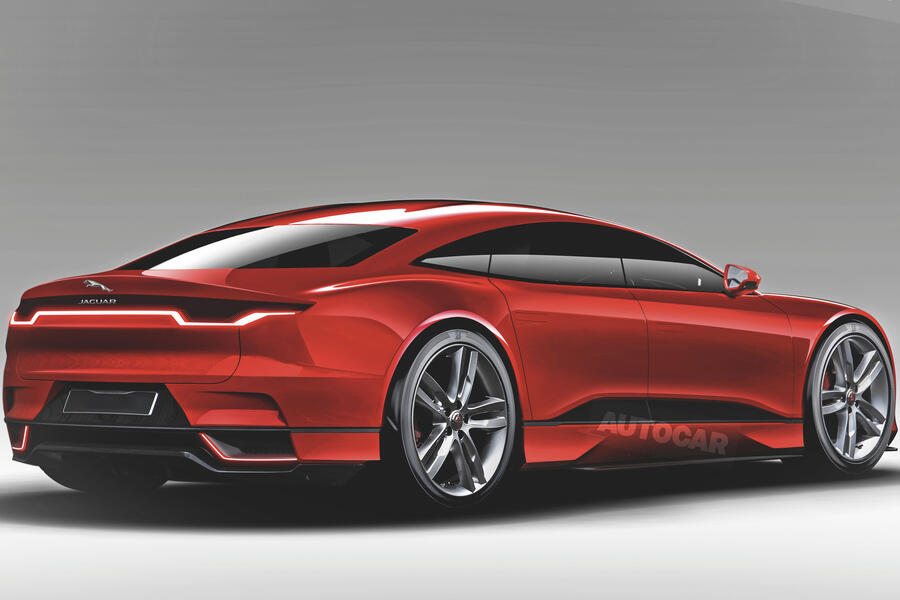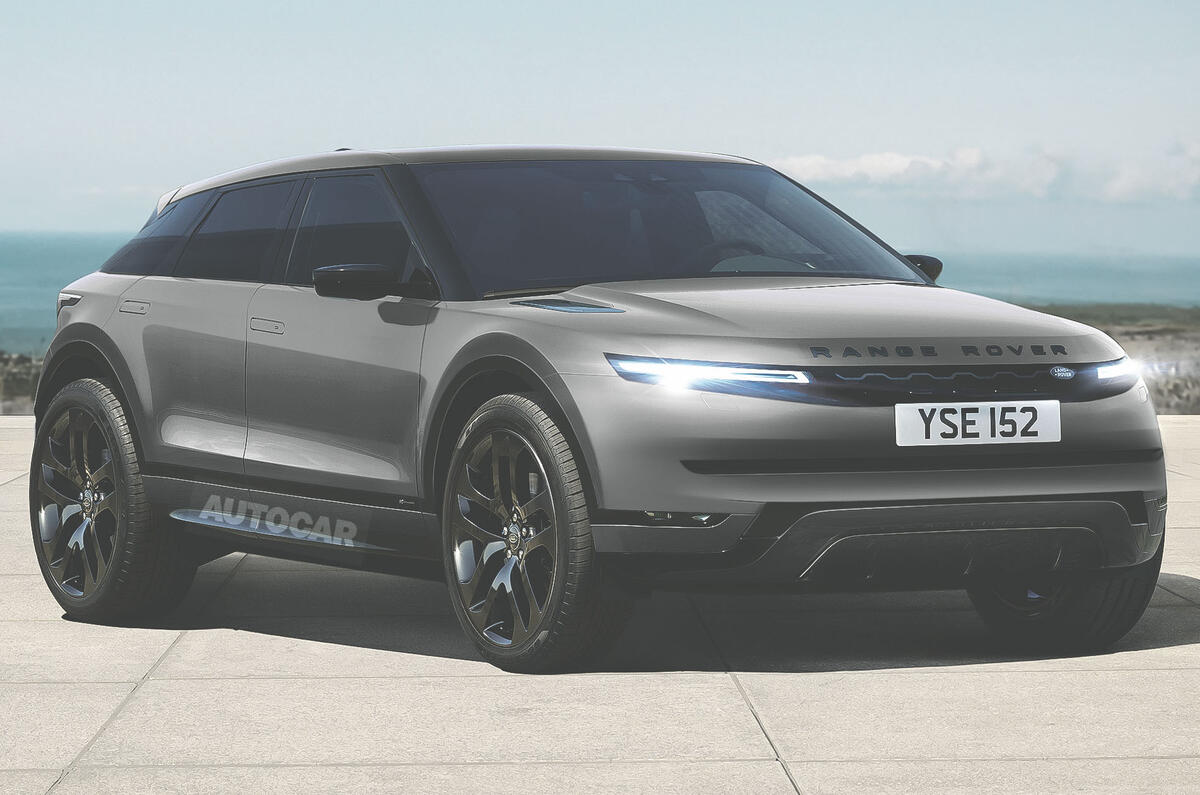
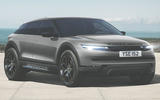
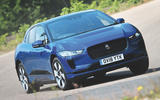

Land Rover is gearing up to launch its first fully electric Range Rover model, a low-slung luxury crossover that will be twinned with the Jaguar XJ and is due to go on sale in late 2021.
With the revived Defender now unveiled as a true off-road flagship model, the British firm can strengthen its focus on electrification, a key area of investment in Jaguar Land Rover’s Charge and Accelerate programmes designed to restructure the business following recent heavy losses.
The new EV, first revealed by Autocar in 2017 and once known under the working name Road Rover, is being developed as the brand’s most road-focused model yet, albeit retaining more off-road capability than rivals.
It is intended to take on the likes of the next-generation all-electric Porsche Macan and the forthcoming Audi E-tron Sportback.
JLR’s new model has been referred to in company documents as a ‘medium SUV’.
It is expected to sit between the Evoque and the Velar in terms of overall size, but with a lower roofline and smaller frontal area than both in order to optimise economy and range.
The space created by the electric architecture also means it is likely to offer more cabin space than the Velar.
While JLR has registered the Road Rover nameplate, there is no news yet on what name the showroom version will take – although it will be branded within the Range Rover family.
The Range Rover label remains because the machine will be pitched at a luxury audience.
The move should also boost its appeal in the vital Chinese market, where there is demand for both large premium crossovers and electric cars.
Jaguar Land Rover’s struggles in China have been a key factor in the company’s recent financial woes, and improving its performance in the country is a key part of the turnaround strategy.
With the Chinese government heavily pushing fully electric cars, both the forthcoming electric XJ and Range Rover crossover will be vital to the firm’s renewed push in the country.
Although Jaguar Land Rover bosses continue to remain tight-lipped on the existence of the EV crossover, company chief Ralf Speth has repeatedly stated the firm’s goal to achieve net zero emissions.
He has hinted at new models in the range, recently saying to reporters: “We will launch things to expand the product portfolio. We won’t stand still. So you can expect these [new models] as you can also expect updates of our existing cars.”
The firm only recently confirmed it was developing the next-generation Jaguar XJ as an electric car, as first revealed by Autocar in 2015, with the model set to be built at the firm’s Castle Bromwich plant.