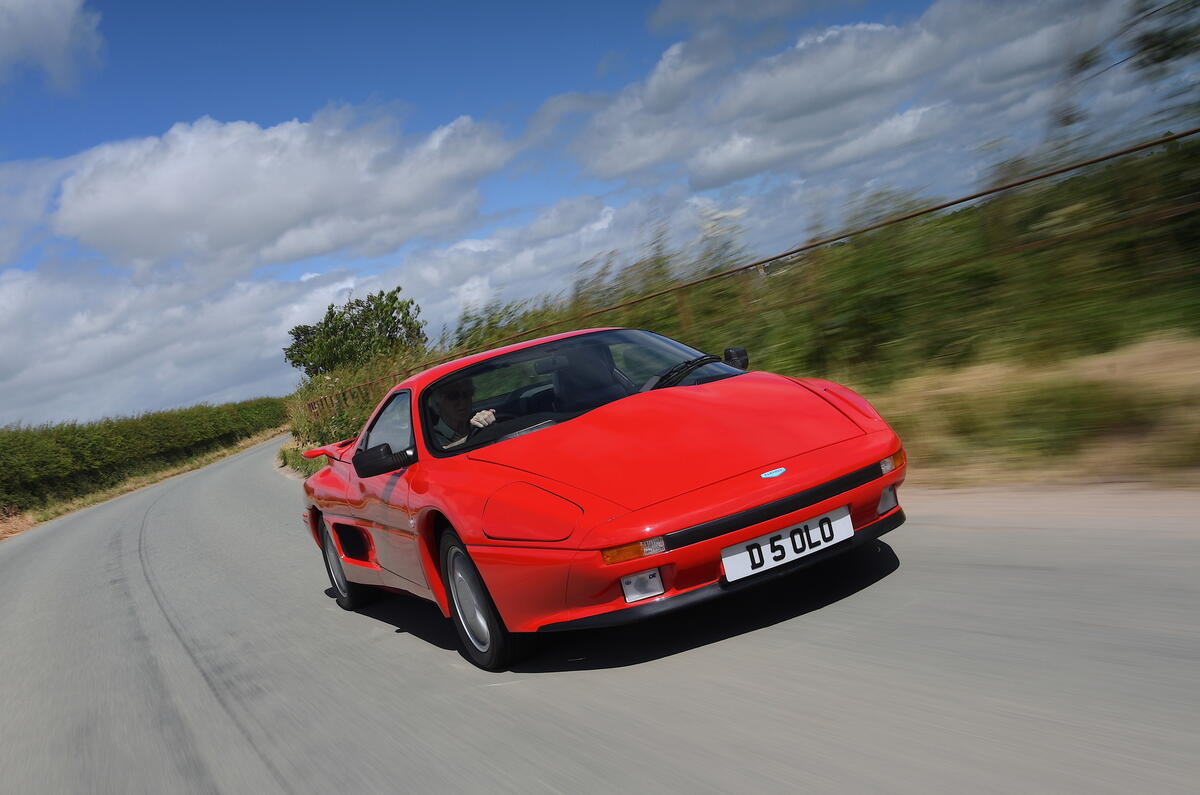
During the 1980s and 1990s, the British car industry was littered with ambitious sports car start-ups ready to take on the establishment.
Light on cash but brimming with confidence, these one-person-in-a-shed operations often disappeared as quickly as they had sprung into life. Panther, however, was different.
Originally based in Devon, the firm was started by Robert Jankel in 1972 and became well-known for models such as the quirky Lima and Kallista, which evoked the classic sports cars of the 1930s.
Using humble Vauxhall and Ford mechanicals, these four-wheeled pastiches attracted a loyal following and even the odd famous owner, among them Elton John and Oliver Reed.
However, by 1983, Panther had been bought by ambitious young South Korean businessman Young-chull Kim, and there were plans to build something a little more contemporary.
Featuring a mid-mounted 1.6-litre Ford CVH engine and sleek, targa-topped bodywork, the original Solo was devised as a rival to machines such as the Fiat X1/9. But before it got past the prototype stage, Kim saw the then new Toyota MR2 would do the same job for less, so decided to push the Solo upmarket.
What resulted was one of the best supercars never to succeed. Styled by the Royal College of Art’s Ken Greenley with assistance from March Engineering’s wind tunnel, it was packed with engineering innovation.

For starters, the Ford engine had been upgraded to the 204bhp turbocharged 2.0-litre from the Sierra RS Cosworth, while there was now a bespoke Ferguson four-wheel-drive transmission, making the Solo the only mid-engined all-paw production car in the world at the time.
Then there was the body itself, which featured a pioneering construction of steel spaceframe chassis bonded to an aluminium-honeycomb and impregnated-composite passenger cell that resulted in an incredibly rigid structure.
Then there were novel features, such as revolving headlamps and a 2+2 seating layout. Factor in chassis tuning input from Ford Special Vehicle Engineering supremo Rod Mansfield and the Solo had all the raw ingredients to succeed.
It certainly had the chassis chops to impress. With its stiff structure, grippy four-wheel drive, quick steering and all-independent suspension, the Solo was a delight to drive. Despite relatively modest rubber (195-section at the front, 205 at the rear), the Panther combined sky-high grip with a rare balance and adjustability.


Add your comment