













From £218,7207

Crewe firm aims for greater driver appeal at a lower price point for its convertible GT

Find Bentley Continental GTC: 'S' version is competent but confused deals
New car deals
From £218,720
Nearly-new car deals
From £184,950
Other Services
Sell your car
84% get more money with

The ranks of top-tier convertibles with power and art deco-esque opulence to spare have thinned out in recent years.

Rolls-Royce stopped taking orders for the Dawn in 2022 and production of the Mercedes S-Class Cabriolet – an underrated gem especially in S560 guise – ended a year earlier. It leaves the subject of this week’s road test with the market for such cars almost entirely to itself.

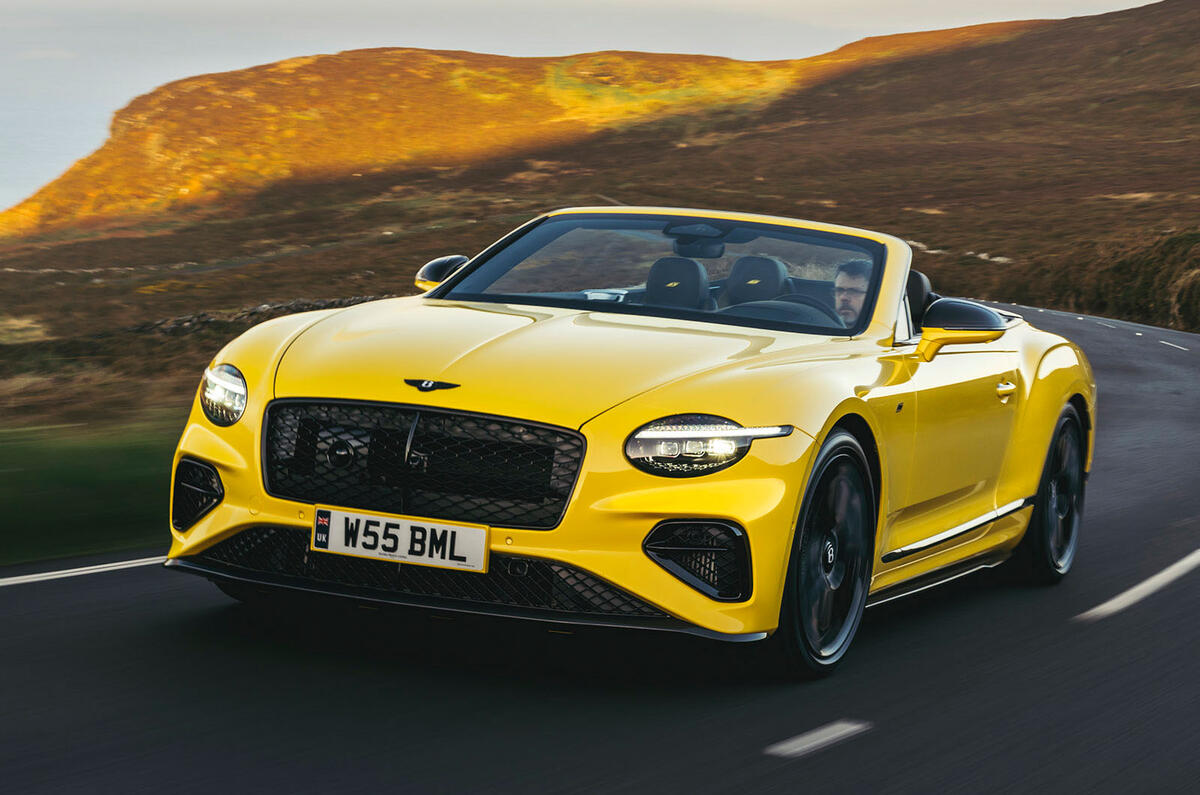
Or at least it does if you’re not considering the latest Bentley Continental GTC in its subtly more sporting S specification, as we have here. True, Bentley also purveys its only convertible model in full-blown 772bhp Speed guise, but while the S makes less power, it utilises the range-topper’s sportier chassis tune, and for quite a bit less expense (£35,000 less, to be precise). It’s therefore a car you might just consider instead of an Aston Martin DB12 S Volante, Porsche 911 Turbo S Cabriolet or Maserati Grancabrio Trofeo, which can’t necessarily be said of the standard Continental GTC – or the pricier Speed.

We will soon learn whether the S, as a sporting luxury plug-in hybrid convertible, really can compete so broadly, but it’s worth noting that the task of crafting a genuinely good open-air driver’s car from the tin-top Conti GT has, if anything, become harder of late. With the exception of the box-fresh Supersports, every model in the range is now fitted with Bentley’s hybrid powertrain. This is thought to add around 200kg to the kerb weight, thanks mainly to a 25.9kWh battery that contributes meaningful range.

Factor in the reinforced sills, cross-bracing and A-pillar support that any convertible of traditional construction needs and, in the case of the Conti GTC S you’re looking at a claimed kerb weight of more than 2.6 tonnes. Can such a machine, shorn of some rigidity and with priorities rightly elsewhere, really offer driving satisfaction as an alternative to others mentioned?


Advertisement
Back to top

DESIGN & STYLING

8
Bentley Continental GTC S 002

So what constitutes an S? These cars effectively combine the powertrain of the standard GT with the ‘Bentley Performance Active Chassis’ of the GT Speed. That means the new two-chamber air springs, the torque-vectoring rear electronic limited-slip differential, the ESC software, the front-rear clutch-based torque split, the active anti-roll bars and the new-for-S rear steer are tuned to deliver the additional control and poise of the flagship derivative.

It’s an arsenal of chassis tech that only the Porsche 911 Turbo S comes close to matching in this particular corner of the market. And it’s paired with Bentley’s ‘High Performance’ PHEV powertrain, which is pegged at 671bhp, rather than the ‘Ultra Performance’ version of the Speed.

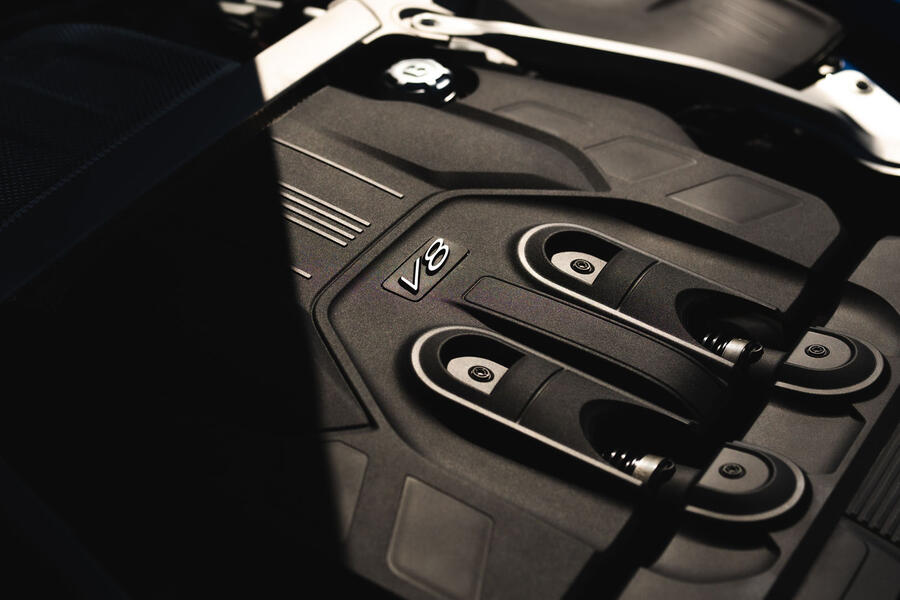
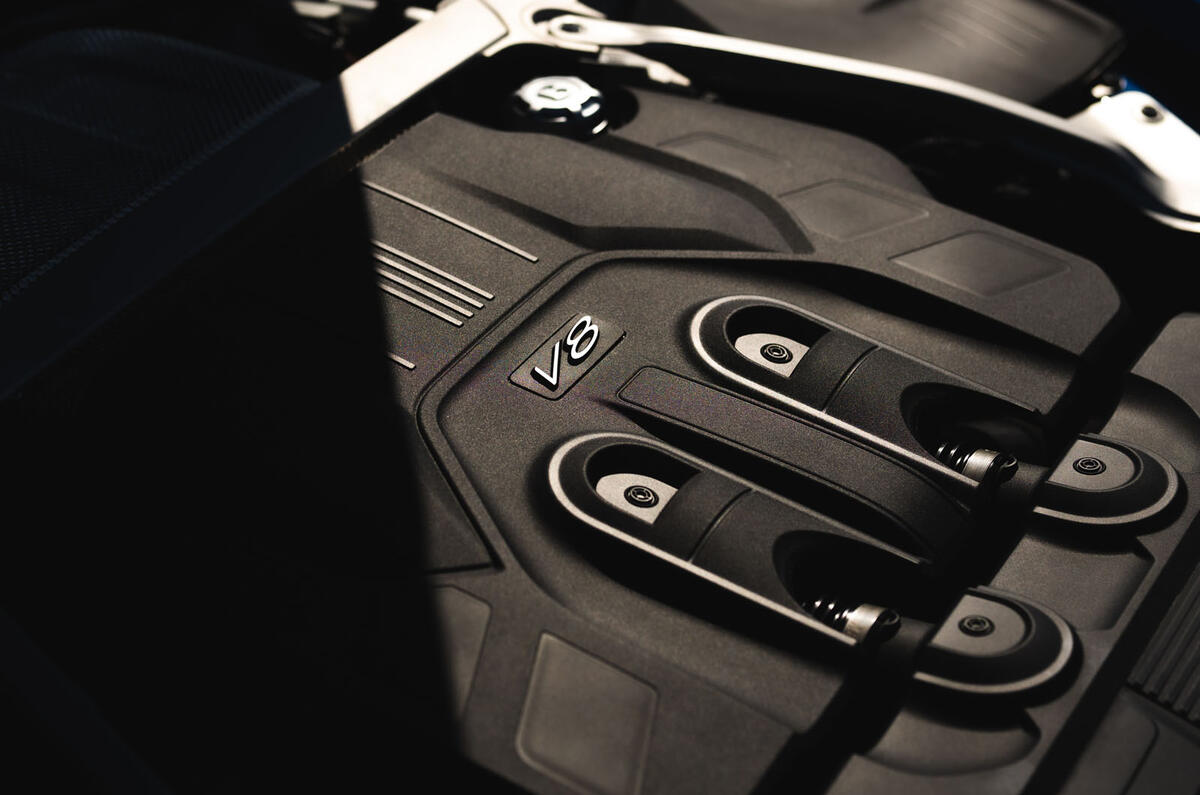
Of that total, 512bhp is delivered by the twin-turbocharged 4.0-litre crossplane V8; 188bhp then comes from an electric motor integrated into the eight-speed dual-clutch automatic gearbox. It’s an engine that, because of the car’s new-found hybrid assistance, no longer has cylinder deactivation and neither does it rely on twin-scroll turbos for their responsiveness, with mono-scroll units now in place, with their superior packaging, reduced complexity and potential for greater top-end power. The upshot in the GTC S is a claimed 0-60mph time of 3.7sec (two-tenths shy of the coupé’s) and a top speed of 191mph (identical to the coupé’s, impressively).

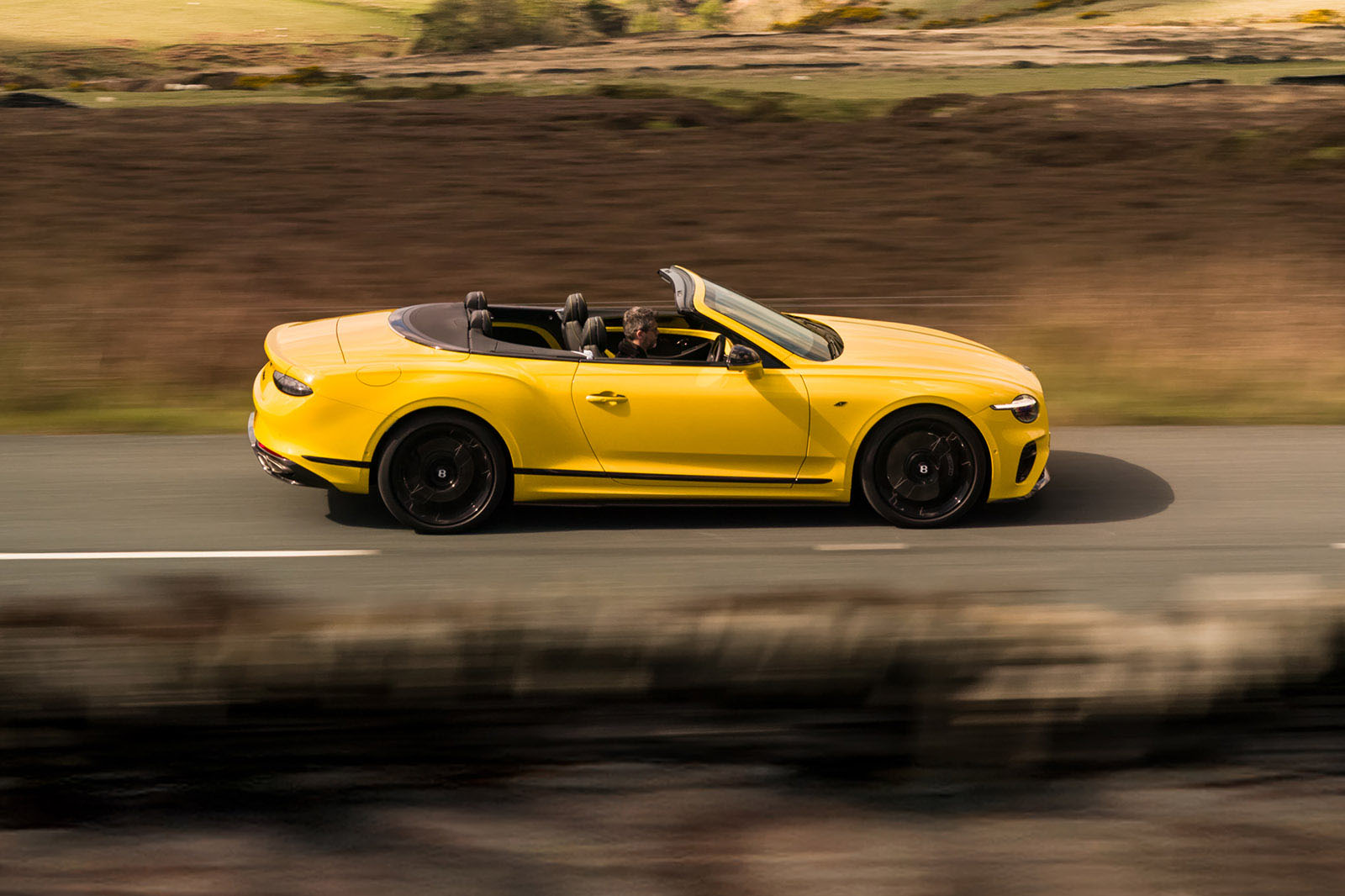
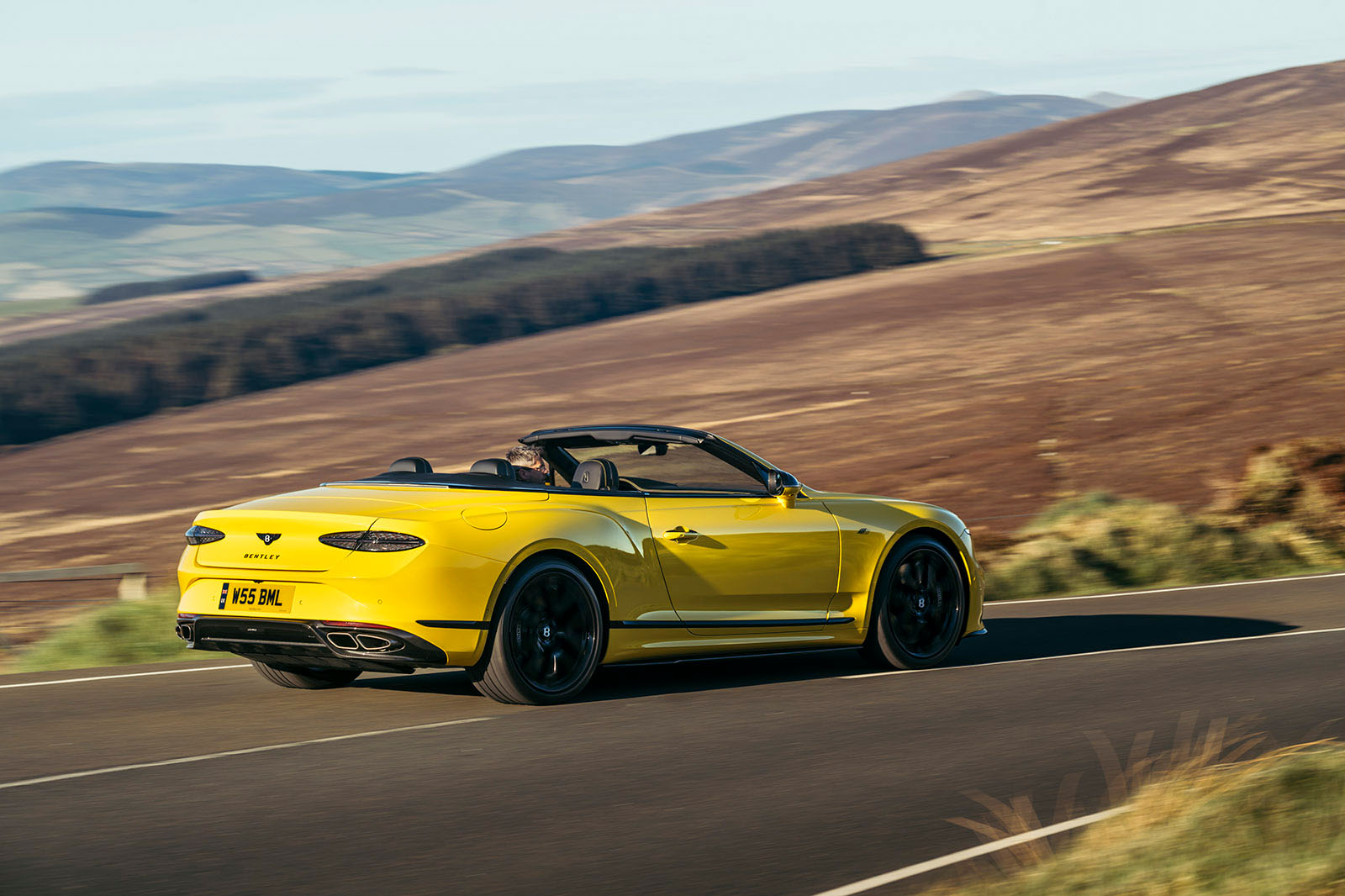
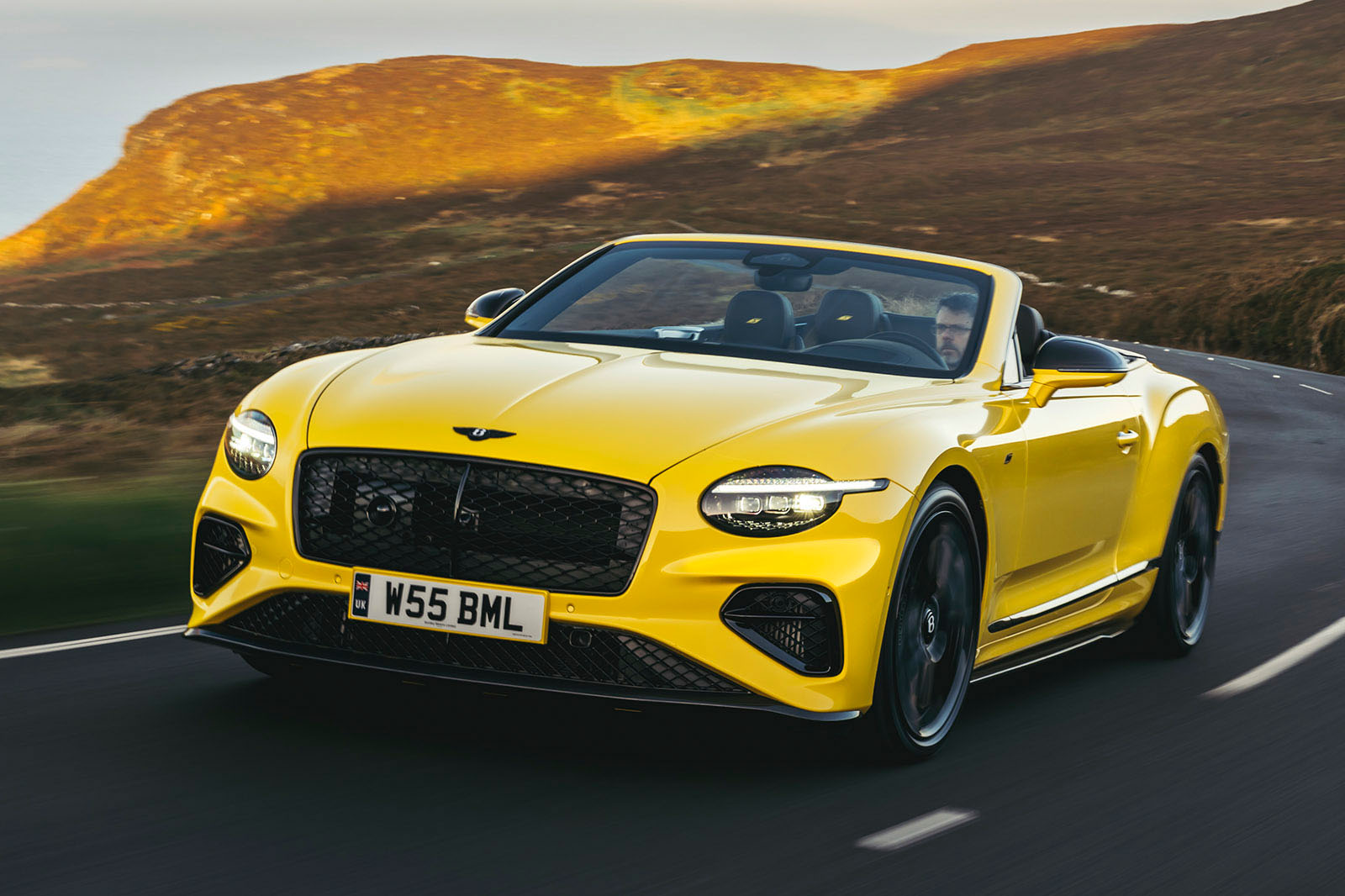
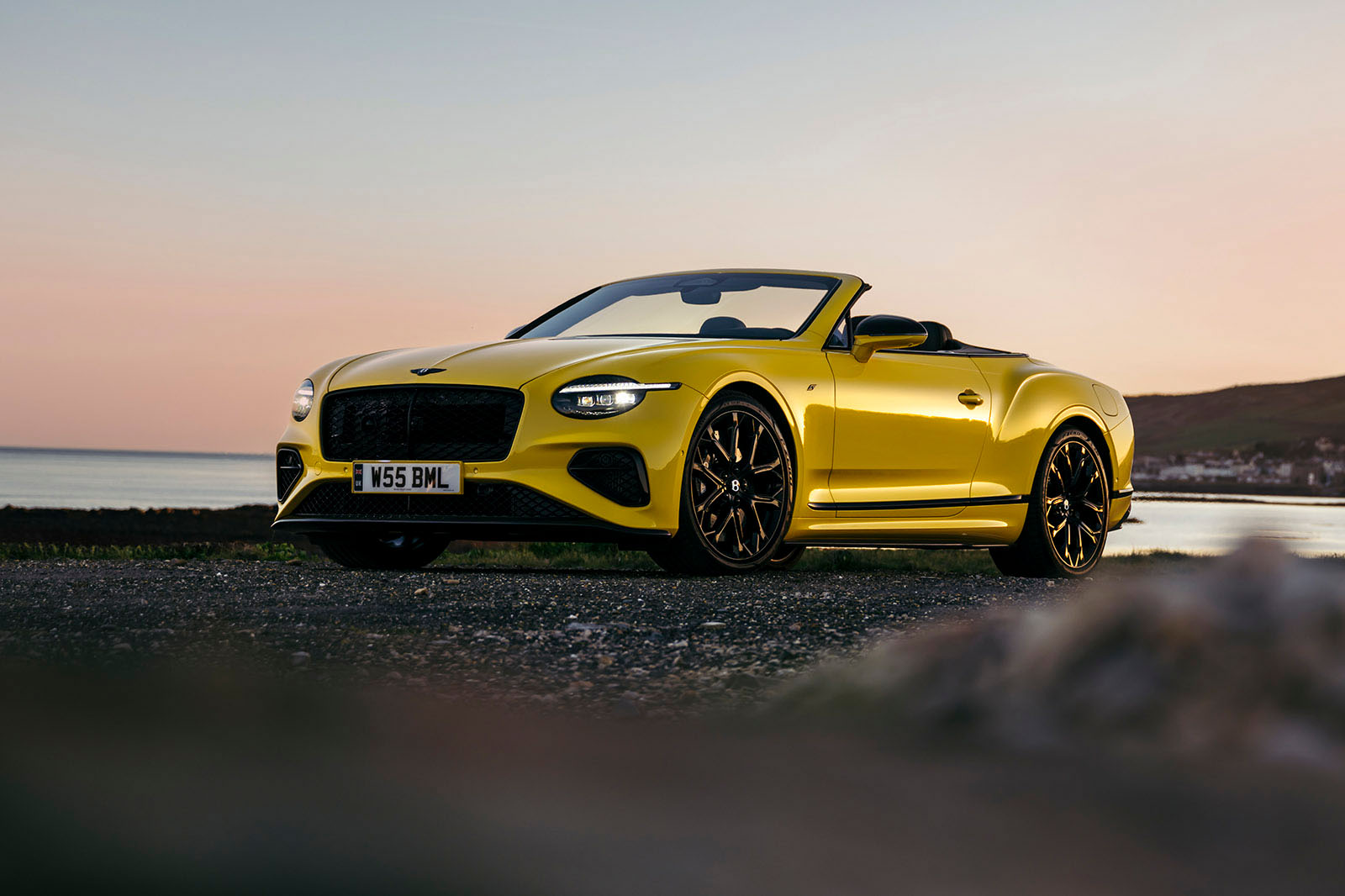
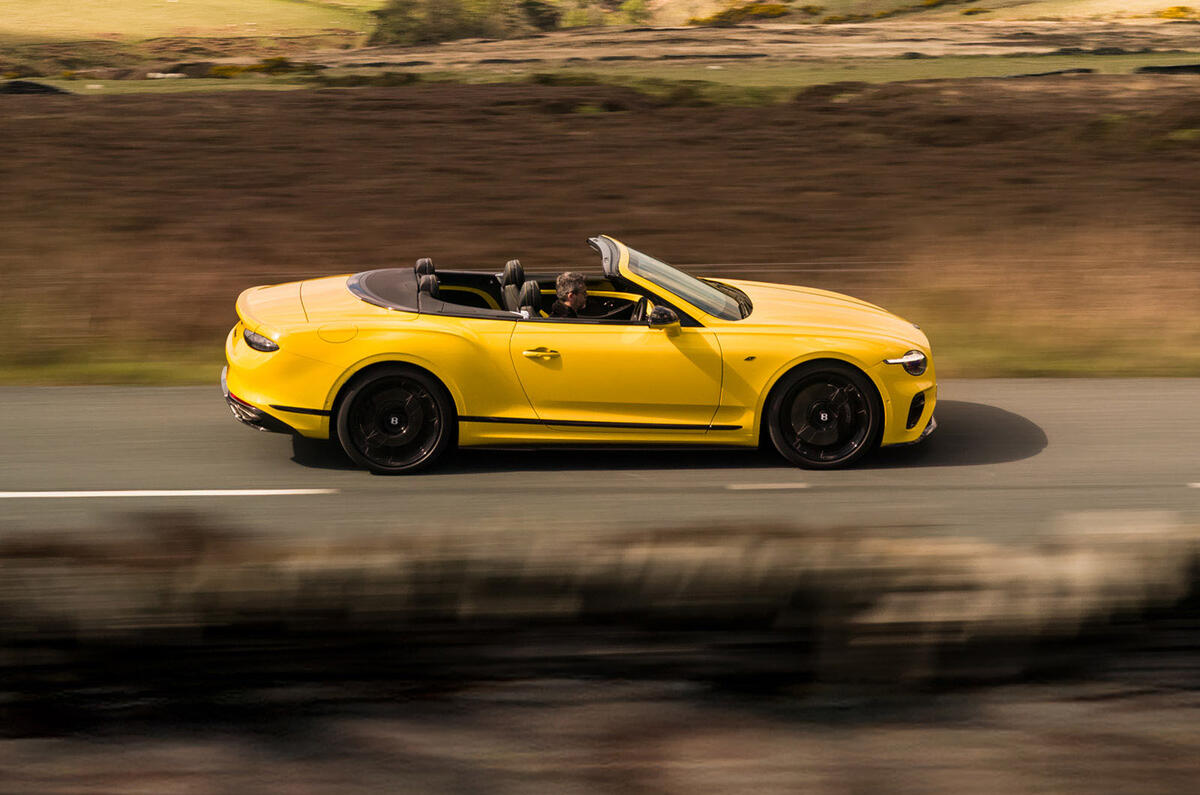
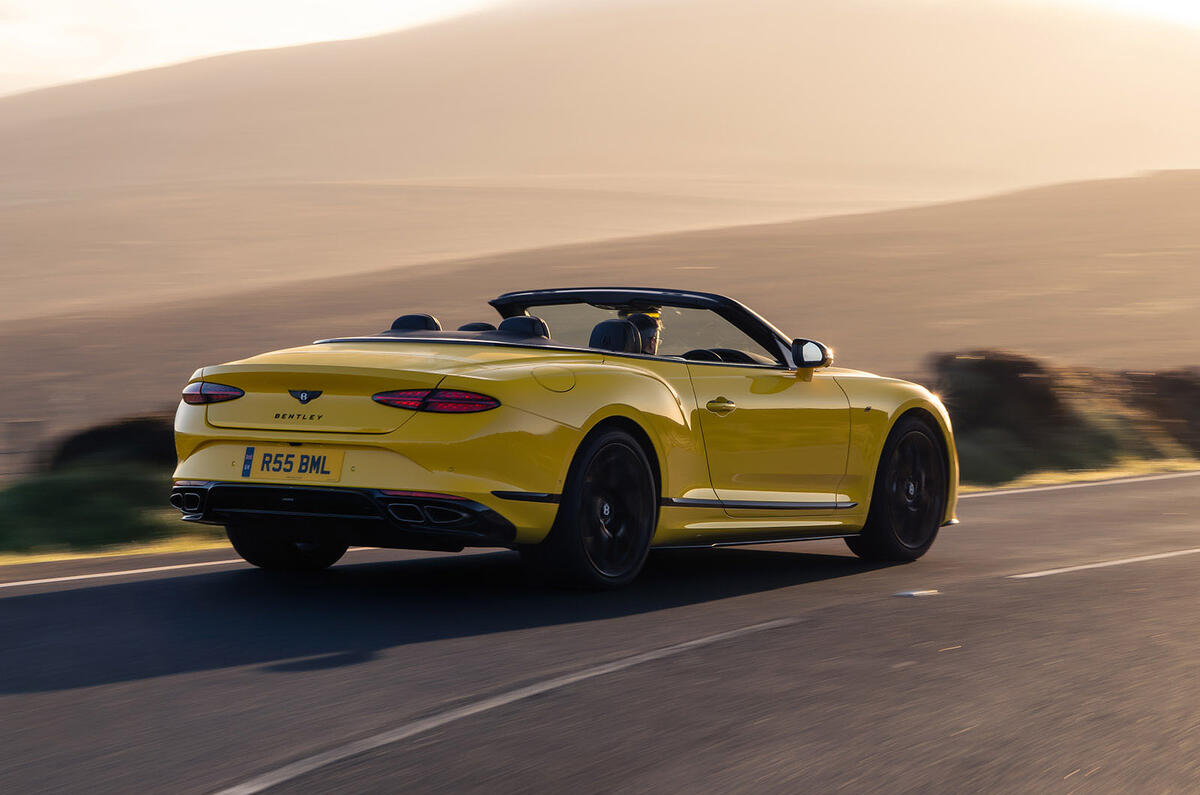
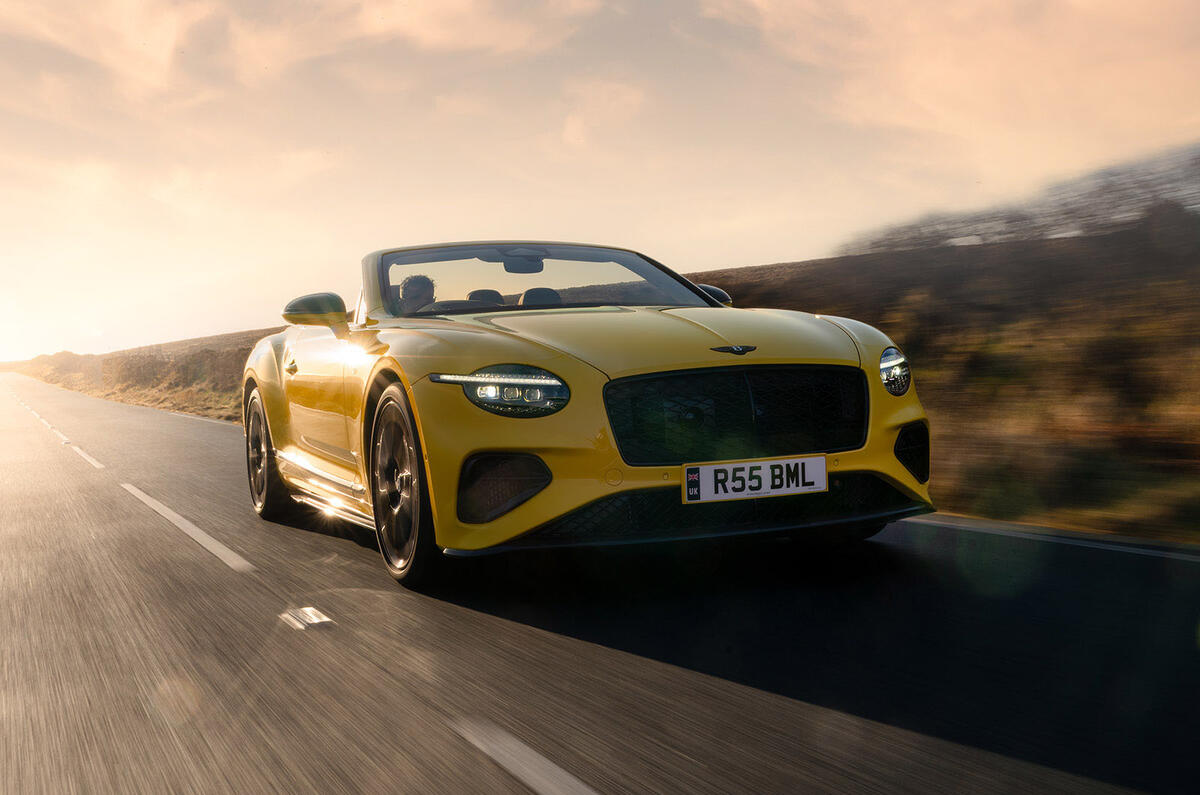
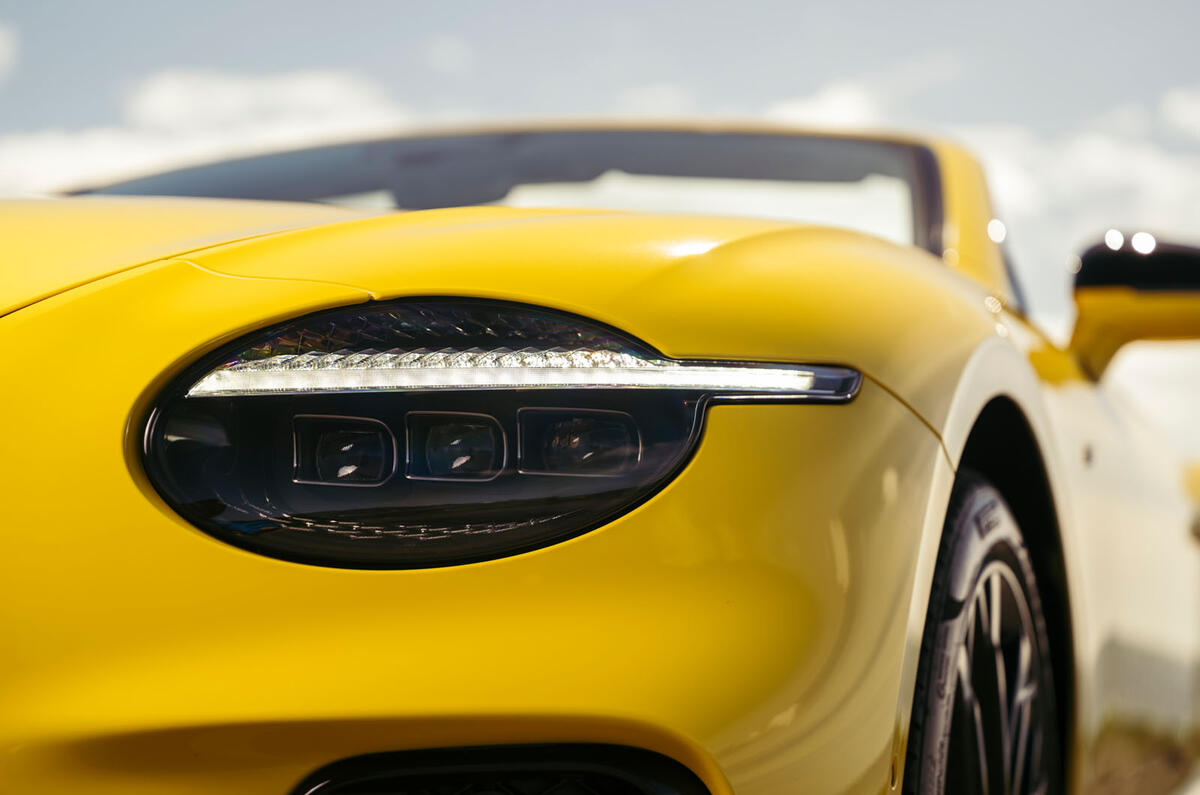
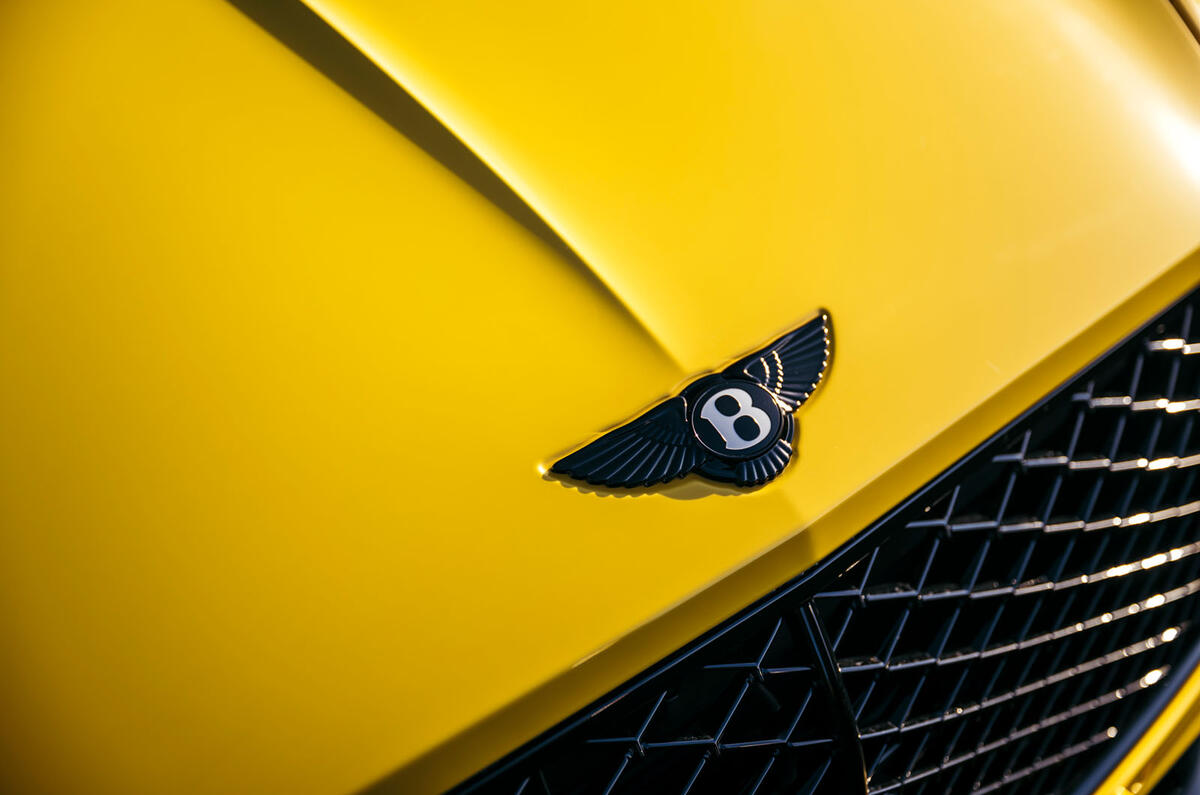
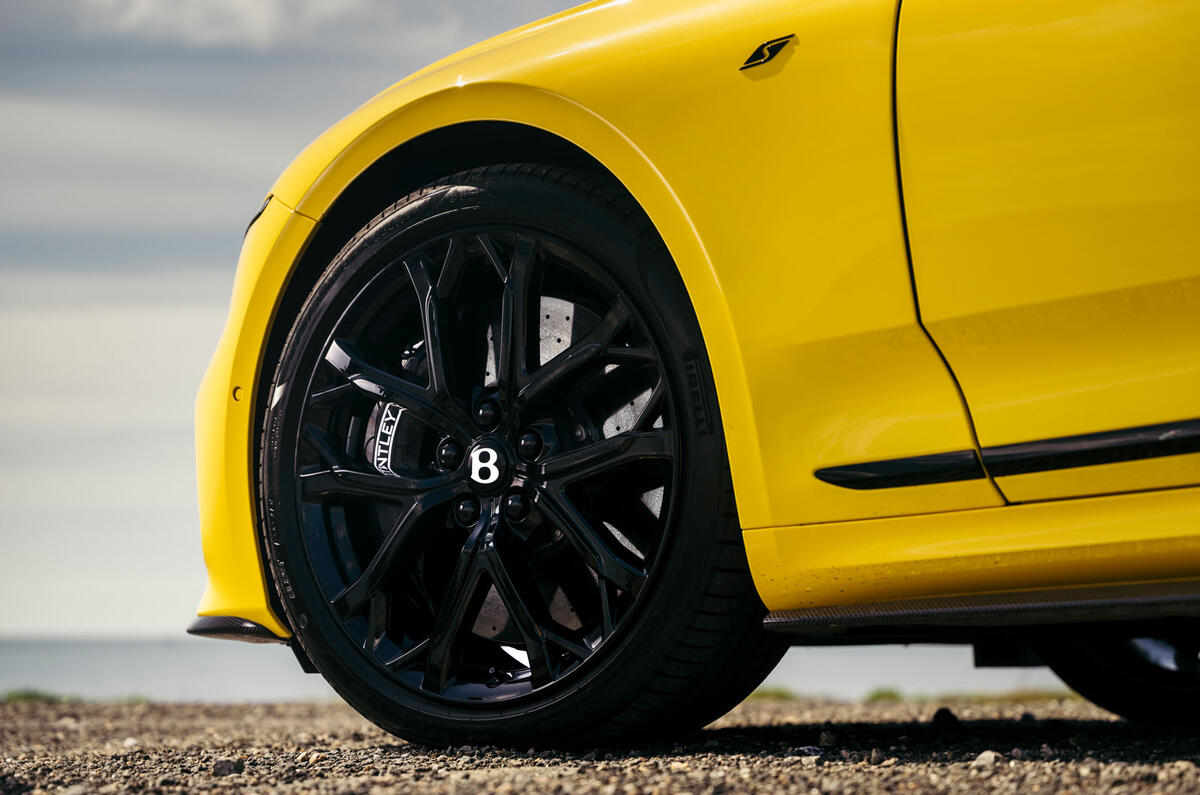
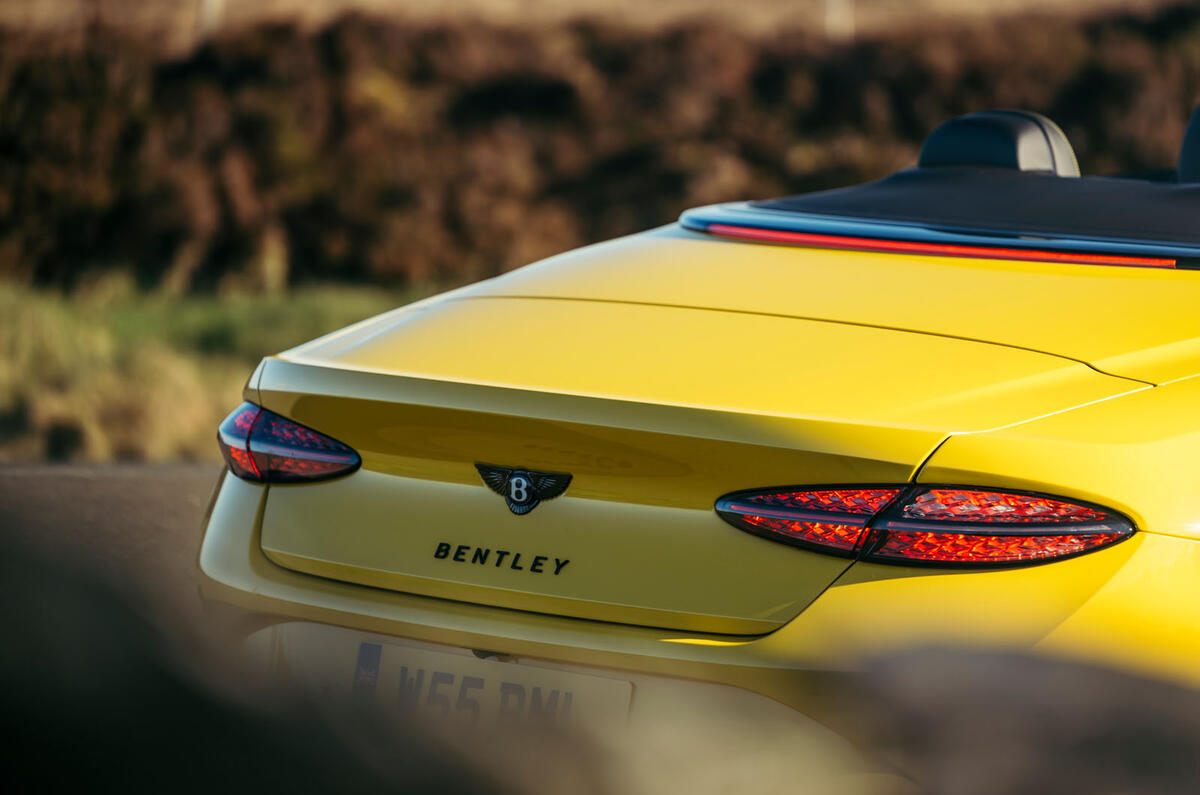
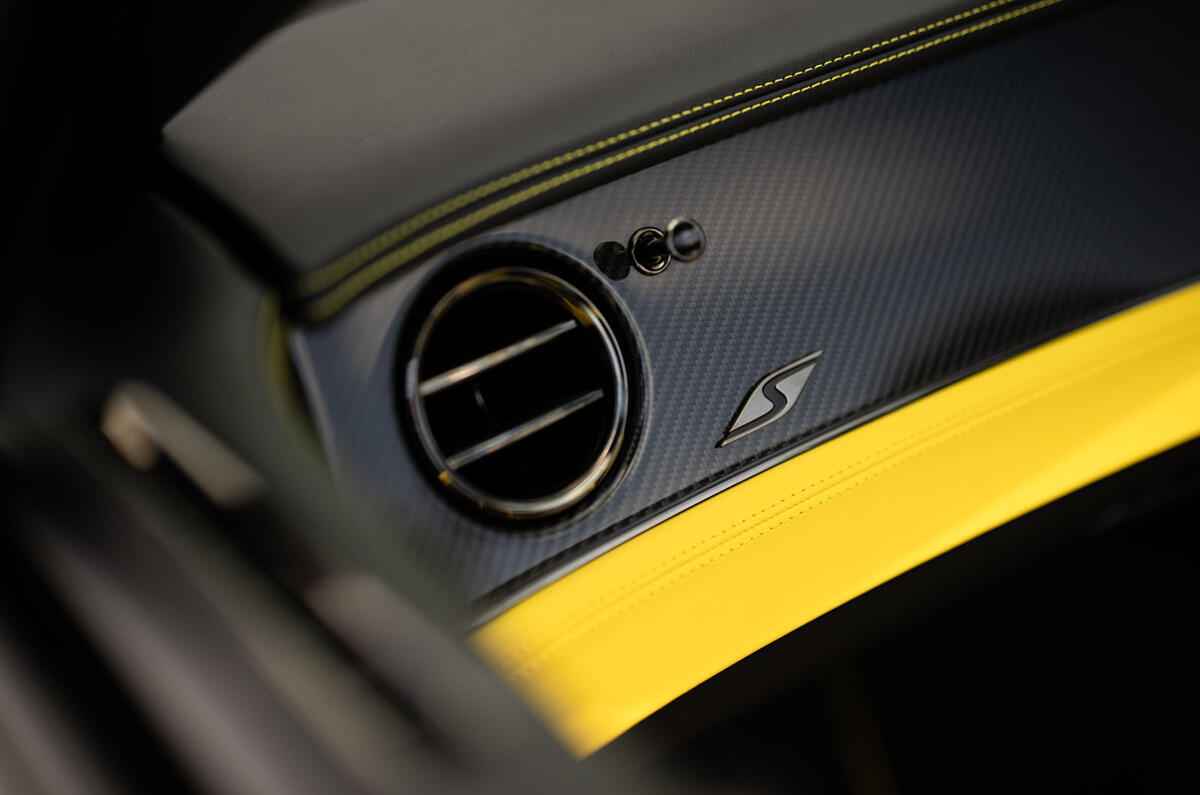
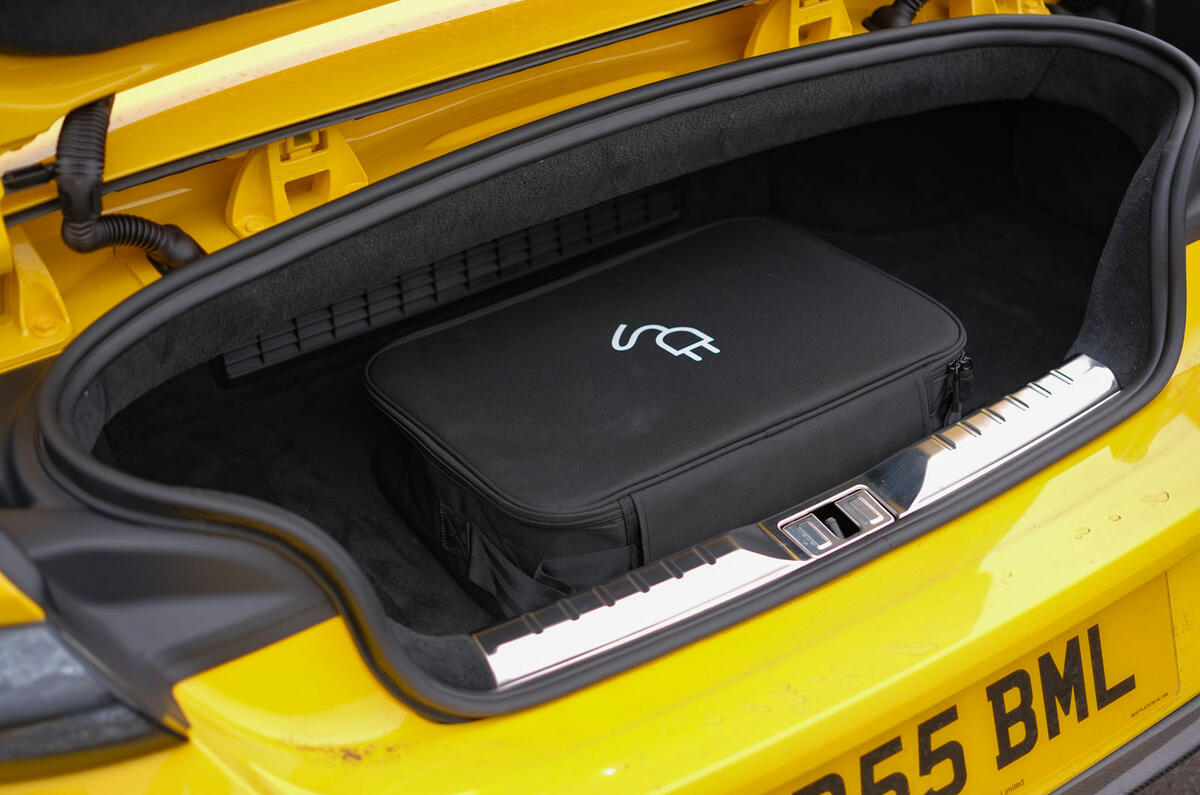
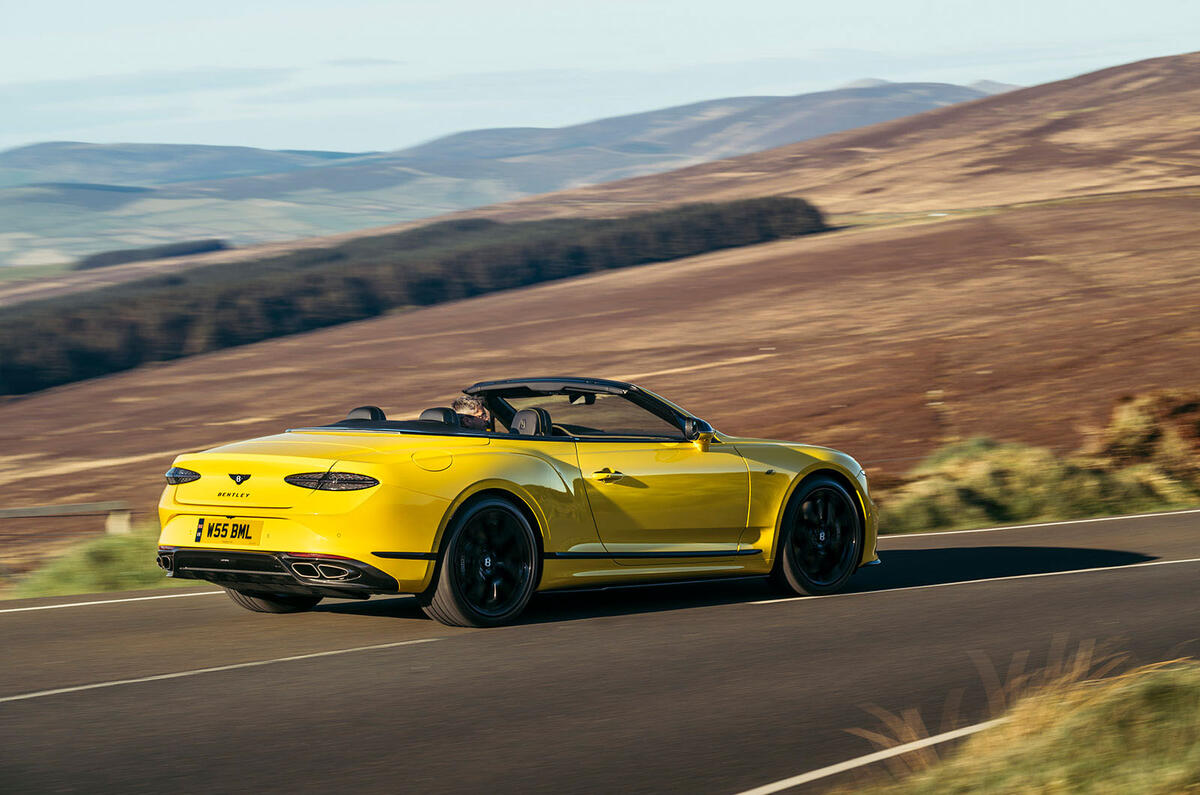
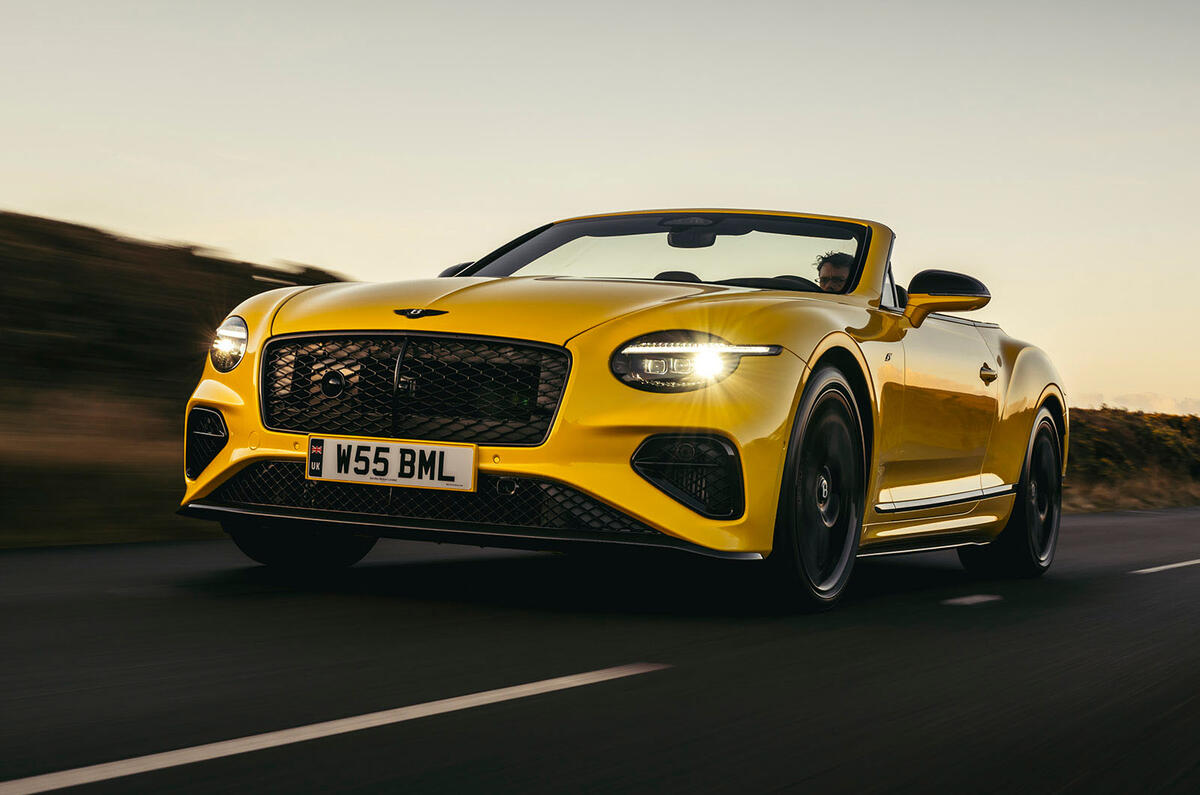
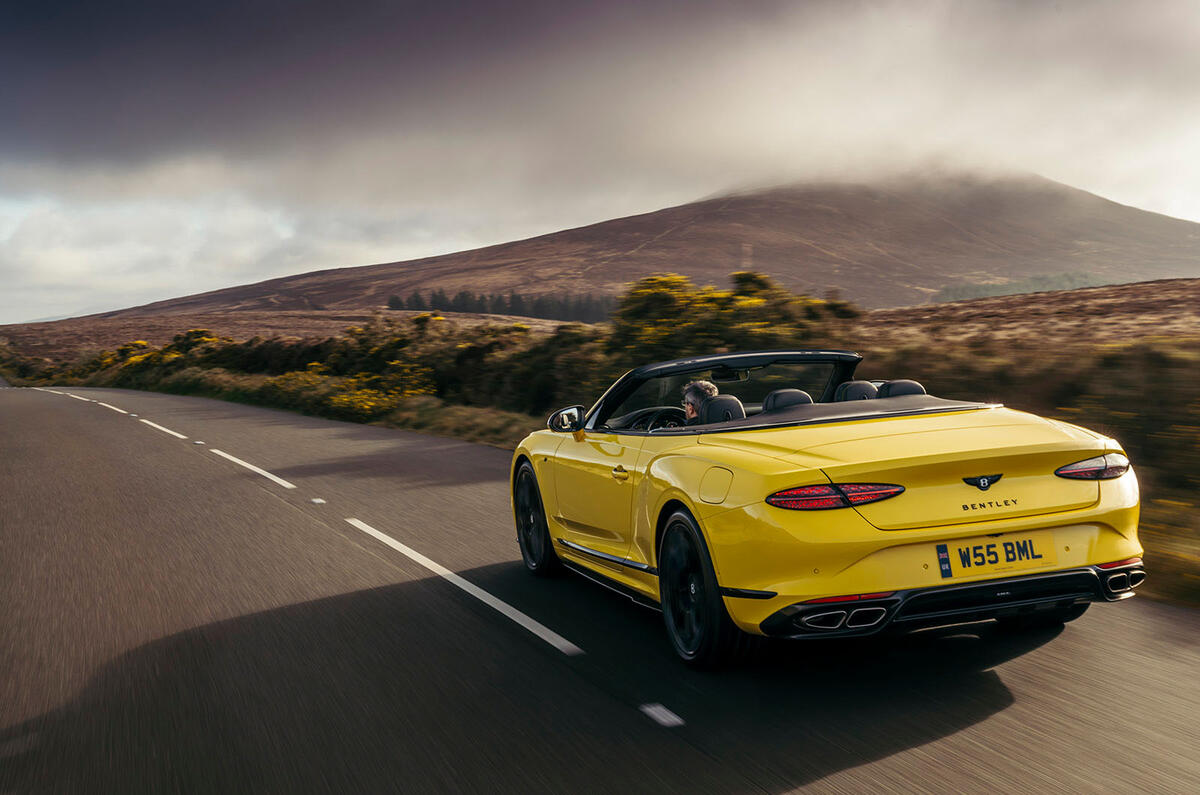
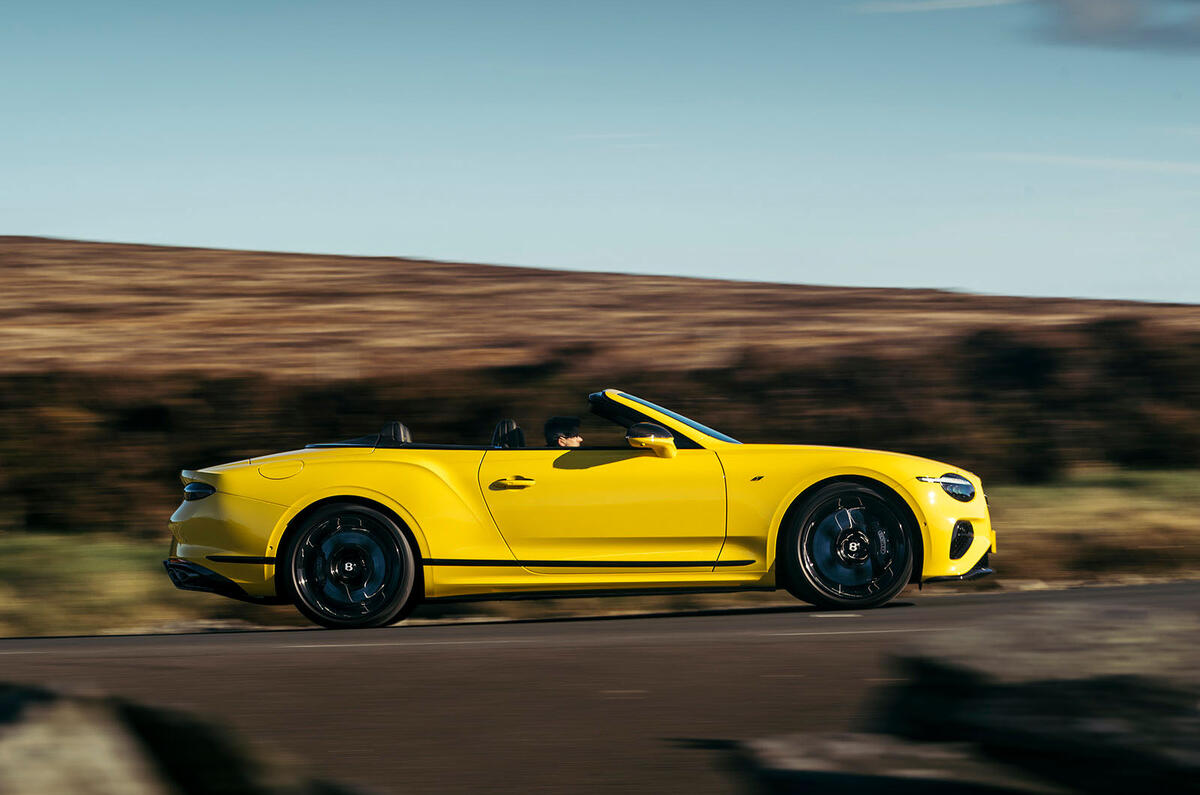
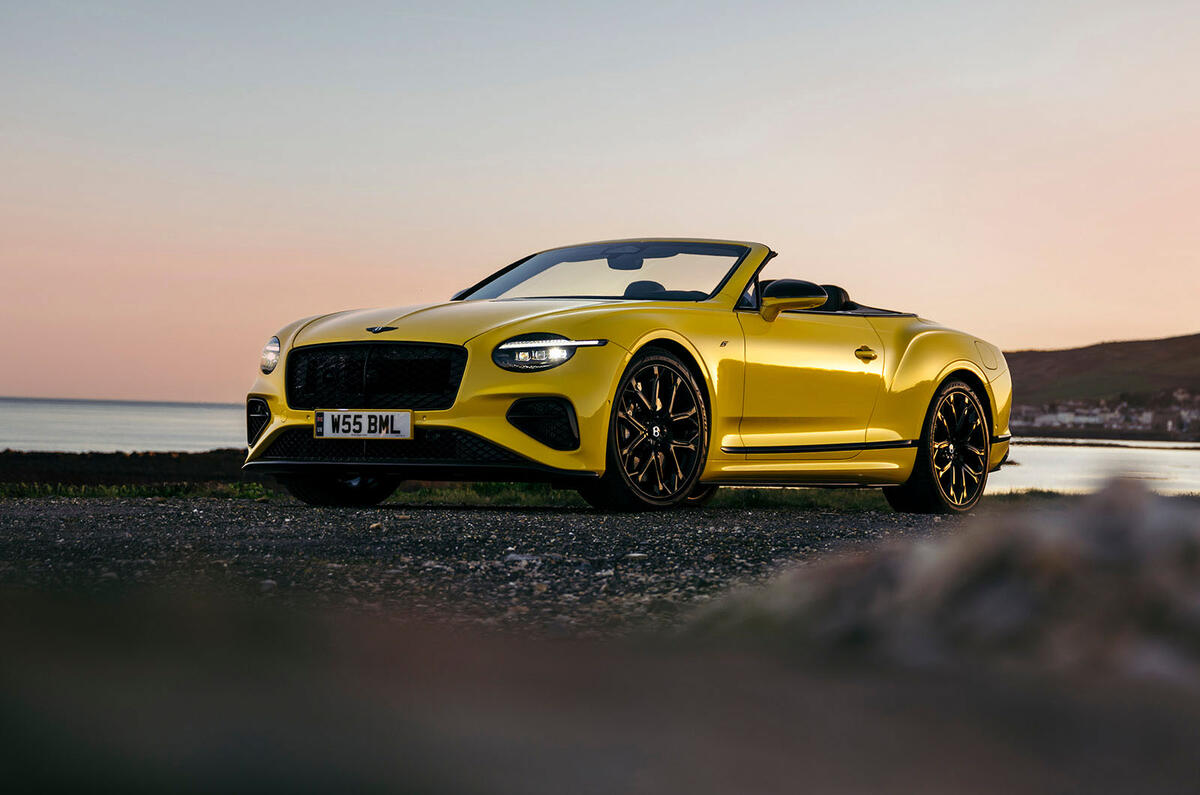
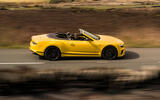
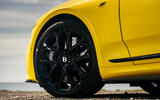
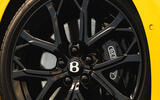
Meanwhile, the 25.9kWh battery sits not within the wheelbase but under the boot floor, chiefly to ensure the Continental GT, in all its guises, has a balanced weight distribution. This is something it achieves, but only with some limitations to the GTC’s usability, as we will shortly expound on.S-specific styling adaptations are light-touch and mostly relate to gloss black exterior panels, sportier sills and darkened brightware. However, when paired with an exterior colour like our test car’s Cyber Yellow, which pops against copious optional carbonfibre trim, there’s little doubt the car sits at the sportier end of the Bentley spectrum, in stark contrast to Azure-grade GTCs, with their lighter hues and wood.

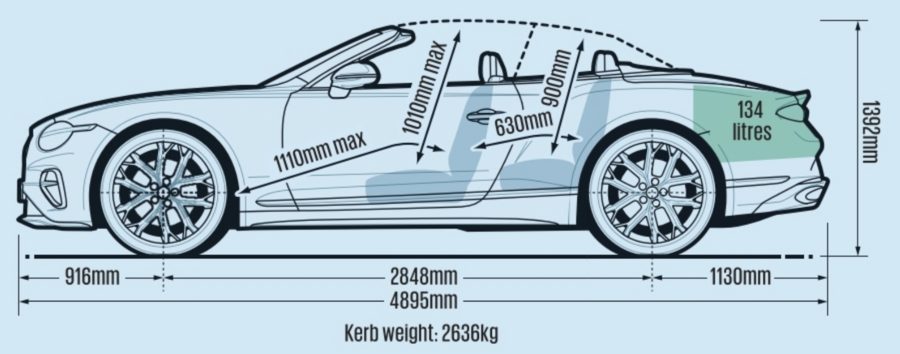
The weighbridge at Horiba MIRA was out of action for this test, but at 2459kg the homologated kerb weight for the S coupé is identical to that of the regular GT. For the C, with its seven-layer Z-folding roof and chassis strengthening, you can add 177kg. For the reasons stated earlier, genuine reference points are hard to come by but, for context, 2636kg for the Conti GTC S makes it 271kg heavier than the four-door Porsche Panamera Turbo S E-Hybrid with which it shares a powertrain.

INTERIOR

8
Bentley Continental GTC S 011

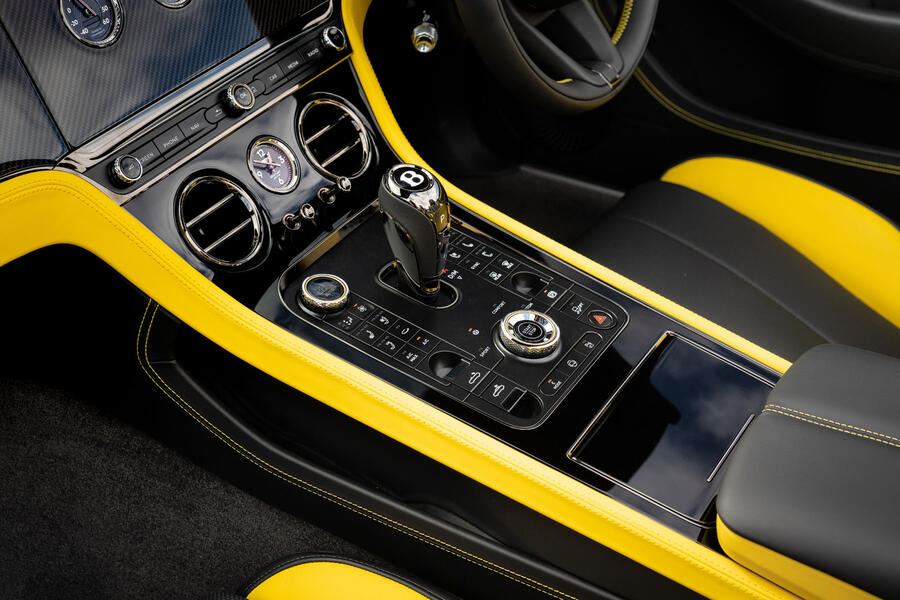
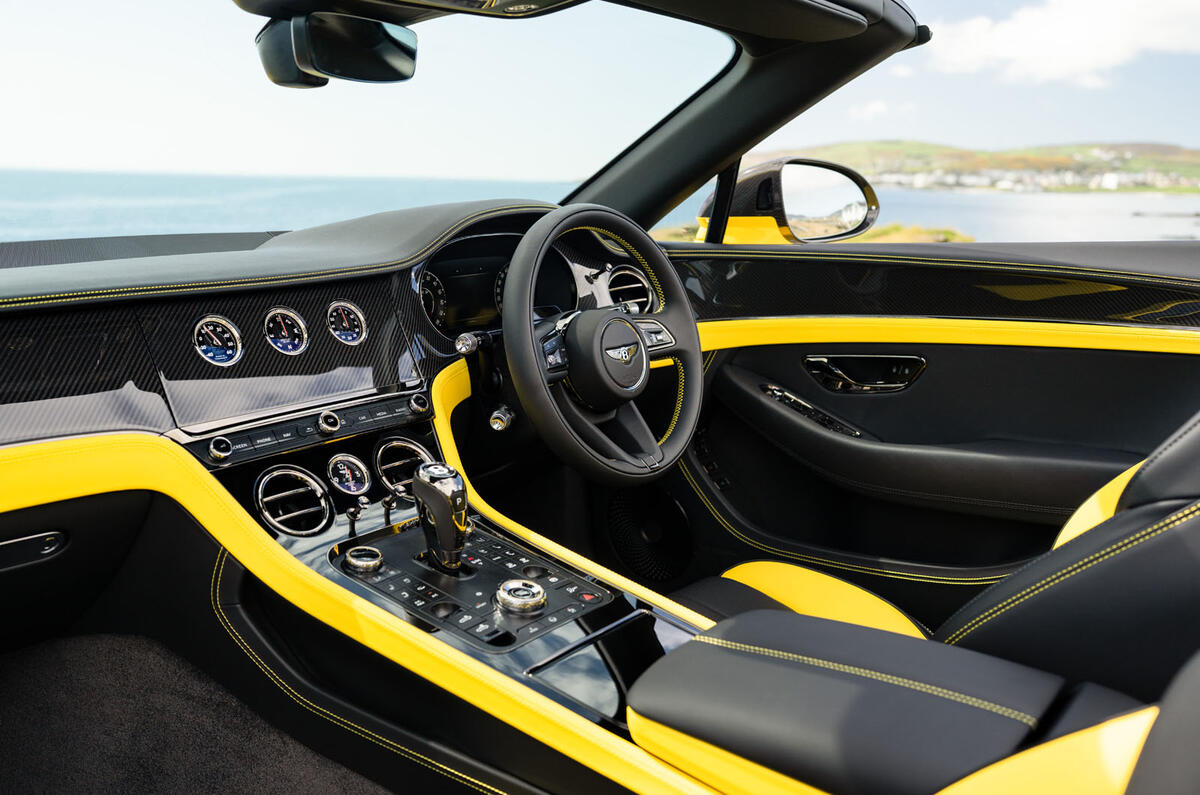
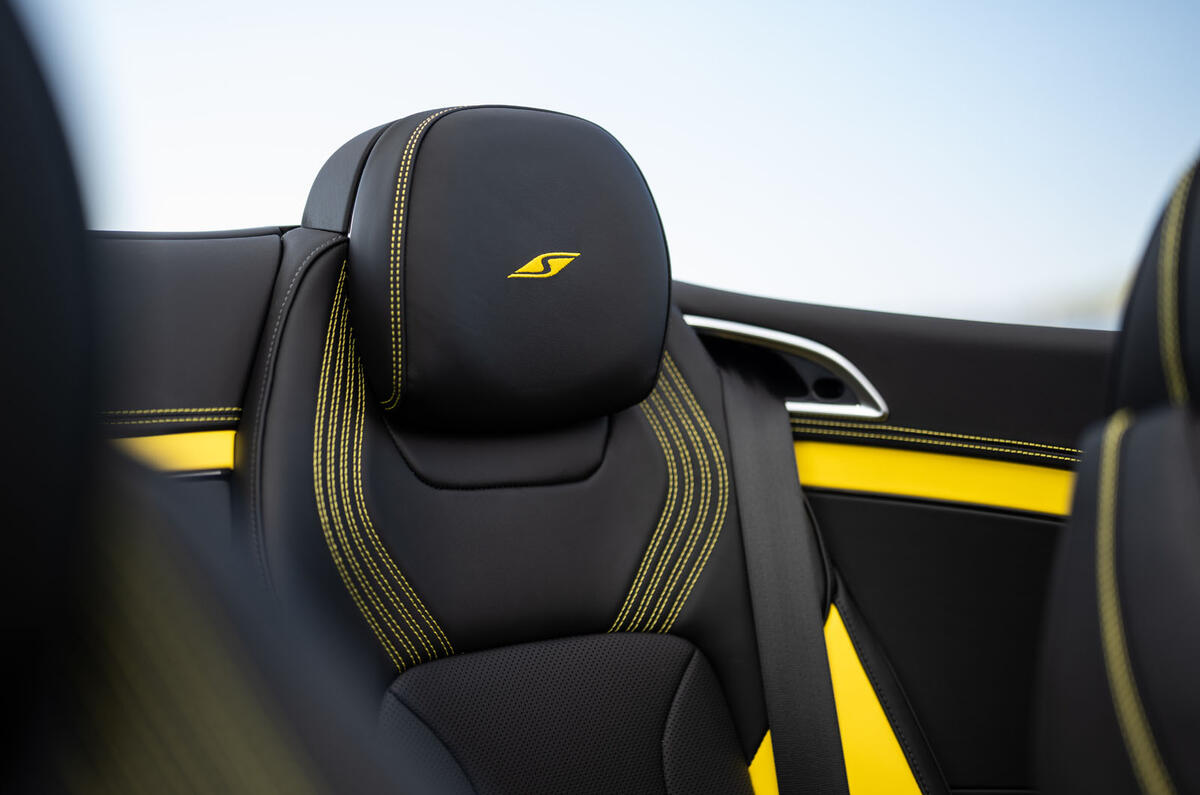
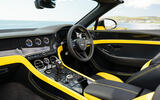
The GT S gets piano black veneer and microsuede upholstery as standard, but the full range of leather, wood, carbonfibre and aluminium remains available for those who aren’t fans of dust and fingerprints.

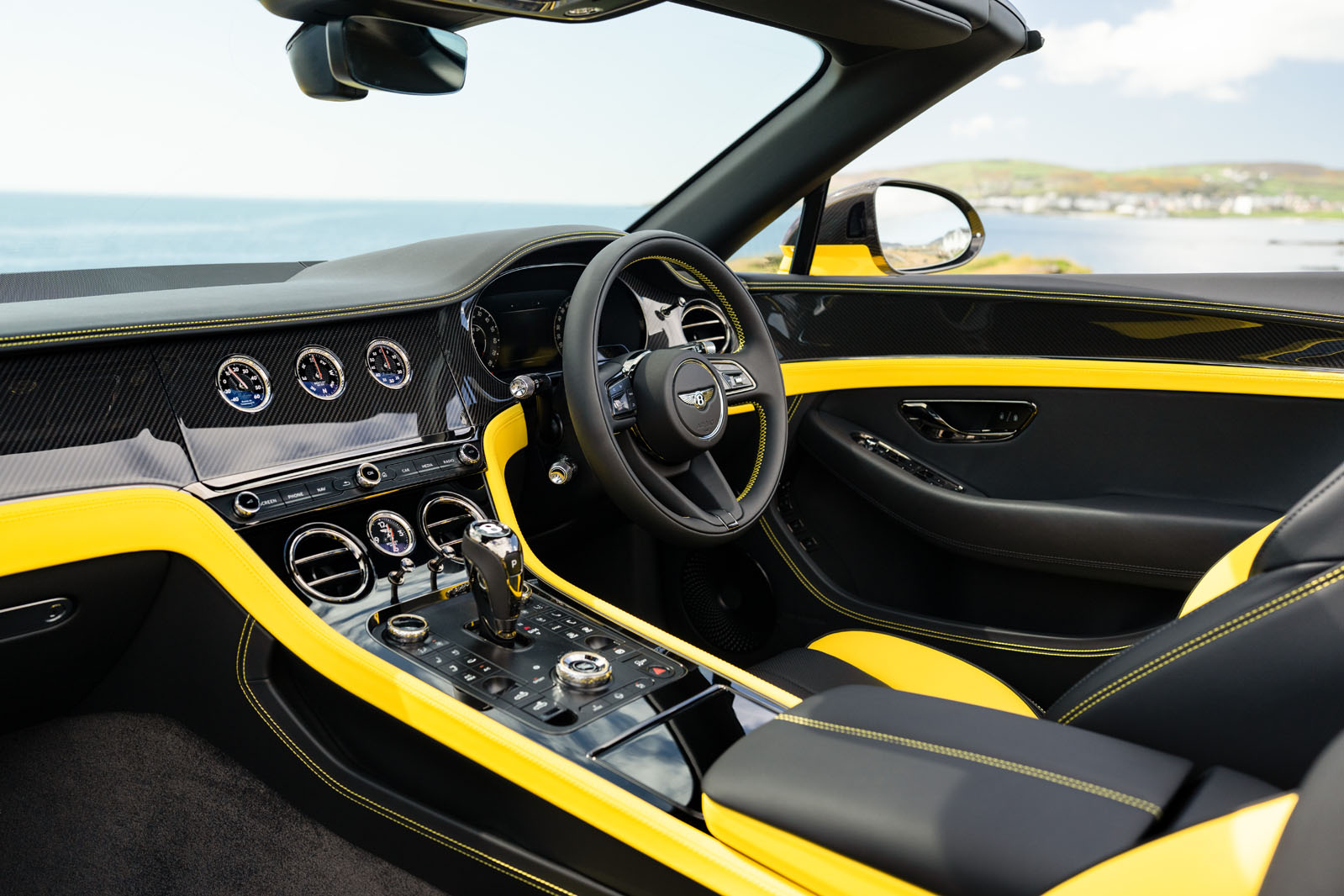
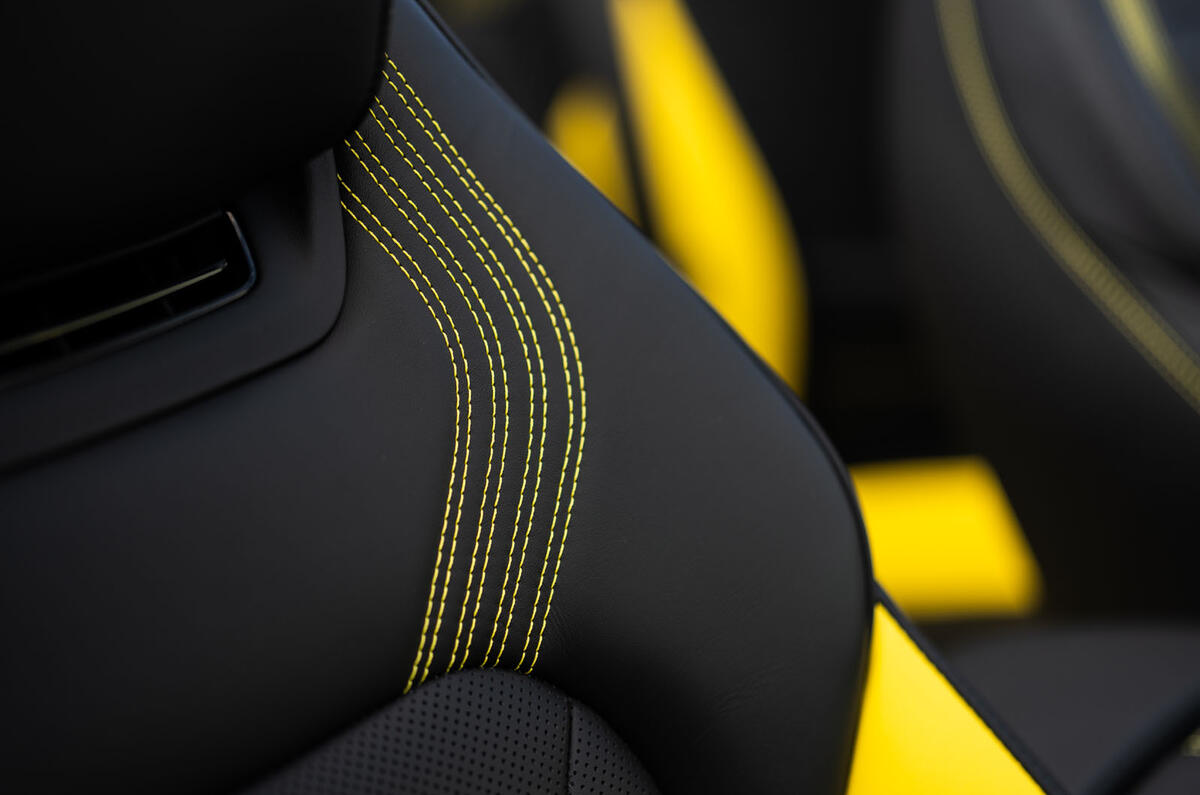
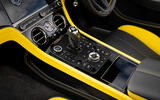
This particular car is slathered in carbon along with ‘Beluga’ leather, with plenty of embossed S logos, and also has the Touring specification package at a cost of £6035. This adds adaptive cruise control, night vision and a head-up display. Bentley now offers a bewildering array of these packages, including a Smoker’s specification, with a solid ash can in the front and cigar lighters at both ends of the cabin. Talk about a blast from the past, but nearly anything is available if you’re willing to pay for it, and quite rightly.

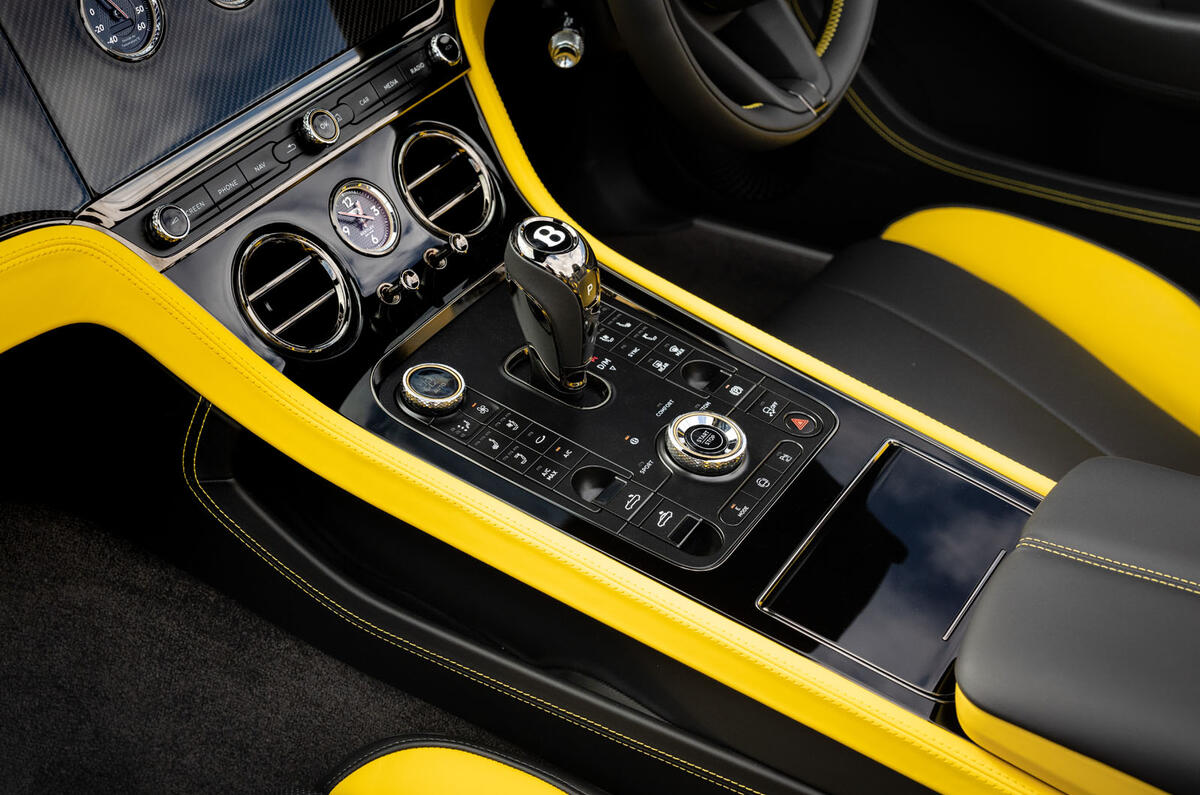
We won’t retread our tracks after the full road test of the GT Speed last year, but it suffices to say that the ambience and material lavishness of the current Continental’s cabin remain a true highlight of any journey. There are endless switches, buttons and dials, and while the digital array has been updated, its physical presence is no larger than it was for the previous-generation car – a judicious approach on Bentley’s part and one that helps retain a pervasive sense of privacy and calm in a cabin that equally wants nothing for modern functionality.

As for ergonomics, our road test rule showed that the convertible suffers no shortfall in head room – front or rear – compared with the coupé. And while the rear window is smaller on the convertible, the sheer size of the Conti GT ensures the back of the car never feels unduly claustrophobic, as can often be the way in cars with folding fabric roofs.

Anyone wanting to maximise the sense of light and space could also select one of the lighter hues from the eight-strong range of roofliners on offer – Magnolia or Camel would do the trick. And there are plenty of exterior fabric choices as well, including a tweed (though pairing this with carbon exterior trim would be strange to say the least).

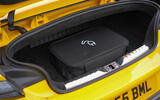
For a machine with deeply rooted touring credentials, where the GTC suffers concerns boot space. The floor is already high, with packaging considerations for an 80-litre fuel tank, the drive battery and what must be a substantial differential. The berth for the roof mechanism complicates matters further, to the extent that the official capacity of this shallow boot is just 134 litres. Rather implausibly, this is less than that offered by the frunk of a Ferrari 296 GTB, and is also less than what you will find in the similarly compromised Aston DB12 S Volante.

ENGINES & PERFORMANCE

8
Bentley Continental GTC S 018

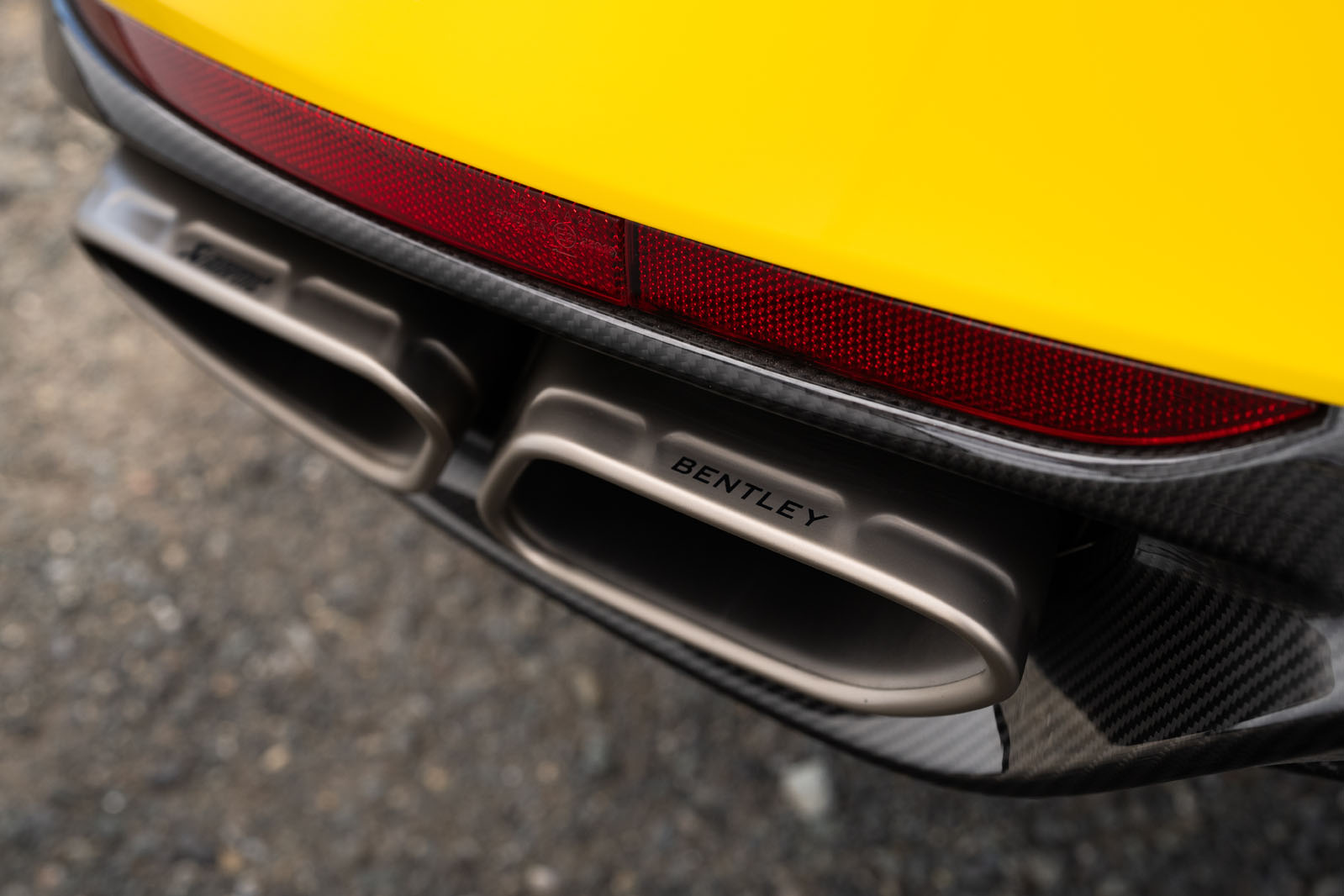
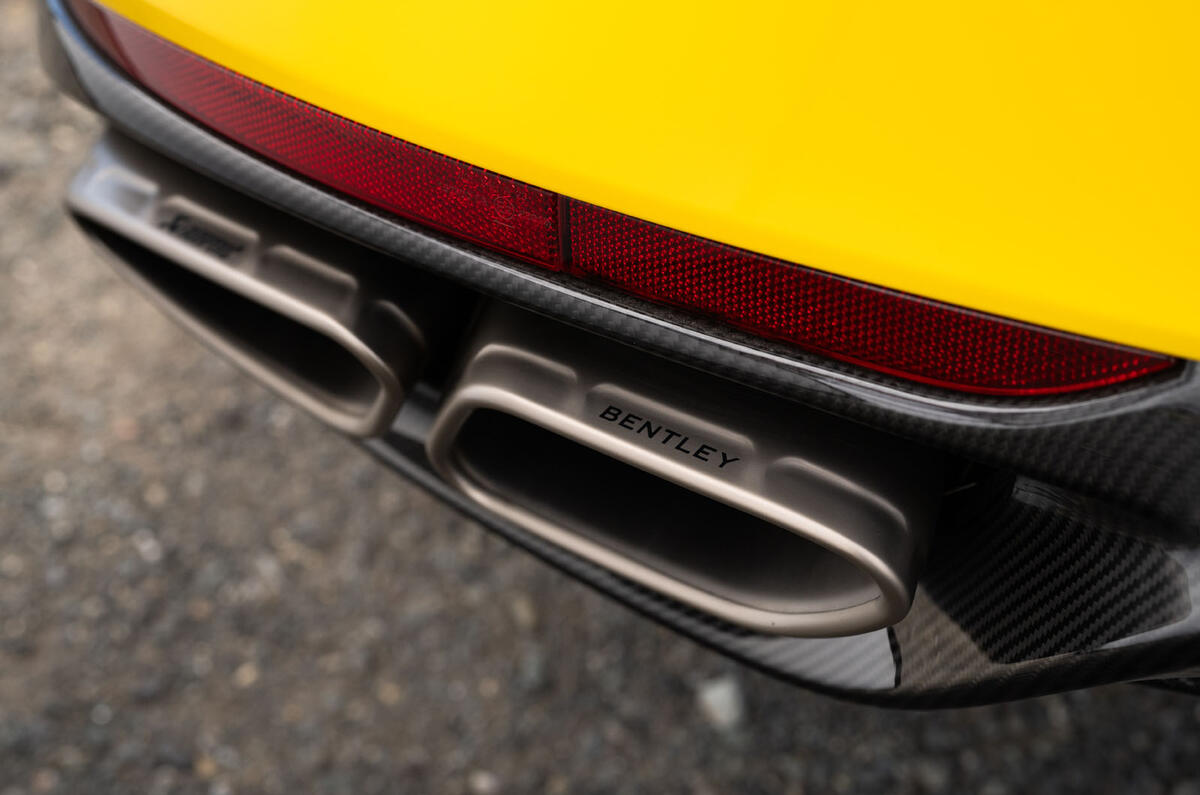
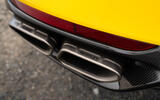
Open-air driving suits this generation of Continental GT especially well. The hybrid powertrain has the ability to enhance your enjoyment of both the burbling V8 and, if you kill it by hitting the E-Mode button, the serenity of the countryside you happen to be passing through. In fact it’s difficult to say which scenario appeals more. While our car’s Akrapovic exhaust ensures you’re accompanied by an omnipresent and effervescent ‘dirty woofle’, as one tester put it, it’s undeniable that silently gliding about, roof down and in an indulgent degree of luxury and refinement, is also special.

That said, one frustrating quirk of the powertrain is that, unless you are in Sport mode, the engine can oscillate between action and dormancy too often, particularly if the battery’s state of charge is very low. If you’re simply pottering down a country road, the combination of having no roof and the Akrapovic exhaust makes the V8’s frequent start-up reports extra-intrusive.

More generally, and as we have found with other Bentleys of this hybrid era, the faint lack of transparency in the behaviour of the ever-adapting regenerative braking and the electric-assisted acceleration don’t entirely suit a car of the Continental GT’s ilk. Previous generations had a fantastic sense of refinement underpinned by a muscular powertrain of charming simplicity and consistency. It made them superbly drivable cars, and while these new PHEV models are far from problematic in everyday driving, there is something that feels a touch overcomplicated about their machinations when you’re simply getting from A to B.

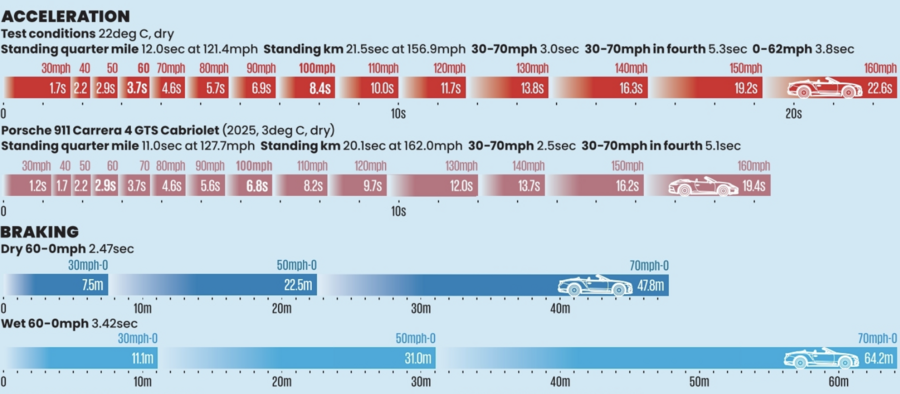
Mind you, there is nothing wrong with the level of performance on offer, either in terms of roll-on or standing-start acceleration. Our car needed 3.7sec to hit 60mph and just 8.4sec to hit 100mph. These are improbable figures for a five-metre-long convertible weighed down by an inordinate degree of leather and knurled metal, and while there will be some for whom the even quicker GTC Speed appeals more, there can’t be many of them among us.

Braking distances were a little longer than expected, and served as a reminder of the demands so much momentum puts on the Pirelli P Zero PNCS tyres. A figure of 47.8m from 70mph is 10-20% longer than you would extract from smaller and lighter rivals by Porsche, Ferrari and Aston Martin. Meanwhile, the 64.2m needed for the same metric in the wet is actually longer than our figure for the lighter-on-paper Land Rover Defender Octa. No doubt, the GTC should do better.

RIDE & HANDLING

7
Bentley Continental GTC S 019


While some car makers have moved into a realm where there is almost no discernible drawback to having the open-top option in terms of on-road handling, perhaps unsurprisingly Bentley hasn’t quite reached that state. As such, there are two ways of perceiving the Conti GTC, both of which are valid.

One says that this is a remarkably keen-handling machine given the forces involved and the sheer footprint of the thing. That it can be put down a reasonably smooth British B-road, at some pace, and provide a measure of satisfaction and enjoyment says a lot about the quality of the underlying engineering. The GTC finds an easy, reassuring on-throttle balance that marries with nearly unbreakable traction and invites you to uncork the V8 at will. With the roof down and the driver in the mood, it is thunderous entertainment and brutally fast point to point.

At the same time, the amount of weight involved, and the sheer scope of metalwork between the axles, soon puts paid to the idea of the GTC S as any kind of real driver’s car. Under duress the two ends don’t quite speak in unison, as they do in the coupé. It’s a characteristic you sense is exacerbated by the Speed-spec suspension, with its localised stiffness. We have previously described this set-up as a bit ‘terse’ on British roads and in this context it seems to highlight the limitations of the carved-open chassis.

Smoother Californian or European roads would no doubt be kinder to the GTC and the raw body control in Sport mode can still be something to behold, as can mid-corner pace when the rear steer transitions to stability-enhancing synchronisation with the front axle. But even then you might rue the current Conti GT’s strangely detached steering action, despite the weight being nicely judged. The tactility of the helm still can’t match that of pre-rear-steer-era cars.

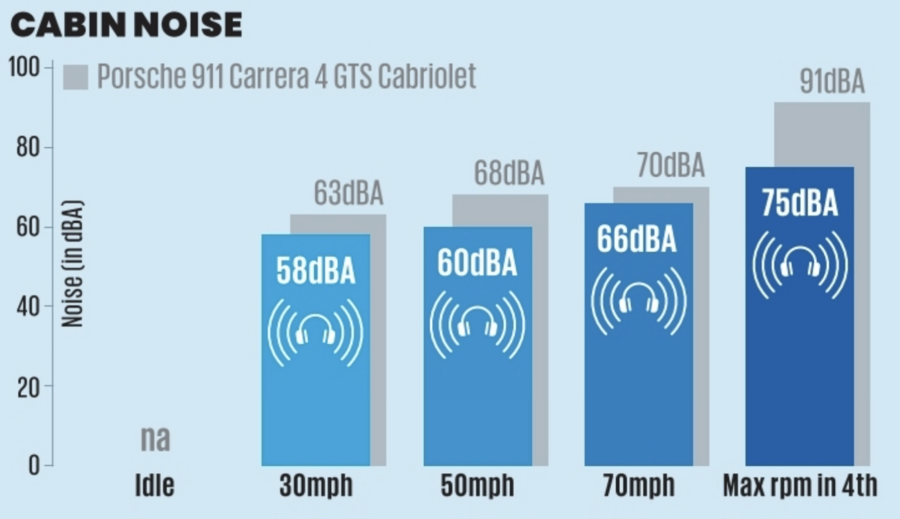
Beyond objective criticism are the GTC’s road manners relative to the coupé in normal driving. Compared with the hard-top Speed we tested, this S is essentially identical in its isolation at a cruise and easily quieter than any of the alternatives mentioned. The sense of pomp and serenity it generates in the outside lane of the motorway, with that characteristic Bentley waft, means draining the tank in one go is no sweat at all. With the wind deflector up, air turbulence is also minimal. If you were minded to, all-day drives al fresco wouldn’t be tiring on the ears, as they can be with alternatives.

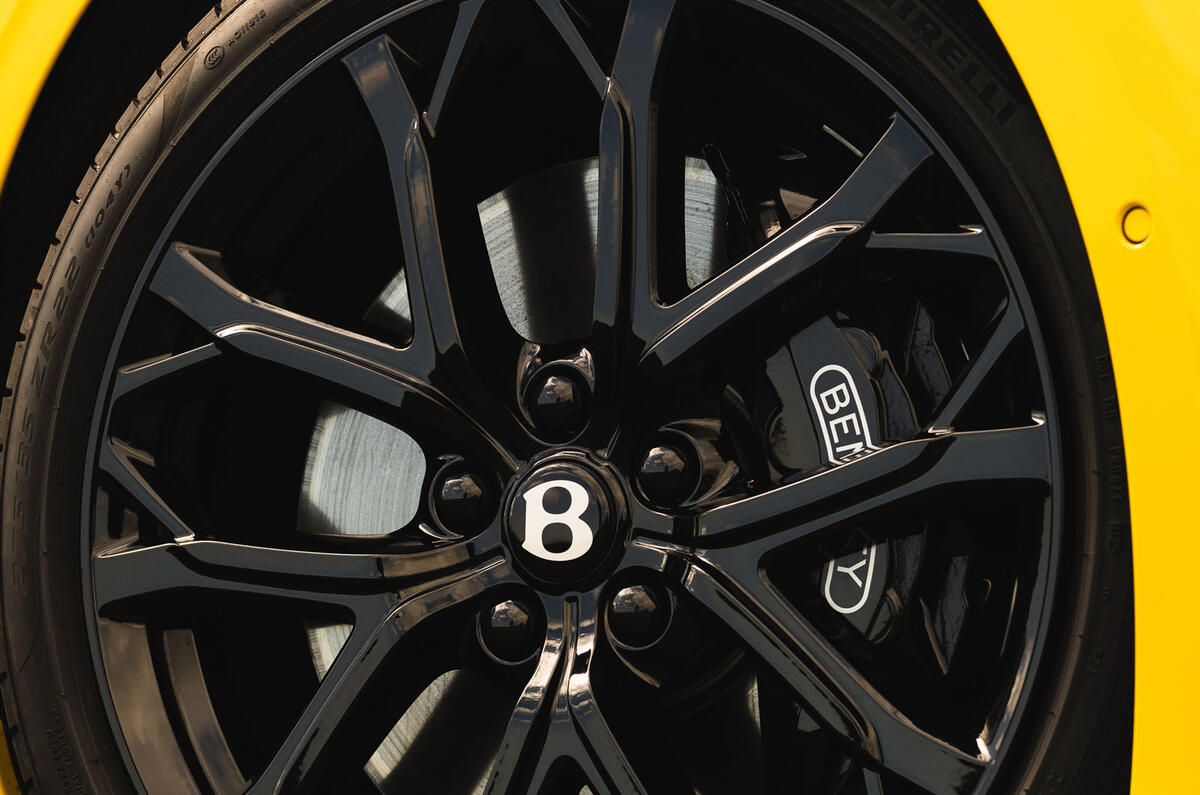
As with the handling, however, it’s true that the Conti GTC would if anything ride better on the regular chassis than with the Speed chassis. By sticking with the 21in wheels, the car might also round off the worst vagaries of the road a touch more insouciantly, and the more relaxed suspension tune would be more appropriate, more of the time.

MPG & RUNNING COSTS

8
Bentley Continental GTC S 001

he Continental GT wants to be the most luxurious option in the two-door sporting category, so it’s no surprise that the S is more expensive than alternatives from Aston Martin, Porsche and Ferrari. However, with it starting at a whisker over £235,000, the premium you’ll pay for the Bentley is perhaps not as great as you might expect, with the Aston DB12 Volante and Ferrari Amalfi Spider costing around £220,000. In other words there’s a straight trade-off here: the Bentley’s world-class opulence and refinement versus the genuine dynamic brilliance of the others. Arguably there is no wrong answer.

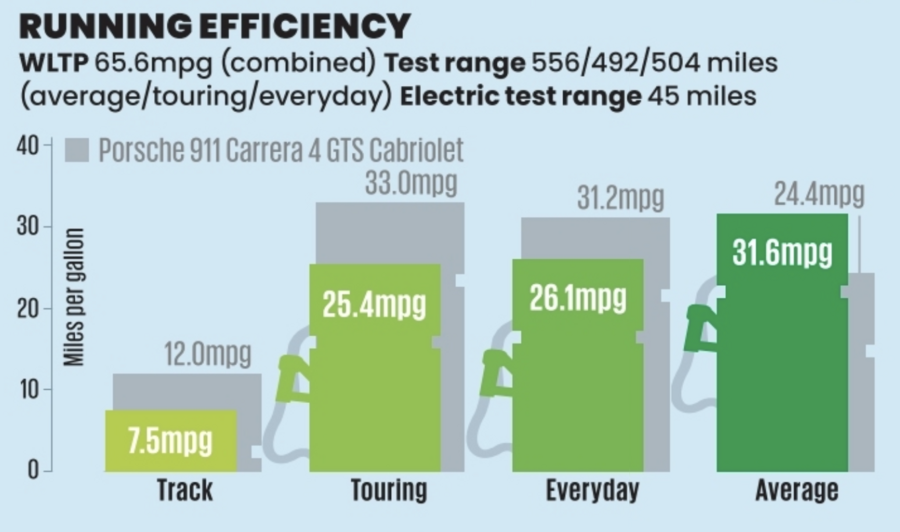
The Bentley is, of course, also a PHEV (not quite uniquely, because Mercedes-AMG will sell you an SL 63 S E Performance). The 25.9kWh battery pack provides meaningful range too: around 45 miles in the real world. It’s doubtful that the additional frugality the system generates over the long term will matter much to would-be owners, but the ability to slink away from home or hotel silently is a boon.

As for the V8, on a depleted battery it returned a touring economy of 25.4mpg, for a creditable cruising range of 447 miles. In everyday driving you might manage higher still, because charge is so quick to regenerate and the car will then deploy it to best effect. Our ‘everyday’ efficiency test returned 26.1mpg (still on an empty battery), and when the generous electric range was factored in our overall test average came to 31.6mpg.

So it’s a decently versatile car, but all testers felt the GTC would be better still in non-S guise. A standard GTC in, say, Silver Frost with a Portland interior and a Claret roof, riding on 21in ‘Ten Twin-Spoke’ wheels with ‘Open Pore Koa’ veneers and – go on then – the titanium sports exhaust would better capture the magnificence of the open-top Conti while costing meaningfully less. But equally there will always be those who want the more extrovert option.

VERDICT

7
Bentley Continental GTC S 023

As a luxury sporting convertible there’s little doubt the Continental GT, in fourth-generation guise, continues to hold monumental appeal. Perhaps even unique appeal, now that similarly large and opulent alternatives have fallen by the wayside. With the serious caveat that boot space is now smaller than ever, on account of the hybrid system, there are few better ways to take apart an hours-long drive or a flowing A-road in a bubble of refinement and opulence others can’t match.

That said, S treatment complicates things. With it, the GTC’s body control and accuracy is enhanced but not such that it notably improves the driving experience, given the obvious structural limitations. At the same time, ride quality, though very good, isn’t always at the level it needs to be. Our advice? Save ‘S’ for the coupé; leave the leisurely ‘C’ be.

Richard Lane

Richard Lane
Title: Deputy road test editor

Richard is Autocar's deputy road test editor. He previously worked at Evo magazine. His role involves travelling far and wide to be among the first to drive new cars. That or heading up to Nuneaton, to fix telemetry gear to test cars at MIRA proving ground and see how faithfully they meet their makers' claims. 

He's also a feature-writer for the magazine, a columnist, and can be often found on Autocar's YouTube channel. 

Highlights at Autocar include a class win while driving a Bowler Defender in the British Cross Country Championship, riding shotgun with a flat-out Walter Röhrl, and setting the magazine's fastest road-test lap-time to date at the wheel of a Ferrari 296 GTB. Nursing a stricken Jeep up 2950ft to the top of a deserted Grossglockner Pass is also in the mix.

Matt Saunders

Matt Saunders Autocar
Title: Road test editor

As Autocar’s chief car tester and reviewer, it’s Matt’s job to ensure the quality, objectivity, relevance and rigour of the entirety of Autocar’s reviews output, as well contributing a great many detailed road tests, group tests and drive reviews himself.

Matt has been an Autocar staffer since the autumn of 2003, and has been lucky enough to work alongside some of the magazine’s best-known writers and contributors over that time. He served as staff writer, features editor, assistant editor and digital editor, before joining the road test desk in 2011.

Since then he’s driven, measured, lap-timed, figured, and reported on cars as varied as the Bugatti Veyron, Rolls-Royce Phantom, Tesla Roadster, Ariel Hipercar, Tata Nano, McLaren Senna, Renault Twizy and Toyota Mirai. Among his wider personal highlights of the job have been covering Sebastien Loeb’s record-breaking run at Pikes Peak in 2013; doing 190mph on derestricted German autobahn in a Brabus Rocket; and driving McLaren’s legendary ‘XP5’ F1 prototype. His own car is a trusty Mazda CX-5.