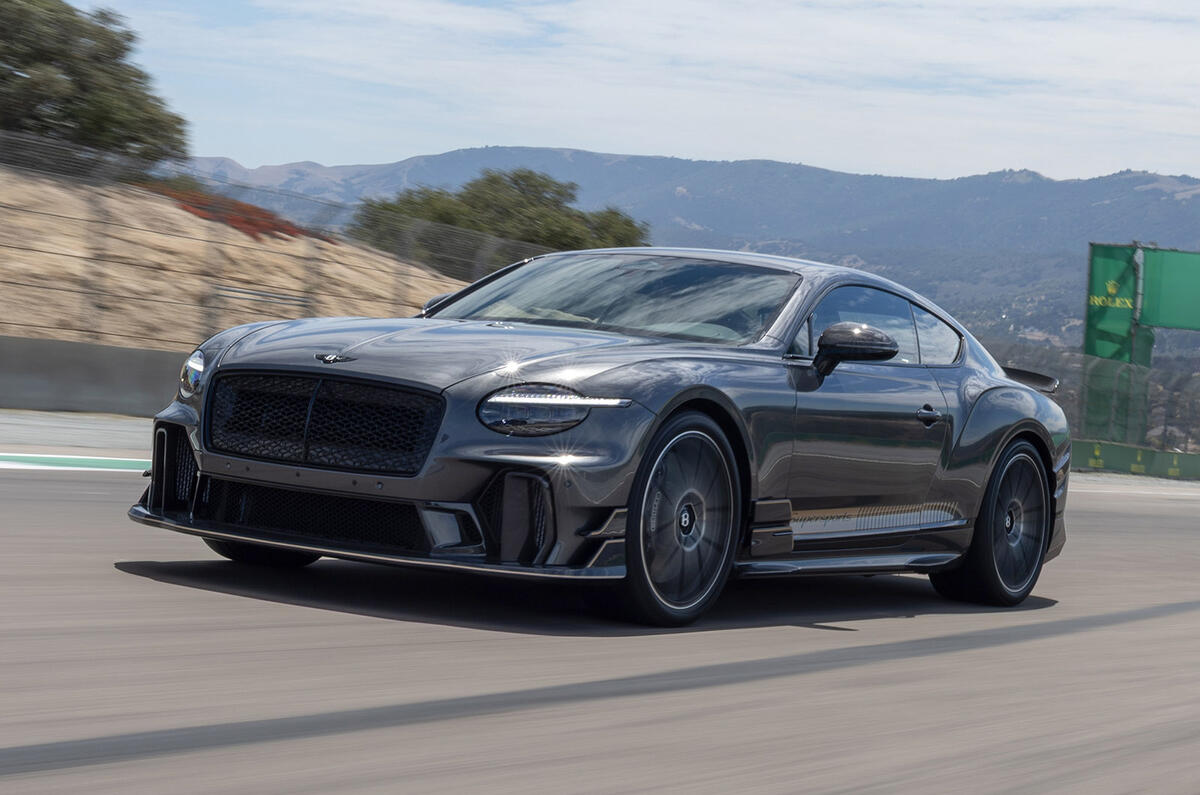
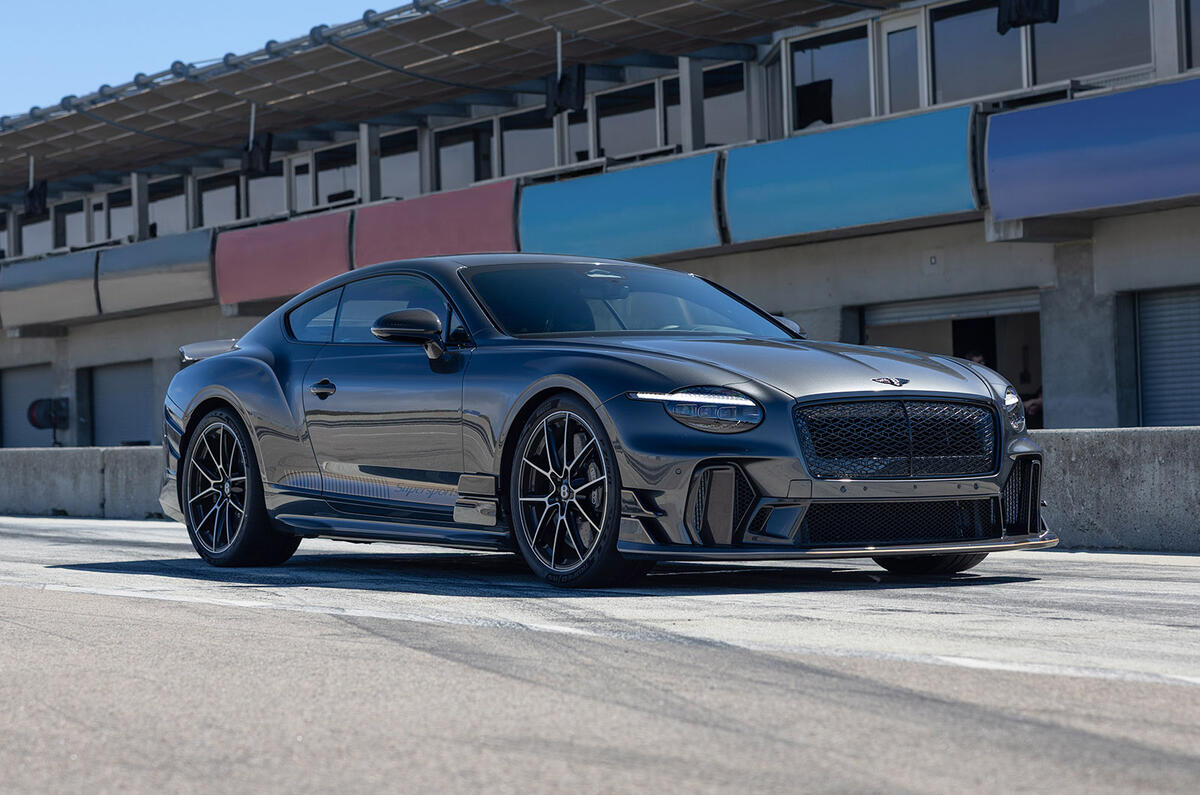




Bentley finally answers the call to make a simpler, lighter, quicker Continental – with indulgent results

Find Bentley Supersports review: a luxury missile that thrills on track deals
Other Services
Sell your car
84% get more money with

It’s unlikely that the latest addition to the Bentley Continental model range was born out of wondering how, exactly, to top the power-to-weight ratio of a Continental GT Speed. But if it had been, and you the bold/foolhardy young buck in the ideas meeting who’d suggested beginning by taking away a-hundred-and-something horsepower, you wouldn’t have expected to be listened to – or, even, gainfully employed – for very long.

But that, in one very simple sense, is what’s happened to the Continental GT in order to turn it into the new Bentley Supersports (note the dropping of the ‘Continental GT’ part of the model name here; perhaps simply because Bentley wanted the new one – in the spirit of the car – to be quicker to say). 

That’s an awfully long way from all that has happened to this car, mind you. Bentley has never before demonstrated anything like the commitment to serve the interests of keen drivers that it has just shown by bringing to the brink of sale this very special, at-least-relatively-lightweight, two-seat Continental. 

The new Supersports – only 500 examples of which will be made, with deliveries beginning just before the end of 2026 – has been championed by former Porsche executive turned Bentley CEO Frank Walliser as something of a catalyst. A means of demonstrating the untapped capabilities of his company; the latent potential of its cars; and the readiness of its customer base to embrace special derivatives of first-order performance flavouring. It handles the first two feats pretty well, in this tester’s estimation. The hot-ticket sales reception with which it has been met suggests the third is something of a formality.

Advertisement
Back to top


DESIGN & STYLING

Bentley Supersports review 2026 002

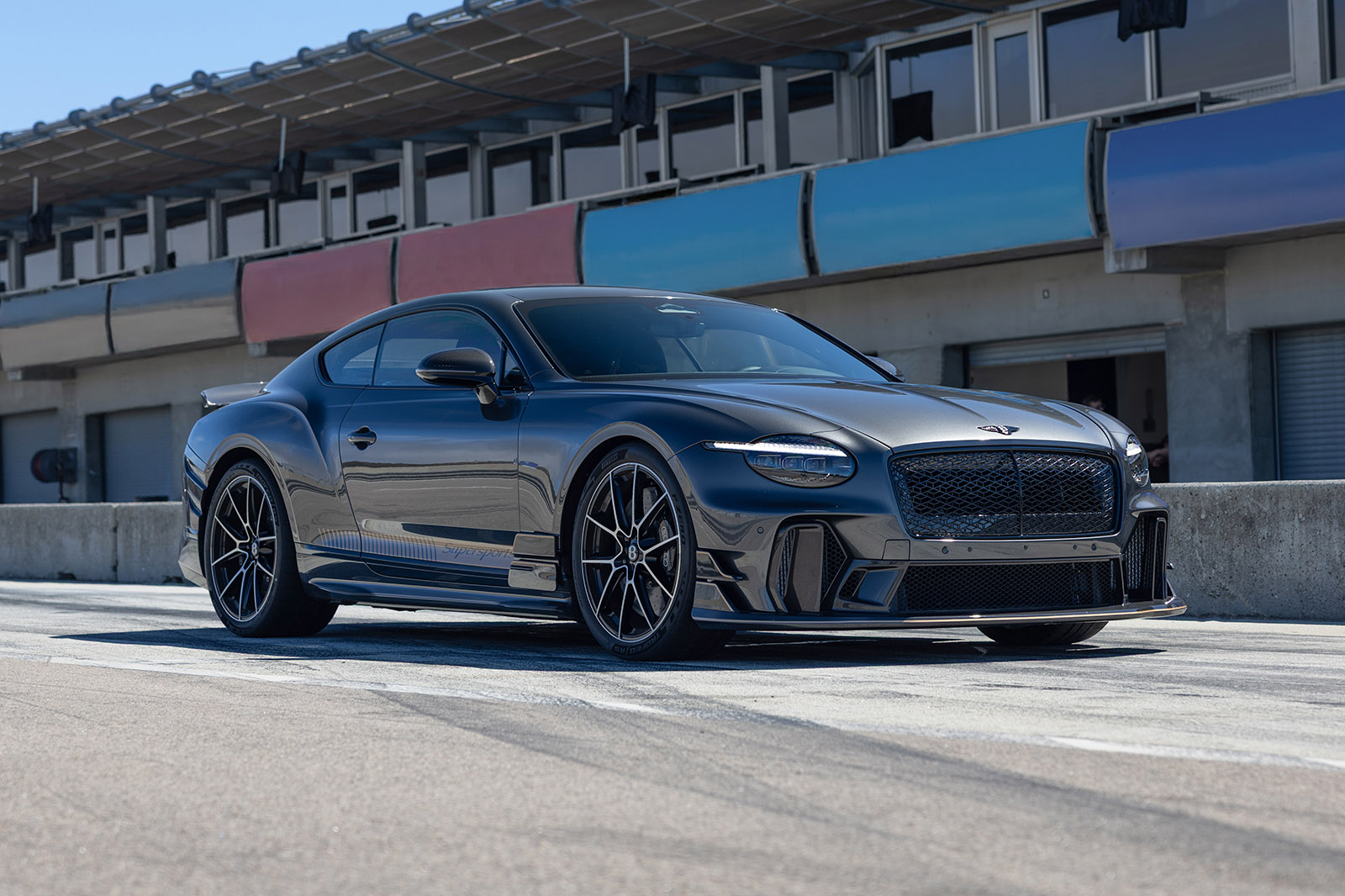
The make-up of this car is a potent demonstration of what can be achieved with low-volume specials for firms like Bentley in 2026. It also shows the enduring power of ‘less is more’ subtraction when it comes to performance engineering. In essence, the Supersports is a Continental GT without its plug-in hybrid system, back seats and forward driveshafts and four-wheel drive system. 

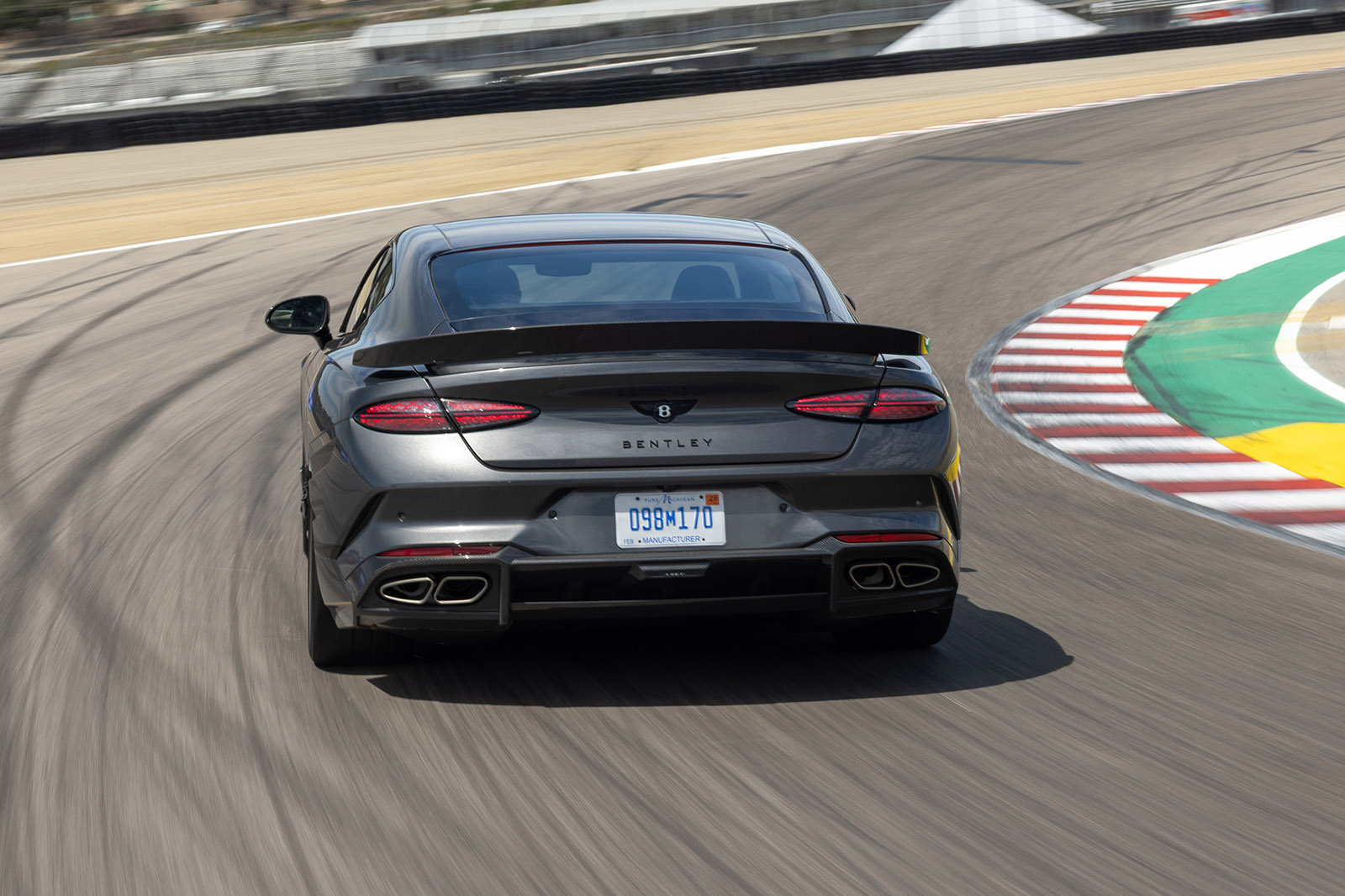
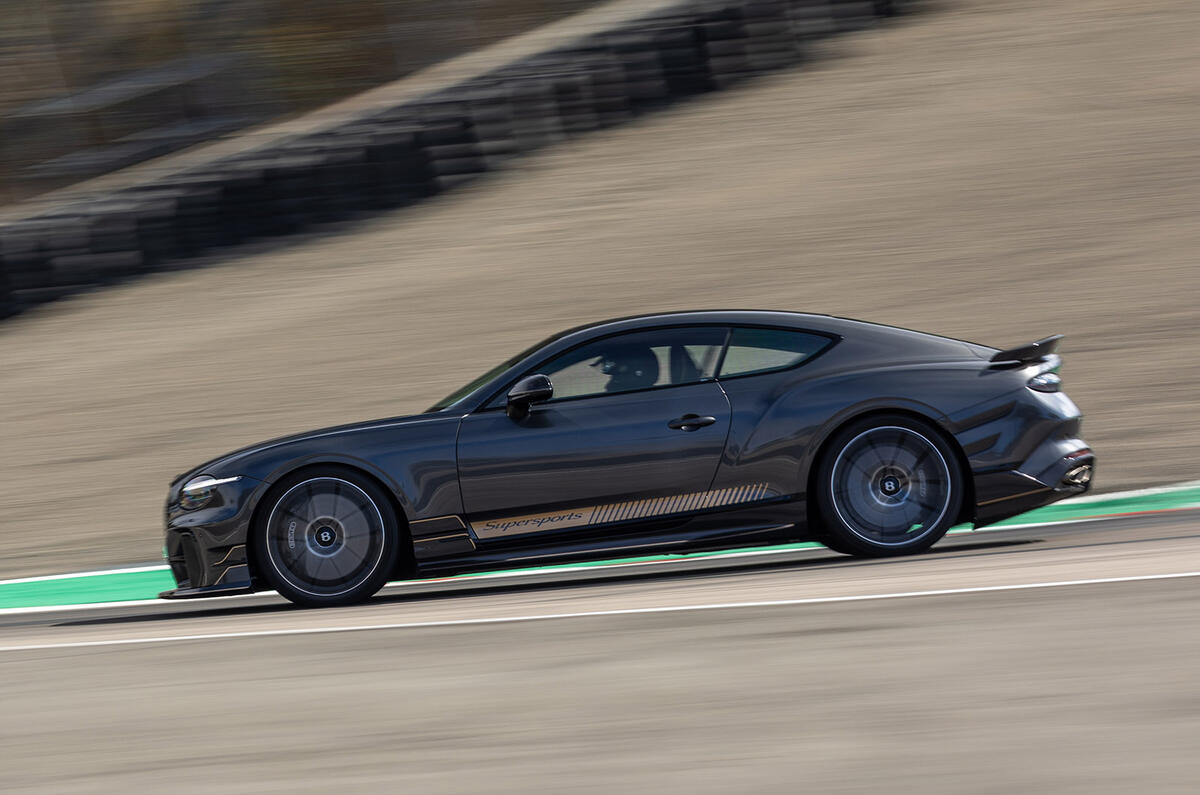
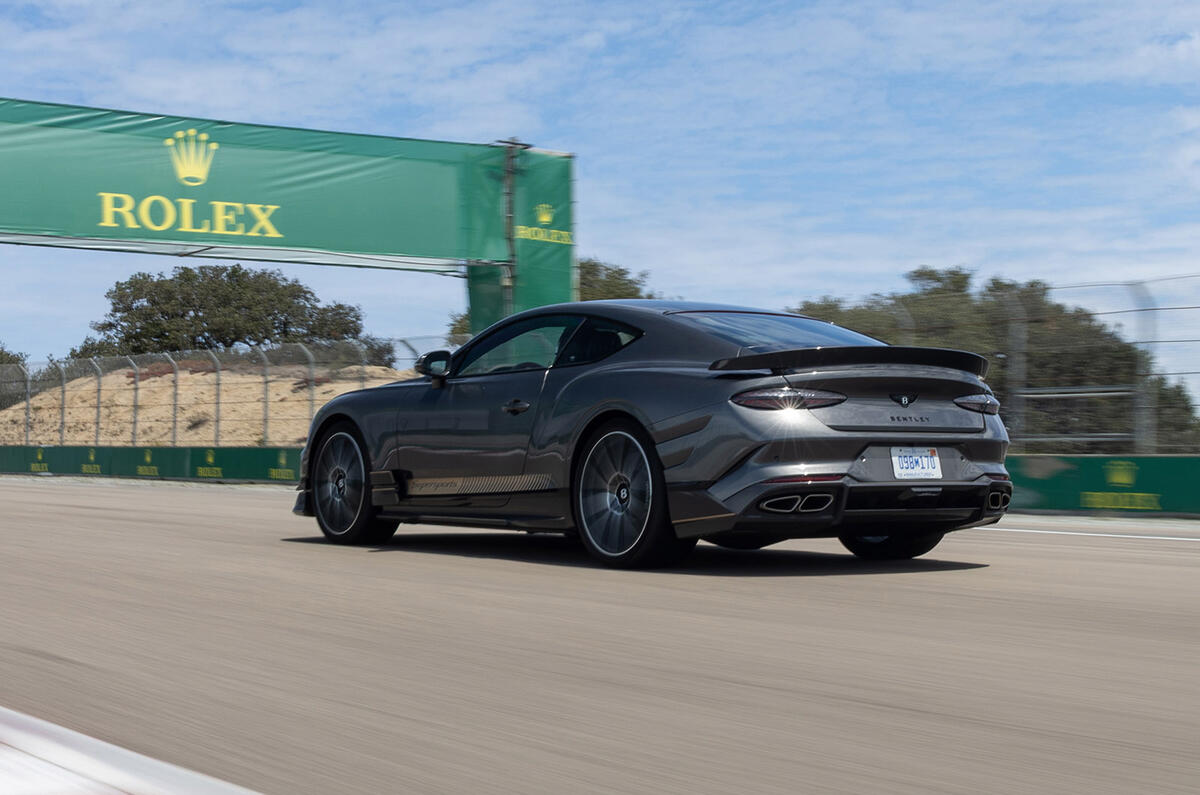
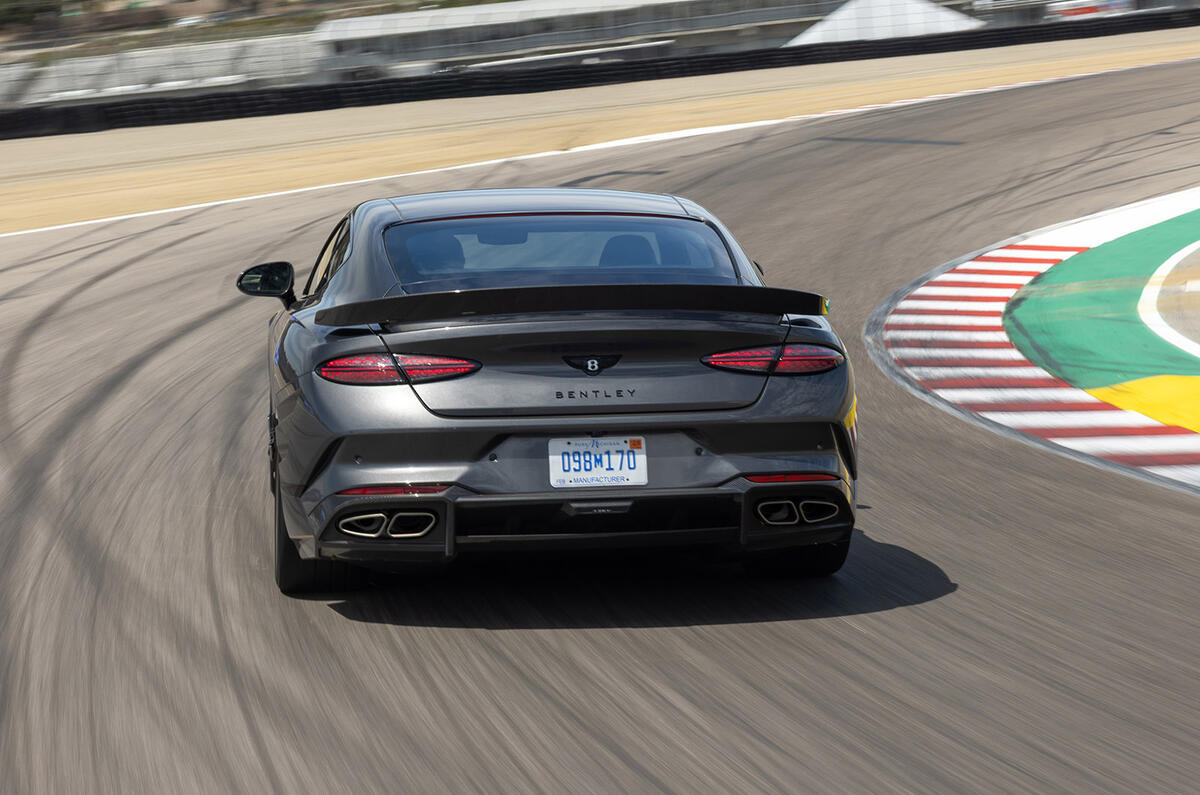
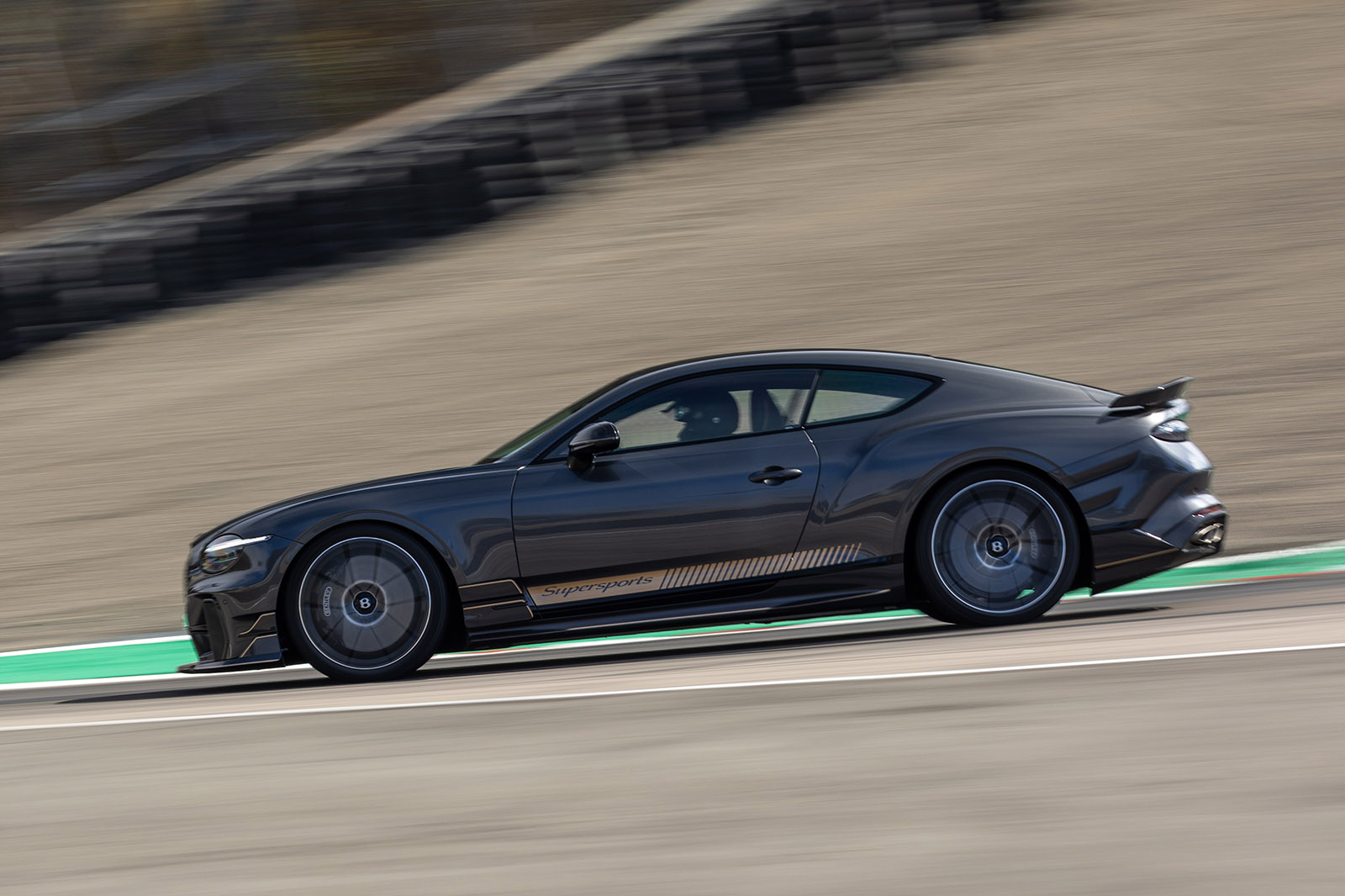
Taking out the hybrid system’s rear-mounted battery created a bit of a weight distribution problem for the Supersports. Bentley’s addressed it with the car’s large bootlid spoiler, which puts the lion’s share of the car’s 300kg of downforce ‘back’ over the rear wheels. Clever.

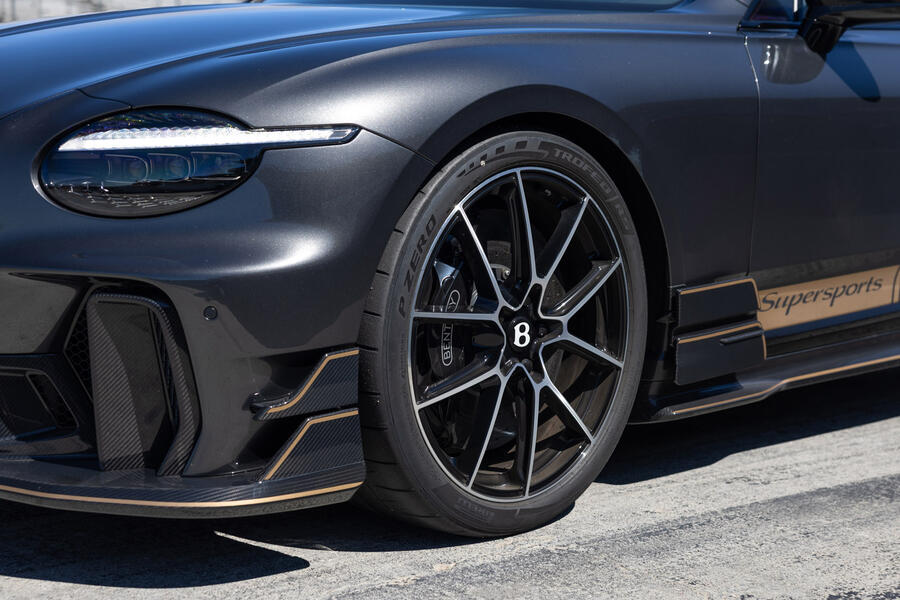
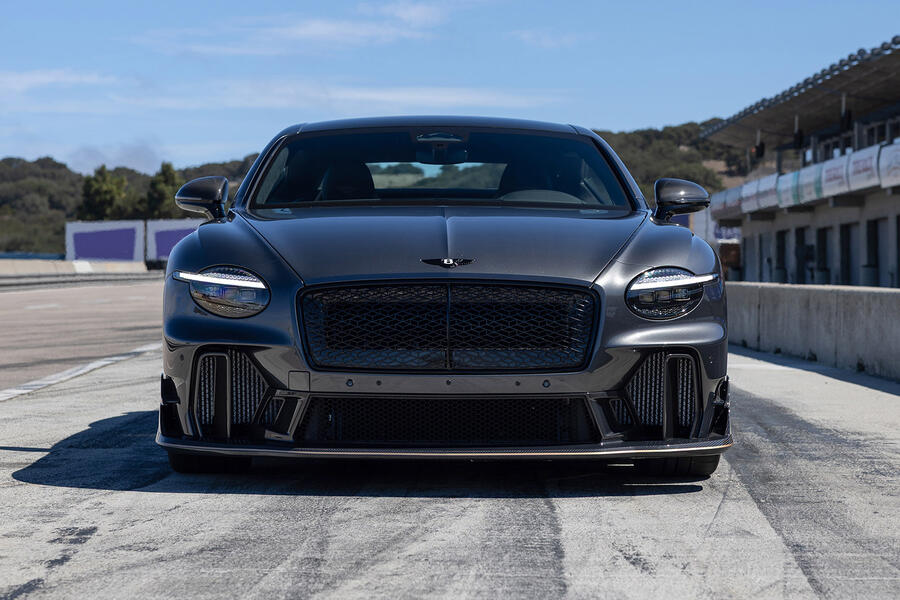
What is does have is a widely upgraded, 4.0-litre twin-turbocharged V8 engine, which, compared with the regular GT’s V8, has bigger single-scroll turbos, a stronger crankcase and a new cylinder head. There's also a lightweight exhaust system, lightweight forged wheels from worshipful Porsche tuning outfit Manthey, a carbonfibre roof, plenty of downforce-generating bodywork, carbon-ceramic brakes and Pirelli Trofeo RS semi-slick tyres. 

This is the first two-wheel-drive Continental GT there has ever been. It’s also the first sub-two-tonne road car that Bentley has built in eight decades. Its power-to-weight ratio is 329bhp per tonne – to the 2.45-tonne GT Speed’s 314bhp per tonne. Eat that, electrification.

This is also, incidentally, the only Continental GT of the current generation that won’t go through normal-series homologation (because of the specialisation and volumes associated), instead finding its way to the road, in the UK at least, via single vehicle approval. That means Bentley can leave off some of the ADAS and driver monitoring systems.

INTERIOR

Bentley Supersports review 2026 004

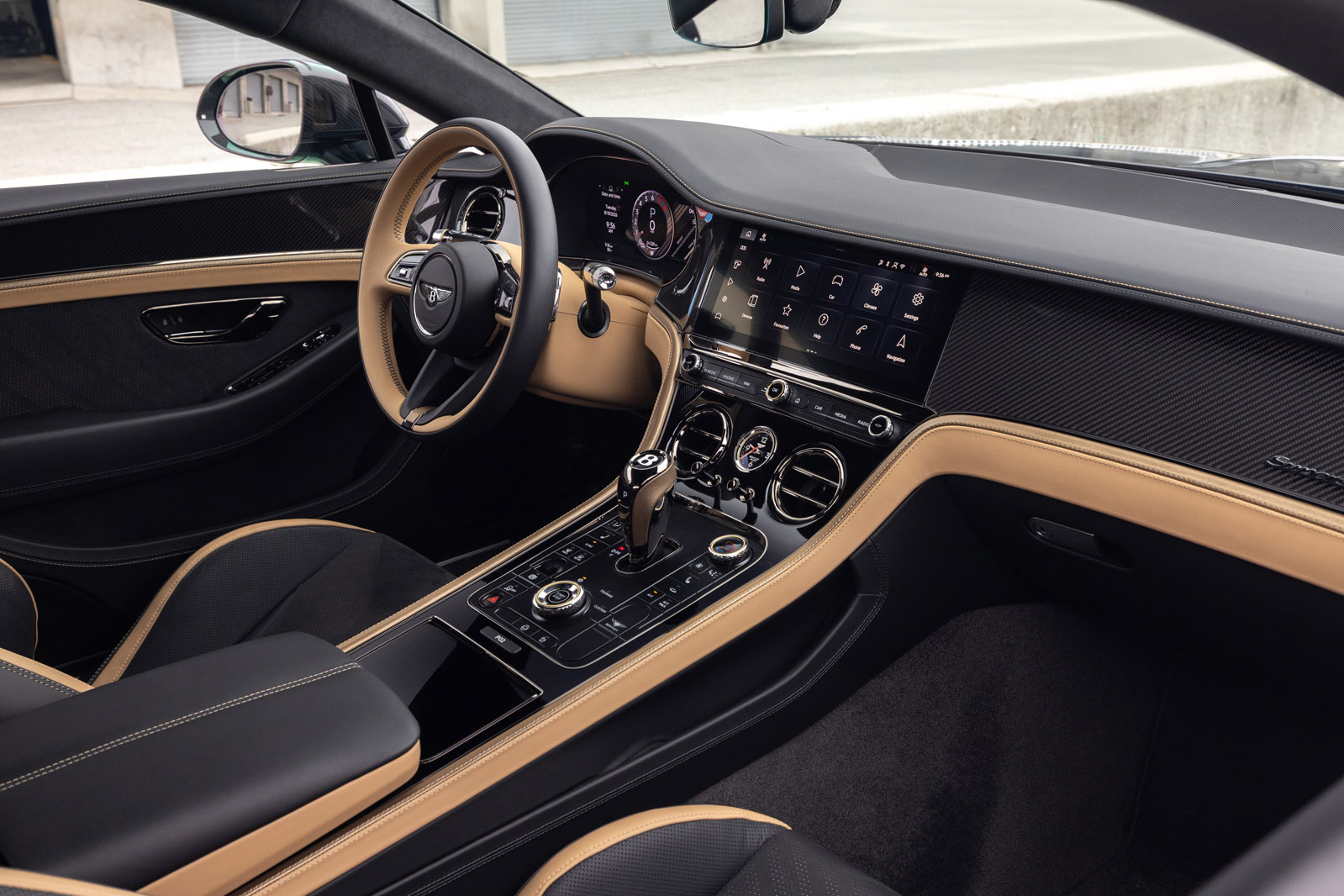
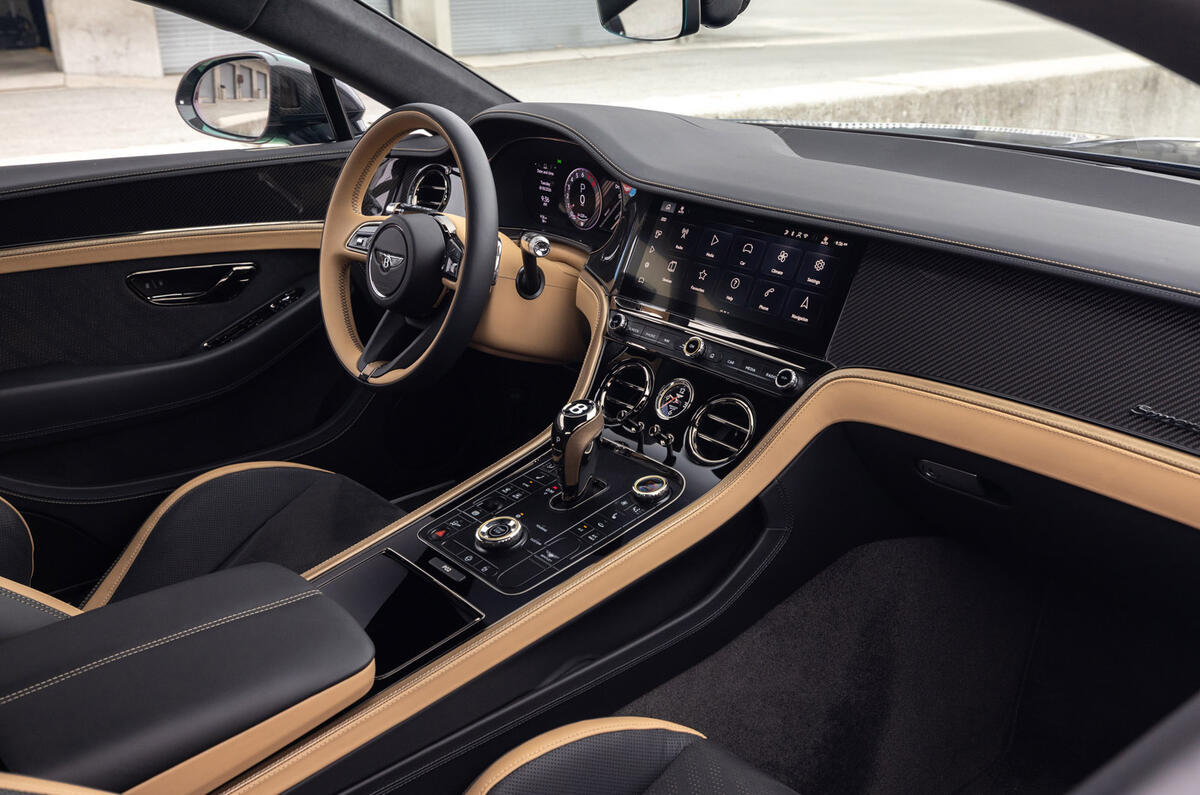
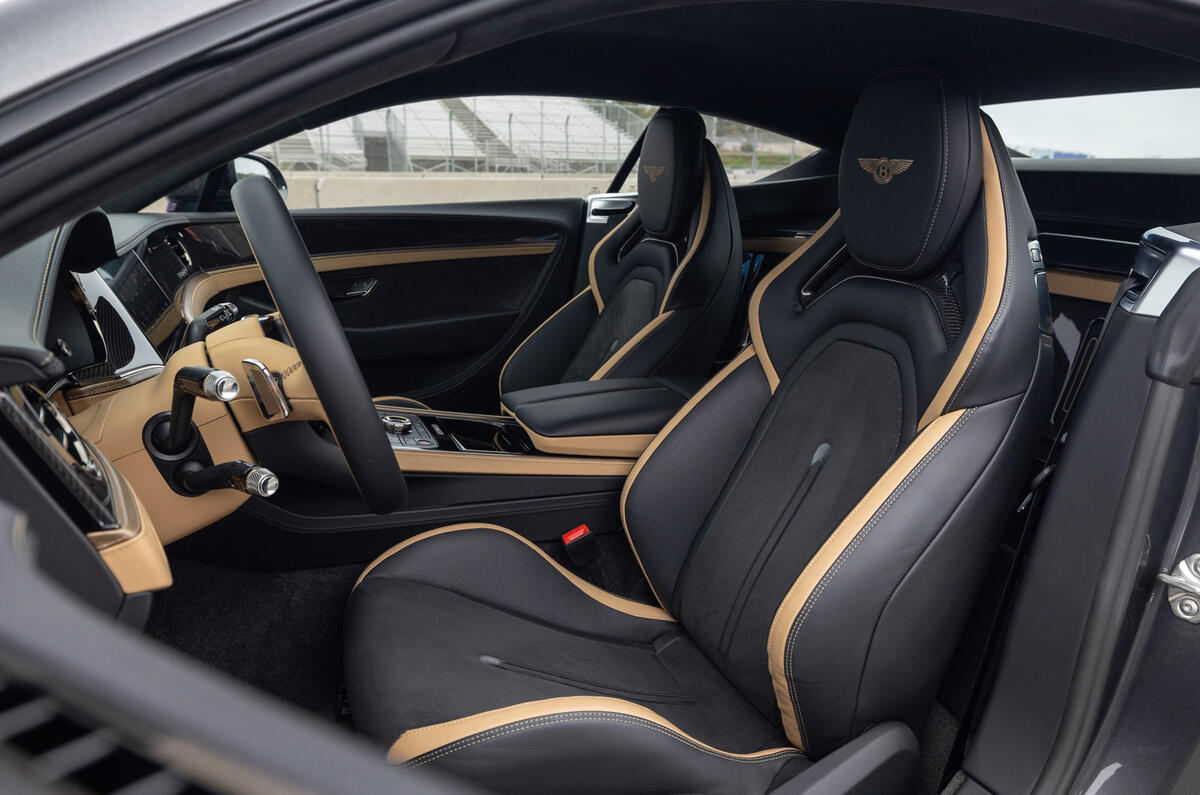
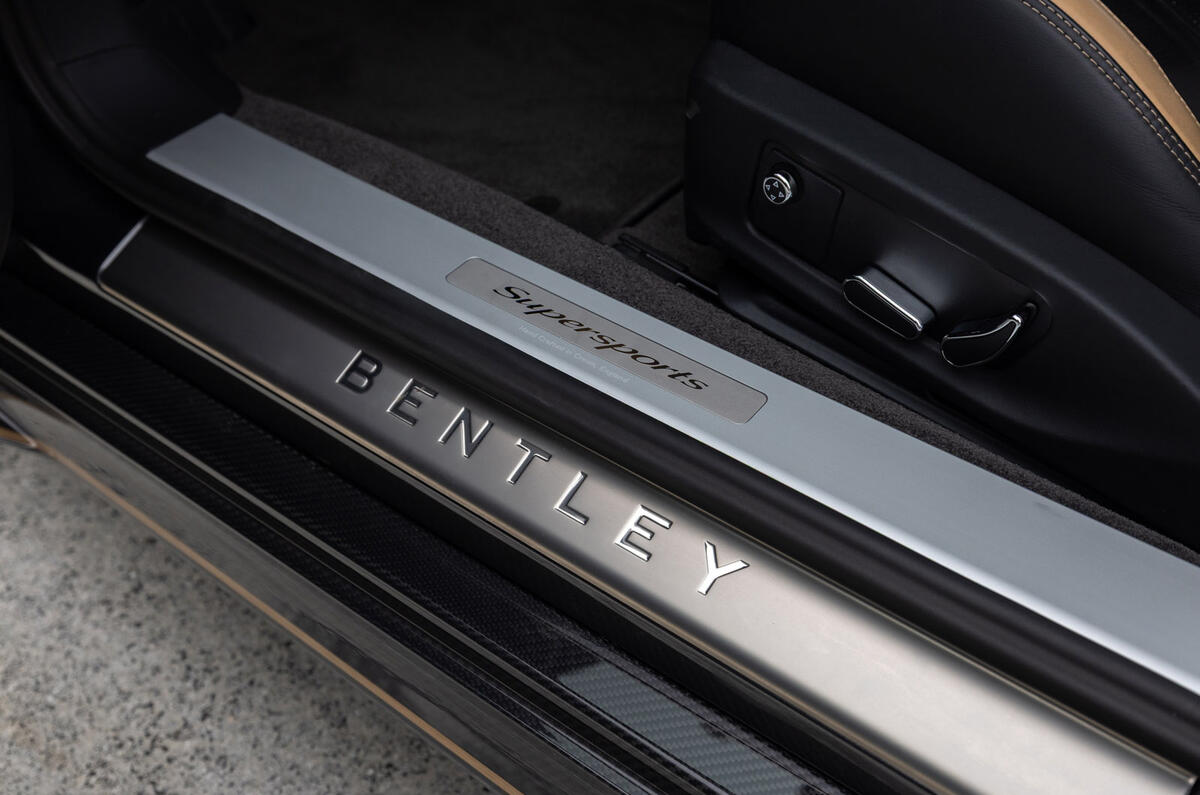
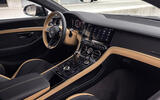
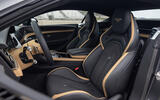
You sit back into new, lower-mounted sports seats as you slide on board and survey a cabin that doesn’t look or feel in any way meanly kitted out or austerely pared back. This is still a seriously lavish proposition. 

The Supersports’ creators were resolved that whatever dynamism and driver appeal they might add to this car, it shouldn’t come at any cost whatsoever to the Continental’s luxury credentials and comfortable touring manners. That’s why it retains air suspension and remains an enormously comfortable and enticing place to sit, and an easy car to access.

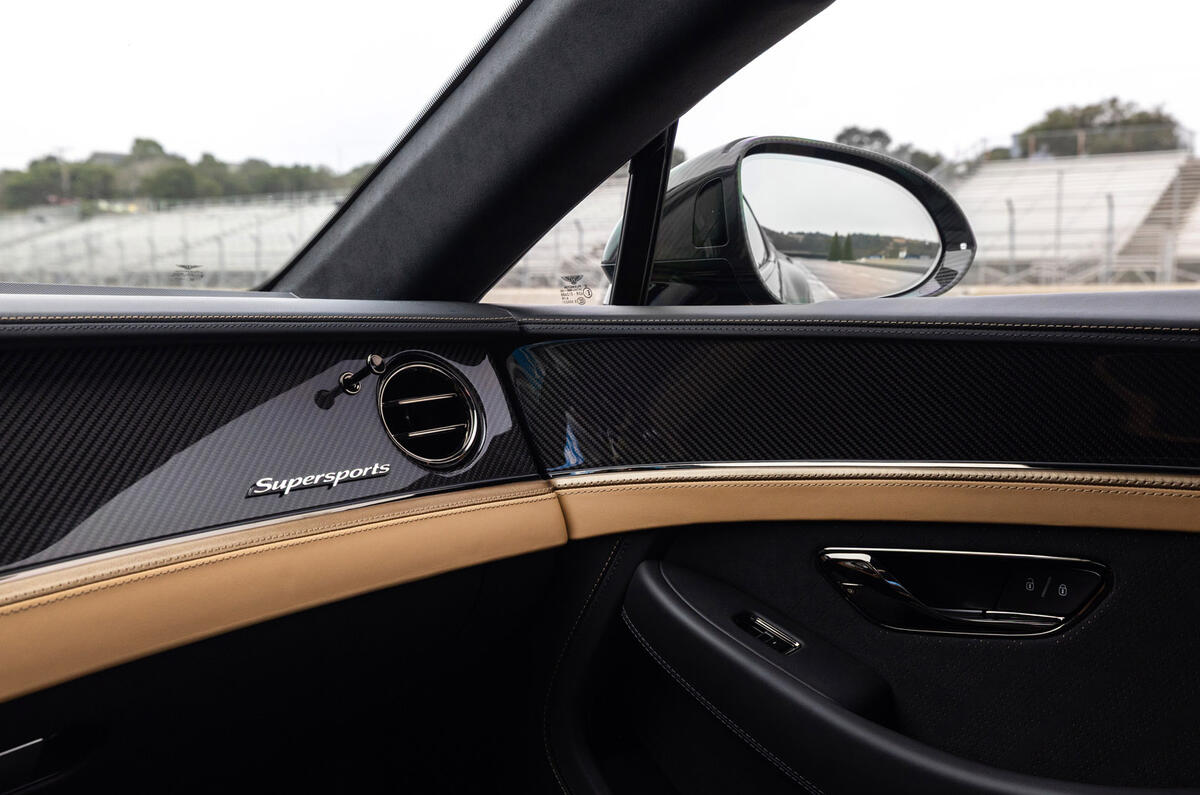
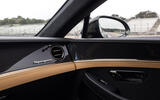
The car’s mix of leather (single-tone, duo-tone or tri-tone), Dinamica suede and lacquered carbon is predictably delicious to behold. The fatter bolsters of the front chairs hold you in place like they mean business, but without adversely altering your comfort levels one iota. And all the GT’s familiar luxury material cabin appeal is absolutely present ahead of you. 

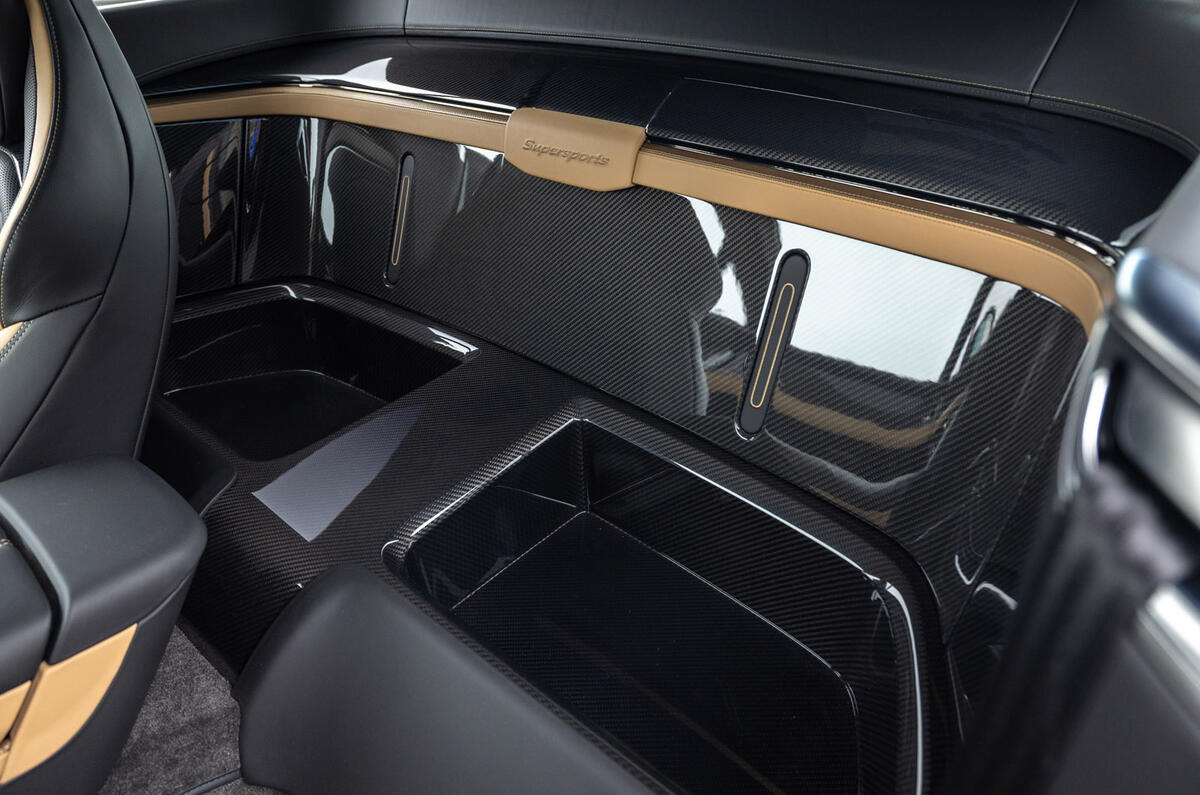
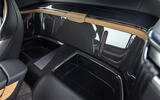
Only when you cast your eye backwards do you see the half-bathtub-like carbonfibre panel where the back seats would be. And then nod in approval when you realise that the seatbelts and rear audio speakers have been cast out as well (not to mention most of the sound-deadening NVH insulation that sat underneath the rear bench, says Bentley).

ENGINES & PERFORMANCE

Bentley Supersports review 2026 017

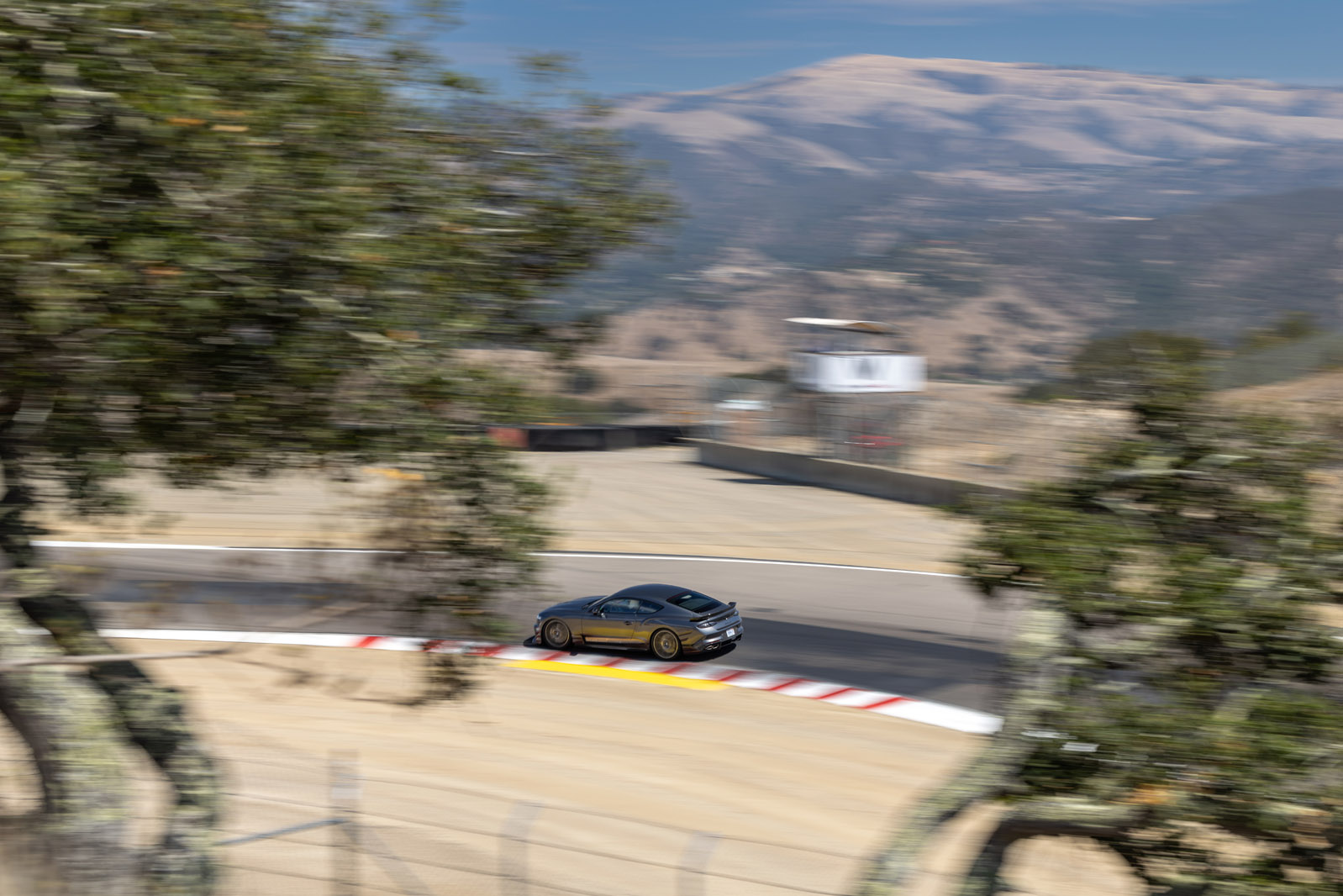
This is a Continental GT whose combustion engine actually starts when you press the ‘engine start’ button, needless to say – and then makes a fair bit of noise. In Sport mode especially, it gurgles, burbles and snarls as you load it up and let it rev. It is, honestly, gladdening to the ear, whether it’s just idling or hulking and heaving its way, through the top of fourth gear, up to Laguna Seca’s corkscrew corner.

All it lacks, really, is that extra bit of operating range really special performance cars typically have – that magic last 1000rpm, if you like. Instead, you’re snagging an upshift at 6000rpm, rather than wringing every last rpm out as you might in a really great GT-department Porsche or M-division BMW. 

The eight-speed gearbox swaps cogs very agreeably. It does so quickly and positively enough on track in manual mode, except for the odd occasion when it refuses a downshift close to the redline and you have to ask all over again. At bumbling pace, we know, it works eerily smoothly too, apart from the occasional bit of hesitancy when engaging drive or reverse.

Does the car feel outright fast enough for the money? Honestly, you could buy quicker – and Bentley isn’t bothered if you want to. This car isn’t quite in the Ferrari Speciale, Lambo Performante, Porsche Turbo or Aston Martin AMR league for outright, asphalt-warping thrust. But, as Bentley is at pains to point out, it’s all about quality over quantity. Not about how fast you go, but how you go fast, and how much fun you have in the process. 

The car’s chassis mostly lives up to that billing, when it’s on song, as you’re about to read. But I think the V8, for all its rortier audible character, struggles to – if only a little bit.

RIDE & HANDLING

Bentley Supersports review 2026 019

The V8 channels its thinly veiled violence through an uprated electronic, torque-vectoring differential that has larger clutches than the one the regular GT uses. 

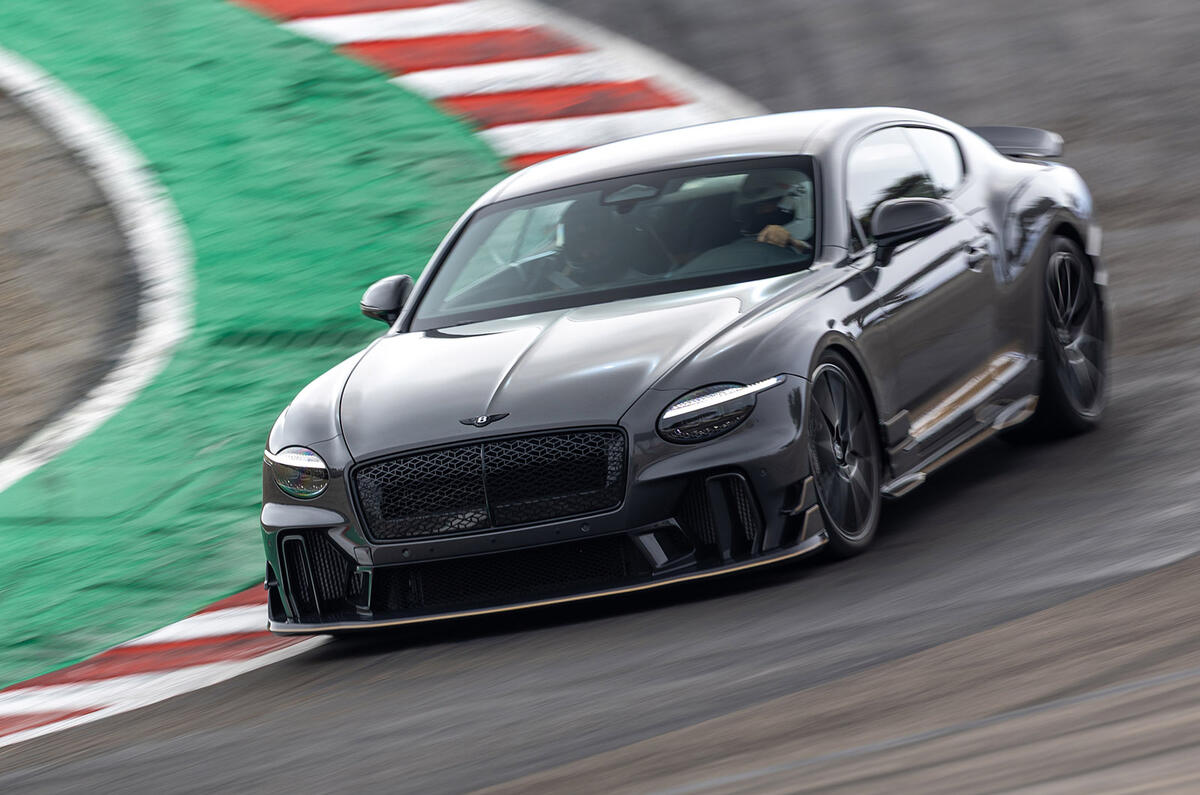
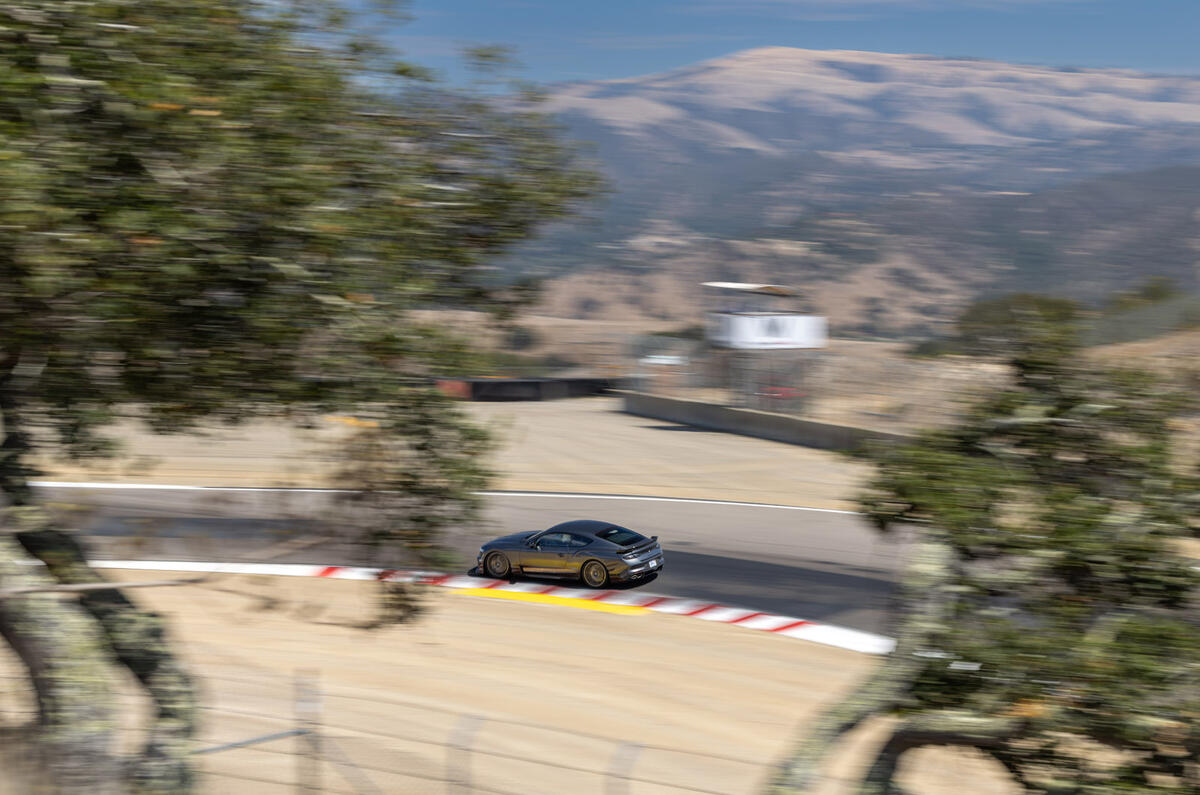
I wonder if they're quite large enough. After a couple of quickish sets of five or so laps around Laguna’s testing gradients with the stability control dialled back, it felt like I was beginning to find the thermal limits of that diff, and its capacity to share so much torque out across a widened rear axle, and between a pair of fatter, gripper, harder-working rear contact patches, without overheating. Honestly, it was beginning to cause the car to bail itself out of the gentle, controllable, big-unit-with-smooth-moves powerslides that the four-wheel steering system and sharpened chassis and steering otherwise make it so irresistibly easy to cue up. 

It also felt like I was beginning to find the cooling limits of the carbon-ceramic brakes in a similar timeframe, without driving in any way like I was trying to break Laguna’s lap record. To be fair to Bentley, these were late-model prototypes being made to work hard, in warm track conditions. But would a Porsche GT car have had the same problems? No. But is it fair to judge what remains a two-tonne luxury coupé by the standards of a proper, track-bred sports cars weighing 30% less? Also no. Alas, wealthy people can be a judgemental lot.

I’m inclined to give Bentley a bit of leeway, I must admit – mostly because when it’s good, the Supersports really is wicked-strength fun. The brakes, when cool enough, are strong and progressive; the steering tactile, hefty and faithful; the body controlled and composed, even through really fast compressions like the one leading onto Laguna’s Rahal straight; and the front axle keen and precise to point. 

No Bentley that I’ve ever driven has really even approached this sort of dynamic poise at serious pace. Switch the DSC system into the background and the car can be steered on the throttle so easily – by judicious degrees, or to heroic angles, entirely at your whim. 

You expect it to handle like it weighs 2.5 tonnes, like Continentals always have. But, for a good while, it feels more like 1.5 tonnes. It’s flattering, playful, indulgent and forgiving. Until the heat soak catches up with it, that is, at which point it’s still a lot of fun – but not quite the same proposition.

VERDICT

Bentley Supersports review 2026 020

So is this car really the transformative moment that Bentley’s management would have us believe? It might be, assuming its engineering team can address what at least felt to me like weaknesses in its hardware before deliveries begin. More exploration would certainly be required, either way, before I could conclude that it definitely is. 

Quite clearly, it’s a car with transformative dynamic character and potential, though – and, apart from anything else, just the kind of Bentley Continental you’d much rather drive, on road or track, than any other in the range.

That it’s a more ambitious driver’s car than Bentley has really ever made in the modern era is clear and to be warmly applauded. If this is a taste of GTs to come, given the development direction that the company’s current management has now established, it seems a promising sign indeed.

Matt Saunders

Matt Saunders Autocar
Title: Road test editor

As Autocar’s chief car tester and reviewer, it’s Matt’s job to ensure the quality, objectivity, relevance and rigour of the entirety of Autocar’s reviews output, as well contributing a great many detailed road tests, group tests and drive reviews himself.

Matt has been an Autocar staffer since the autumn of 2003, and has been lucky enough to work alongside some of the magazine’s best-known writers and contributors over that time. He served as staff writer, features editor, assistant editor and digital editor, before joining the road test desk in 2011.

Since then he’s driven, measured, lap-timed, figured, and reported on cars as varied as the Bugatti Veyron, Rolls-Royce PhantomTesla RoadsterAriel Hipercar, Tata Nano, McLaren SennaRenault Twizy and Toyota Mirai. Among his wider personal highlights of the job have been covering Sebastien Loeb’s record-breaking run at Pikes Peak in 2013; doing 190mph on derestricted German autobahn in a Brabus Rocket; and driving McLaren’s legendary ‘XP5’ F1 prototype. His own car is a trusty Mazda CX-5.