




From £130,9857

Stylish drop-top comes in for a nip and tuck – and leaves with one of the best-sounding engines in the game

Unfortunate slogan choice in the artsy video that Maserati showed journalists at the launch event for its facelifted 2026 line-up: “In a world that mistakes volume for presence, we have never raised our voice.”

You get the point: it’s about the Italian brand being subtle, refined and considered while rivals bicker over power figures, battery capacities and Nurbürgring lap times. But it can’t help drawing attention to the fact that Maserati’s very presence is eternally under scrutiny because its volumes are so low.

Its core models – the Grecale SUV, Granturismo coupé and Grancabrio convertible – have been updated after roughly three years on sale apiece, during which time they have recorded fewer than 2000 sales in the UK combined - and the sports car duo only around a tenth of that tally.

The Grancabrio continues to be offered with a V6 in two states of tune and – somewhat surprisingly – in fully electric Folgore form, which might now sell slightly better now it's had its maximum range boosted to 316 miles.

This is one of the last remaining examples of the four-seat luxury convertible: one of those concepts that’s probably more appealing on paper – or in some romantic, coming-of-age road trip movie, perhaps than in the real world.

It takes about 10 seconds travelling in the back of one to appreciate why. There’s seldom an abundance of space and there’s so much wind buffeting and fluttering that you can’t really hear any conversation – or even succeed in wearing a hat for very long. Imagine travelling to visit in-laws or for a weekend away exclusively via a particularly draughty rollercoaster and you will begin to get the idea.

Advertisement
Back to top

Most luxury car manufacturers – the likes of Bentley and Mercedes-Benz – have come to tacitly admit as much by declining to offer big, four-seat convertibles any more. Their flagship open-top cars are now almost exclusively 2+2s in which the back seats are pretty clearly there for short hops and ‘emergencies’ only.

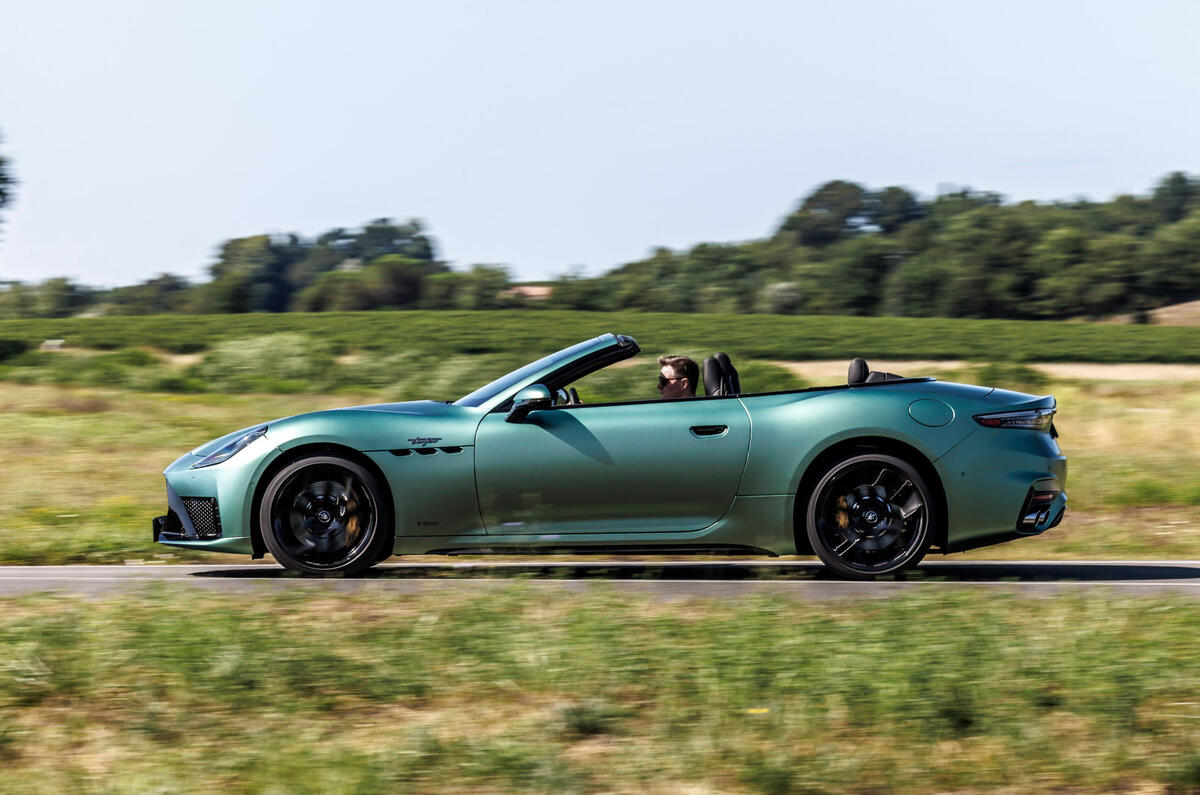
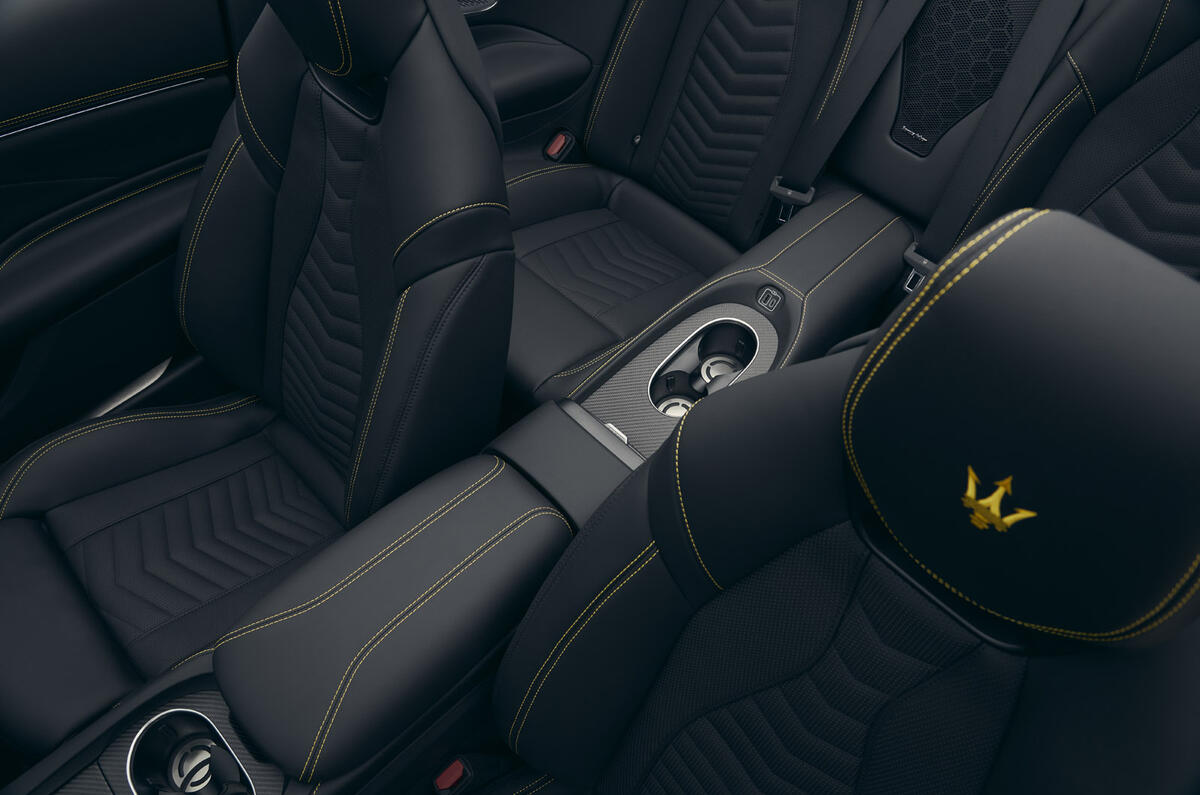
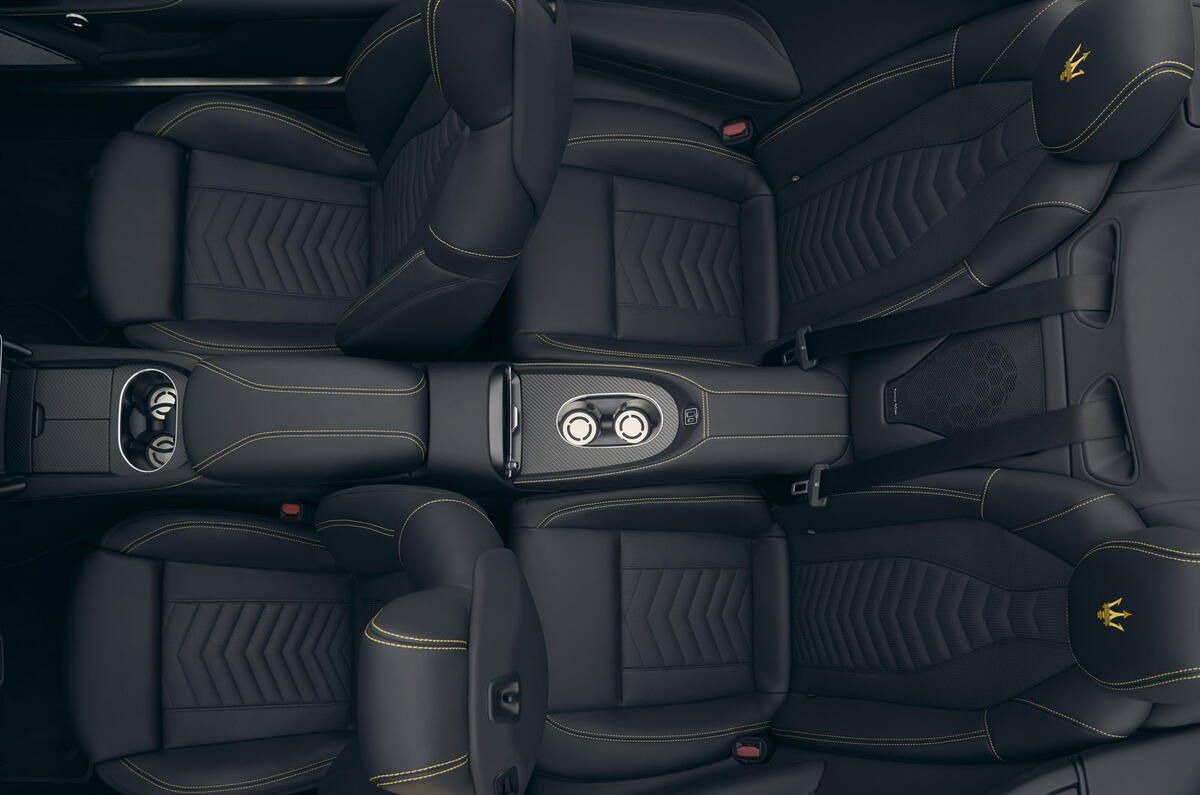
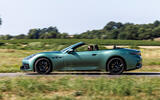
But the second-generation Maserati Grancabrio – which entered production in 2024 and has now been lightly updated  is the exception. This is the one luxury cabriolet that targets genuine four-seat usability.

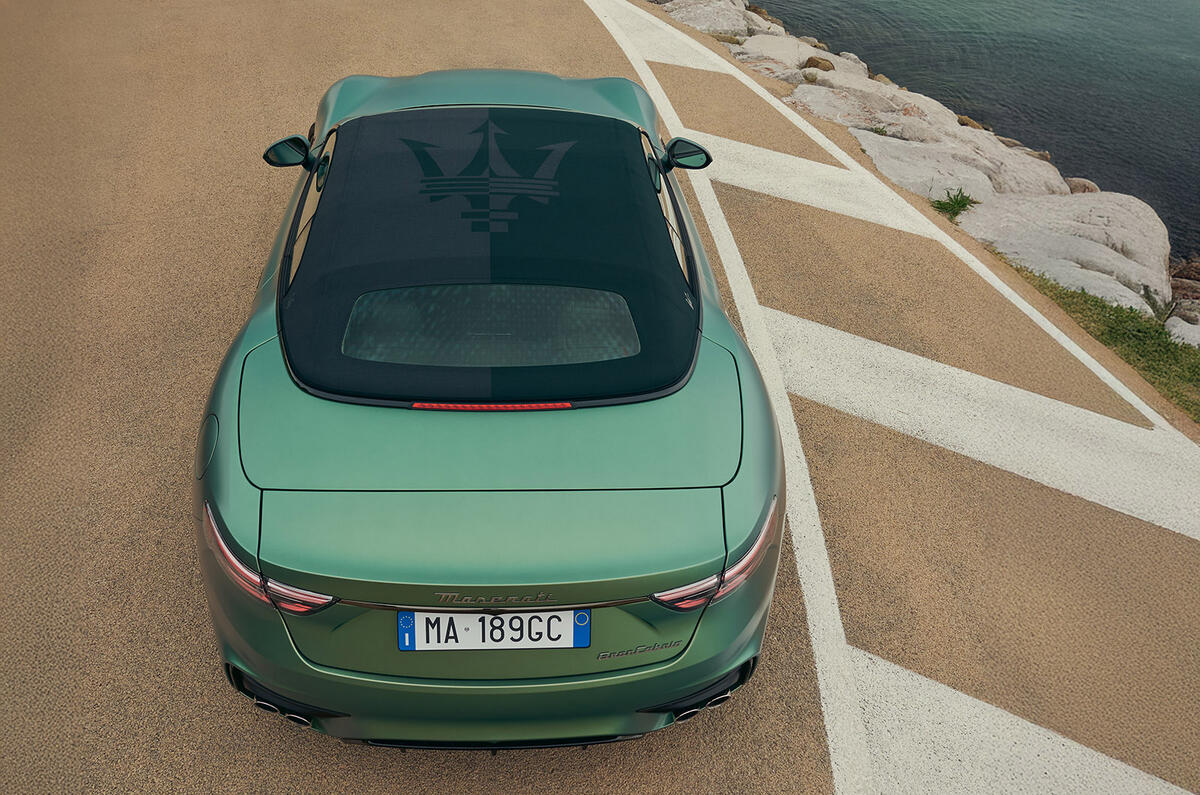
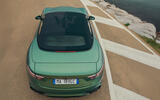
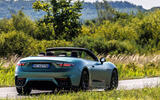
And you don’t have to drive it everywhere with the roof down, of course: there’s a lovely motorised cloth hood to keep the wind out when you want to.

DESIGN & STYLING

8
Maserati GranCabrio Trofeo V6 review 2026 081

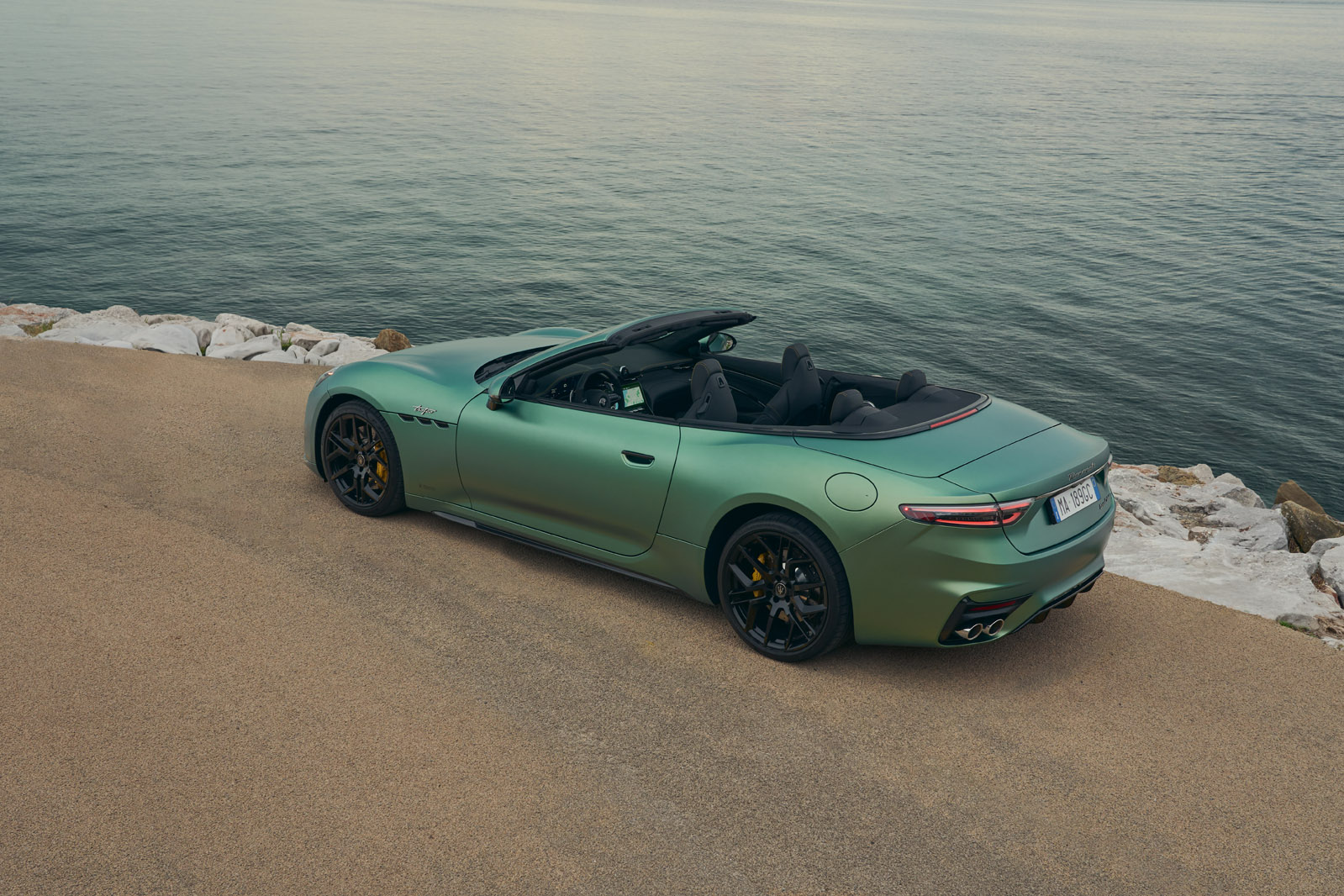
The second-generation Grancabrio is based on a mixed-metal model platform that was developed from scratch for both open and closed applications – and to accommodate an electric powertrain.

It's a large cars by two-door GT class norms: very nearly five metres long, when anywhere between 4.7 and 4.9 would be more typical. But then you don’t make space for passengers without a bit of a stretch.

As a V6, it can be had 483bhp or 583bhp Trofeo form. There's also a more expensive, three-motor, 750bhp, all-electric Folgore. All Grancabrios have four-wheel drive, however, and use air suspension with adaptive damping.

Since it’s a convertible, the Grancabrio Trofeo needs chassis reinforcements that the Folgore can do without (because its drive battery itself adds structural stiffness to the car). Even so, it weighs a pretty reasonable 100kg more than an equivalent Granturismo – although that will leave it very close to two tonnes with a driver and fuel on board.

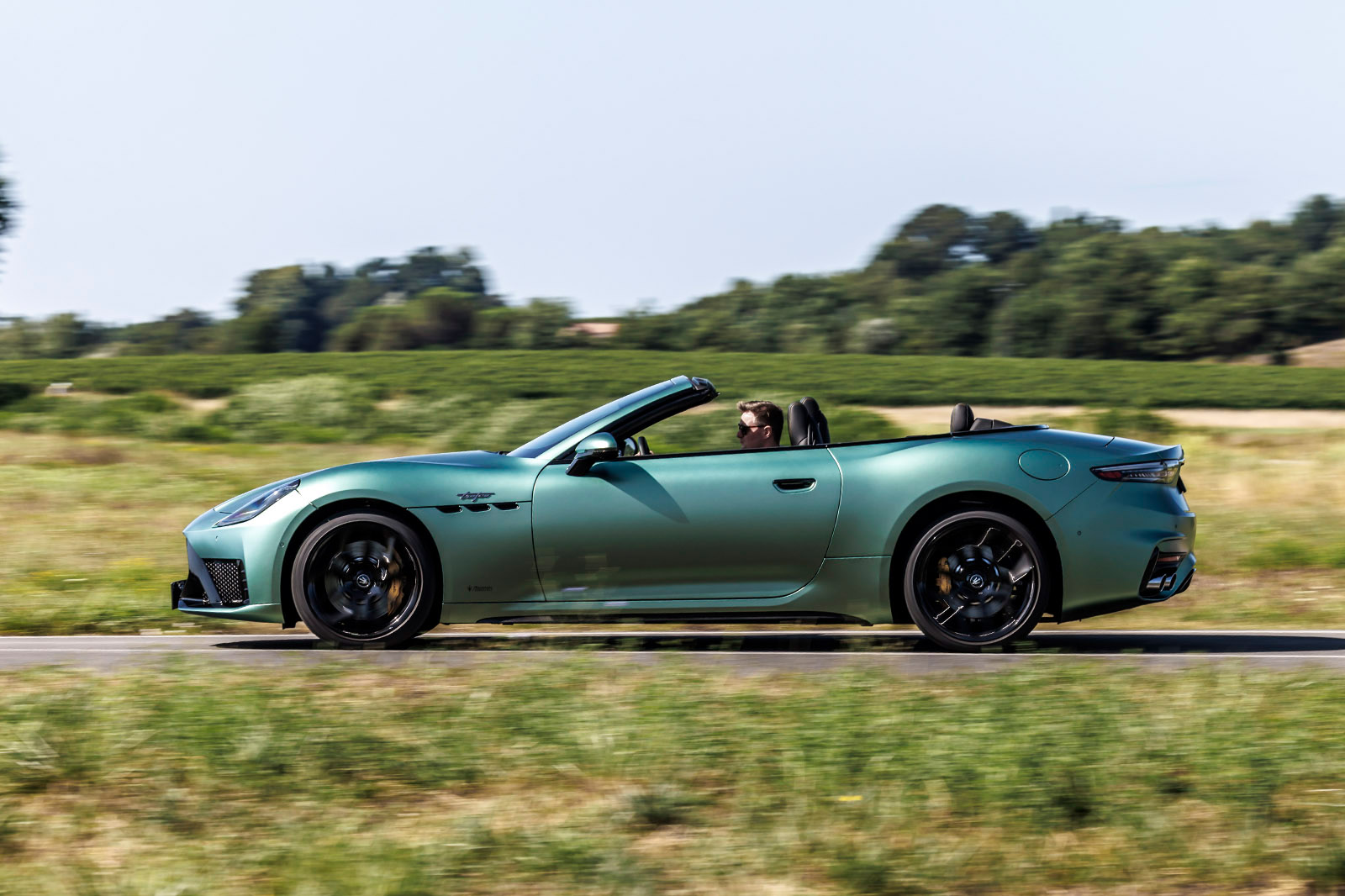
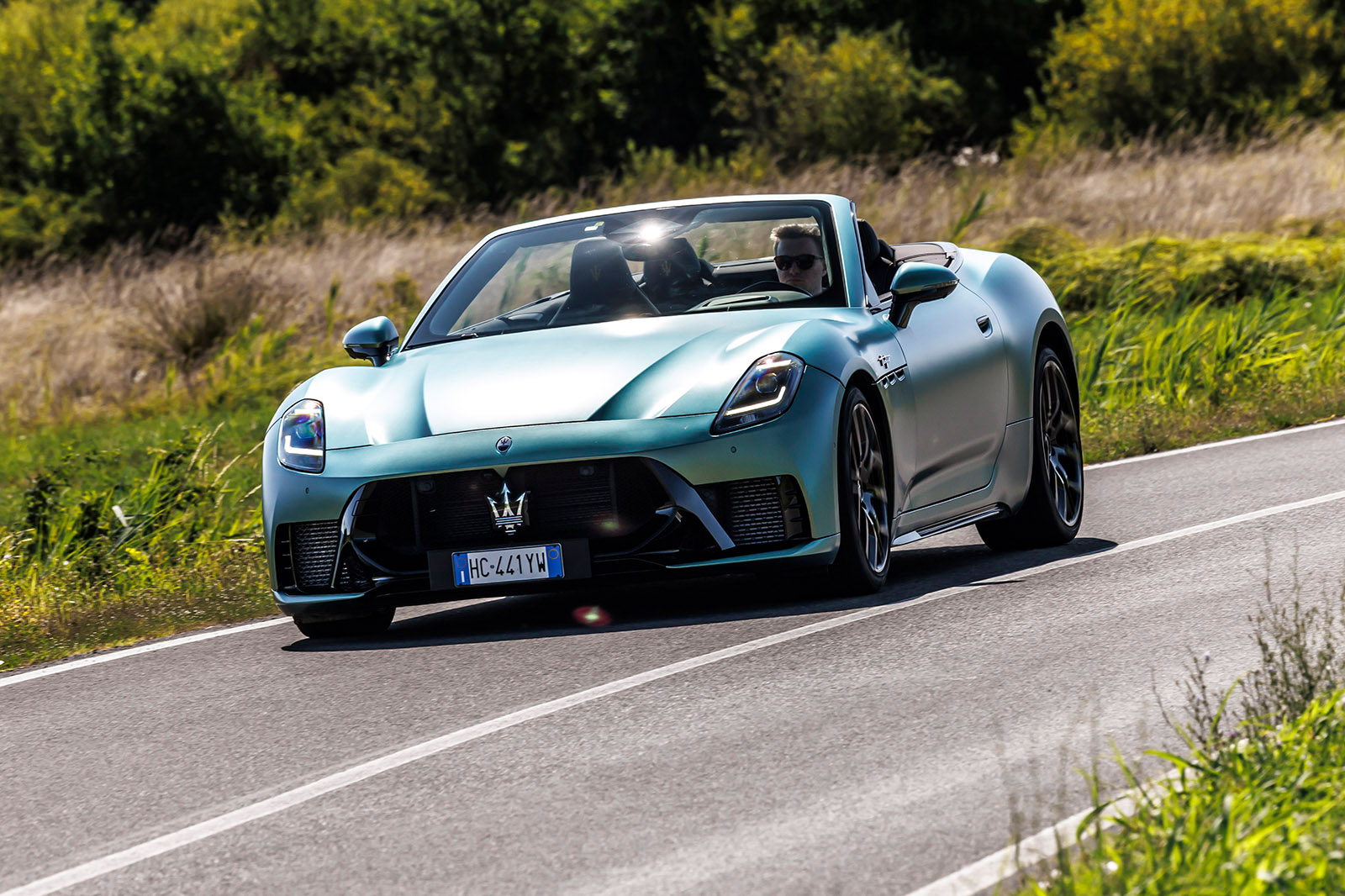
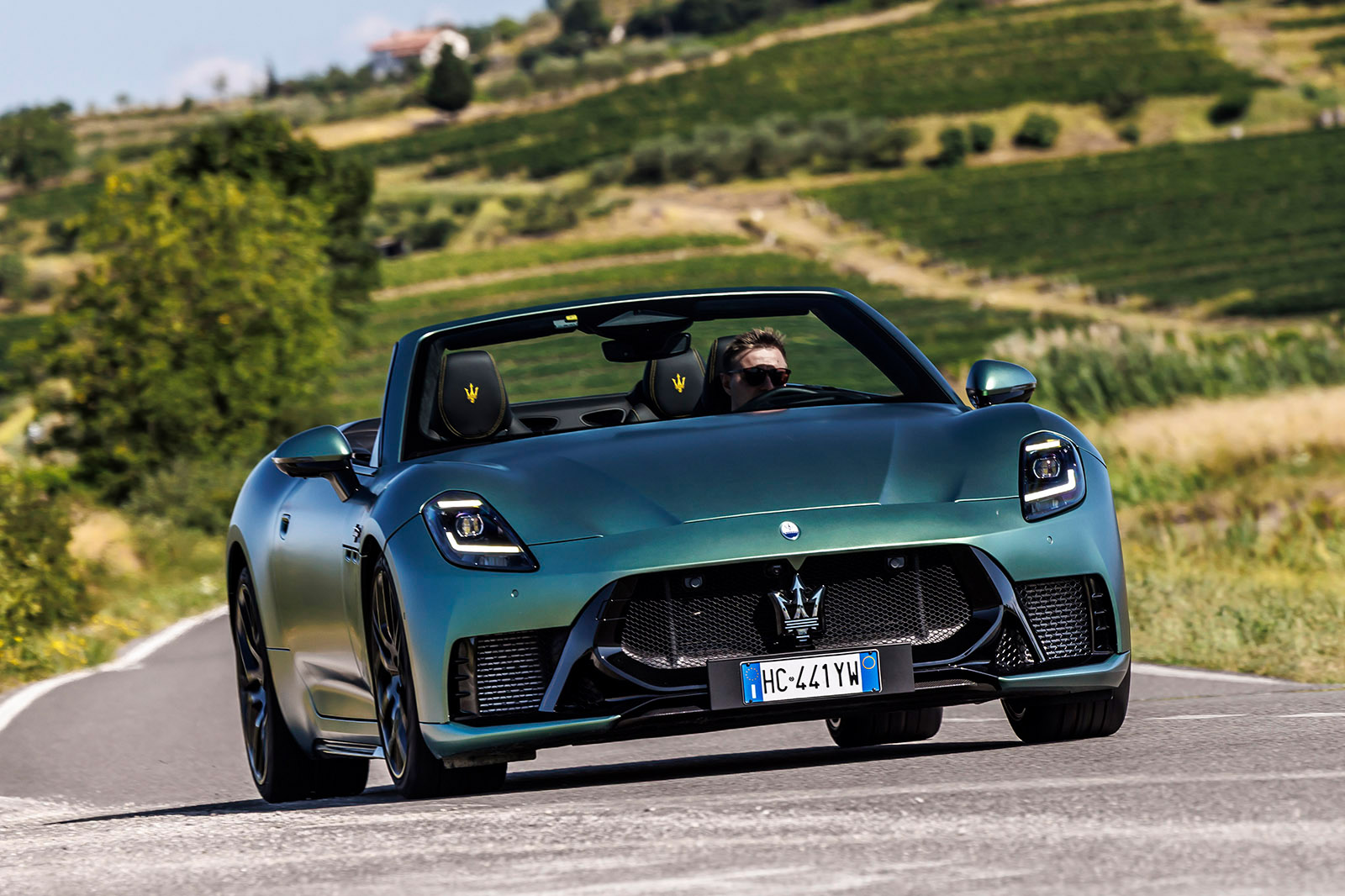
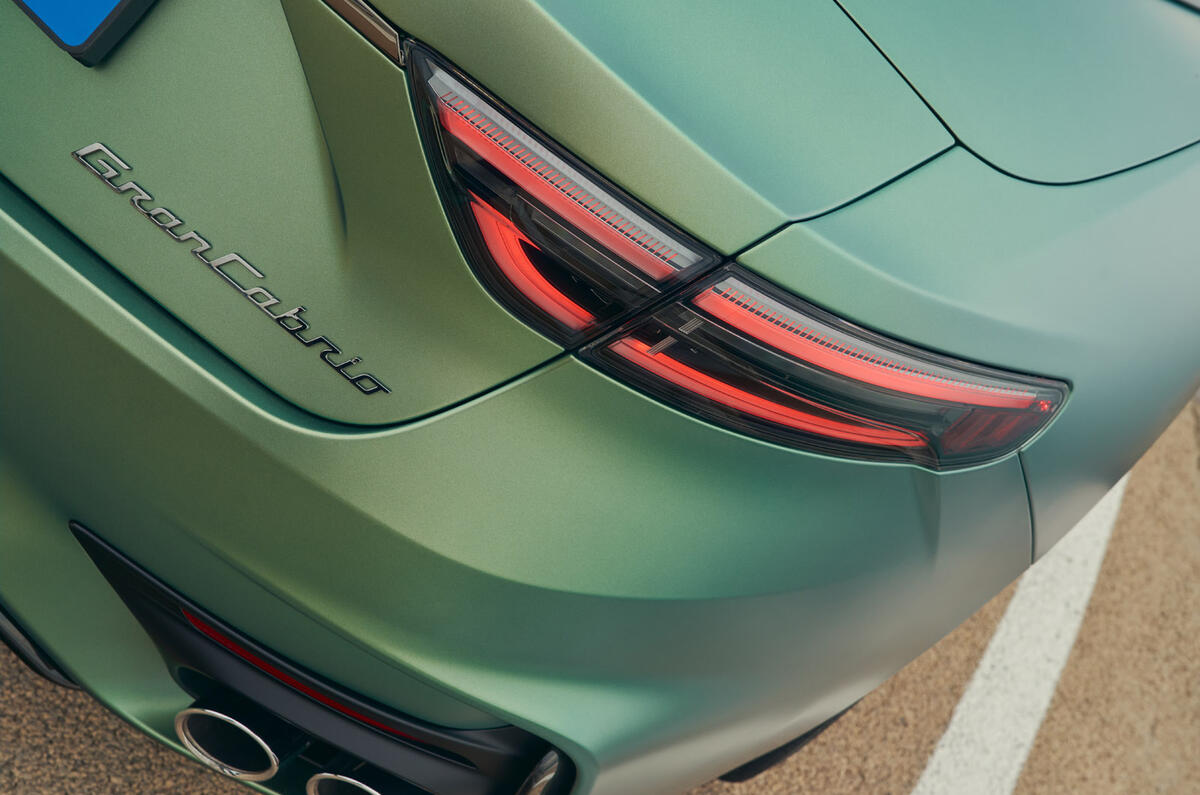
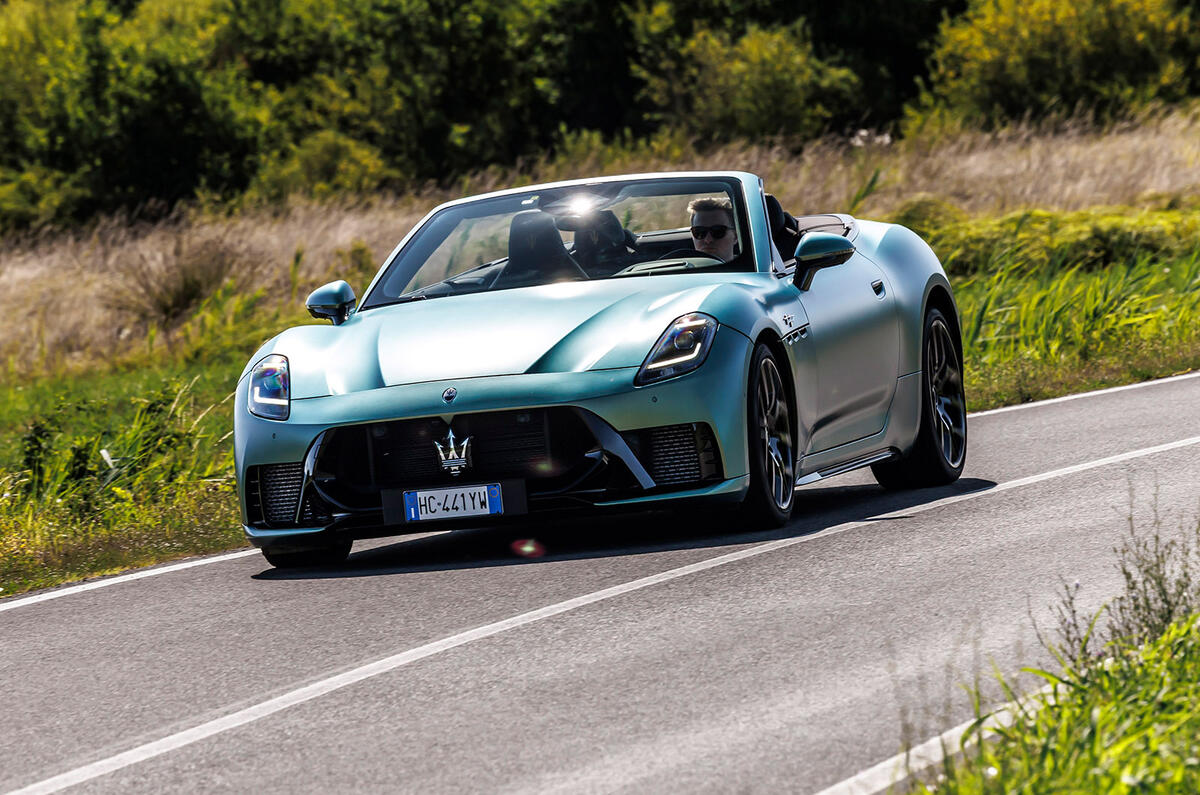
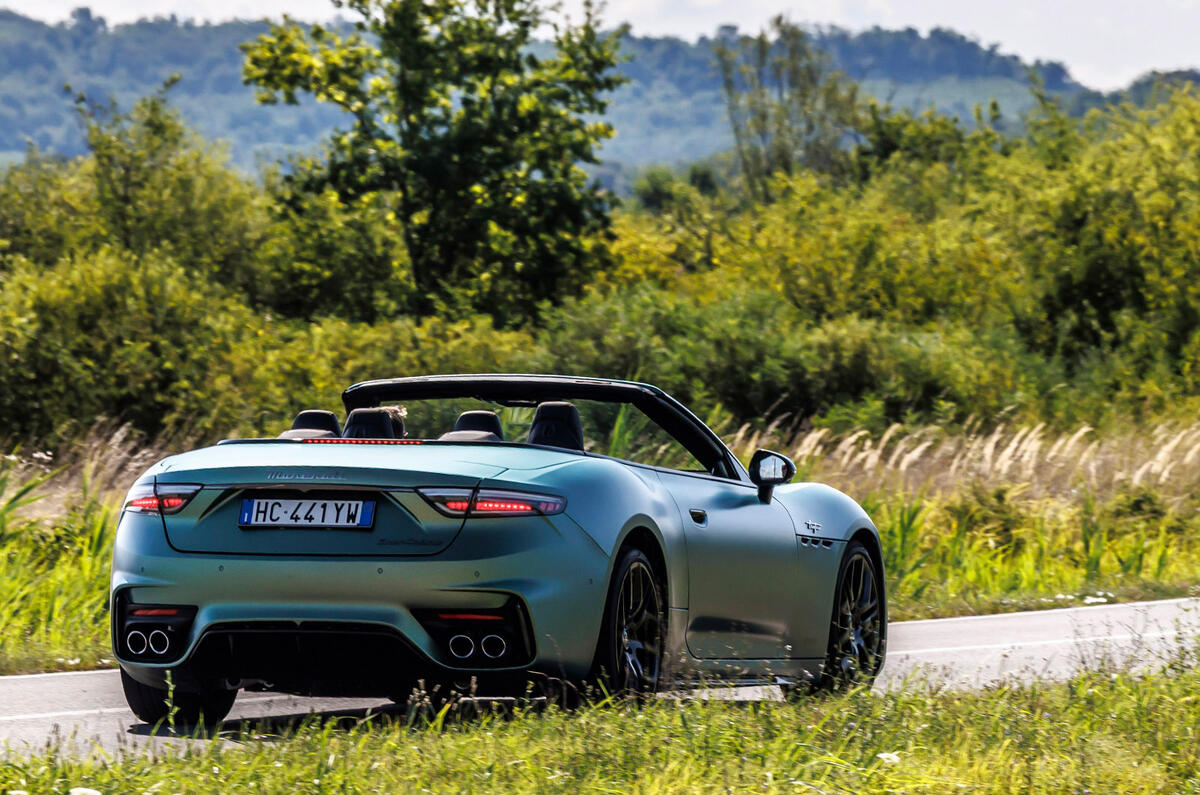
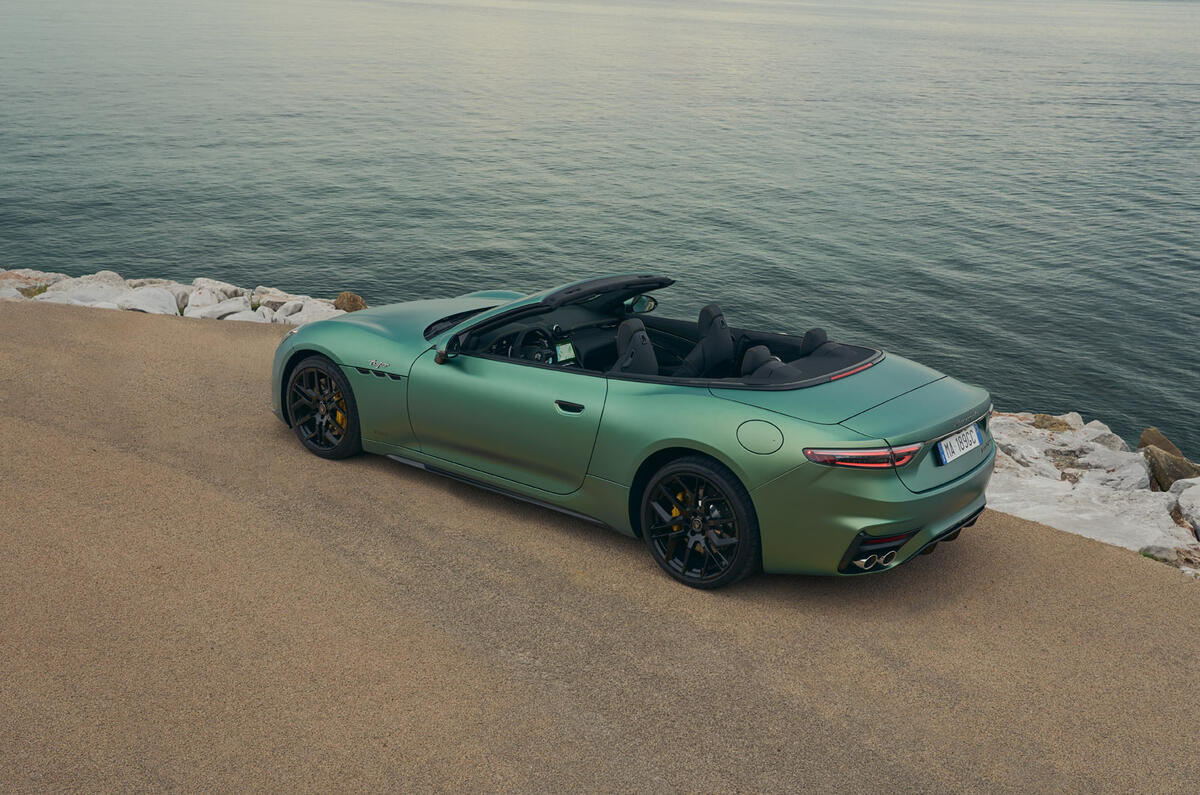
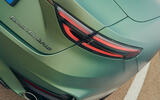
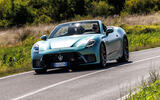
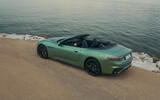
Design appeal is claimed as one of the Grancabrio’s chief lures, and the packaging of the mechanicals has certainly delivered a low bonnet line and an elegant look overall, which the car’s wide ‘cofango’ clamshell-style bonnet feeds into, ditto Maserati’s use of smoked chrome for the highlights. If you like a coloured hood, you can choose from black, blue, grey, ‘greige’ or ‘granata’ red.

A lightly refined new look is among the headline changes for the 2026 car. Changes here are subtle but noticeable and all made in response to customer feedback in the three years since this car was launched.

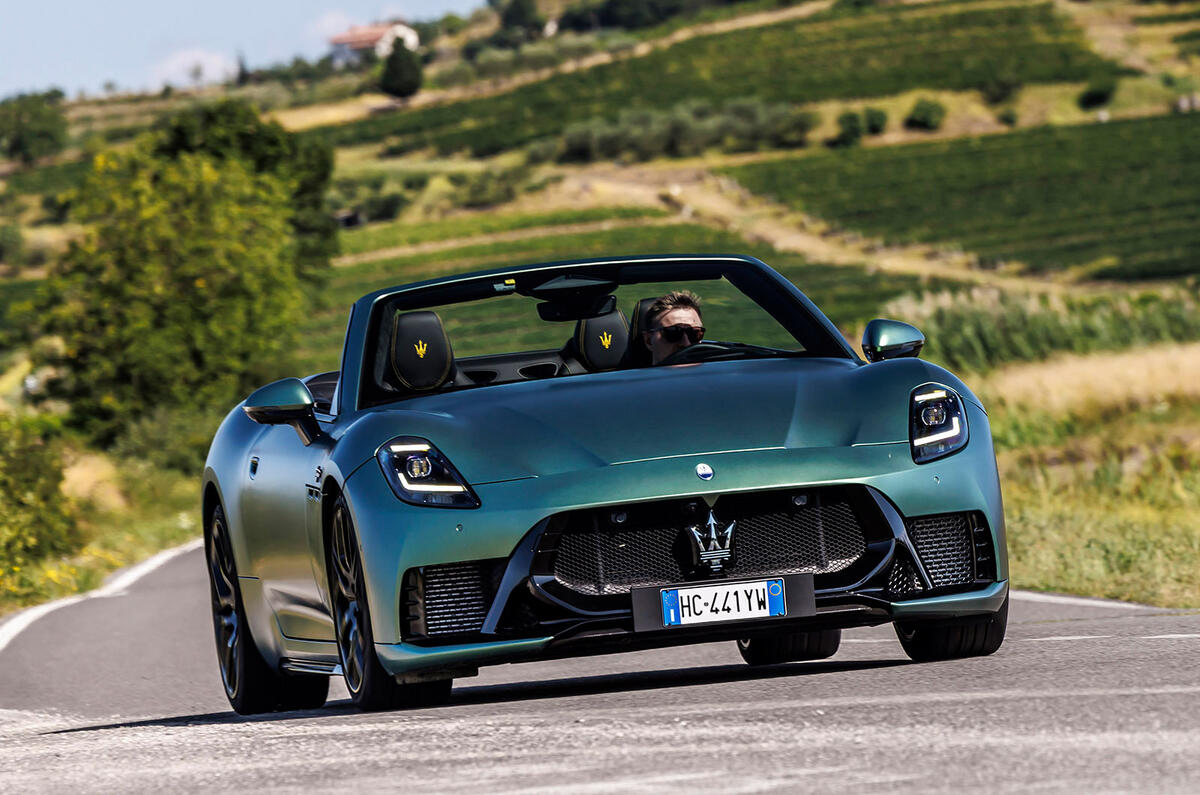
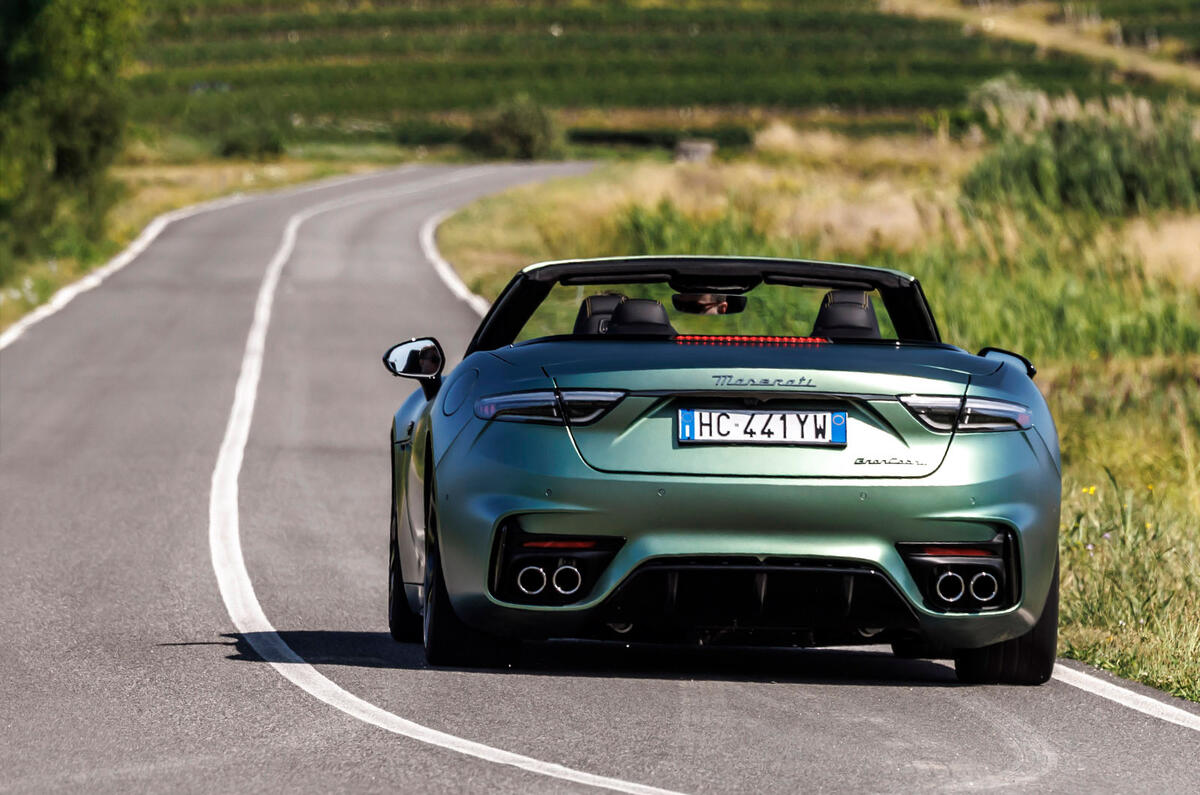
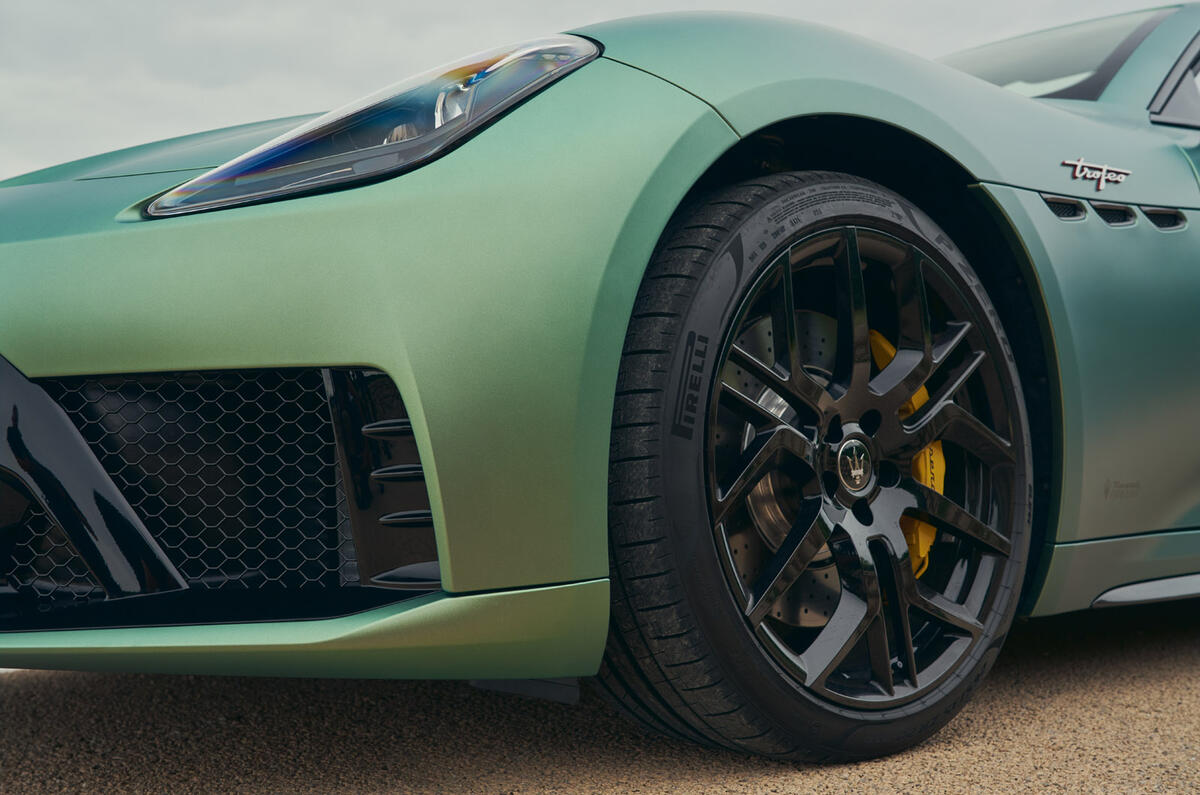
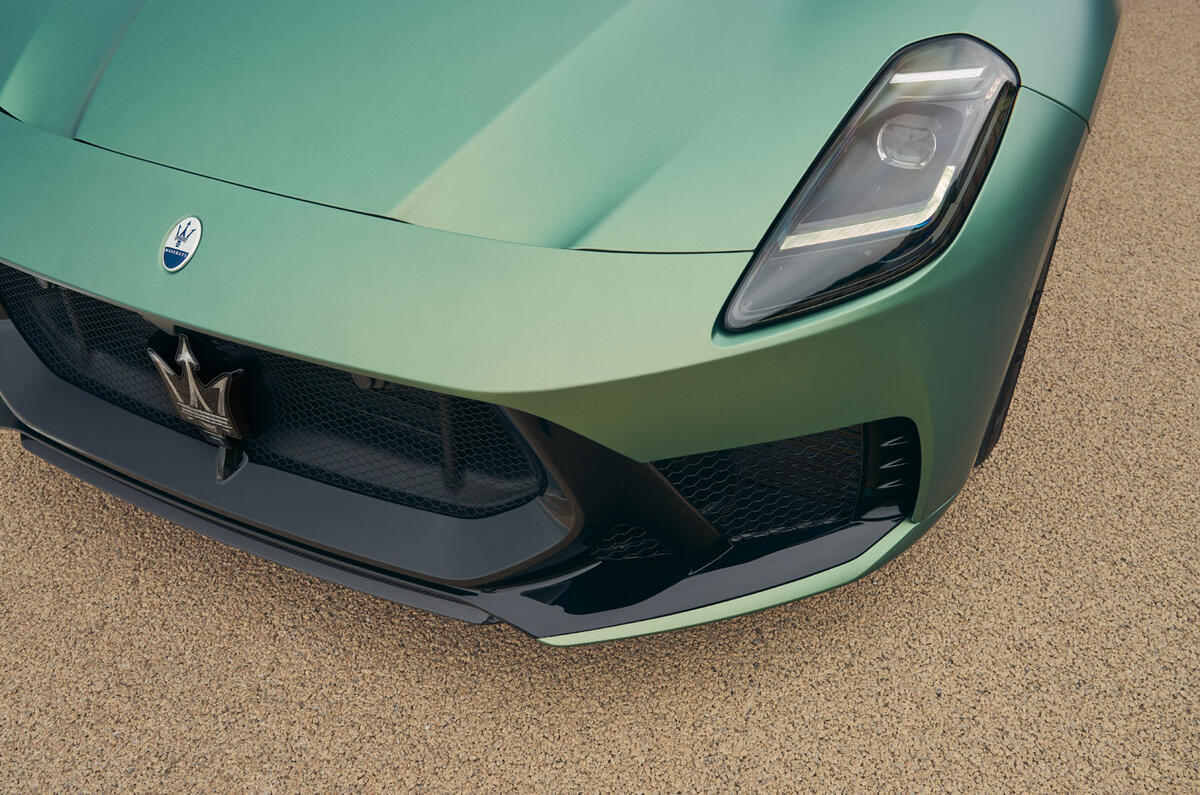
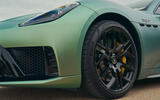
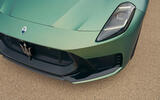
Chief among them is a new look modelled on Maserati’s wild MCXtrema track car, which manifests in angrier-looking vents and bumpers, a straighter-edged front grille and wider wheels.

INTERIOR

8
Maserati GranCabrio Trofeo V6 review 2026 091

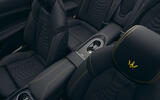
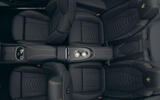
We might as well start with the Grancabrio’s main point of difference. There’s enough room even for two adults of average height to be fairly comfortable in the back seats. Access with the cloth roof down is easy; considerably less so with it up but not impossible.

With the roof up (it’s all motorised and operable in the space of about 15 seconds while the car is moving at speeds of up to 32mph) head room becomes a little bit tight, but the net effect isn’t nearly as claustrophobic-feeling as some. 

But you need to be prepared to drive everywhere with the roof up if you intend to take much in the way of luggage with you, the Grancabrio’s hood folding away into an expansion space that turns the boot into something of a letterbox-like space fit only for the slimmest of soft bags.

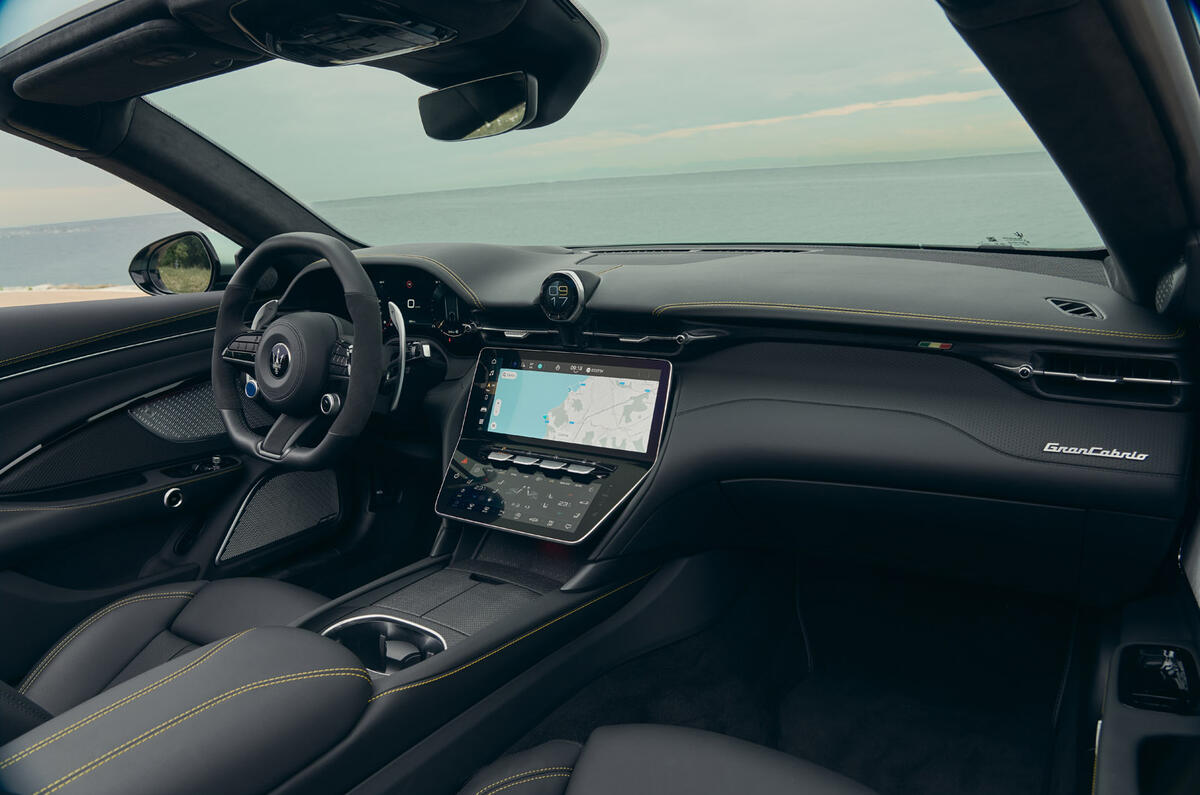
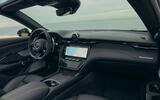
The front cabin is fairly comfortable and spacious. It has some of the richer materials you would expect of Maserati but perhaps not enough of them to lift the prevailing ambience far enough above the level of, say, a typical German premium saloon. 

Ten years ago, Maserati leaned harder into its leathers and chromes and really caught the eye with them. Today the consistency of perceived quality in its cars is probably better than it used to be – and yet some of the wow factor is missing, despite tweaks and enhancements in the name of prestige and specialness.

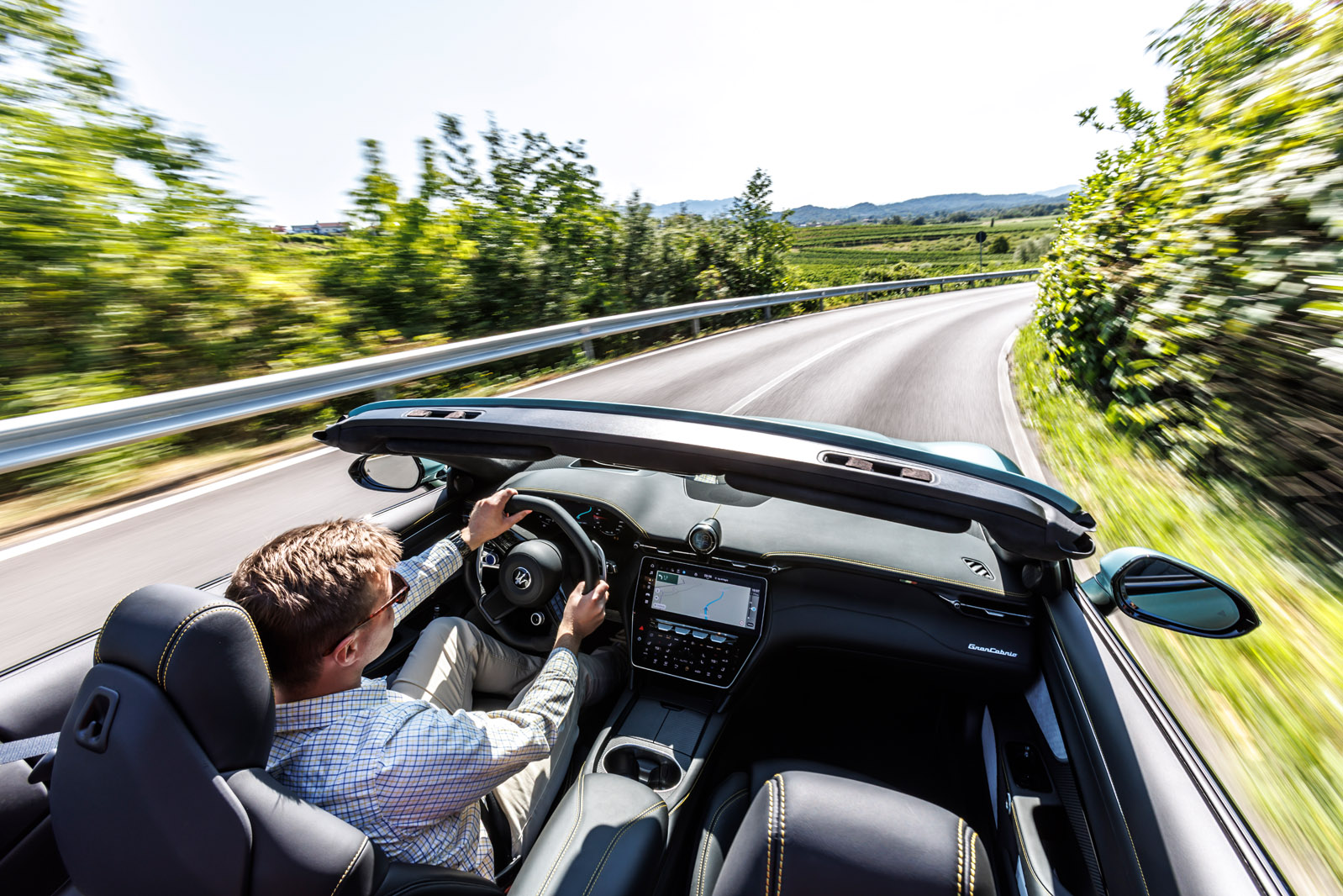
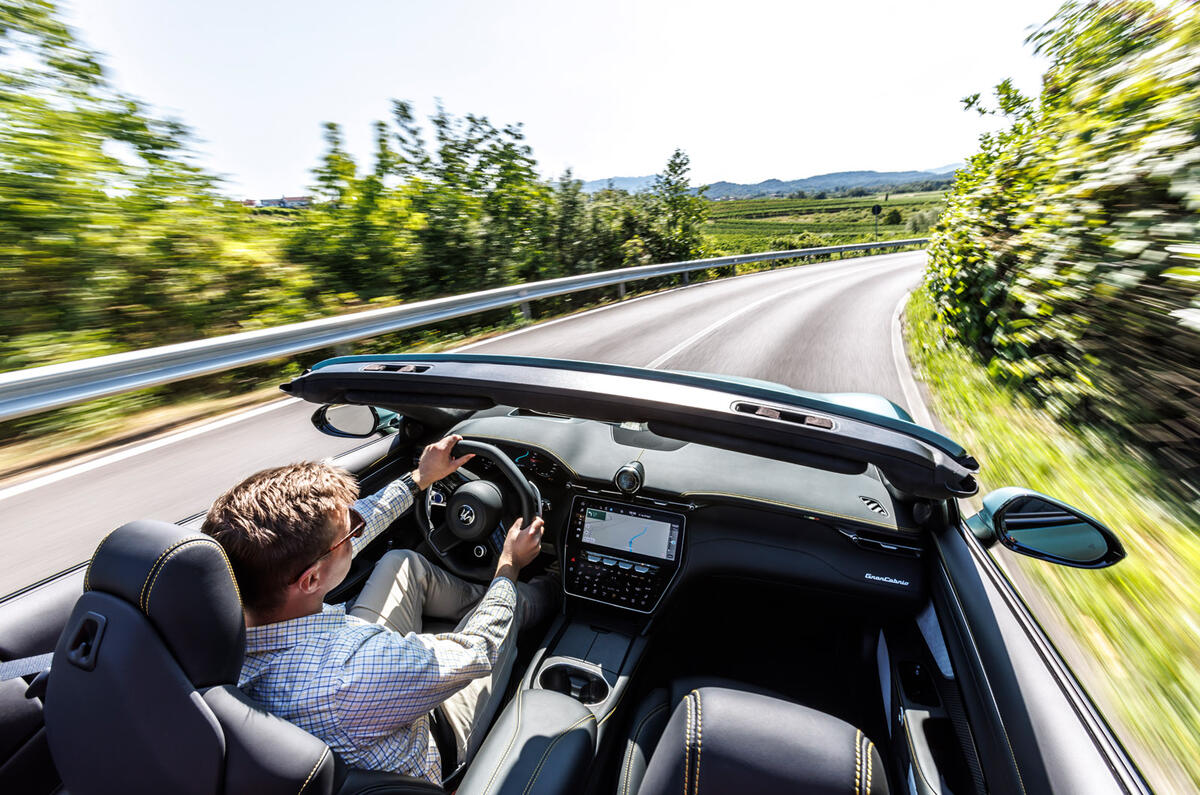
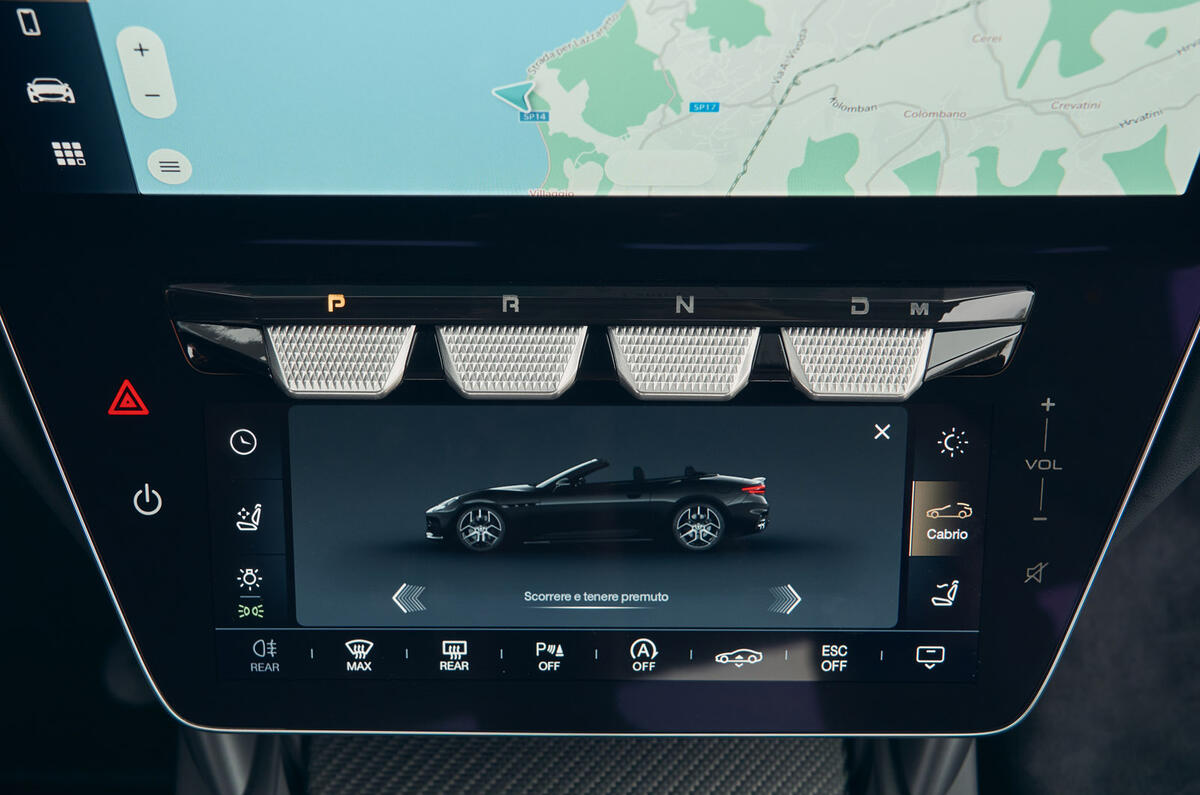
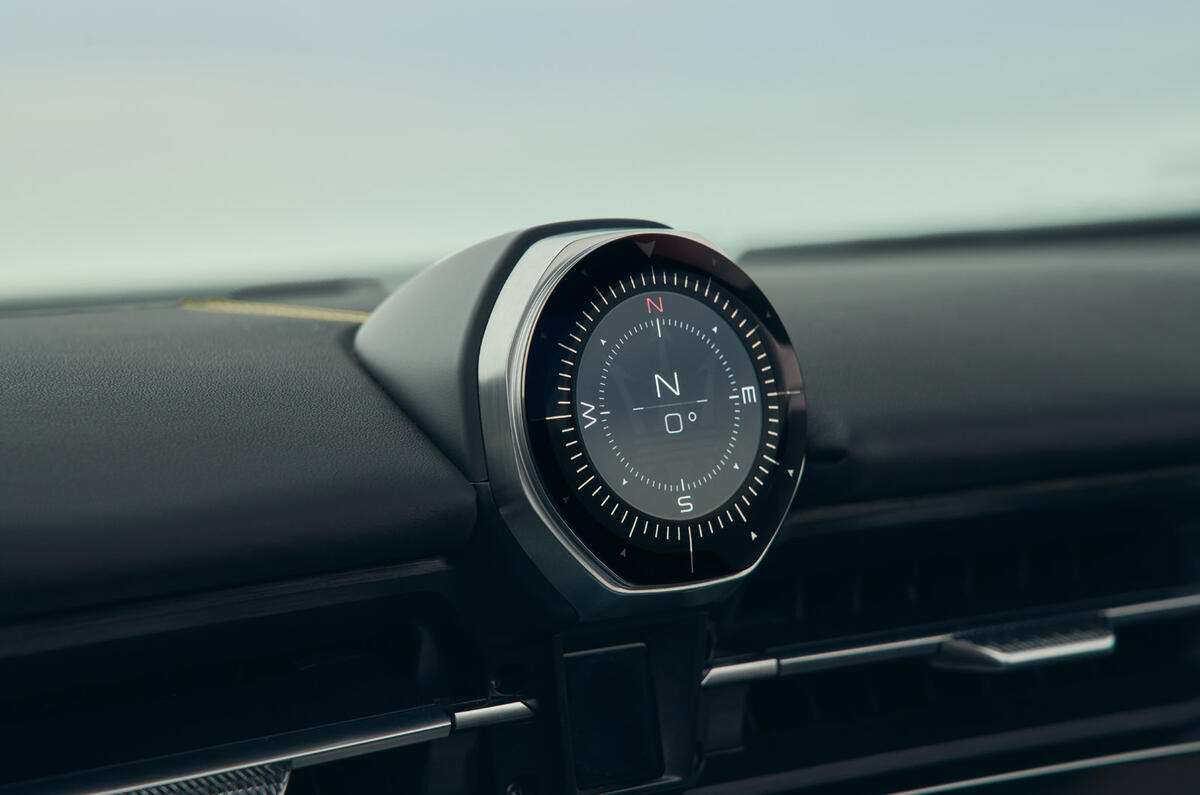
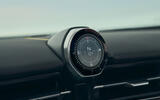
The driver display screen is now faster and clearer, for example, while the digital climate control interface has been revamped in the name of ergonomics. Both work very nicely. There’s a new steering wheel too – reshaped with influence from the GT2 Stradale track car’s for a more comfortable grip and trimmed in Alcantara. And the slightly naff Porsche-alike clock that used to sit atop the dash has been swapped for a slicker and more thoughtfully integrated unit with a proper glass face and a snazzy digital read-out. Little things but they all add up.

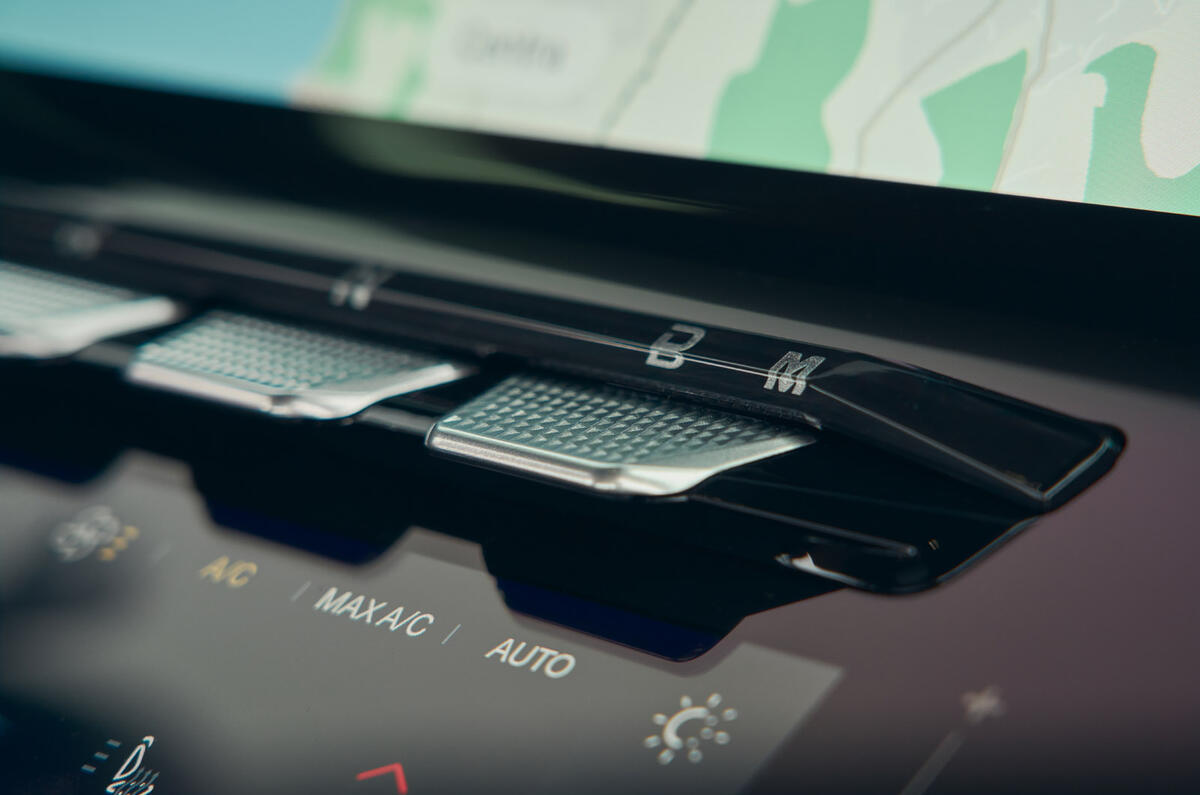
Of more significance are the new metal drive selector buttons, which are more sensibly spaced and add haptic feedback so they’re easier to use on the move - not to mention the fact that they bring a vast visual improvement over the old PRND panel, which looked like it came off a printer.

It’s still a pretty terrible way of changing direction and a regrettably obvious example of Maserati’s affinity for the Fiat and Jeep parts bin, but it does at least look classier and make parking manoeuvres a bit smoother.

New for this facelift, too, is a function that allows you to switch between drive and reverse using the gearshift paddles - which is great but does make you think: if they can engineer in that functionality, why not scrap the buttons altogether? Anyway…

ENGINES & PERFORMANCE

8
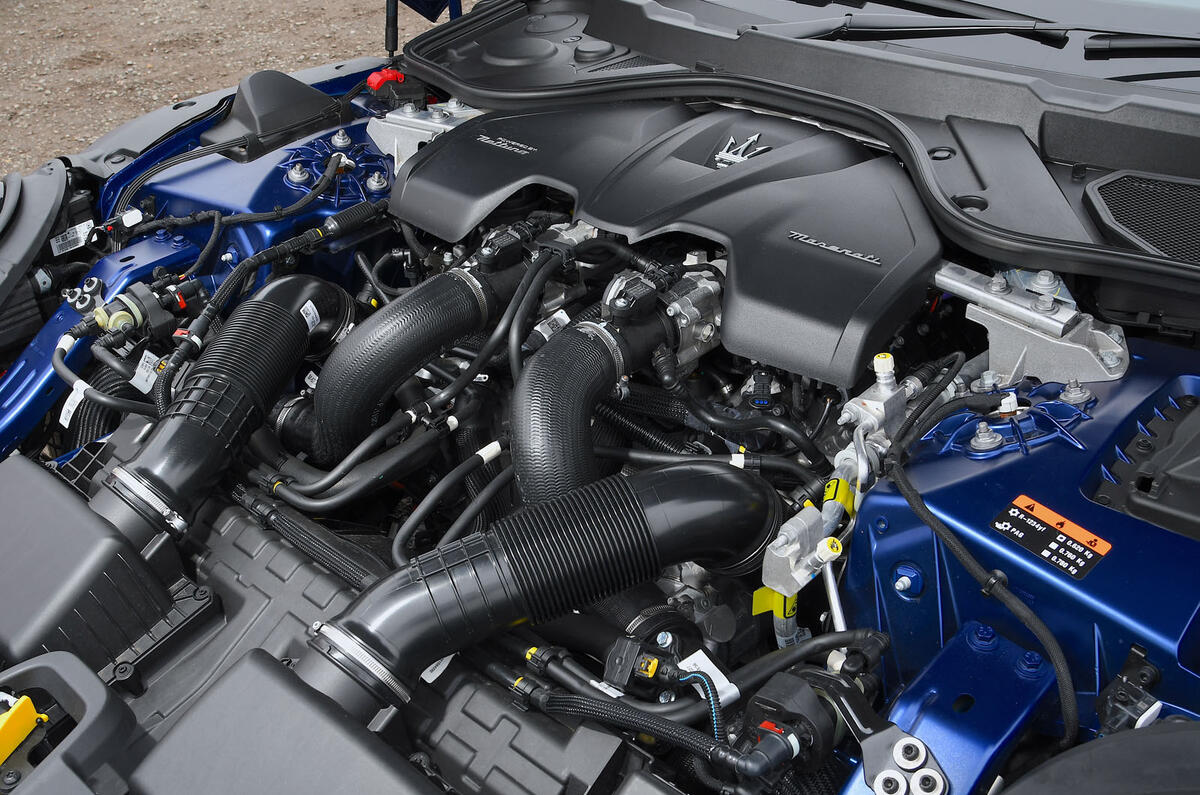
Maserati GranCabrio review 2024 12 engine

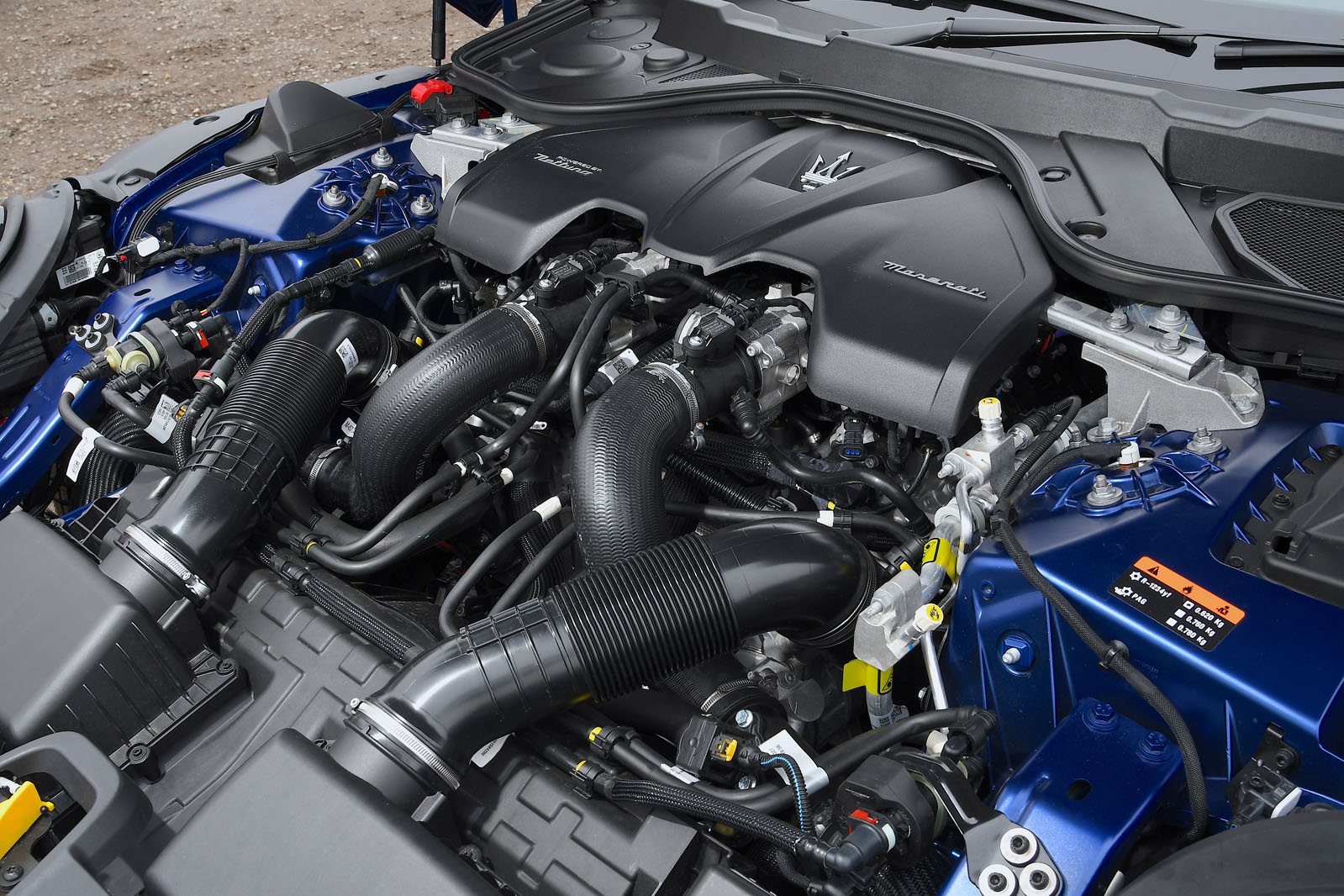
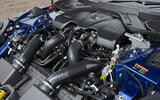
If you want combustion rather than electric power, there’s only one engine on offer here: Maserati’s Nettuno twin-turbocharged 3.0-litre V6, with either 483bhp or 583bhp.

Even in a GT carrying something of a weight penalty, laden with four-wheel drive and air suspension as standard and measuring almost five metres long, that feels like quite a lot.

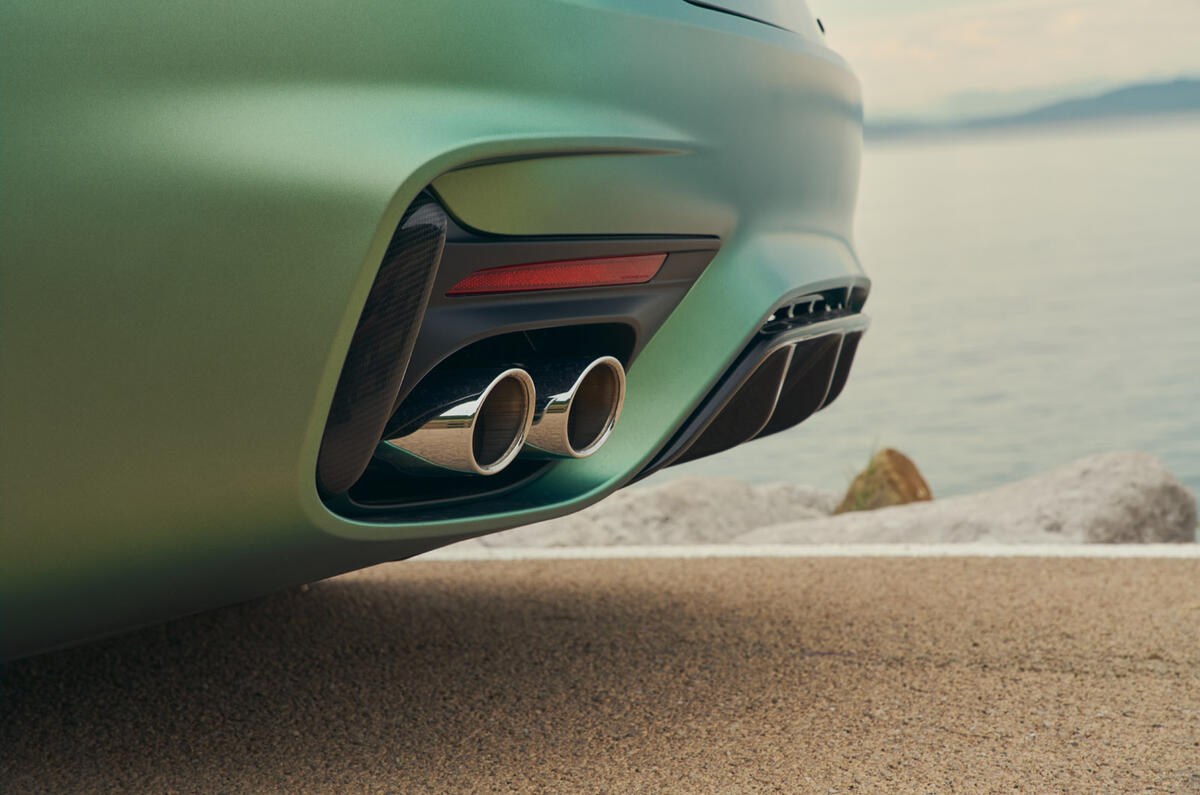
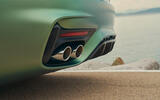
The most exciting and obvious change for 2026 is the fitting of a new exhaust system that aims to bolster the sense of occasion to a level befitting a £160,000 Italian sports car. No engine would have had an easy time replacing the thunderous 4.2-litre atmo V8 that powered the old Granturismo, meaning this V6 started on the back foot, so droney and flatulent did it sound by comparison. But with this new arrangement, Maserati has recaptured some of that lost viscerality and sense of purpose.

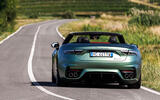
Exclusive to the top-rung Trofeo, it drops the central silencer, reroutes the pipes to the rear muffler on each side, adds wider-bore outlets and gains a hole in the main pipe to create a degree of interference.

It's "as loud as it can be", the engineers grin, and certainly it contributes significantly to making the Grancabrio a much more exciting car to drive. 

Pootle about in Normal mode and the Nettuno remains a fairly ordinary-sounding engine, not unlike a Volkswagen Golf R's turbo four in its bubbly idle and burpy gearshifts, but open it out in Sport and it doesn't so much loosen its tie as strip off entirely and show you some obscene tattoos.

Once the turbos come on song at around 2000rpm, this V6 sings with the best of ‘em. It’s low and ominous through the mid-range, taking on a characteristically shrieky overtone near the top of the rev band to signal the urgent need for a higher ratio.

And when you do change up (calling upon the ZF eight-speeder via some of the most substantial and pleasingly engineered paddles in the business), it emits a piercing whip-crack as any unburned fuel finds itself rapidly combusted at the wrong end of the exhaust pipe. Tunnels are extremely fun. 

It’s all a bit contrived and childish, and maybe a little out of place in a car with such aspirations to elegance and sophistication, but it goes some way, at last, to making up for the death of Maserati's V8. 

The four-wheel drive system does have an electronic differential at the rear, but it isn’t a particularly complicated one, the torque distribution varying with selected drive mode.

The eight-speed automatic gearbox is nice and smooth in ordinary driving, but those big paddles don’t deliver the quickest or most crisp-feeling shifts in manual mode.

RIDE & HANDLING

6
Maserati GranCabrio Trofeo V6 review 2026 098

Styling changes, interior upgrades and shouty exhaust aside, Maserati has left its GT relatively untouched mechanically.

The Trofeo has been given a 40bhp power hike, which is welcome if not transformative: it’s still a decently quick car that stops short of pin-you-back supercar pace.

Now, just as with the previous Grancabrio, you can watch Maserati’s chassis flex simply by looking in the rear-view mirror, as header rail and then back-seat headrests all shimmy in syncopated rhythm over each lump and bump.

Meanwhile, the lower-powered standard car now comes with a Country mode that lifts the suspension by 20mm at speeds of up to 75mph. 

So the Grancabrio remains largely unchanged to drive, which is to say quick, satisfying and comfortable, if a little short on outright engagement.

It has nice, heavy steering – and it’s responsive with it – but ultimately feels a little too cumbersome and softly sprung to ever really get stuck into tight technical roads.

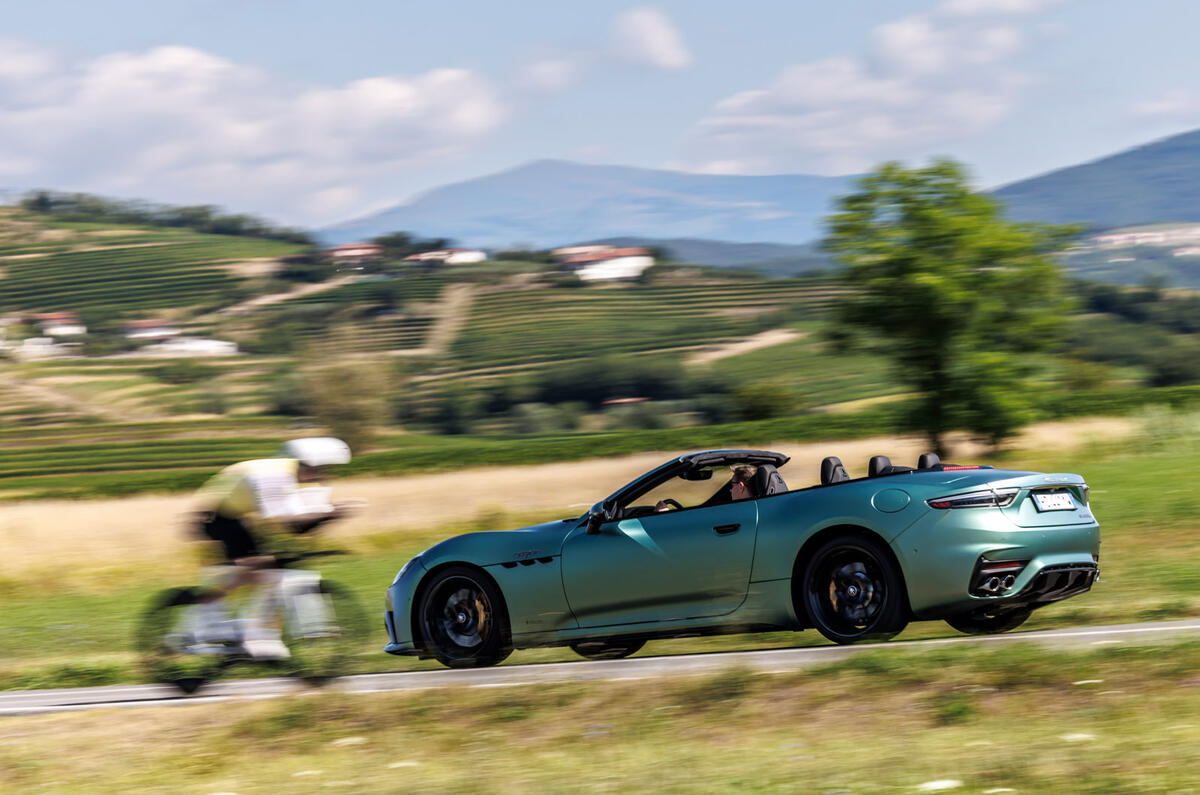
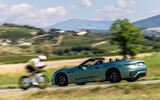
It’s at its best on fast, sweeping B-roads, where its GT character really shines through and you can make blistering progress if you’re in the mood. 

It always feels like quite a big and heavy car when it’s cornering (there’s no clever four-wheel steering here to sharpen up the turn-in, for instance) and its sportier driving modes fail to unlock much extra poise, agility or engagement from the chassis.

What’s provided makes for level, accurate and assured handling and a car that’s easy enough to drive at whatever pace you feel like, but it’s quite a way off being dynamically dazzling.

The Grancabrio steers precisely but with quite an elastic, artificial feel, and the ride varies from fairly soft but occasionally clunky in the softer drive modes through to firmer but even clunkier in the angrier ones, with quite a lot more twist and shudder in evidence throughout the body structure in the latter over less even roads.

MPG & RUNNING COSTS

6
Maserati GranCabrio Trofeo V6 review 2026 080

The Grancabrio is quite an expensive model, putting it head-to-head with the likes of the Mercedes-AMG SL 63 and Porsche 911 Turbo Cabriolet.

It sits a healthy margin below the cheapest Bentley Continental GTC or Aston Martin DB12 Volante yet is probably still close enough for the well-heeled convertible buyer to consider those cars as near rivals. Both would offer meaningfully more luxury appeal and desirability but admittedly not the same four-seat usability.

That V6 engine can return close to 30mpg when driven sensibly but is more likely to average 22-25mpg in mixed use.

Cap expects residual values to be competitive.

VERDICT

7
Maserati GranCabrio Trofeo V6 review 2026 102

The Grancabrio occupies a slightly awkward position in the market, which makes it tricky to judge in the context of rivals. It’s tempting to consider it against the likes of the Aston Vantage Roadster and maybe the Bentley Continental GTC, but the former is now a hot-blooded, full-blown super-sports car and the latter is in a different league of luxury altogether. 

The Mercedes-AMG SL 63 is really the only drop-trop 2+2 cruiser on sale that offers comparative performance for a similar price – perhaps with the trump card that it still packs a V8.

But the really uncomfortable truth is that the BMW M4 Competition Convertible does much the same thing – albeit a bit less tunefully – for £64,000 less. 

Felix Page

Felix Page
Title: Deputy editor

Felix is Autocar's deputy editor, responsible for leading the brand's agenda-shaping coverage across all facets of the global automotive industry - both in print and online.

He has interviewed the most powerful and widely respected people in motoring, covered the reveals and launches of today's most important cars, and broken some of the biggest automotive stories of the last few years. 

Matt Saunders

Matt Saunders Autocar
Title: Road test editor

As Autocar’s chief car tester and reviewer, it’s Matt’s job to ensure the quality, objectivity, relevance and rigour of the entirety of Autocar’s reviews output, as well contributing a great many detailed road tests, group tests and drive reviews himself.

Matt has been an Autocar staffer since the autumn of 2003, and has been lucky enough to work alongside some of the magazine’s best-known writers and contributors over that time. He served as staff writer, features editor, assistant editor and digital editor, before joining the road test desk in 2011.

Since then he’s driven, measured, lap-timed, figured, and reported on cars as varied as the Bugatti Veyron, Rolls-Royce PhantomTesla RoadsterAriel Hipercar, Tata Nano, McLaren SennaRenault Twizy and Toyota Mirai. Among his wider personal highlights of the job have been covering Sebastien Loeb’s record-breaking run at Pikes Peak in 2013; doing 190mph on derestricted German autobahn in a Brabus Rocket; and driving McLaren’s legendary ‘XP5’ F1 prototype. His own car is a trusty Mazda CX-5.