



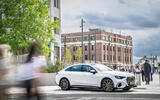
The long-running German saloon has gone electric – but it keeps all the strengths that made it great

Find Mercedes C-Class Electric driven: new tech, still a proper Merc deals
Other Services
Sell your car
84% get more money with

The arrival of the Mercedes-Benz C-Class Electric seems a seminal moment on the road to full electrification. Here we have the firm whose founder, Karl Benz, patented the combustion-powered passenger vehicle 140 years ago, launching an electric version of the defining model in its line-up.

Boss Ola Källenius describes this new EV as designed to “hit the centre of the Mercedes fan base”. While the GLC SUV is Stuttgart’s best-seller nowadays, the compact executive saloon market remains the arena in which German premium brands are judged (and with the Neue Klasse BMW i3 on the way, our road testers are already salivating to do some judging).
 

So an electric C-Class is a big deal, even if Källenius claims the aim is to ensure you don’t really notice the change in powertrain. “The feedback from dealers and customers is that we’ve hit the spot,” he tells me. “They say ‘that’s a beautiful car and oh, it’s electric? Yeah, great.’”
Advertisement
Back to top

As with the closely related new electric GLC, in style and name this is an electric C-Class and not, say, an EQC saloon. In fact, Mercedes has quietly ditched its EQ branding entirely here: the official name of this first variant is the 400 4Matic electric. Yes, with a lower-case ‘e’.

So is this a true C-Class that happens to be electric, or is just an average electric saloon with a fancy grille? Let's find out.

DESIGN & STYLING

Mercedes Benz C Class ev review 2026 002

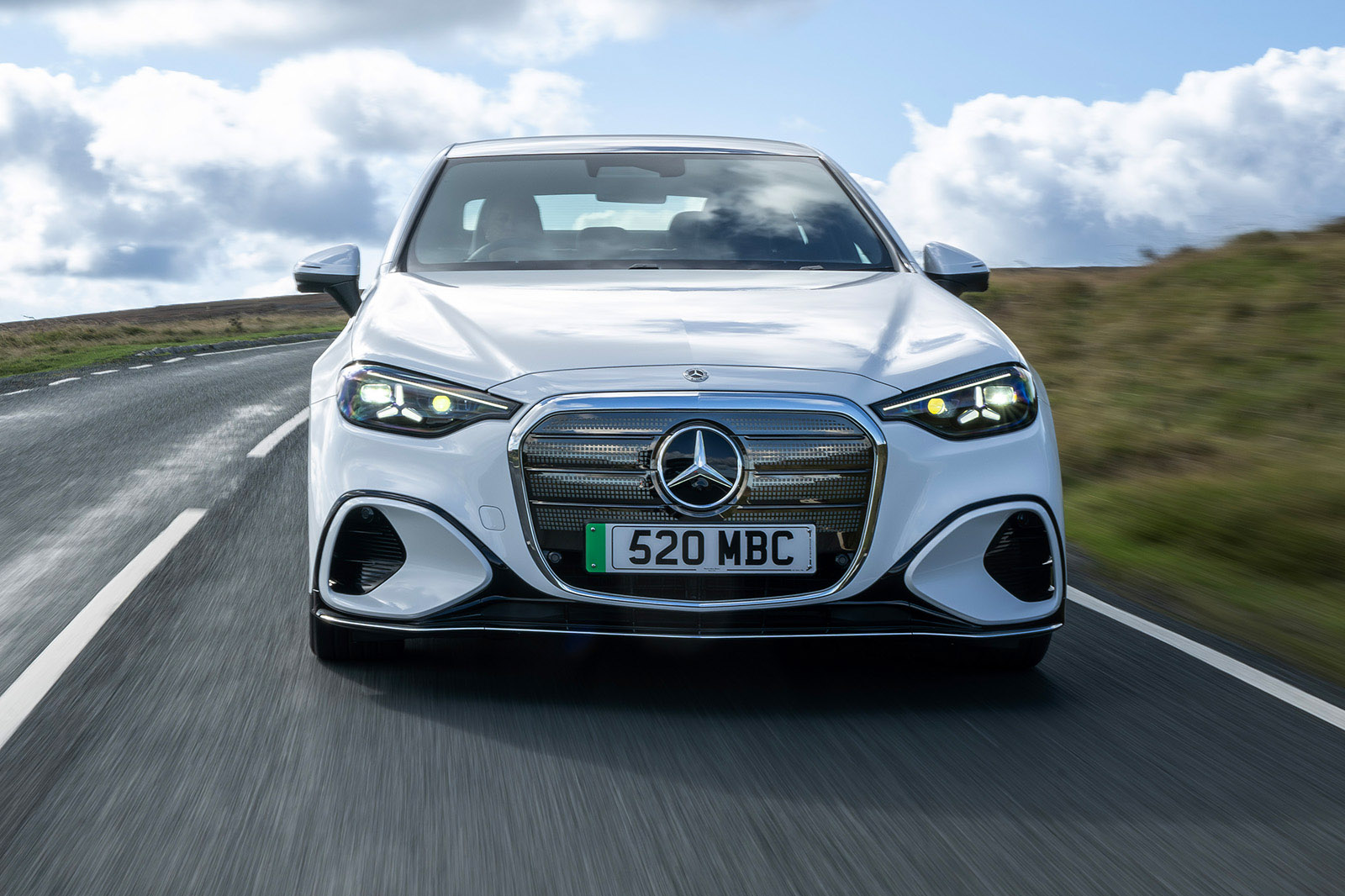
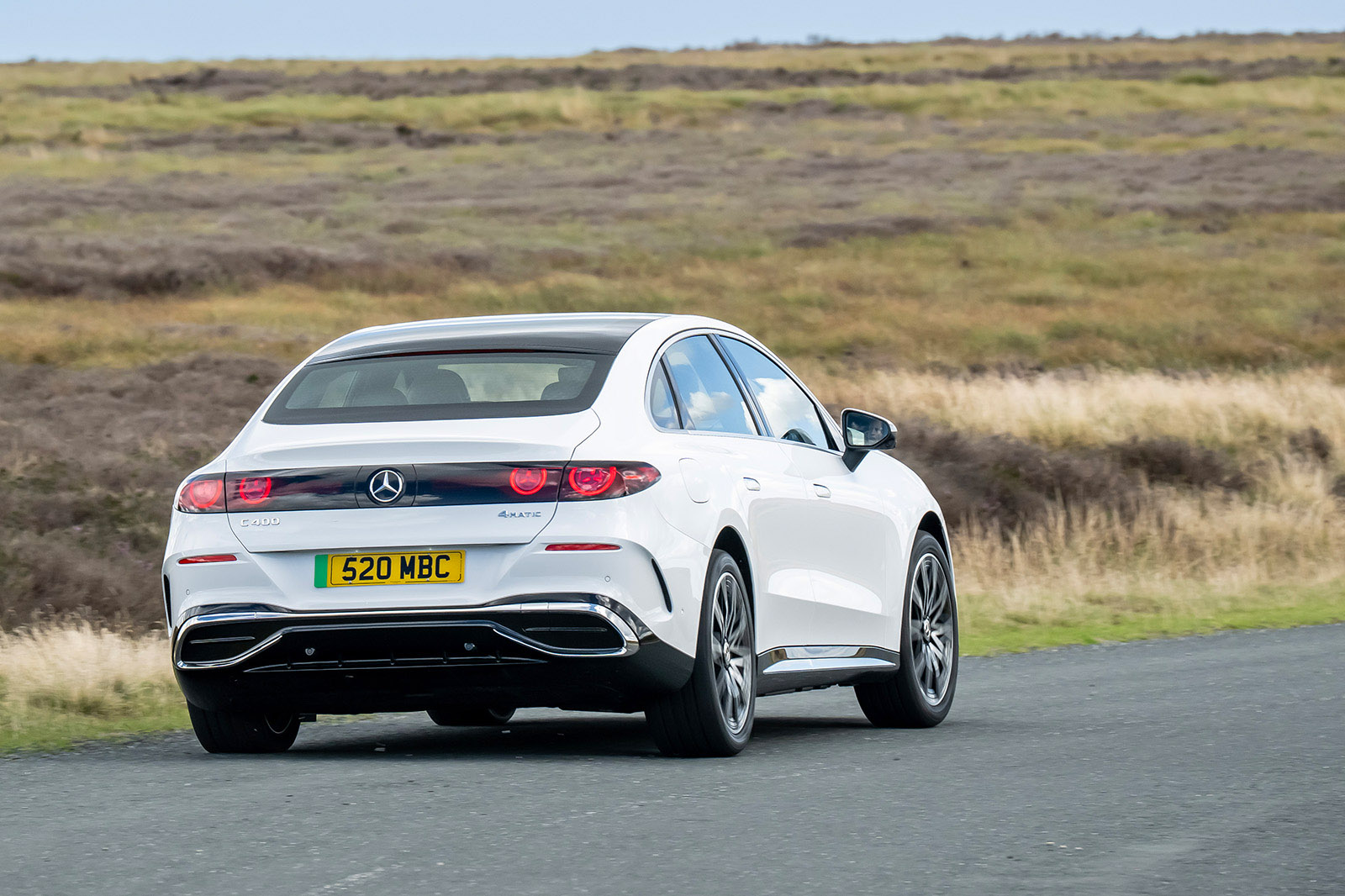
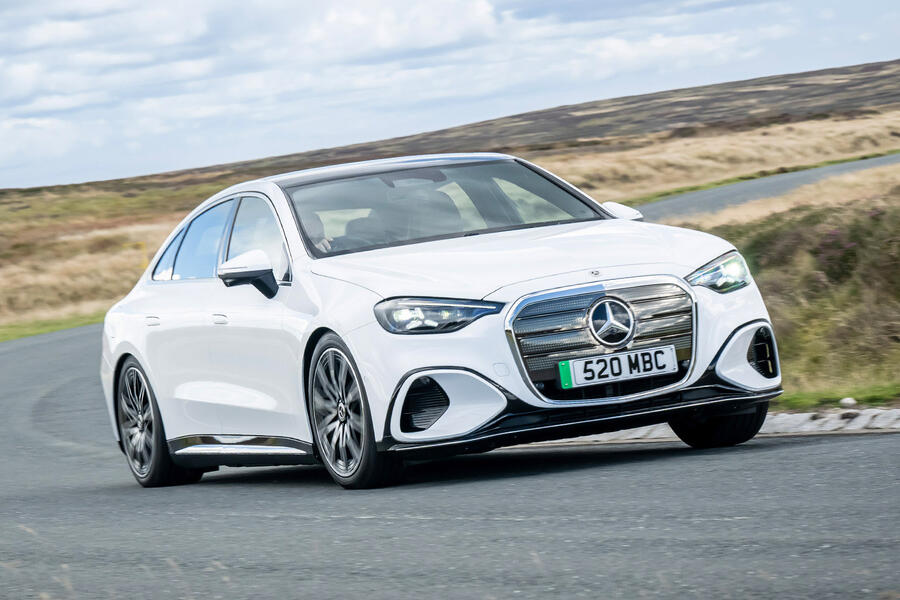
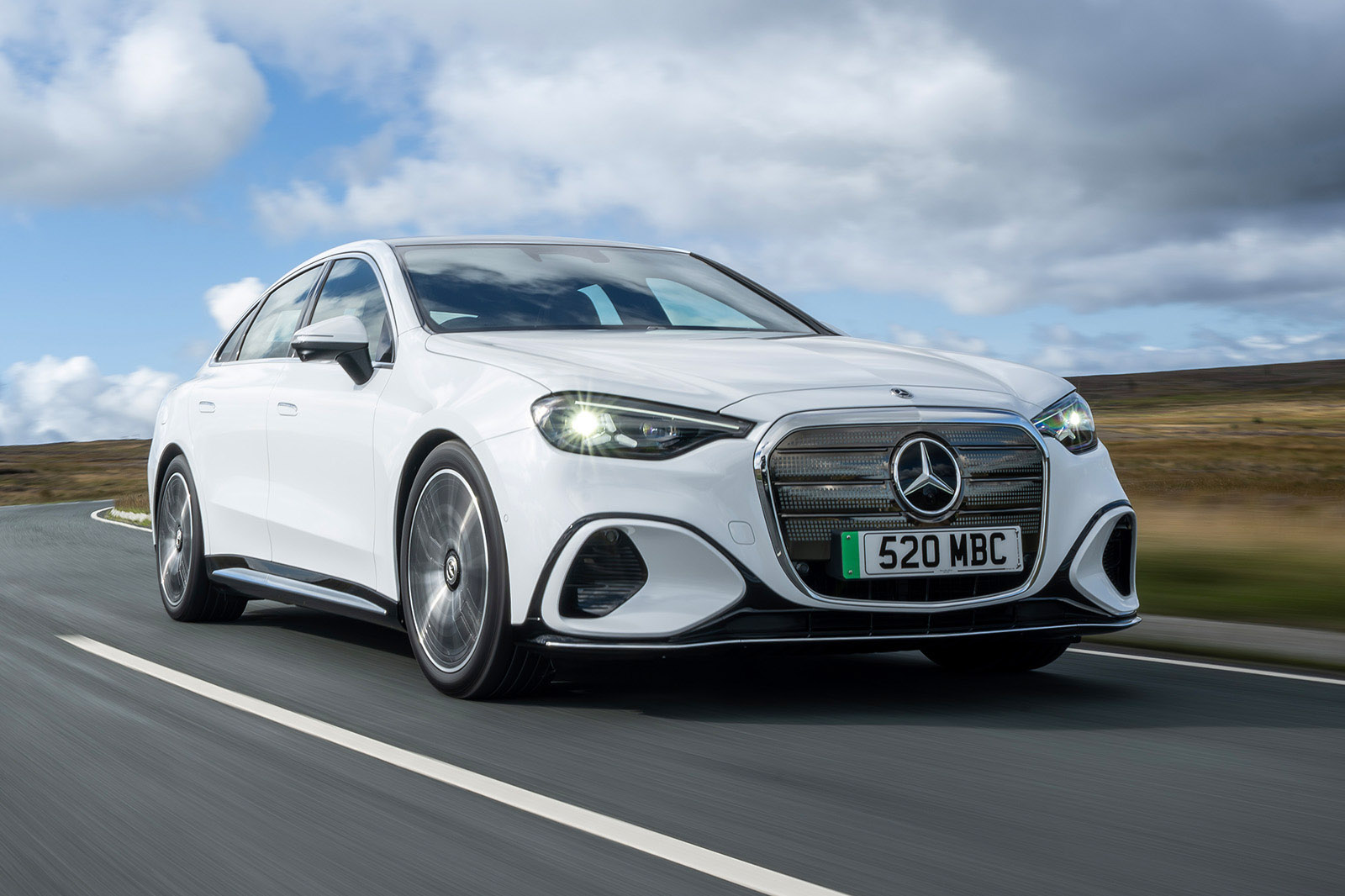
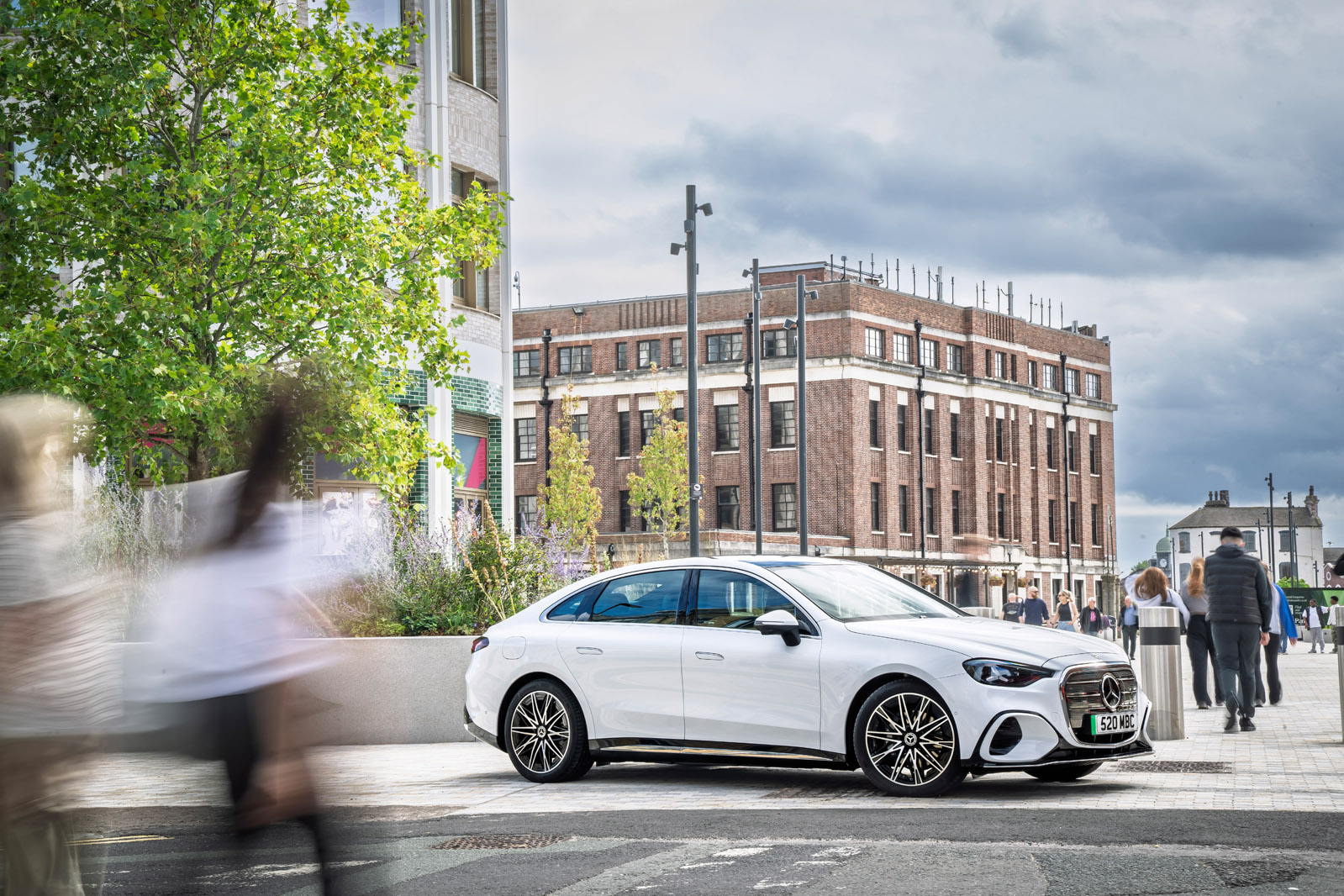
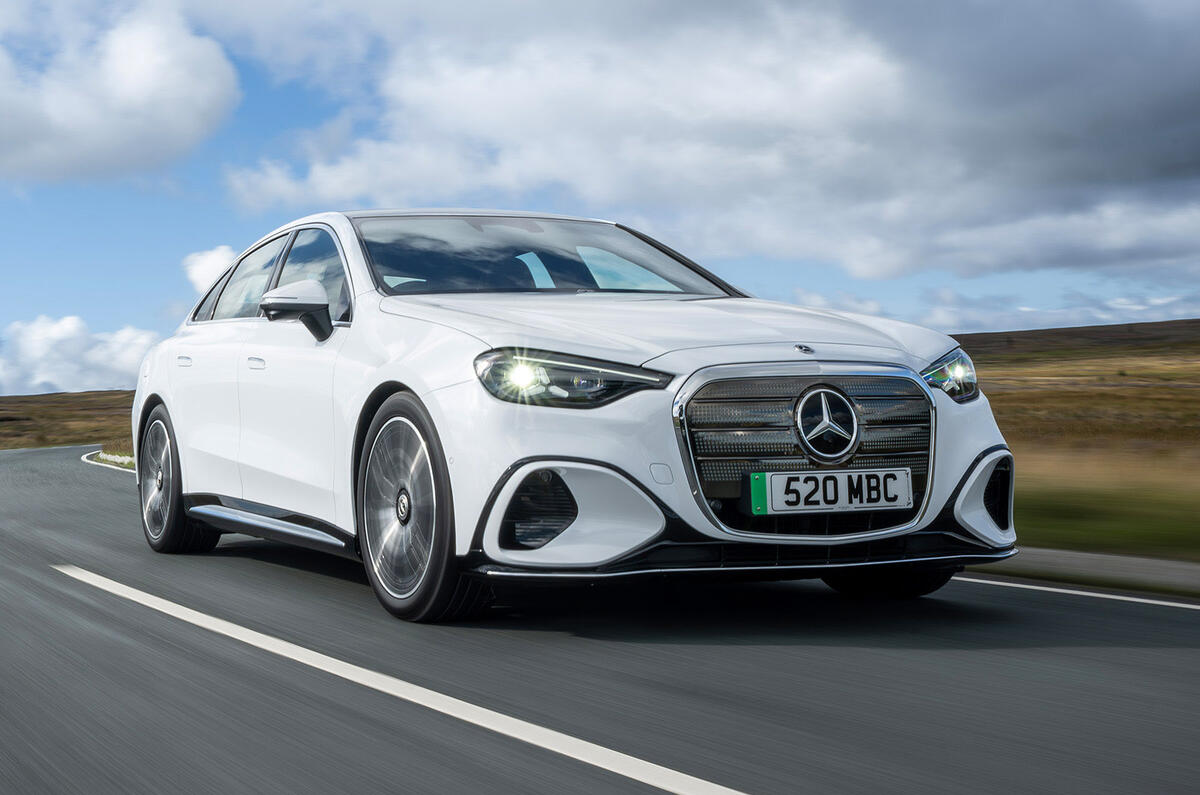
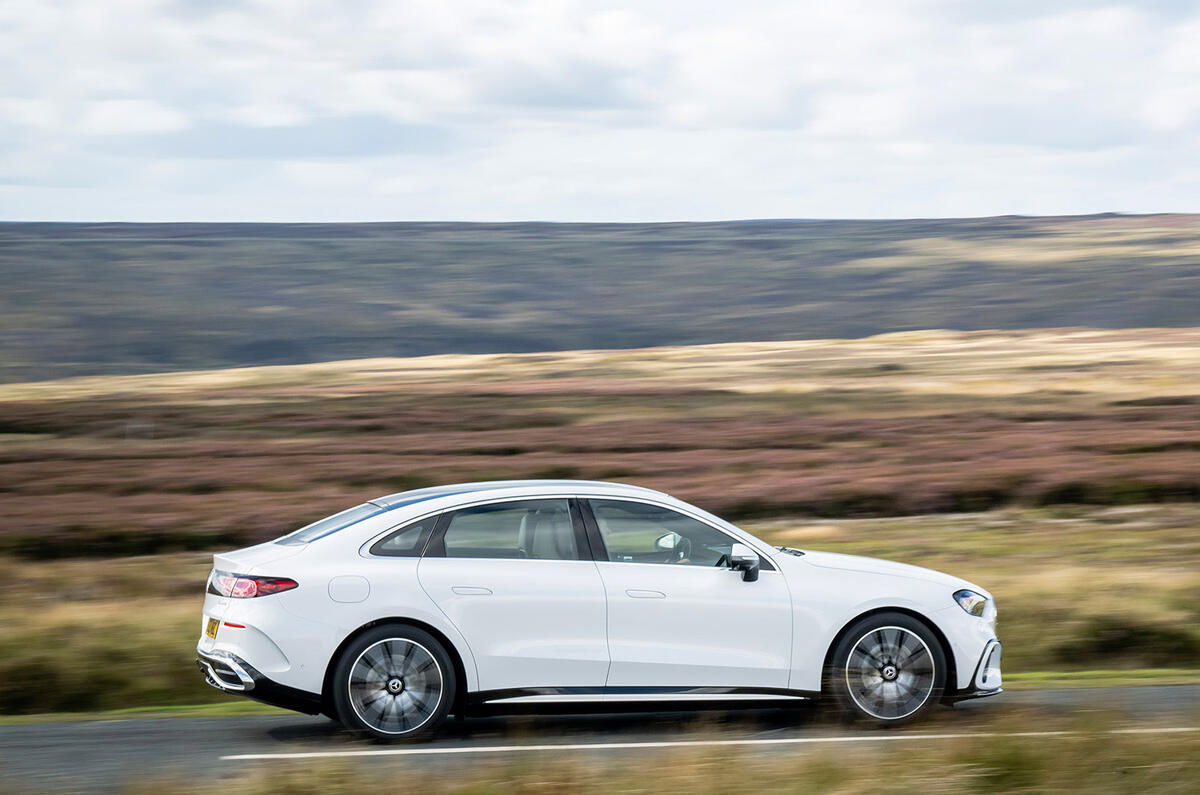
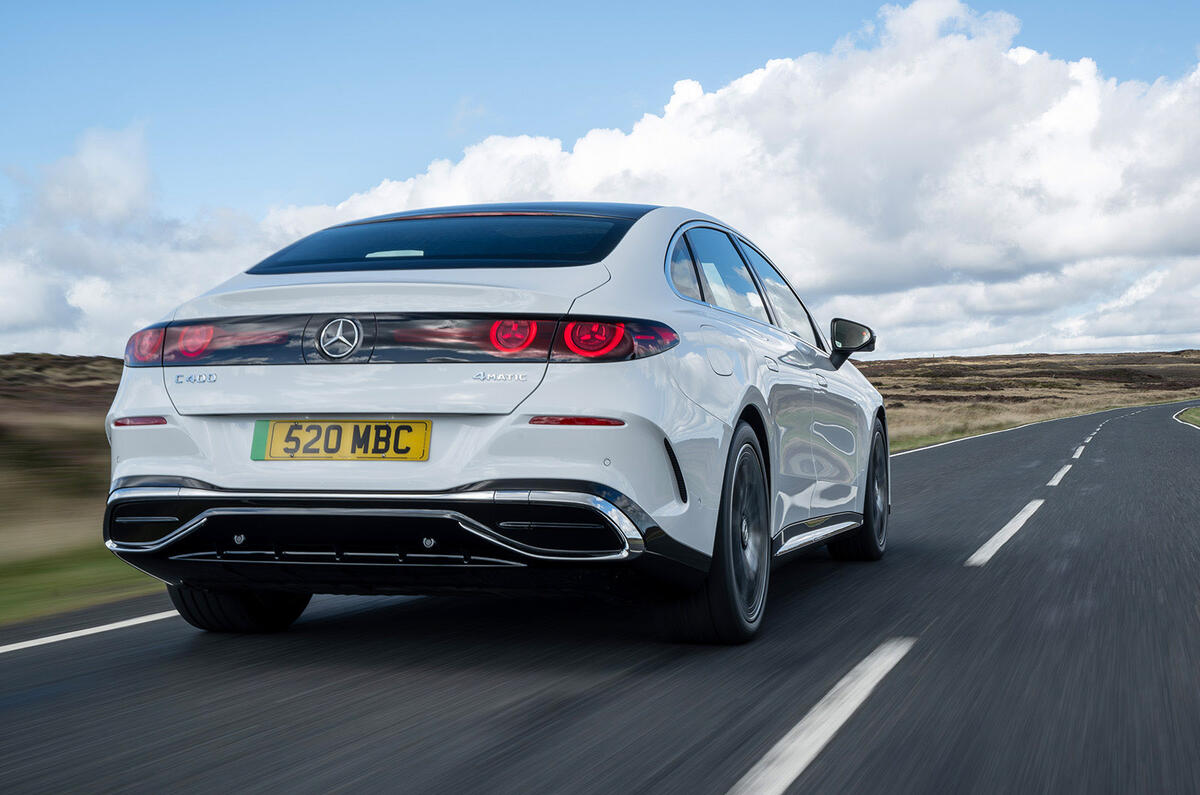
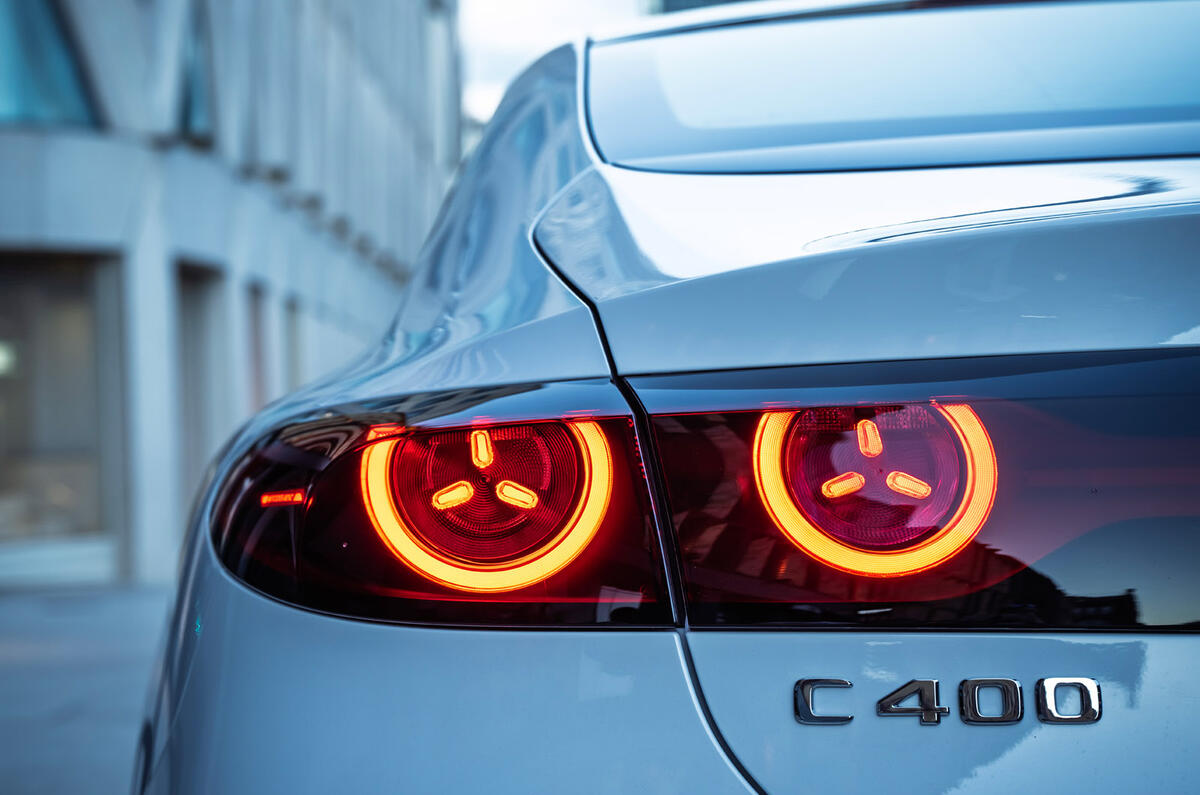
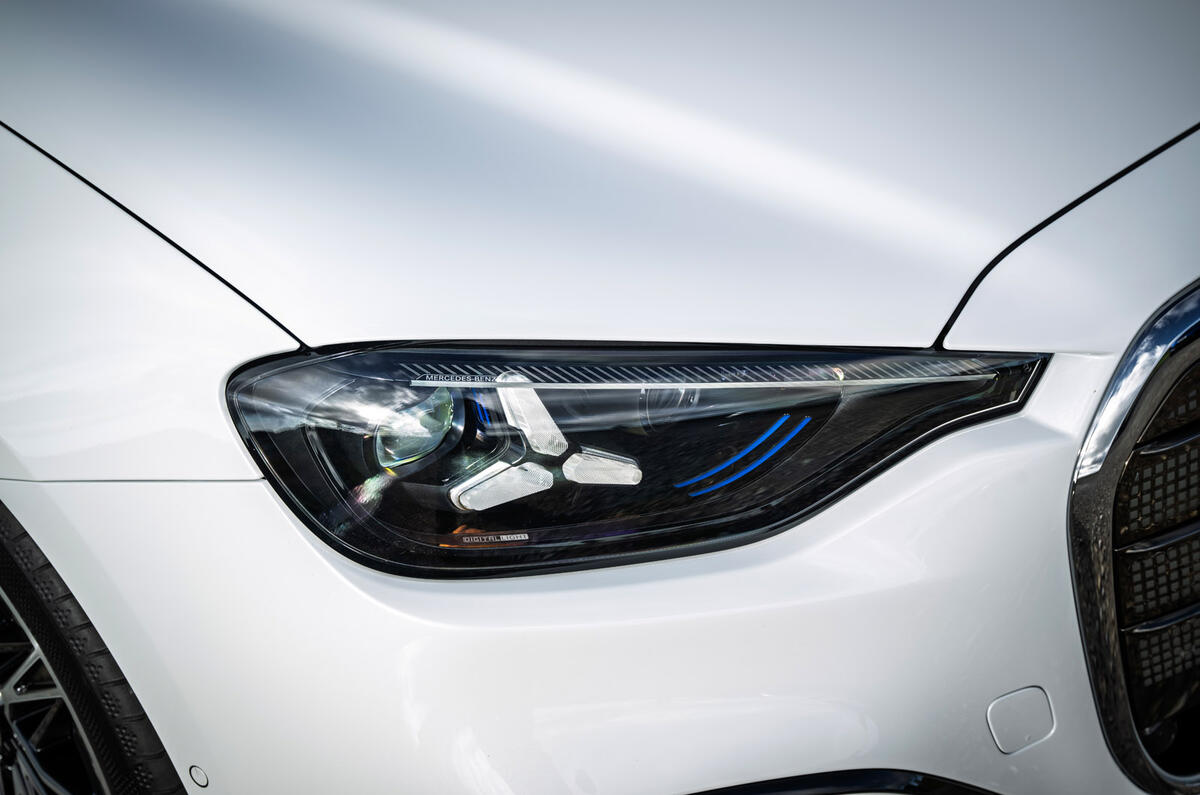
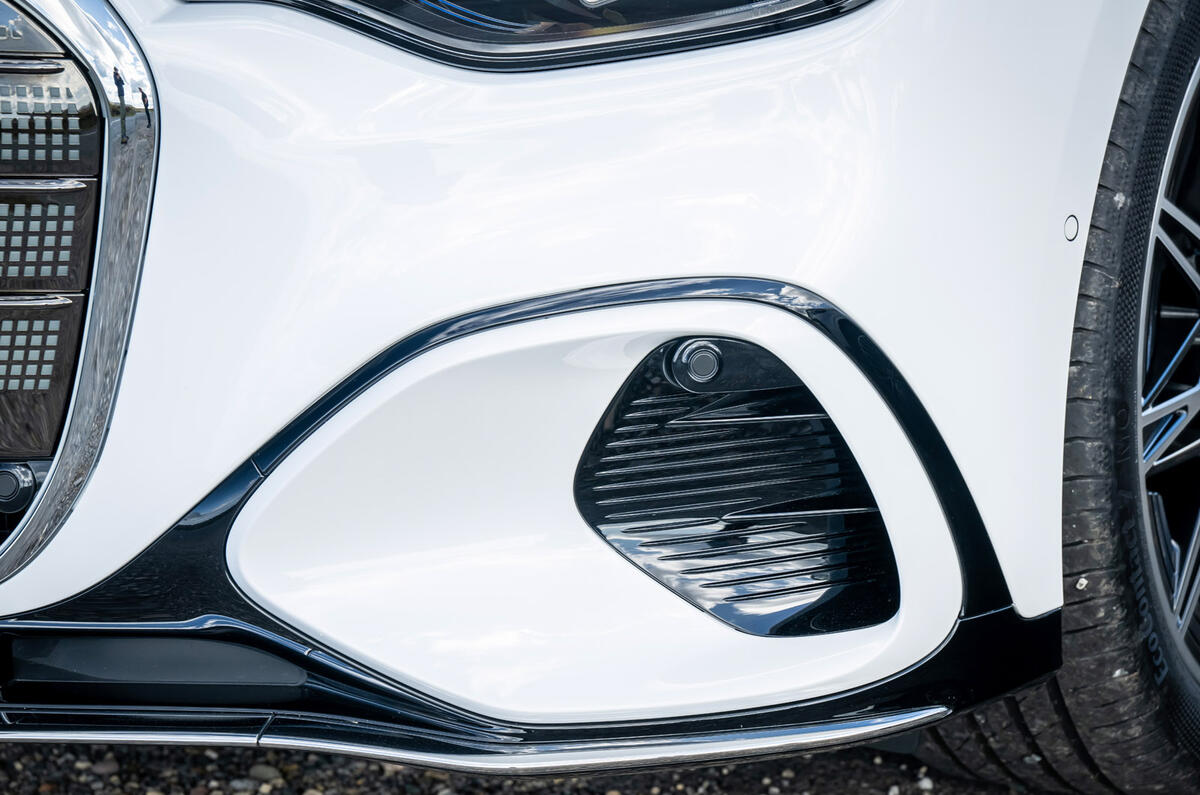
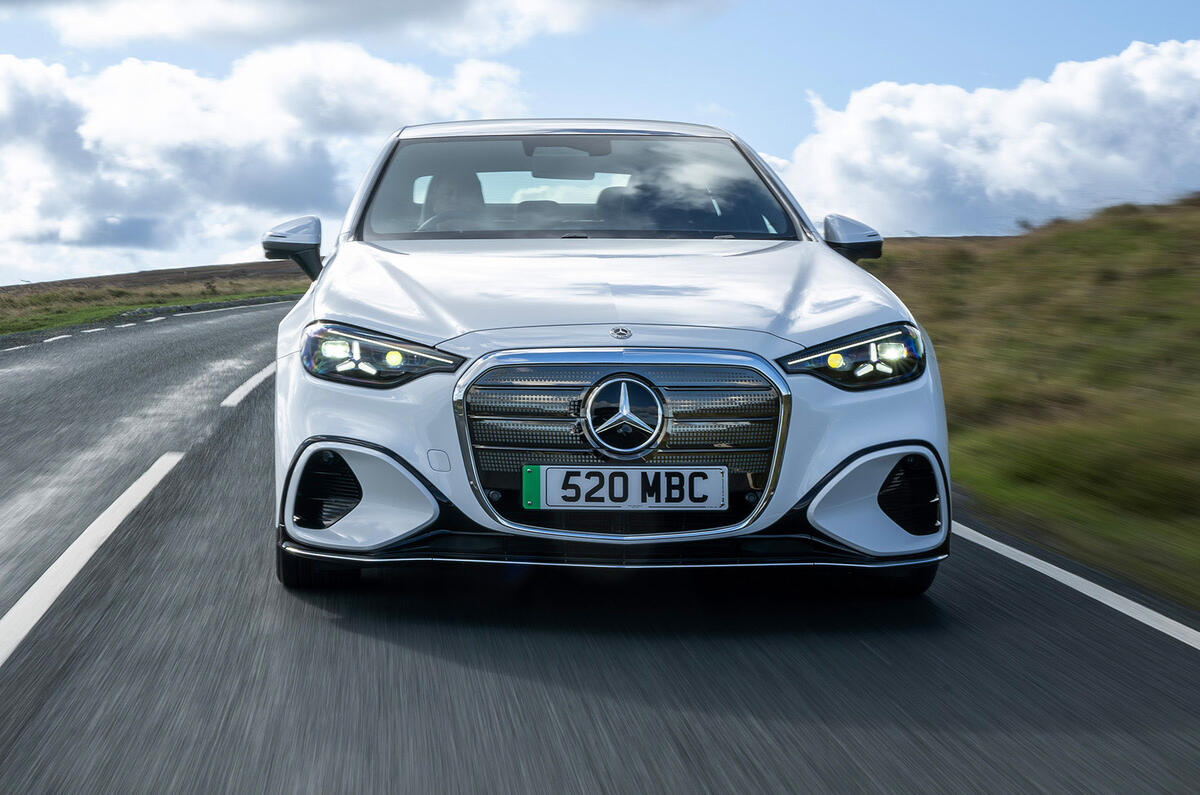
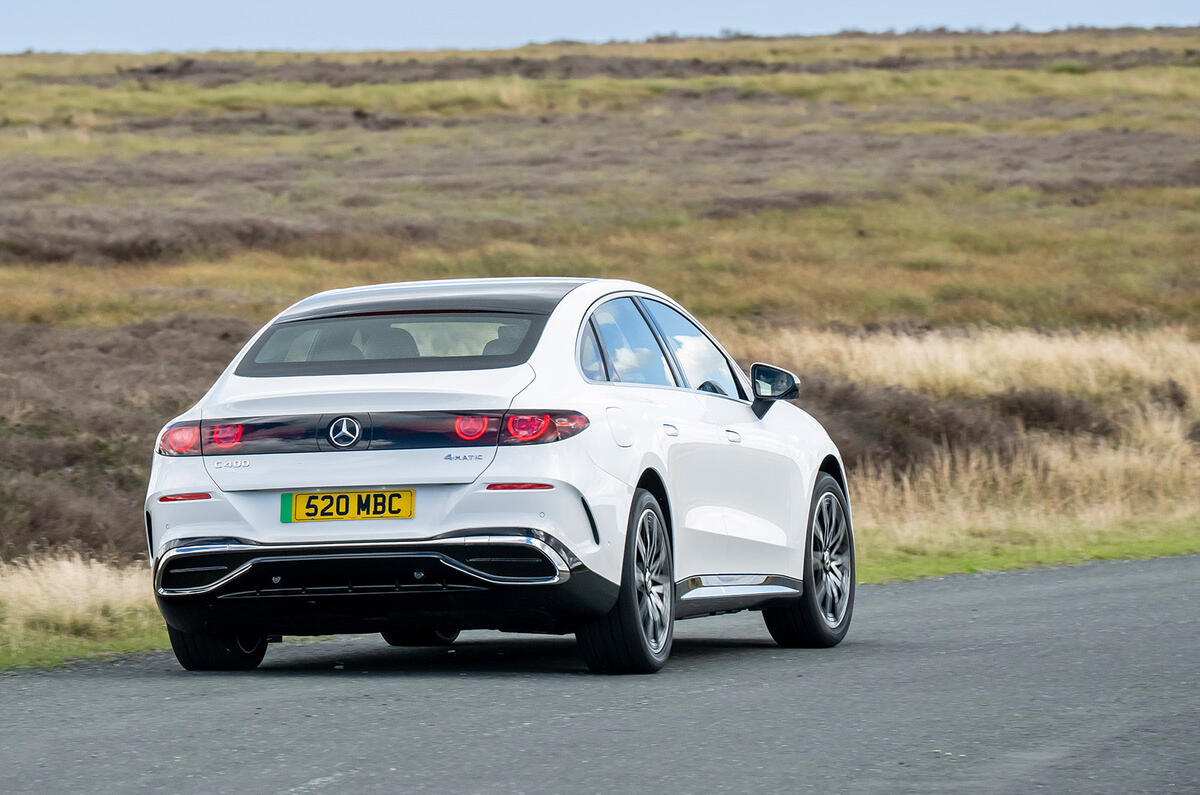
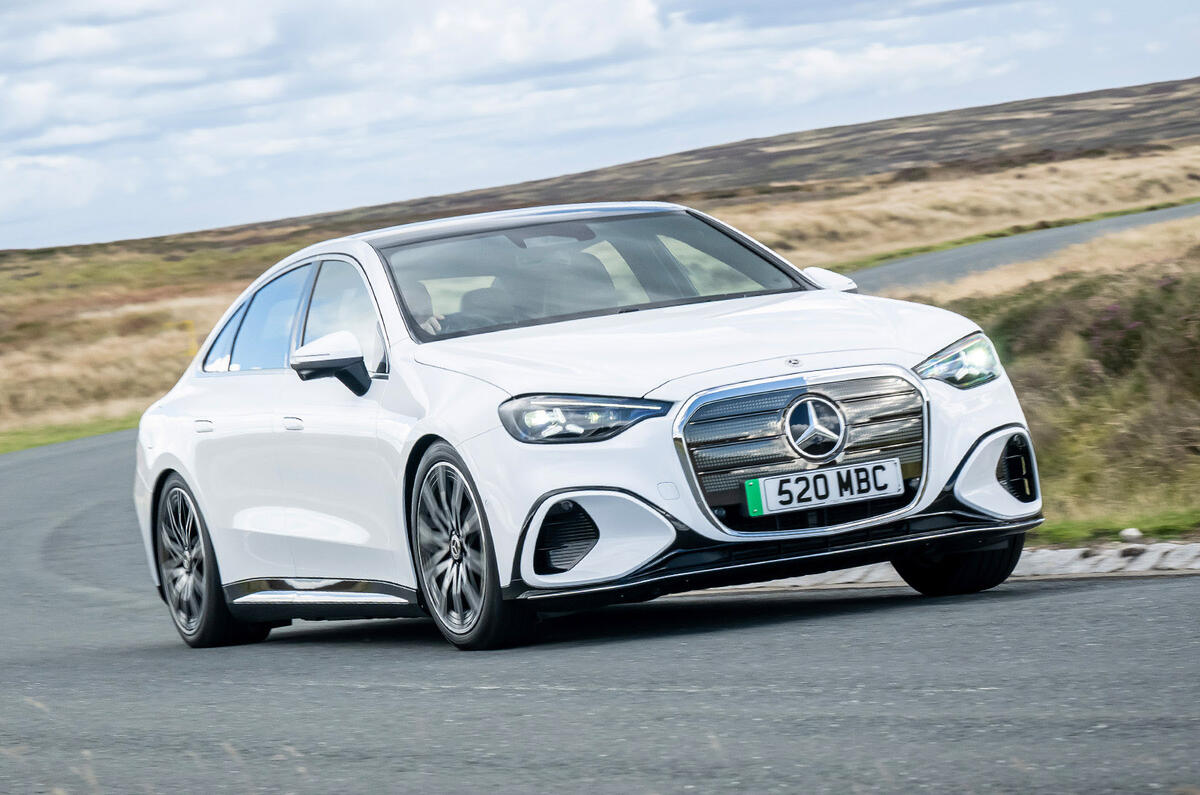
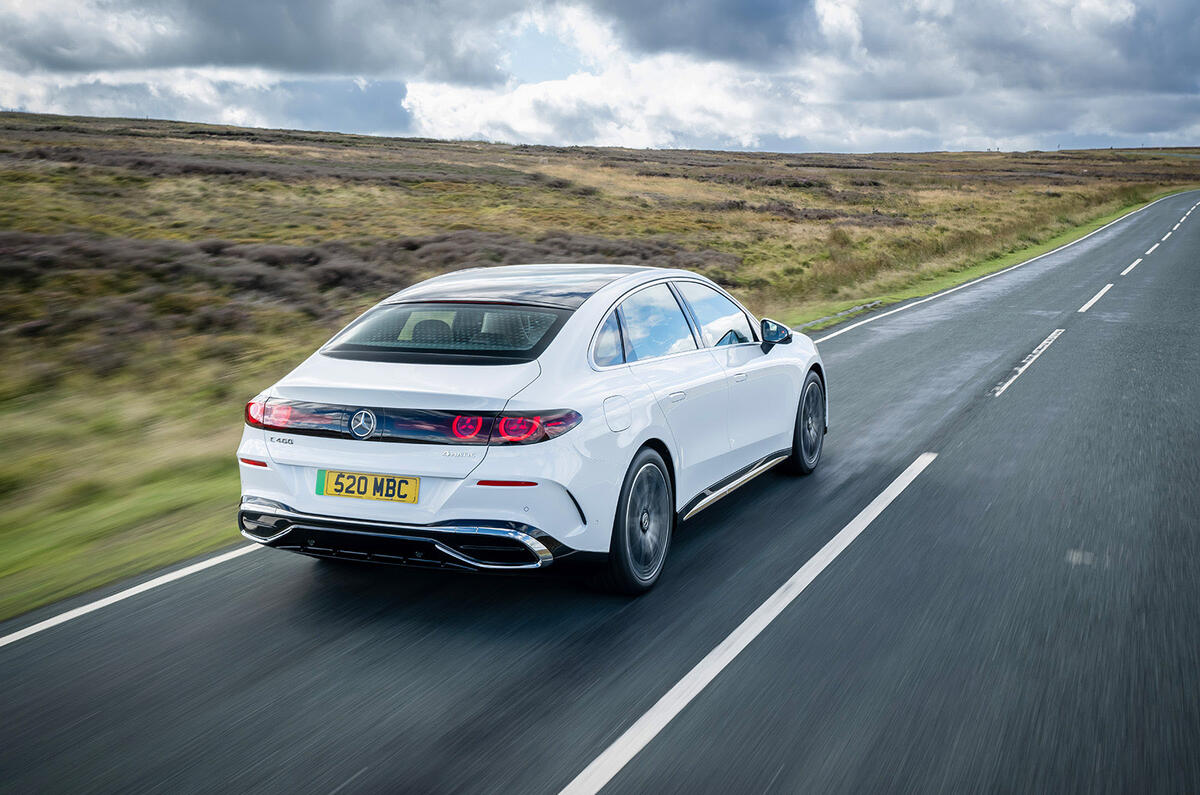
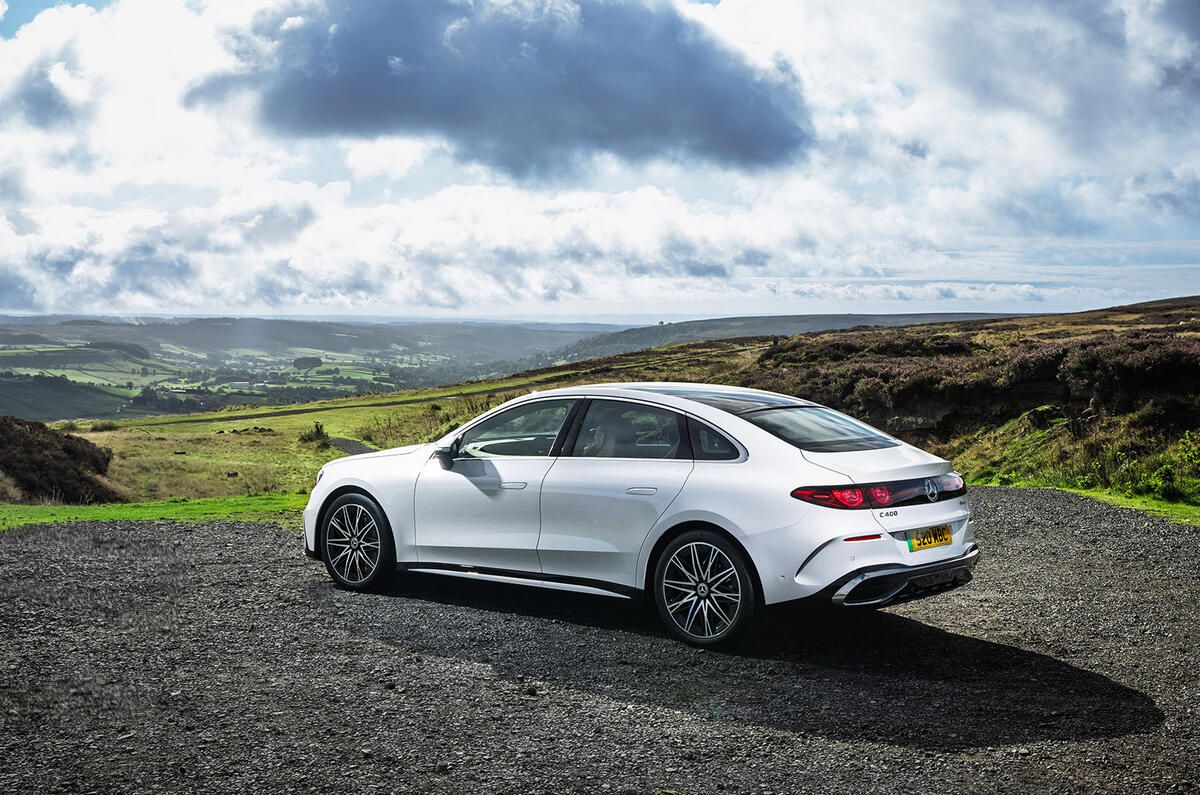
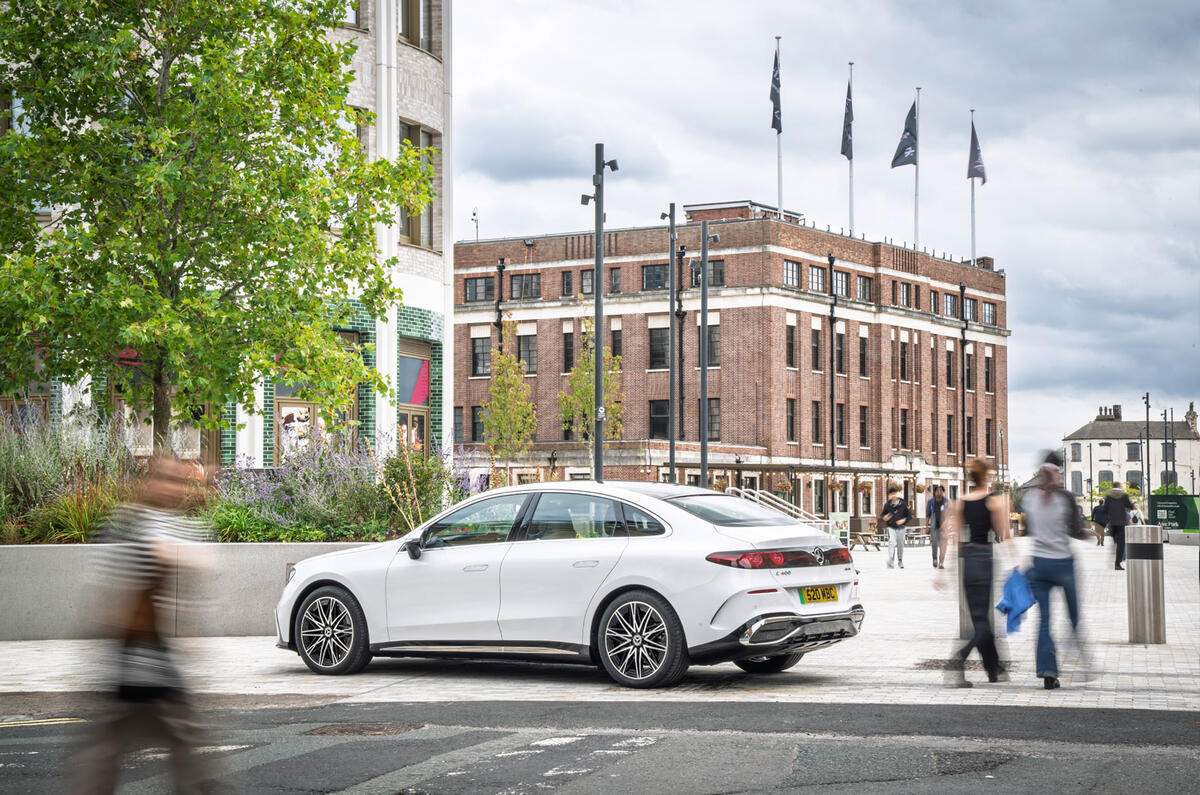
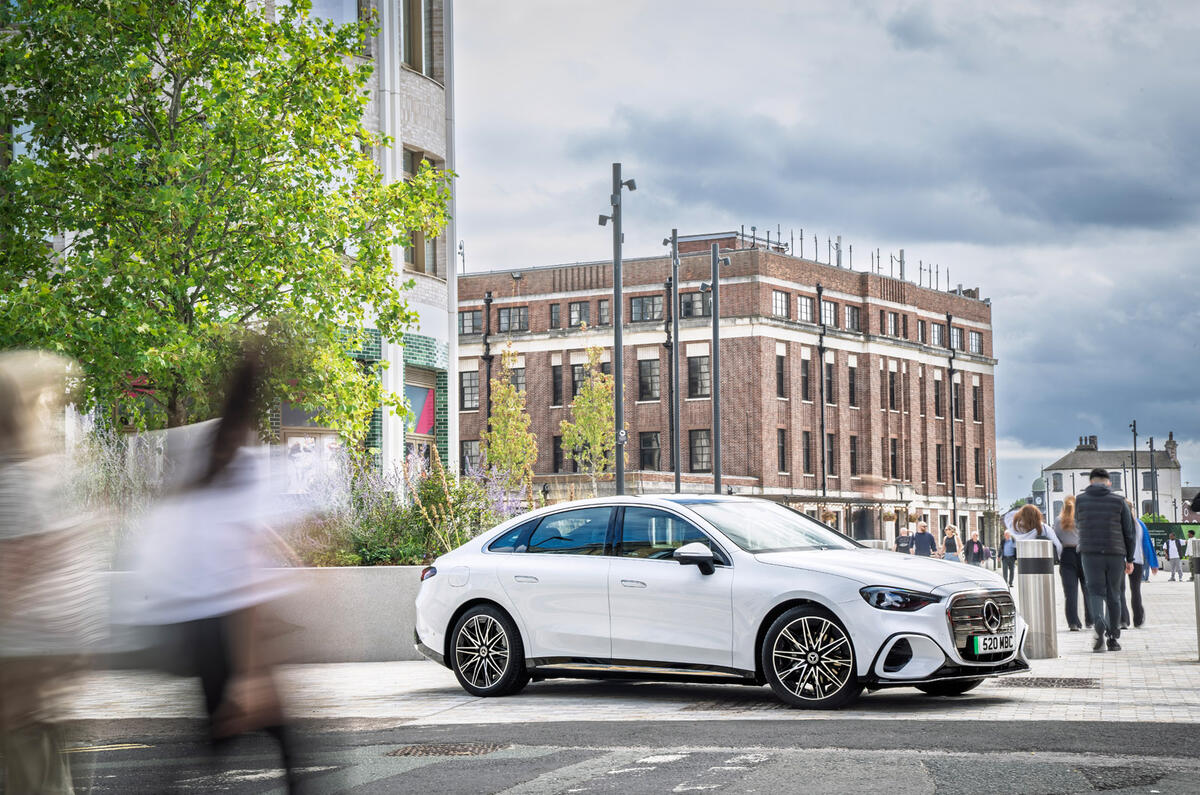
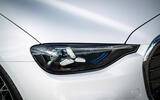
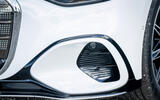
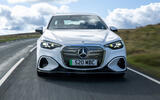
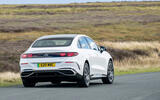
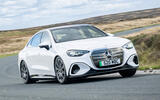
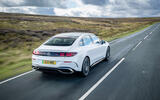
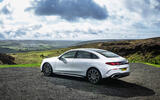
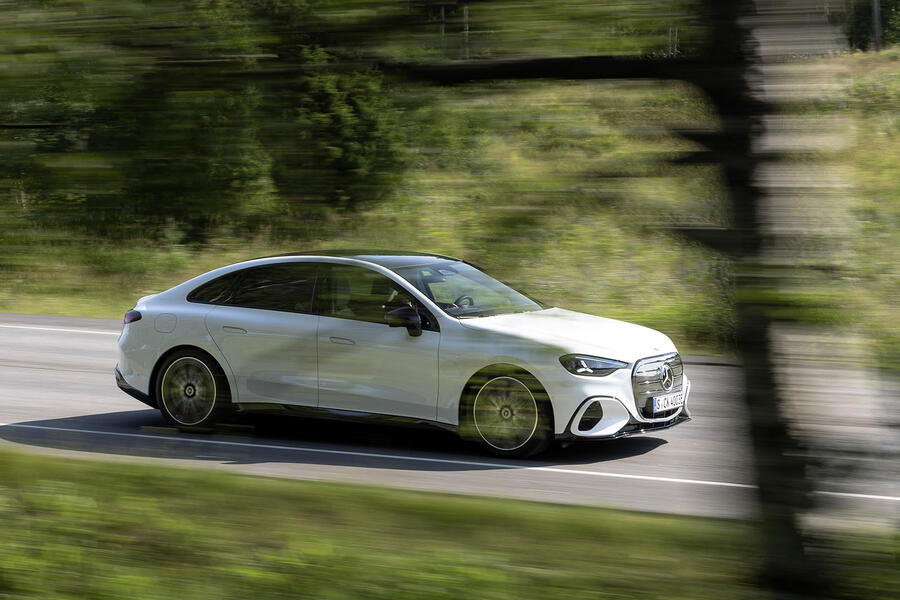
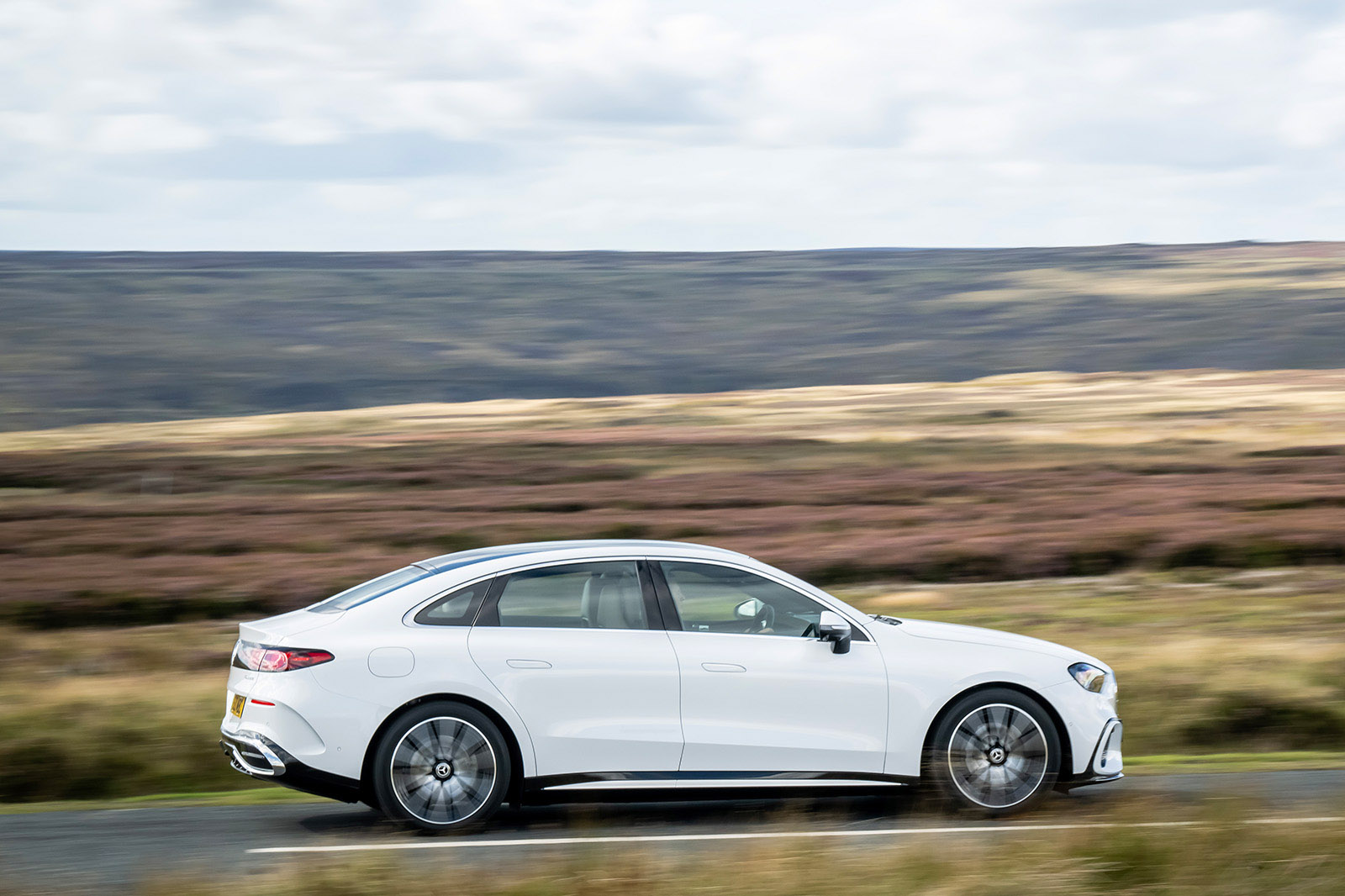
The C-Class Electric looks pretty much like a regular C-Class, more or less. Actually, let’s just go with more: to ensure optimal packaging, the wheelbase is nearly 10cm longer than that of the ICE C-Class, at 2962mm. In fact, at 4883mm in length overall the car is closer to an E-Class (4949mm) than its namesake (4751mm).

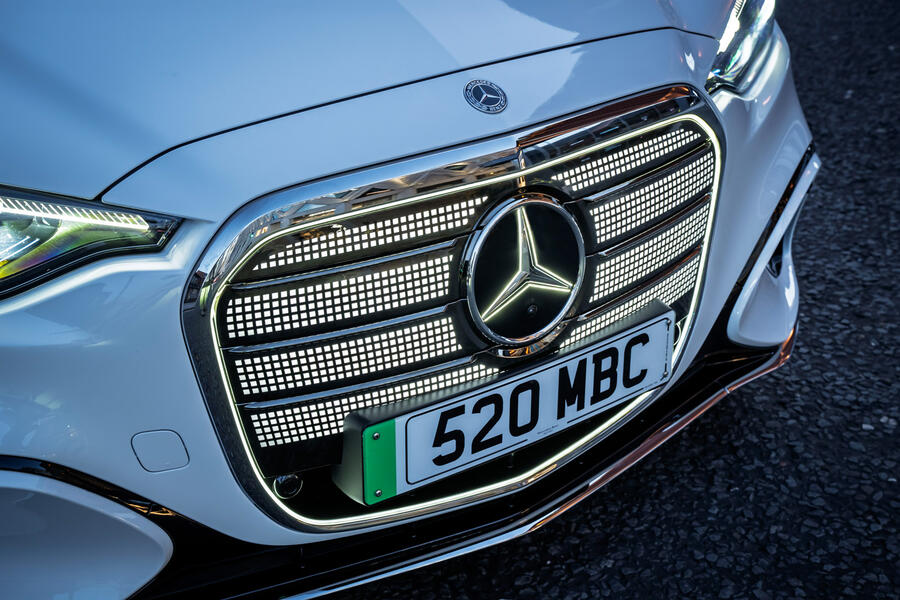
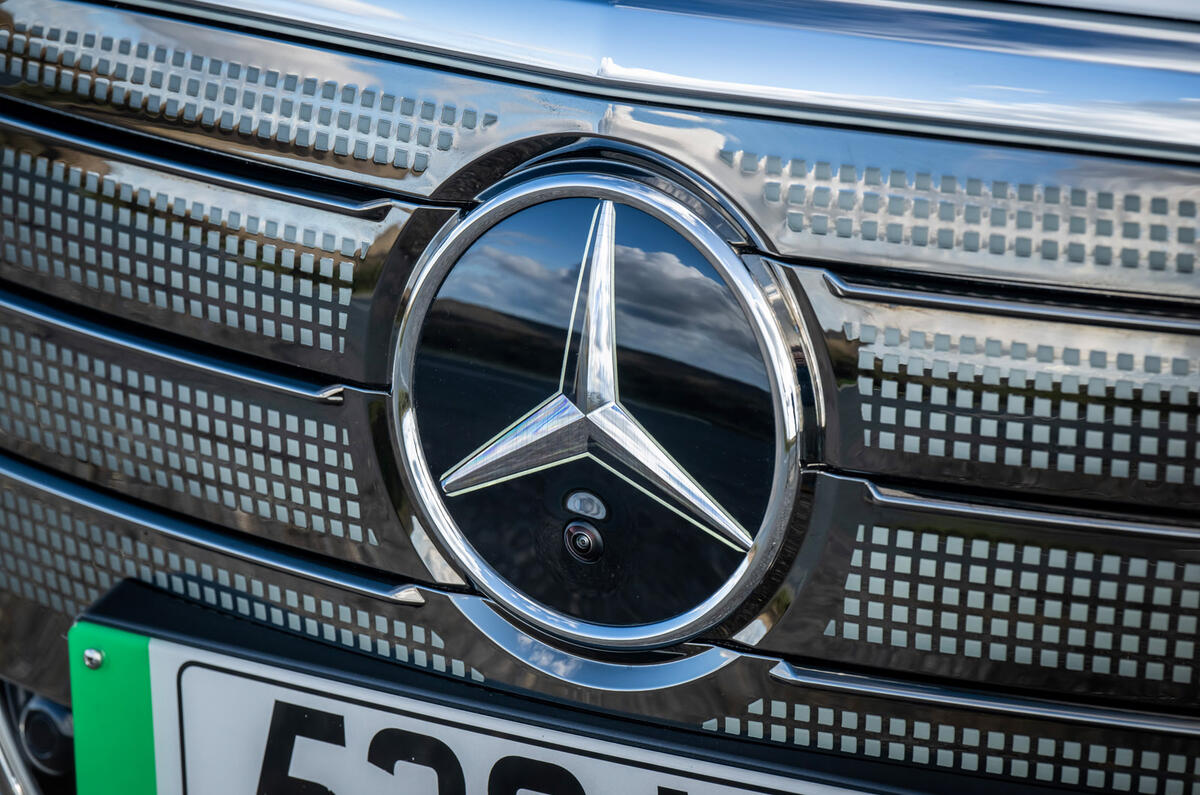
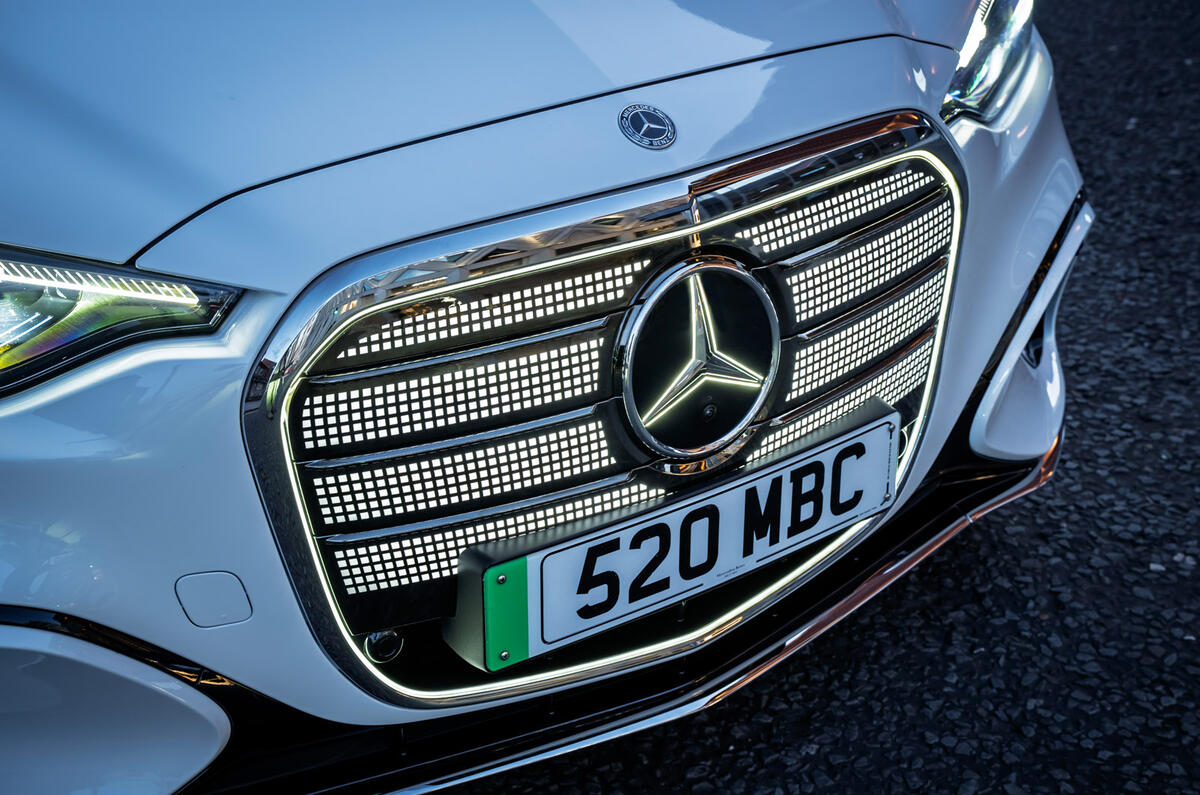
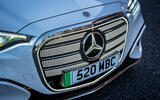
Dimensions aside, there are a host of classic Mercedes design cues, such as the front grille. It has a bit too much of a cheese-grater vibe up close for my liking, but the 1000-plus LEDs in it twinkle nicely. And the proportions are those of a classic executive saloon. To a point, at least: from some angles it still looks a bit awkward, due to the aerodynamics-honing refinements and the attempt to hide that larger size. But unlike with the amorphous old EQE and EQS saloons, there is actual character here.

The design will ensure the EV’s styling is close to that of the ICE C-Class, which will receive a major update later this year. But while similar on the surface, as with the GLC this EV is technically unrelated to its ICE namesake. It sits on Mercedes’ new and electric-only MB.EA platform, developed specifically for mid-sized models.

The C-Class will be launched as the 400 4Matic, which is set to be the most powerful standard version (excluding whatever AMG is being cooked up in Affalterbach). This features two motors combining for maximum outputs of 483bhp and 590lb ft of torque, powered by a 94kWh (usable capacity) battery.

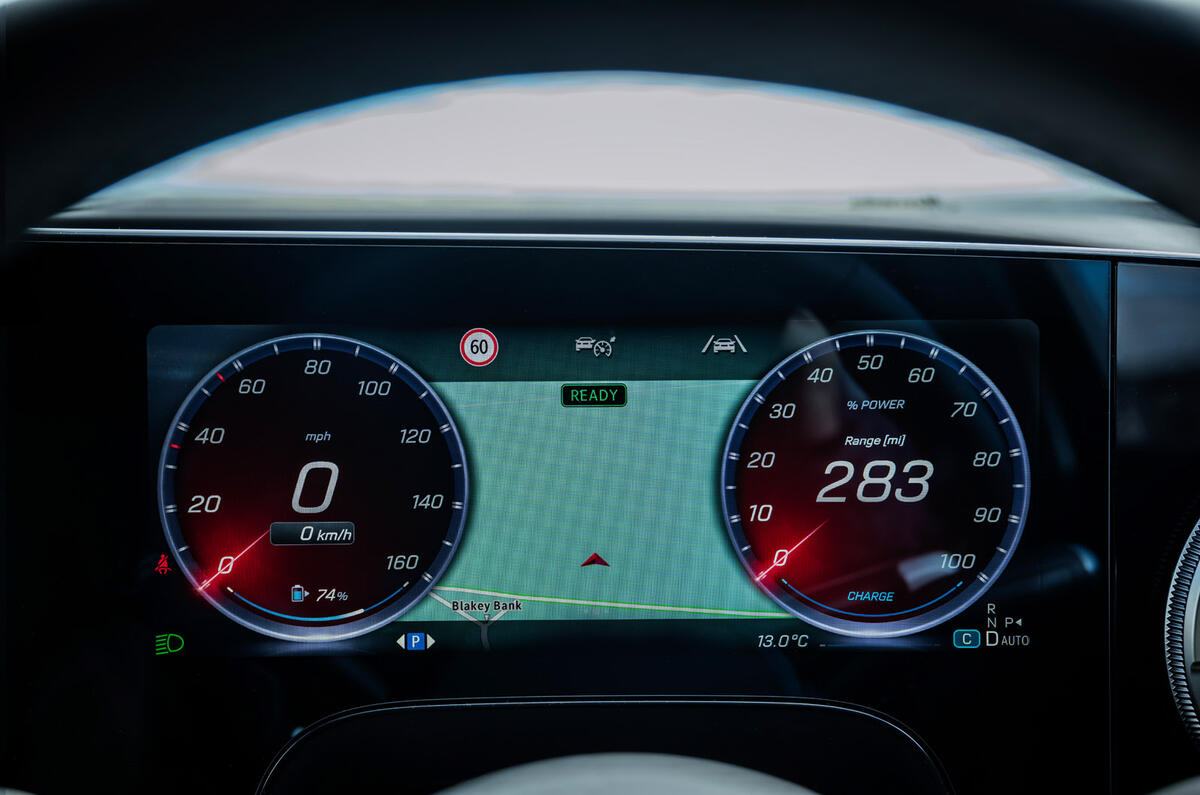
If that sounds familiar, it’s because it’s an identical output to the GLC 400 4Matic. But because the saloon is lower, more aerodynamic and lighter (relatively, at least: it still weighs 2460kg), it will travel 40 miles more on a full charge, giving it an official range of 473 miles.

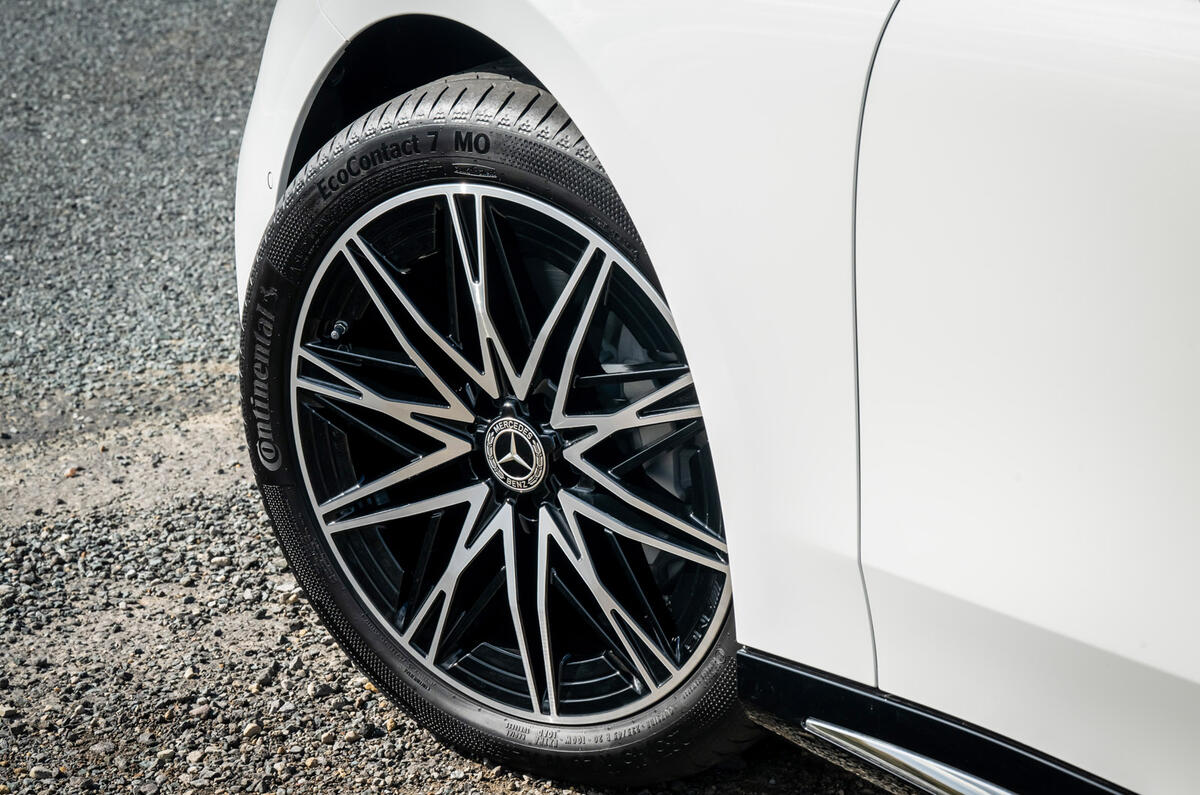
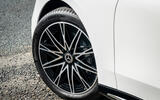
Worth noting: because the smallest wheel size in the UK will be 19in (18s are available elsewhere), the most efficient model coming here has a range of 452 miles. Five trim levels will be offered here, rising from the £57,995 Sport to the £70,830 Premier Edition.

Mercedes’ new EV powertrain is unusual in that the rear motor has a two-speed gearbox (with 11:1 and 5:1 ratios) to optimise power delivery, while the front motor is largely used to boost the power output and can be disconnected to aid efficiency when not needed.

Meanwhile, the native 800V electrical architecture ensures it can charge at rates of up to 330kW and all UK-bound cars will be fitted with a 400V inverter so that they can use all chargers.

INTERIOR

Mercedes Benz C Class ev review 2026 007

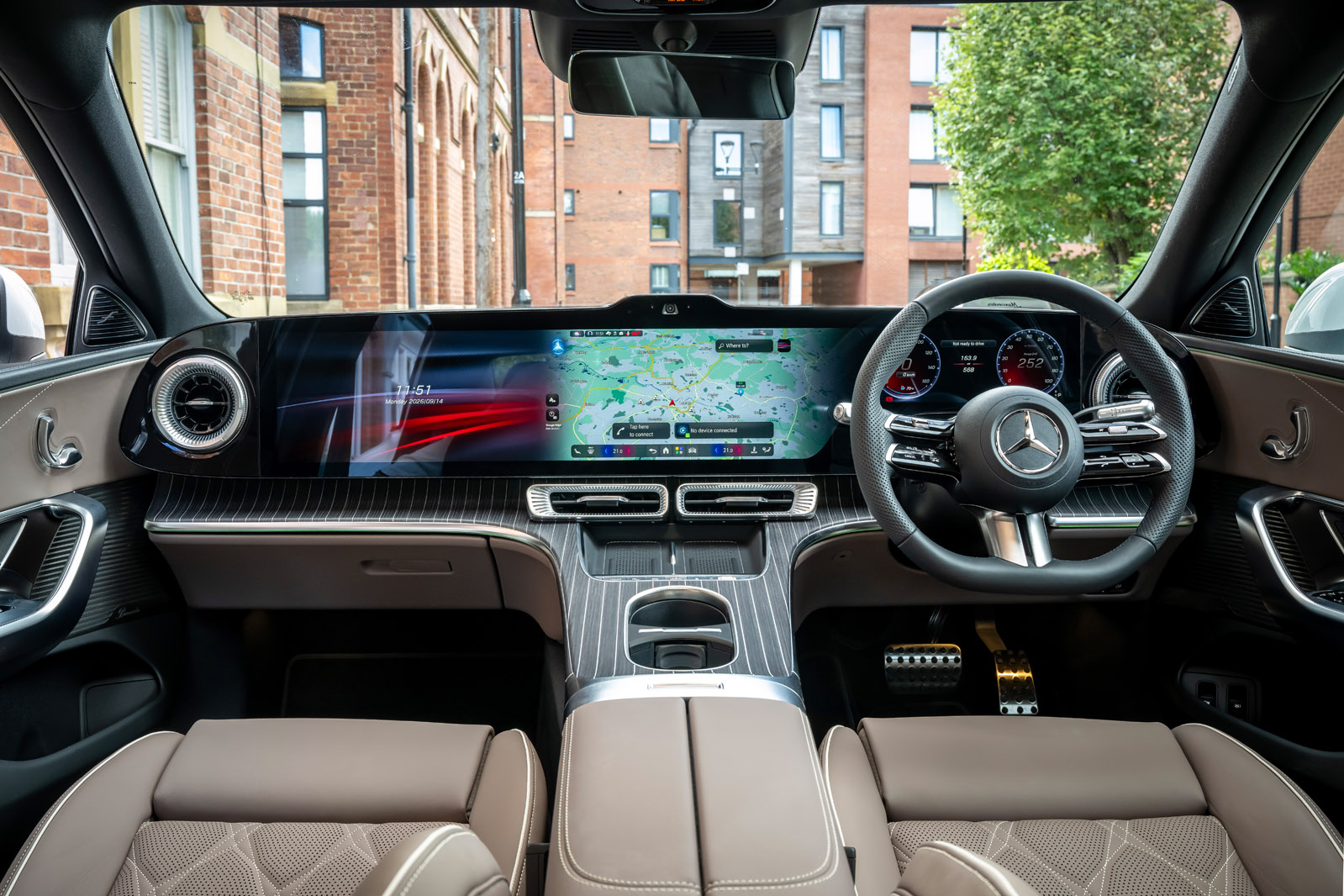
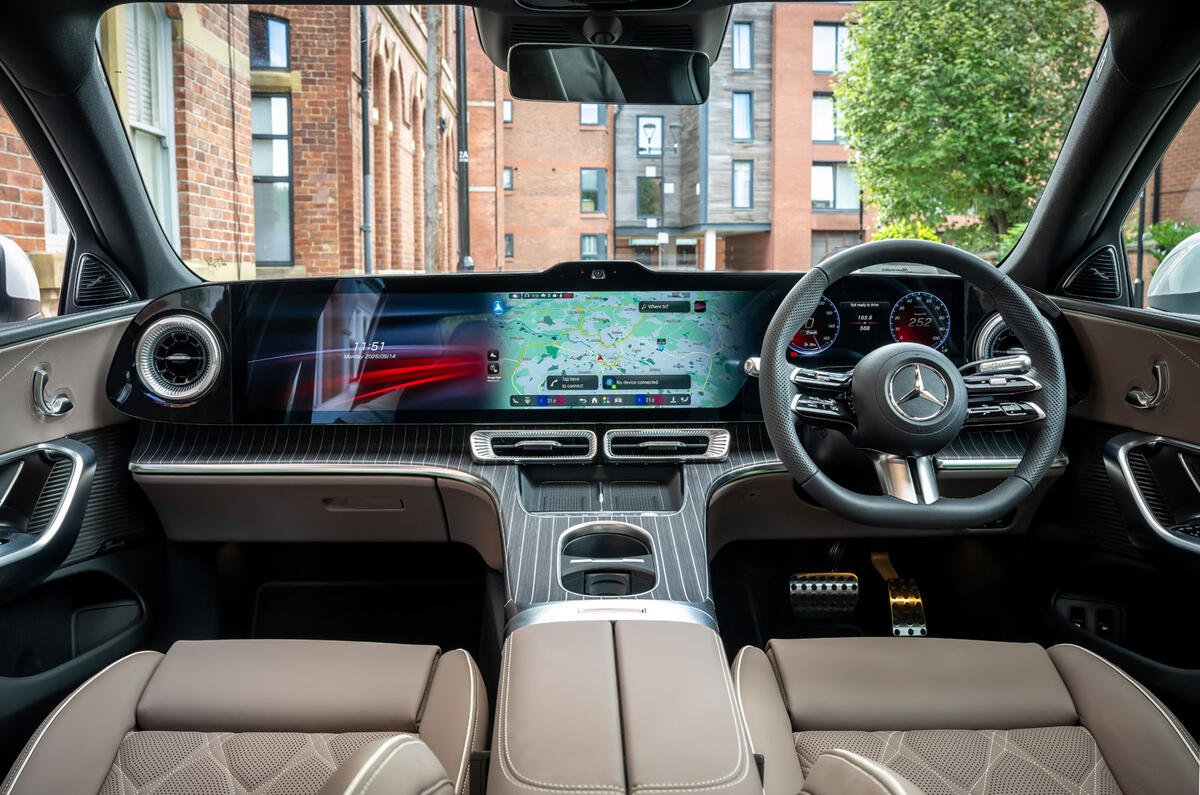
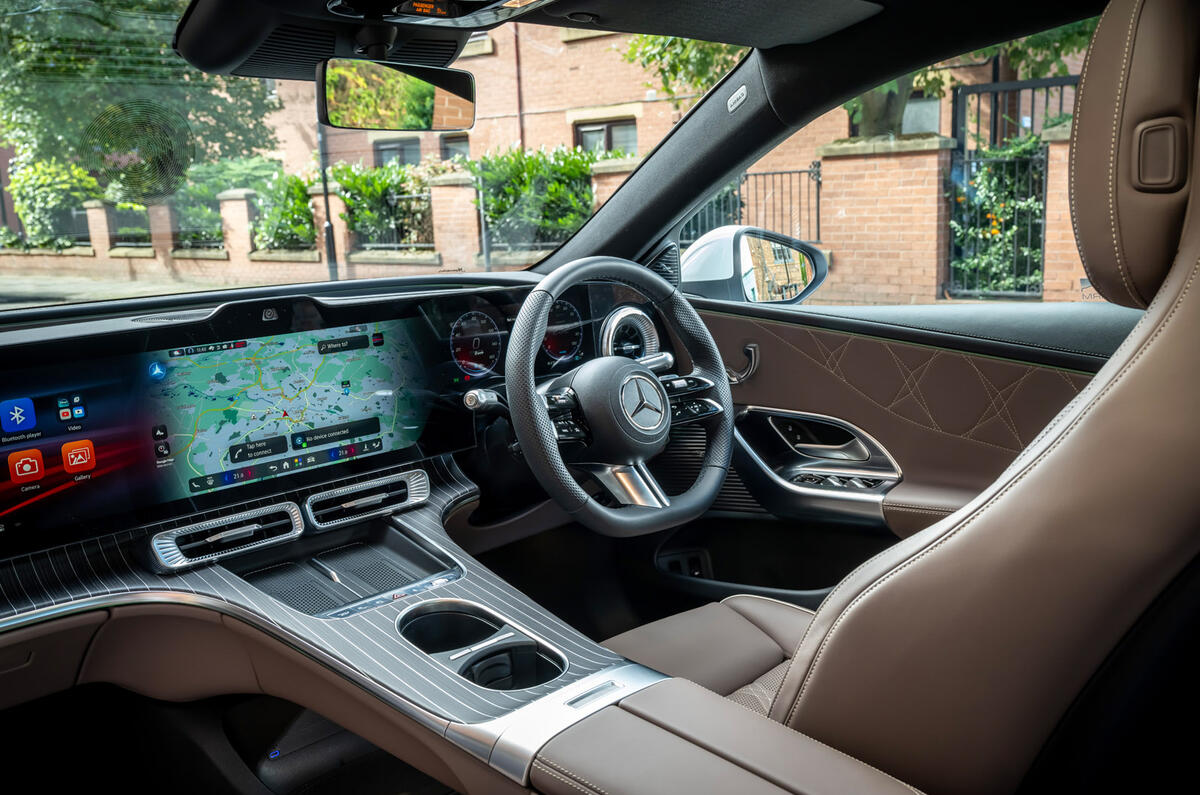
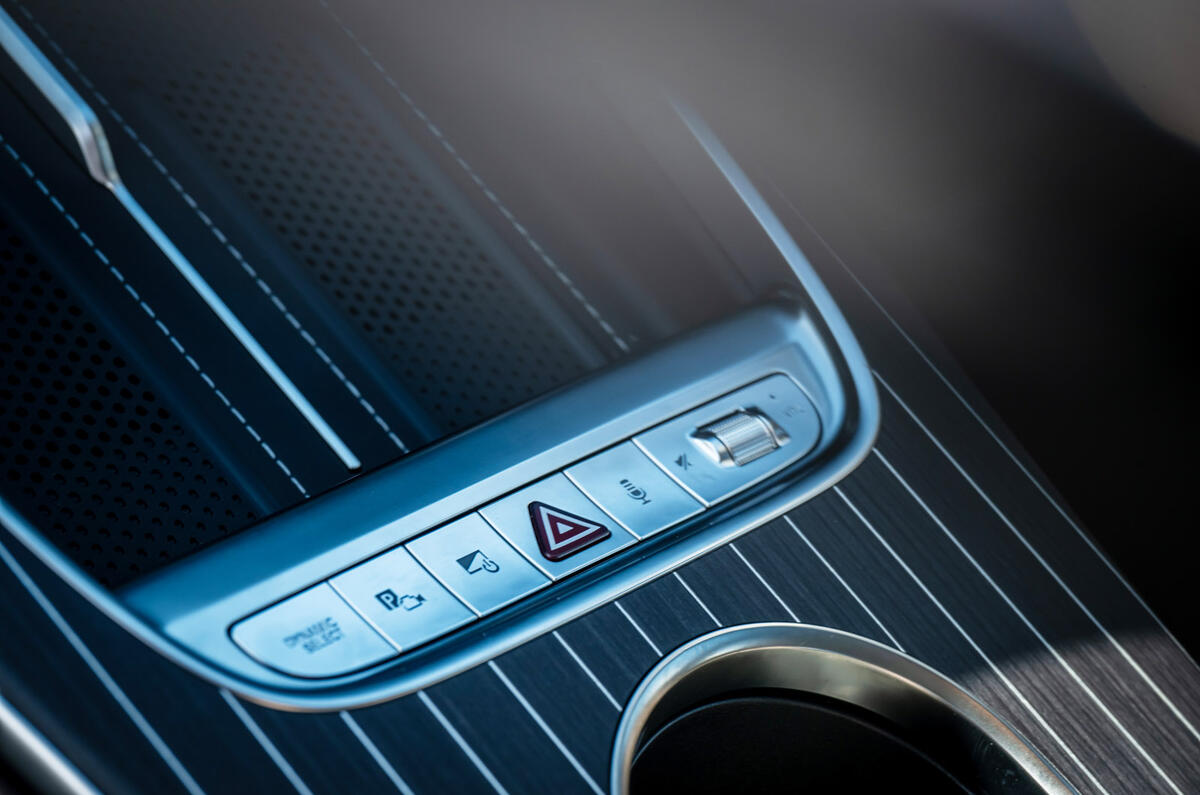
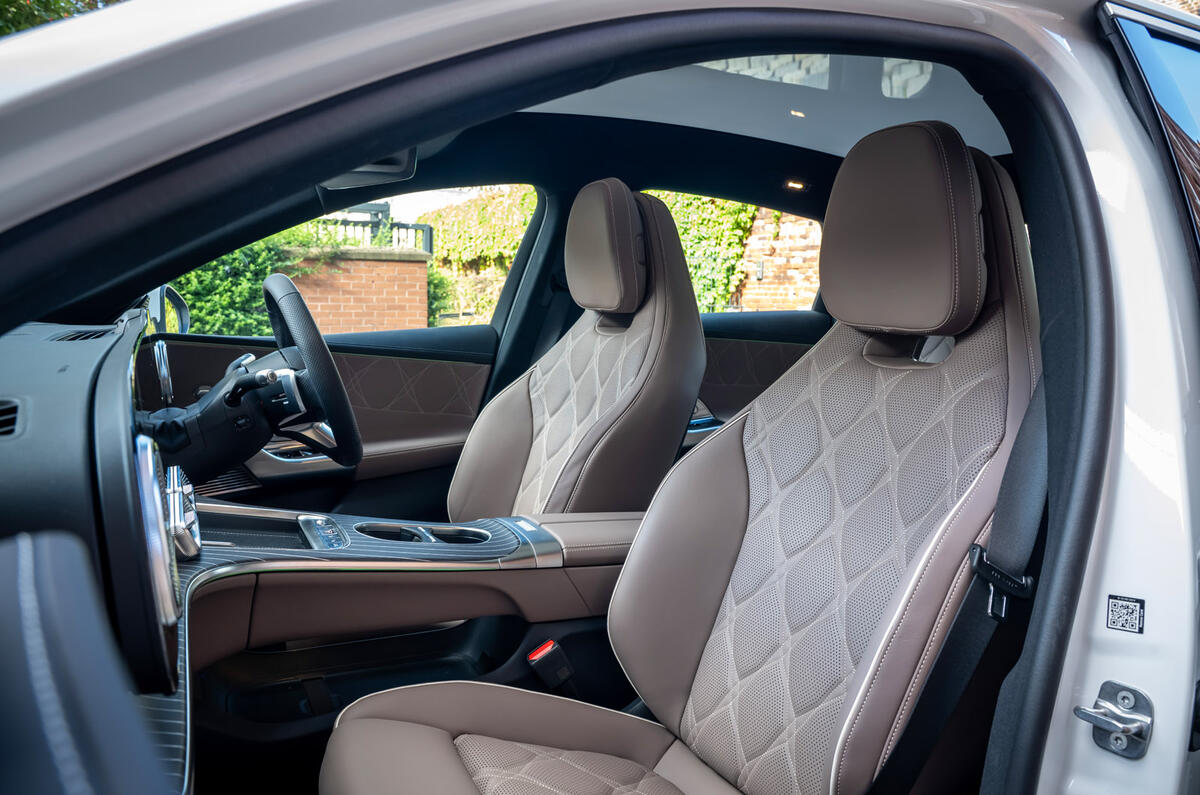
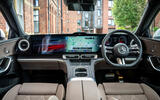
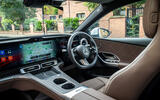
Inside, the C-Class Electric continues to feel reassuringly modern Mercedes, for better or worse. So you can expect an opulent luxury feel, reassuringly premium-feeling materials and a whopping great touchscreen. All the models on the launch event were fitted with the mahoosive 39.1in MBUX Hyperscreen, which I swear is bigger than the screen in the cinema I frequented growing up.

That screen is incredibly sharp and responsive, the operating system is well designed and the voice control (powered by a blend of AI systems) is so excellently usable that it would probably rival KITT for Michael Knight’s affections.

Mercedes-Benz's MB.OS system has Microsoft Teams built in. To showcase its usefulness, the guide driver for the track laps kept in touch using a car-to-car call. For safety reasons, the cameras turn off once the car starts moving.

It is, though, a lot. So it’s worth noting that it isn’t actually standard on lower-spec cars: they get either a trio of screens similar to those in the new CLA or the smaller MBUX Superscreen.

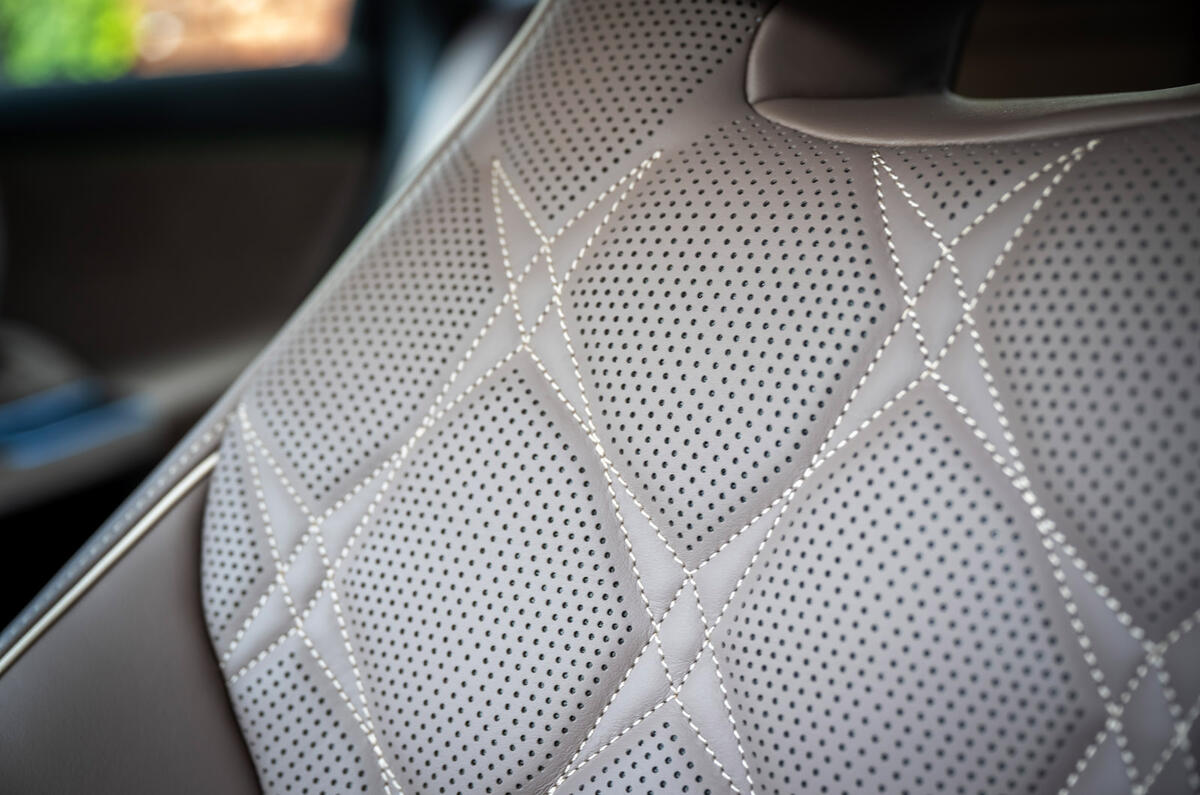
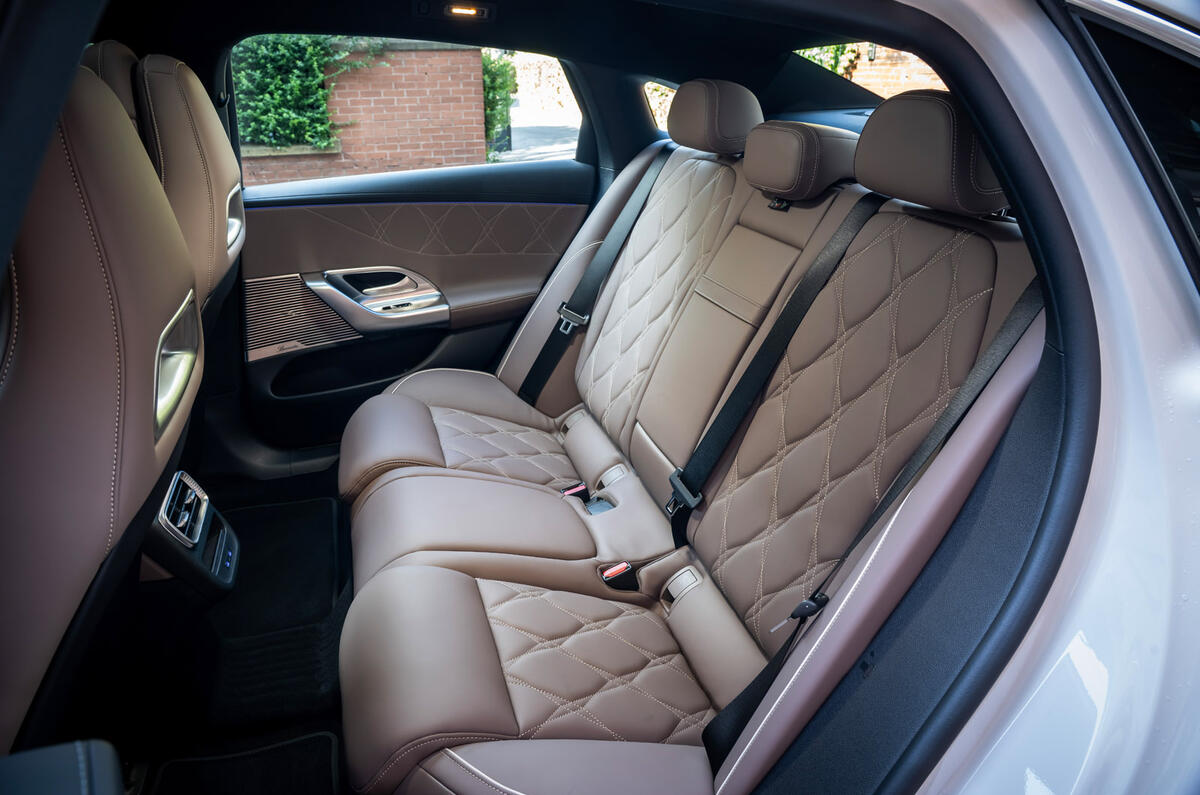
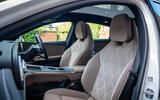
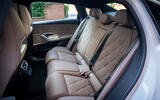
Aside from all those pixels, this is reassuringly plush stuff: the new seats are really comfortable and cosseting (even before you turn on the massage function) and there’s a wide range of trim options – including a vegan-certified interior.

Don’t fret, though: you can still have a C-Class kitted out with acres of leather should you be the old-school steak-eating type.

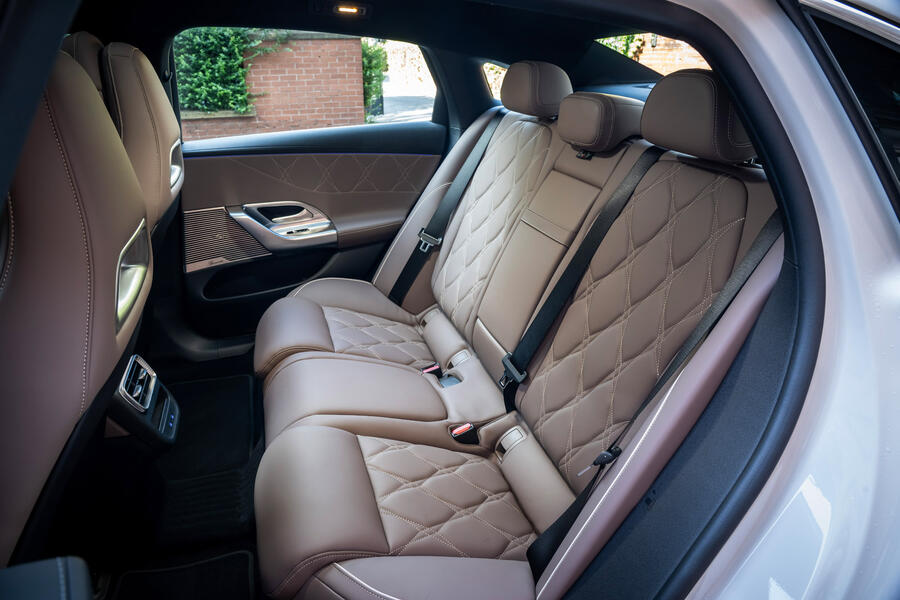
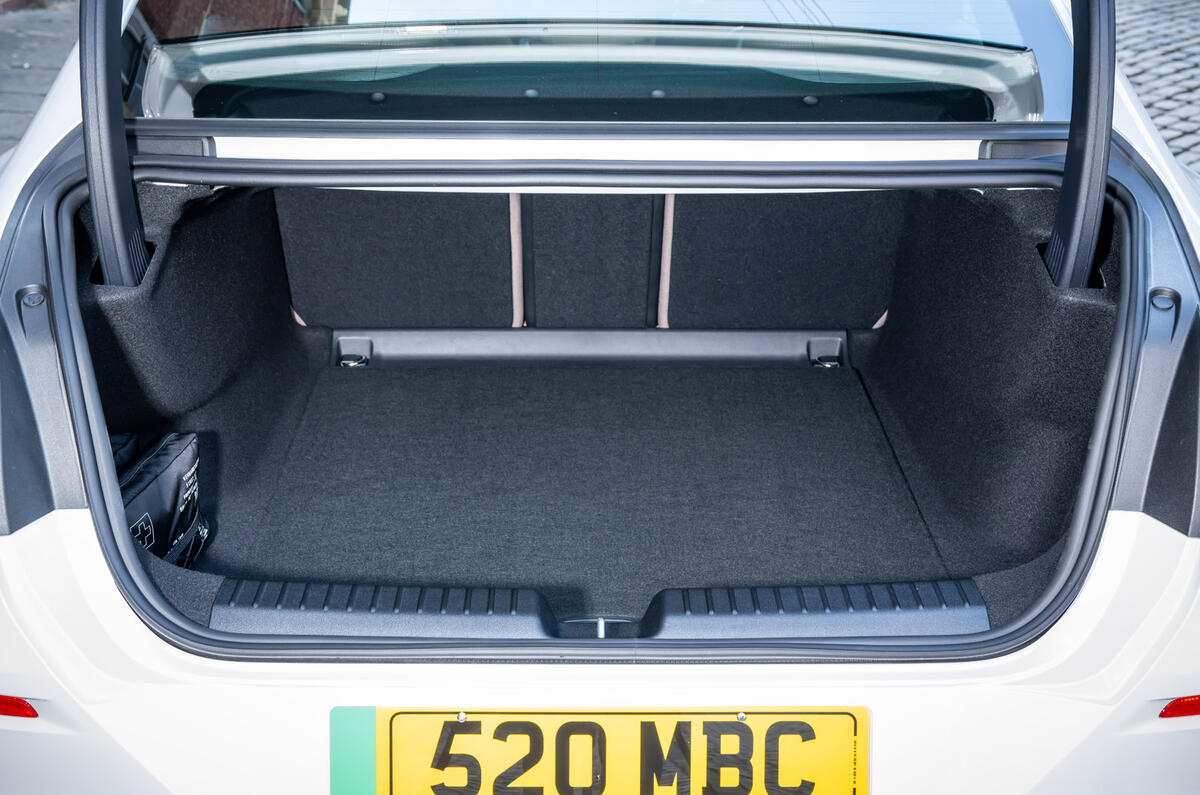
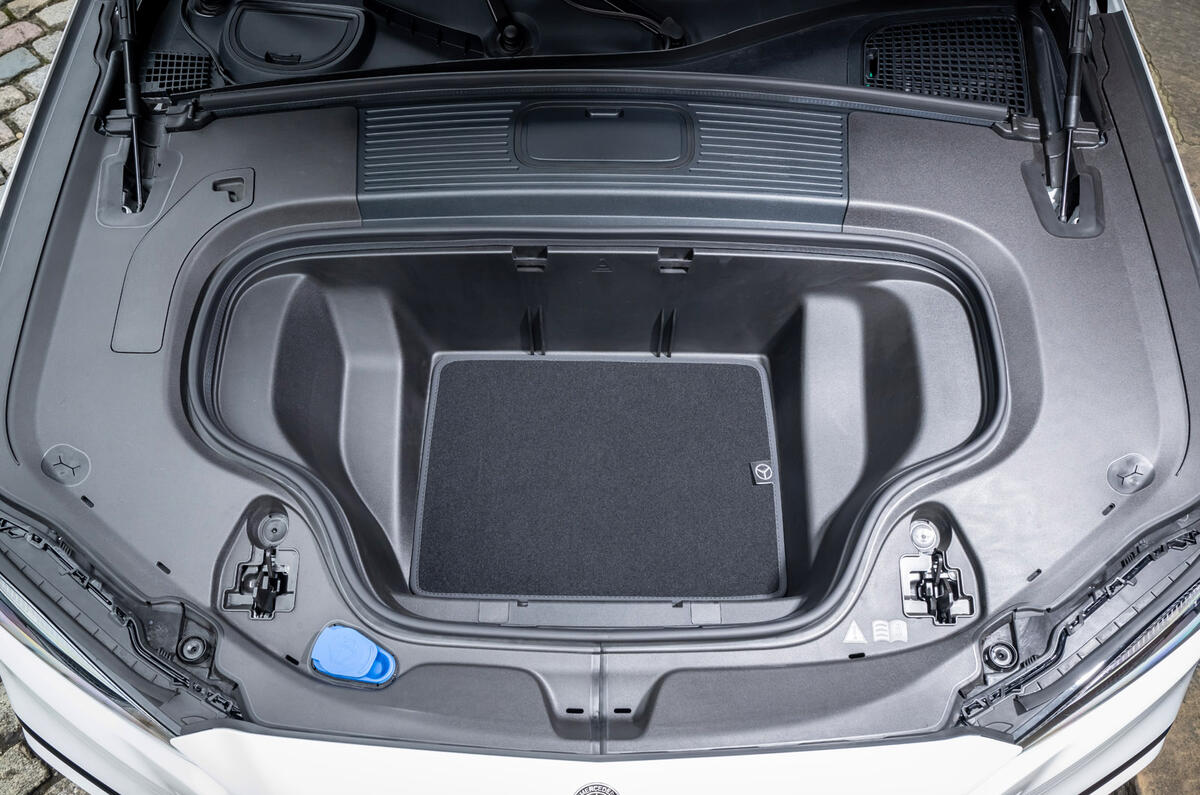
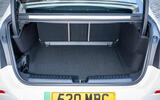
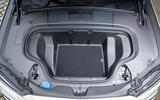
It’s also really spacious, helped by that stretched cabin and a huge panoramic roof that features a built-in Mercedes star pattern. And while a saloon will never match an SUV for outright cargo capacity, the 470-litre boot and 101-litre frunk will be enough for most people’s needs.

ENGINES & PERFORMANCE

Mercedes Benz C Class ev review 2026 021

Mercedes describes this as the “sportiest C-Class ever”, which feels like a bit of a gauntlet thrown at BMW, given that driving dynamics have long been more of a 3 Series thing. And, predictably, all that electric power and instant torque mean this is a plenty fast car: your typical German executive will make short work of chunks of autobahn.

But there’s a decent linearity to the power: yes, if you bash the accelerator from a standing start a few times you’ll start to feel queasy, but with a little more reserve you really can use and enjoy that power to cruise along effortlessly.

And it truly is effortless: even by Mercedes’ standards, there’s a remarkable degree of refinement here. The smooth powertrain combines with a superbly isolated cabin to produce a quiet, calming drive. You really can waft along quite nicely.

In its press material, Mercedes puts much of the C-Class Electric’s sporty aspirations down to the combination of air suspension and rear-wheel steering, which are bundled in the optional £2500 Refinement Package. The latter offers up to 4.5deg of steering, which reduces the turning circle to 11.2m. As you would expect, both systems are adaptive.

Certainly it helps make the C-Class Electric easy to place, despite its not inconsiderable length, and the rear steering is natural enough that it rarely feels obtrusive or unsettling. The air suspension soaks up imperfections in the road brilliantly, smoothing out the ride and adding to that impressive sense of serenity.

That said, at higher speeds on the motorway the Airmatic suspension does occasionally offer that slightly unnatural bounce that such systems often do and doesn’t feel quite as connected to the road as you might like.

Mercedes even laid on a handling circuit to showcase the car’s sporty dimensions, and attacking that with gusto did show that, when pushed, the C-Class Electric can cope remarkably well for a big, heavy, electric saloon. I really could hustle it through bends. But a circuit is very much not its natural habitat.

As standard, the C-Class Electric is fitted with steel suspension, and I also drove an entry-level model (Sport grade in the UK) that rode on it. Truthfully, the difference doesn’t affect the ride too much: it predictably gets a bit more ruffled on rougher surfaces but also feels generally more connected on the motorway.

The lack of rear steering means you have to work a bit harder behind the wheel when manoeuvring at slow speeds but nothing too arduous.

MPG & RUNNING COSTS

Mercedes Benz C Class ev review 2026 001

The C-Class Electric seems reasonably efficient, too: on the longest loop I tackled, I averaged around 4mpkWh without trying to drive efficiently, suggesting that impressive WLTP range or up to 4.41mpkWh really can be replicated in the real world. That said, we only had limited running on relatively short loops, so we'll want to test that further once cars reach the UK.

There’s adjustable regenerative braking via steering wheel paddles, and it generally works well, even if the brake pedal still has a slightly disconnected feel at times.

Five trim levels will be offered in the UK: Sport (priced from £57,995), AMG Line, AMG Line Premium, AMG Line Premium Plus and Premier Edition, with the latter starting from £70,995. If you're chasing efficiency you'll want the Sport or AMG Line Premium models, which sit on 19in wheels and have official ranges of 452 and 442 miles respectively. A Premier Edition model on 20in tyres has a range of 428 miles.

Adding the enhanced 22kW AC charging will cost you £1000. Other options include trailer coupling (£1000).


VERDICT

Mercedes Benz C Class ev review 2026 023

The C-Class Electric's impressive efficiency will be crucial given that, as with the GLC Electric, it trails its Neue Klasse BMW rival on the spec sheet. Although the difference is likely to be less pronounced in the real world. But, let’s face it, the result of that inevitable comparison test with the forthcoming i3 will help determine how successful this car truly is.

But until we get to try Munich’s latest, we can consider this C-Class Electric in isolation – and it’s really very good at everything you would expect a Mercedes executive saloon to be. It's efficient and incredibly refined, relaxing to spend time in, capable of eating chunks of miles and has all the opulence and premium feel you'd expect. 

Doubtless this will please Källenius to hear, but it feels like a C-Class – and oh, it’s electric.

James Attwood

James Attwood, digital editor
Title: Associate editor

James is Autocar’s associate editor, and has more than 20 years of experience of working in automotive and motorsport journalism. He has been in his current role since September 2024, and helps lead Autocar's features and new sections, while regularly interviewing some of the biggest names in the industry. Oh, and he once helped make Volkswagen currywurst. Really.

Before first joining Autocar in 2017, James spent more than a decade in motorsport journalist, working on Autosport, autosport.com, F1 Racing and Motorsport News, covering everything from club rallying to top-level international events. He also spent 18 months running Move Electric, Haymarket's e-mobility title, where he developed knowledge of the e-bike and e-scooter markets.