6

Japanese brand returns to the UK with a large, plug-in hybrid 4x4

Find Mitsubishi Outlander PHEV deals
Other Services
Sell your car
84% get more money with

After a five-year hiatus, Mitsubishi is back in the UK with a small but authentic line-up of vehicles. It consists of the L200 pick-up truck and this week’s road test subject, the Mitsubishi Outlander, a large, plug-in hybrid SUV pitched against the Skoda Kodiaq, Toyota RAV4 and a raft of other options.

That’s a different approach from the one the Japanese company is taking in continental Europe, where its showrooms are mostly populated by rebadged Renaults. Mitsubishi UK hasn’t confirmed whether it will bring any of those over here but, in any case, none is as interesting as the Outlander. While it shares a platform and some switchgear with various cars from Alliance partners Renault and Nissan, fundamentally it’s an in-house development, with a bespoke drivetrain.

The PHEV element is what has driven Mitsubishi’s return to the UK. When it left in 2021, the Mk3 Outlander was outdated and had lost most of its tax benefits. Today, PHEVs are enjoying a new wave of popularity, and here to ride it is a new generation of Outlander. Having said that, while this Mk4 car is new to us, it has been on sale in Japan, the US and other markets since 2021, so it can’t be expected to move technological boundaries.

Still, it needs to make a case for itself against both the increasingly sophisticated PHEVs from Europe and Japan and the enticingly affordable ones from China.

Advertisement

DESIGN & STYLING

7
Mitsubishi Outlander FD 15.9.26 12

While the Mk2 Outlander of 2006 was notable for being a Mitsubishi development that got rebadged as a Peugeot and a Citroën, the Mk4 was part of a bigger ecosystem from the start. Mitsubishi based this latest Outlander on the Alliance’s CMF-CD platform, shared with the Nissan X-Trail and Qashqai and the Renault Rafale and Austral SUVs.

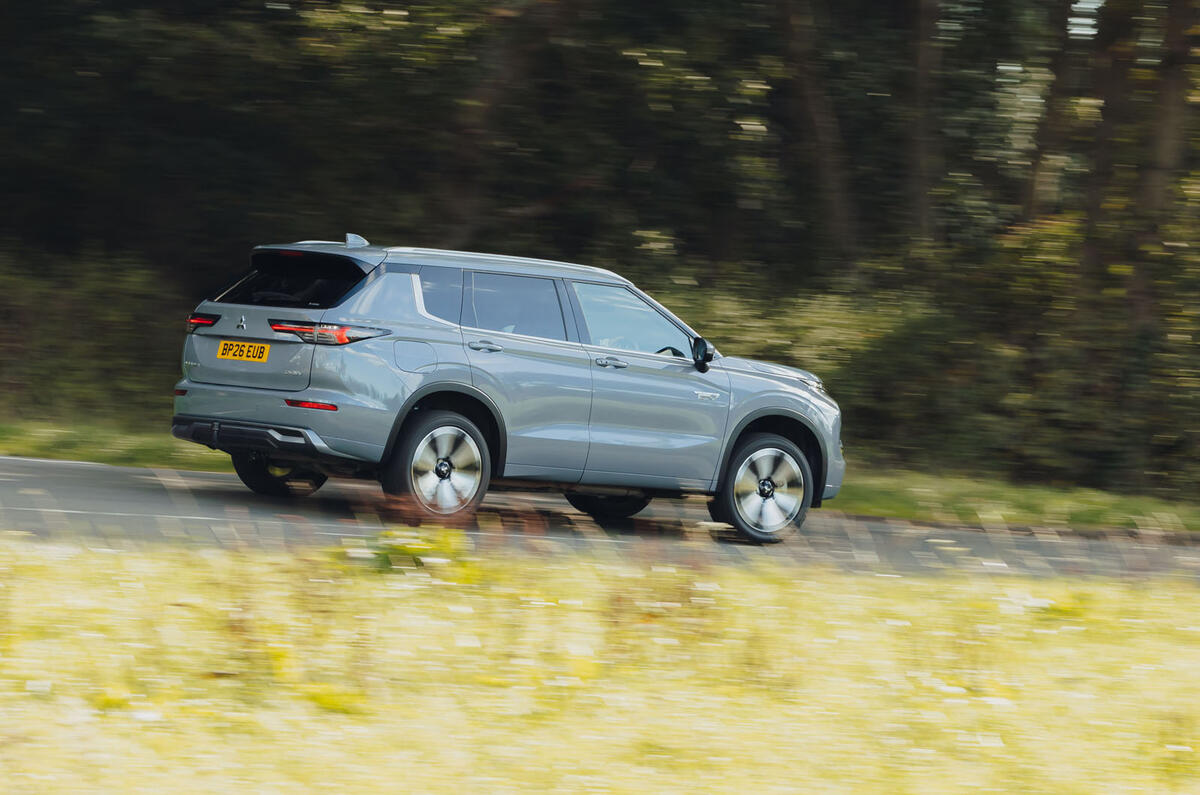
Mitsubishi naturally doesn’t shout about which parts it shares with which cars, but the numbers reveal a few clues. Looking at the Outlander’s side profile, it’s clear that it shares key hard points with the X-Trail, and indeed the two cars have the same wheelbase (although the Outlander is slightly longer and wider overall). Also, the battery pack is suspiciously identical in size to that of the Rafale PHEV (22kWh total capacity) and a peek inside reveals plenty of Nissan switchgear.

Behind the charging flap are two ports: a conventional Type 2 one for slow charging and a Chademo one for rapid charging at up to 50kW. We saw a peak of 40kW once we had found a charger with the right plug. It’s a very odd arrangement, given CCS exists.

However, the rest of the powertrain is all Mitsubishi’s own work, which highlights a strange inefficiency about how the Alliance works. Renault, Nissan and Mitsubishi have each developed hybrid systems that work completely differently. Renault’s E-Tech system uses a complex clutchless gearbox; Nissan’s ePower system is a pure series hybrid with no direct connection between the engine and the wheels; and Mitsubishi’s concept goes back to the original Outlander PHEV and is similar to the one that has been adopted by Honda and many Chinese manufacturers.

Under most conditions, the wheels are driven by the electric motors only (136bhp front, 114bhp rear), with the engine serving only to drive a starter-generator inside the front transaxle. At higher speeds, the engine can clutch on and drive the front wheels through a fixed gear ratio. The petrol engine is the 2.4-litre Atkinson-cycle version of Mitsubishi’s long-running ‘4B’ four-cylinder engine that also powered the previous Outlander PHEV.

Whereas that car carried its battery in the transmission tunnel, the new one has it in the same place as other CMF-CD-based cars, which is in a flat pack under the cabin floor. The 53-litre petrol tank sits behind it under the rear seats.

Mitsubishi has made full use of the platform’s packaging opportunities, because not only does it have a sizeable battery and a big fuel tank, but it also has four-wheel drive, thanks to those dual motors, and offers a third row of seats. The PHEV versions of the Skoda Kodiaq and Honda CR-V offer neither, and most four-wheel-drive rivals are exclusively five-seaters.

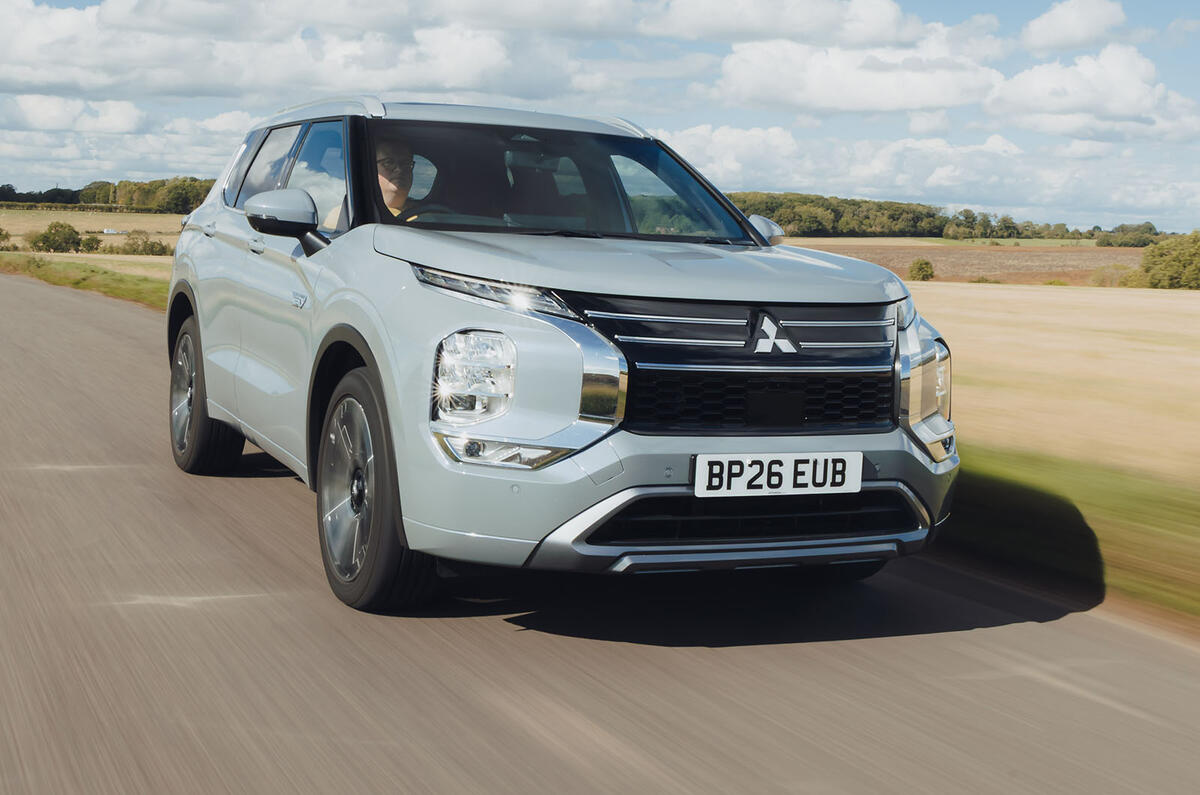
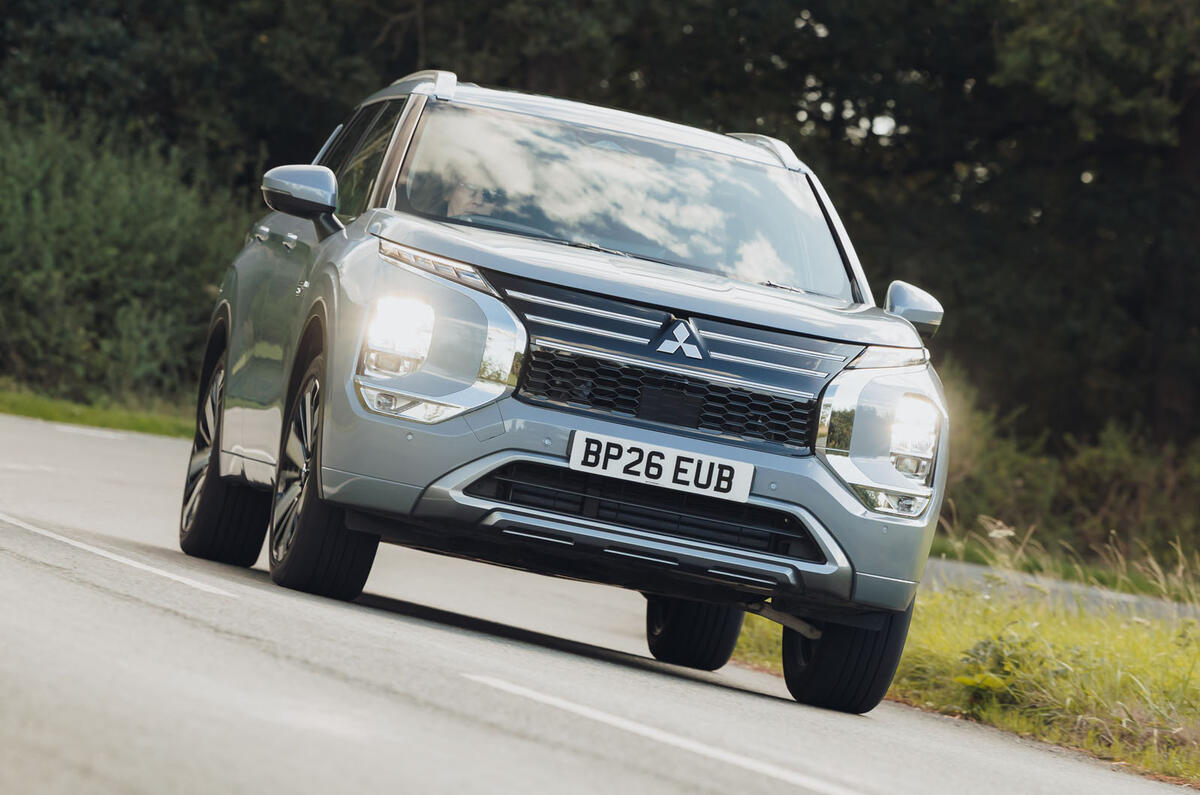
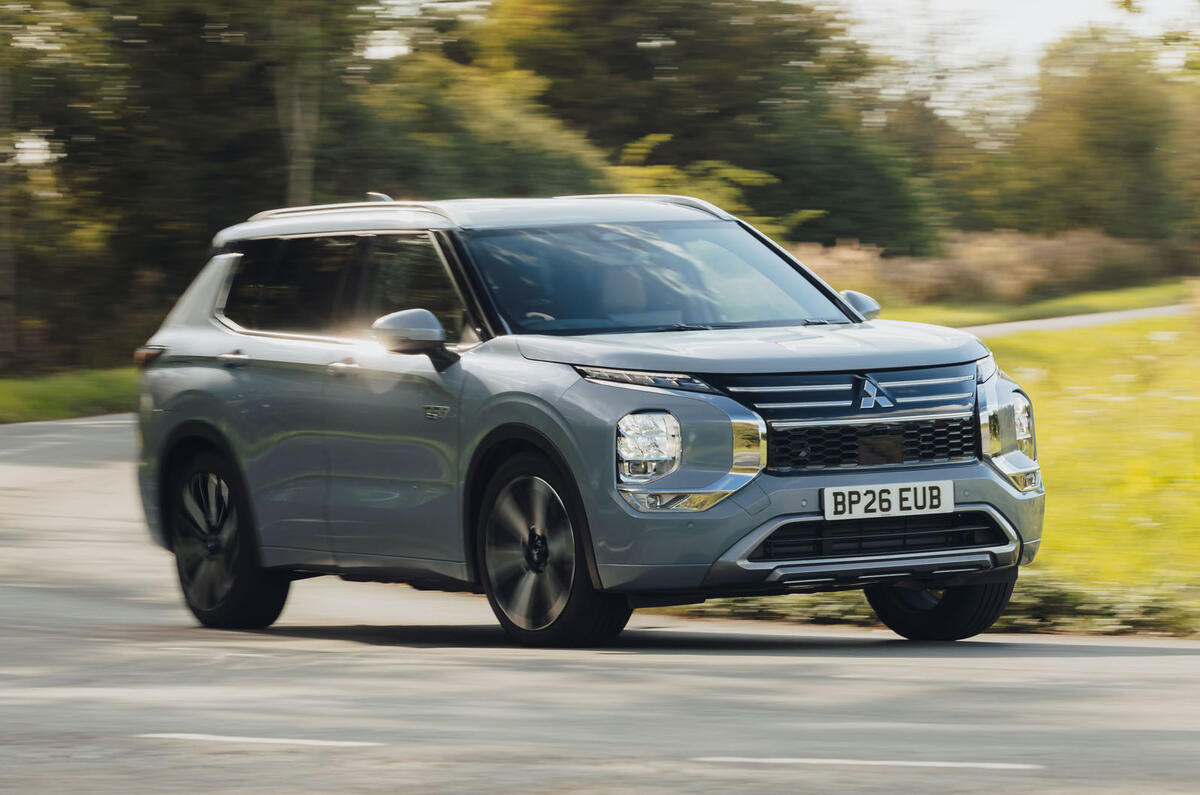
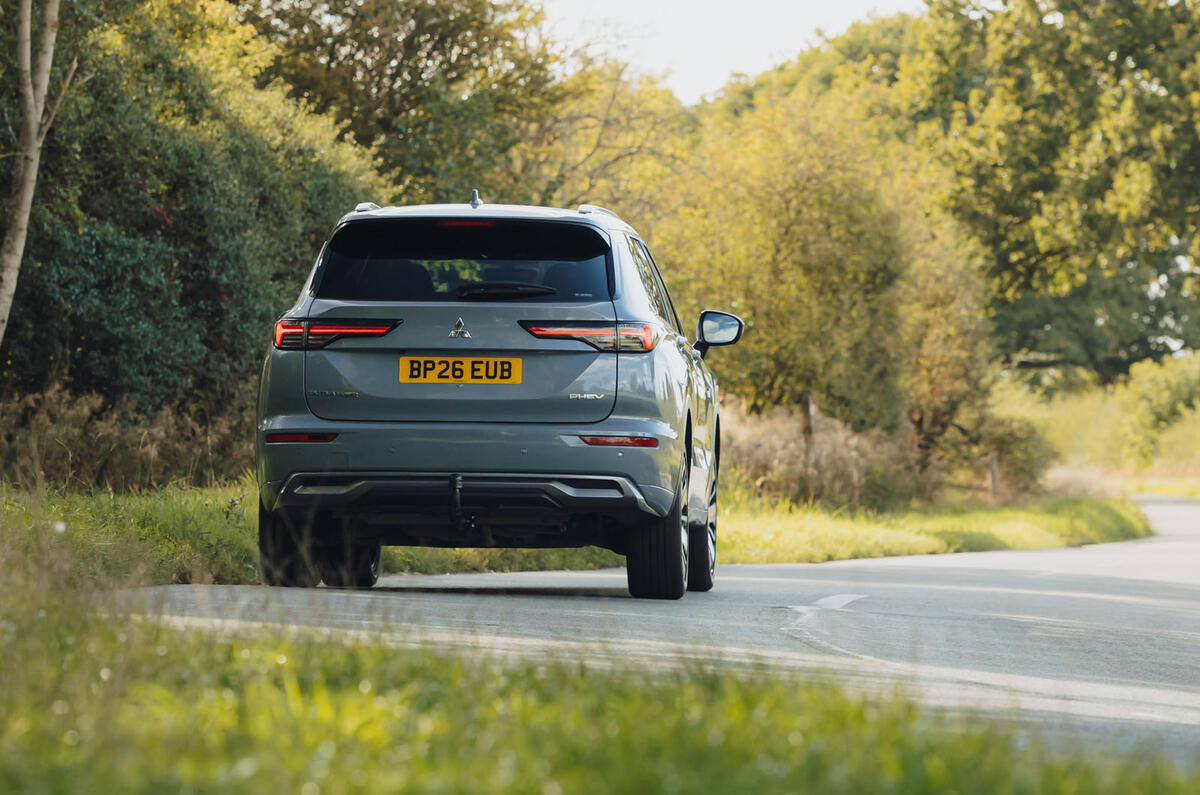
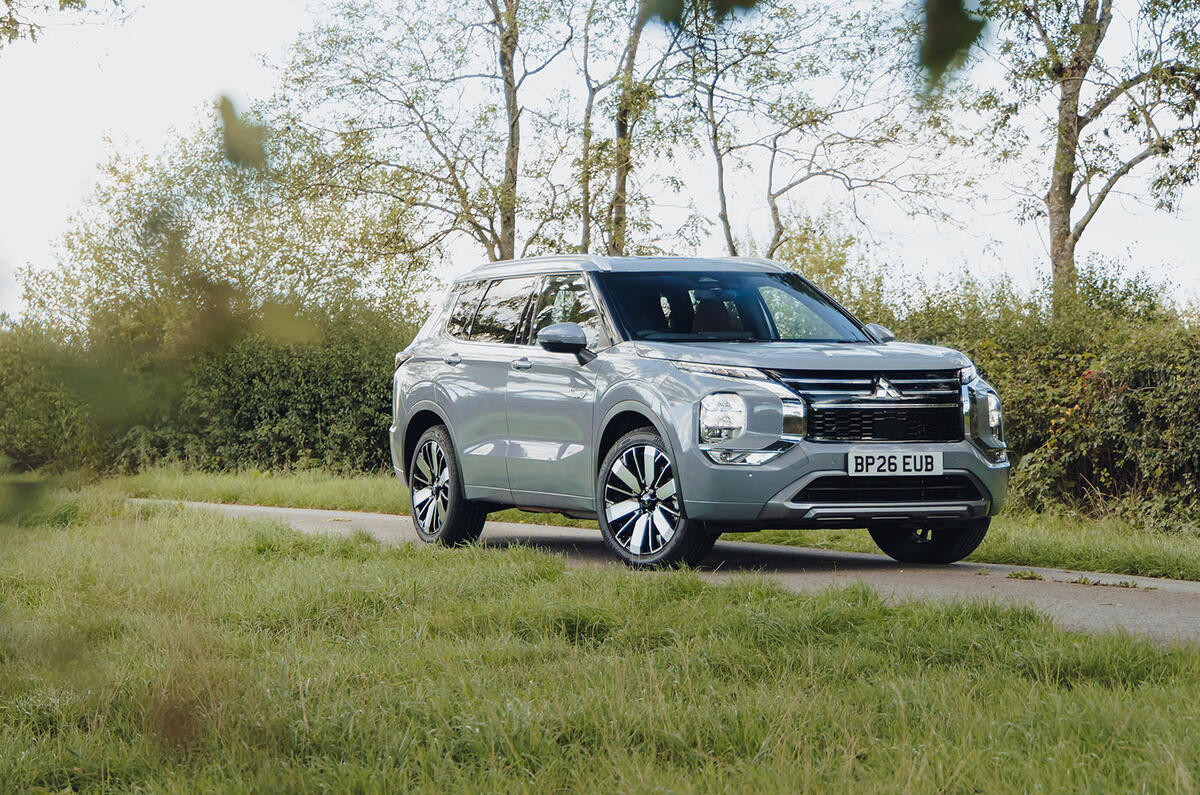
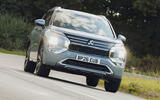
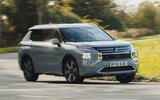
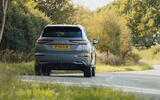
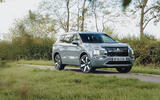
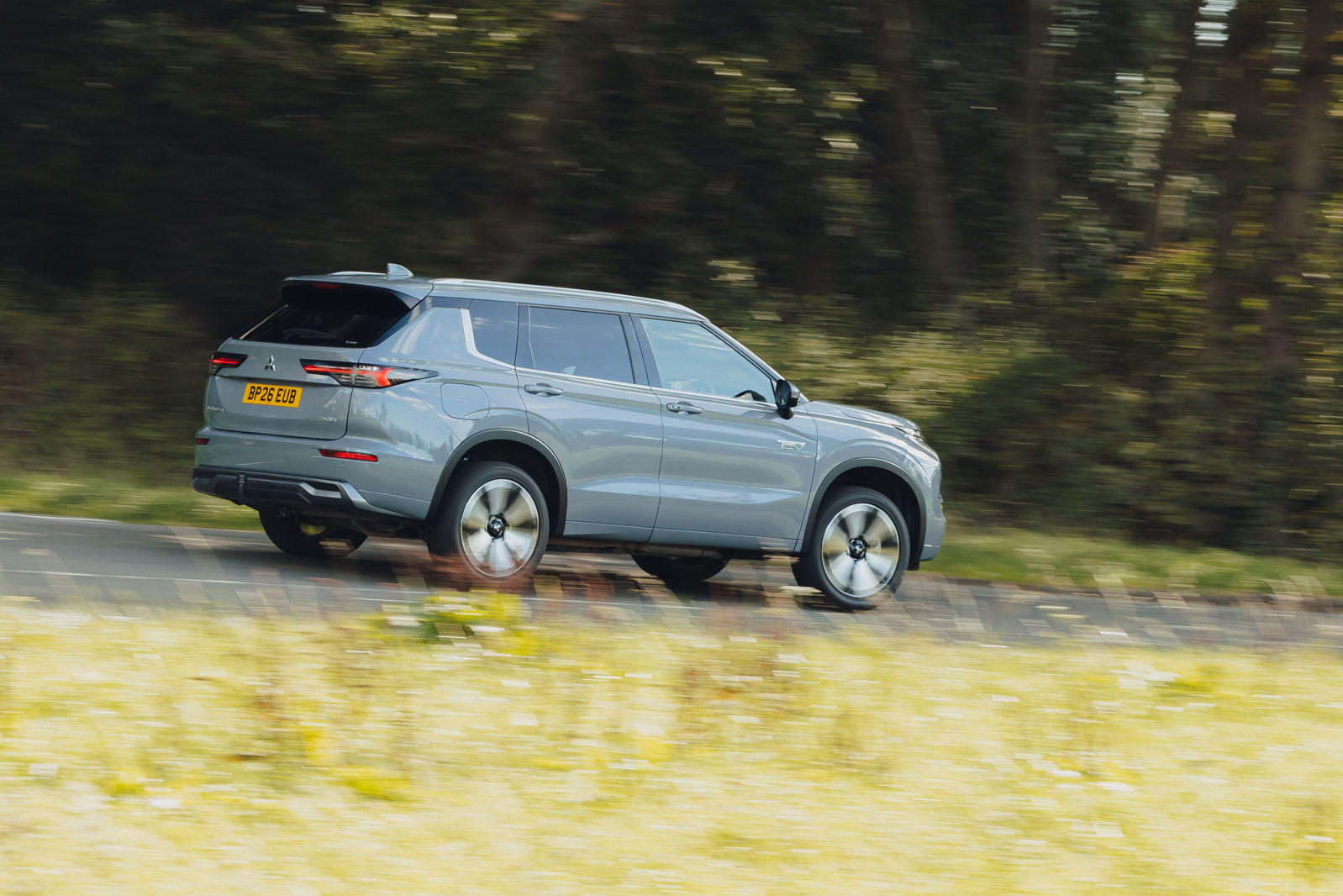
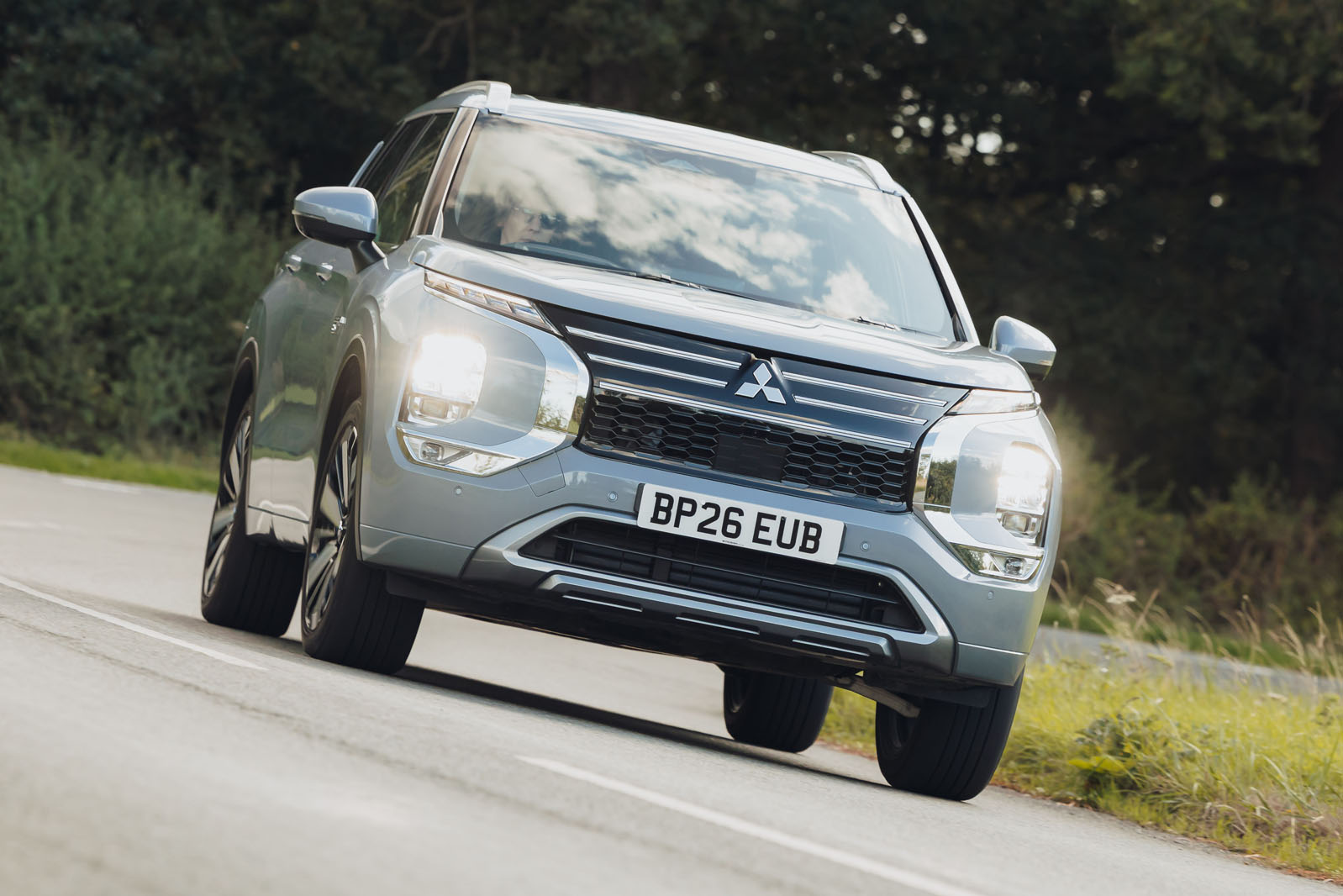
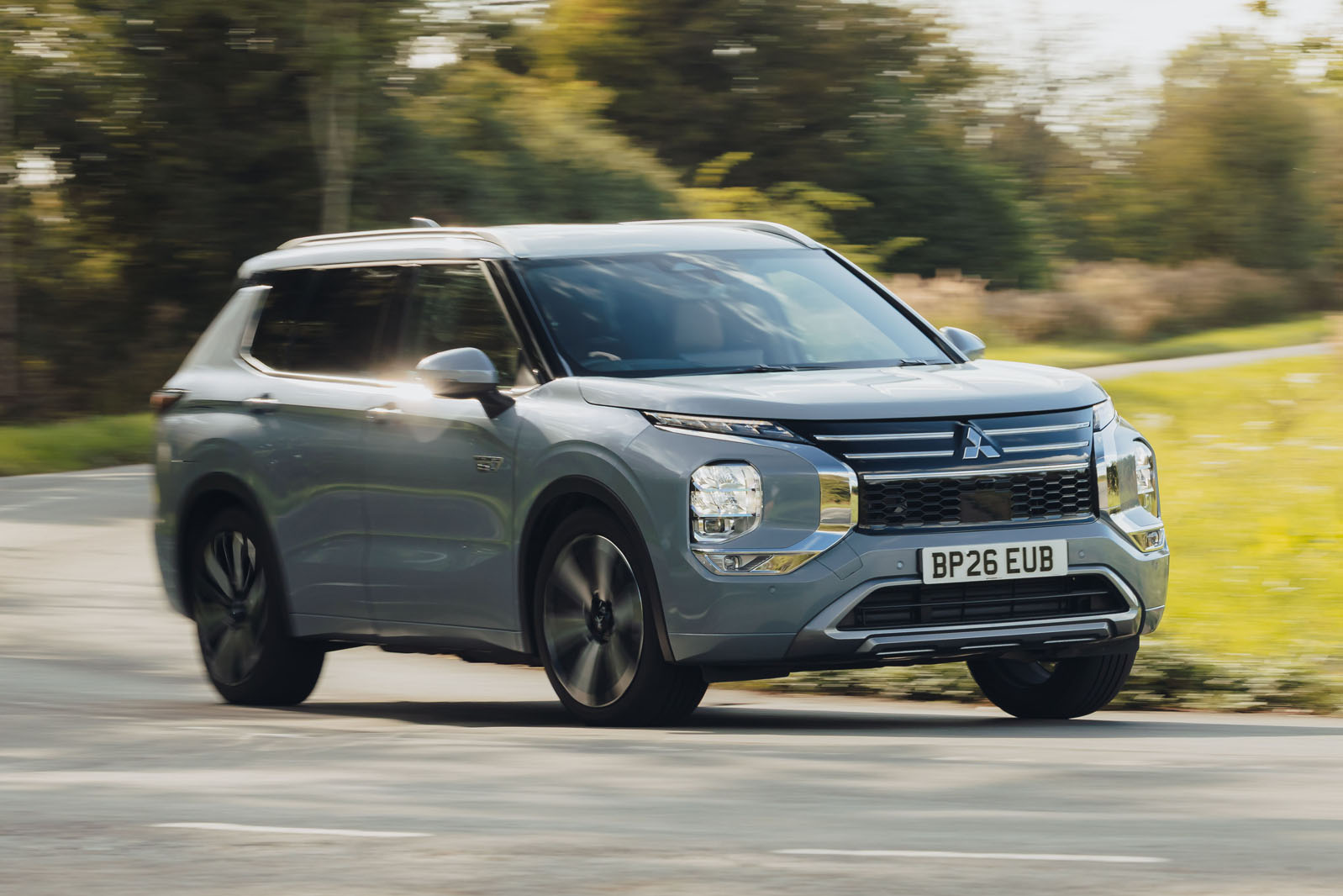
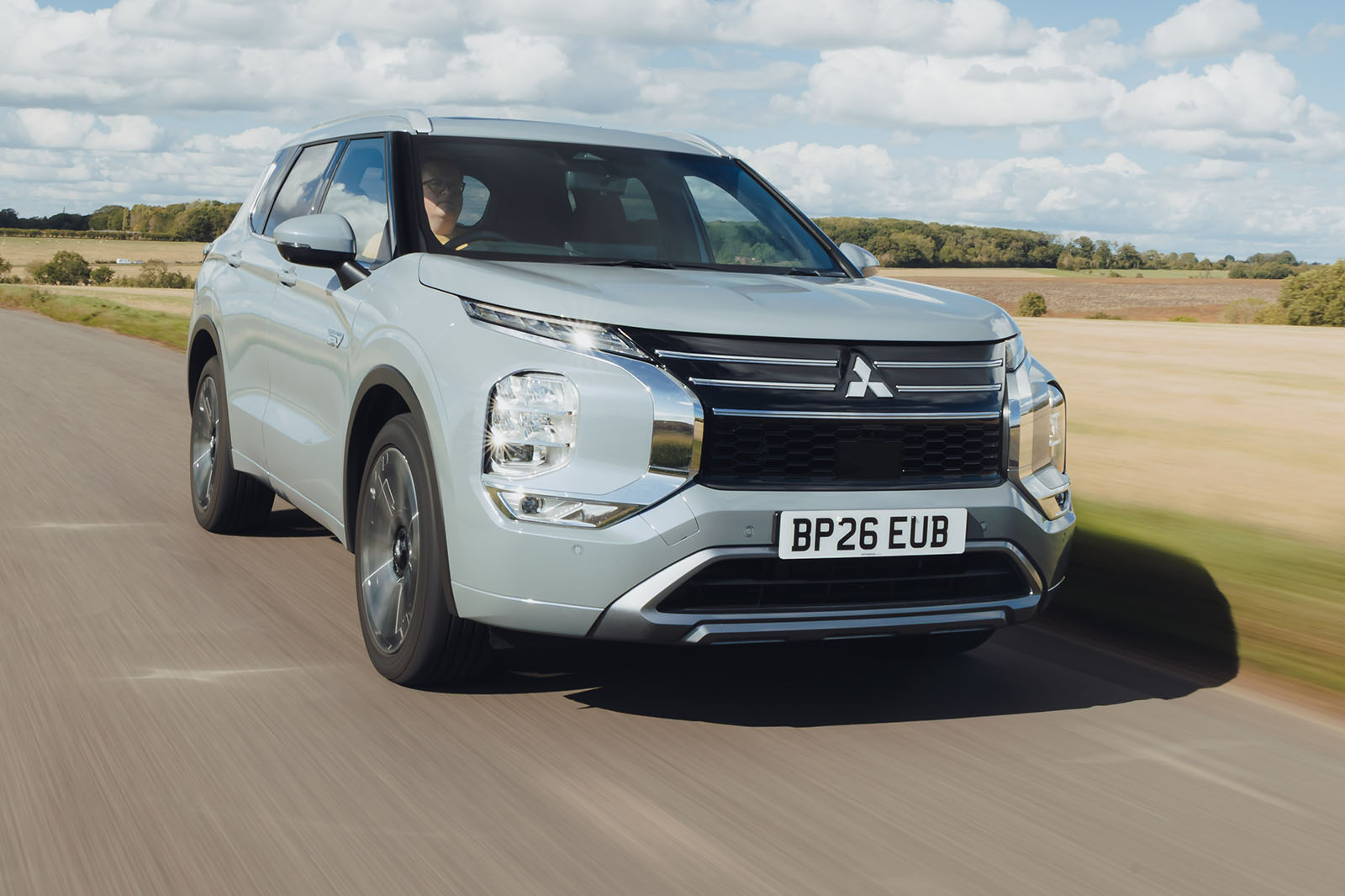
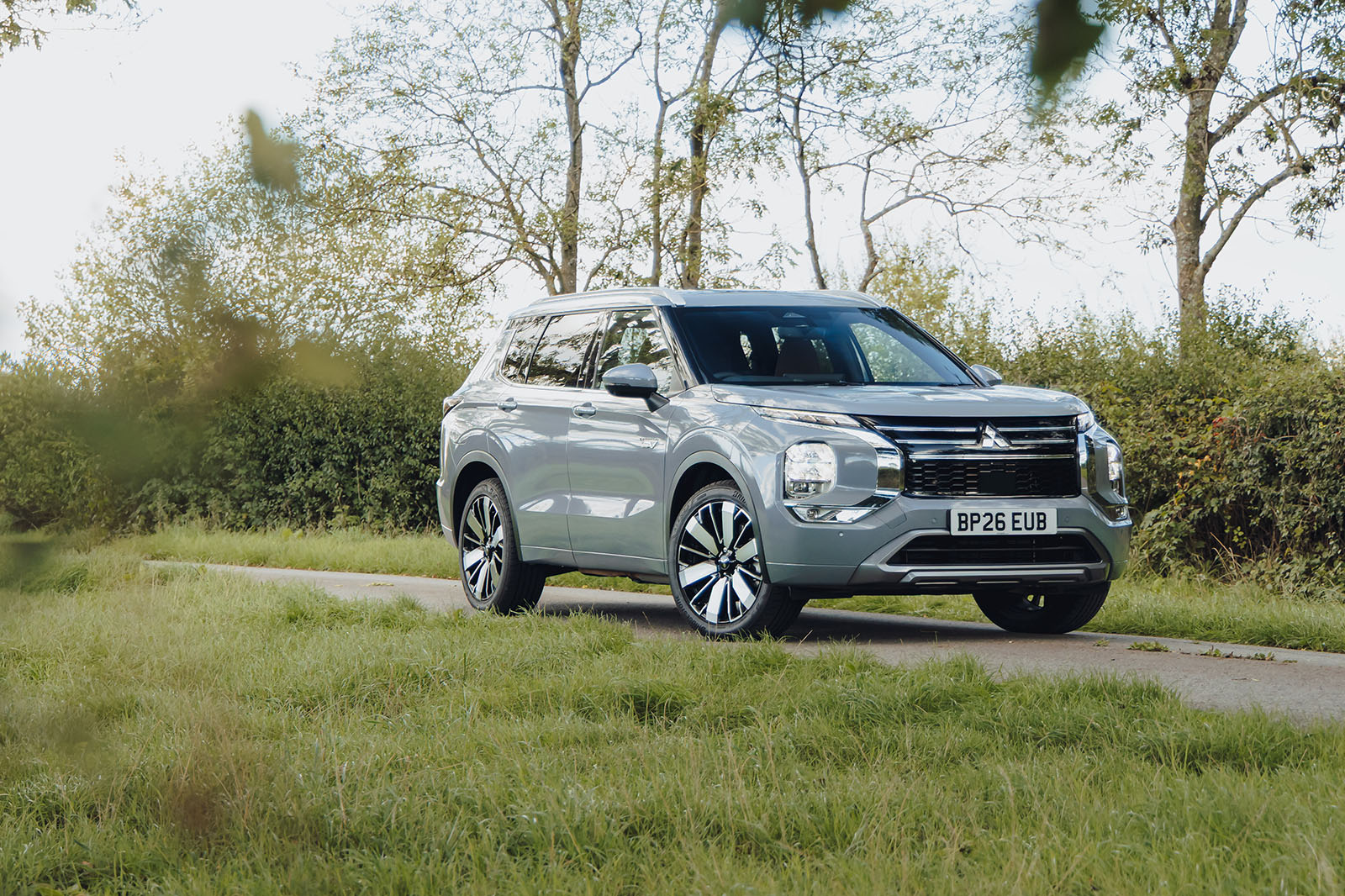
Despite some technical alignment with other cars on the same platform, the Outlander also retains a distinct visual identity. Unlike many other manufacturers, Mitsubishi hasn’t shied away from using chrome, which together with the polished alloy wheels gives a blingier aesthetic that’s more traditional of large SUVs.

INTERIOR

7
Mitsubishi Outlander FD 15.9.26 4

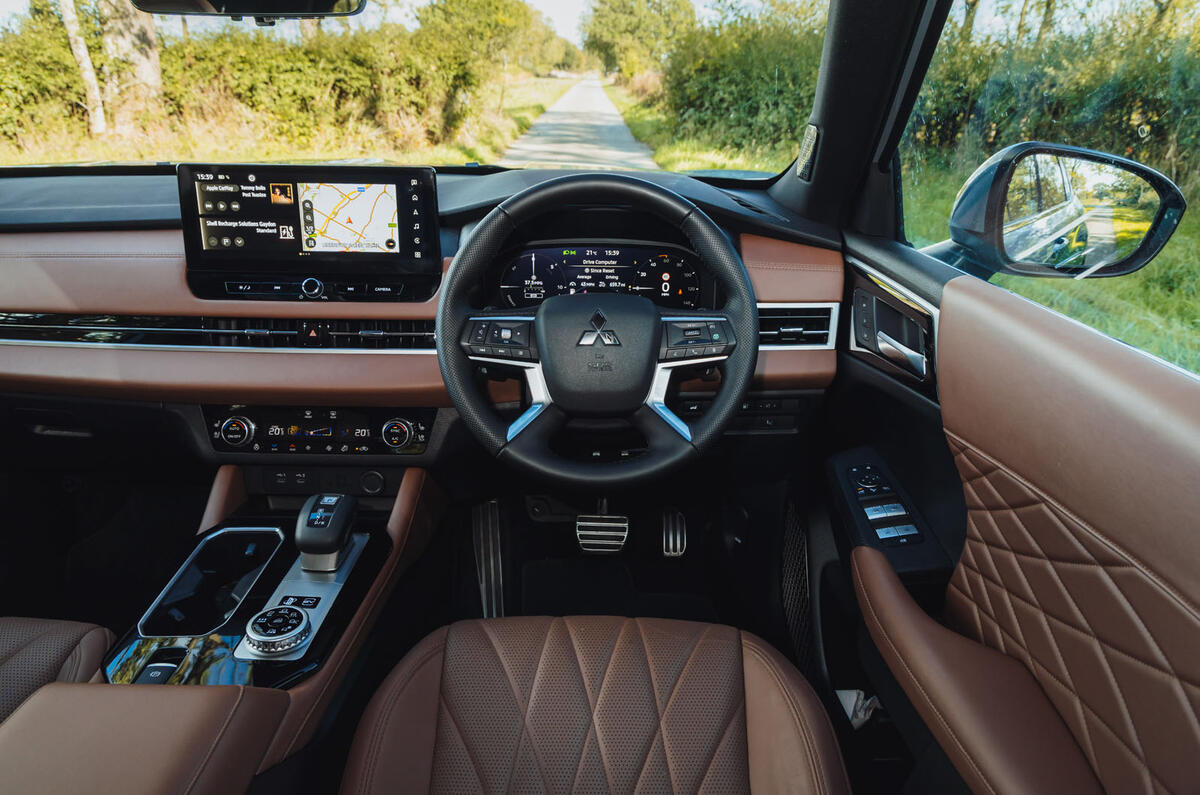
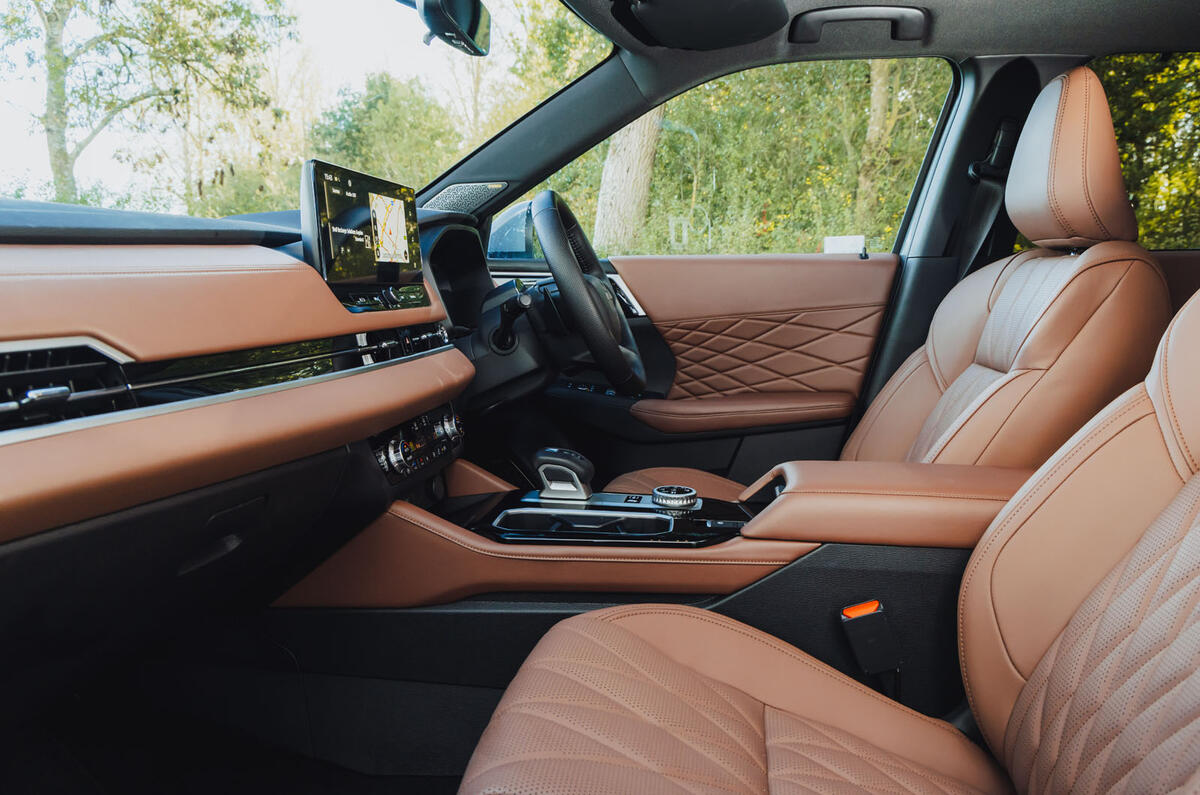
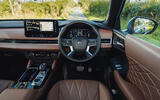
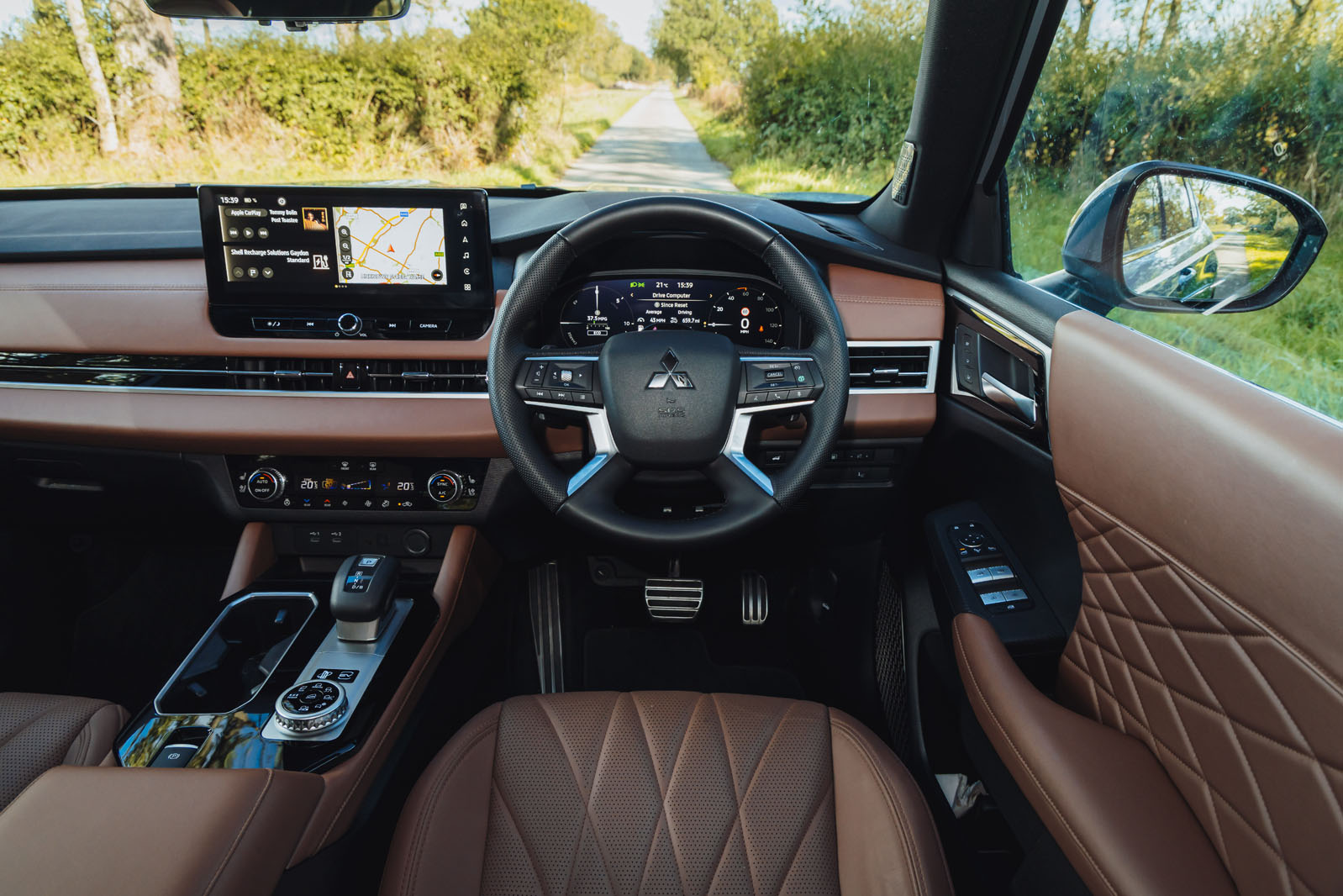
There’s something reassuringly traditional about the interior too. The four-spoke steering wheel, simple angular air vents, copious physical buttons and diamond-stitched leather aren’t especially fashionable, but they will provide sanctuary for those tired of the prevailing minimalist design trend.

Most of the switchgear is adapted from recent Nissans with some small colour and texture changes. That’s mostly a good thing, because it’s well laid out, with satisfying haptics. Generally, though, perceived material quality is something of a mixed bag. The leather on the seats and steering wheel feels thick and real. By contrast, the material on the armrests feels a little thin and loose and the plastic trim pieces in carbonfibre, metal and piano black effects feel and look cheap.

Cabin storage is okay, including generous cupholders, a wireless phone charger and a deep armrest cubby. Unlike in related Nissans, there’s no space under the centre console.

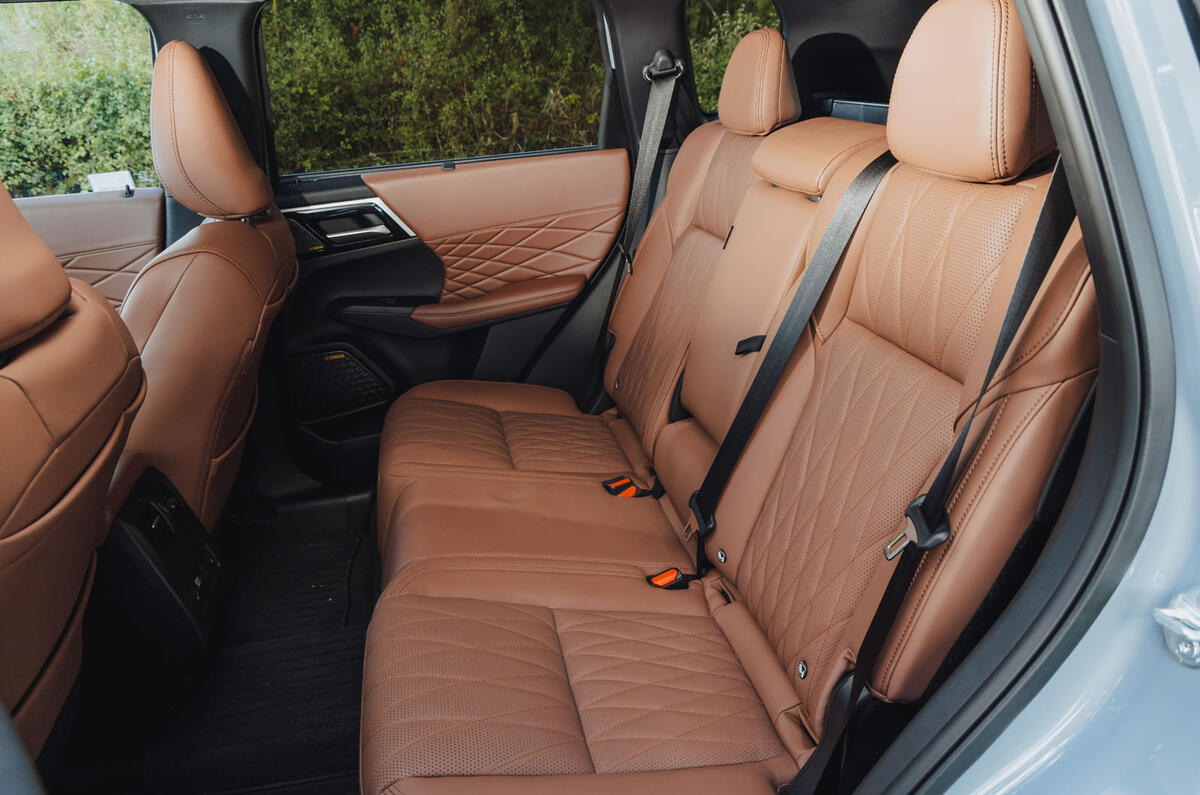
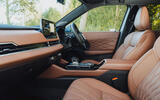
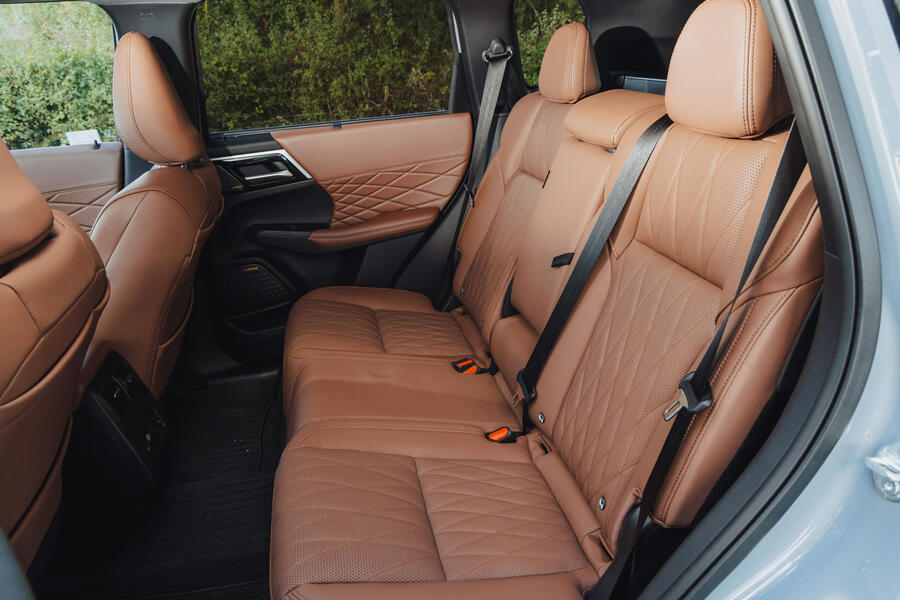
Most testers liked the brown leather of our high-spec Diamond test car, but if you don’t, your only choice is to downgrade to Nativa trim, which gets black artificial leather. Another strange quirk of the trim line-up is that Nativa cars get seven seats while Diamond cars get five, so there’s no way to have the high spec and three rows of seats.

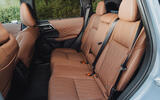
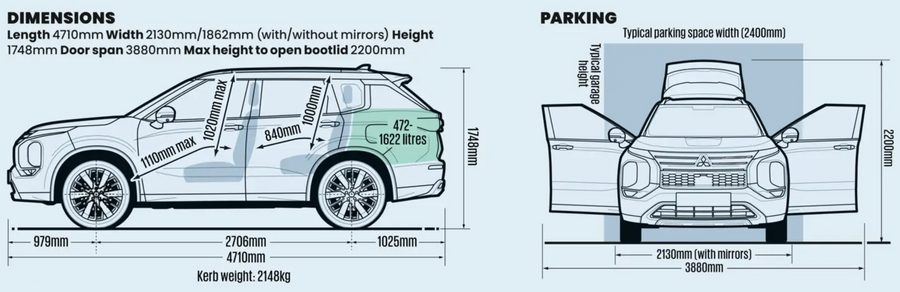
Our test car, then, was a five-seater, which seems to us the more felicitous configuration, because the seven-seater’s third-row seats are very small indeed. The second row is moderately comfortable. Because the sunroof ends just in front of the passengers’ heads, head room is actually quite good, and so is knee room, even if the Kodiaq has more still. However, the battery’s presence means the floor is quite high and there isn’t much toe room under the front seats.
Up front, the chairs have plenty of electrical adjustment, including lumbar support and cushion tilt. Surprisingly, they’re different from the ones in the X-Trail, although not quite as comfortable, because the seat base lacks a bit of padding. Still, long journeys aren’t an issue, there’s a massage function and the steering column has a lot of adjustment too.

While the boot is certainly roomy, it’s smaller than most rivals’. With 472 litres of volume, the Outlander just beats the RAV4 but lags behind the Rafale, Kodiaq and MG S9 by some distance. Remote release handles let you fold the rear seats flat, and there’s a small underfloor cubby for the charging cable. However, the load cover is positioned so that it leaves a gap to the rear seats, and even in the five-seat version there are armrests and cupholders.

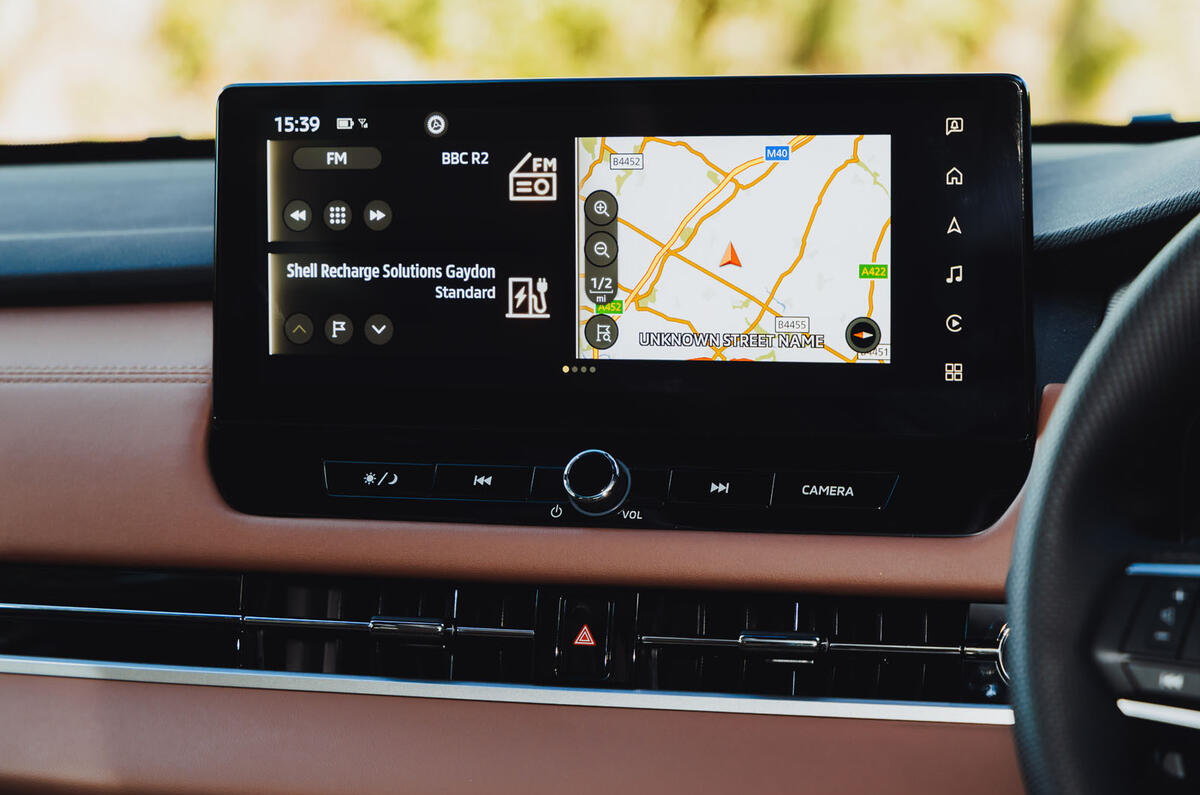
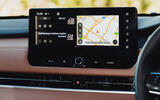
For in-car tech, Mitsubishi is leaning again on Nissan, although it seems to get only the leftovers. The digital interface in the Outlander is a lot like the one we saw in the X-Trail when it arrived a few years ago. That means it’s all fairly logical and fit for purpose, but whereas Nissans now have Google Maps, the Outlander still uses an older sat-nav system that isn’t as well connected.

The audio system is by Yamaha, with eight speakers as standard or 12 plus a subwoofer in the Diamond. We found it clear and powerful.

ENGINES & PERFORMANCE

7
Mitsubishi Outlander FD 15.9.26 18

The Outlander’s PHEV powertrain is a development of the one from its 13-year-old predecessor.

In one way it feels its age. You have the usual EV, Normal, Save and Charge modes, but they’re not as sophisticated as on the best new PHEVs. First, you can’t set a target percentage for Save and Charge. Second, in Normal mode, the car will simply empty its battery first, instead of taking into account navigation data to reserve some electricity for the end of your drive.

By default there’s fairly strong regen braking when you come off the accelerator, but you can adjust it using paddles behind the steering wheel. That’s great, but there’s also a multi-stage B-mode and a supposed one-pedal mode that doesn’t actually bring the car to a complete stop. Why make it so complicated?

In another way, Mitsubishi was ahead of the curve anyway. Much like some of the new range-extender-style PHEVs, most of the propulsion force comes from the electric motors, which means that, so long as the battery is charged, the Outlander feels like an EV. There are no jolts or hesitation from gearchanges or clutches engaging and the engine remains very muted. The motors and electronics emit quite a noticeable whine, although we don’t really mind it because it lends the car a bit of character.

With no help from the engine, the Outlander can still hit 62mph in 9.7sec and tops out at 85mph.So unlike in other PHEVs, you’re not left with significantly compromised performance in EV mode.

When you put your foot to the floor, the engine starts to behave as if it’s attached to a CVT, albeit a well-behaved one, holding high revs to supply as much power as possible to supplement what the battery can provide.

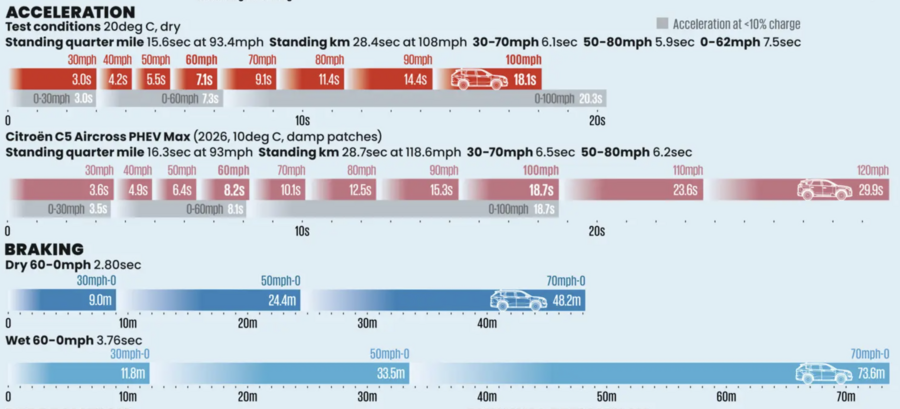
As a result, the acceleration is somewhat non-linear, surging between 20-50mph as the system builds power. In our testing, the Outlander bettered its claimed 0-62mph by 0.4 sec, which makes it quicker and more effortless than most of its rivals. When the battery is empty, it loses only 0.2sec to 62mph and still beats the claimed figure, but the engine does become more present in everyday driving.

While the powertrain copes with the Outlander’s 2160kg kerb weight (as tested) quite well, the brakes aren’t up to the job. Paddles control the level of regeneration and the pedal is generally progressive, if slightly mushy. However, 48.2m is already a long stopping distance from 70mph in the dry and it lengthened over the course of five consecutive stops. In the wet, the Outlander took 73.6m, which is unacceptable for a car on summer tyres in mild conditions.

RIDE & HANDLING

7
Mitsubishi Outlander FD 15.9.26 16

Mitsubishi still likes to reference its past rallying successes in its marketing, but that’s a red herring. The Outlander knows what it’s meant for, and it’s not flying through forests sideways.

The engineers have opted for a relaxed chassis tune here. The springs and dampers do control body movements but don’t stop them dead in their tracks, which means the ride generally feels pleasantly soft but not overly floaty – a very appropriate compromise for a family SUV.

We did get the sense that the body structure isn’t the most rigid and the dampers aren’t of the highest quality, so you do get the occasional shudder as the 20in wheels hit a pothole, but nothing too egregious. The Outlander is also fairly quiet at a cruise – on a par with the Citroën C5 Aircross PHEV.

With standard four-wheel drive and the heavy battery positioned optimally under the cabin floor, the Outlander also handles as well as it needs to. On the test track, it’s surprisingly willing to enable lift-off oversteer, but on the road that just translates to a nicely keen balance. Overall grip is adequate and, thanks to four-wheel drive, there’s none of the scrabbling or torque steer that afflicts some of its front-wheel-drive rivals.

We did find the steering to be slightly vague, requiring rather too many corrections at a motorway cruise. It also has a somewhat heavy, stodgy feel. So even with its competent handling, the Outlander isn’t a car that tempts you to throw it around.

Despite a mild rear bias to the electric motors’ power distribution, the Outlander defaulted to safe understeer on the wet handling circuit, with the different drive modes making little to no difference.

The traction and stability control systems feel about two generations behind: they will take care of any slides eventually but rather slowly and clumsily.

The same is true of the ADAS. Thankfully, the Outlander lacks an overspeed warning chime and the lane keeping assistance doesn’t actually interfere with the steering; it only vibrates the wheel and sometimes drags the brakes, so it’s not too intrusive. By contrast, the driver monitoring is too overbearing and requires a bit of fiddling to turn off on every restart. The adaptive cruise control is rather easily spooked for no reason and can’t be switched to traditional cruise control. Mitsubishi would do well to adopt Nissan’s systems, which feel more modern.

If you’re looking at the Outlander as a tow car, you may well be disappointed, because it’s limited to hauling 1600kg braked, which is less than PHEV versions of the Kodiaq (1800kg), RAV4 (2000kg on 4WD models) and S9 (2000kg).

MPG & RUNNING COSTS

5
Mitsubishi Outlander FD 15.9.26 2

This car’s predecessor found great success because it was one of the first PHEVs to enjoy substantial tax breaks. The latest one now finds itself in a fiscal climate that’s only slightly less favourable, but it has gained a lot of rivals.

Thanks to an official electric range of 54 miles, it falls in the 10% BIK tax band, which makes it a lot cheaper to run as a company car than an equivalent petrol or diesel SUV. However, some of its rivals, such as the Kodiaq, RAV4 and Chery Tiggo 9, are rated for more than 70 miles, which puts them in an even cheaper bracket.

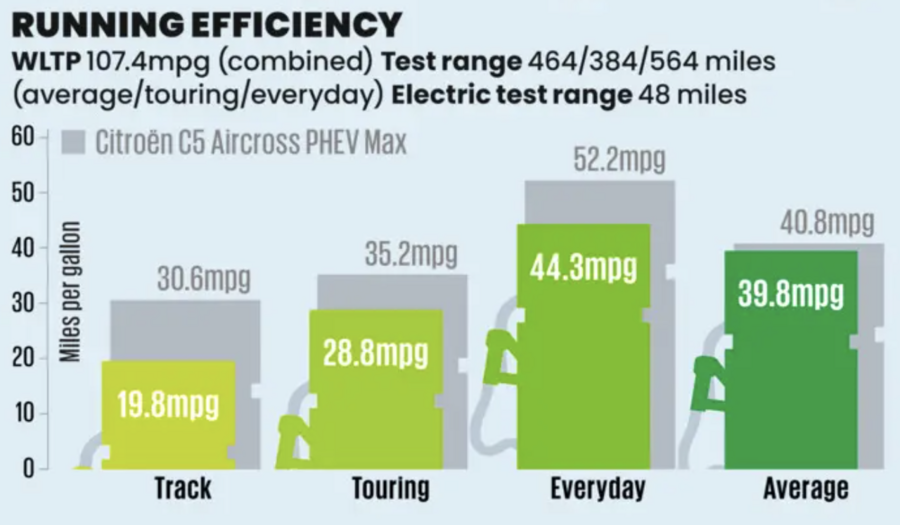
The RAV4 makes for a telling comparison, because its battery is about the same size but in four-wheel-drive form it gets 75 miles out of it, as opposed to the Outlander’s 54 miles, showing that it’s much more efficient. We managed 48 miles in the Outlander before the engine fired up and more informal testing suggests that the RAV4 gets similarly close to its official claim.

Things arguably get worse once the Outlander’s battery runs out, as demonstrated by our touring and ‘everyday’ economy tests, which are run on a flat battery. Its suburban economy is just about acceptable at 44.3mpg but its motorway economy of 28.8mpg is very poor. By contrast, the Kodiaq and RAV4 will still do more than 45mpg in mixed use with a depleted battery.

Mitsubishi has made some odd choices when it comes to charging the Outlander. When you open the charging flap, you’re greeted by two ports: the usual Type 2 as well as a Chademo. The former handles AC charging, the latter DC charging. It rarely makes sense to rapid-charge a PHEV, because at present rapid-charger prices you’re better off just running it on petrol. Worse, the Chademo format has largely been abandoned in Europe in favour of CCS, so compatible chargers are getting hard to find in the UK. The cost of the rapid-charging hardware would have been better invested in boosting the AC charging speed, which tops out at a sluggish 3.5kW, meaning it takes six and a half hours to brim the battery from empty.

The Outlander isn’t particularly cheap to buy either. At £46,995 as a Nativa and £49,995 as a Diamond, it’s up there with the more expensive cars in the class, even taking into account that there are no further options beyond a few paint colours. On the same terms, an equivalent RAV4 is slightly cheaper on PCP finance.

The standard warranty is valid for five years or 62,500 miles, which is rather meagre compared with rivals.

VERDICT

Mitsubishi Outlander FD 15.9.26 9

Although it’s new to us, the Mk4 Outlander was launched in other markets five years ago. Indeed, it feels like it’s due for a mid-life facelift to bring a few things up to date. The interior and ADAS tech could do with freshening up, but the bigger problem is that the plug-in hybrid powertrain just isn’t efficient enough, either on petrol or electric power. The brakes also need an upgrade.

The rest of the car is mostly pleasant. While it’s not the most spacious inside, it’s well appointed, easy to use and decent to drive. It rides and handles well and the electric-first nature of the powertrain means it’s smoother and more effortless than rivals with multi-speed gearboxes.

At the end of the day, though, the Outlander isn’t as complete as the cars it’s priced to rival, nor as temptingly cheap as some other options.

Illya Verpraet

Illya Verpraet Road Tester Autocar
Title: Road Tester

As a road tester, Illya drives everything from superminis to supercars, and writes reviews and comparison tests, while also managing the magazine’s Drives section. Much of his time is spent wrangling the data logger and wielding the tape measure to gather the data for Autocar’s in-depth instrumented road tests.

He loves cars that are fun and usable on the road – whether piston-powered or electric – or just cars that are very fit for purpose. When not in test cars, he drives an R53-generation Mini Cooper S or a 1990 BMW 325i Touring.