





















8

Yes, it’s an automatic and it’s £30k, but it’s a new petrol hot hatch and it’s in Britain

Find Skoda Fabia 130 deals
Other Services
Sell your car
84% get more money with

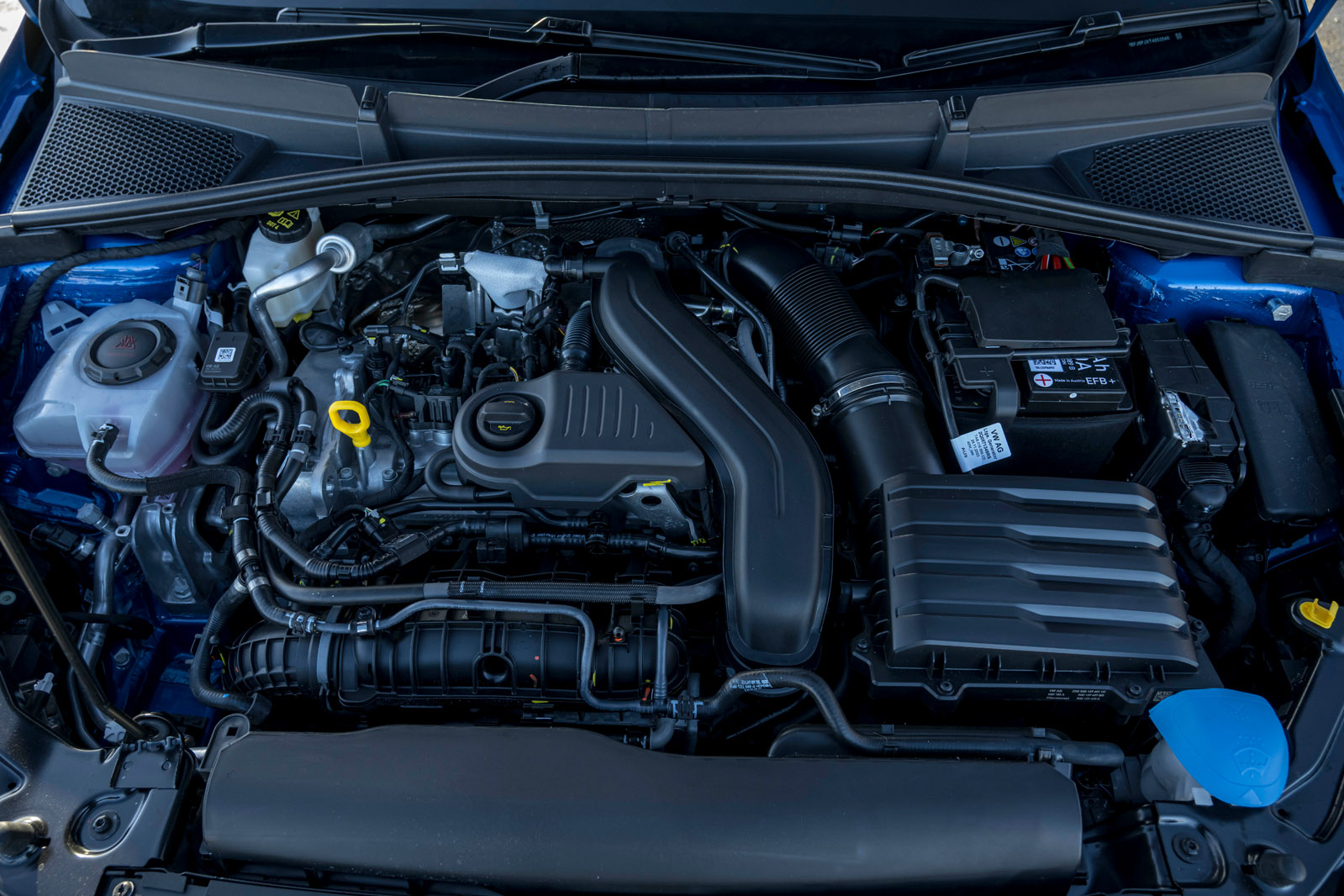
The last three mentions of ‘intake plenum’ we can find in the Autocar archive related to the Ferrari 849 Testarossa, Gunther Werks' Porsche 993 Speedster and, er, the world’s fastest tractor. Now to make another for the Skoda Fabia 130.

It may just be a warm version of a small hatchback, not hot enough even by Skoda’s own reckoning to earn a vRS badge, but it seems some proper hardware engineering has gone into this little car.

Hot hatches have been falling by the wayside in great numbers, and even warm hatches are an endangered species, at least if you want one with a petrol engine.

There’s a hot hatch revival going on in the electric world with the Alpine A290, Mini Cooper E, Vauxhall Mokka GSE and a few others, but they won’t work for everyone.

With the pressures of emission restrictions and profitability, you can see why Skoda might not have bothered, but we’re glad it has.

Advertisement

DESIGN & STYLING

7
Skoda Fabia 130 review 2025 002

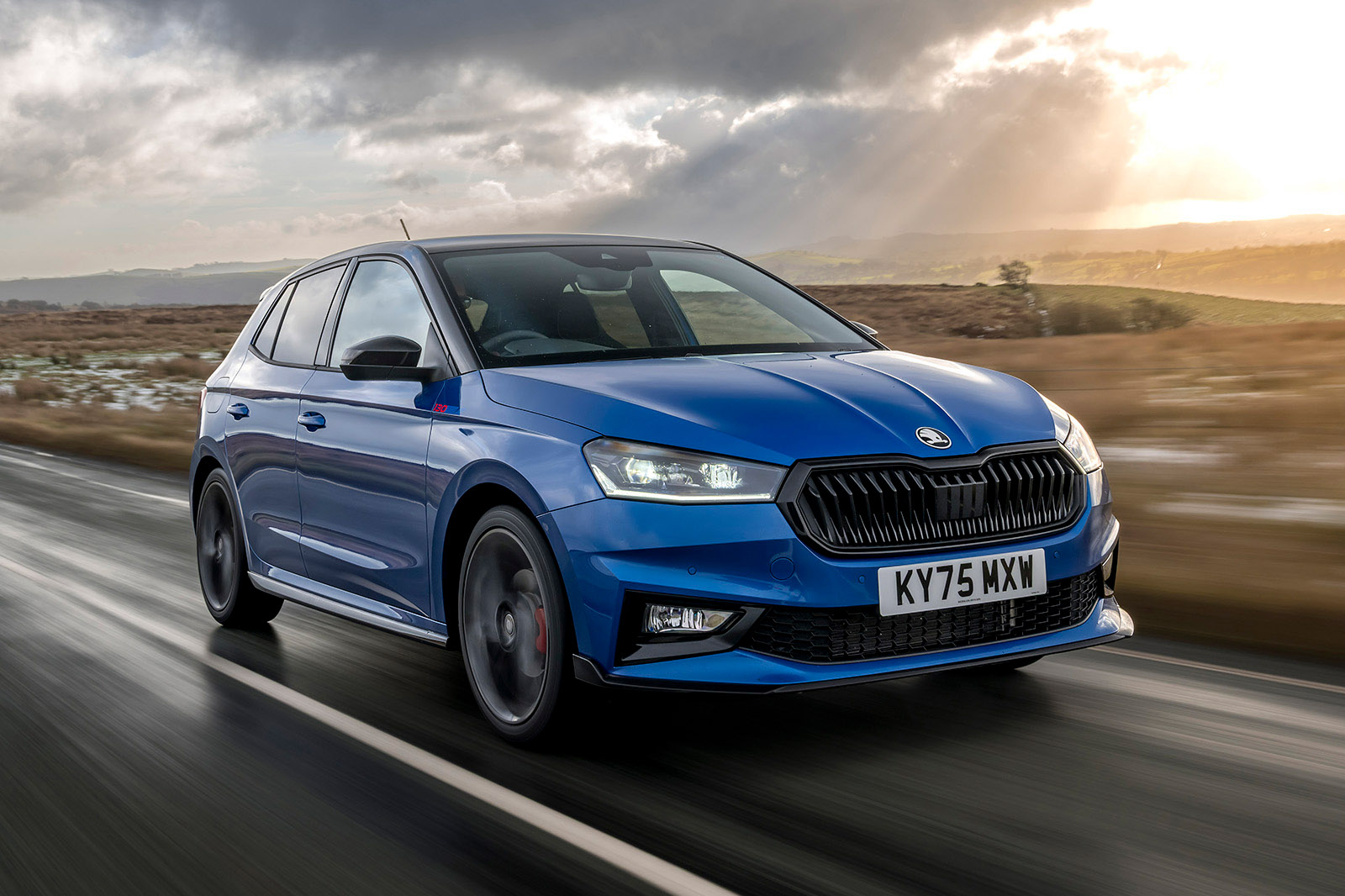
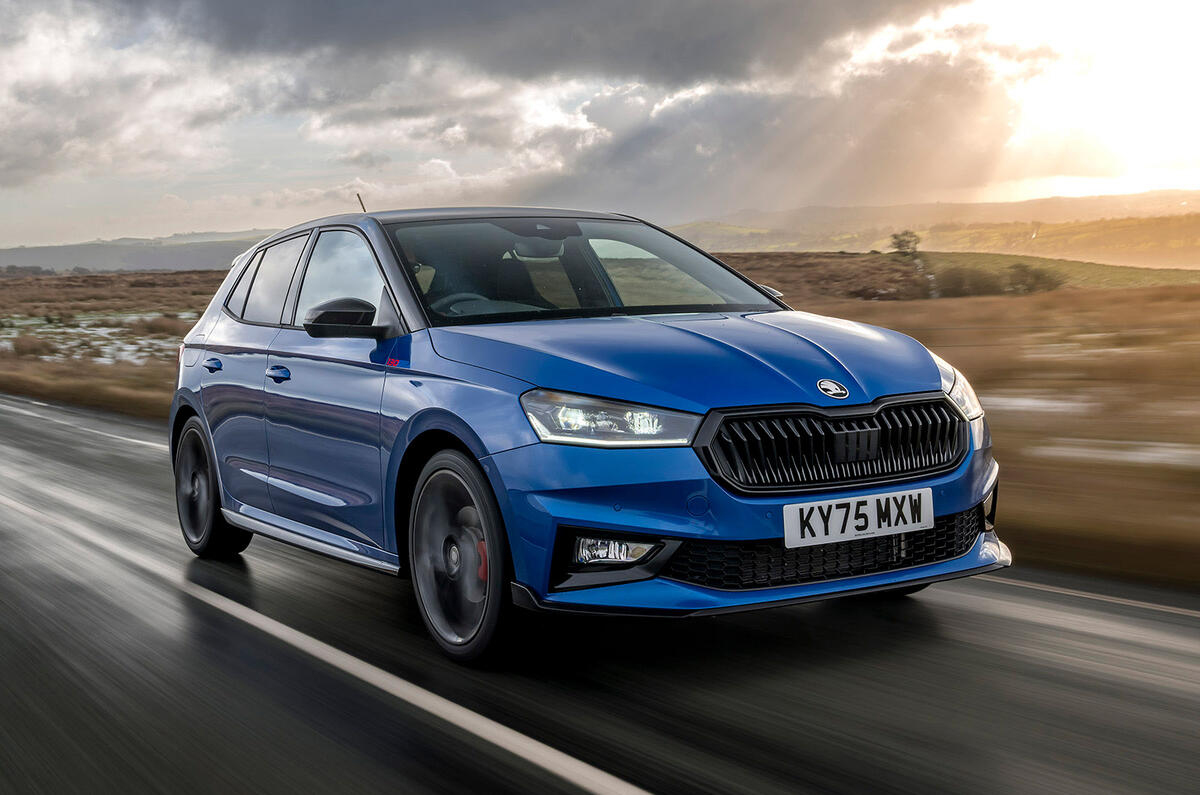
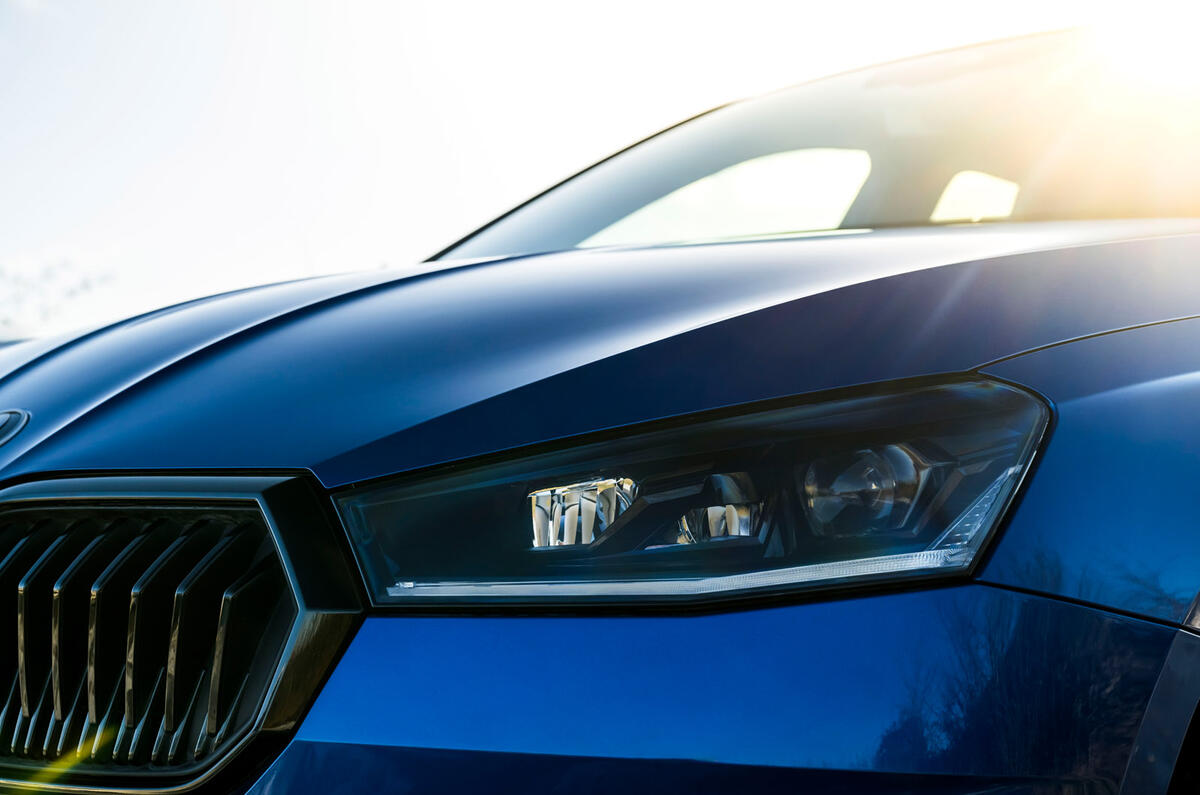
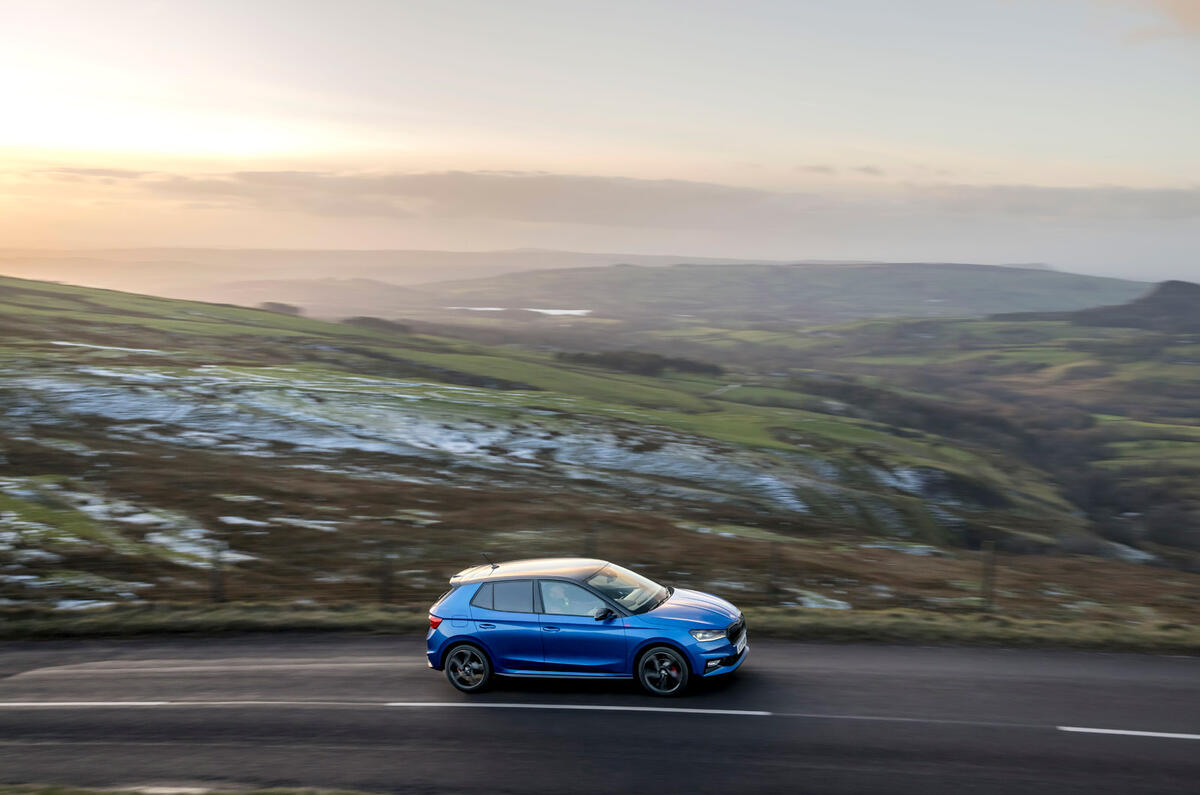
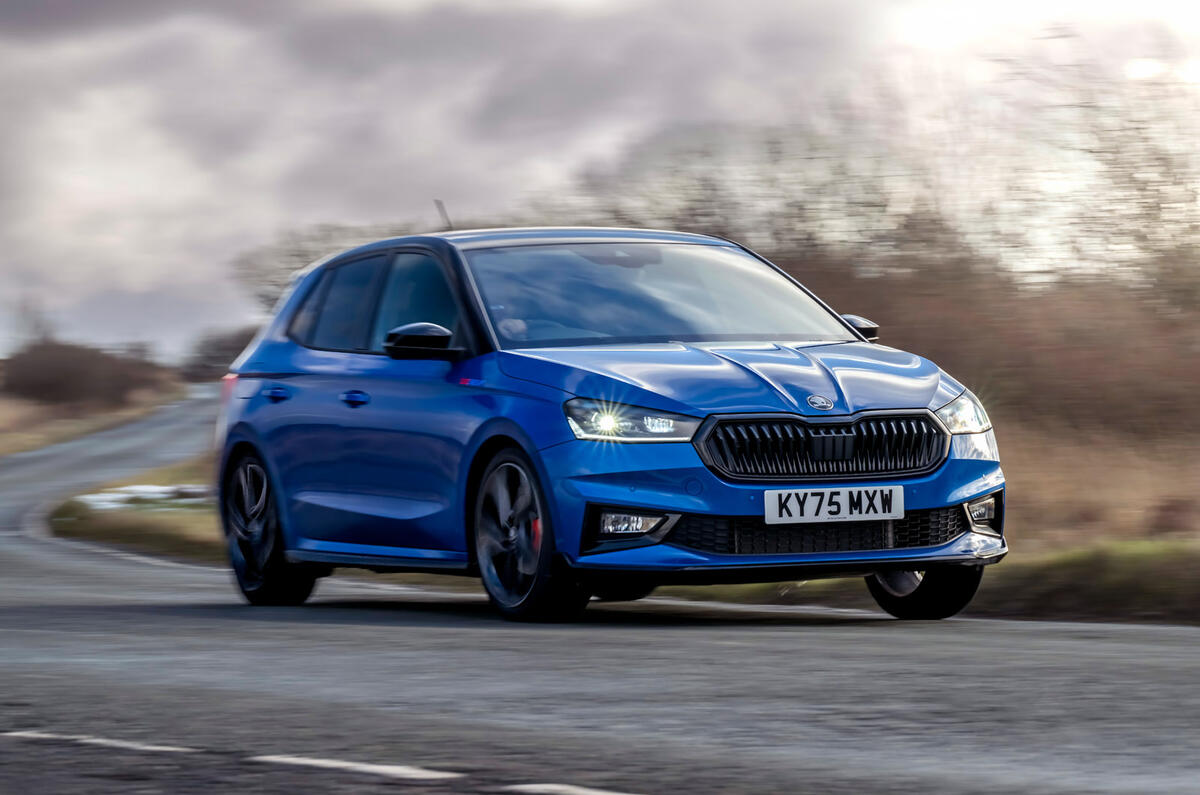
This Fabia 130 is not a vRS. Skoda says it’s milder than that (and vRSs have never been particularly hardcore) and this is as sporty as it’s going to get for the Fabia. Even so, there are some notable hardware changes from a normal Fabia.

This 130 gets its name from two sources: it makes 130kW (175bhp) and Skoda turned 130 years old last year.

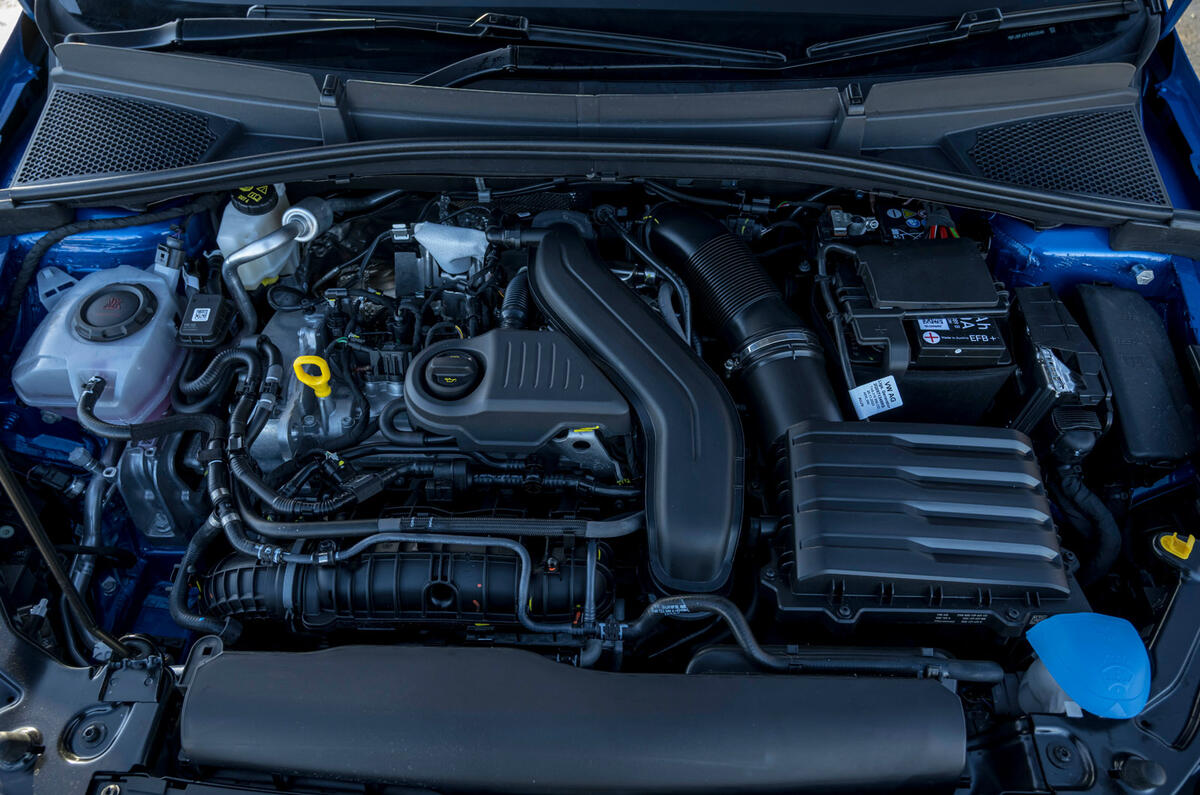
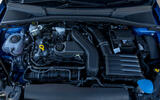
To get to that figure (a 26bhp upgrade), some subtle upgrades have been made to the Volkswagen Group's ubiquitous four-cylinder 1.5 TSI 'Evo2' engine. 

Its ECU has been modified and bits of the engine have been upgraded to cope with the additional power in a curiously global parts bin special kind of way: that larger intake plenum, as well as new rocker arms, charge air pipes from Mexico and thicker cylinder head gaskets from China.

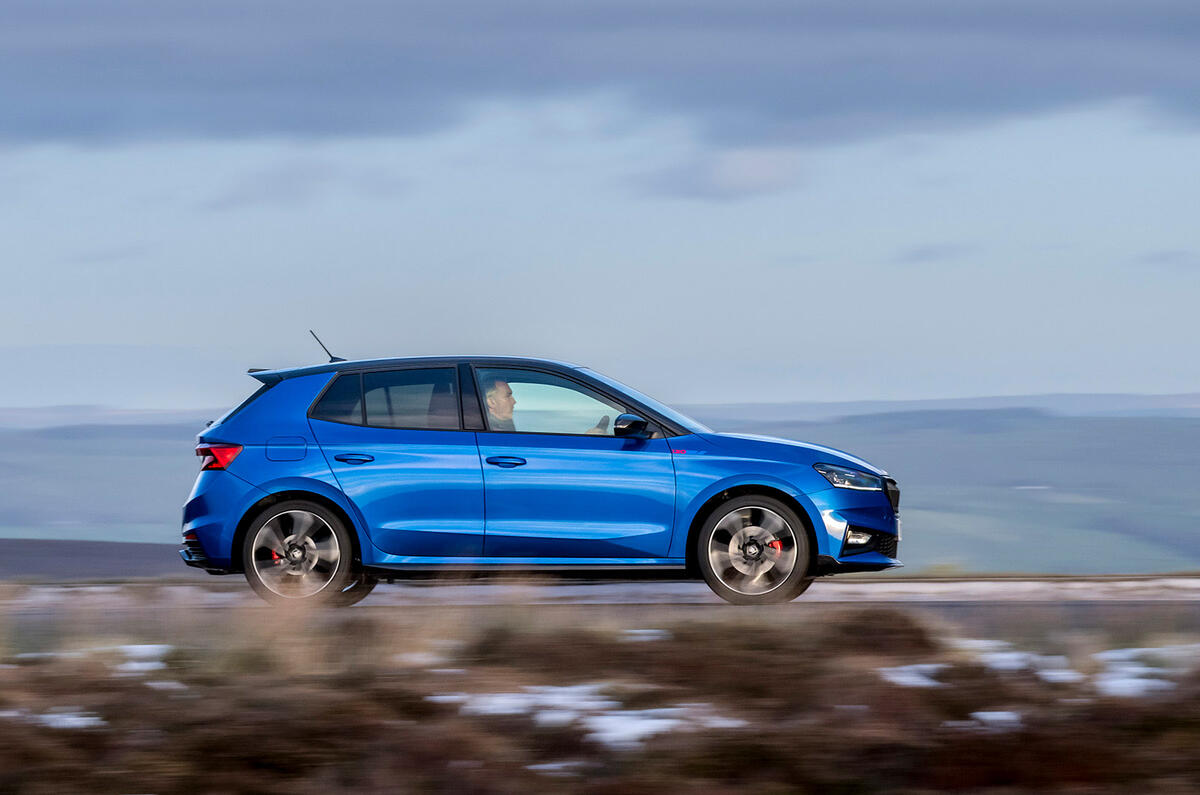
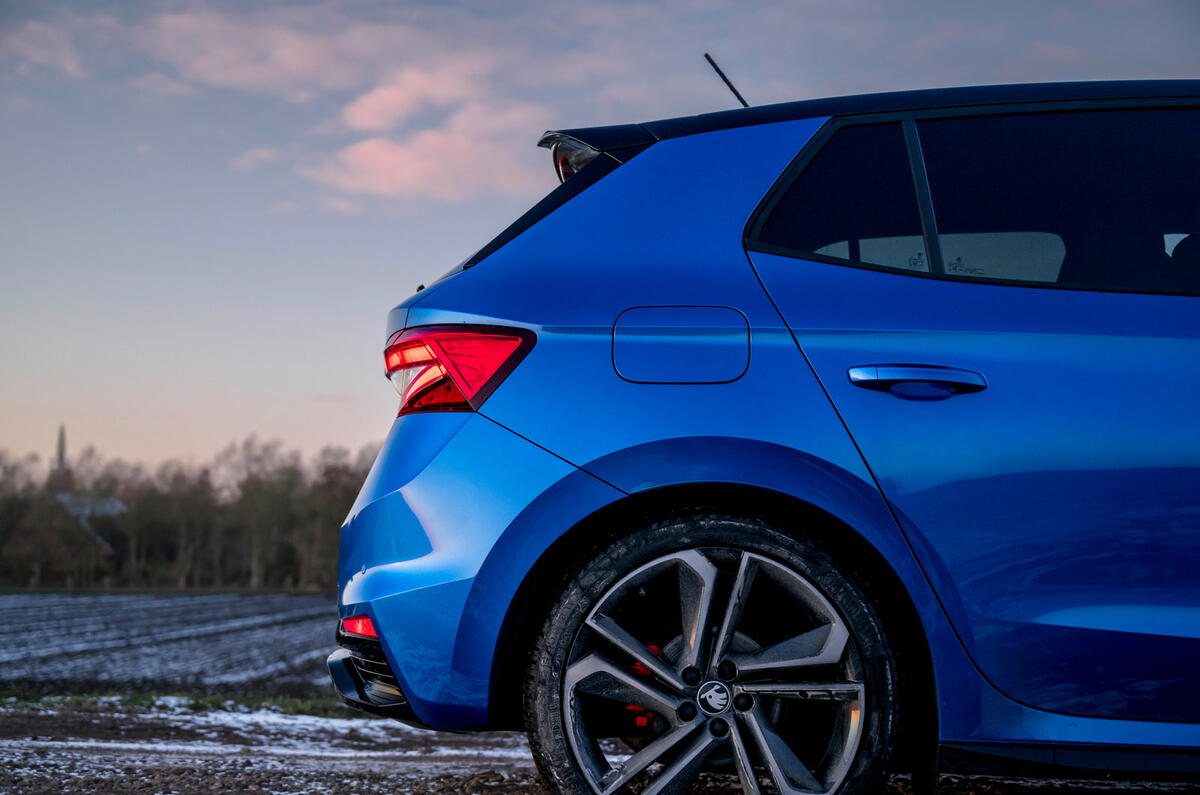
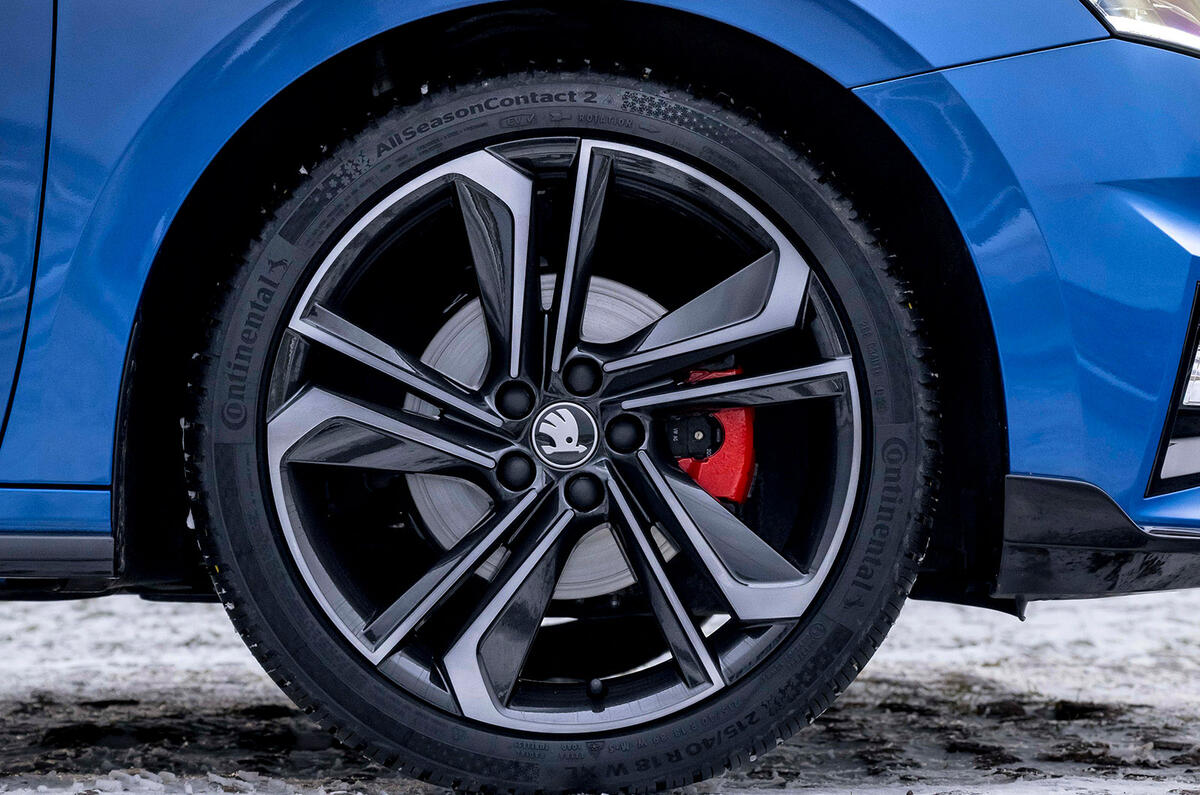
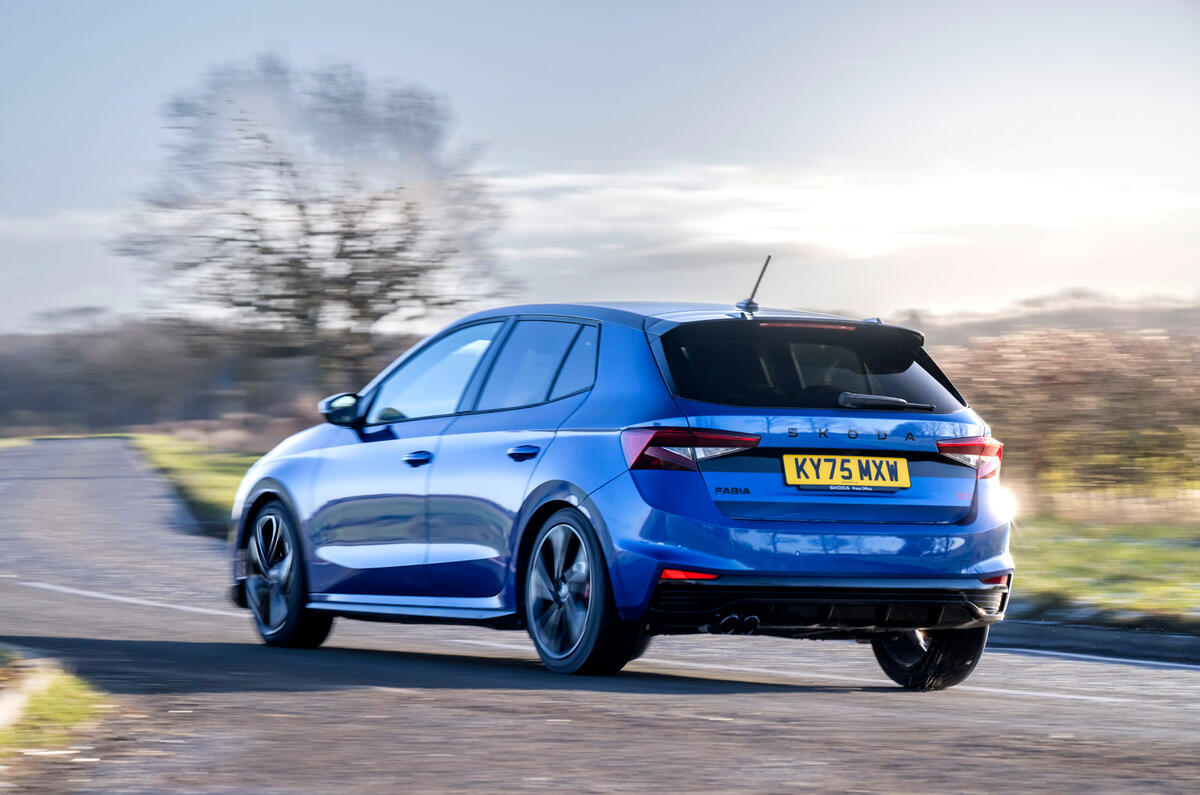
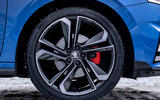
There’s just the one set of 18in wheels to choose from, which the engineers are thrilled about, because it means they can make steering and camber adjustments specifically for this car without worrying about variables in wheel size. 

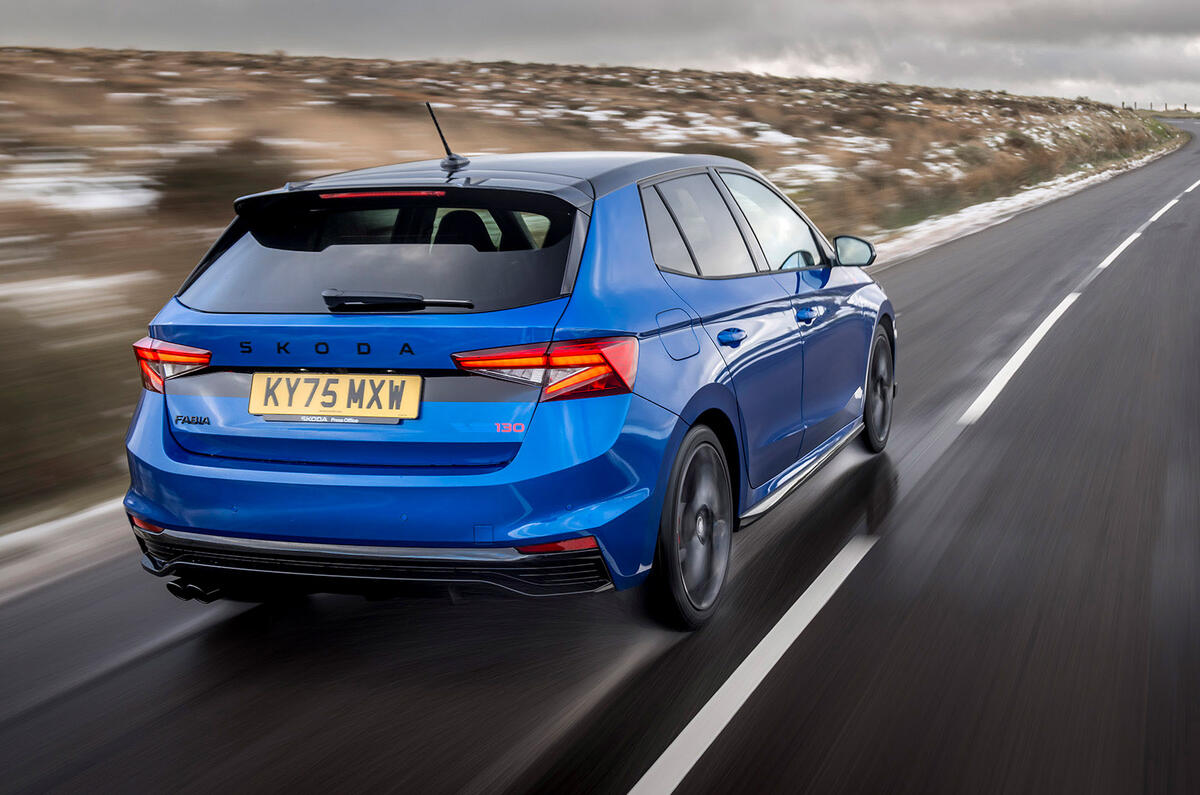
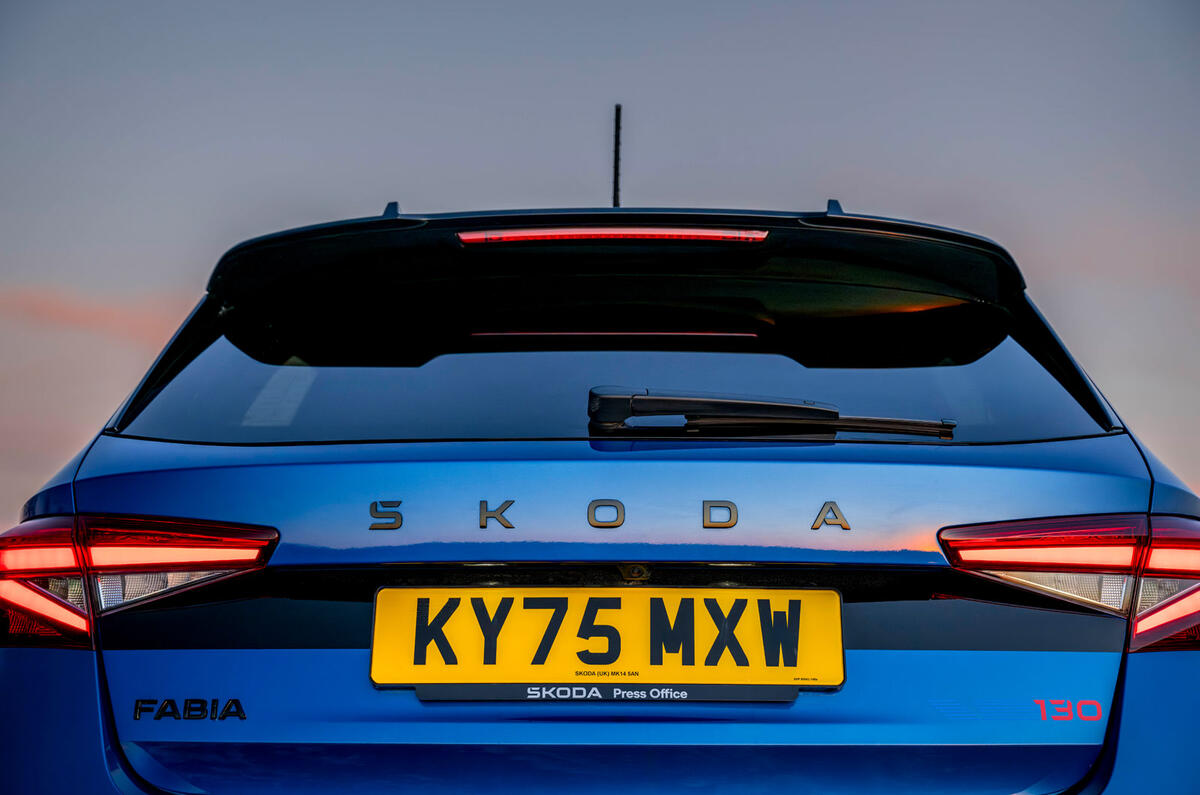
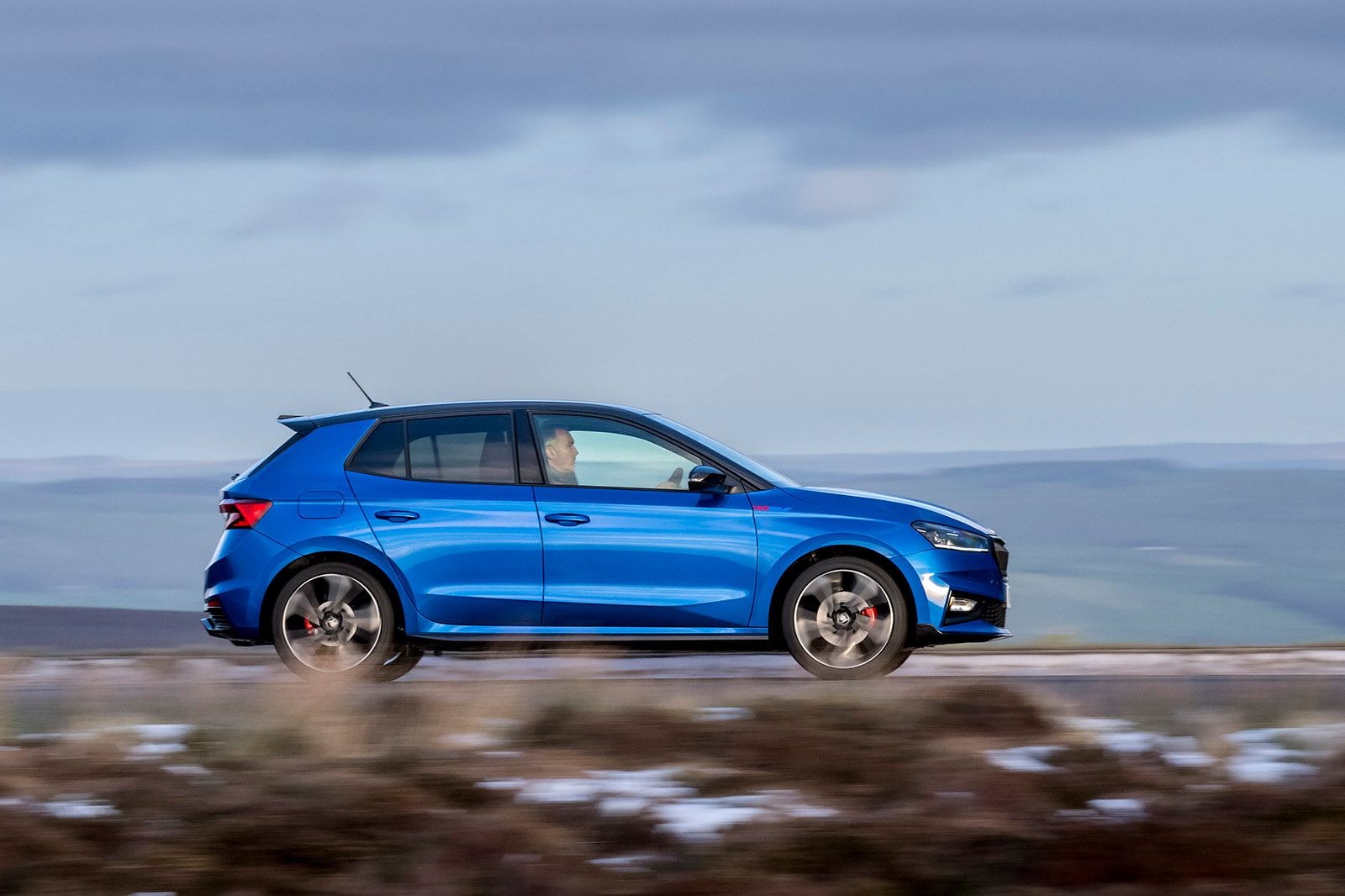
There are a few '130' badges dotted around the outside and beneath the rear window is a solid black stripe to denote that you’re in a special edition. The diffuser looks surprisingly serious, and this is the only Fabia with visible exhaust pipes.

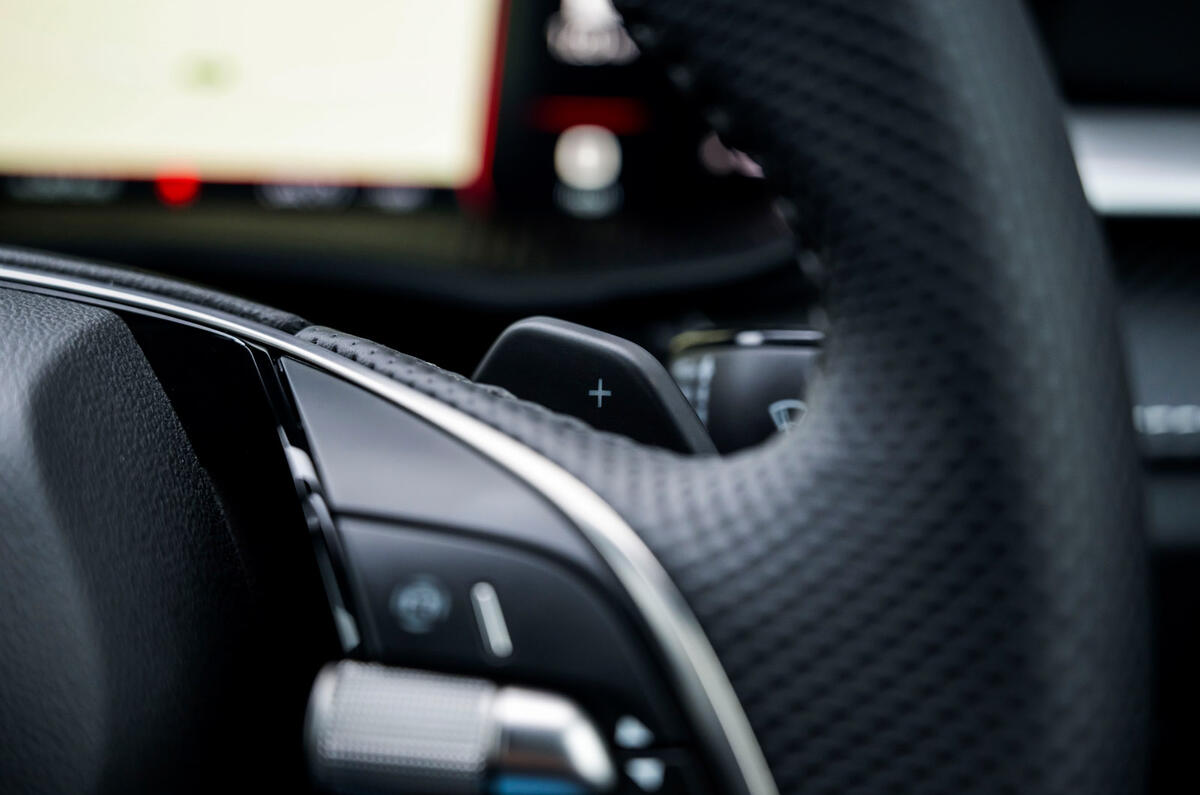
It’s available only with a dual-clutch automatic (DSG) gearbox. The 1.5-litre turbo engine can be specced with a manual in a few different Volkswagen Group cars, but not here. Skoda says there wouldn't be enough demand. But the software of the seven-speed DSG has been upgraded and it now holds on to gears a bit longer to make better use of the additional power.

INTERIOR

8
Skoda Fabia 130 review 2025 010

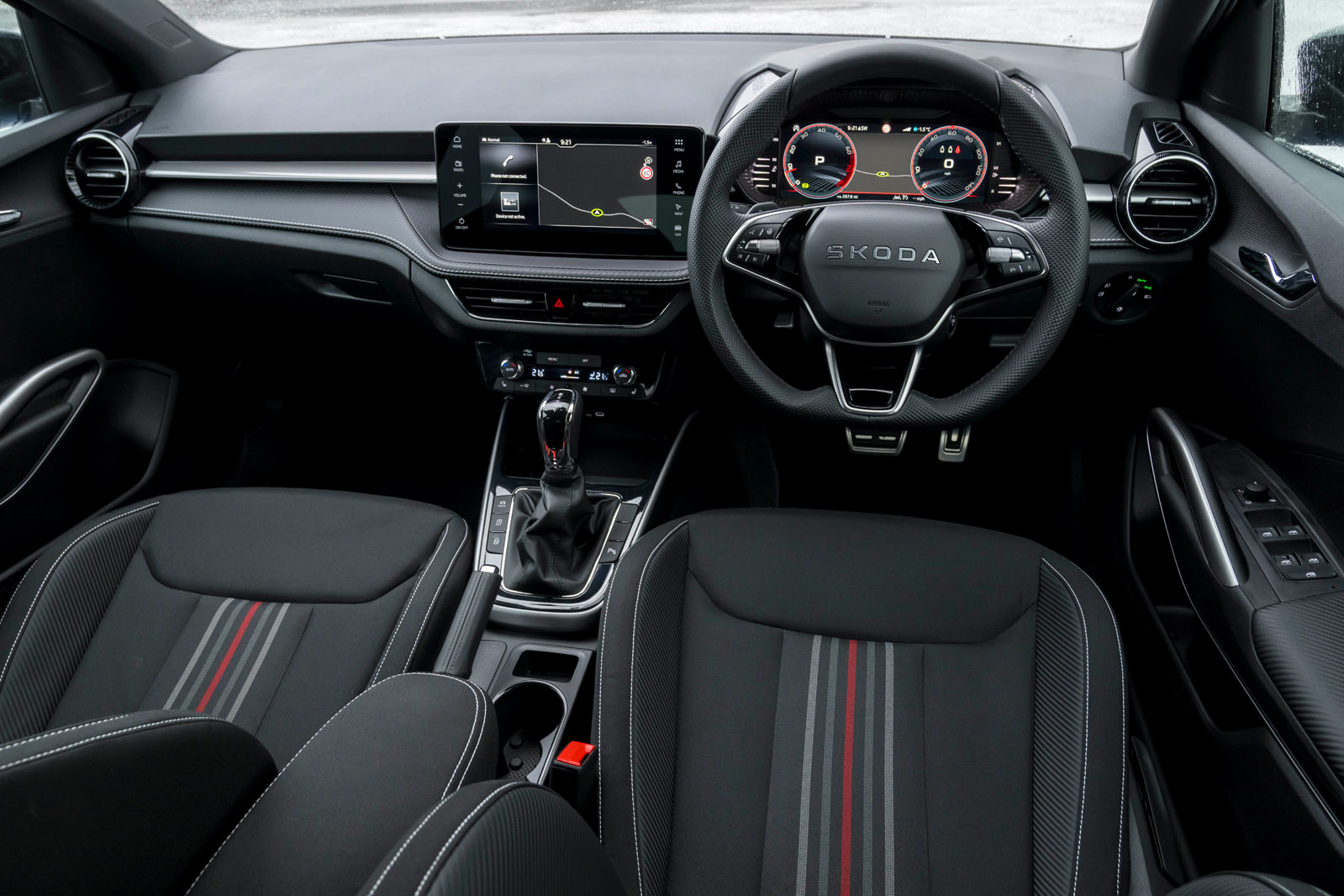
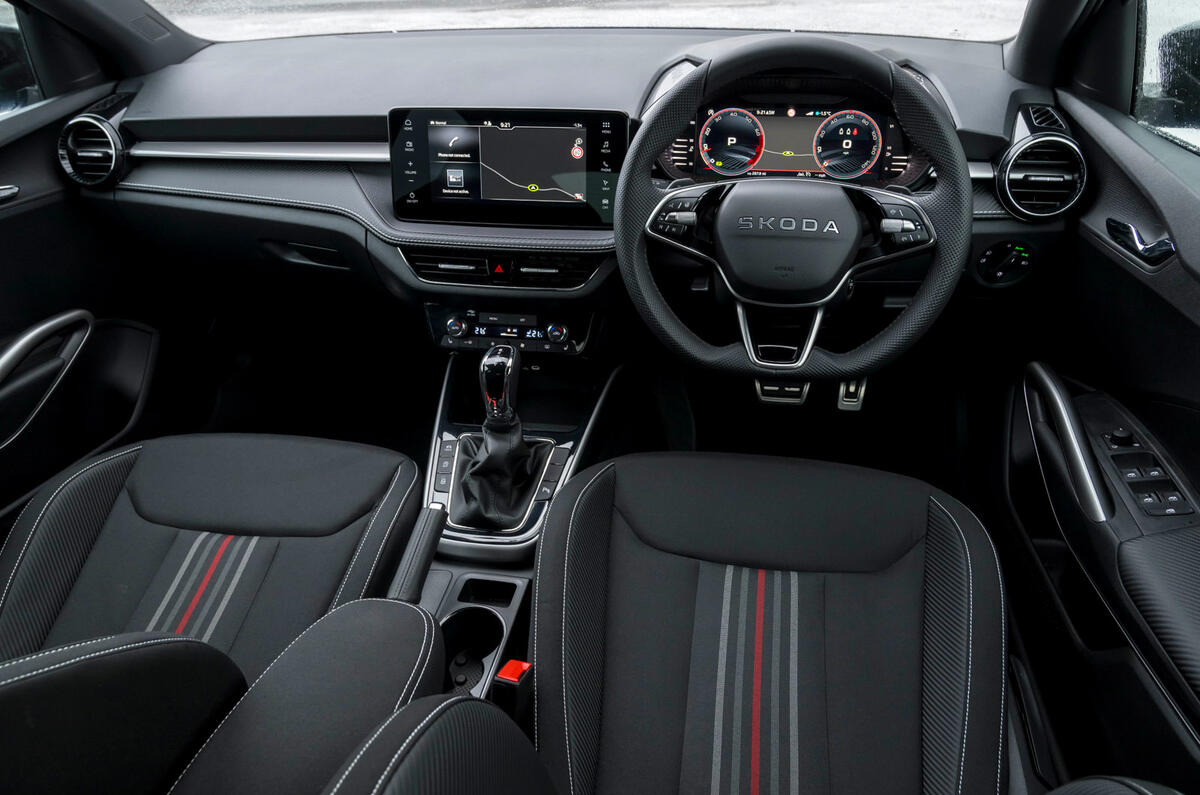
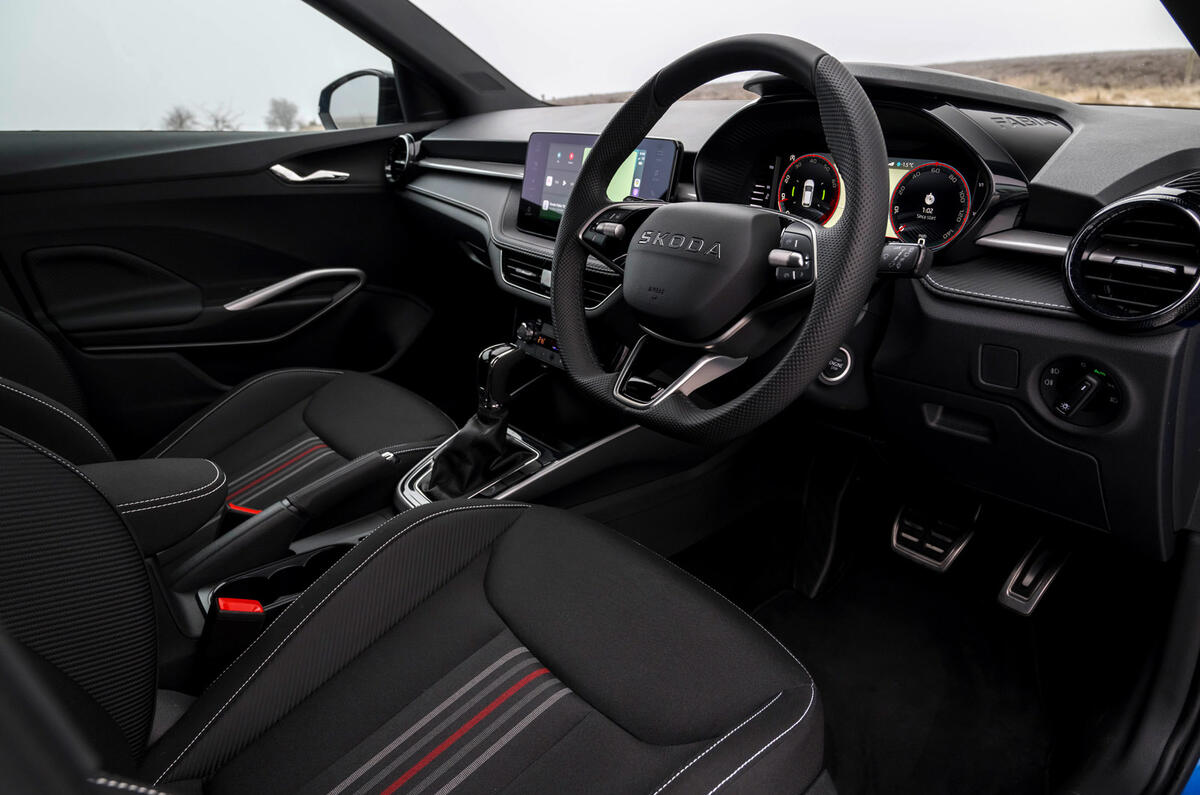
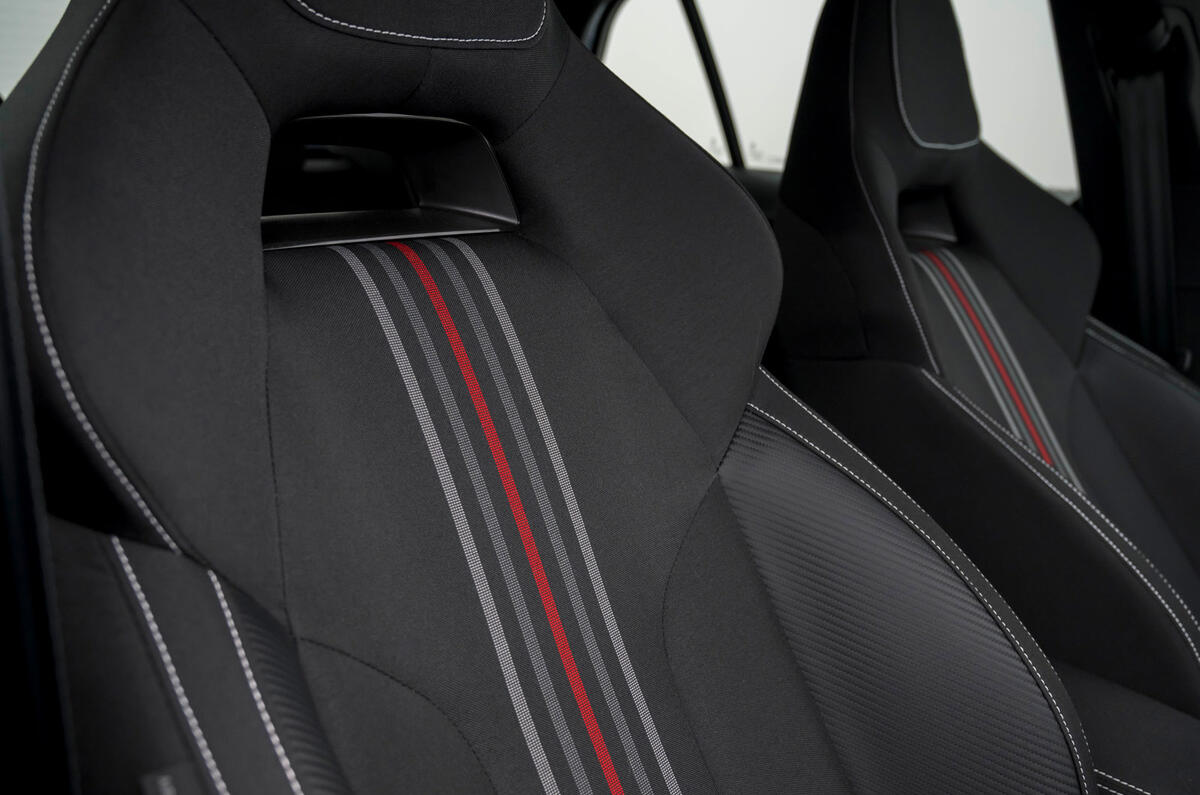
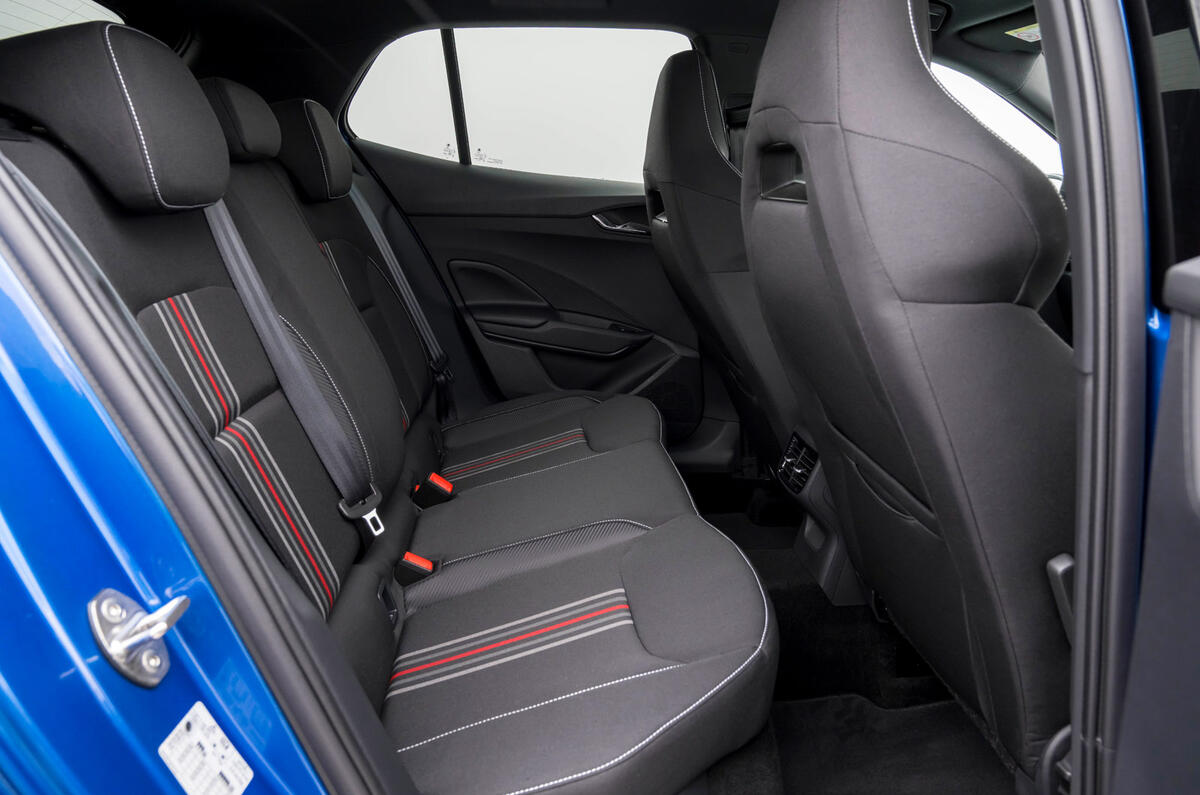
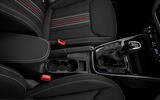
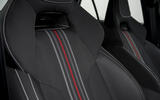
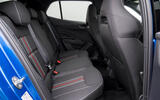
Inside, the 130 gets a pair of manually adjusted sports seats, which are generally very comfortable and keep you in place pretty well in corners. They lack a bit of thigh support, though.

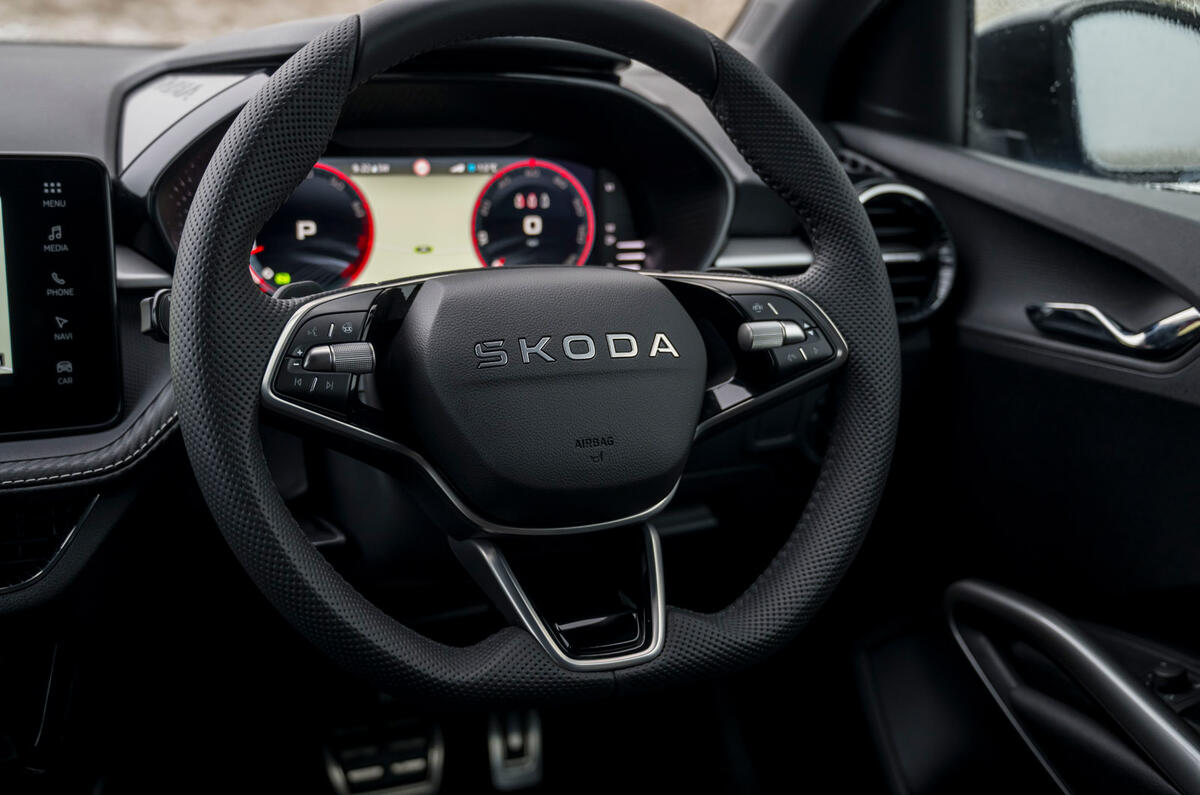
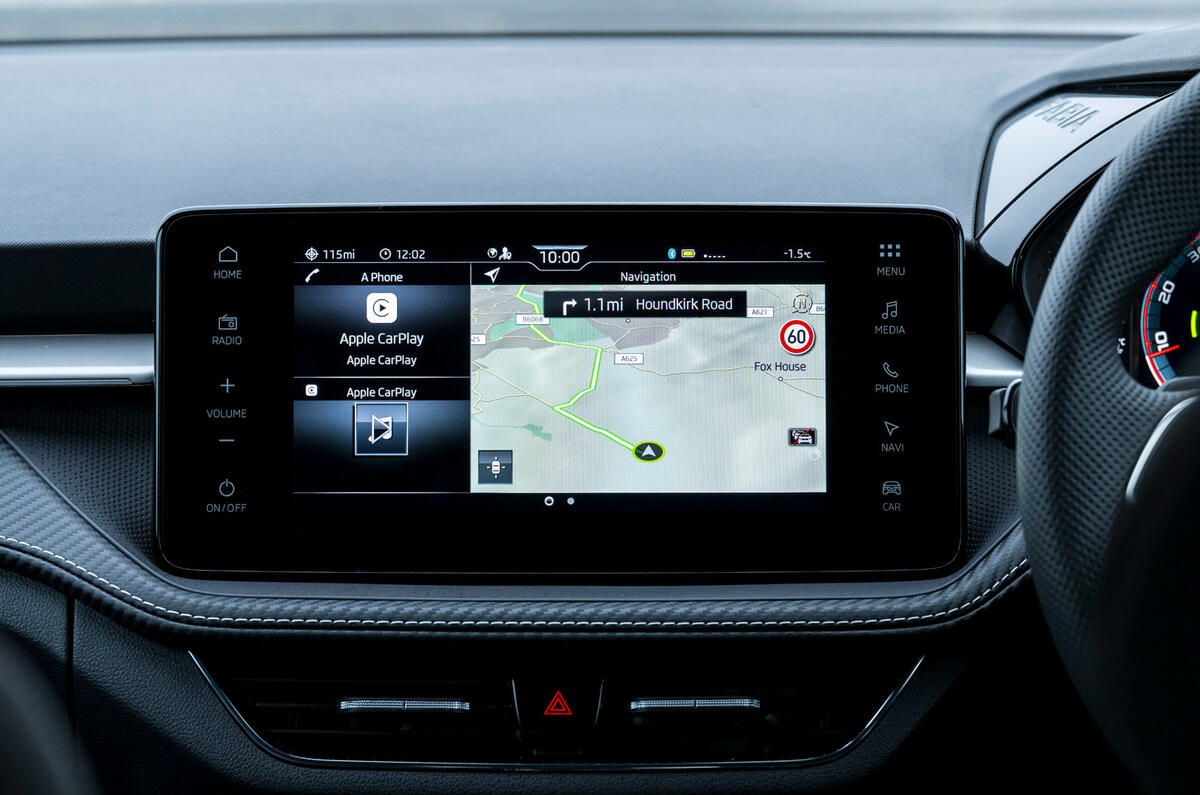
Otherwise, it’s much the same as any other Fabia, which is to say very roomy for a supermini and very well thought out, with physical controls for all the important stuff and relatively basic but intuitive tech.

At this price point, the perceived quality is looking a little suspect, though. The tops of the dash and doors are all hard plastic, which is perfectly fine at £20,000 but less so at £30,000.

For more detail, read our main Skoda Fabia review.

ENGINES & PERFORMANCE

7
Skoda Fabia 130 review 2025 023

The engine mods take it from the usual 148bhp to 175bhp. Torque remains at 184lb ft, though. At 7.4sec, it's faster from 0-62mph than a Mk2 Volkswagen Golf GTI 16v, so to anyone not yet drunk on the power of modern EVs, it’s a nicely quick car. But look, let’s not get too excited here: all the intake plenums and dual exhaust tips in the world don’t change anything about the fact that this is a fundamentally ordinary engine.

It has a curiously flat torque curve, where you expect a slug of boost to arrive at some point. At 2000rpm? No. Maybe 3000rpm? Okay, surely it’s coming at 4000rpm? But the hit of torque never comes.

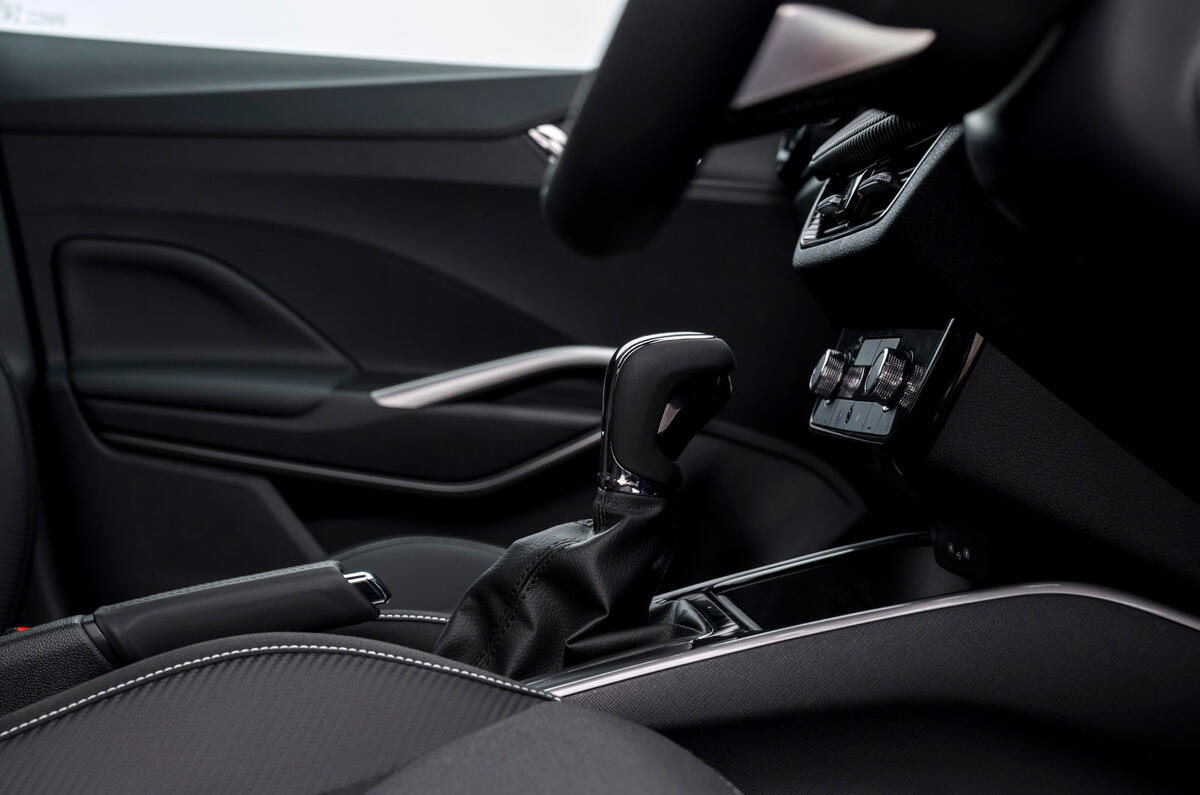
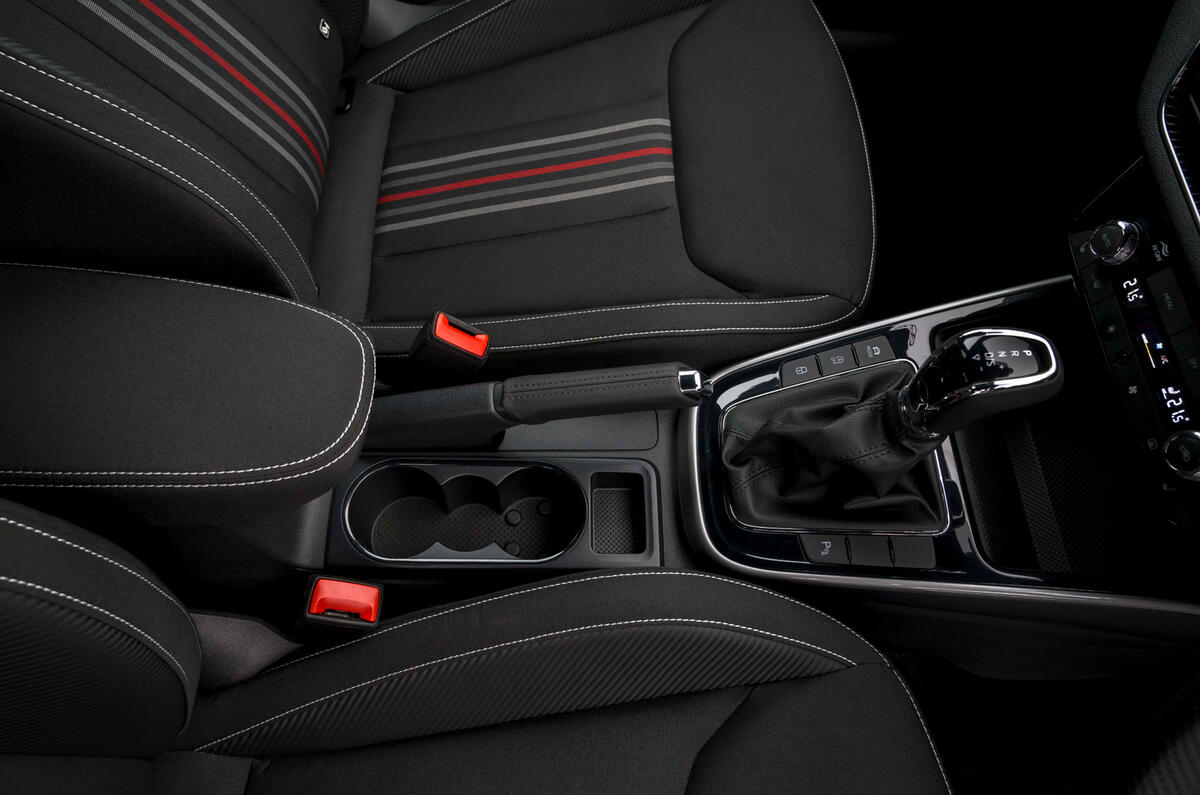
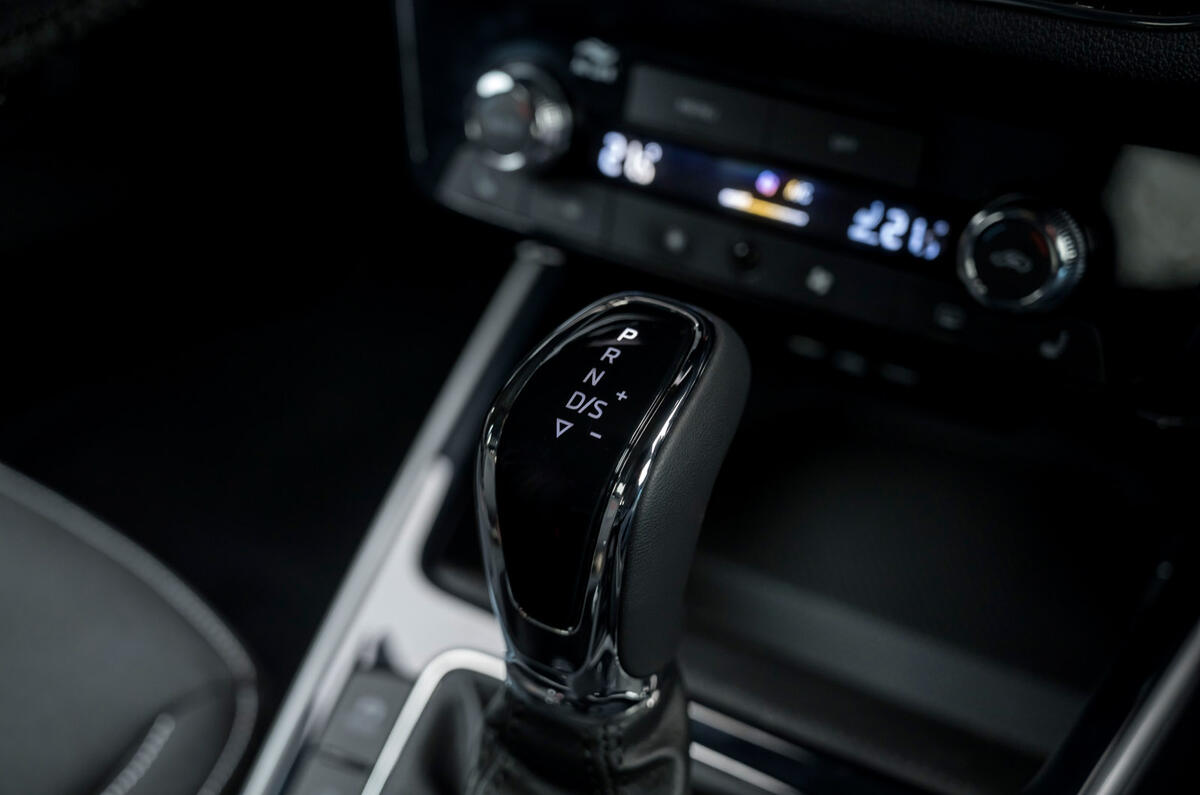
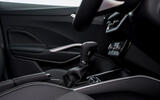
The automatic gear selector is a big lever. You pull it back for Sport mode and knock it left for manual mode. I would have preferred a proper six-speed manual, but this is so much better and more intuitive than the little toggles that are now more common.

Sport mode adds a bit of welcome digital aural augmentation, but it never amounts to much more than weary mooing.

It’s a shame Skoda isn’t offering the option of a manual gearbox. It would have taken a minimal amount of development and added a layer of engagement. The DSG is generally inoffensive but not particularly snappy.

RIDE & HANDLING

8
Skoda Fabia 130 review 2025 024

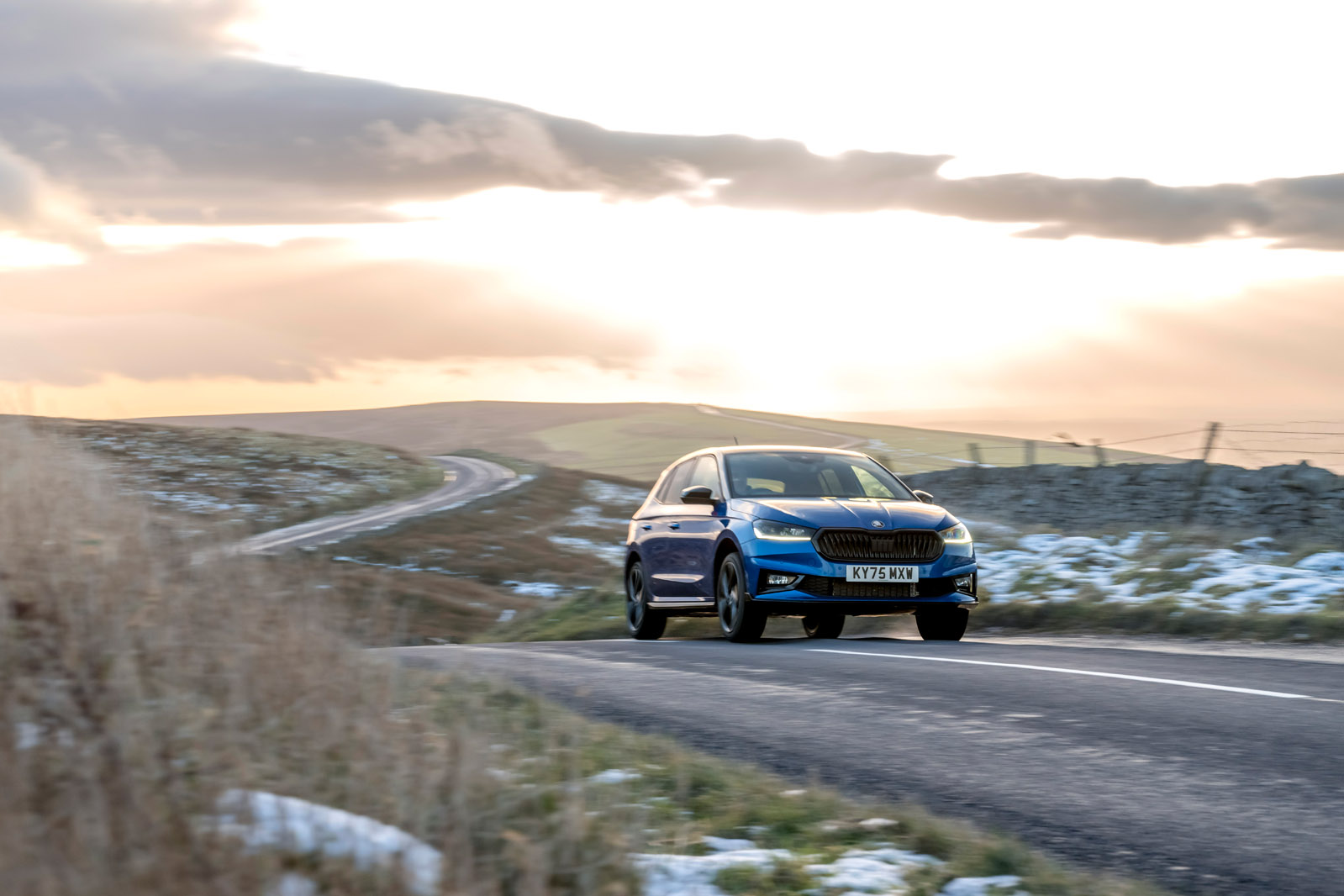
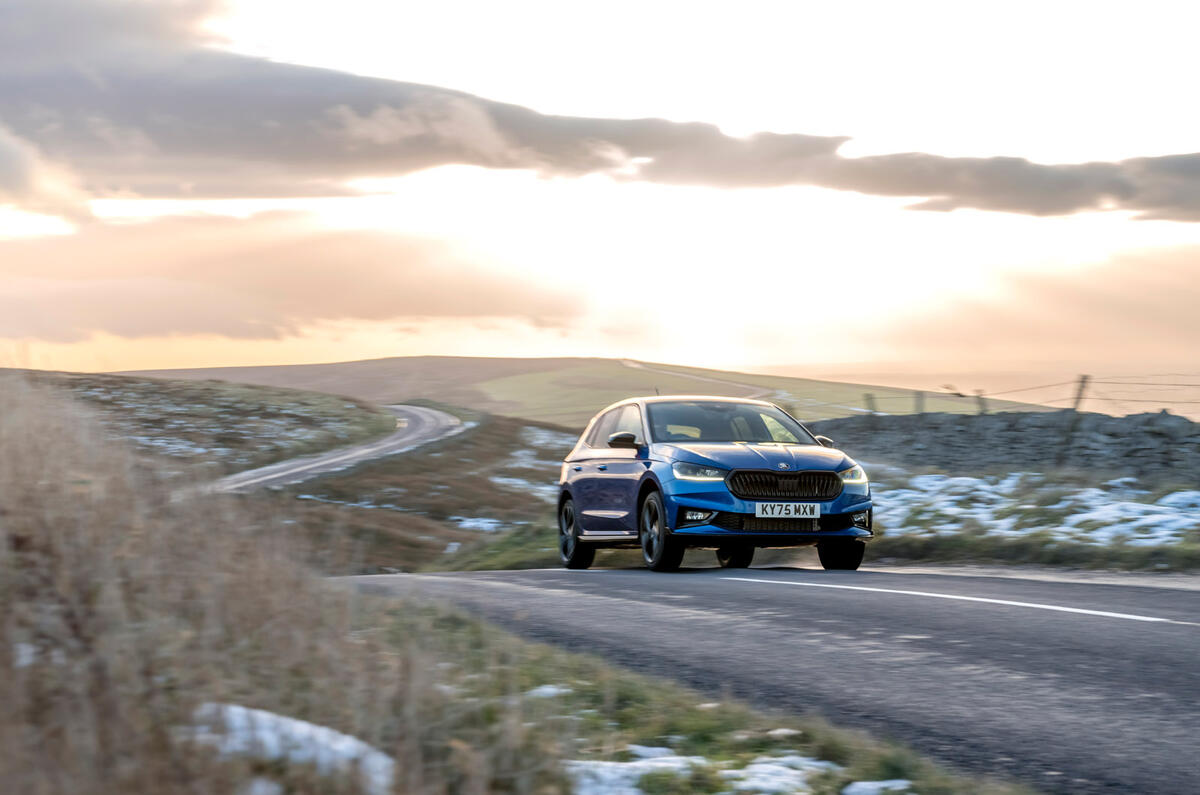
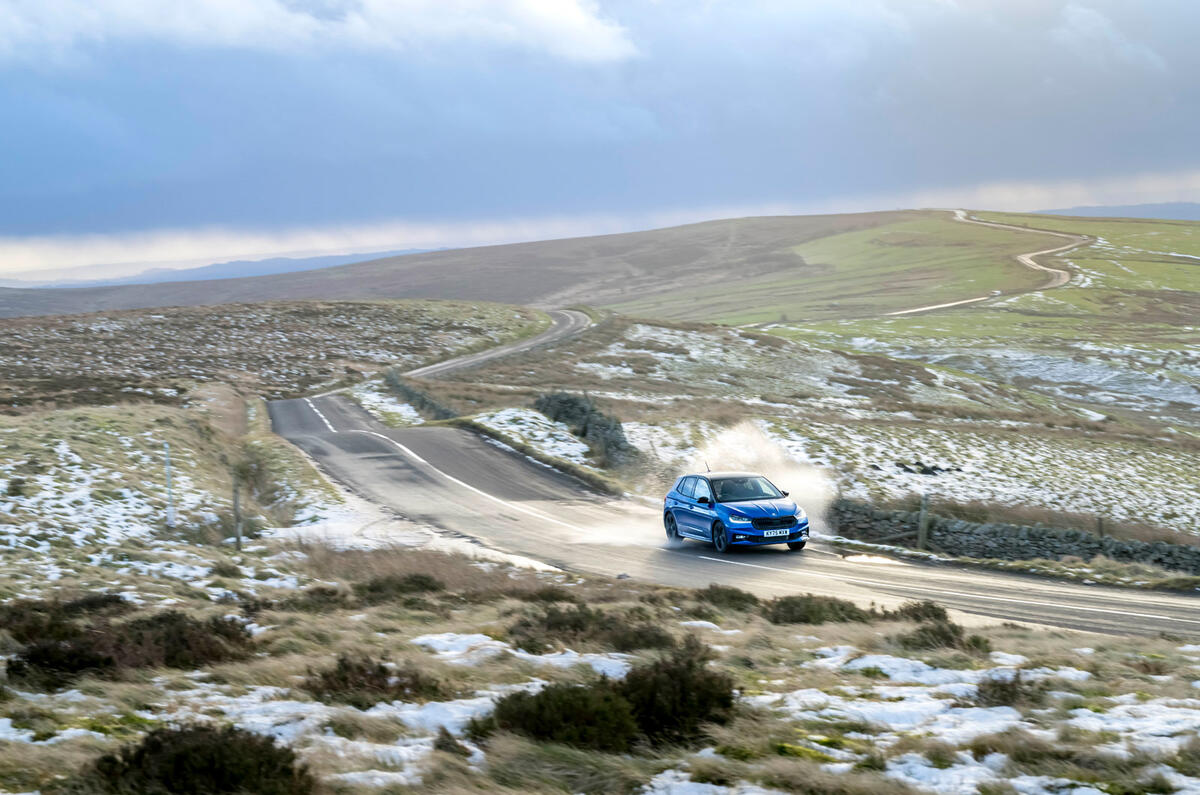
Having now driven the Fabia 130 on UK roads, the good news is that the chassis is nicely judged. Again, don’t expect Renault Clio RS Cup levels of sharpness here, that was never the point. But even on the all-season tyres that the press office fitted for white reasons evident in the pictures, there’s a good amount of grip and turn-in bite.

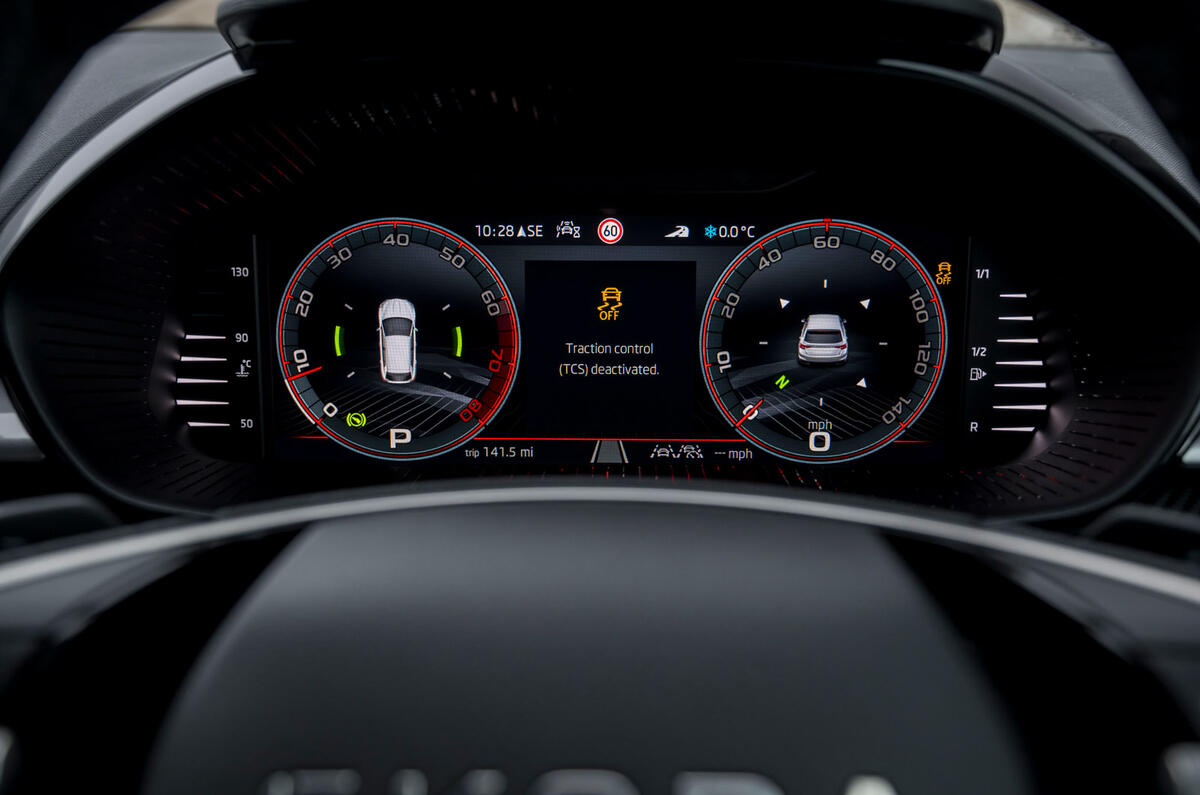
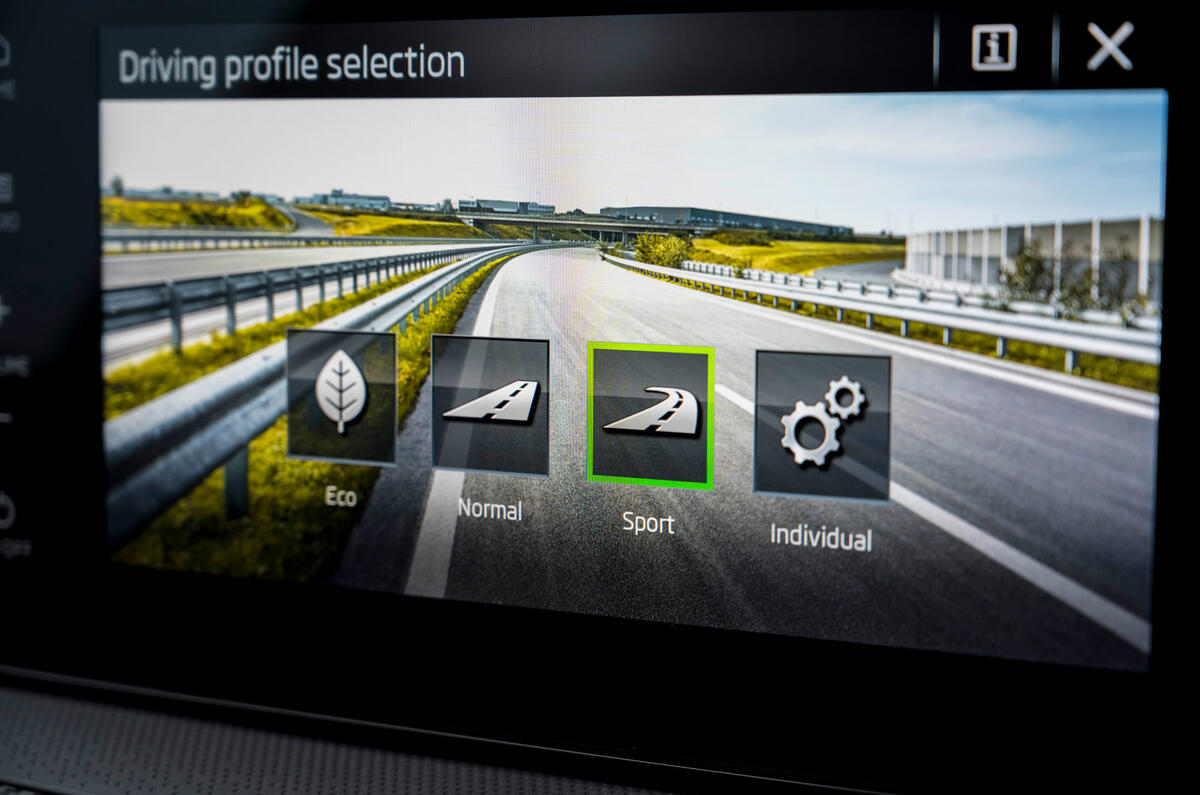
Set the stability control to the new Sport setting and you can even tease the back out with a well-timed lift of the throttle. The systems can’t be turned off completely but will let you grab an armful of opposite lock before intervening.

The 130 is too mild to get a limited-slip differential, but in slippery conditions you can feel the traction control doing a fairly decent impression of one.

When we drove it on the international launch, we reported “strong levels of feedback”, but when we drove it in the UK, it was merely fine. There was a bit of feedback about grip levels and relatively natural weighting, but something like a Mini Cooper communicates better. This is one area where the all-season tyres might have been to blame.

The Fabia 130, then, is satisfying to drive quickly, though not exactly scintillating. For all that, it rides surprisingly well. It’s on simple passive dampers and torsion beam suspension at the rear, but the ride is taut without being excitable or brittle. It’s not excessively noisy on the motorway, either.

Like most recent Volkswagen Group cars, the various driver assistance systems usually work quite well and are easy to turn off when they don’t.

Cruise control is standard on the 130, with a smooth and responsive adaptive system as an option.

MPG & RUNNING COSTS

7
Skoda Fabia 130 review 2025 001

Prices start from £29,995. Not so long ago, that would have bought you a Hyundai i20 N or a Ford Fiesta ST, but those are no more. Even so, it feels like quite a lot for what is only a warm hatch, and it’s a jump of more than £5000 up from the mechanically similar Fabia Monte Carlo.

On top of that, you will probably want to add an option pack or two, such as the Winter Premium Package (heated seats and steering wheel, heated windscreen, dual-zone climate) and the Charging Package (wireless phone charger, extra USB ports). Then again, the Fabia 130’s only real rival is the Mini Cooper, with the three-cylinder Cooper C being a bit cheaper and the four-cylinder Cooper S a bit more expensive.

WLTP fuel consumption stands at 50.7mpg, which in our experience would be achievable with a very judicious right foot. In mixed use, we saw low- to mid-40s.

VERDICT

If it’s a hot hatch you’re after, this is not it. It’s pretty sharp but ultimately not that quick. If this car is framed as a warm hatch, something that's a bit of fun but whose primary objective is not to have fun, then it’s a much simpler sell, as Skoda’s entry into this market comes at a time when nearly every other manufacturer is leaving it. 

This generation of Suzuki Swift doesn’t have a Sport version, the Hyundai i20 N finished in 2024, the Vauxhall Corsa hasn’t had a fast version for more than five years and the Ford Fiesta isn’t even a thing any more.

The Volkswagen Polo GTI is still available from stock but probably won’t be for long, so Skoda pretty much has this niche within a niche wrapped up.

Murray Scullion

Murray Scullion
Title: Digital editor

Murray has been a journalist for more than a decade. During that time he’s written for magazines, newspapers and websites, but he now finds himself as Autocar’s digital editor.

He leads the output of the website and contributes to all other digital aspects, including the social media channels, podcasts and videos. During his time he has reviewed cars ranging from £50 - £500,000, including Austin Allegros and Ferrari 812 Superfasts. He has also interviewed F1 megastars, knows his PCPs from his HPs and has written, researched and experimented with behavioural surplus and driverless technology.

Murray graduated from the University of Derby with a BA in Journalism in 2014 and has previously written for Classic Car Weekly, Modern Classics Magazine, buyacar.co.uk, parkers.co.uk and CAR Magazine, as well as carmagazine.co.uk.

Illya Verpraet

Illya Verpraet Road Tester Autocar
Title: Road Tester

As a road tester, Illya drives everything from superminis to supercars, and writes reviews and comparison tests, while also managing the magazine’s Drives section. Much of his time is spent wrangling the data logger and wielding the tape measure to gather the data for Autocar’s in-depth instrumented road tests.

He loves cars that are fun and usable on the road – whether piston-powered or electric – or just cars that are very fit for purpose. When not in test cars, he drives an R53-generation Mini Cooper S or a 1990 BMW 325i Touring.