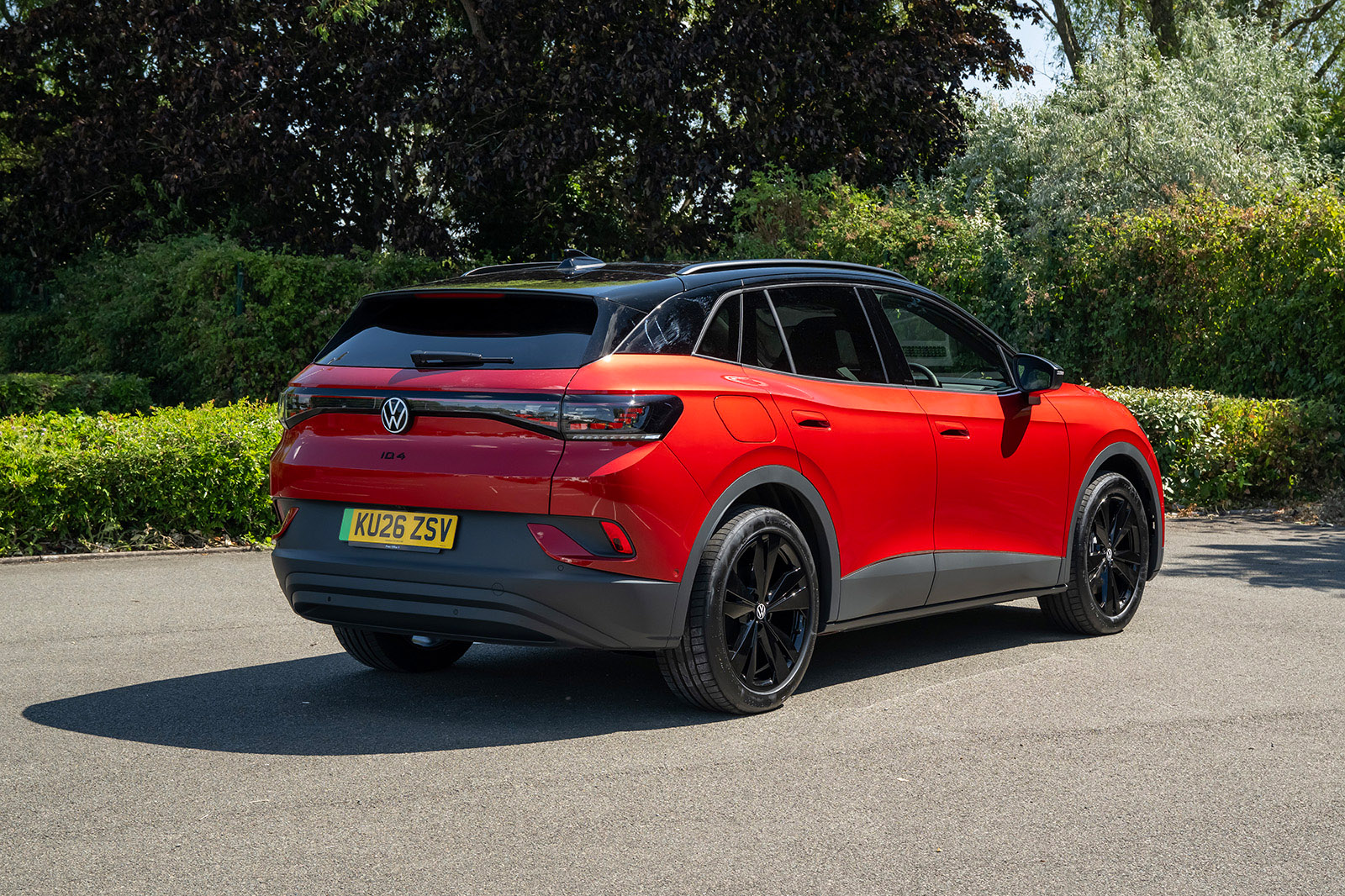
8

Can Volkswagen's most popular electric car still stand out against its advancing rivals?

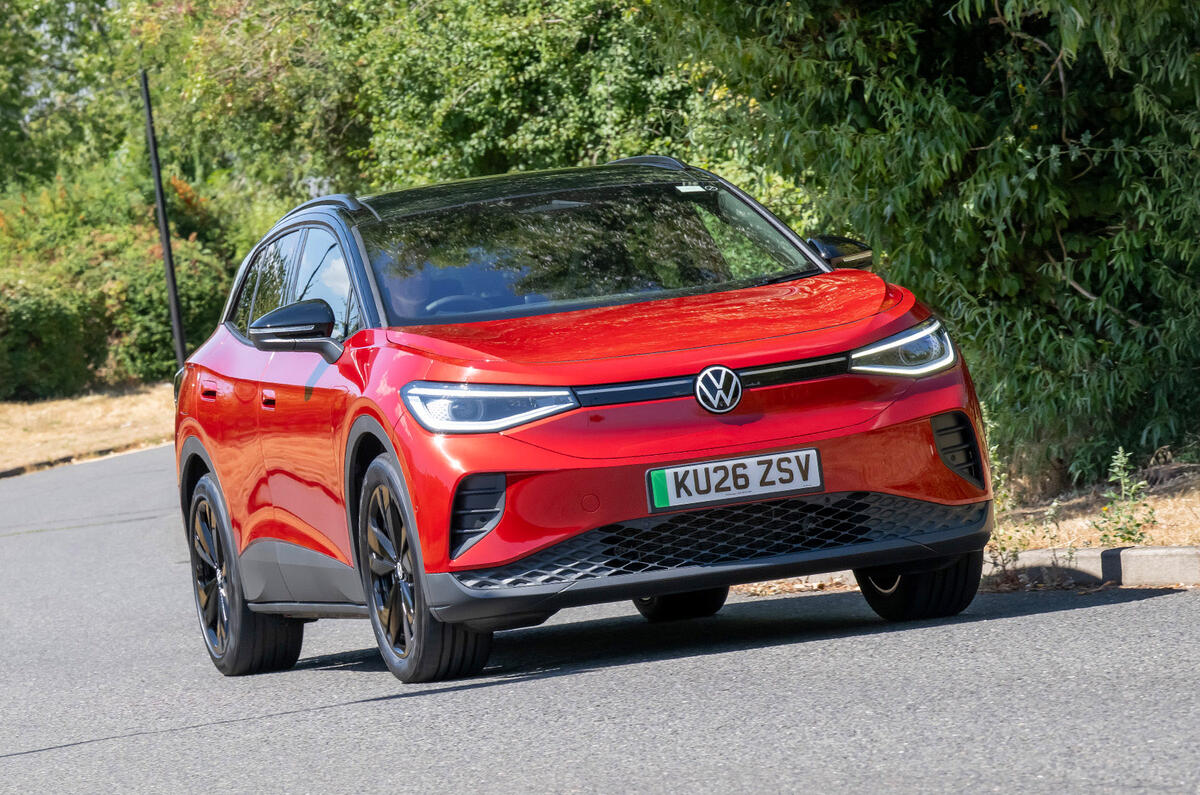
The Volkswagen ID 4’s days may be numbered in the guise that we’ve come to know it - it’s about to be redefined and rechristened the ID Tiguan, in line with Volkswagen’s updated EV model naming strategy which has also recently brought us the ID Polo - though it’s probably the least deserving car of a reset in Wolfsburg’s zero-emissions lineup.

It appeared in the UK in early 2021, and quickly became not just the best-selling EV of the Volkswagen brand but also the entire Volkswagen Group. Some 182,000 examples of it (and its ID 5 coupé-SUV twin) were sold in 2024. 

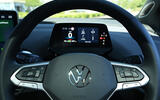
The white plastic that wraps around the dainty 5.2in digital display also seems to be exactly the same sterile-looking, medicinally reassuring material they use for the cases of MRI scanners

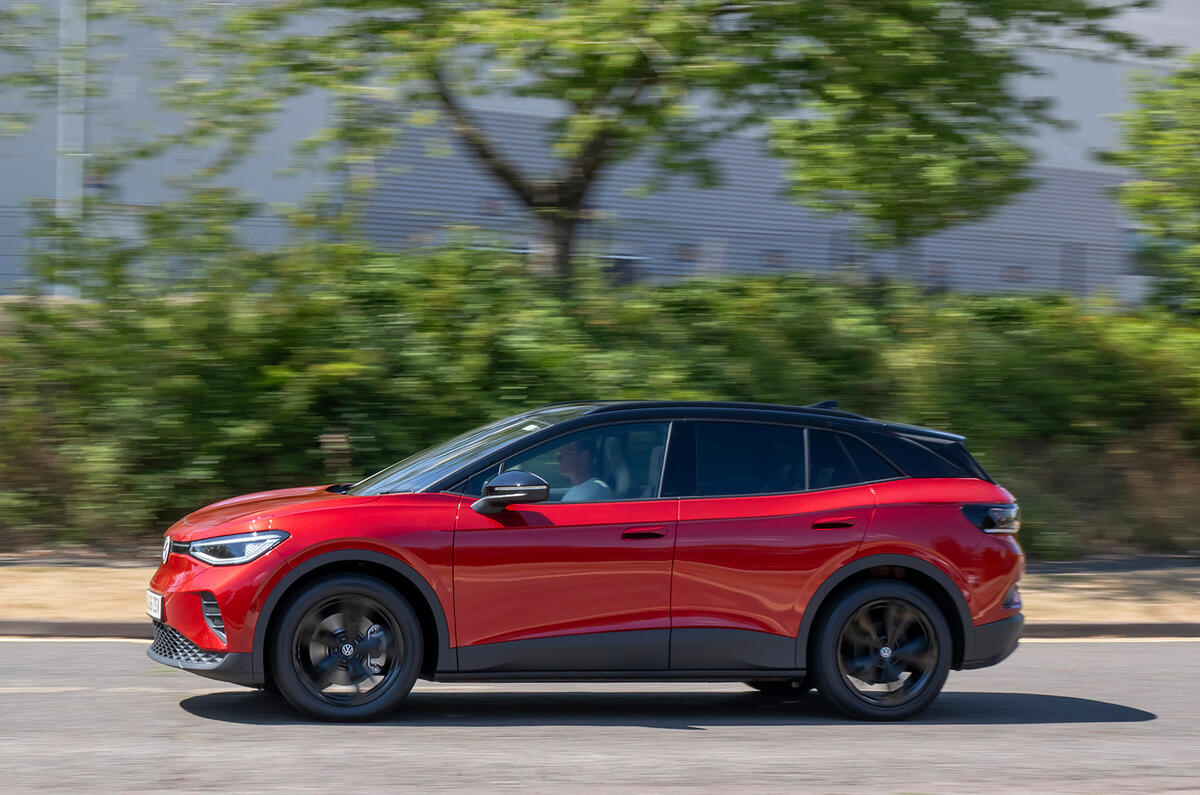
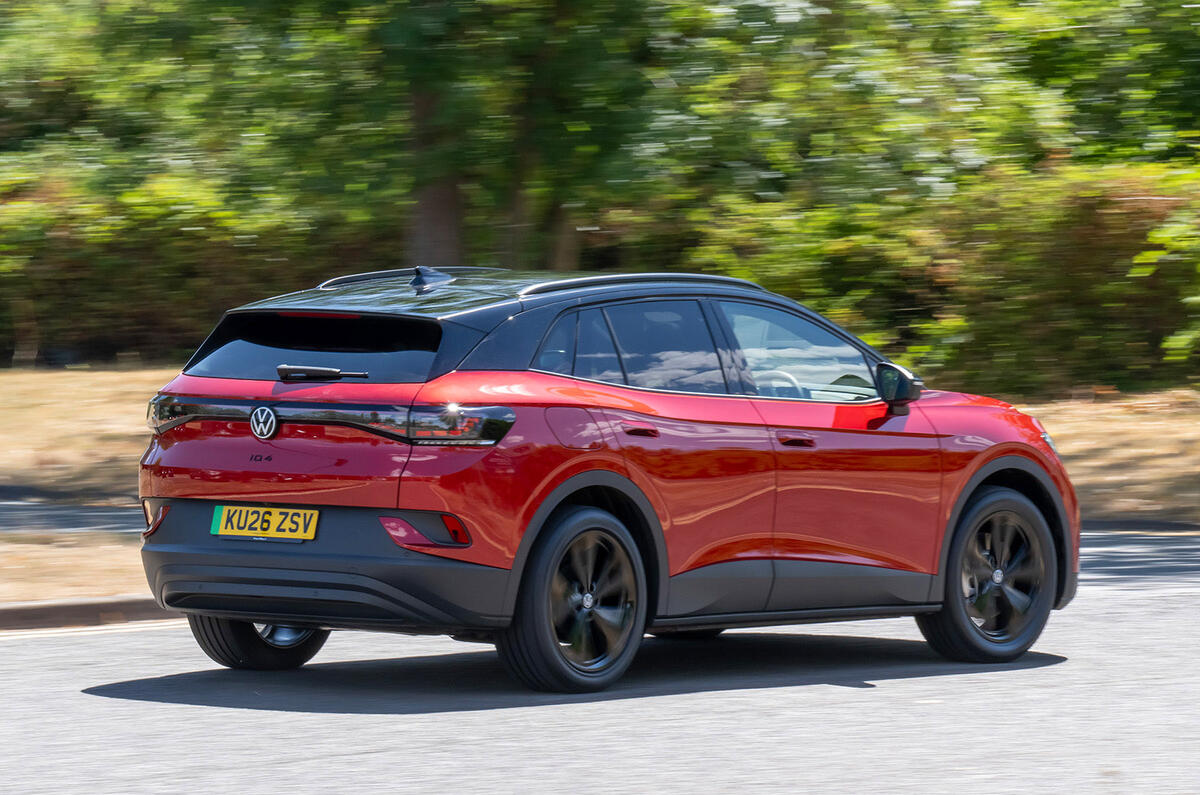
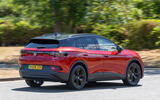
With dimensions just inside those of the Volvo XC60 in every direction, it taps richly into the current vogue for mid-sized ‘crossover’ not-quite-SUVs. Which, on the one hand, means the car is well-positioned to be popular; but also means, by default, that it has plenty of competition.

The ID 4’s rivals have become stronger and more diverse by the month, launching from all directions - Kia and Hyundai in Korea; Peugeot, Citroen and Vauxhall in Europe; Xpeng, BYD, MG and Chery in China; and Tesla in the US - all with increasingly competitive products. 

But Volkswagen has also bolstered the ID 4’s model range, adding larger batteries and several motor options to broaden the SUV’s appeal; and enhancing the car’s equipment level and value offering as it has aged, as well as lately bolstering its performance and range.

Advertisement
Back to top

Volkswagen ID 4 range at a glance

The ID 4 offers a choice of three batteries in the UK: and the smallest one grew the most as part of the car’s 2026-model-year revision. The car’s entry-level grade (Pure) now gets 58kWh of usable battery capacity, up about 10 per cent on where it was originally; the mid-level, single motor grade (Pro) gets a 79kWh pack (up about 3 per cent); and all twin-motor models (4Motion and GTX) use a 77kWh pack.

WLTP-lab-test electric range has increased on most derivatives; but most meaningfully on Pure models (up from 222- to 265 miles); while power is up on both Pure (by 19bhp, to 187bhp) and Pro 4Motion (282- to 296bhp) models. The longest-range versions remains the single-motor, rear-driven Pro Essential, at 351 miles.

The range-topping Volkswagen ID 4 GTX sports SUV is covered in its own separate review.

Versionpower
ID 4 Pure187bhp
ID 4 Pro282bhp
ID 4 Pro 4Motion296bhp
ID 4 GTX 4Motion335bhp

DESIGN & STYLING

7
VW ID4 2026 002

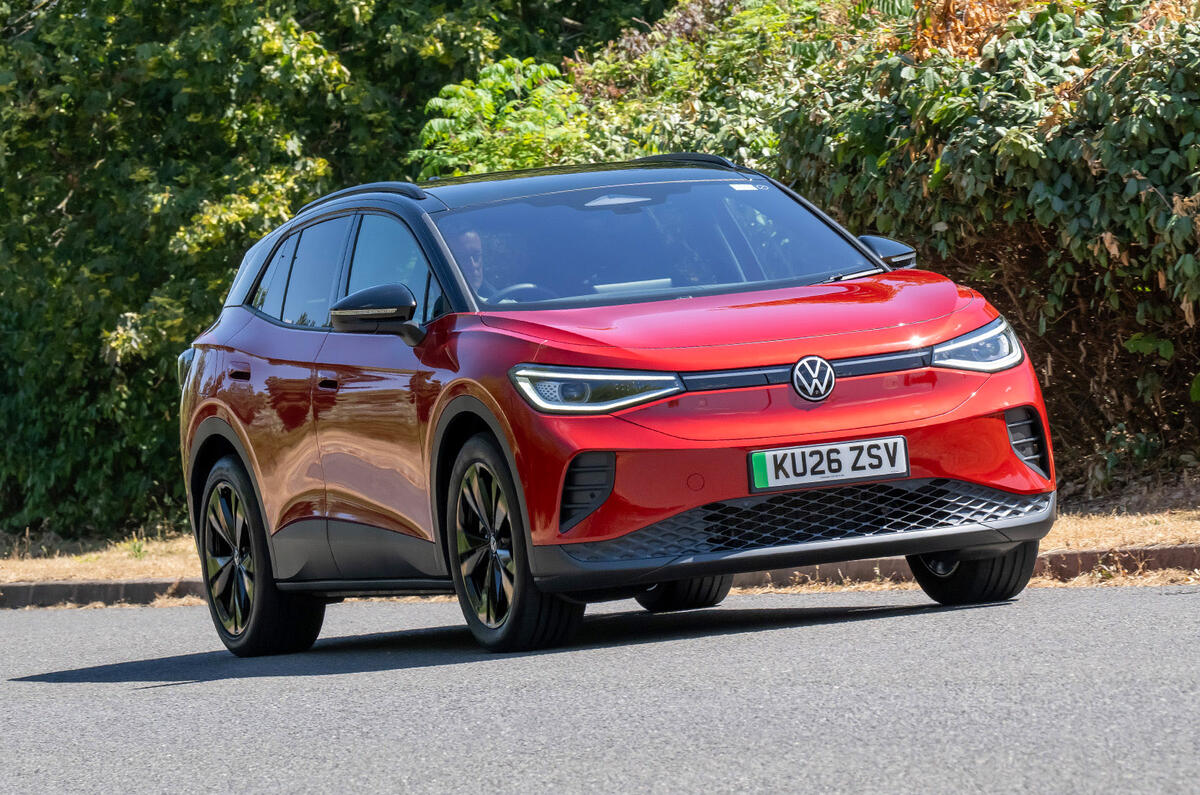
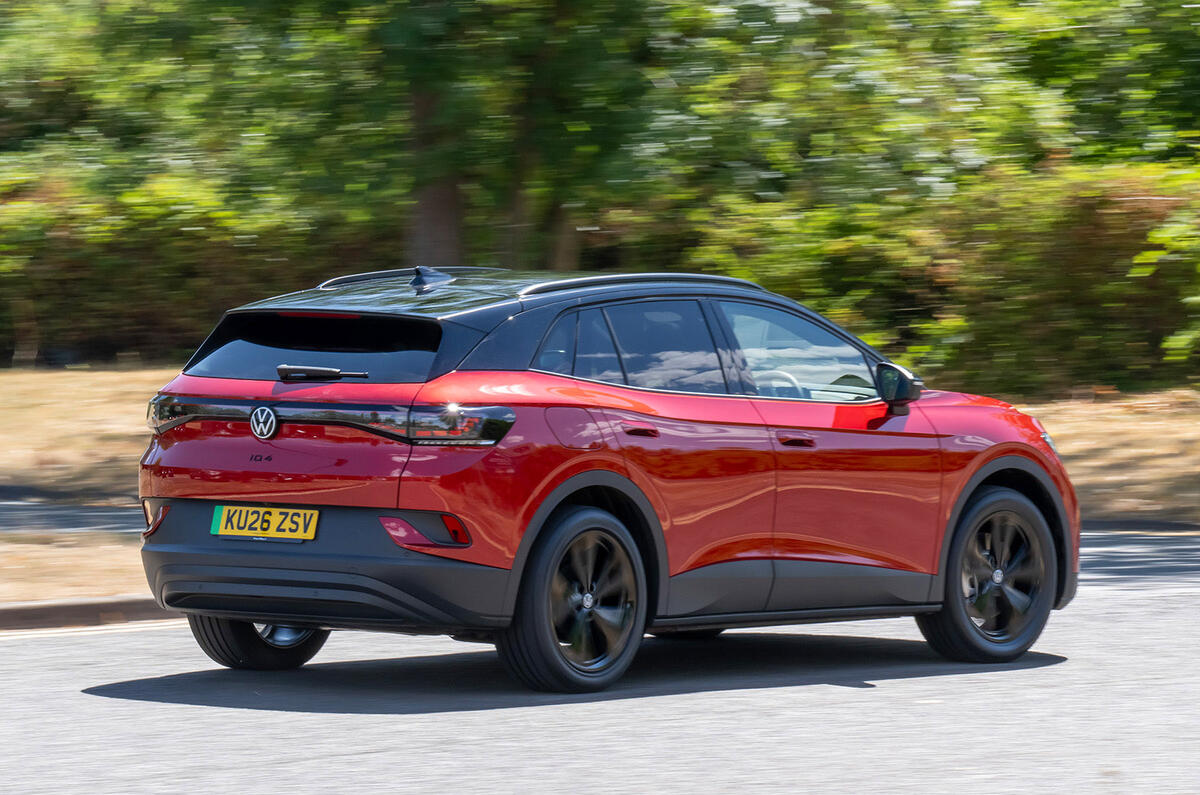
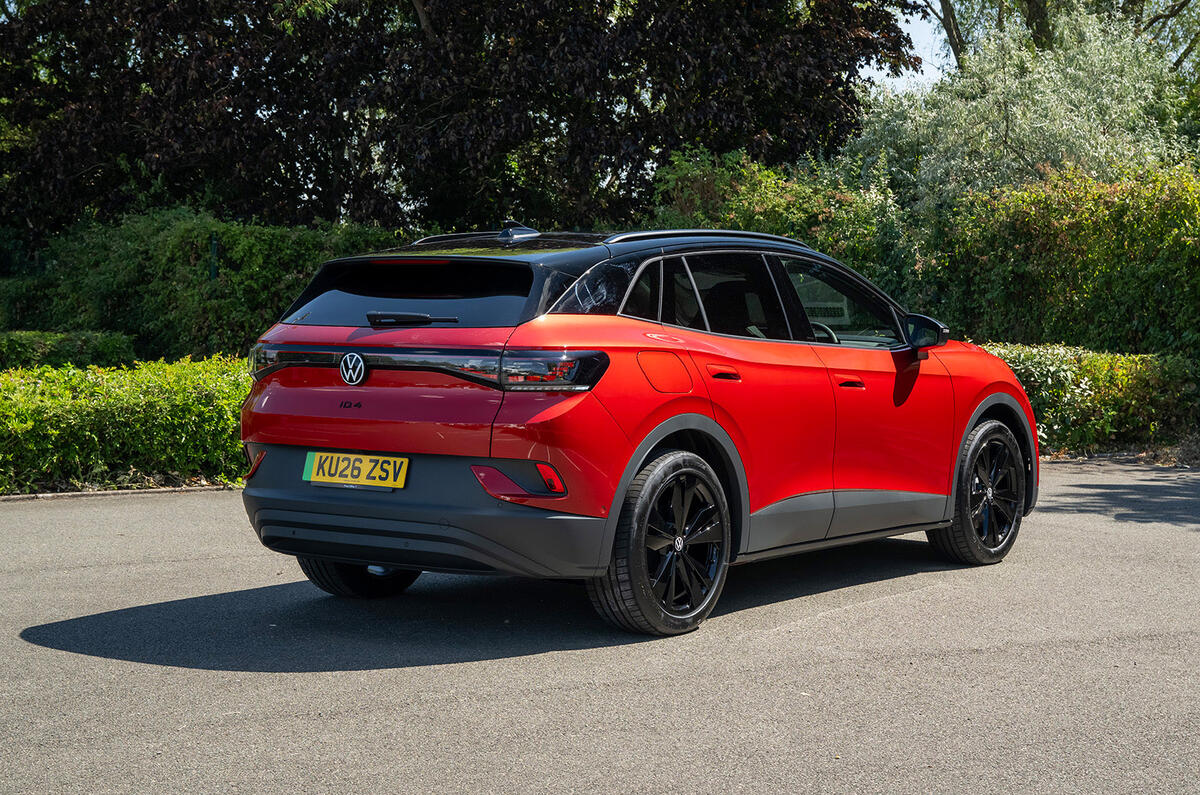
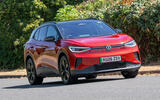
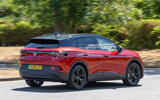
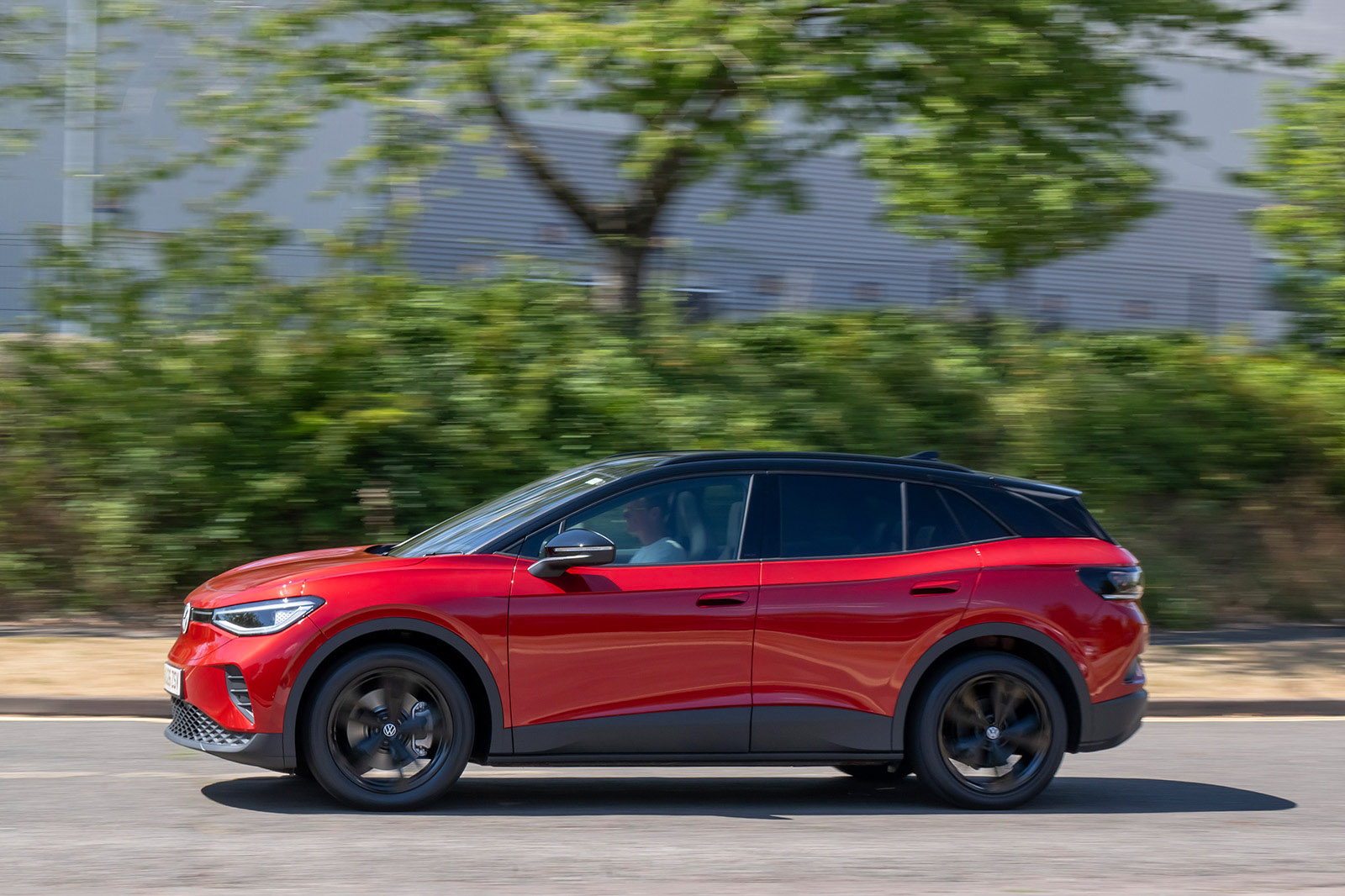
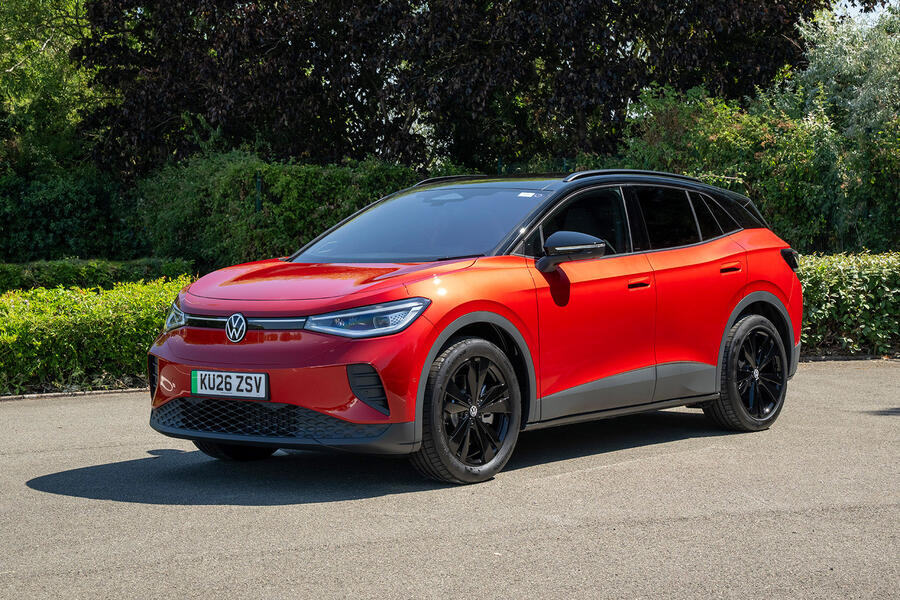
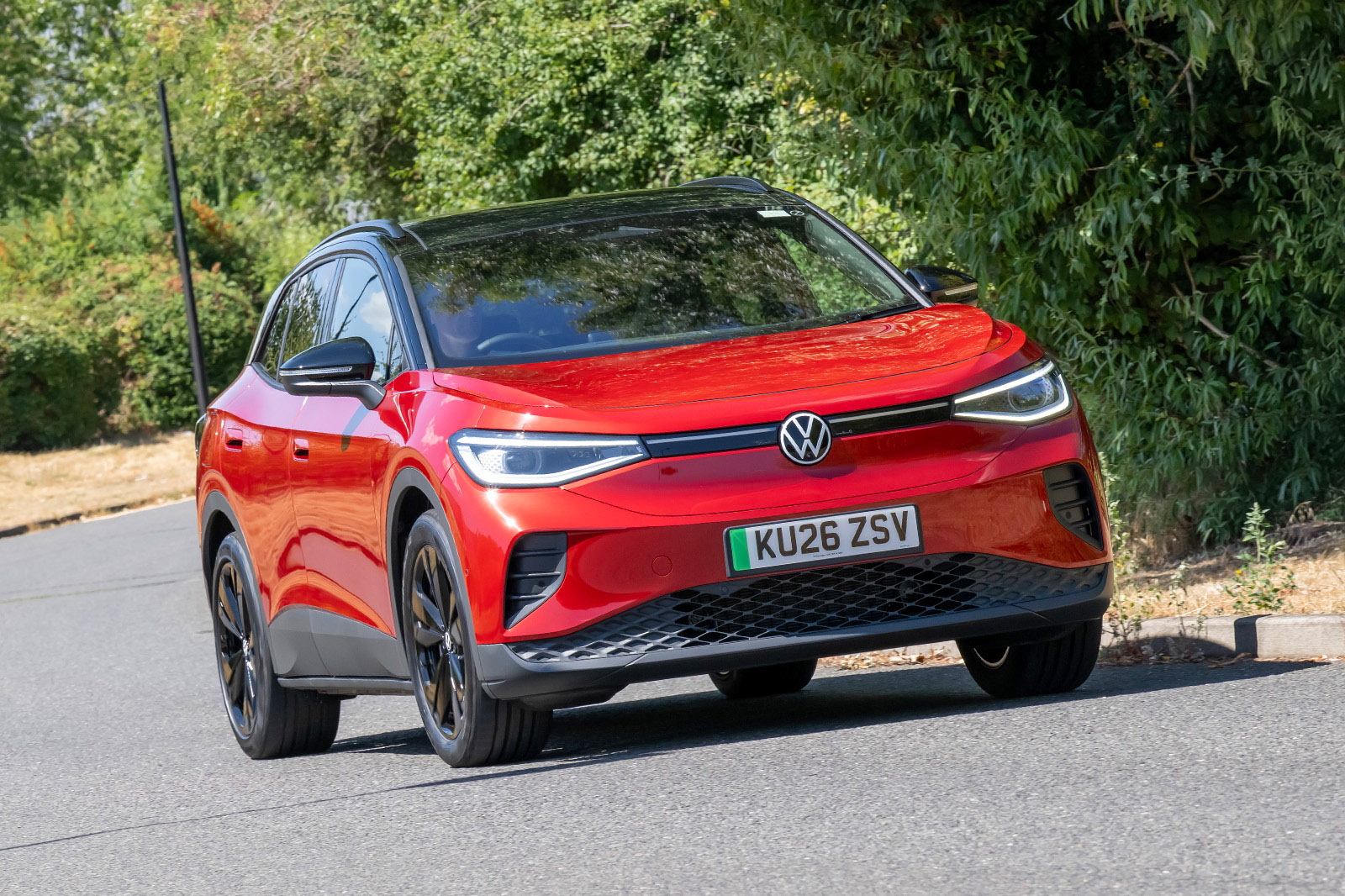
Under a body that’s somehow bulbous and rakish in equal measure (the ID 4 isn’t exactly handsome but neither is it unattractive) lies the same MEB platform used by the ID 3, only with the wheelbase and tracks extended.

The ID 4 was the Volkswagen Group’s first SUV to use the platform, and was later followed by the Audi Q4 E-tron, Skoda Enyaq, and Ford Explorer and Capri.

It received an updated drivetrain in 2023, plus other revisions related to powertrain electronics management software. The updated drivetrain it received brought to it the rear-mounted motor that Volkswagen introduced on the ID 7 saloon; and both single-motor, rear-wheel-drive models and dual-motor, four-wheel-drive ones received it.


The AP550 unit gives the rear-wheel-drive ID 4 Pro models 282bhp and 402lb ft; while Pro 4Motion models get 296bhp, and the range-topping ID 4 GTX gains an extra 40bhp, taking it up to 335bhp.

The car rides on all-indepedent suspension via steel coils, with 19in wheels fitted as standard to most models. DCC adaptive dampers and progressive steering are available only on range-topping GTX models as part of Volkswagen’s Sports Package Plus (£1200).

INTERIOR

8
VW ID4 2026 005

The ID 4’s interior shares many hallmarks with the other cars in the ID range. That of the Volkswagen Golf loosely inspires the dashboard topography but, as with the ID 3, the cockpit is more minimalistic, and has a sleek, progressive look to it. The conspicuous lack of buttons and switches on it might even seem quite shocking to someone coming from and number of cars with more conventional, busier dashboard layouts.

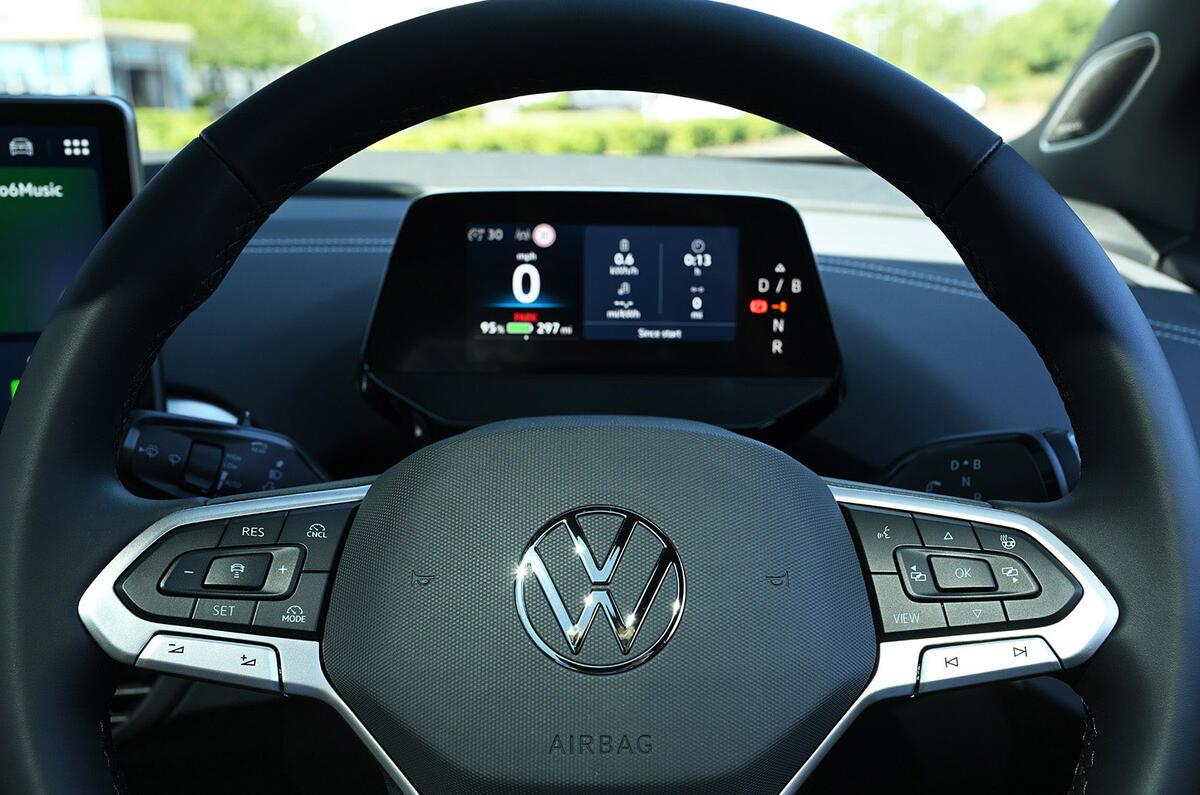
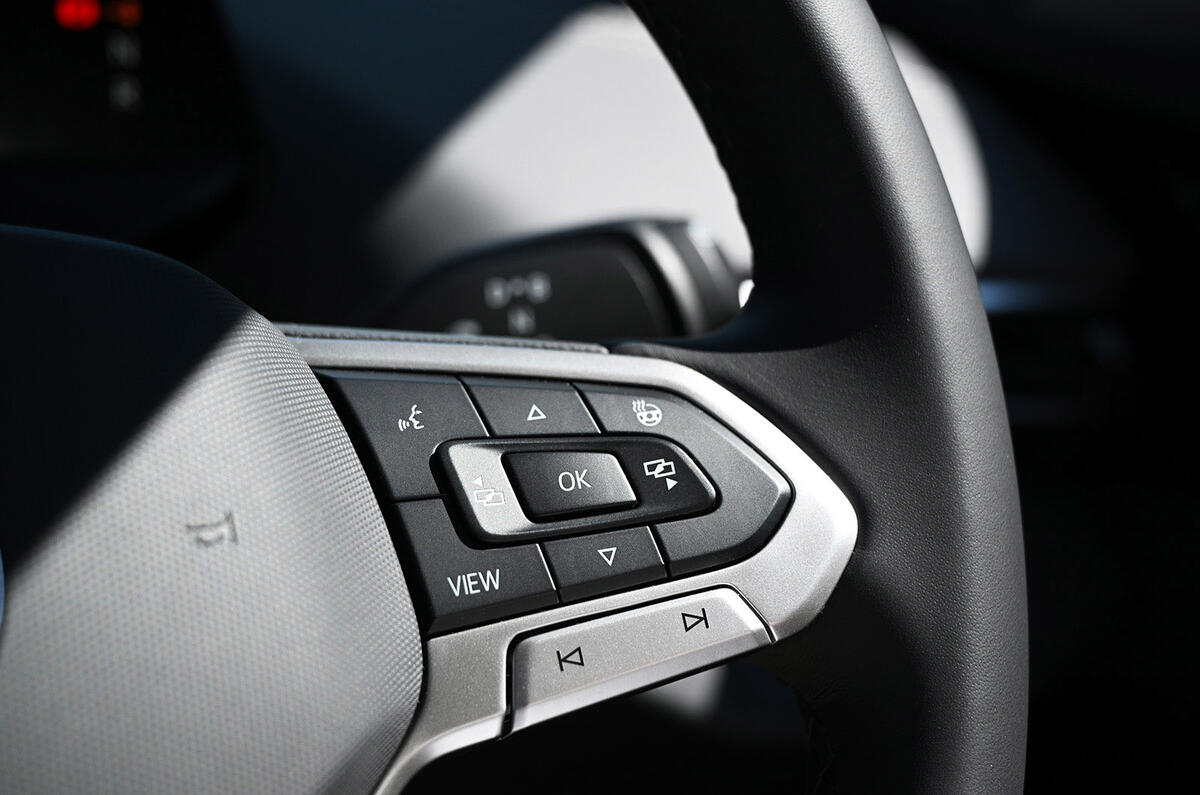
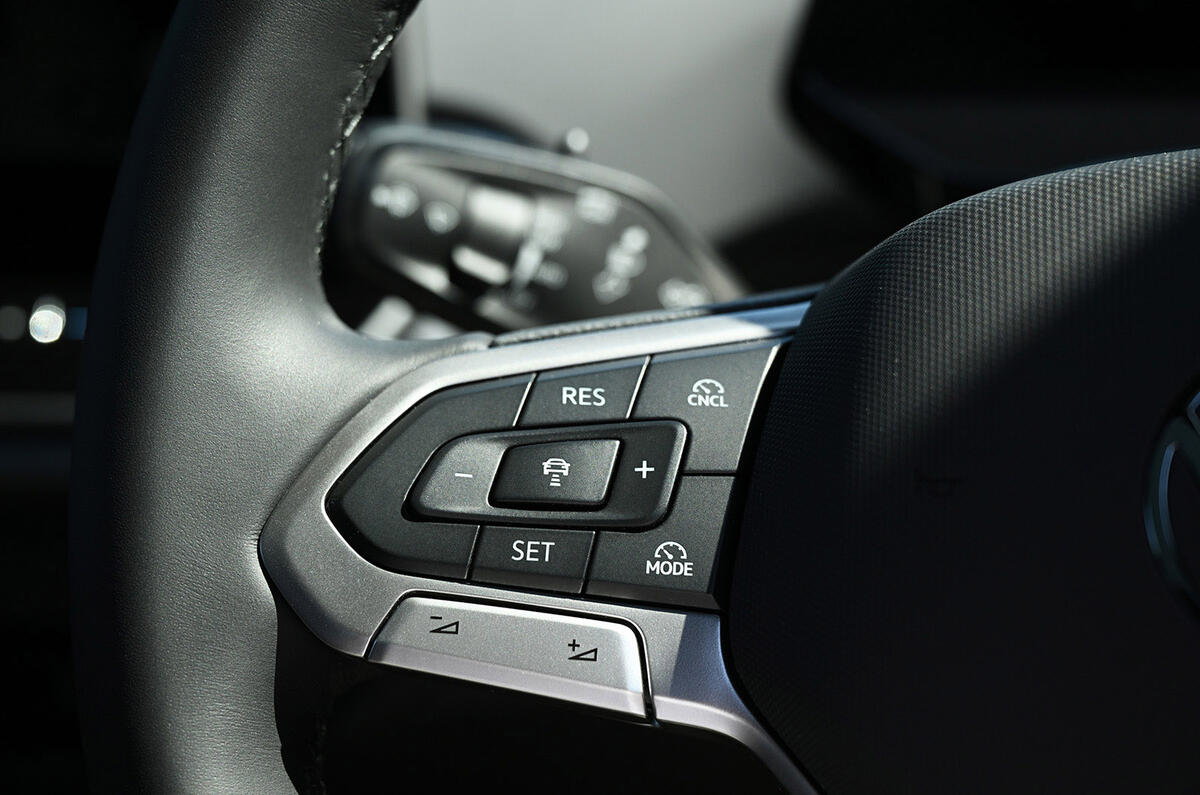
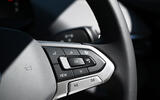
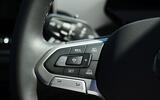
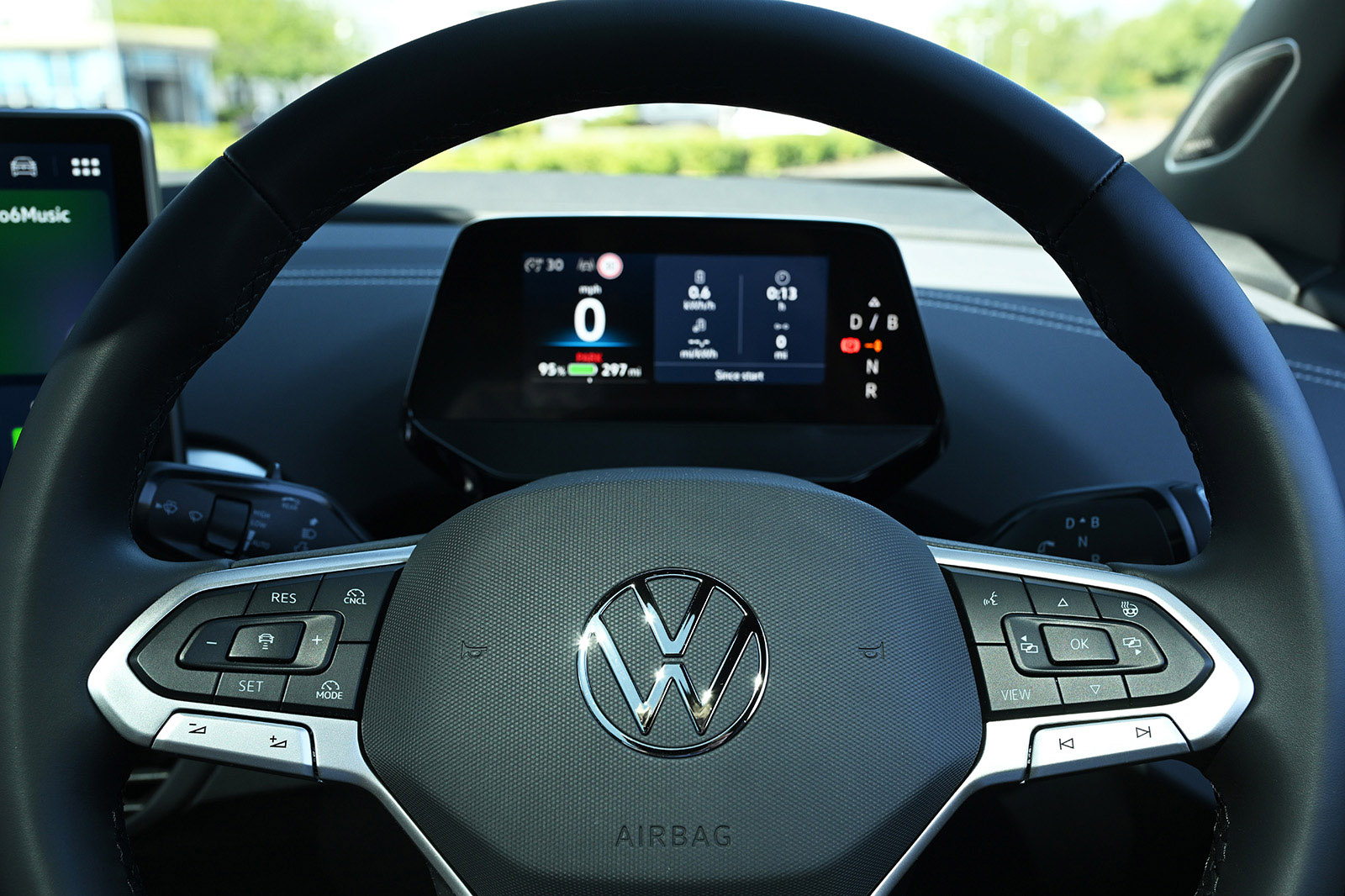
Originally the car came with a steering wheel that featured haptic touchpads for controlling the music, display and cruise control, which were slow and frustrating to use, and far too easy to press by accident. Happily, Volkswagen changed these spoke-mounted buttons consoles for ones with conventional physical buttons as part of the 2026-model-year update.

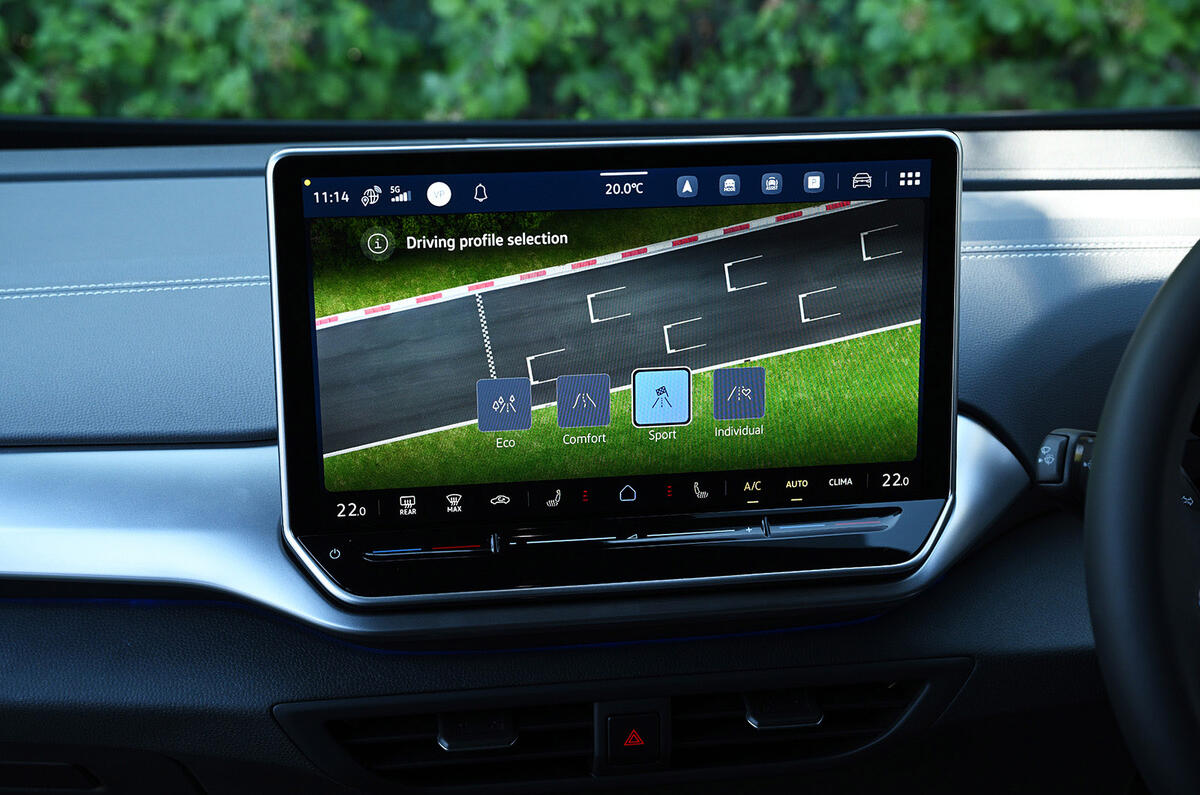
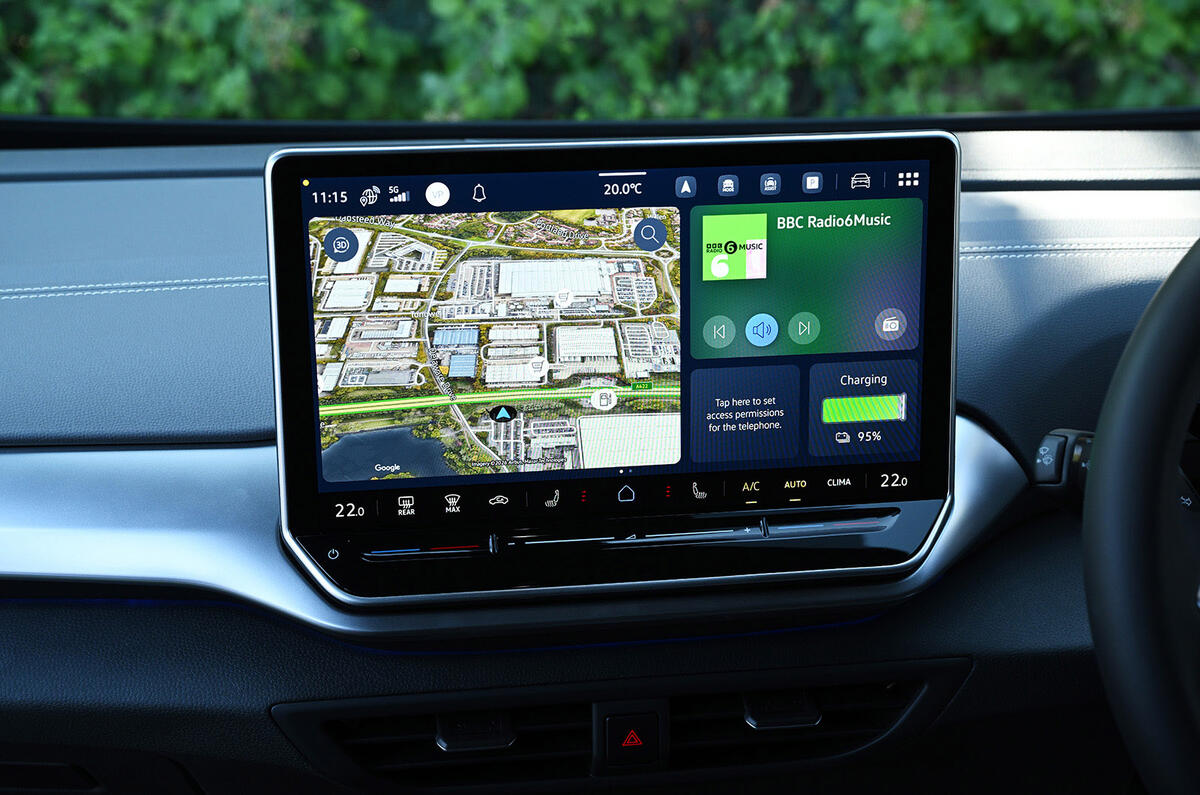
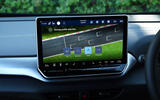
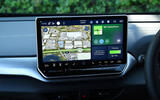
Additionally, the ID 4 gained an upgraded interior with a larger, 12in central touchscreen in 2025, that operates with updated infotainment software and menus, and better accessibility to key functions; plus illumination for the touch-sensitive ‘sliders’ just underneath the screen that control the audio volume and the climate control. VW’s downsized gear selector rocker was replaced by a column stalk. All made meanful enhancements to the car’s usability.
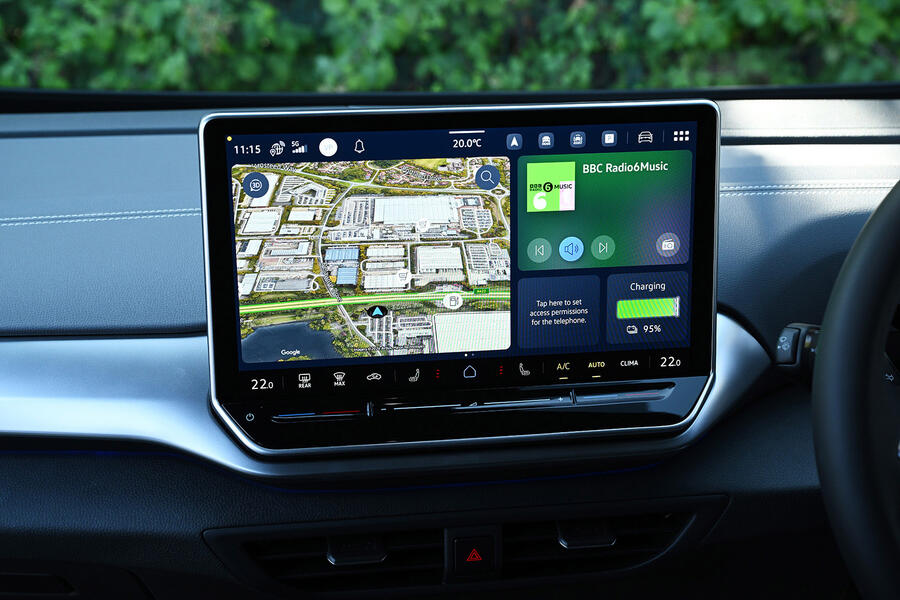
Volkswagen’s infotainment systems were difficult to use in the recent past. They were slow, buggy and crashed repeatedly; but the brand has overcome many of these shortcomings with the latest version of its ‘MIB’ software. While the system in the ID 4 still isn’t as intuitive and user-friendly as it could be, it’s a big improvement.

Material quality is reasonable. The car’s attractive and superbly comfortable 'Style' seats - plus organic shapes in the door-card mouldings, and Volkswagen’s modern reluctance to use much in the way of a physical switchgear - do create quite a special ambience. And, yes, one that is genuinely very relaxing, not least because the scuttle is relatively low, and forward visibility good. 

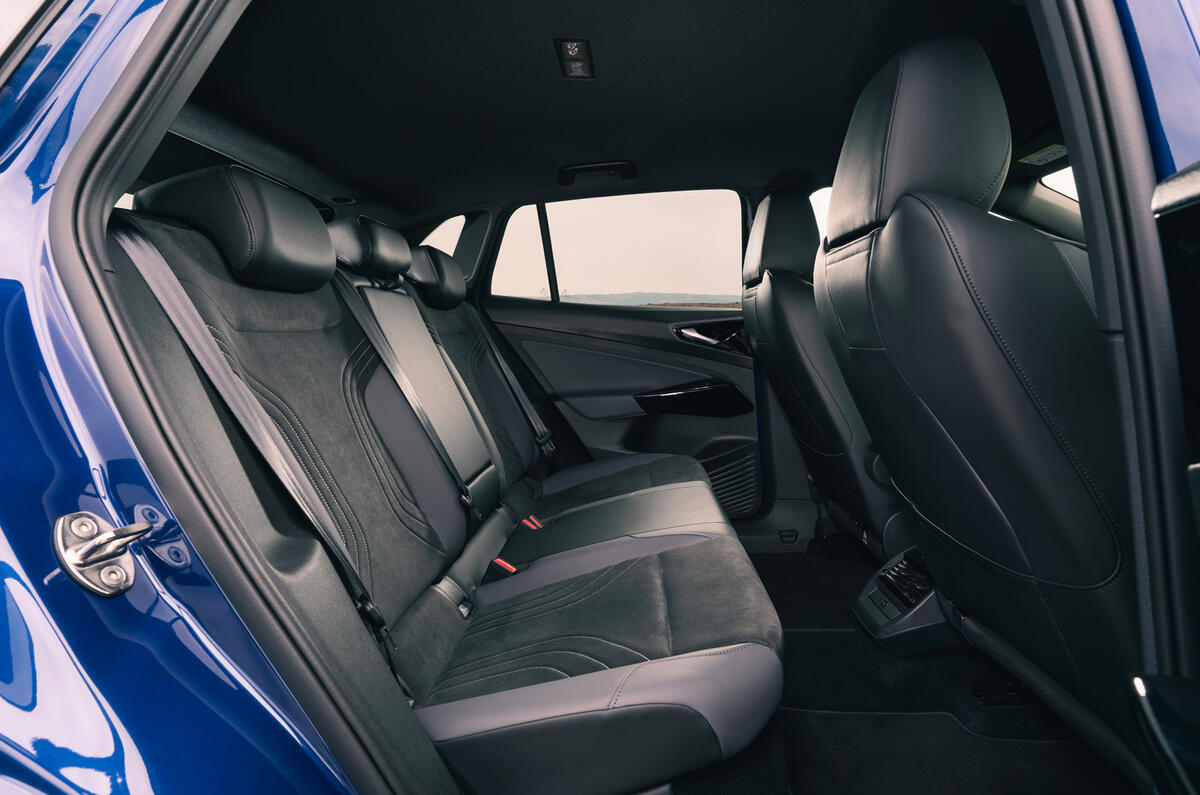
If you see the dashboard putting on a light show, that’s the ID Light concept, which blinks in different colours and patterns to relay everything from sat-nav directions to charging status to incoming phone calls. It’s moderately useful at times, albeit often something of a distraction. The cabin’s fundamental ergonomics are excellent, though, and you might not be expecting to find such generous rear leg room.

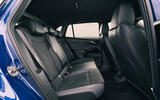
The ID 4 is akin to a Mercedes-Benz E-Class for rear passenger space, and overall it’s clear that Volkswagen has brought all its packaging know-how to bear with this first electric SUV. You really do get an impression of spaciousness, wherever you’re sitting.

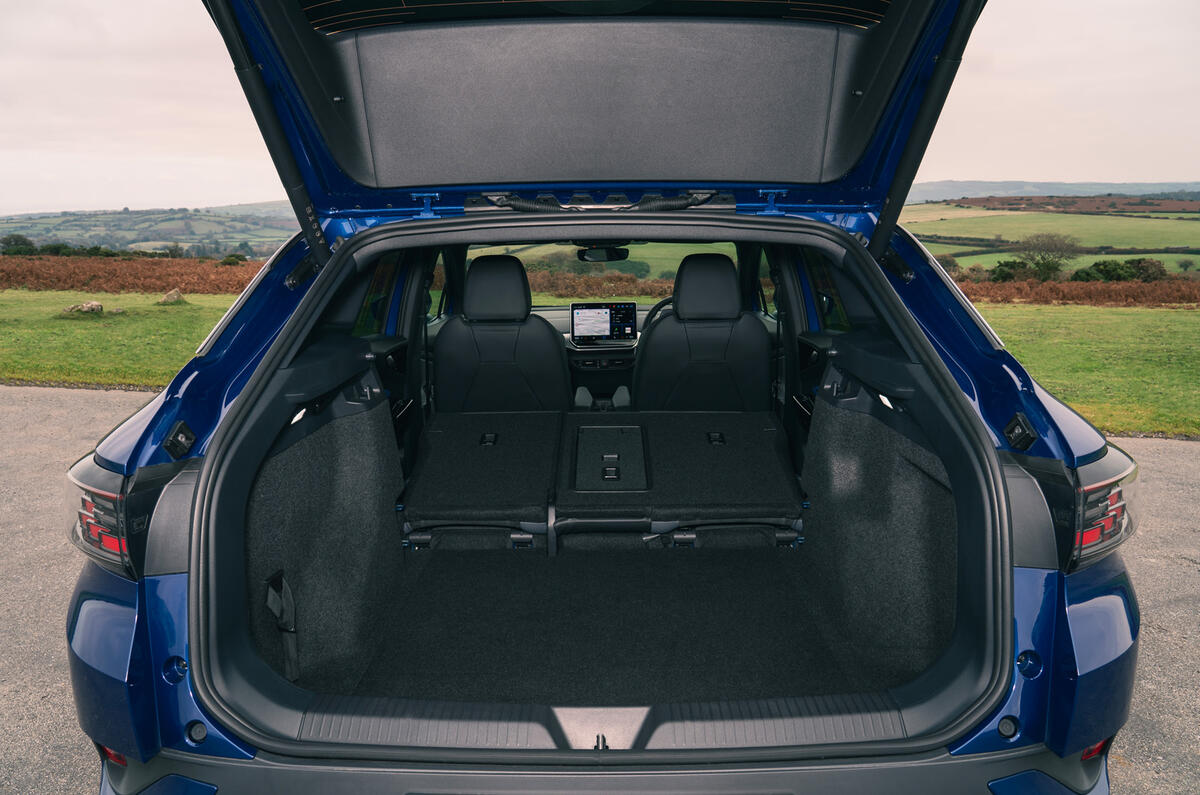
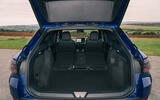
It’s a genuinely practical car, with a boot measuring 543 litres, which is larger than the Kia EV6 (490 litres) and almost identical to the Renault Scenic (545 litres) – although like most SUVs of this size, it’s still outclassed by the Tesla Model Y for outright luggage space.

ENGINES & PERFORMANCE

7
VW ID4 2026 010

In entry-level guise, the ID 4 has a reasonable amount of power and performance, which is delivered smoothly, silently. 

In an EV, going full throttle in a less powerful car returns broadly the same experience as going half throttle in a more powerful car. And because the power is available from rest, the entry-level ID 4’s 0-30mph acceleration is perfectly acceptable.

Most drivers will opt for the big-battery variant with the more powerful motor, though, which will hit 0-62mph in a very respectable 6.7sec. That’s not particularly quick by the standards or the quickest £40,000 crossover EVs, but it’s certainly punchy enough to make for assured motorway merging and easy overtaking on single-carriageway roads.

Like the interior, the car’s driving experience is kept devotedly simple, so as to feel progressive. There’s no driving mode button to fiddle with, and no regen paddles to flick up and down through battery regen settings. You just select D and squeeze the accelerator; although there is a B mode on the drive selector for those who want more trailing-throttle regen from the off - and you can select a more pronounced ‘one pedal’ drive mode via the vehicle settings menu for a similar effect. 

Unless you do either, the car will regulate its regen adaptively based on data from its forward sensors and navigation system; blending regen up when there’s a junction or traffic up ahead, but otherwise letting the car ‘coast’.

The single-motor, rear-wheel drive model can be a little slow when it’s blending up that regen, creating what can feel like a dead zone in the brake pedal response, and spongy pedal feel, when you have to respond to rapidly changing conditions up ahead; and eroding how smoothly you can drive.

RIDE & HANDLING

8
VW ID4 2026 003

The ID 4 is far from what you might call engaging to drive on a winding road; but it is very intuitive, and it’s certainly pleasant and composed.

It’s a very easy car to drive, benefitting from linear, predictable steering response and settled body control. Harder cornering does expose the ID 4’s taller, boxy profile a little bit, though. 

A low centre of gravity provides the foundation for fairly agile handling for a car of this size; distinguished by light but accurate variable-rate steering, and from drive being directed to the rear wheels.

The car’s grip levels are the limiting factor when you begin to push hard over challenging roads, although you can generate quite a bit of cornering speed before the stability control light illuminates to signal a breach of adhesion, and the drive motor’s pegged back in turn. 

Overall, it is a very competent car to drive and, with rear-wheel drive, neat and precise. It’s particularly good around town, where its 10.2m turning circle provides outstanding manoeuvrability and the sort of nimbleness usually associated with much smaller cars. In this role alone, the ID 4 is extremely convincing.

That the ride quality, even on 20in wheels, is mostly fluid and well-mannered elevates the ID 4’s game further. It’s smooth over most surfaces, and rarely feels unsettled.  

The optional Dynamic Chassis Control system that governs the adaptive dampers has been refined, gaining new software mapping and additional sensors; and it gives the ID 4 a smoother and more controlled ride over any given road surface, and a more adaptable one. We recommend having it, where it’s offered: though it’s now only available on GTX models.

MPG & RUNNING COSTS

8
VW ID4 2026 001

Prices for the ID 4 start from just under £37,000 after the UK government’s ECG subsidy (£1500). A base-spec, single-motor, 79kWh Pro Match model costs £45,000, and packs 347 miles of claimed range; cheaper at list price than an equivalent Tesla Model Y Long Range RWD, but with less range and performance. 
Pro Match models come quite well-equipped, getting automatic wipers, an electric tailgate, LED matrix headlights and heated seats; but VW’s top-level infotainment technology (the augmented reality head-up display, for example) and its top-level ADAS systems both come at additional cost. 

Speaking of which, the ID 4 can charge at speeds of up to 105kW in the 58kWh model and 185kW in the 79kWh version; neither being particularly remarkable, but neither an embarrassment either.

We’ve yet to test the entry-level model to verify its claimed range; although it was certainly in need of improvement. The mid-range, single-motor Pro Black Edition indicated available range of between 280- and 300 miles during our real-world testing, depending on driving route and conditions. That’s better than the car managed before its revision (between 240 and 270 miles); and it’s broadly competitive for a £45,000 family EV, albeit no better than that.

VERDICT

8
VW ID4 2026 012

The ID 4 offers a neat, simplified and intuitive EV experience. Few rivals in the sub-£50,000 bracket are as straightforward to operate, pleasant to use or easy to get along with as this spacious and understated crossover. As such, it’s an easy car to adopt, and adapt to: which helps explains why it’s sold so strongly.
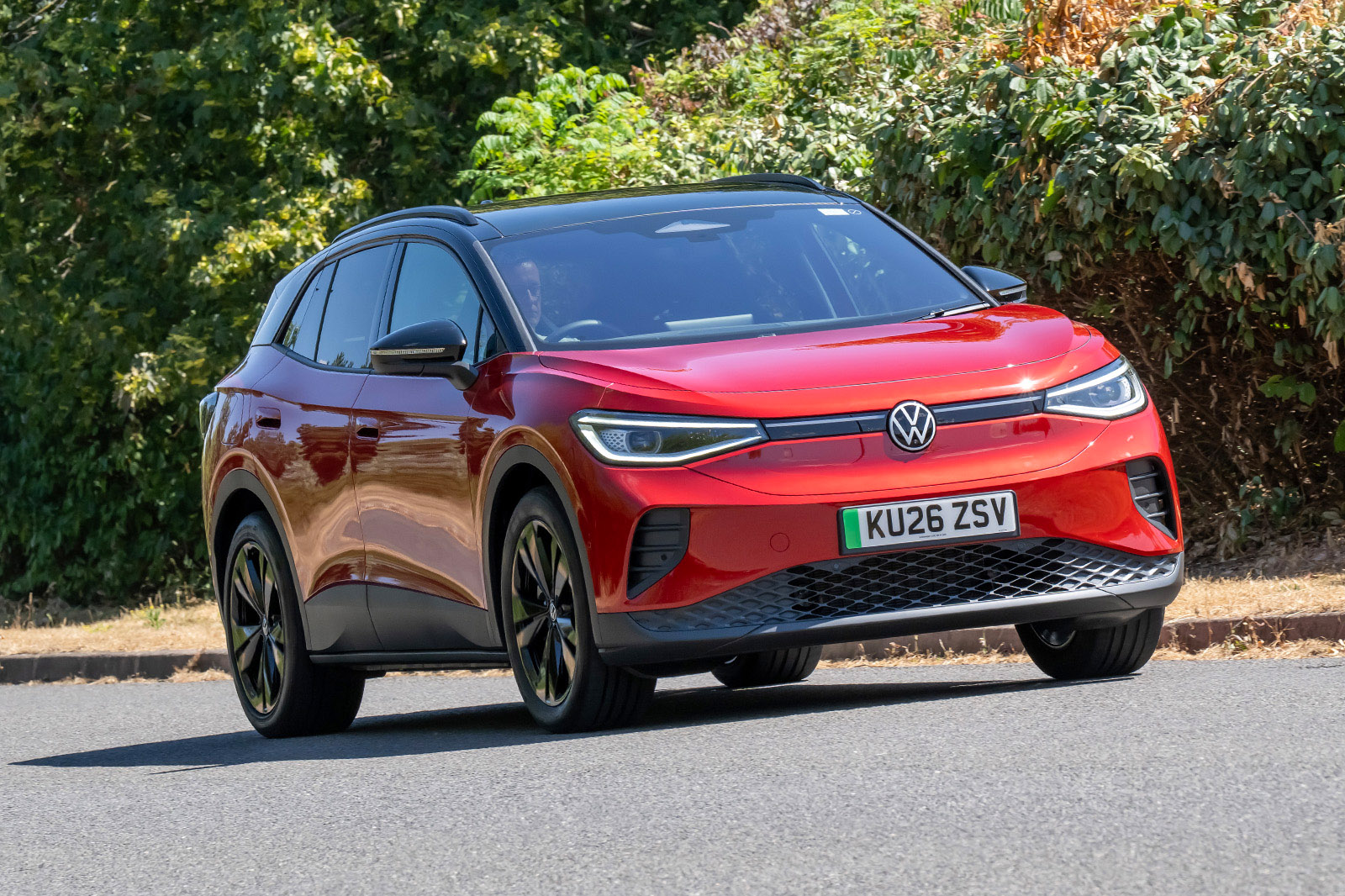
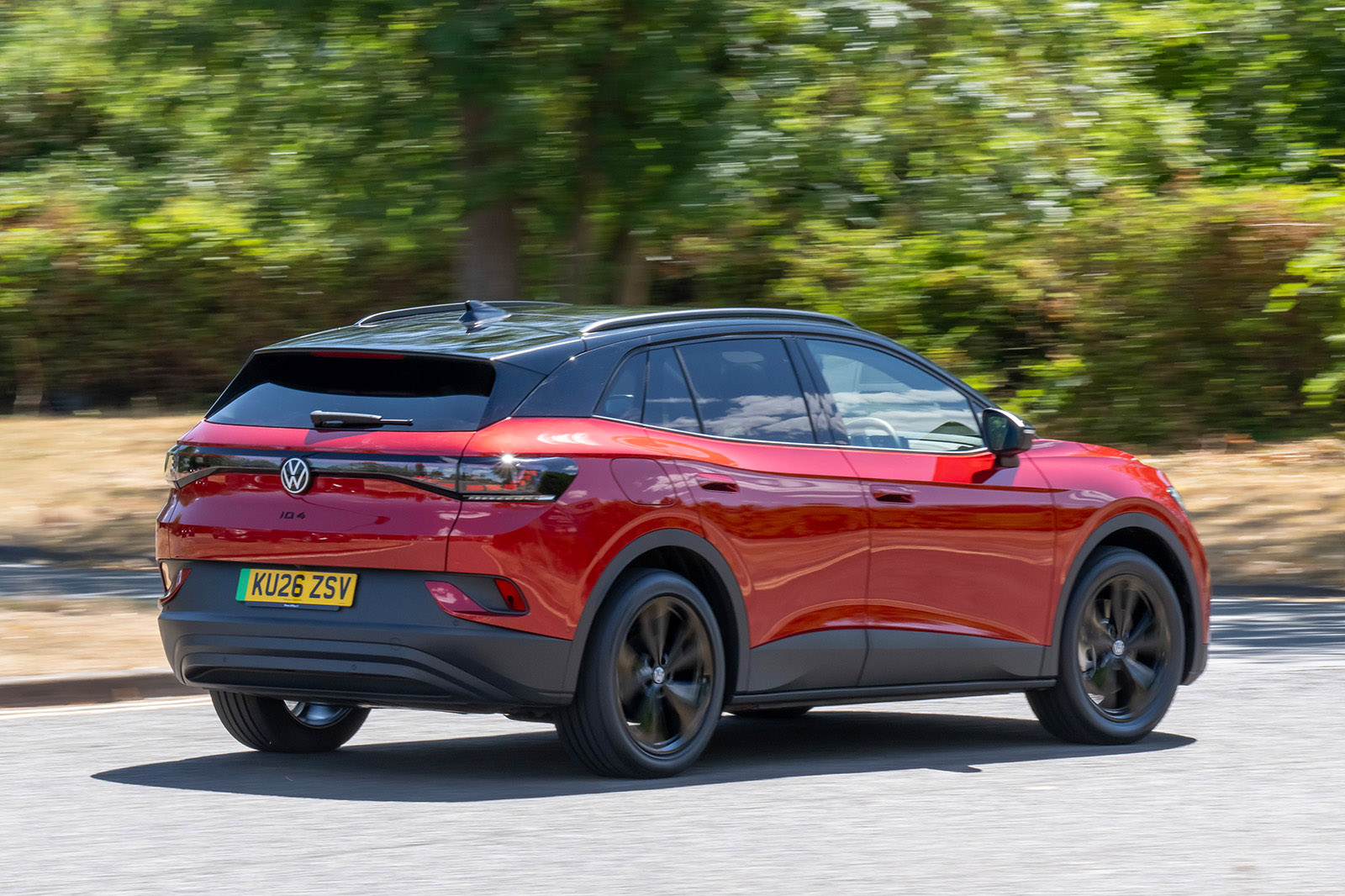
Some rivals are better value; others faster charging or longer of range; some simply packed with more technology. But the ID 4 is dynamically rounded and competent, has a user-friendly interior, and presents a typically strong VW-brand ownership proposition. 

And while it doesn’t offer much in the way of driver engagement or excitement, it has enough character to ensure that it doesn’t leave you cold: neatly tuned control responses, sharp initial performance, interesting little design cues, and a sense of maturity on the move.

With proper premium-brand options beginning to go beyond its standards for range and usability, the ID 4’s time for replacement is certainly coming; but, for the time being, it should continue to hold its own as a commendable known quantity in an ocean of novel brand and entrants.

Richard Lane

Richard Lane
Title: Deputy road test editor

Richard is Autocar's deputy road test editor. He previously worked at Evo magazine. His role involves travelling far and wide to be among the first to drive new cars. That or heading up to Nuneaton, to fix telemetry gear to test cars at MIRA proving ground and see how faithfully they meet their makers' claims. 

He's also a feature-writer for the magazine, a columnist, and can be often found on Autocar's YouTube channel. 

Highlights at Autocar include a class win while driving a Bowler Defender in the British Cross Country Championship, riding shotgun with a flat-out Walter Röhrl, and setting the magazine's fastest road-test lap-time to date at the wheel of a Ferrari 296 GTB. Nursing a stricken Jeep up 2950ft to the top of a deserted Grossglockner Pass is also in the mix.

Matt Saunders

Matt Saunders Autocar
Title: Road test editor

As Autocar’s chief car tester and reviewer, it’s Matt’s job to ensure the quality, objectivity, relevance and rigour of the entirety of Autocar’s reviews output, as well contributing a great many detailed road tests, group tests and drive reviews himself.

Matt has been an Autocar staffer since the autumn of 2003, and has been lucky enough to work alongside some of the magazine’s best-known writers and contributors over that time. He served as staff writer, features editor, assistant editor and digital editor, before joining the road test desk in 2011.

Since then he’s driven, measured, lap-timed, figured, and reported on cars as varied as the Bugatti Veyron, Rolls-Royce PhantomTesla RoadsterAriel Hipercar, Tata Nano, McLaren SennaRenault Twizy and Toyota Mirai. Among his wider personal highlights of the job have been covering Sebastien Loeb’s record-breaking run at Pikes Peak in 2013; doing 190mph on derestricted German autobahn in a Brabus Rocket; and driving McLaren’s legendary ‘XP5’ F1 prototype. His own car is a trusty Mazda CX-5.