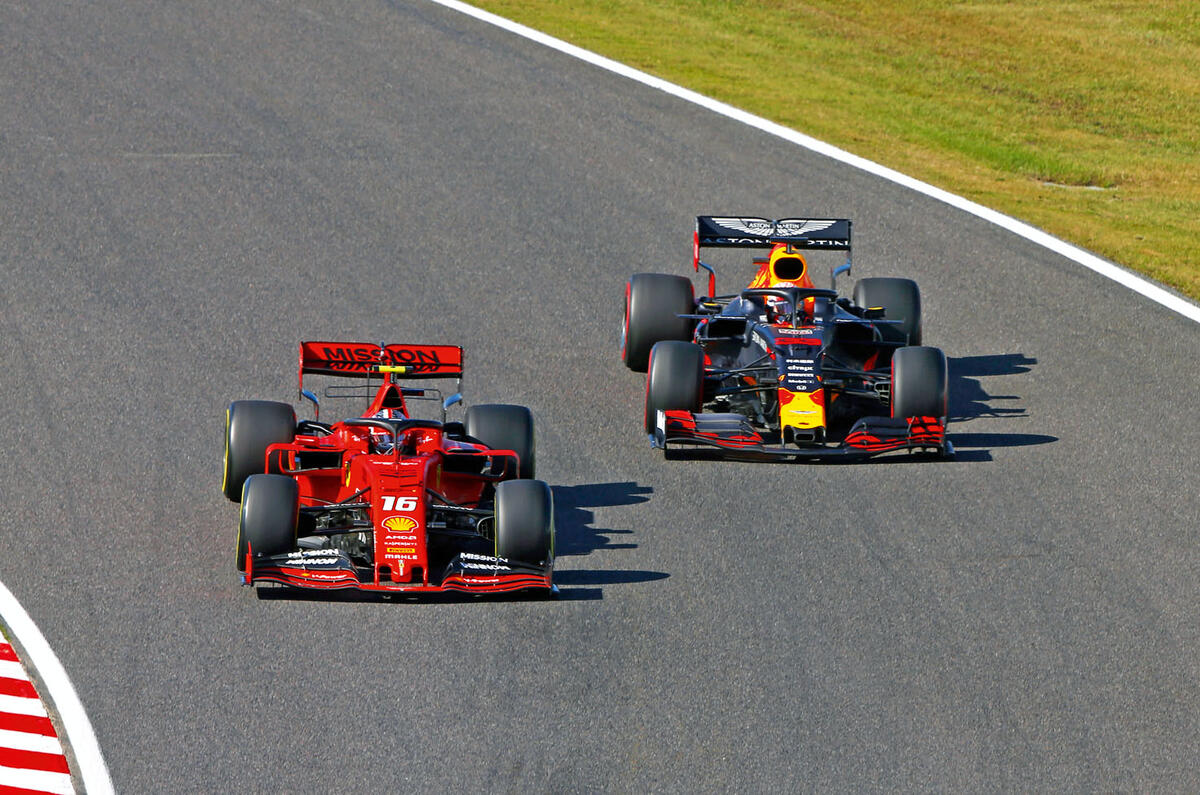

As Lewis Hamilton moves inexorably towards Michael Schumacher’s seven world titles and 91 grand prix victories, where is the next-gen challenge coming from? Is Ferrari the biggest threat to Hamilton and Mercedes? Or is it Red Bull-Honda?

In Max Verstappen and Charles Leclerc, both teams have outstanding young talents. You’d have to favour Verstappen simply because of the intra-team situation. There’s no doubting where Red Bull’s effort will go, no disrespect to Alex Albon.

Verstappen, at 22, is blindingly quick. Five years into his Formula 1 career, it’s now three-and-a-half seasons since he won his first GP. He’s ready. And on the evidence of the season’s final grands prix, so too is Honda.

At Ferrari, there’s a problem. Leclerc is quicker than Sebastian Vettel. But there’s not much in it. Going to the final round, Leclerc had seven pole positions to Vettel’s two, but his average qualifying pace advantage was just 0.07sec. At Mercedes, Hamilton has qualified 0.18sec quicker than Valtteri Bottas over the season. At Red Bull, Verstappen had 0.57sec in hand over the demoted Pierre Gasly and 0.4sec advantage since Albon arrived.

F1 history is littered with examples of two number ones in the same team winning most battles but losing the war. In 1973, Ronnie Peterson and Emerson Fittipaldi won seven races for Lotus, shared four to three, but let in Tyrrell’s Jackie Stewart to win the championship with five.

In 1986, Nigel Mansell and Nelson Piquet shared nine wins, five to four, for Williams-Honda, but when Mansell’s tyre blew in that memorable Adelaide finale, Alain Prost retained his world title for McLaren, with four. A bit more recently, a warring Vettel and Mark Webber at Red Bull would have conceded the 2010 championship to Fernando Alonso but for a Ferrari strategy cock-up in the final round.

Hamilton and Mercedes very rarely drop the ball. If Ferrari is going to compete, it probably needs to prioritise Leclerc. But how does Ferrari team principal Mattia Binotto explain that to a 53-race-winning four-time world champion?

At ‘Next Gen 2’ level, some have waxed lyrical about the 2019 rookies (Albon, Lando Norris, George Russell and Antonio Giovinazzi) being the best crop ever.
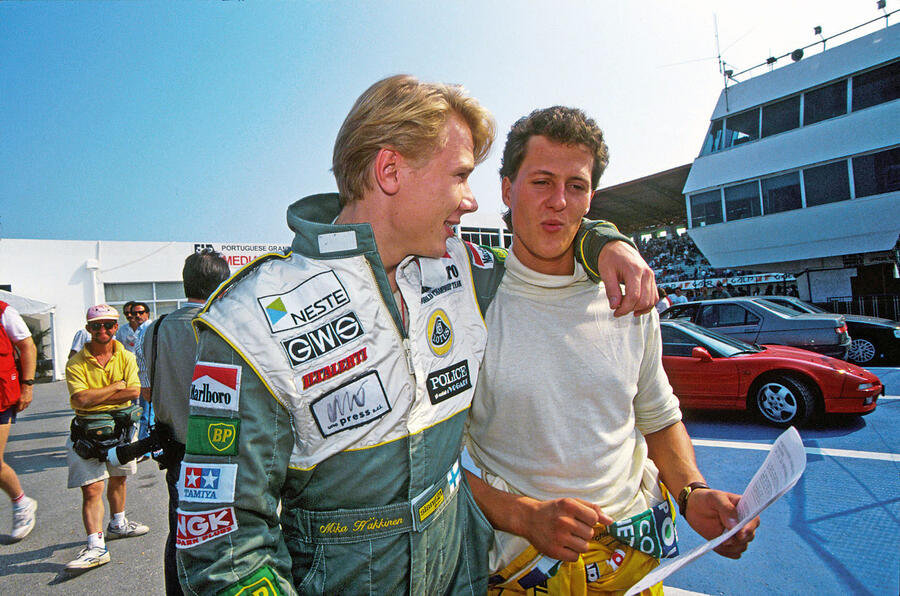
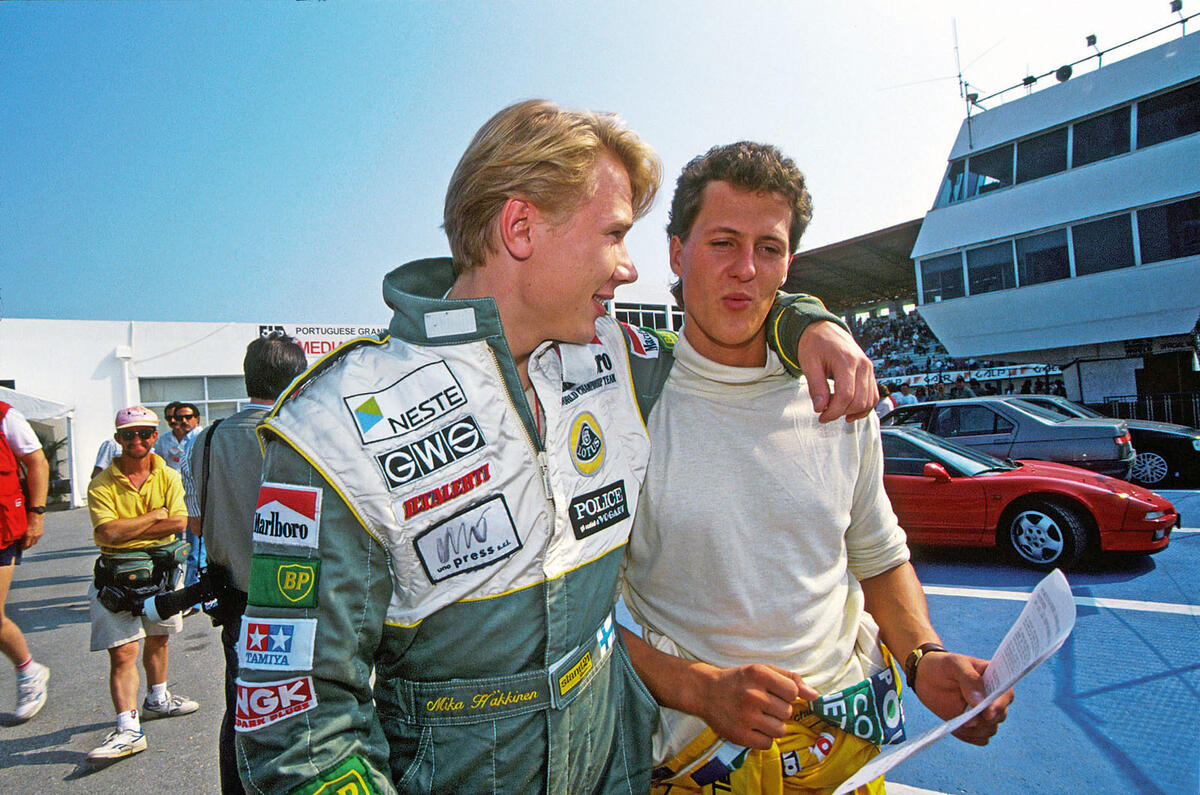
Hakkinen schumacher

That’s stretching things a bit. The more geriatric among you will be yelling: hang on, what about Jim Clark and John Surtees in 1960? The slightly sprightlier will be pointing out that Michael Schumacher and Mika Häkkinen, who arrived in 1991, can boast nine championships between them. And even that record was knocked over this year by the class of 2007, Hamilton and Vettel, now with 10.

But there’s no denying the quality of the season’s debutants. Russell is the hardest to judge because his Williams has been woefully uncompetitive. It badly lacks downforce, so for Russell to miss out on Q2 by five-hundredths at twisty Hungary of all places, and lap quicker than both Racing Points and a Renault, was a standout effort.

He has white-washed Robert Kubica in qualifying by the biggest margin between team-mates across the grid. I struggle writing that because Kubica’s F1 comeback, eight years after his awful rallying accident, was truly gutsy. The late Niki Lauda, who saw Russell’s testing performances in the Mercedes, had him down as a future world champion.

Although an average qualifying deficit of just over half a second to Russell might not look great, we may end up looking back on it as far better than appreciated. After all, Senna/Prost was billed as one of sport’s greatest rivalries, yet Prost’s average qualifying deficit over two seasons at McLaren was bigger, at 0.67sec…

At Red Bull, Albon raised eyebrows, not least Verstappen’s, when he went to Suzuka for the first time and equalled Verstappen’s qualifying time down to the last thousandth. You can’t do things like that without real talent.

Over at McLaren, Norris’s early-season form was so impressive that McLaren Racing CEO Zak Brown snapped him up for a three-year contract extension in early July.

Carlos Sainz, a man who pushed Verstappen when they were Toro Rosso teammates, has been an average of just 0.03sec quicker than Norris in qualifying – the tightest margin across the whole grid. The pair have forged the closest thing you’ll get to a friendship in an F1 paddock.

READ MORE

Racing lines: why car makers still can't resist motorsport

Opinion: Why hillclimbing is the underrated hero of motorsport

New power generation: The young drivers making their mark on motorsport