Access control:
Open
Include in Apple News:
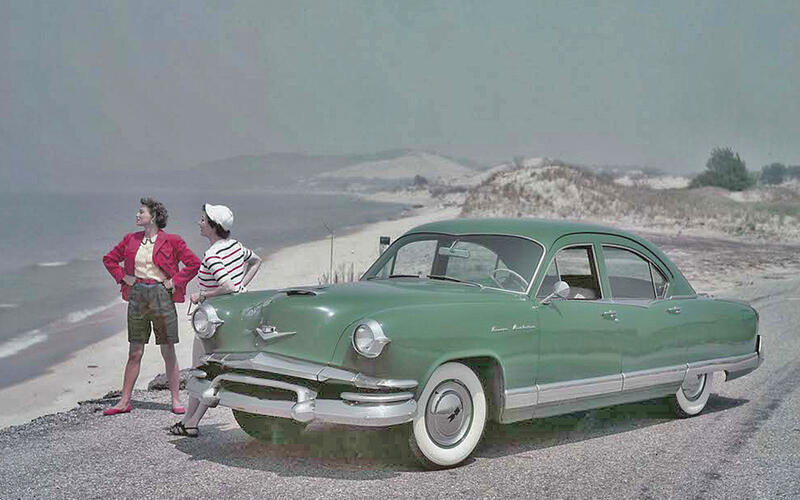

These included names that may ring a bell for some, like Bobbi-Kar, Playboy, Keller, Airway, Californian, King Midget, Davis, and more. Only one attained the size and scale necessary to challenge America’s largest automakers and that was Kaiser-Frazer, formed by legendary businessman Henry J Kaiser and Graham-Paige CEO Joseph Washington Frazer.
The two men managed to produce a car that was fully competitive with the best Detroit had to offer, in one of the largest factories in the world, while overcoming thousands of problems large and small. The big question is how was Kaiser-Frazer (K-F) able to take on the Big Three automakers in America- not to mention the larger Independents? Here’s the interesting story, in pictures and words:
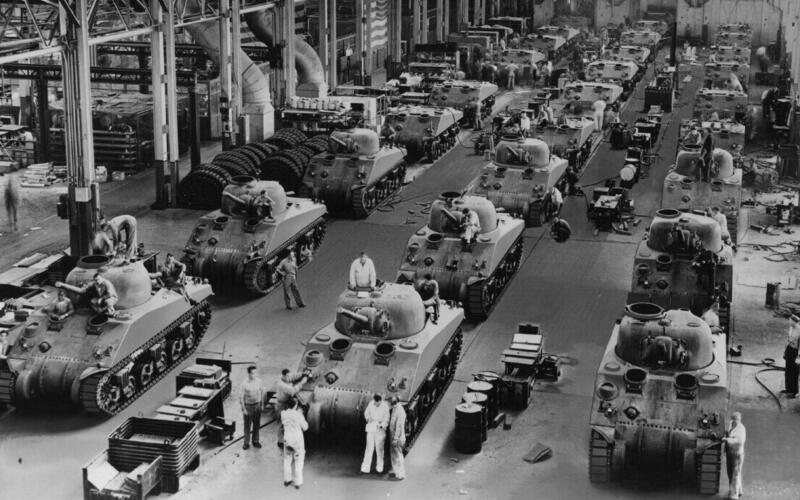
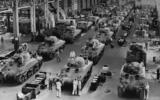
All autofirms faced similar problems when the war ended. The government abruptly canceled contracts for the war materiel being churned out on their production lines, such as this Chrysler one building Sherman tanks. There were also chronic shortages of sheet steel, chrome, tires, components etc., all required for the companies to resume their previous role as producers of cars for the public to buy.
K-F had another layer of challenges. It also had to acquire a factory, hire and train a workforce, set up a wholesale and retail distribution systems, sign contracts with hundreds of suppliers, and develop a marketing program - not to mention the small matter of designing and engineering an entirely new automobile.
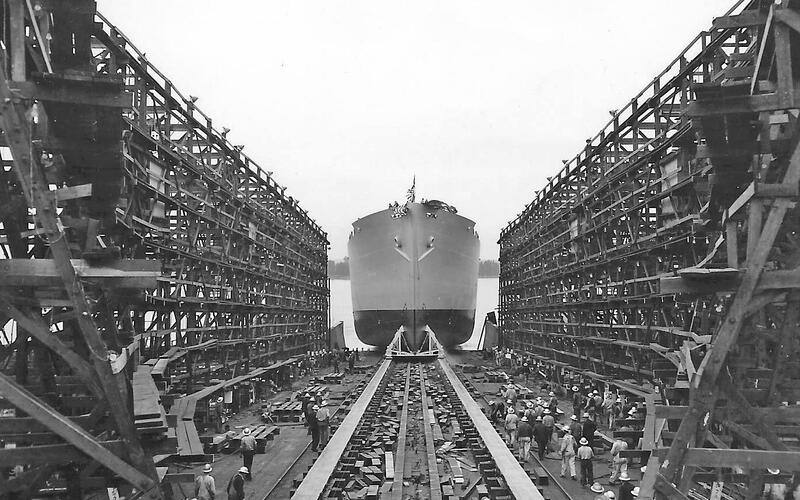
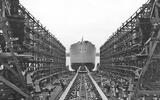
Henry J. Kaiser had made his first fortune building roads and dams. He made another in WWII when he introduced mass-production to shipbuilding. Kaiser shipyards produced thousands of ‘Liberty’ cargo ships as well as cruisers, tankers and aircraft carriers for the US Navy. One shipyard actually built a Liberty ship in just seven days… It was his ability to make things happen quickly that inspired him to get the jump on the Detroit majors and start producing up-to-date cars before they got their act together.
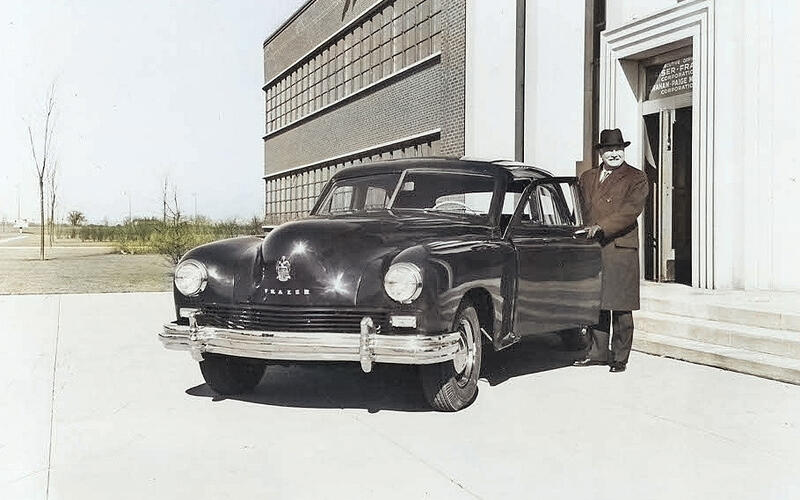
Joseph Frazer came from wealth and had graduated from Yale. Fascinated by the auto business his first job was mechanic’s helper at 16 cents an hour. Frazer moved up through the industry; a born salesman, he moved into sales positions at auto dealerships, where his enormous ability drew attention from higher-ups. By 1919 he was at General Motors, where he helped organize General Motors Acceptance Corporation (GMAC), GM‘s highly profitable auto finance arm that continues to this day, branded as Ally Financial.
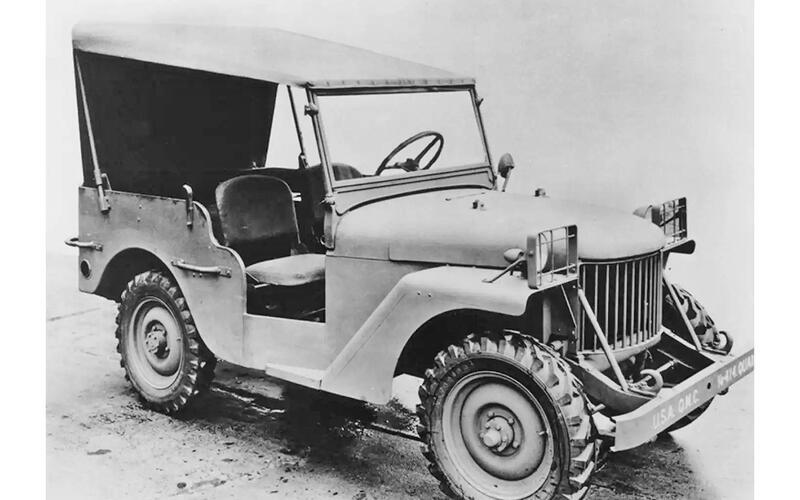
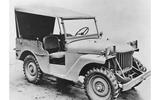
Walter P Chrysler hired Frazer to head up sales at Maxwell-Chalmers. Frazer was there when the company morphed into Chrysler Corporation. Moving again, in 1939 Frazer became president of struggling Willys-Overland. He successfully revamped THE Willys product line on a shoestring, launched new advertising and pushed dealers to increase sales efforts. Production and sales climbed, and in 1940 Willys won the crucial contract for the Army’s new utility vehicle that became the Jeep, securing the company’s future.
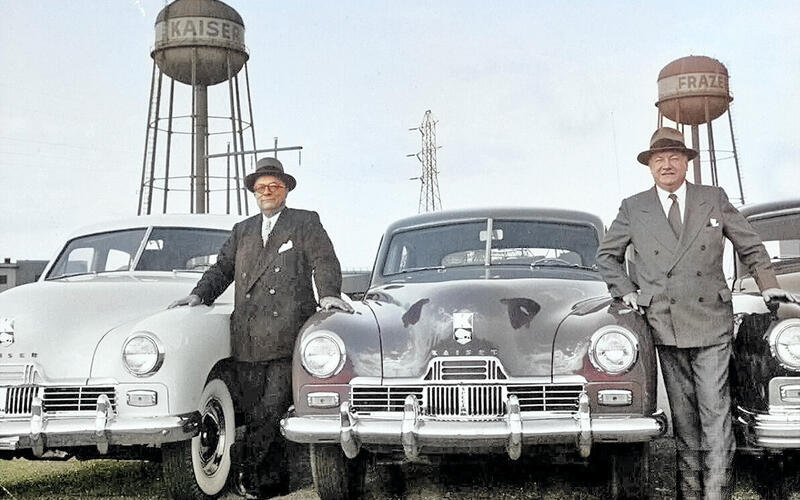
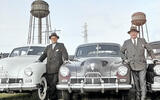
After the war Frazer (on the right here) gained control of Graham-Paige, a small independent automaker that halted passenger car production in 1940. Frazer hoped to raise enough capital to introduce a new postwar Graham car- but after running into problems finding anyone willing to finance the venture he decided to team up with Henry Kaiser (left), one of the most famous businessmen in the world, and a man who made a large contribution to America’s war effort.
Kaiser’s stature was such that banks were willing to underwrite practically any venture with his name on it. Because of his wartime shipbuilding fame Kaiser was a household name, and the public was soon eagerly awaiting news about the new car he and Frazer would be produced by the newly formed Kaiser-Frazer Corporation.
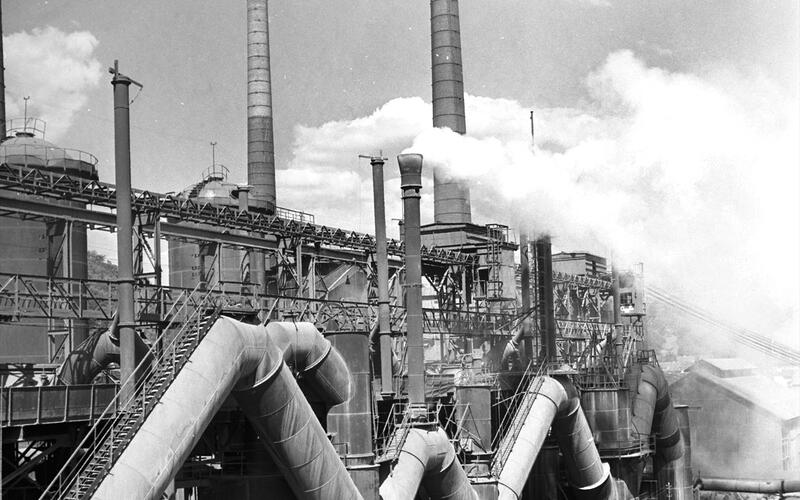
The new firm was formed with a mission to produce automobiles for a market desperate for anything on wheels. Cars for the civilian market hadn’t been produced since January 1942 and America’s vehicle stock was getting depleted, in an era when cars were much less hard-wearing than today. Management knew they had a golden opportunity selling cars in what would be the hottest new car market ever. And as for the supply problems, Mr Kaiser was well used to them during the war and had a ready-made network of experts across the country who knew how to find stuff fast.
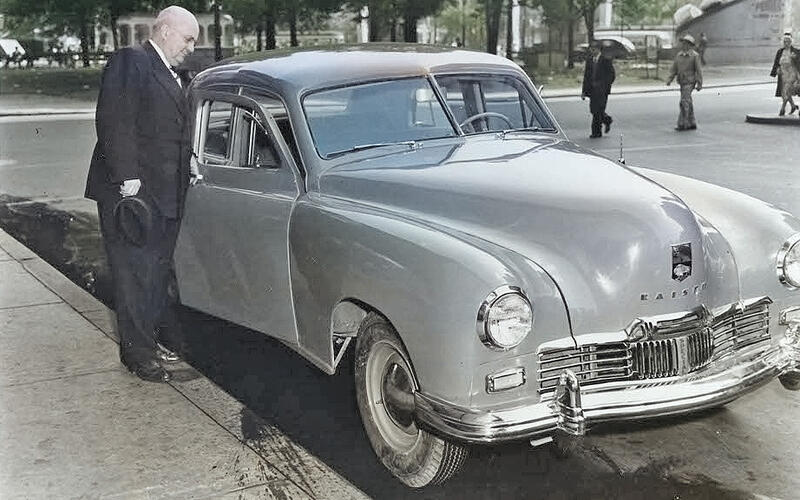
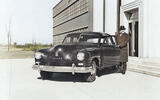
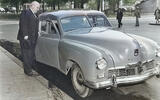
Kaiser favored a front-drive automobile and early press photos showed an attractive prototype. But tooling to produce front-drive proved difficult to obtain and, in the end, Kaiser settled on building a version of a new sedan design commissioned by Graham-Paige from Howard ‘Dutch’ Darrin (1897-1982). In this photo Henry Kaiser inspects the first production model off the line.
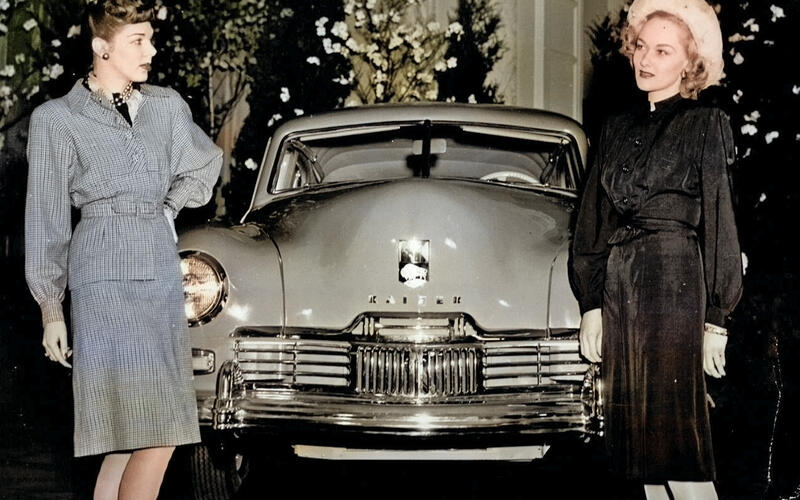
The new cars were first publicly displayed in January 1946 at the famed Waldorf-Astoria hotel in New York City. A massive crowd turned out to see them; folks became so anxious to see the new Kaiser-Frazer they ended up breaking through one of the hotel’s French glass doors. It was an extraordinarily exciting event. When Henry Kaiser was introduced to his dealers, they let loose with a standing ovation, cheering themselves hoarse.
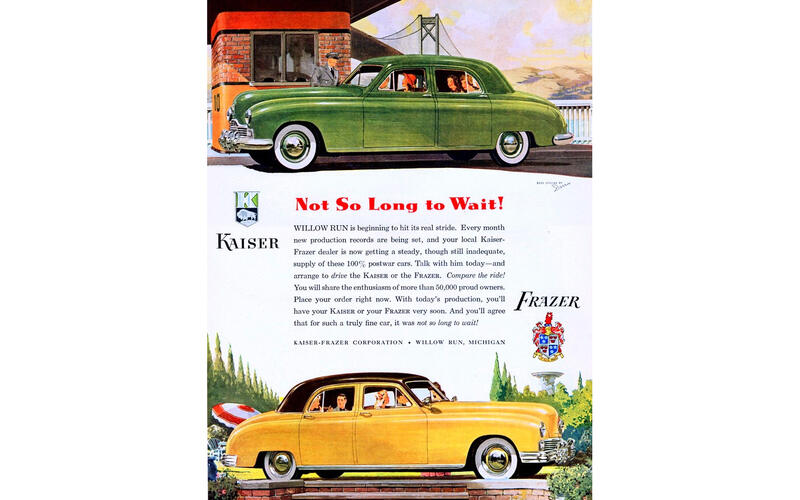
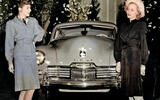
The new Kaiser/Frazer automobiles were the most modern on the road, as their marketing stressed. Featuring unique ‘envelope’ body styling, they looked years ahead of everyone else. Both were large four-door sedans targeting buyers in the medium and luxury markets. The 1947 Kaiser Special was priced at $2104 - a comparable Nash Ambassador was $1809.
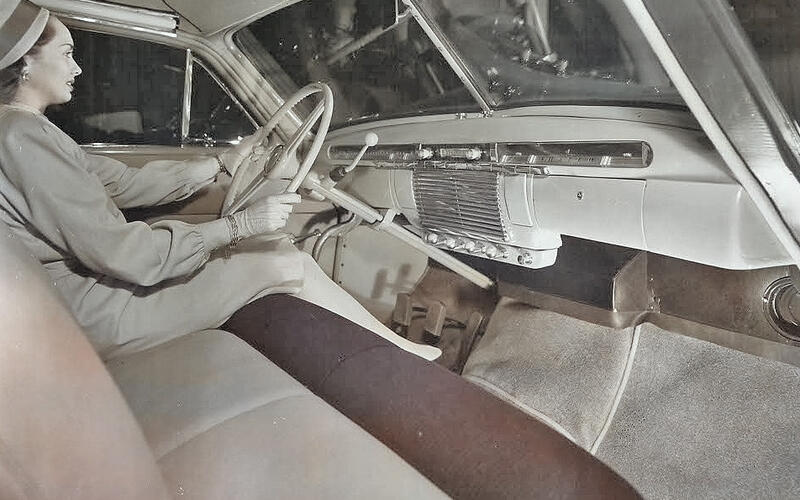
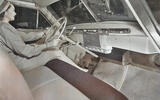
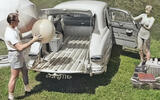
While Kaiser was the mainstream brand, Frazer was the posh one and had pricing to go with it: The topline Frazer Manhattan was $2712 (about $40,000 in today's money) when a new Cadillac Series 62 cost $2523. There was plenty of room inside the 1947 Frazer, as seen in this 1947 publicity shot. Notice the fine carpeting and seat upholstery;
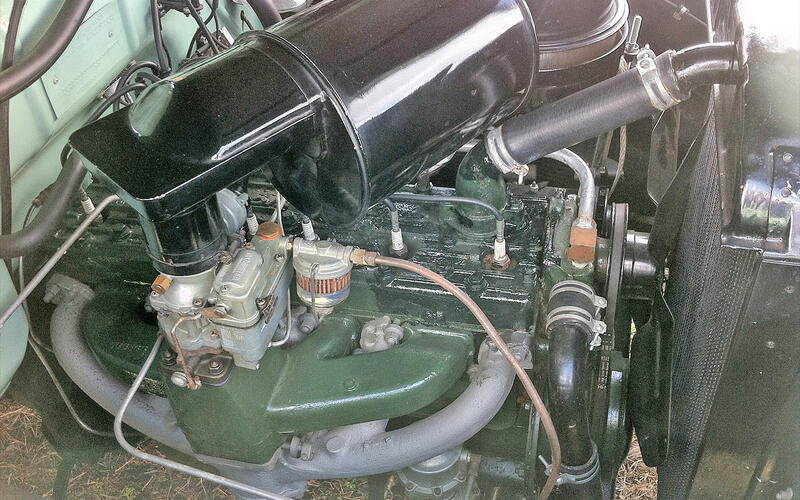
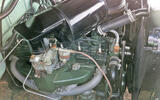
Both Kaisers and Frazer’s were powered by a Continental Motors-designed flathead six-cylinder engine of 226 cubic inches, generating 100 hp in standard form and 112 hp with the optional two-barrel carburetor. Transmission choices included the standard three-speed manual gearbox with column-mounted shift lever, or the same with optional overdrive.
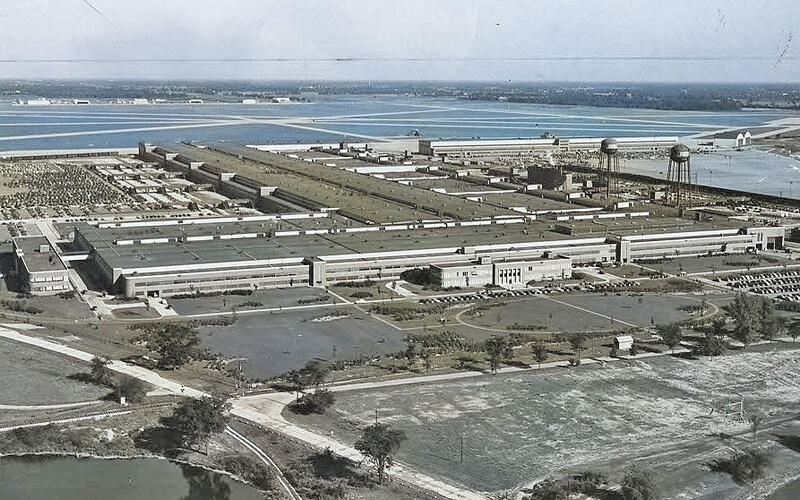
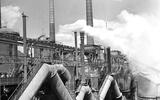
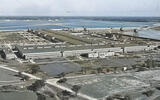
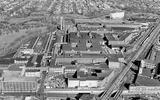
Detroit veterans predicted Kaiser-Frazer would quickly sink without a trace but amazingly, new Kaiser and Frazer cars were rolling off the assembly line just nine months after the company signed a lease on the production plant ironically built by a member of the Big Three: a gigantic building in Willow Run, Michigan. It was built in 1942 by Ford Motor Company and would primarily produce the B-24 Liberator heavy bomber. The plant’s size was staggering: architects had to take into account the curvature of the earth when laying it out. Clearly Frazer and Kaiser were thinking big.
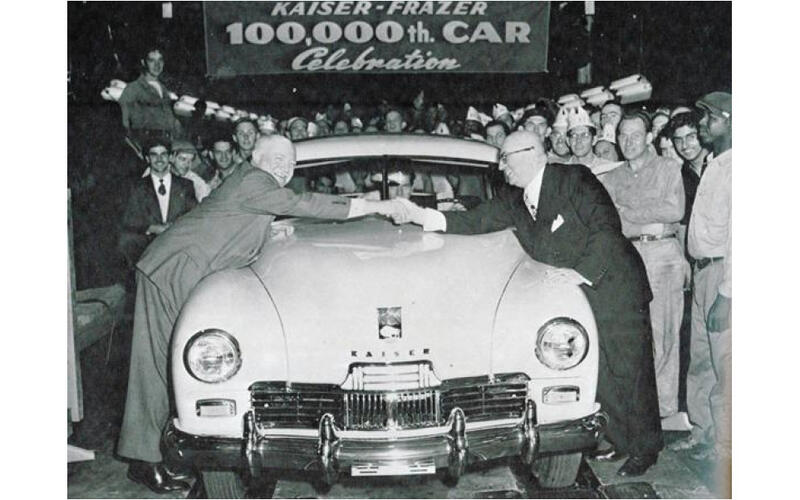
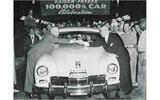
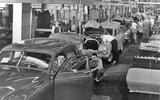
Car production got underway in the summer of 1946, starting slowly and gradually ramping up to speed. By September 25, 1947, the 100,000th car rolled off the assembly lines. Less than six months after that, the 200,000th car was produced. Kaiser-Frazer found itself out-producing some of the best-known automakers in America. However, the company was sorely under-financed.
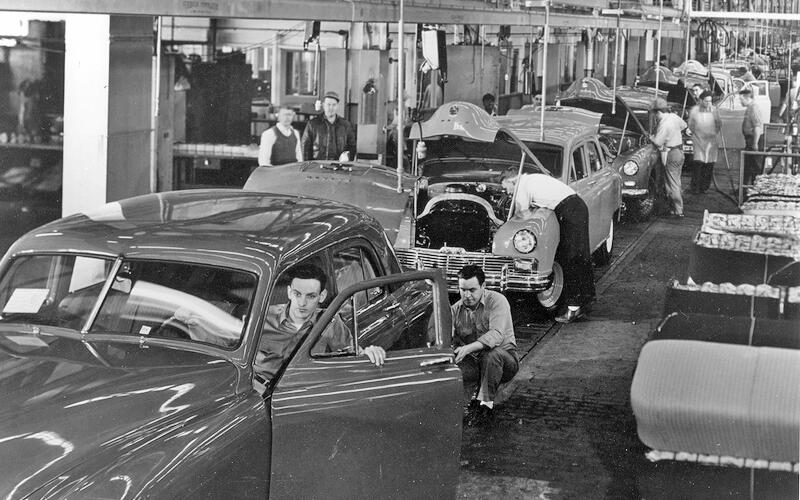
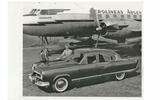
Initially it wasn’t a huge obstacle as pent-up demand meant K-F could sell every car it built. But over time it proved a major problem. The company also spent vast amounts to acquire scarce materials and components needed for production. In an industry where costs were measured in pennies, it was estimated that the steel purchased by Kaiser-Frazer in the early years cost $42 extra per car because the company had to pay a premium in transportation. To keep production humming, some parts were even shipped by air, at vast expense.
Since high production was vital to the company’s success it got into the unfortunate habit of settling with union demands rather than having a strike. The end result was Kaiser-Frazer’s per-unit cost of production was probably the highest in the industry.
Problems came to a boiling point when an obstinate Henry Kaiser clashed with his partner over production plans for 1949. Ford had become the first of the Big Three to unveil its post-war range in the summer of 1948, and Frazer realized that renewed competition called for scaled-back production until the all-new 1950 Kaiser/Frazer’s came out, but Kaiser refused, declaring “The Kaisers never retrench!”. Kaiser tooled up to produce 200,000 1949 cars - about twice what Frazer recommended.
PICTURE: 1949 Kaiser Manhattan
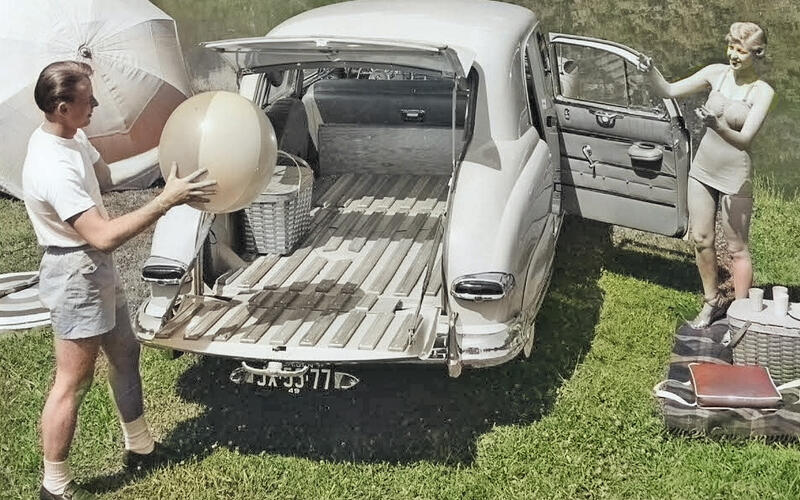
The vehicles received a minor facelift consisting of revised front-end styling, along with new ‘halo’ models added to lend a bit of excitement to showrooms. These included the Kaiser Traveler and Vagabond four-door hatchbacks, along with the costly four-door Kaiser Virginian hardtop plus Kaiser and Frazer four-door convertibles. Because the company produced only a single four-door body style the new models were all based on that.
PICTURE: 1949 Kaiser Vagabond
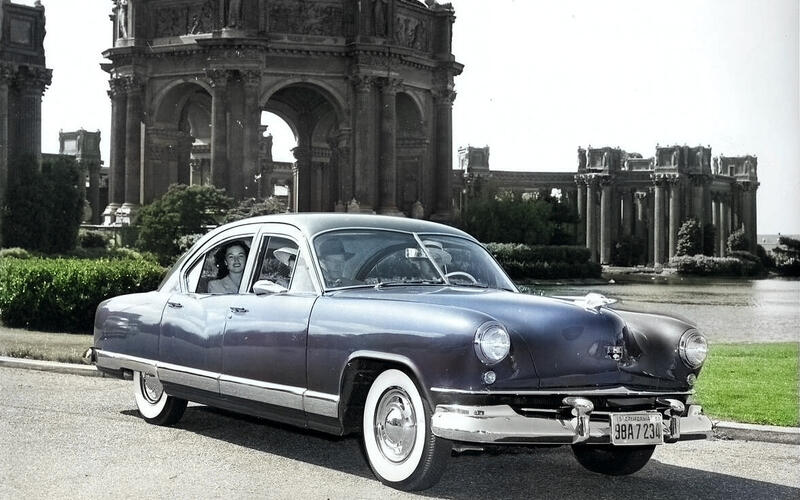
In the end Joe Frazer was right; Ford’s new models sold like hot cakes, aided by its large dealer network, while demand for Kaiser/Frazers was down sharply for 1949, and unsold cars piled up around Willow Run. Leftover 1949 bodies were used to produce the 1950 models and the company was forced to postpone its planned all-new car until March 1950, when it appeared as an early 1951 model.
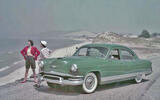
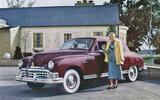
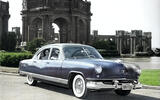
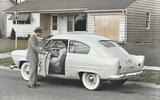
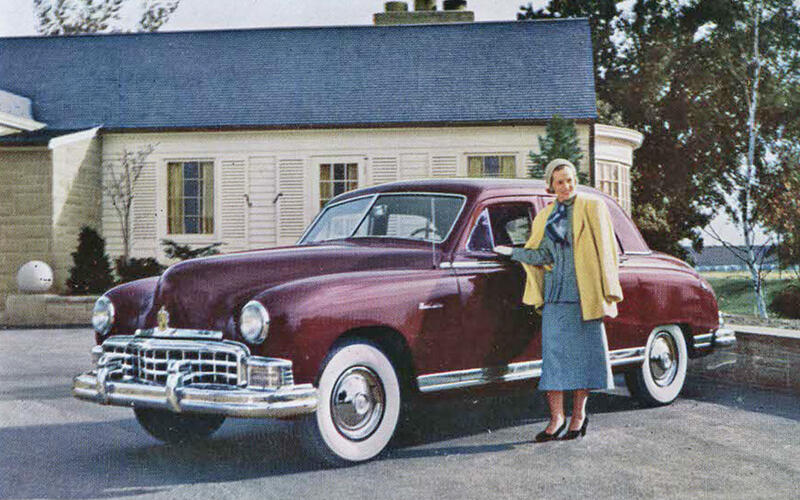
Many considered the new 1951 Kaiser the best-looking sedan on the market (pictured). When it finally debuted, it was like the cavalry appearing; for a while it seemed the company would be saved from disaster.
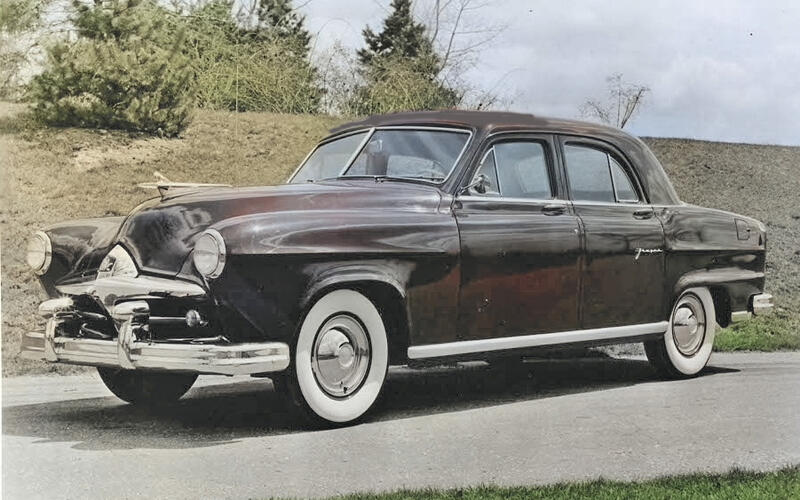
The 1951 Frazer, on the other hand, was merely a restyled 1950 model, created not to revitalize the brand but to use up leftover bodies. By this point Joe Frazer had had enough; he left the company. As soon as the 1951 Frazer cars were sold off the upscale brand was dropped, a mistake since it robbed the company of extra sales volume that it badly needed.
There were other mistakes. The gravest was K-F’s failure to introduce a V8 engine. Most automakers realized that V8s were becoming essential in the medium price bracket; After all, Ford had produced its blue-collar flathead V8 as early as 1932. Studebaker and Packard developed their own V8s; American Motors’s Nash and Hudson divisions purchased theirs from Packard, while its engineers worked to come up with their own engine. Kaiser was the only independent that failed to introduce a V8. Making a virtue out of necessity, its marketing often stressed the economical engines instead.
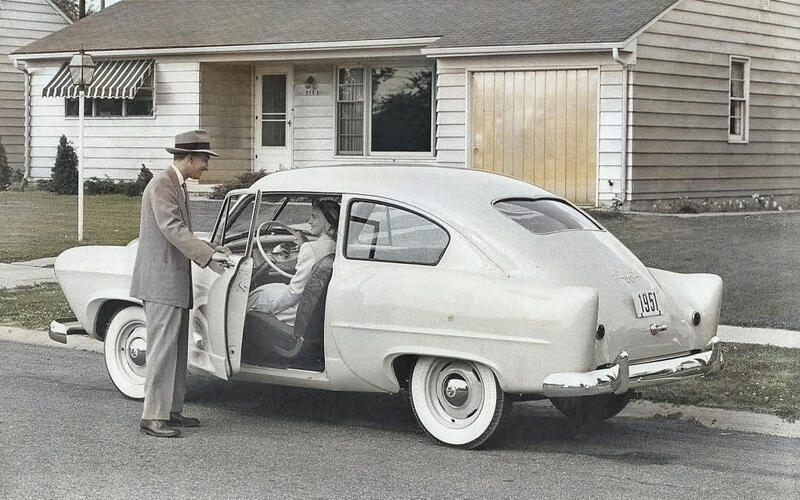
Then there was the Henry J fiasco. Most independents jumped into the small car field during the 1950s. Kaiser did too, but with a product completely wrong for the times. Despite the unanimous judgment against it by his advisors, Kaiser chose to base his car on a squat little prototype created by American Metal Products which imposed big-car looks on a small one. Dubbed the Henry J, it was the third automotive brand from Kaiser-Frazer.
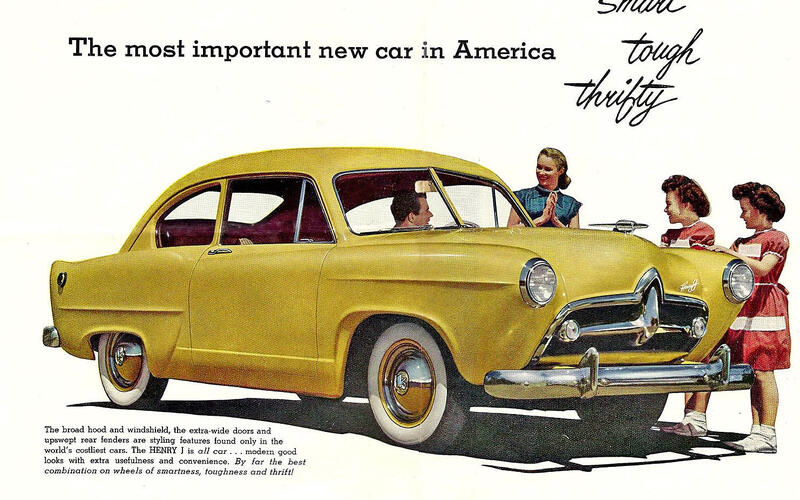
Mechanix Illustrated’s Tom McCahill said the Henry J looked like “...a Cadillac that started smoking too young.” The only body style was a two-door sedan offering a choice of four or six-cylinder models. Sales were good initially, with 82,000 units sold in an extended 1951 model year. But 1952 production dropped to about 30,000 units; for 1953 a mere 16,672 were produced.
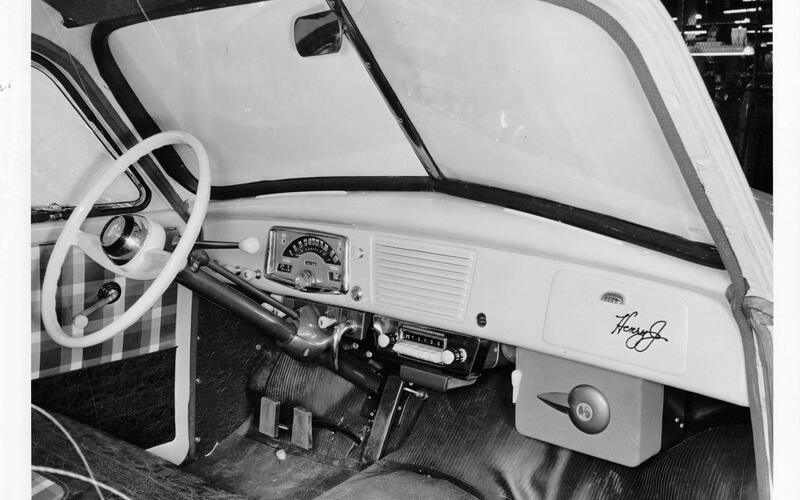
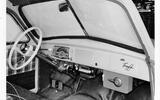
The Henry J was simply too small and austere; it had no trunk lid, no glovebox, and even no ventilation system at a time when air-con was about to arrive in autos for the first time. Meant to fulfill Kaiser’s long-held dream of building a high-quality low-priced car, its diminutive size, small engines and stark interior (pictured) made it the butt of jokes by comedians. It became known as a cheap little car for poor people- the result of which even poor people didn’t want it.
Officially there was a 1954 model year but the 1123 Henry Js produced were re-serialized leftover 1953s. After that the car was dropped. Cheap the car might have been, it was costly to develop and drained the company of capital.
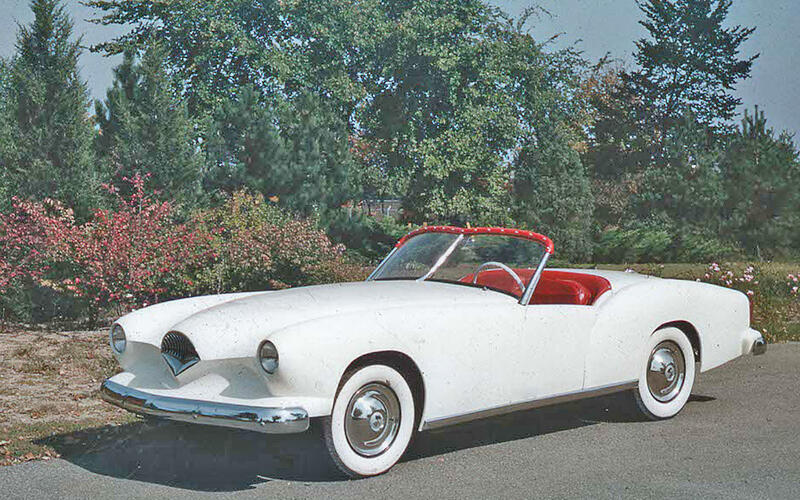
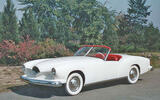
There was trouble with the senior cars too. Although more than 140,000 1951 models were produced, only 32,000 1952 Kaisers were produced, and a similar number of 1953s. The Kaiser-Darrin sports car introduced for 1954 didn’t help stem the losses, and just 435 examples were made; it boasted unique doors that slid into the front fenders. Mortally wounded, the Kaiser brand was finished by 1954, despite a handsome European-inspired facelift. A handful of 1955s was produced to use up existing bodies and components.
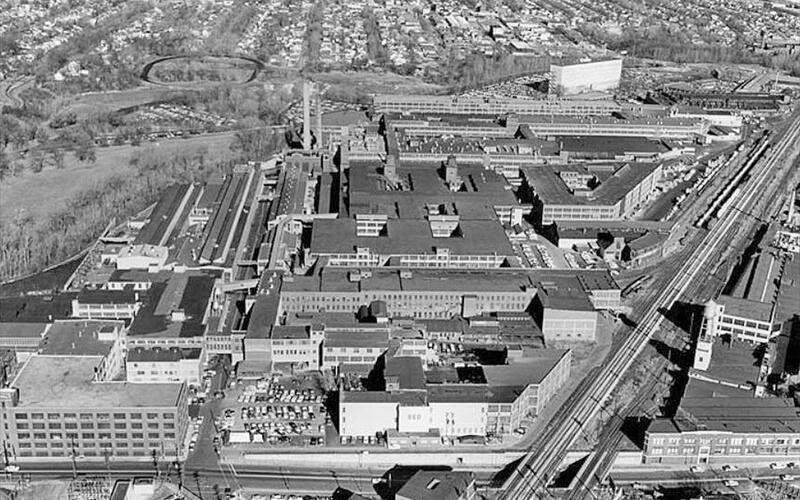
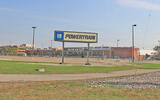
When Henry Kaiser realized his automobile company was failing, he hit upon the idea of buying Willys-Overland, the profitable maker of Willys and Jeep vehicles. Applying Kaiser-Frazer tax-loss carry-forwards to Willys-Overland profits would allow him to quickly recoup his investment. Kaiser ended up purchasing Willys-Overland assets for $60 million. Kaiser production shifted from Michigan to Willys’ plant in Toledo, Ohio (pictured).
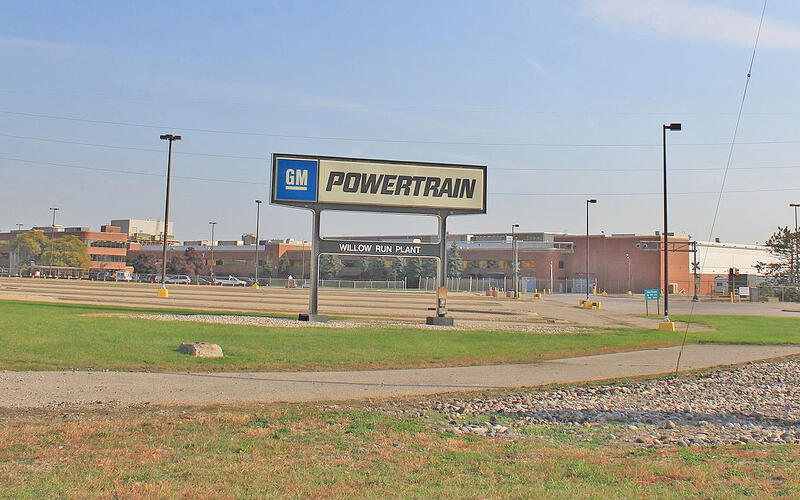
In December 1953 Kaiser sold Willow Run to General Motors for $26 million, which used the location until 2010, making automatic transmissions and for a period even weapons like the M16 rifle. By the end of 1955 Kaiser and Henry J cars were gone- as were Willys’ autos - as Kaiser’s automotive interests became strictly Jeep-related, which turned out to be a sensible move.
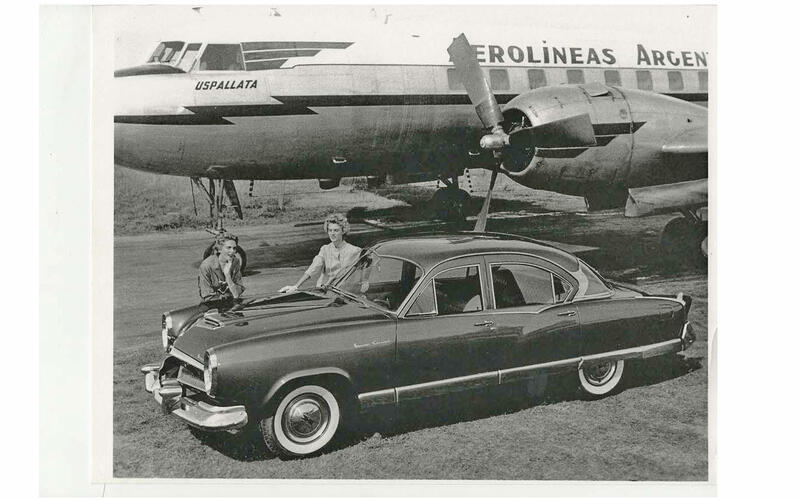
But that wasn’t quite the end of the Kaiser car. In 1960 Henry Kaiser signed an agreement to produce Kaiser sedans in Argentina using the old tooling. Industrias Kaiser Argentina (IKA) was a joint venture formed to produce the Kaiser Carabella for the Argentinean market. It was the first automobile completely manufactured in Argentina. The Kaisers were eventually replaced by more modern cars.
In all, Kaiser-Frazer produced over 700,000 automobiles in what came to be known as “The Last Onslaught on Detroit”. That’s no small accomplishment but along with so many other companies not part of the hallowed Big Three, it found it hard to compete with their economies of scale. It lacked their dealer-networks, and some of the managers brought in by Kaiser from his construction hinterland were out of their depth in the dynamic and highly competitive consumer automarket.
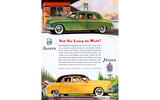
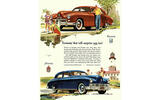
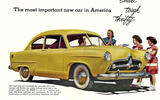
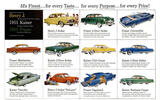
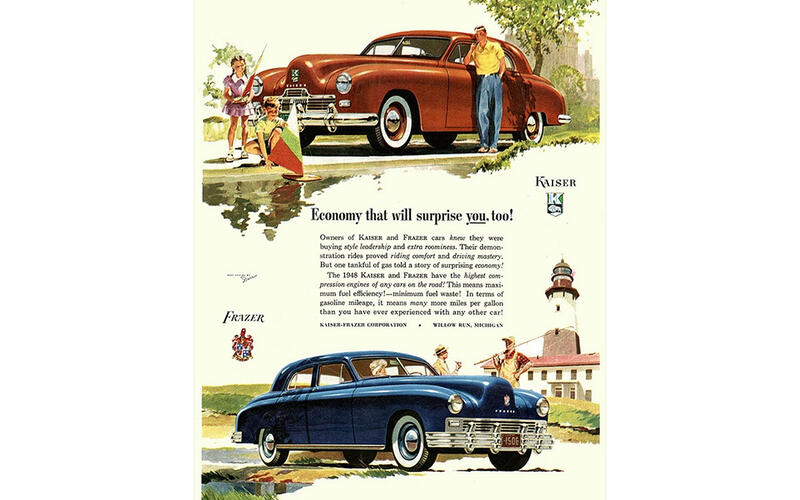
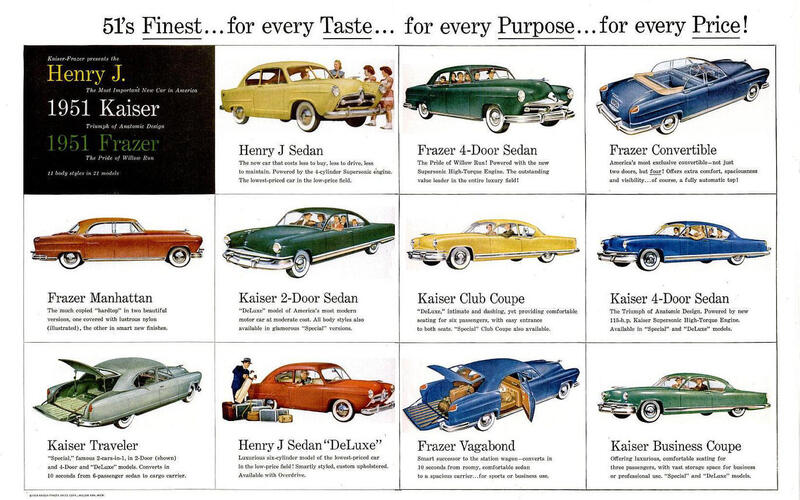
While advertisements in its heyday (pictured) suggested a vast model range, in fact it was mostly derivative on a small theme; nothing compared to the multi-brand, multi-model offer from the likes of GM.
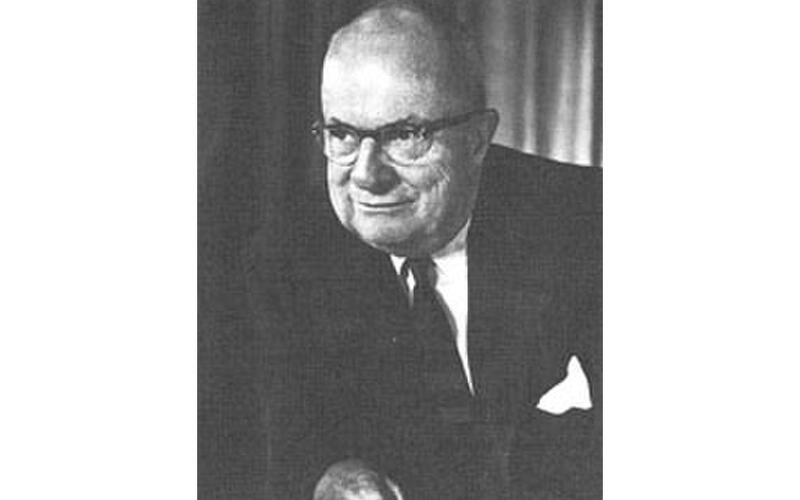
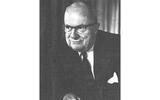
Joseph Frazer died in 1971, aged 79. Henry John Kaiser (pictured) died in August 1967 in Honolulu, aged 85, and his family decided to then exit the auto business; they sold Kaiser-Jeep to AMC in 1970. He deserves to be somewhat better known today considering his role in major construction projects, his wartime organizational prowess and his effort to take on Detroit.
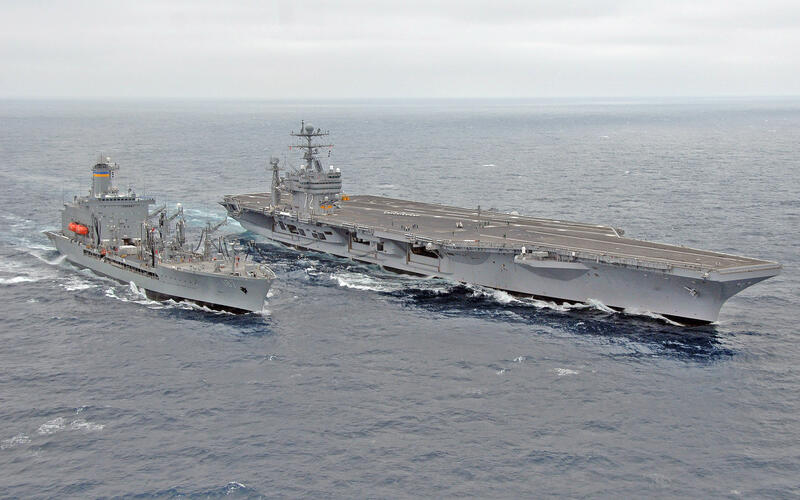
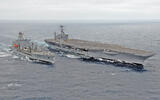
Kaiser’s name does survive however as a class of 18 US Navy oil tankers: the Henry J. Kaiser class, the first of which also bears his name and is pictured here, transferring oil across to the Nimitz-class carrier USS Abraham Lincoln; the carrier might be nuclear-powered but its airplanes are not...
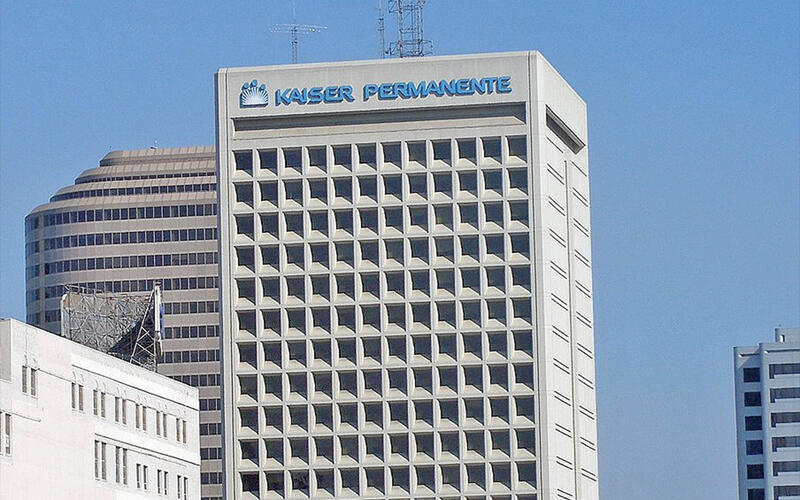
The name also continues in Kaiser Permanente, a large healthcare company that Kaiser had started in the ‘30s to provide support for his workers and then, from 1945, the general public. Today it operates 39 hospitals, 700 medical offices and employs around 300,000 people. It got into the news in October 2023 when a large number of its staff staged a strike, in protest over staffing levels.
And as for Henry Kaiser himself? He was a mercurial character certainly – this tends to be a feature rather than a bug for many self-made billionaires - but a decent one in the final analysis and towards the end of his life, said: “After I am gone, people may forget the dams and ships, but they will never forget the medical care that eases their pain and suffering.”
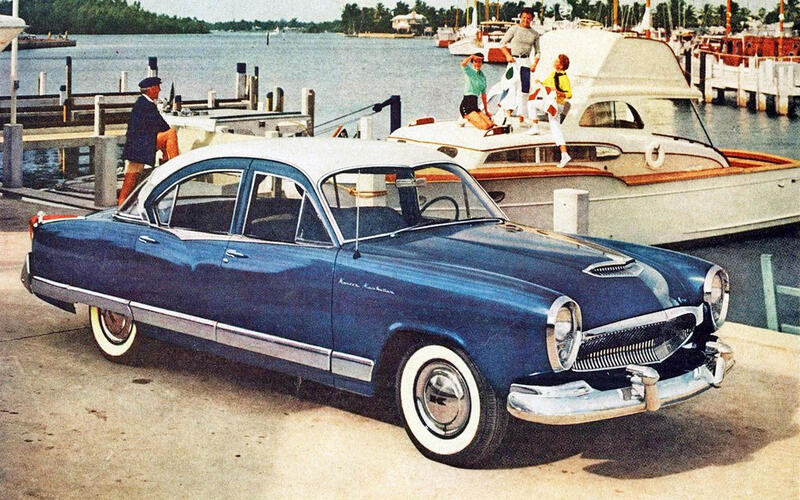
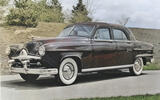
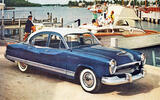
There is an active Kaiser-Frazer owners club, and a busy Facebook group, with lots of helpful owners exchanging news and tips. If you want to join team Kaiser, the affordable way is via the largest-selling, most mainstream models: a Kaiser 1951 Deluxe is priced around $12,000 today. The rarer 1954 Kaisers (pictured), last of the line, are among the more desirable and valuable survivors.
At the other end of the scale, Kaiser-Darrins are very valuable, helped by their rot-proofed fiberglass construction, zany looks and the fact few were made in the first place; nice ones sell for over $100,000, and the first one ever built sold at auction in 2016 for $200,000. Just don’t expect performance to match those looks: the 90 hp six delivered a 0-60mph time of 15 seconds, off to a 95mph top speed. But what a way to get around…
Writer Patrick Foster has spent more than 30 years studying various aspects of the automotive industry, has written for most of America's classic car magazines, and has written books including 13 Lost Car Legends- America's Independent Car Companies 1945-1985