Currently reading: Britain's Best Driver's Car: The British sports car stars
UP NEXT

This year's field for our annual performance showdown features an intriguing trio of lightweight Brits

Autocar’s annual Britain's Best Driver's Car contest isn't just about powerful supercars and big-name manufacturers: we also like to celebrate some of the innovative performance cars from smaller firms.

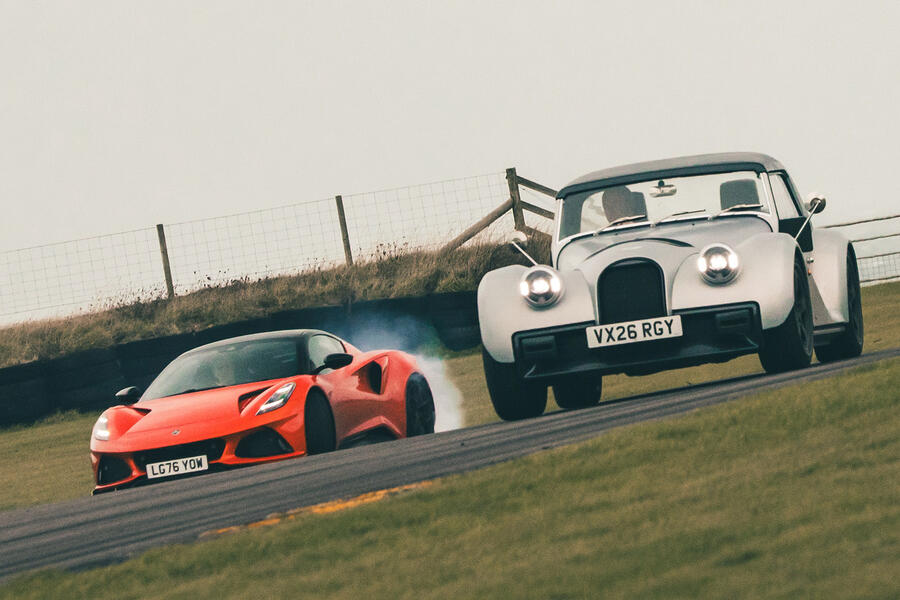
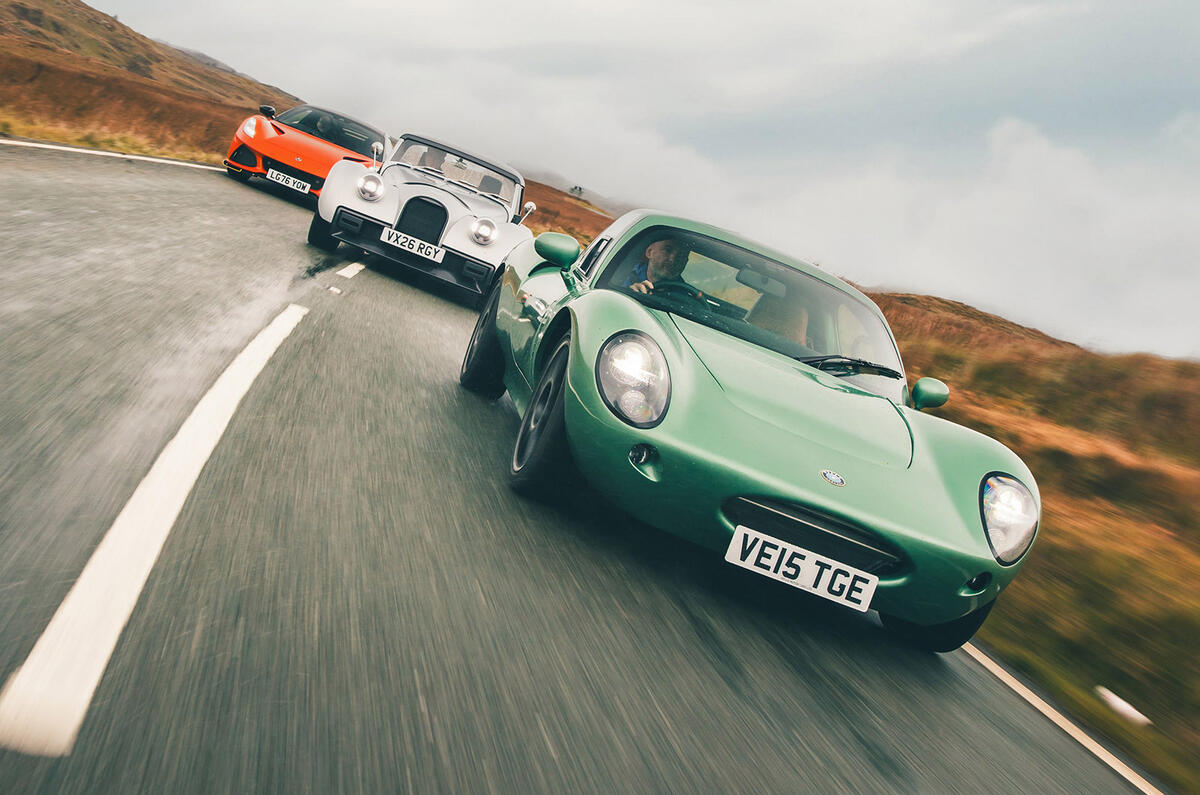
The field of 10 cars assembled for this year's event includes three lightweight Brits: the Lotus Emira 420 Sport, Morgan Supersport 400 and Wells Vertige. They're united by a common ethos but very different machines from very different firms.

This is the third part of our BBDC 2026 coverage; you can read about the four everyday performance heroes in our field here and the three supercars here.

And make sure to return here tomorrow to find out which cars made our final three – and which scooped the crown.

BBDC 2026 part 3: The lightweight contenders

Whatever will be the end result of this test, can we just pause and celebrate that Britain is still producing these wilfully alternative cars, when most of the industry has decided that it makes better business sense to just give up or produce two-tonne crossovers?
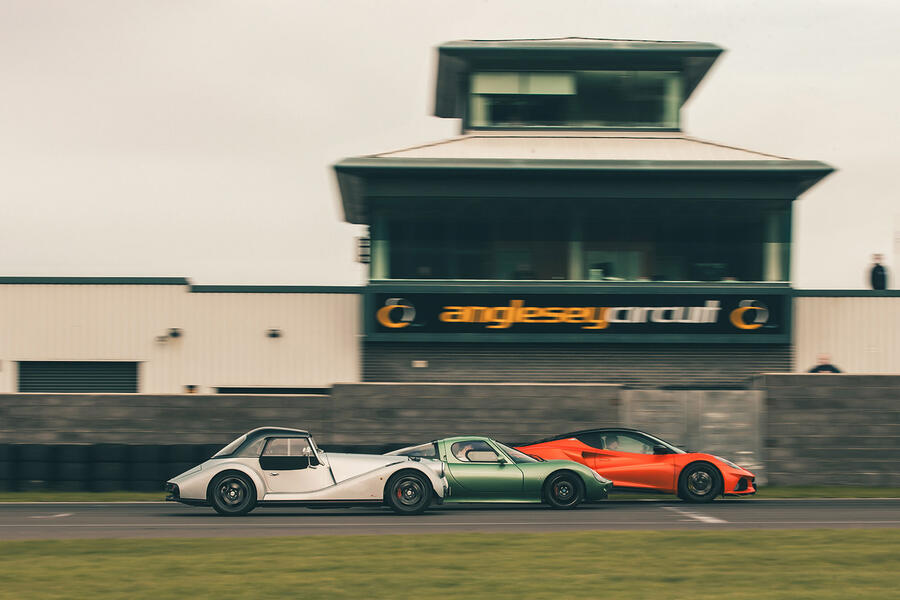
It undoubtedly does make better sense, and car manufacturers are businesses, after all, but it makes the values that many keen drivers still hold high - lightness, tactility, simplicity, personality - so much rarer in mainstream metal.

A quick glance at the spec sheets of our contestants shows that Britain is the place to be if you would rather not be fighting physics, because the three lightest cars in the pit lane were the Wells Vertige (905kg), the Morgan Supersport 400 (1170kg) and the Lotus Emira 420 Sport (1430kg).

Beyond a vaguely shared heritage and philosophy, though, these are three very different cars, and that's part of what makes them so interesting. They hail from three companies in three different stages of life.

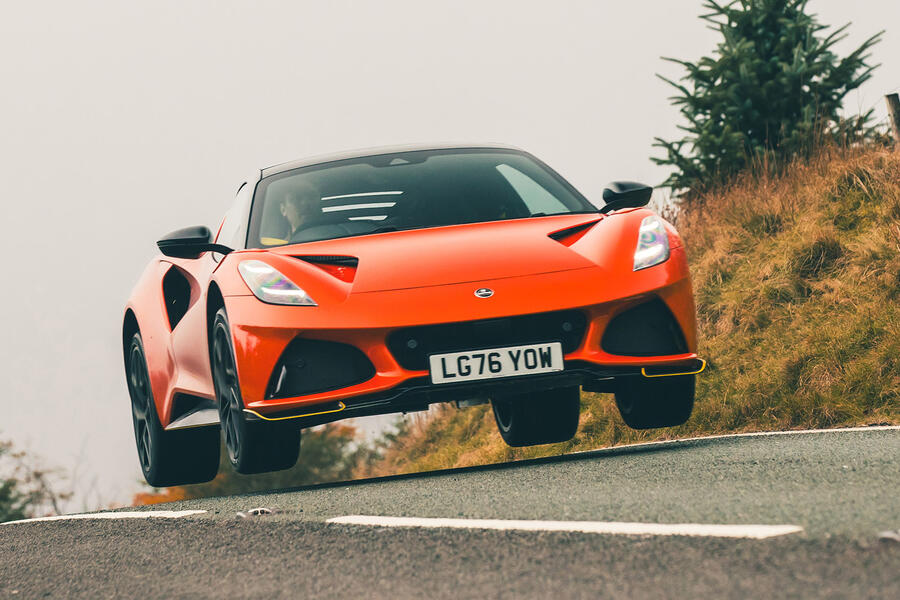
Lotus is clearly the most established (if not the oldest). It's now part of the big Geely machine, but it's wrestling with what it wants to be and is in trouble as much as ever. Case in point: even though the Emira has been on sale since 2021, between bad timing and the PR department going quiet on us in previous years, this is the first time we've had one at our 'Handling Day'.
Back to top

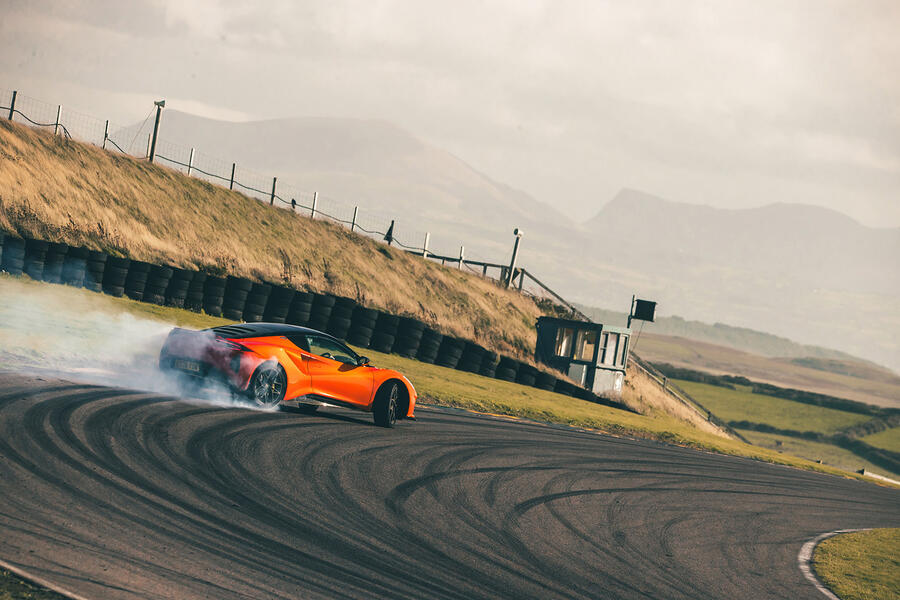
We've extended another invitation to the Emira, because new for 2026 is this 420 Sport. This does, however, exemplify Lotus's identity crisis. The 420 is supposed to be the most driver-focused Emira, yet it's based on the Turbo SE and uses the same 2.0-litre four-cylinder engine and eight-speed dual-clutch automatic gearbox combination from AMG. On the chassis side, it's classic sporty special: more power, carbonfibre bits, titanium exhaust and manually adjustable spool-valve dampers from Multimatic.

The consensus on the day was that the Emira would have done better if Lotus had extended the same treatment to the V6 manual - or just sent us a V6 manual back in 2021. Note to self reads: "A world-class chassis in search of a driveline that is its equal."

Indeed, the judges' notes are dominated by scorn for the gearbox in particular. "The clumsy DCT calibration had me exercising my full gamut of obscenities as it dithered on a rev-limiter upshift or threw in a random downshift," complained Disdale.

In fact, if we're to only go off the notes, you would expect the Emira to finish at the bottom of the pack, so great was the negativity surrounding it. But that's because it's hard to comprehend how this slacker of a gearbox ever got the job. Actually, the Emira posted a respectable sixth-place finish, because in many ways it still serves up the classic Lotus experience that we have loved for the past several decades.

Back to top

The 2.0-litre turbo engine isn't the most charismatic, but its gas turbine/vacuum cleaner impressions garnered some fans, and it does punch hard once it's on boost.

The Emira is probably the most classically pretty car in our group, and while it's bigger than Lotuses of the past, it's still pleasantly B-road-sized. It has lovely and slick hydraulic steering, so no matter how bad the conditions are, you can flow it down a twisty road and revel in the mid-engined balance.

The adjustable dampers were set a bit on the firm side for the road, and the Cup 2 tyres didn't love the standing water, but both helped to make it a very effective and enjoyable track car. Get into it after one of the big estate cars and it's refreshing how it strips away the nonsense and lets you get on with carving better lines and thinking about your braking points.

It will do the silly stuff too once you've pulled into the pits to turn off the stability control, which you can do only when stationary. Instead of relying on clever torque-vectoring systems to chuck power to an outside wheel, you need to plant the front end and unload the rear axle before giving a bootful. If you manage to work with the engine and gearbox, the Emira provides a really engrossing old-school experience.

But the gearbox remains a problem. It's one for which Lotus can't carry all of the blame, given that it buys it in from Mercedes-AMG.

Back to top

Perhaps Lotus should have chosen more wisely and followed the example of Morgan. The Malvern concern has had a long-standing relationship with Munich for its V8, four-cylinder and straight-six engines. And since it abandoned its horse-and-buggy-era chassis in 2019 for something that can deal with the power, it has blossomed into a maker of sports cars that deserve to be taken seriously.

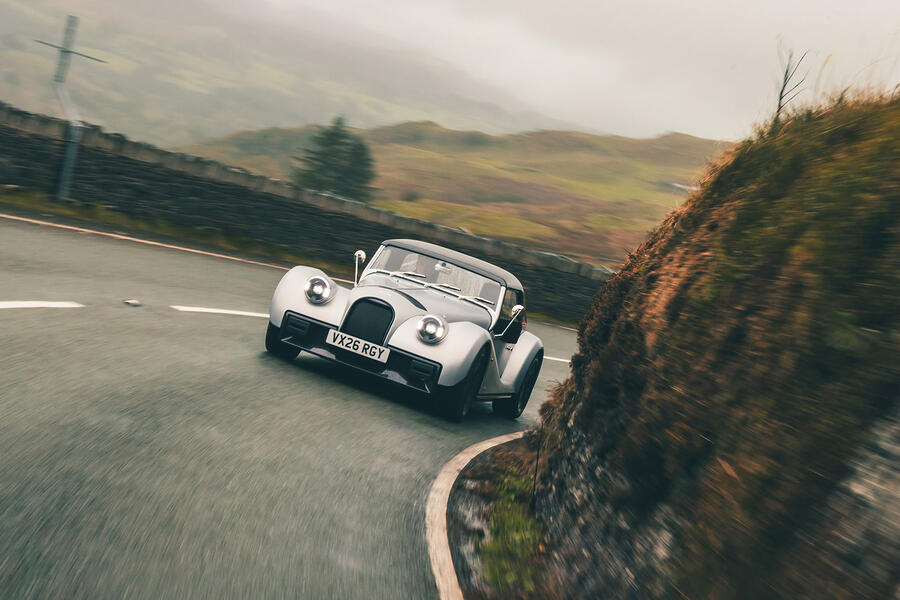
Still, there is the suspicion that it's getting ideas above its station, because with the Supersport 400 it's also doing the 'hardcore special' thing. We really like the regular Supersport, but it remains a car that makes up with character what it lacks in outright ability. This new 400 version uncorks the BMW 'B58' turbocharged six to 402bhp, but the chassis isn't wildly different. It gets the adjustable dampers from Nitron as standard, as well as Michelin Pilot Sport 5 tyres and revised geometry, but this is no GT3-style makeover.

In a group of fairly buttoned-down serious performance cars, the Morgan feels like a bit of a hot rod. Or according to Saunders: "A Morgan this fast is a riotous thing, even if it does feel, at times, like a bit of a danger to public health." It's certainly an event at all times.

On a circuit, you could surprise plenty of track-day goers with a Supersport, because the light weight means it monsters the straights without tiring out the brakes. Ultimately, the Supersport doesn't seem massively interested in setting fast lap times - as evidenced by the 2.7sec gap to the Emira. If you're in the mood for its brand of slightly approximate fun, though, it is hilarious. It pitches and dives under acceleration and braking, which helps you to back the car into corners and ride out big drifts.

Back to top

Look at it as if Cruella de Vil is pursuing a motor racing career. It attracts positive comments everywhere, and getting behind the wheel makes for welcome respite from the screens that dominate most modern cars. Style isn't our concern here, but the driving position is surprisingly good and the seats are supportive.

With the standard sports exhaust, the Supersport lets loose the full rasp of the straight six. Its 402bhp meets an 1170kg kerb weight for very serious performance too, and while a six-speed manual would complete the analogue picture, the eight-speed ZF auto does a fine job.

On the wet roads we got served on our first day, the chassis could feel a little twitchy, while the more aggressive geometry makes the steering unhelpfully non-linear. Once you settle into it, though, you discover a handling balance that's classically front-engined and rear-driven.

Lane even called it "fairly balletic" and, like the Lotus, it's quite compact, so you have lots of road to play with. Also like the Lotus, this car's dampers were set a bit too firm for the road, and you can't ignore the Morgan's rough edges. Its less than perfectly rigid structure can shimmy alarmingly, and there is a lot of bluster from the plastic side windows.

Like with the Lotus, we can't help wondering if the wrong version of Supersport made it to Handling Day, and whether the 400 trades a bit too much of the standard car's on-road insouciance without being able to match the outright ability of the performance car heavy-hitters. It's still an utterly charming thing, though, and an eighth place overall is a respectable result for Morgan.

Back to top

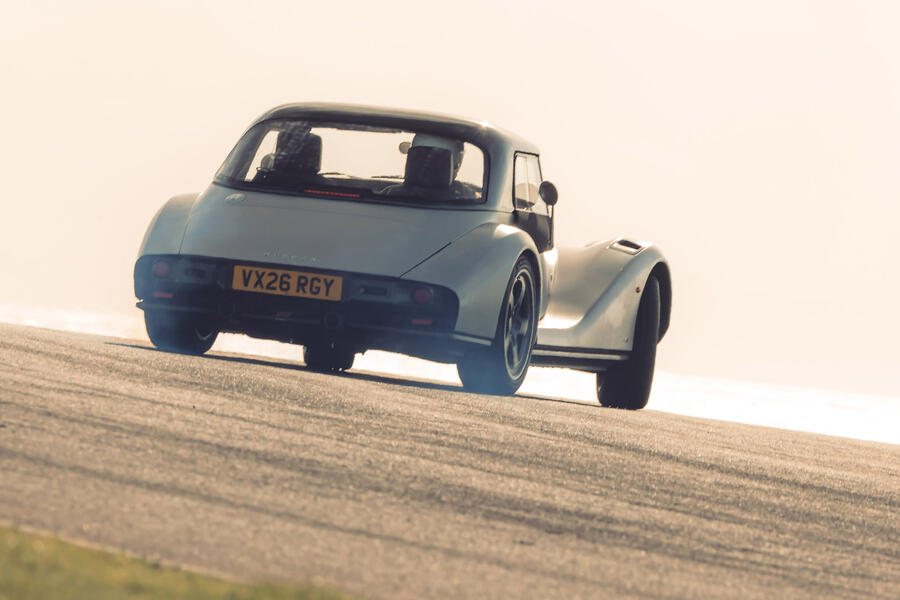
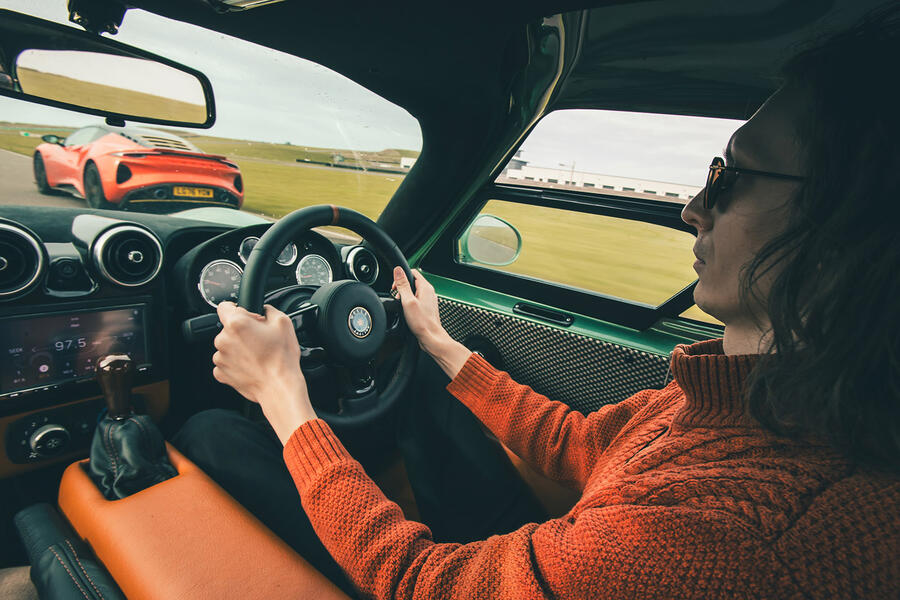
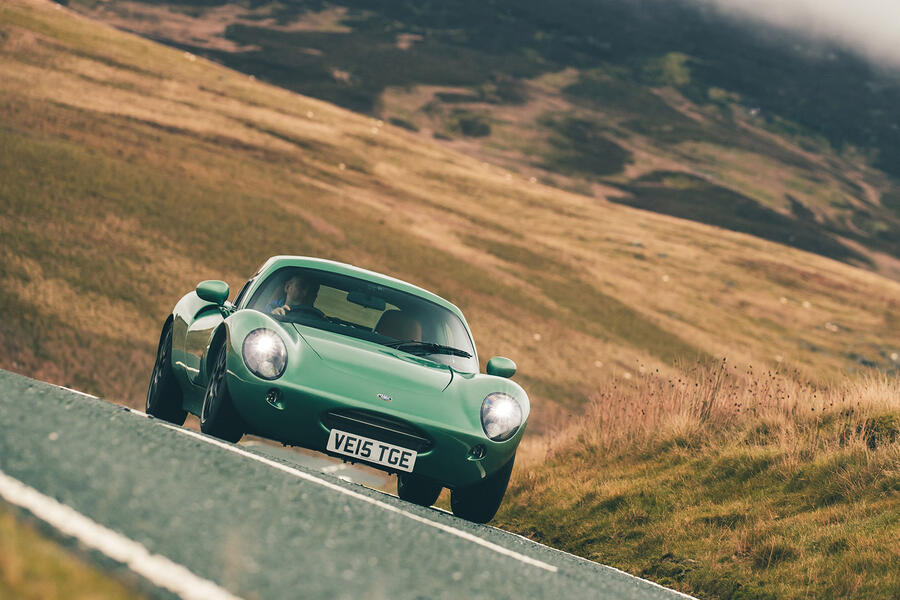
But somehow this year's wildcard near-unknown rocketed past it. Inviting the Wells Vertige was one of those gambles that sometimes ends in a car falling apart both figuratively and literally. The little Vertige had its share of critics, but the car itself didn't miss a beat, and it finished a mere two points from the podium. That's not bad for a tiny and brand-new outfit.

I call it the 'little Vertige' partly out of affection and partly because its physical size was its greatest handicap. None of our judges could fully get comfortable behind the wheel, and poor Saunders couldn't even close the door at all when wearing a helmet. Luckily Prior was on hand to set a lap time instead.

Knowing that there is no power steering or power brakes, never mind ABS or stability control, the compromised driving position makes for a certain intimidation factor. You can't help wondering: "If it steps out, will I be able to catch it?" It's a car that I wish I had driven on track before I drove it on the road, because when you have a bit of space to play with, you quickly find out that the answer is 'yes', as the Vertige is a honey of a sports car.

You have to really try to get the brakes to lock up, and there's more grip than you might think. The unassisted steering will tell you exactly when the front axle does run out of grip and, because there's some give in the suspension and the tyres are fairly modestly specified, it's superbly progressive over the limit.

Back to top

This is one of those cars that drives how it looks. True to the 1960s styling, it rolls a lot and doesn't really have modern amounts of grip, but everything is so tactile, so communicative and so friendly in its responses. For Disdale, the supple suspension set-up called to mind "a mash-up of Lotus and Mazda MX-5, in a good way".

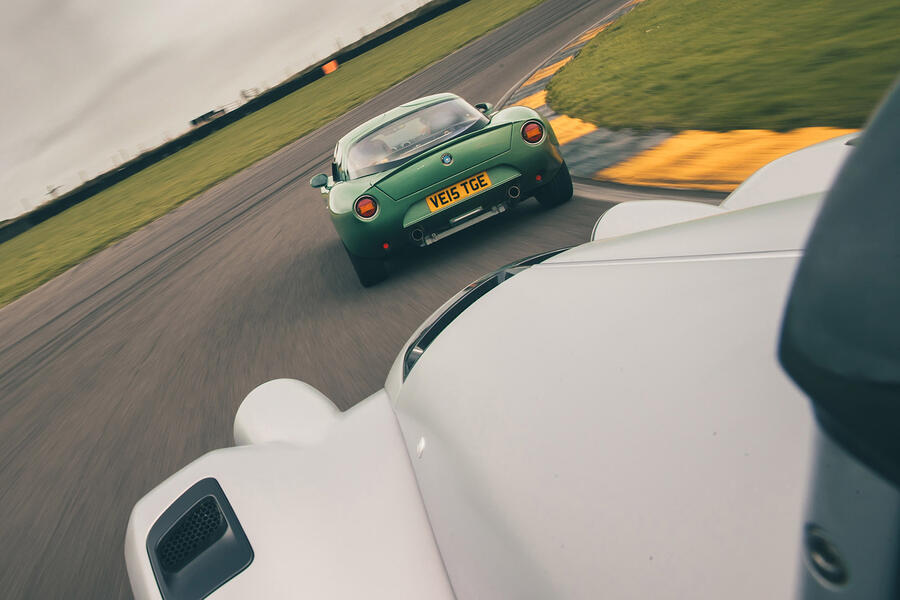
On track, the exaggerated intake bark from the carb-aping Jenvey throttle bodies on the 2.0-litre Ford Duratec makes the Vertige sound a lot faster than it is, but the theatre and the involvement from the manual gearbox mean you could have a whale of a time being the slowest person on a track day. The same applies on the road: because you have so much to do, it's the only car here that's truly fun at two-tenths' commitment.

For me, the way the Wells serves up the maximum of fun at the minimum speed made it my winner, but my colleagues took greater issue at its undeniable failings. Lane called it "idiosyncratic and ergonomically challenging", because the steering is too heavy, the gearchange lacks self-centring force and the engine is too loud for too little performance. Still, even Saunders admitted: "I'm glad it did so well, because it's small and light and authentic - and it's entirely devoted to making every drive more of an event."

Visit autocar.co.uk tomorrow for the concluding part of this year's Britain's Best Driver's Car contest

Join our WhatsApp community and be the first to read about the latest news and reviews wowing the car world. Our community is the best, easiest and most direct place to tap into the minds of Autocar, and if you join you’ll also be treated to unique WhatsApp content. You can leave at any time after joining - check our full privacy policy here.

Illya Verpraet

Illya Verpraet Road Tester Autocar
Title: Road Tester

As a road tester, Illya drives everything from superminis to supercars, and writes reviews and comparison tests, while also managing the magazine’s Drives section. Much of his time is spent wrangling the data logger and wielding the tape measure to gather the data for Autocar’s in-depth instrumented road tests.

He loves cars that are fun and usable on the road – whether piston-powered or electric – or just cars that are very fit for purpose. When not in test cars, he drives an R53-generation Mini Cooper S or a 1990 BMW 325i Touring.