
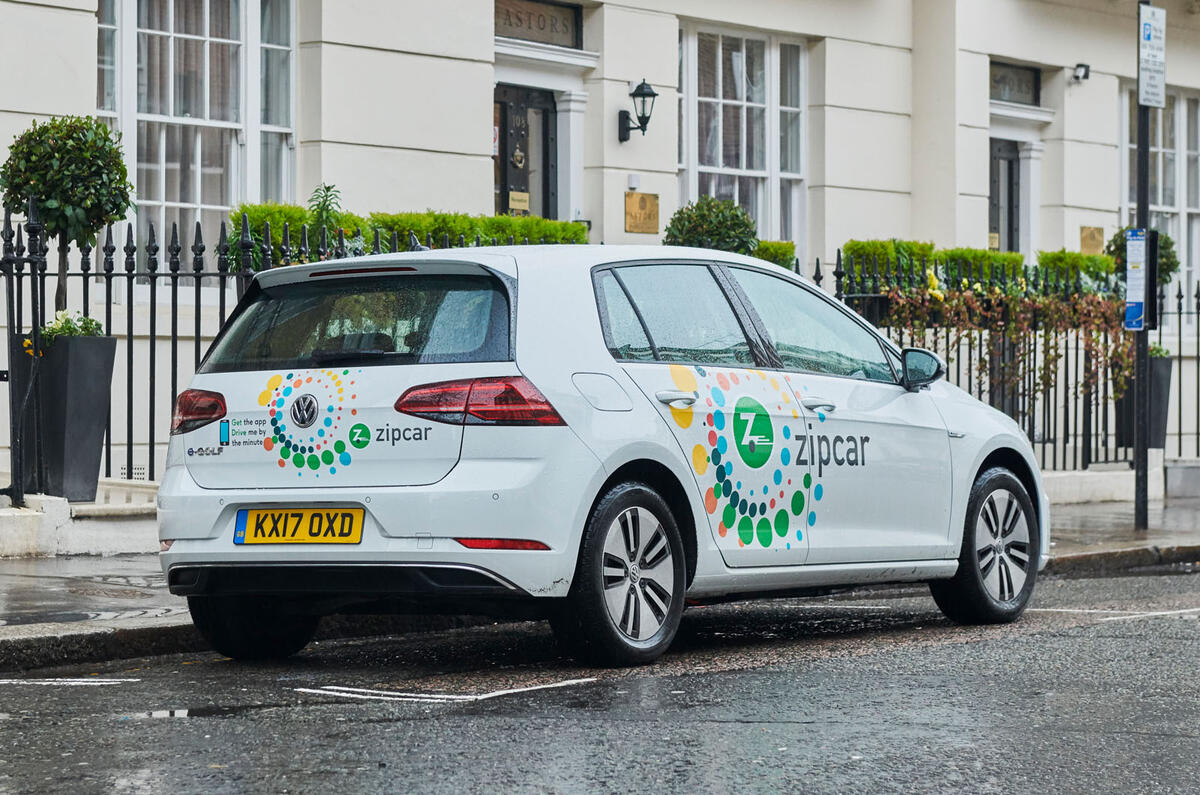
News that Zipcar is poised to shut its doors on its only remaining UK operation (in London) has prompted an outpouring of frustration from loyal users.
The restaurant critic Jay Rayner posted on Bluesky that he was “dismayed” by the decision. “The car club availability was at the heart of our decision to abandon car ownership around five years ago," he added.

Car sharing schemes (sometimes known as car clubs) are on the rise in Europe, with the number of vehicles available across the region up 8% last year to 129,000, according to a November report by car sharing tech company Invers.
In the UK, though, this alternative to urban car ownership has regressed. Despite being the second most populous European country, the UK had a shared-car fleet of just 5477 in 2024, compared with 45,400 for Germany and 13,862 for France. And the exit of market leader Zipcar and its fleet of nearly 3000 cars and vans would dramatically shrink that figure.
So why have car share schemes fared so badly in the UK?
Car sharing took off in urban areas as an smarter alternative to classic rental companies, thanks to technology that allowed members to unlock street-parked cars. Infrequent drivers could ditch car ownership in the knowledge that they could call on a handy alternative for trips when only a car would do, such as Ikea visits.
“Paying around £1,500pa for a car that’s going to be sitting idle for 98% of the time seems bonkers,” one user wrote underneath Rayner’s post.
Zipcar’s announcement that it will halt UK bookings at the end of the year should be a wake-up call for government officials at local and national level, the head of shared-transport charity CoMoUK told Autocar. “It’s been brewing for a long time. There’s been a real lack of policy,” Richard Dilks said.
Car sharing companies face multiple hurdles in rolling out and achieving profitability that the UK has done little to address, in contrast to countries and cities elsewhere across Europe. “There has been very little positive facilitation. In fact, we’ve seen the opposite,” Dilks said.
For example, London boroughs typically charge car clubs 10 times the amount to street-park their cars than it charges residents for permits to park their own vehicles. Dilks cites the case of one London borough that wanted to charge 28 times the amount.
The lack of joined-up thinking among London’s 32 boroughs, plus the City of London and the overarching (but often toothless) Transport for London (TfL) authority has long frustrated car sharing companies.

Add your comment