
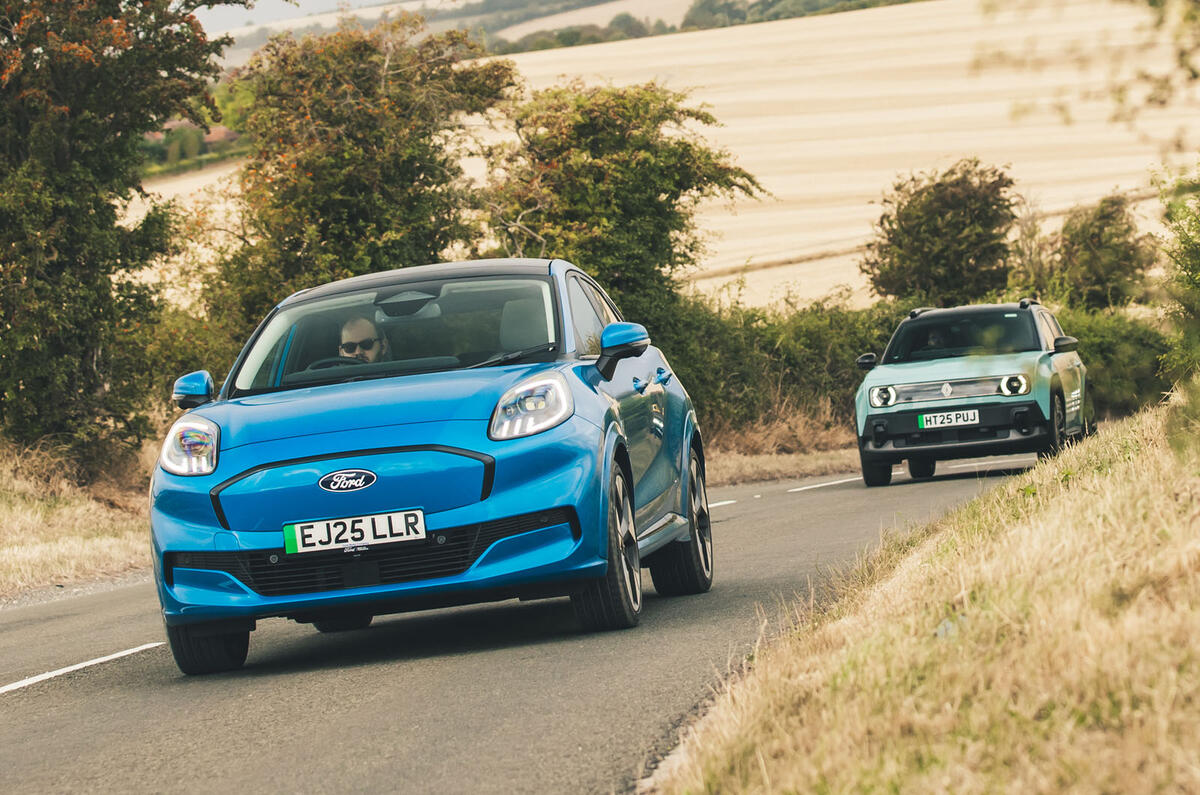
Renault’s coup in landing Ford as a customer for the small EV platform underpinning the 5 is all the more impressive given Ford’s already deep relationship with the Volkswagen Group on EVs.
Ford currently builds the Explorer and Capri electric compact SUVs on the German company's MEB EV platform at its plant in Cologne, Germany, and the two maintain broader co-operation on vans.

So when Ford went looking for a platform for an electric replacement for the Fiesta supermini, the obvious choice would have been Volkswagen's new truncated, front-wheel-drive MEB Plus.
Volkswagen's small EV push will start next year with the ID Polo, built alongside the Cupra Raval, and the platform could have easily supported a Fiesta replacement and a planned second model, likely to be a small SUV. Volkswagen's platform offers those too in the form of the upcoming taller ID Cross and Skoda Epiq.
But the advantage of loose partnerships rather than something more formal is that you can shop around. Ford did and found a better alternative.
Ford CEO Jim Farley told journalists this wasn’t a case of “lovers looking for new lovers” but something more pragmatic.
“First of all, we have deep understanding of Volkswagen's industrial system," he said. "We industrialised the MEB platform in Cologne. We build their platform. We know their supply chain. We know their cost. And you know, we understand their strength and their opportunities."
Farley said Ford made a “thorough investigation for multiple years” in its search for the right platform for the Fiesta replacement, confirming reporting from 2023 that the end of the ICE Fiesta wasn’t the end of Ford’s journey in small cars in Europe.
Then Renault came calling. Former CEO Luca de Meo and current CEO François Provost, then head of partnerships, visited Detroit in March this year and proposed building Ford cars on the company’s small EV platform built in its plant in Douai, France. Suddenly Ford’s options widened and eventually a deal was struck.
Why did Ford go with Renault? “Not one particular reason, but cost is among the top,” Farley said.
Renault was a late runner in the decision, but its success in brining Ford into its electric Ampere stable is a significant win in the teeth of competition from Volkswagen, with its far bigger sales.
We don’t know the picture from the perspective of Volkswagen, which might not have been able to accommodate Ford at its two plants in Spain that are poised to make small MEB EVs.

Add your comment