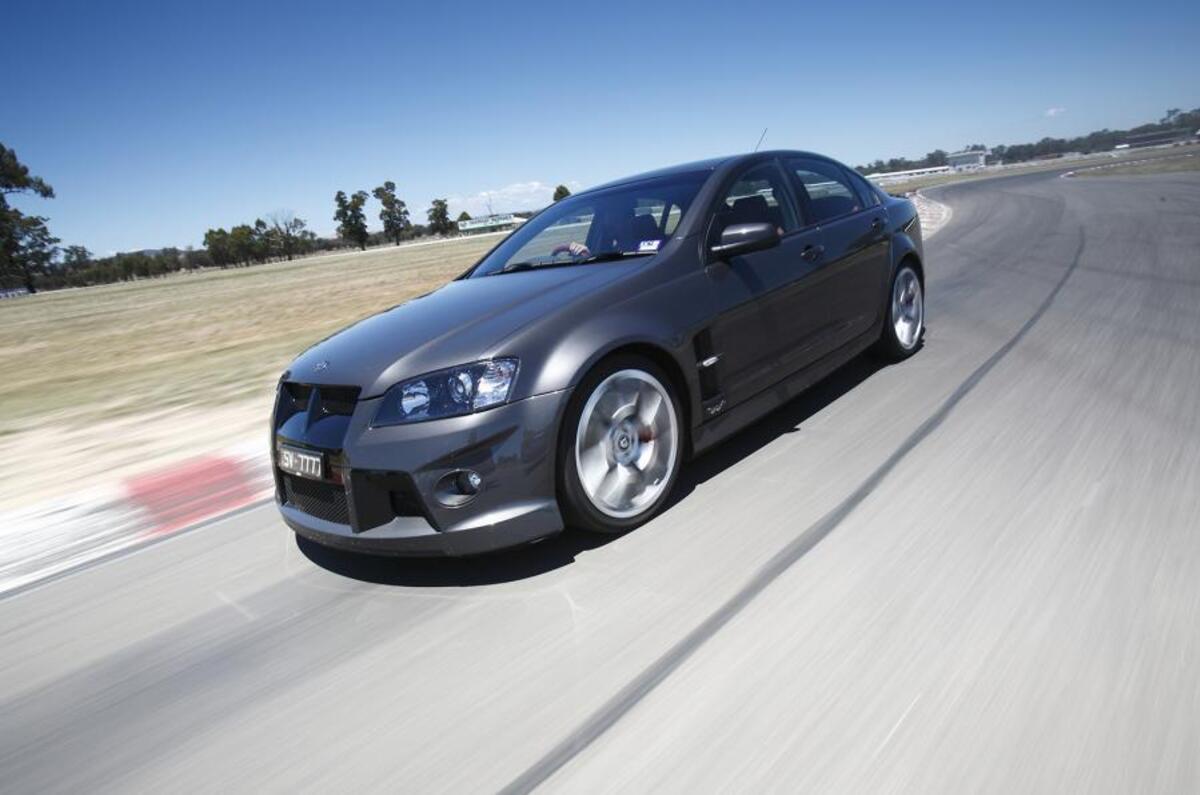

The Holden brand will be axed by parent company General Motors (GM) by the end of 2021, ending the storied Australian brand’s 164-year history.
The company, founded in Melbourne in 1856, has been owned by GM since 1931. It dominated the Australian and New Zealand car markets for decades, but its market share slipped dramatically in recent years and it began to post heavy losses. In 2017, GM shut down Holden's manufacturing operations in Australia, leaving the firm selling a mix of imported and rebadged Opel and GM machines.
Steve Cropley: Holden's demise is sad, but inevitable
Julian Blissett, GM International Operations’ senior vice president, said that Holden would be “retired” because GM felt the investment required to make it competitive in the Australian and New Zealand markets outweighed the likely return. The American car-making giant said the decision was part of its efforts to "transform its international operations".
“Through its proud 160-year history, Holden has not only made cars, it has been a powerful driver of the industrialisation and advancement of Australia and New Zealand,” said Blissett. “Over recent years, as the industry underwent significant change globally and locally, we implemented a number of alternative strategies to try to sustain and improve the business, together with the local team.
“After comprehensive assessment, we regret that we could not prioritise the investment required for Holden to be successful for the long term in Australia and New Zealand, over all other considerations we have globally. This decision is based on global priorities and does not reflect the hard work, talent and professionalism of the Holden team.”
Blissett said GM’s would focus its future growth strategy in Australia and New Zealand on speciality vehicles, working with a number of partners.
GM boss Mary Berra added: “I’ve often said that we will do the right thing, even when it’s hard, and this is one of those times. We are restructuring our international operations, focusing on markets where we have the right strategies to drive robust returns, and prioritising global investments that will drive growth in the future of mobility, especially in the areas of EVs and AVs."
In response, Australian prime minister Scott Morrison said that he was "disappointed but not surprised. But I am angry, like I think many Australians would be." He added: "Australian taxpayers put millions into this multinational company. They let the brand just wither away on their watch. Now they are leaving it behind."
GM Holden’s managing director, Kristian Aquilina, pledged to give the brand a "dignified and respectful wind-down" before operations cease in 2021. He added: ““Holden will always have a special place in the development of our countries. As Australia and New Zealand grew, Holden was a part of the engine room fuelling that development.
“Today’s announcement will be felt deeply by the many people who love Holdens, drive Holdens and feel connected to our company, which has been with us for 160 years and is almost ubiquitous in our lives."
GM is aiming to refocus its international business around its "core markets" of South America, the Middle East and South Korea, with Blissett adding: “In markets where we don’t have significant scale, such as Japan, Russia and Europe, we are pursuing a niche presence by selling profitable, high-end imported vehicles – supported by a lean GM structure."