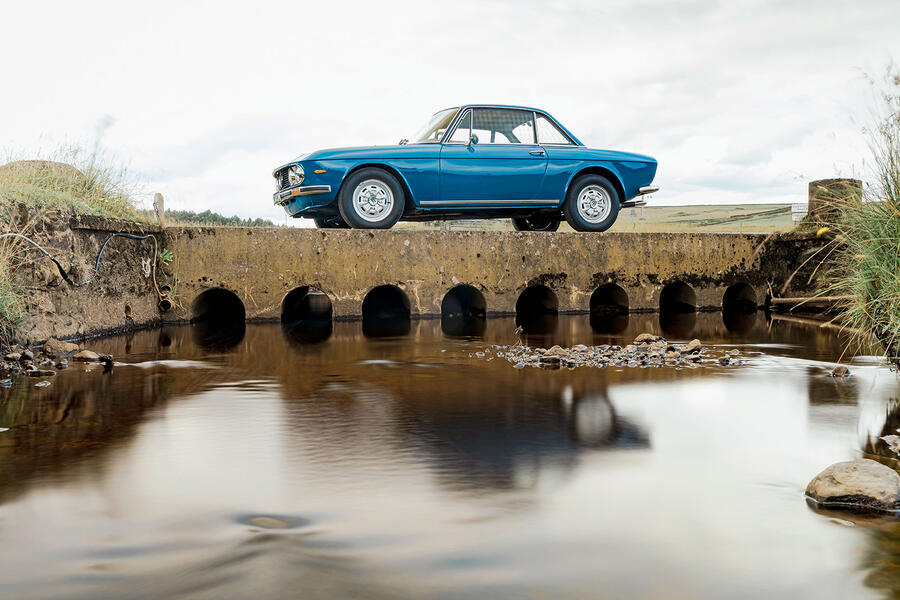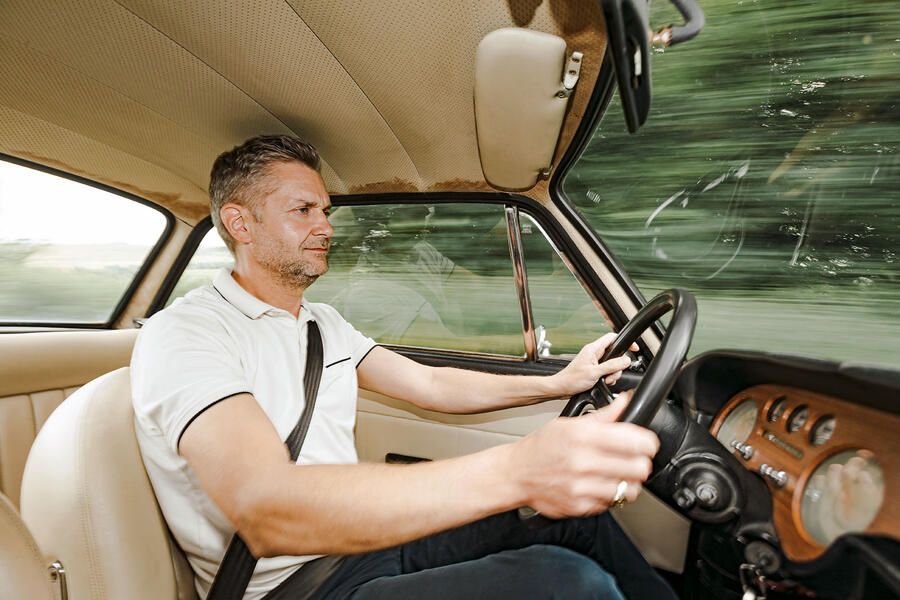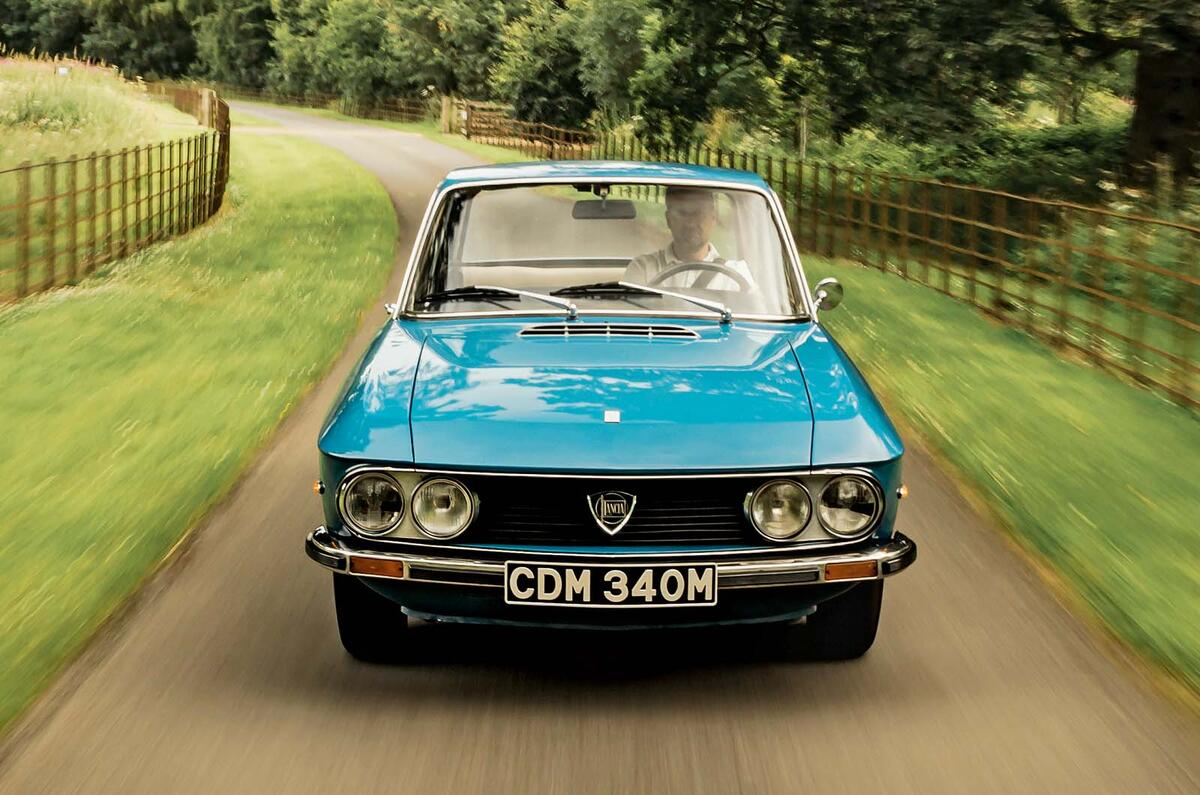

The listing might not have jumped out at me if the same car had been perfectly posed on a turntable in one of those sterile-white studios favoured by the UK’s more aspirational classic car dealers.
But as it was, the pale blue coupé was nestled into a sunlit scene of bucolic Campanian charm, backed by wonky vine posts, verdant meadows, blossoming trees and rugged peaks beyond.
To me, it was a Caravaggio among the classifieds, and I started dreaming of bringing the car back home to Scotland and transplanting a little taste of that scene to our rain-soaked shores, a sort of automotive Portmeirion.
Despite my being a lifelong botherer of Italian cars and chronic Lancia fancier, the Fulvia Coupé 2+2 didn’t steamroll my consciousness like Turin’s incendiary Stratos, 037 or Integrale had.
But its handsome form, intriguing V4 engine and less-heralded rally triumphs (see separate story, right) turned my head, and I was surprised to discover how affordable they were – especially in Italy. This one – a 1974 1.3S – was listed at just £7900.
The car was part of the model’s final iteration, the Fulvia 3, but the first Fulvia Coupé was launched in 1965, with in-house styling by Piero Castagnero inspired by Riva’s exquisite mahogany speedboats.
Mechanically idiosyncratic, it inherited much from Castagnero’s contrastingly quadrate Fulvia saloon: a V4 chain-driven twin-cam engine with only 13deg between its banks and a shared alloy head, and then canted on its side by 45deg and mounted ahead of the front axle, with a four-speed, all-synchromesh gearbox driving the front wheels.
Double wishbones and a transverse leaf spring suspended the front end, with longitudinal leaf springs and a dead axle behind, while all four corners boasted disc brakes.
The complex little engine started at 1216cc and 80bhp (it was a 100mph car even at that), growing through 1231cc and 1298cc to 1584cc.
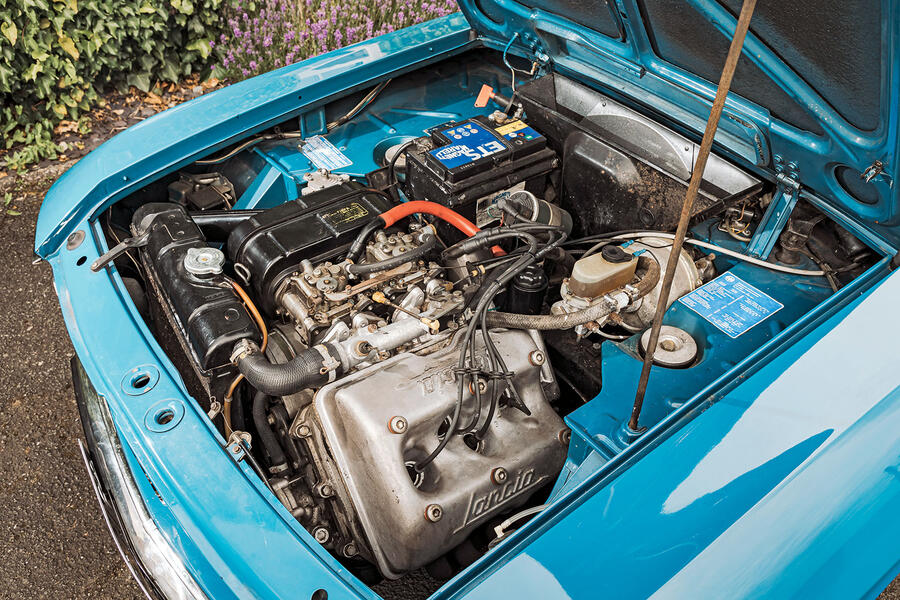
The first high-performance ‘HF’ version mined an extra 7bhp from the 1216cc unit via uprated camshafts, manifolds and carburettors, and it was slenderised via thinner steel with aluminium for the door skins and bonnet, shedding 125kg to tip the scales at a flyweight 825kg.
This was road car engineering the Lancia way, and to hell with the bean-counters.
The hottest production model arrived in 1969 as the 1.6-litre, five-speed Rallye HF. This series of 1258 cars was known as ‘Fanalone’, meaning ‘big headlights’, due to upsized, 7in inner lights.