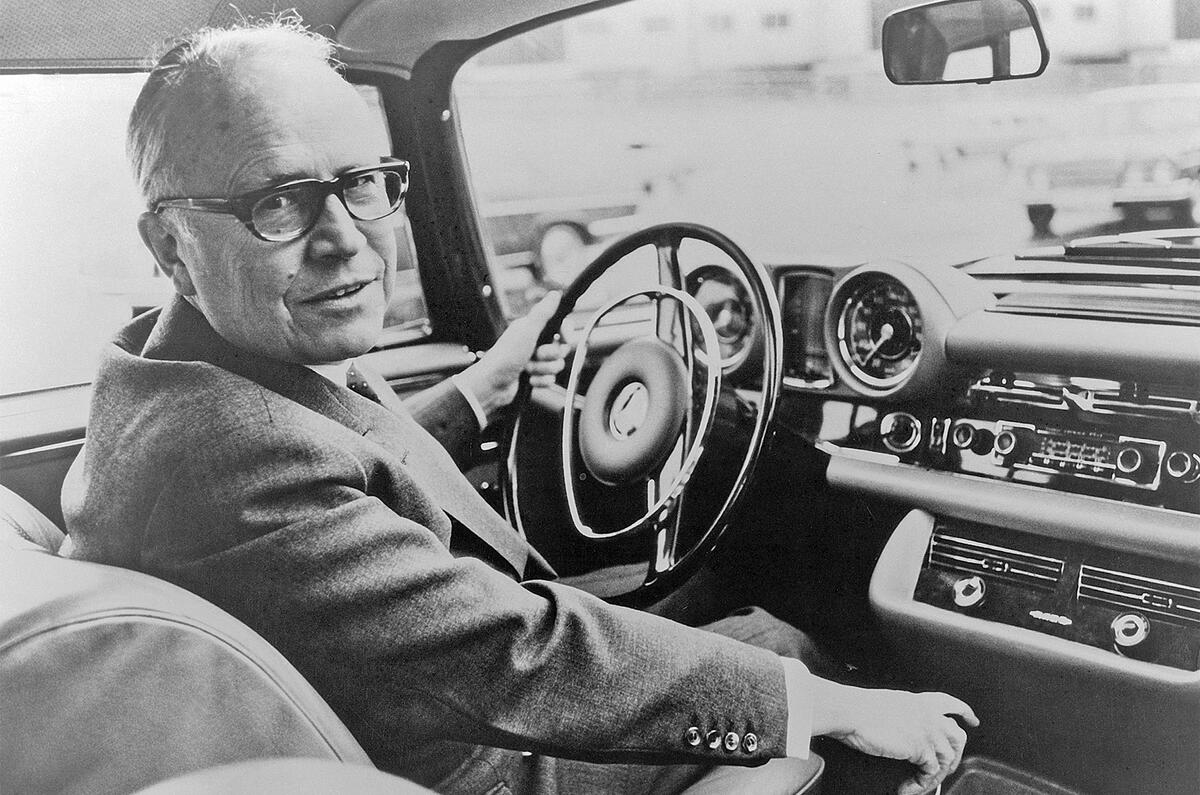

Who would envy Ola Källenius, tasked as he is with keeping the juggernaut of Mercedes-Benz driving forward through a tornado? Surely nobody. But if anybody could provide this CEO with reassurance, it would be one of his predecessors, Joachim Zahn, under whom the German manufacturer emerged from the strikingly similar storm of the 1970s not merely intact but in better shape than ever before.
Autocar first interviewed Zahn in June 1972, a year after he’d been appointed president of Mercedes’ parent company Daimler-Benz, after 13 years as its finance chief.
“Just look at what has happened in the last 10 years,” he implored, gesturing at the various charts and tables spread across his desk. “We’ve now reached a saturation point in Europe. What worries me in this context is that many manufacturers keep increasing their production potential. We’re moving towards a useless and definitely dangerous state of over-equipment.”
As the economies of Western Europe were successfully rebuilt after the war, demand for cars had outstripped supply, because most people had never been able to afford one before – fuelling rapid growth of British, French, Italian and West German car firms. By 1965, though, signs that the democratisation of motoring in the region was nearly complete were starting to appear.
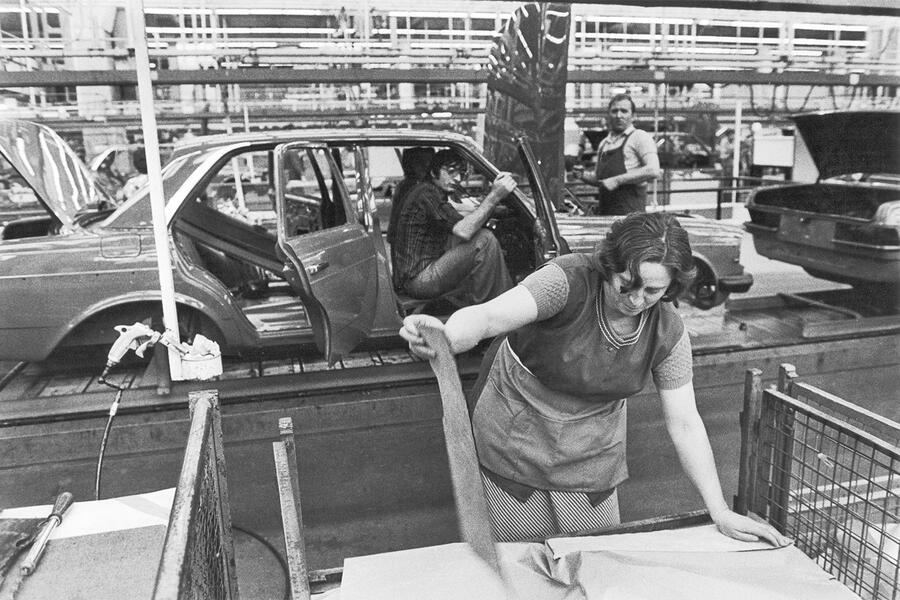
Inflation had then begun to outpace workers’ wages, leading unions to organise frequent strikes at car factories. And matters got even thornier when the US tried to escape its own economic strife by unpegging the dollar from gold, as this messed with exchange rates.
“The psychological environment and strength of anti-establishment demonstrations add to the other threats weighing on the industry,” acknowledged Zahn in 1972. “Our financial results for last year are weaker than before. The strikes in the autumn alone cost Mercedes some 23,000 cars – that is about 7% of production – and 10% of trucks.
“The cost of an unrealistic policy of floating currency and, later, the monetary readjustment have cost German industry. Our costs have grown considerably, while we didn’t increase our prices [for a year] since we wanted to help stop inflation.”
Car makers were also under pressure to reduce road casualties, but Zahn believed Mercedes had by then proven, through hosting a safety conference and revealing an ‘experimental safety vehicle’, “to the men in charge [in the US] that we are full of goodwill, even if a final solution has not yet been found”.