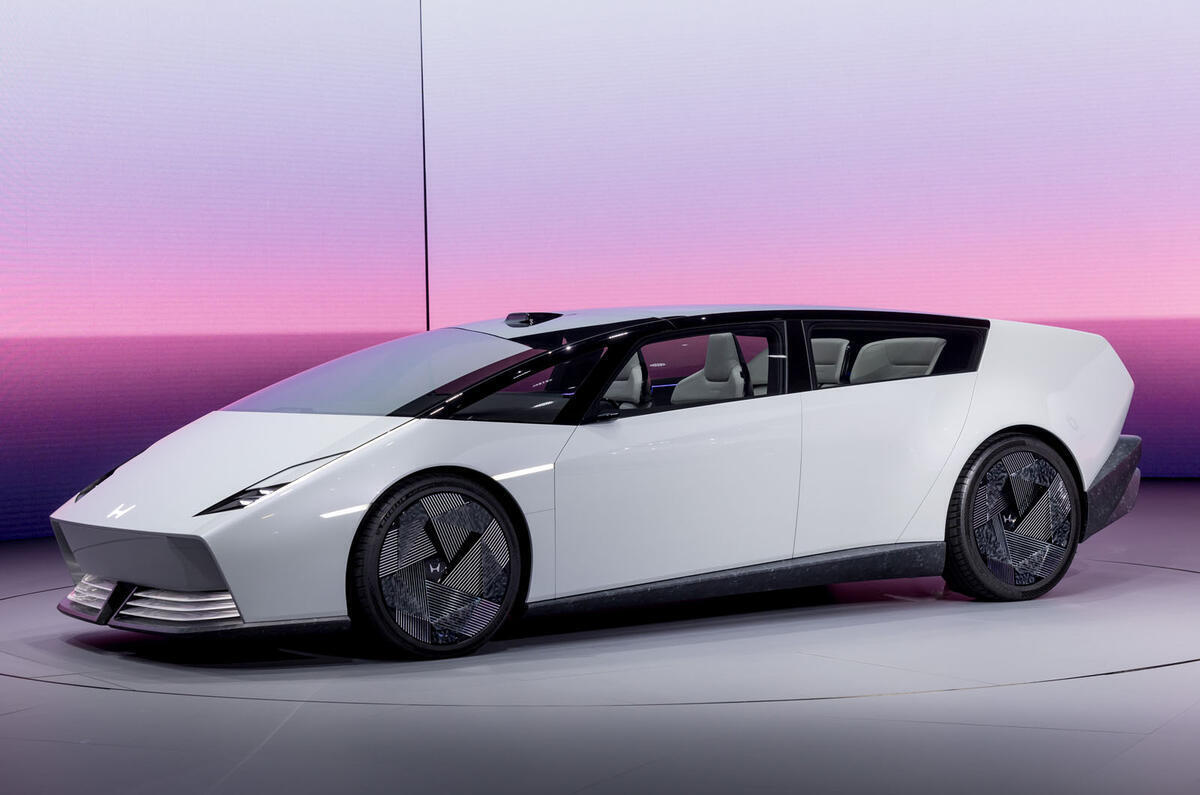

Honda has canceled the 0 Series SUV and Saloon just months before production was scheduled to begin, as it restructures its EV strategy in the face of an “extremely challenging earnings situation”.
The Japanese firm announced on Thursday that the two EVs had been scrapped, just a few months before they were planned to enter production in the US. The US-market Acura RSX has also been cancelled.
The SUV and Saloon were the first of seven planned 0 Series models that Honda previously said would arrive before the end of the decade. But the company said uncertainty and increased competitiveness in the global EV market has prompted it to cancel the programme and write off the heavy costs associated with its development.
These futuristic-looking EVs were to sit on a new bespoke platform developed from a clean sheet of paper. The saloon, first shown in concept form in 2024, was pencilled to go on sale first, followed by the SUV, which was previewed last year.
The write-down decision will result in losses of ¥340-570 billion (£1.6-2.7bn) this financial year (ending at the end of this month), Honda said.
It warned that further losses in the next 2026-27 financial year are expected to result from this decision.
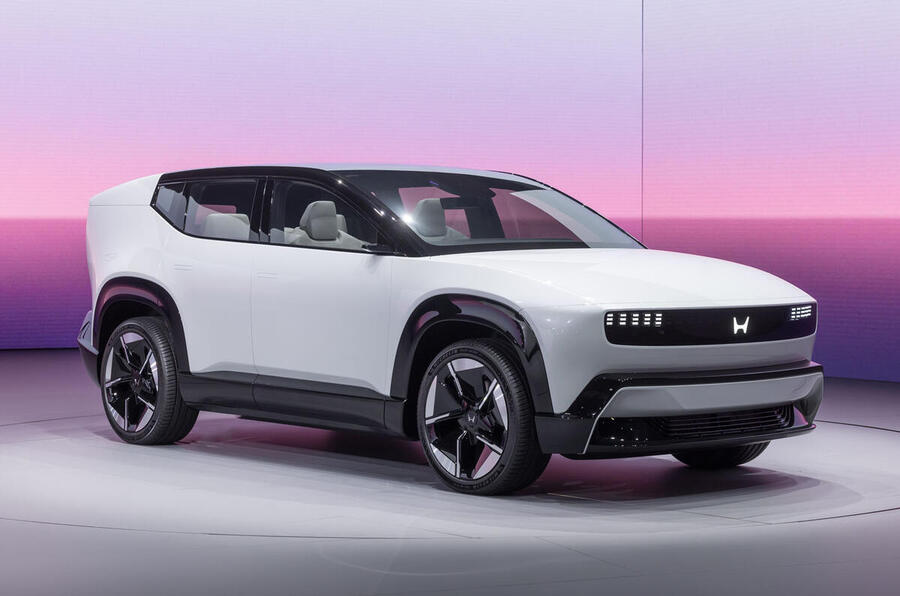
In a statement today, the company said: “Honda determined that starting production and sales of these three models in the current business environment where the demand for EVs is declining significantly would likely result in further losses over the long term."
Explaining this decision, Honda pointed firstly to major changes in the US, where president Donald Trump recently rolled back a string of legislation, brought in by the previous administration, that incentivised both the buying and building of EVs.
This has created an “unfavourable impact” on Honda's business. It added that before the laws were changed, it “pursued EV adoption with strong determination” in the US.
Honda has also struggled in Asia, where there has been a “decline in the competitiveness of Honda products”. The company blamed consumer wants “shifting from hardware features, such as fuel efficiency and cabin space, to software-based features that will continuously advance according to customer preferences”.
It said it was at a disadvantage to react to this, due to new EV manufacturers in China that can “leverage their short product development cycles” to shift scope quickly depending on demand, which has “intensified the competition”.