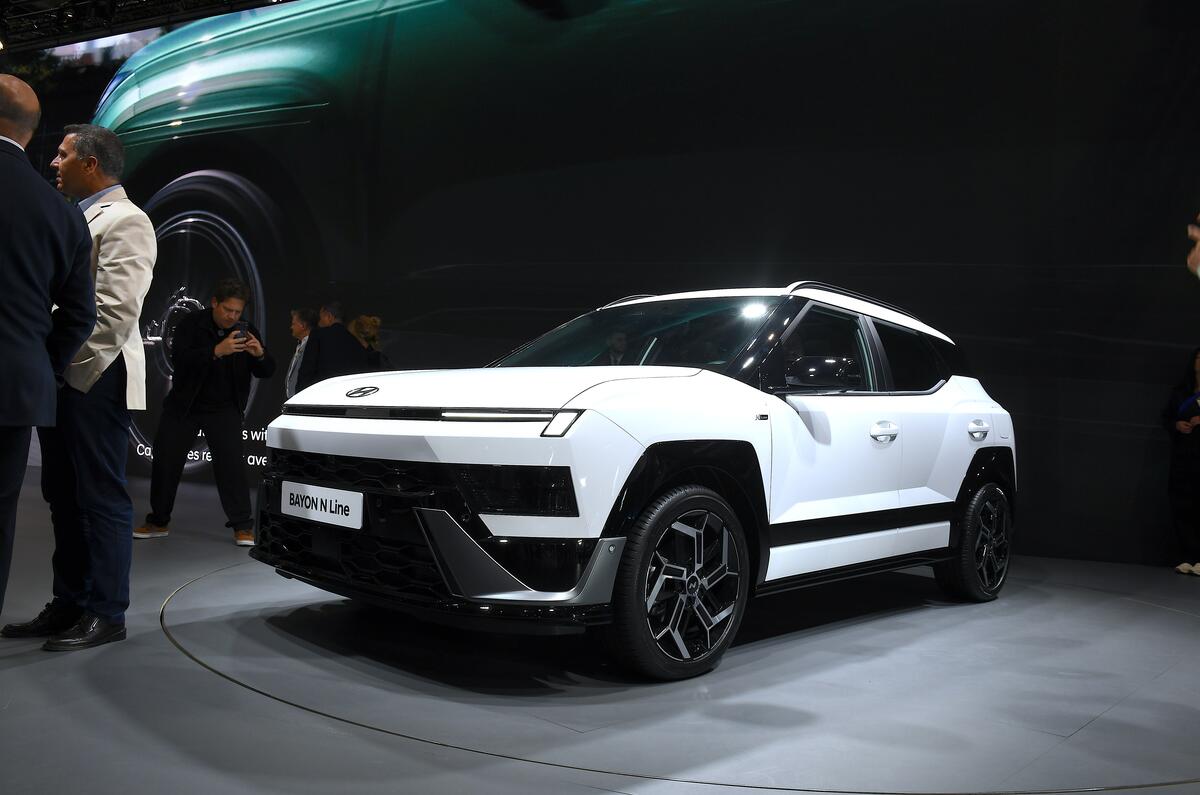
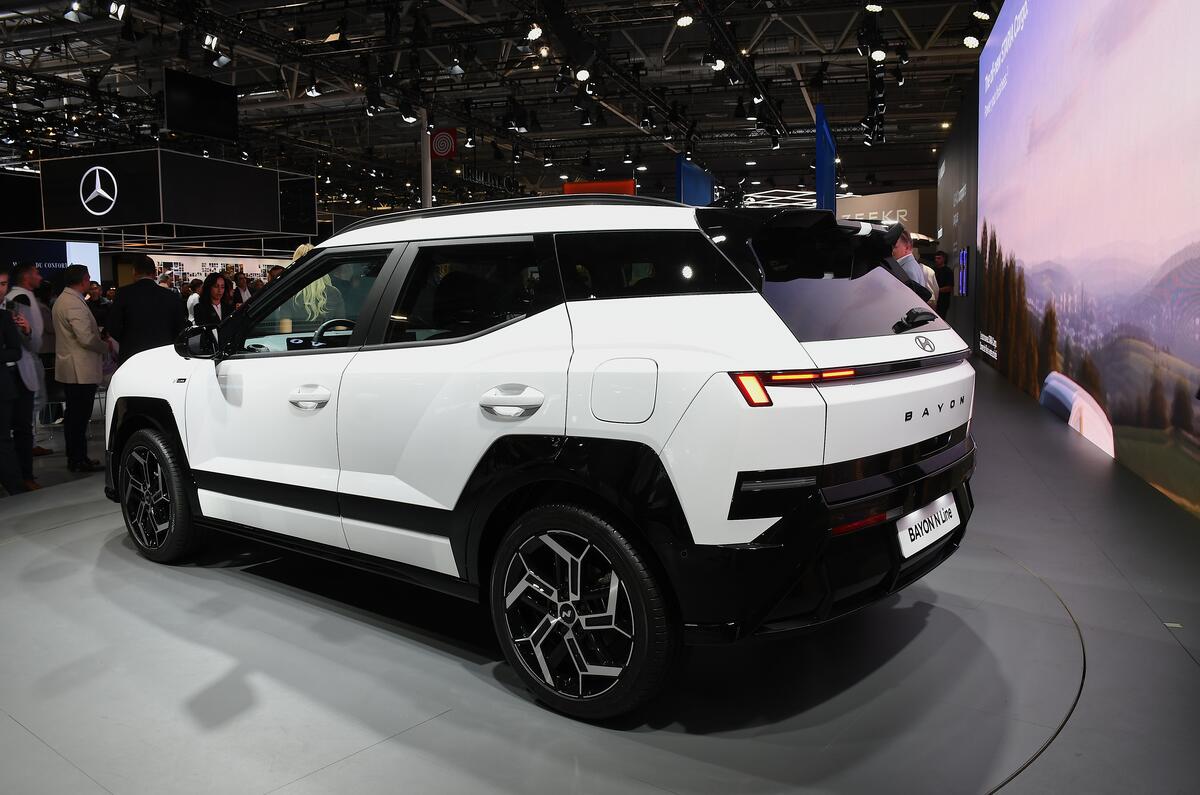
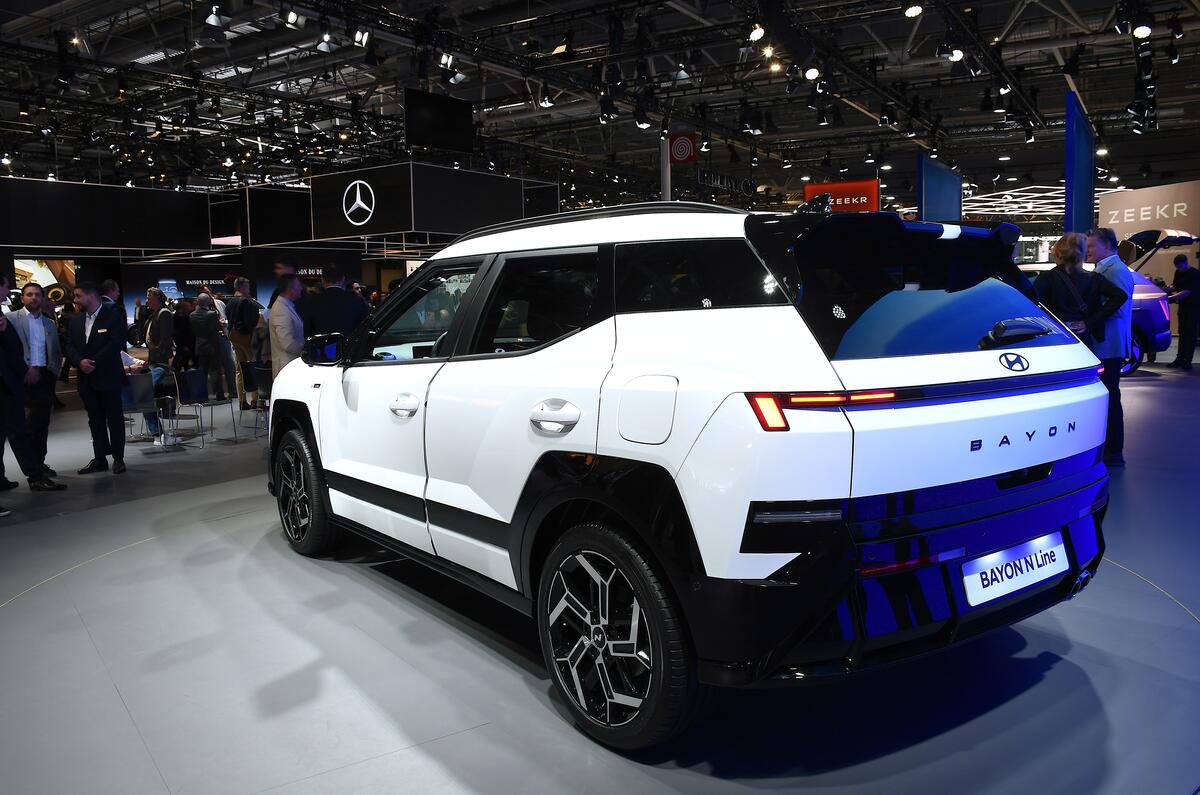
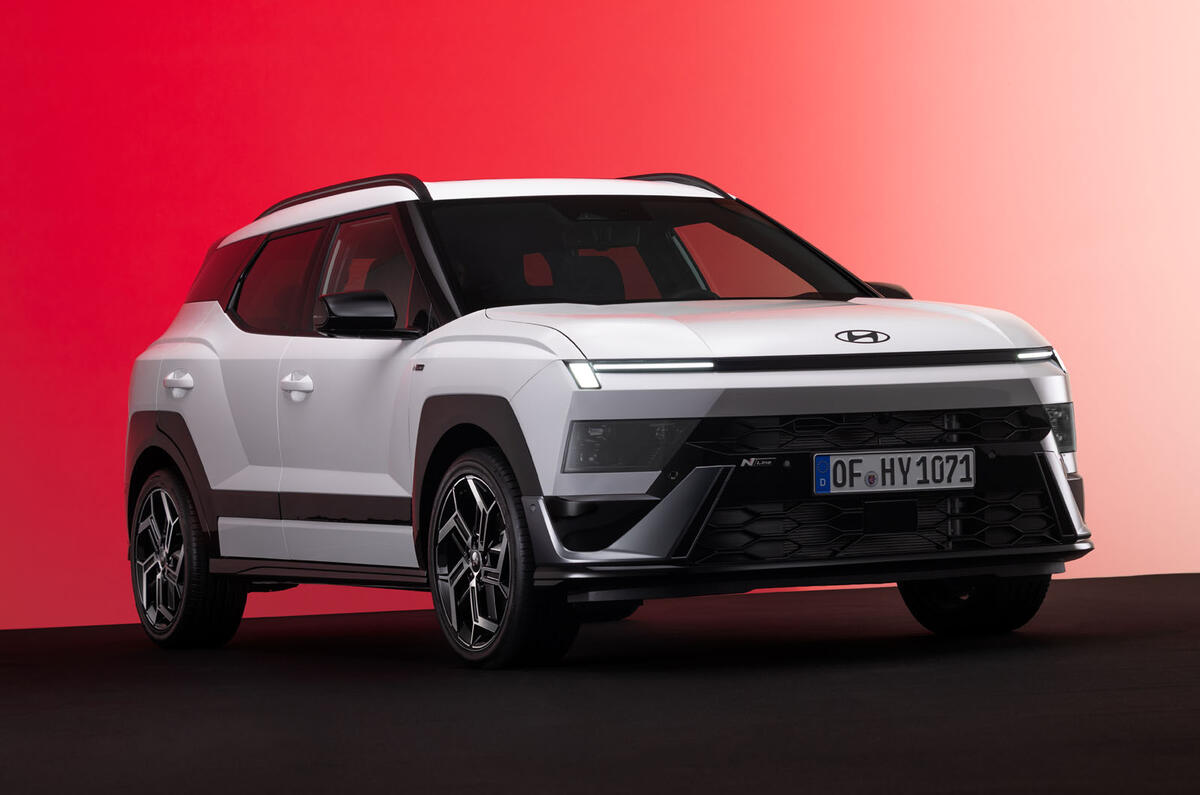
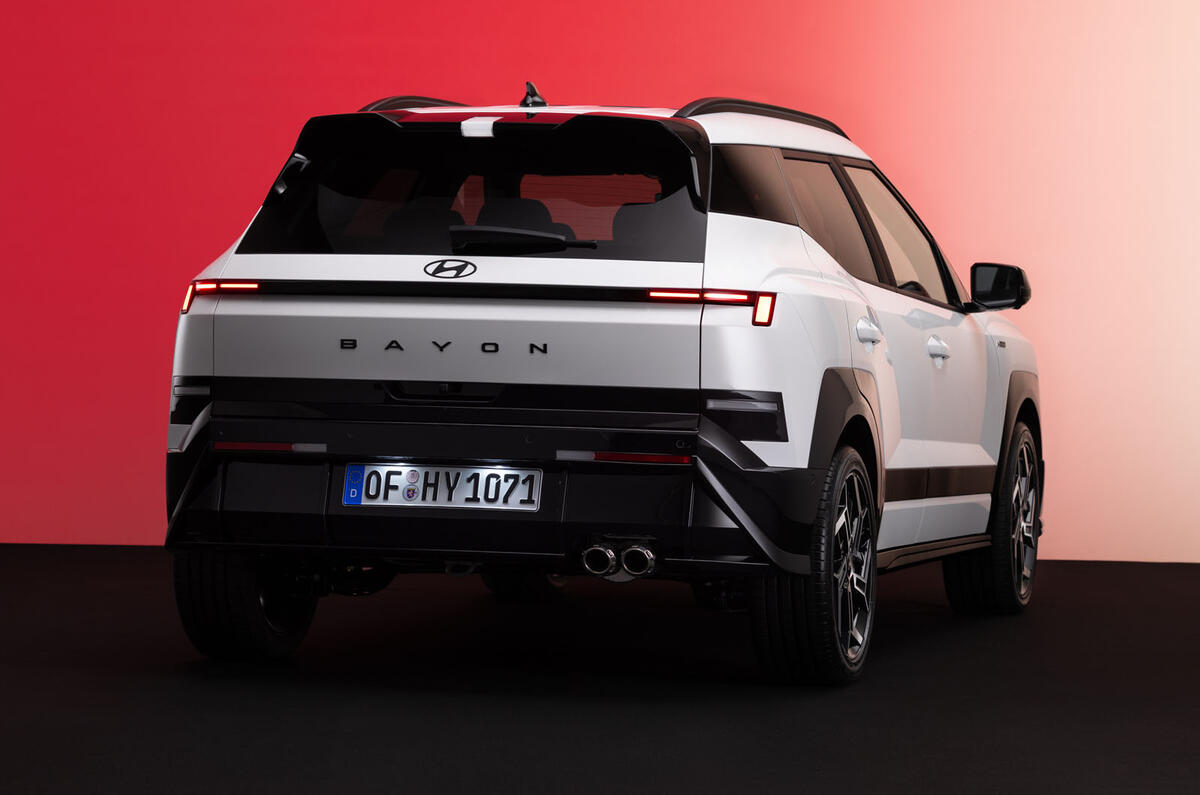





Hyundai has turned the Bayon into a bona fide mini-SUV for its next generation, in a bid to better differentiate it from the related i20 hatchback.
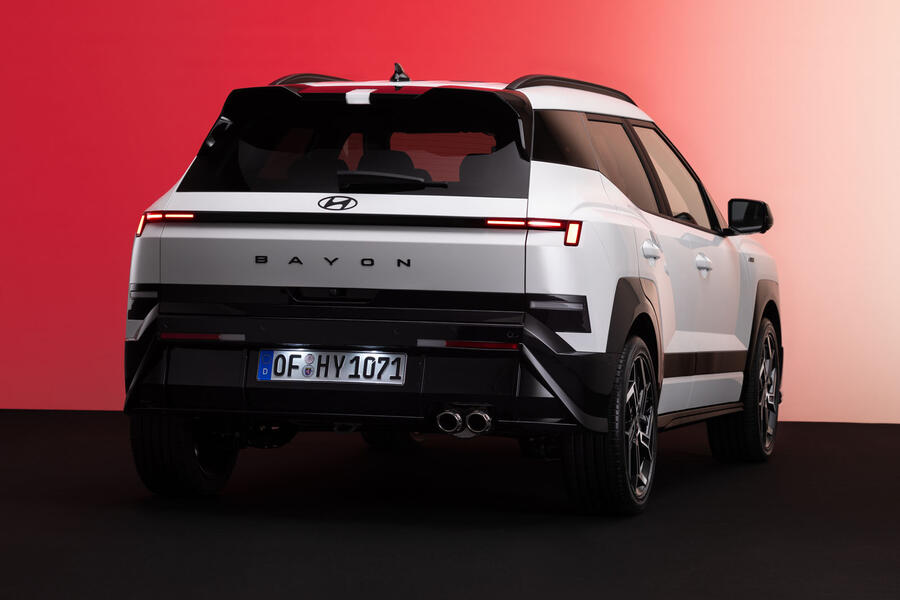
Now slightly longer, taller and wider than before, the Bayon employs Hyundai’s ‘Art of Steel’ design language, manifesting in a boxier look that emphasises hard edges. This was key to making it more obviously SUV-like, despite still being a small crossover.
“Today’s Bayon is too similar to the five-door i20,” Eduardo Ramírez, Hyundai’s European design chief, told Autocar. “That was something we understood: we recognised that we needed to really separate these two products, and it started by defining the Bayon more clearly as a compact SUV with its very distinctive, more robust character, while the i20 remains an i20,” he said.
Christopher McKinnon, Hyundai Europe’s head of product, said that making the Bayon “more SUV” was key to fielding a stronger competitor in one of the most hotly contested classes.
Among Hyundai’s other priorities in making the Bayon more SUV-like was to improve interior space – particularly for passengers sitting in the back.
To that end, its wheelbase is now 20mm longer than before, at 2.6m. The rear seats have two positions – one upright and another with a slight recline – and the middle seat can be folded out to give the other passengers in the back an armrest and cupholders. Boot space measures 440 litres.
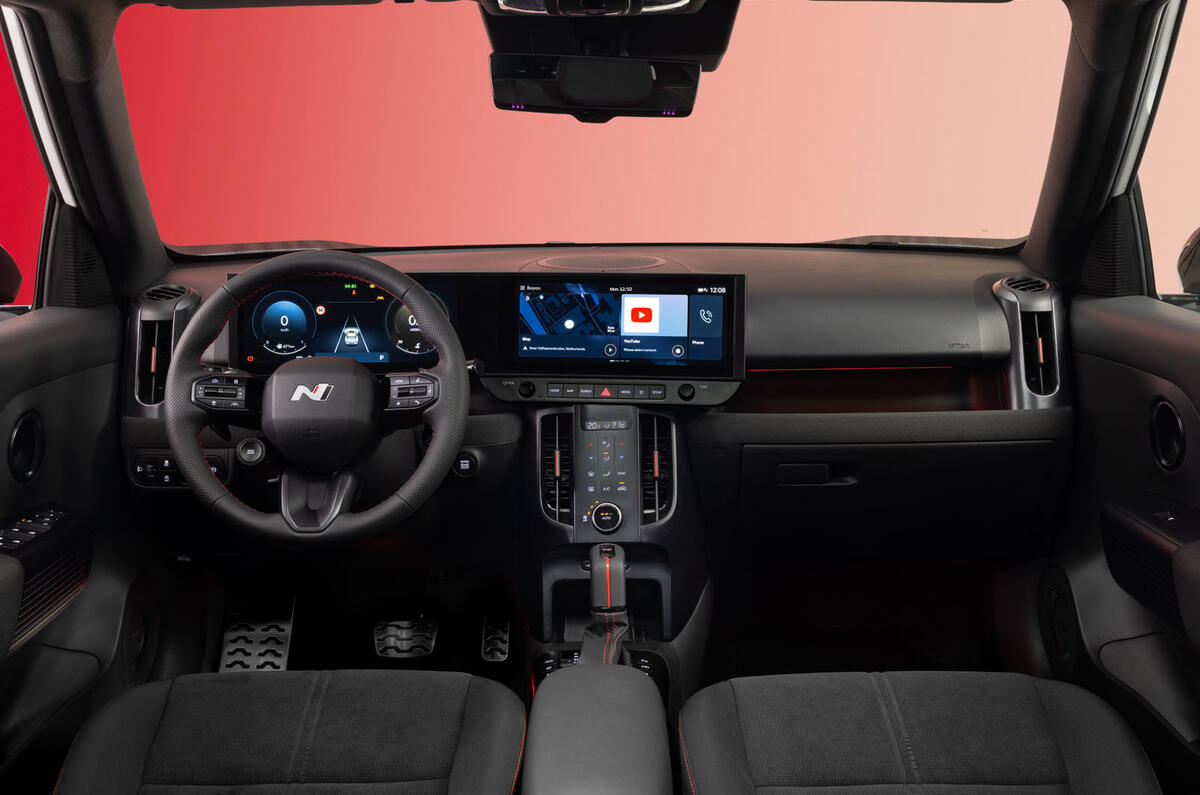
Up front, the Bayon borrows its screens from the larger Ioniq 5 – but it does not follow its newer Ioniq 3 and Tucson stablemates in adopting the Pleos operating system.
That means over-the-air updates and the ability to install additional apps aren’t possible, although wireless Apple CarPlay and Android Auto smartphone mirroring are standard. Initially, the Bayon will be offered only with a turbocharged 1.0-litre three-cylinder petrol engine, putting out either 89bhp or 113bhp. Both versions can be had with a six-speed manual or a seven-speed dual-clutch automatic gearbox.
The Bayon will shortly after that get its first hybrid powertrain, packing 136bhp. This, said McKinnon, was a key consideration in the design of the car. “The only reason it grew in size overall was because we wanted to get the hybrid in there, so we had to add to the front overhang in order to fit the powertrain,” he said.
The first examples of the new Bayon are due in the UK next spring. Pricing is unknown but it is likely to remain around £25,000, while the range-topping N Line car could nudge £30,000.