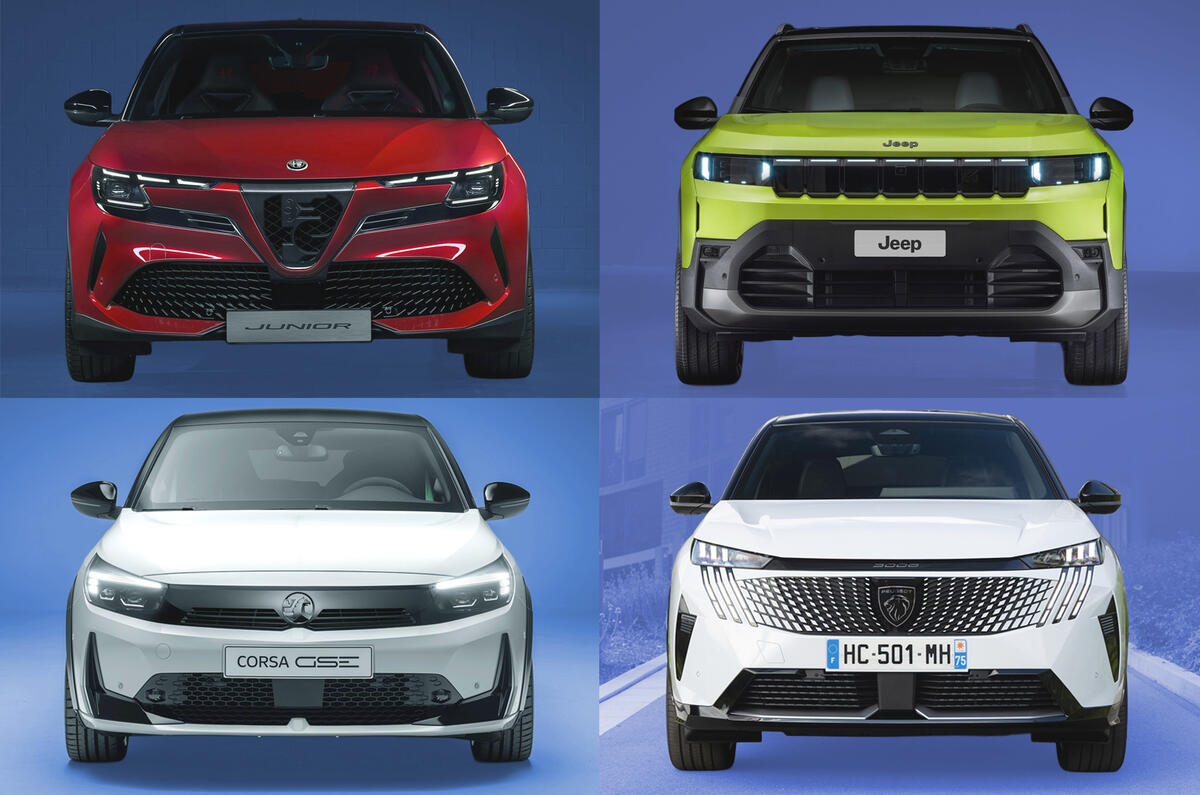

Future models from the 14 brands that make up the Stellantis empire will be more differentiated, despite the increasing use of common platforms and technology, according to its European boss.
The multinational giant recently announced a £52 billion transformation plan that will include 110 new models. The move will involve significant cuts in spending, the use of new, shared platforms and 70% of investment going to four key ‘global’ brands: Fiat, Jeep, Peugeot and Ram.
Stellantis will introduce a new catch-all architecture, STLA One, on which the bulk of those new vehicles will be built, with increasing shared technology.
Despite that consolidation, European boss Emanuele Cappellano told Autocar that the plan will actually lead to greater differentiation between brands.
“We really don't want to be misunderstood when we talk about what is a global brand, what is a regional brand, which is a specialty brand,” said Cappellano. “We are not ranking the brands in terms of relevance. The point is how we can be smart in terms of capital allocation.
“The main difference between a global brand and the regional and specialty brands is just the timing for the first application of investment.
"So with the STLA One platform for the B- and C-segment, Peugeot is the global brand. That means we are going to invest first in launching a Peugeot-branded model on that new platform, new electric architecture, the STLA Brain [software stack] and new technology like steer-by-wire.
“In the meantime, we're working on the following launches on the same platform, where most of the effort, in terms of capital expenditure, is on diversifying – really diversifying – the models and line-up and not just rebadging.
"So you will have the new Peugeot first and after that you’re have a new Vauxhall that is not a rebadged Peugeot, then an Alfa Romeo, a Jeep or whatever.”
Cappellano said that the investment on each model would go on design first, “because we need to change the design, body type and shape and brand attributes”, along with “all the features that are characteristic for each and every brand".
“What we understood, and this is basically what is the driver of this decision, is that our brands, especially the mainstream brands, are recognised for very specific product attributes," he said. "So we need to enhance those product attributes in the future with investment for that brand.”
Cappellano insisted that STLA One is an entirely new architecture and not a development of the STLA Medium that it effectively replaces, because “the only way to be competitive in BEV is to have a dedicated native-EV platform”.