Currently reading: Porsche plans new halo car, SUVs and specials in revival plan

New Sportwagenschmeide 35 strategy aims to increase margins and lower break-even point – but will include significant job cuts

Porsche is considering a new combustion-powered mid-engined ‘super sports car’ as part of a bold new turnaround strategy that is also set to include a new combustion-engined Macan, a large SUV above the Cayenne and a greater focus on high-end variants and halo models.

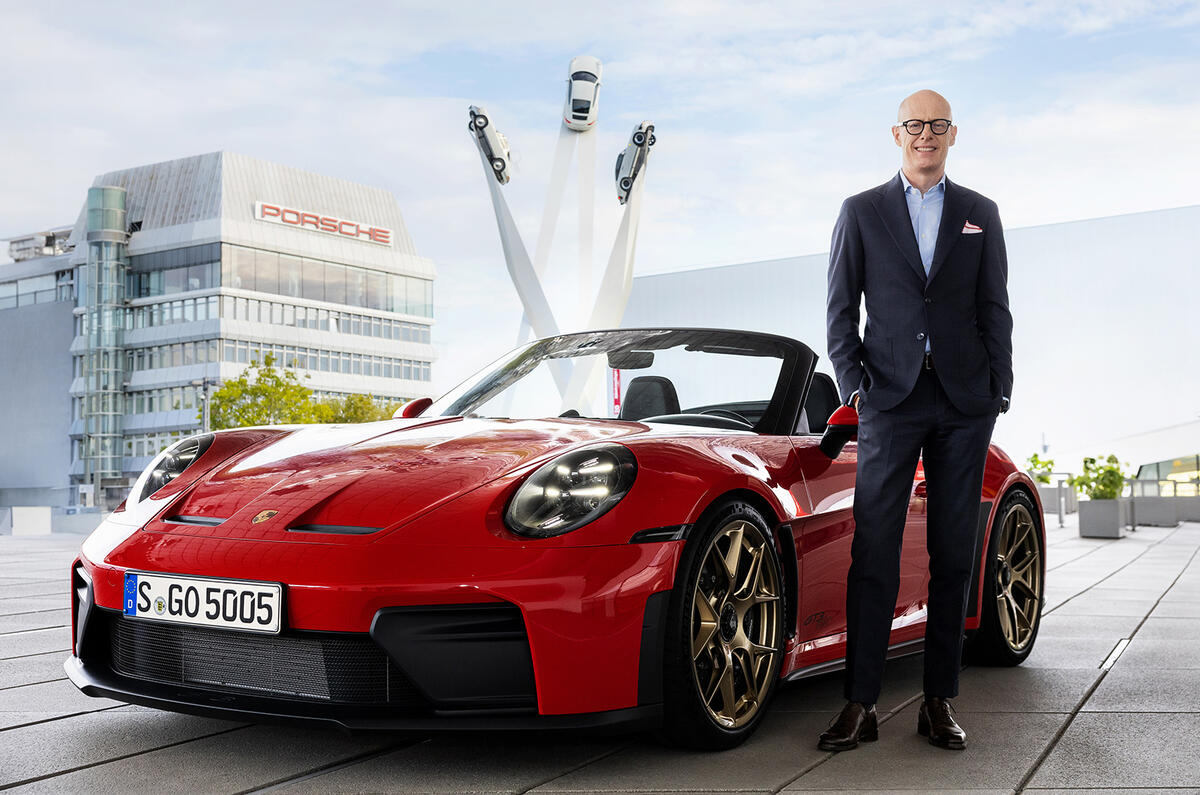
The German manufacturer’s revenues and profits slumped in 2025, prompting CEO Michael Leiters – who joined the firm from McLaren last year – to embark on a major turnaround plan.

Leiters has now unveiled a new medium-term strategy called Sportwagenschmiede 35 – the title combines the German terms for sports cars and forge, the latter symbolising its focus on precision craftsmanship – which Leiters said would “lay the groundwork to make Porsche significantly more efficient, productive and profitable”. 

First ride: new Porsche 918 Boxster EV

The overarching aim of the strategy is to focus on Porsche’s heritage by positioning it as the ‘home of sports cars’, and attempting to leverage the firm’s position between the sporting luxury and premium markets by adding more high-end variants and specials.

Porsche has adjusted its future powertrain strategy, and will continue to invest in pure petrol, hybrid and full electric powertrains, targeting a roughly 2:1 balance of combustion and EV models in its line-up. There will be a focus on reducing the number of variants its offers by around 20%, while expanding its offerings in what it calls high-margin D/E segments – covering medium and large sports cars and SUVs.

At the same time, the firm is aiming to rework its engineering and operations to become leaner, helping to lower its break even point to below 200,000 units through reduced development costs and a significant reduction in both management positions and the overall workforce.

Leiters said that the overall goal is to “reinforce Porsche as one of the world’s most desirable sports car manufacturers”.

Model revamp: super sports car, new SUVs

Leiters confirmed that the firm is considering a new mid-engined super sports car that would sit above the legendary 911 – and said that model would be offered purely with combustion powertrains. Further details were not forthcoming, but Leiters said that “we are developing a super sports car platform”, and said the car would not be directly based on a mid-engined supercar from sister brands Lamborghini or Porsche – although some parts could be shared as part of brand synergies.

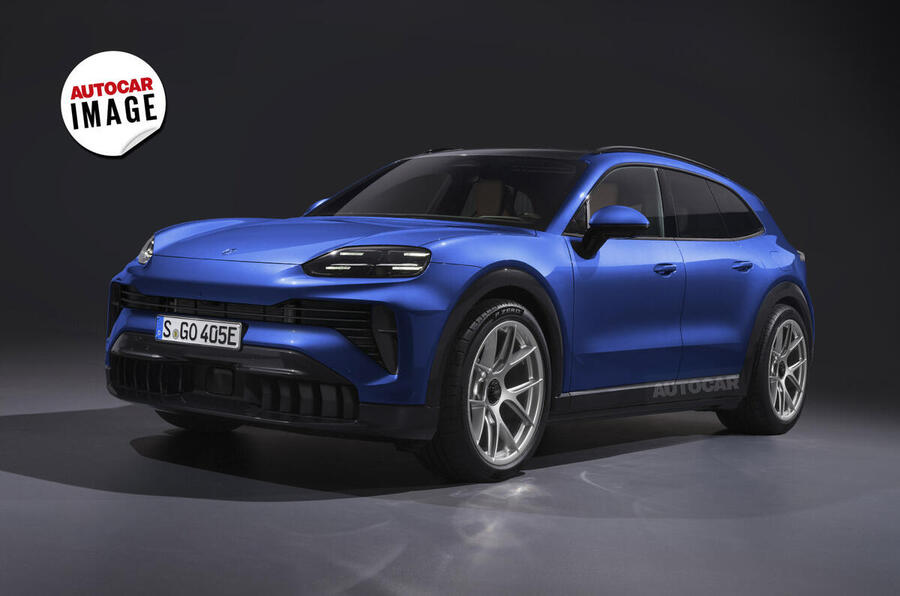
Porsche has also confirmed that it will launch a new combustion-powered SUV that will sit alongside the Macan Electric. Arriving in 2028, the new model will feature pure petrol and hybrid powertrains, and will sit on a VW Group platform. As Autocar has previously reported, the model will sit on the VW Group PPC platform and be twinned with the Audi Q5 (as imagined by Autocar below).
Back to top

Also arriving in 2028 will be the next-generation 718 Boxster and Cayman, which will now launch purely as electric models, with Porsche abandoning plans to rework the new architecture developed for them to accept combustion engines.

Meanwhile, Porsche is pressing ahead with plans for a new combustion-powered large SUV that will sit above the Cayenne and be focused on the lucrative US market. Overall, Porsche is aiming for the higher-end ‘D/E segment’ models to account for around 45% of its portfolio.

More variants and high-end focus 

Leiters also confirmed that Porsche was working on plans for new “highly emotional derivatives” of the 911, which will sit at the higher end of the range. And while Porsche will continue to expand its electric offerings, Leiters said: “I can assure you, the 911 will never be electric.”

As part of its value over volume strategy, Porsche is aiming to increase the average selling price of its range-topping variants by around 20% – but Leiters insisted that would be achieved not simply by putting the price up, but by adding value to those models for customers. The goal is then to increase sales of each derivative by around 30%.

That includes an expansion of the offerings from its Heritage offerings, limited-edition Manufaktur models, and its personalised Sonderwunsch customisation programme, along with more limited-edition models from Porsche-owned tuning firm Manthey. Porsche will also expand its ultra-limited-run ‘few off’ models, with the firm revealing that the highest price paid for a fully bespoke model developed by Sonderwunsch was more than €13 million (£11 million).

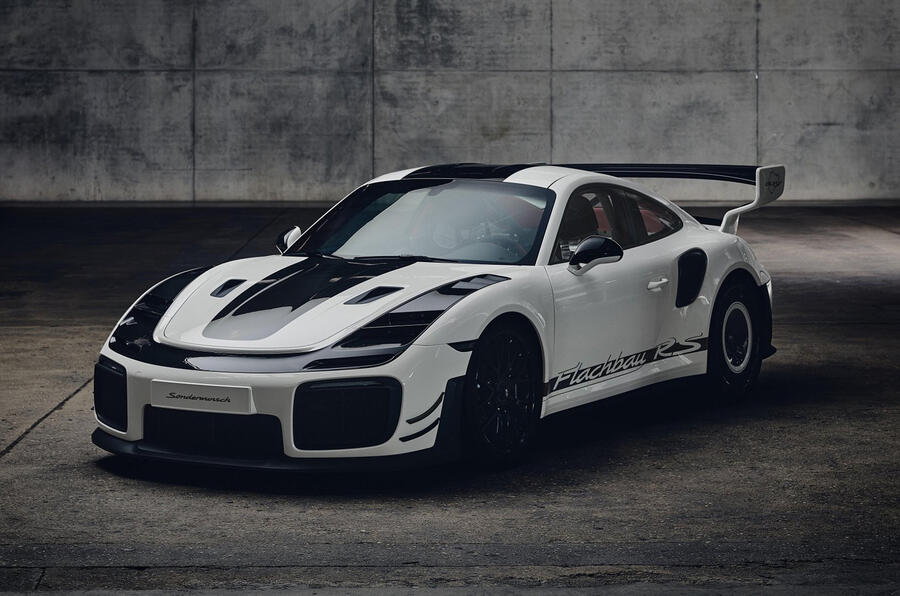
Porsche recently showed off the potential of the Sonderwusch programme with the one-off Flachbau RS.

Back to top

Leiters said: “We will focus on cars that truly define the Porsche brand. In every segment, we want to offer the sportiest car.”

The goal is that, by 2030, the firm will launch “at least one brand-defining new product” every year.

Operational revamp

As well as overhauling its product line-up, Porsche is also making significant business and operational changes to achieve the goal of lowering its break-even point and make the firm more able to compete with rivals.

The target is to reduce development costs for future models by up to 20%, which will be achieved through shorter development times, a more modular development process, reduced complexity and greater use of simulation software and AI.

Despite that, Porsche will continue to invest in a range of powertrain technology, including multiple combustion engines, hybrids and plug-in hybrids and full battery electric.

Porsche is also aiming to reduce personnel costs by around 30%, and sales and distribution costs by around 20%, with the latter in part achieved by restructuring from five sales regions to four. Porsche has also divested its ownership or investment in several companies, including its share of Rimac Bugatti-Rimac, the MHP consulting firm and its e-bike business. The firm believes those measures will allow it to focus better on its core business. 

The firm will dramatically cut management positions by around 40%, with a medium-term target to reduce its workforce by 30%. This will include job reductions at both its Zuffenhausen and Leipzig plants. A Future Package that has been agreed with unions will account for a "socially responsible reduction" of 9000 jobs.

Globally, Porsche is aiming to balance its market shares, and Leiters said that the firm will not push to regain sales in China, which used to be the brand’s largest market. Instead, Porsche is aiming for the Americas and Europe to each account for around 35% of its sales, with China and other markets accounting for around 15% each.

The target is to achieve a group operating return on sales of 9 to 12% in the medium-term, increasing to 15% in the long-term.

Join our WhatsApp community and be the first to read about the latest news and reviews wowing the car world. Our community is the best, easiest and most direct place to tap into the minds of Autocar, and if you join you’ll also be treated to unique WhatsApp content. You can leave at any time after joining - check our full privacy policy here.

James Attwood

James Attwood, digital editor
Title: Associate editor

James is Autocar’s associate editor, and has more than 20 years of experience of working in automotive and motorsport journalism. He has been in his current role since September 2024, and helps lead Autocar's features and new sections, while regularly interviewing some of the biggest names in the industry. Oh, and he once helped make Volkswagen currywurst. Really.

Before first joining Autocar in 2017, James spent more than a decade in motorsport journalist, working on Autosport, autosport.com, F1 Racing and Motorsport News, covering everything from club rallying to top-level international events. He also spent 18 months running Move Electric, Haymarket's e-mobility title, where he developed knowledge of the e-bike and e-scooter markets.