From £36,6408

Mercedes' mid-sized EV’s big-range and fast-charging claims are put to the test

The very latest new electric cars have a surefire way of making nearly new ones age so much quicker than their petrol-powered antecedents ever used to. 

The electric Mercedes-Benz CLA certainly felt like the future, about five minutes ago. It was announced in spring 2025. It remains the reigning European Car of the Year. It has the kind of performance, range and efficiency that was considered good enough, back then, to be class-leading.

And now? The BMW i3’s the new flavour of the month, taking claimed range beyond 550 miles WLTP. Mercedes, meanwhile, has to look to some added variety to keep the custom rolling in. Which is why we’re now testing not only a CLA Shooting Brake body derivative, but also getting our first go in a twin-motor, -350 4Matic version.

The arrivals of these derivatives is part of the usual fleshing out of the model range. There’ll be a 58kWh CLA 200 joining the party this summer as well, for which is claimed a WLTP range of as much as 321 miles in Shooting Brake form, and can be bought from a whisker over £40,000.

Here's Mercedes-Benz, then, with one of the longest-range electric cars on sale in the UK – and it’s not the brand’s top-dollar technology flagship but the entry-level saloon. The Mercedes-Benz CLA achieves this not with some next-generation battery, but with a combination of the fairly traditional engineering that Mercedes has long been known for – gearboxes and aerodynamics – and the electric motor expertise it has gathered over the past few years of volume EV making.

It proved a match for the Tesla Model 3 in a recent group test, even if it couldn’t quite beat it. Now to see how it fares in our range of instrumented tests.

Advertisement
Back to top

DESIGN & STYLING

8
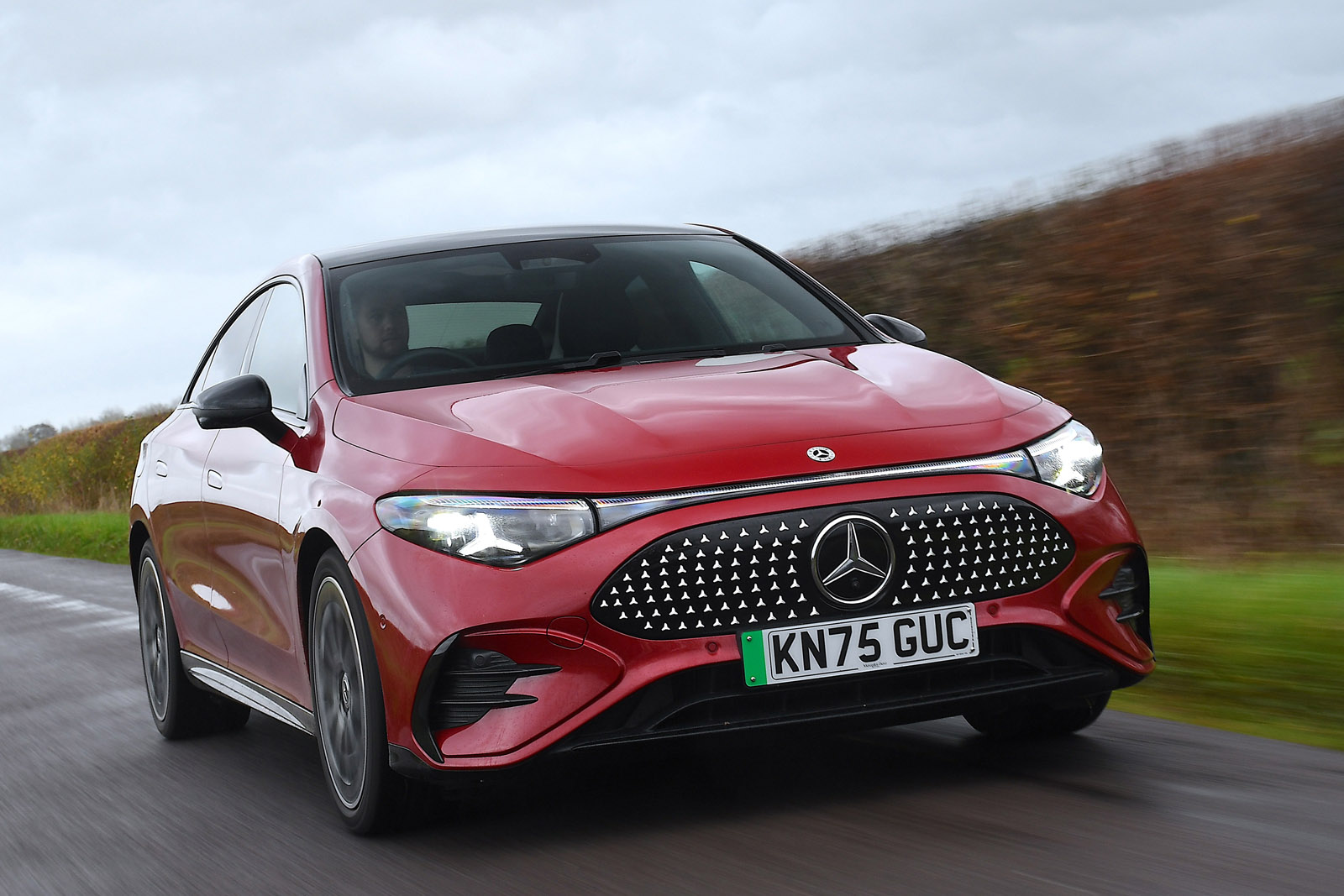
02 Mercedes Benz CLA EV 2026 Autocar road test review front cornering

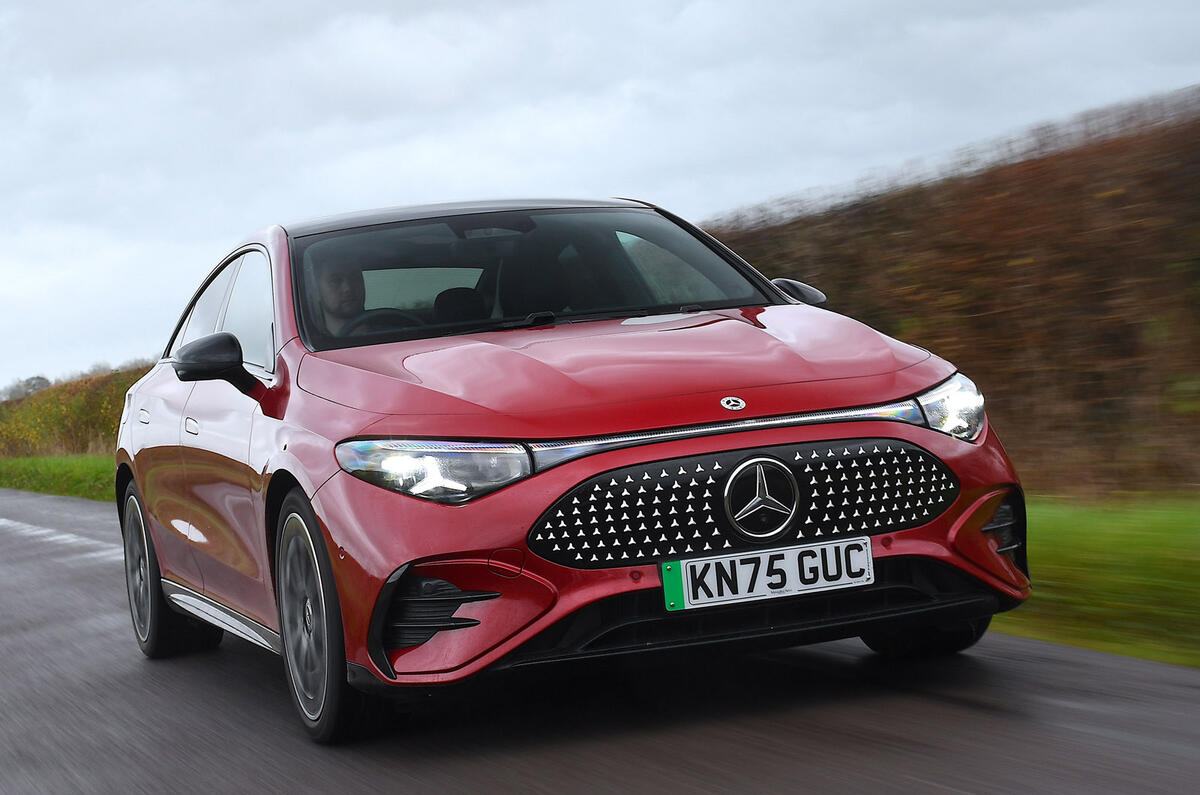
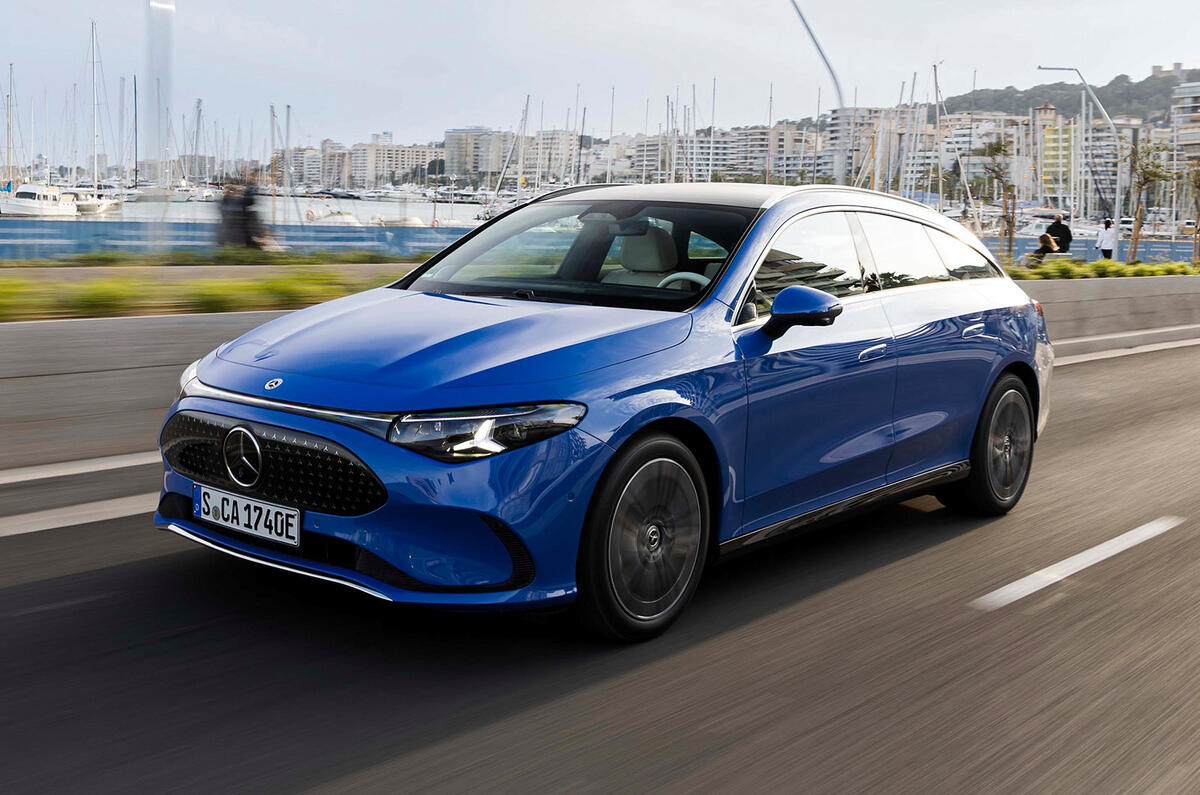
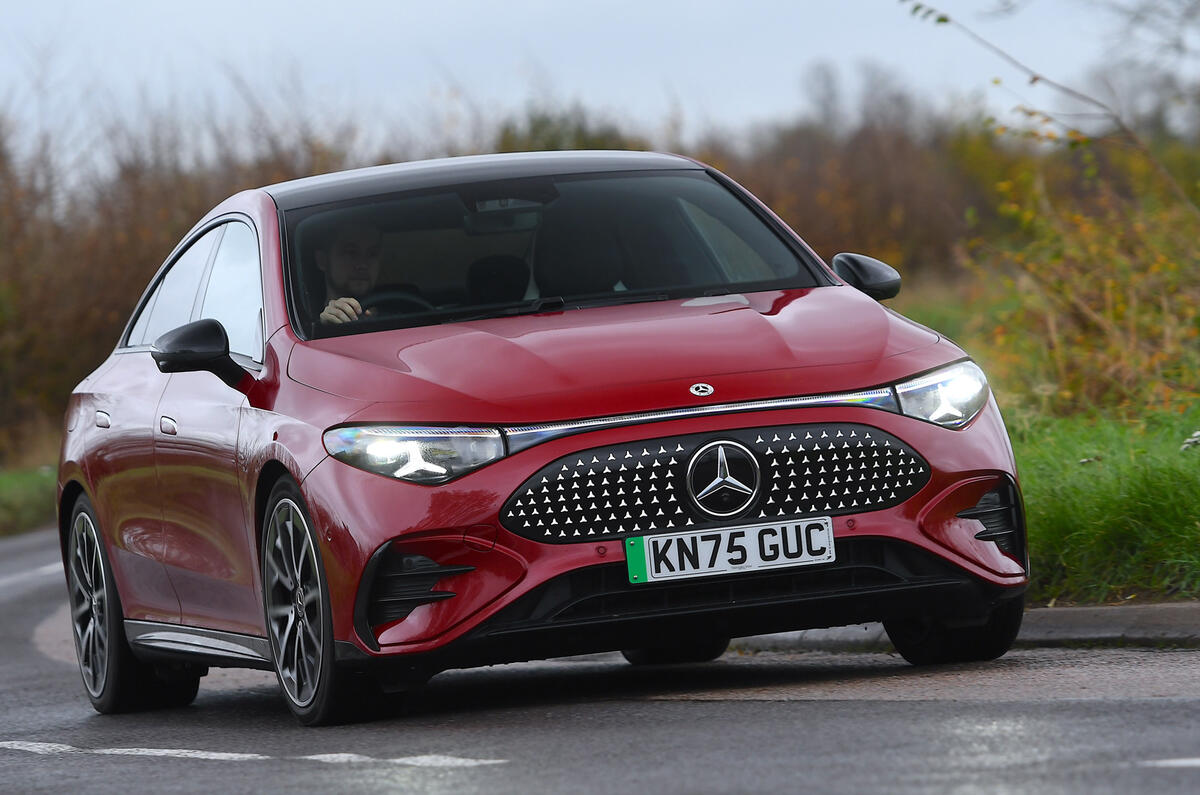
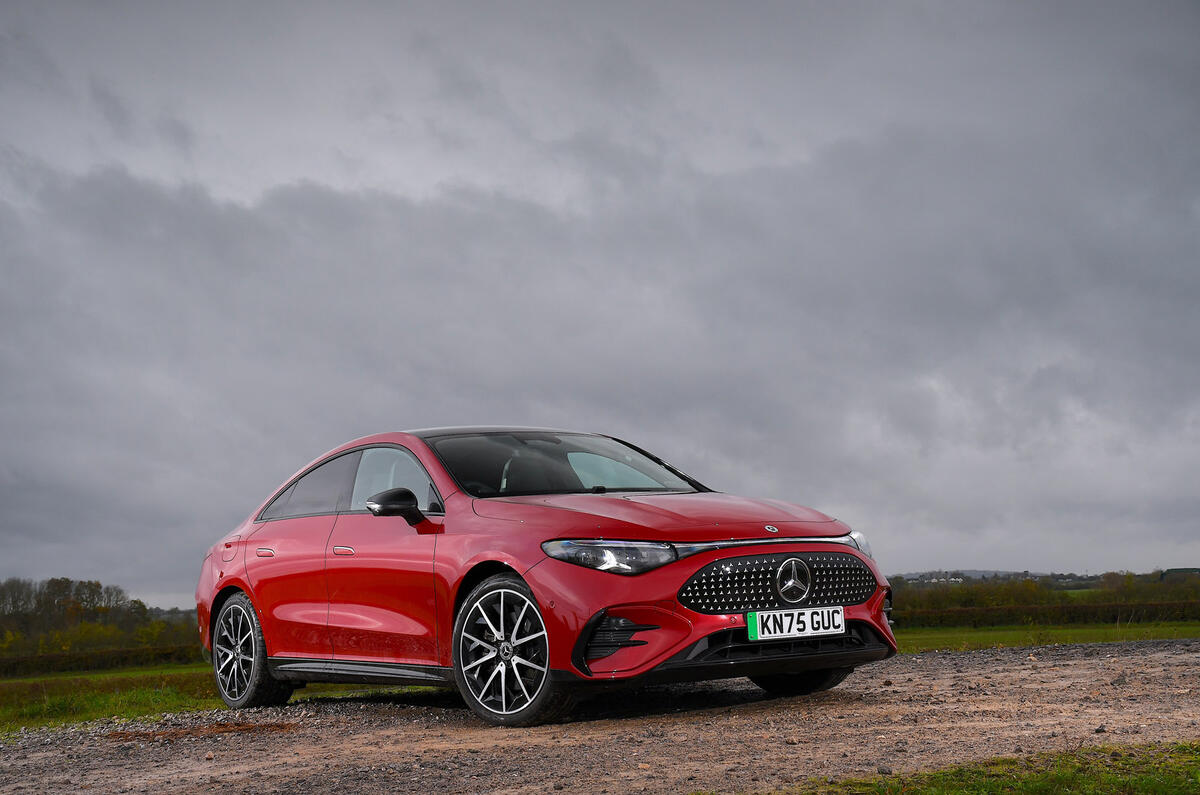
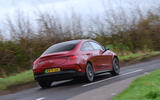
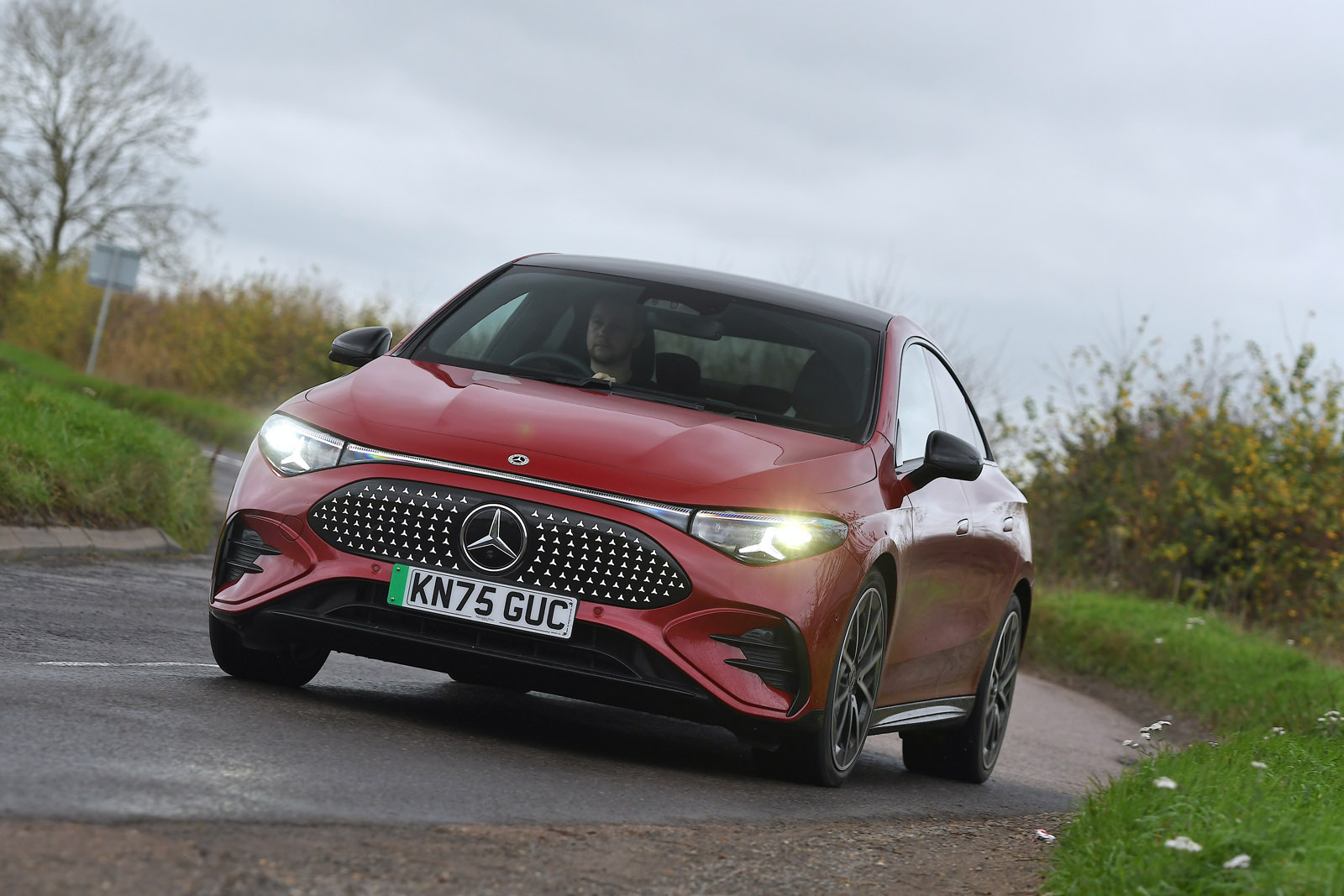
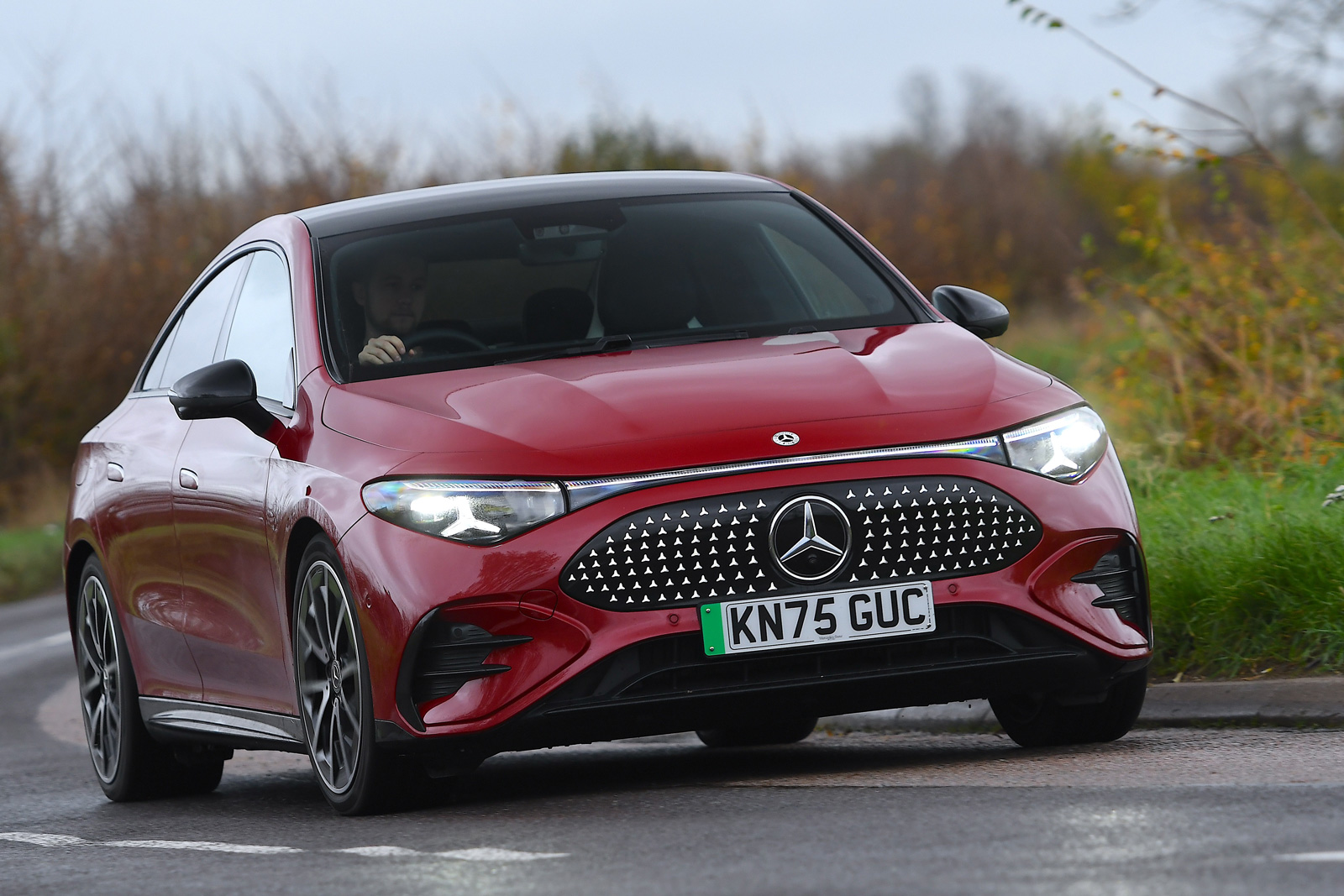
The CLA introduces an entirely new platform for Mercedes-Benz, named MMA or Mercedes Modular Architecture. With it comes a shift in strategy, one that is surprisingly the opposite of BMW’s approach with its Neue Klasse cars. Where Mercedes’ EQ cars have so far been completely separate from their combustion-engined counterparts (the EQE and E-Class share very little), the MMA also supports a range of 48V hybrids (Read our review of the Mercedes CLA Hybrid here). The need to house an engine, as well as the mixed reception to the design of the EQE and EQS, means that the CLA looks more conventional than those cars, with a relatively long bonnet.

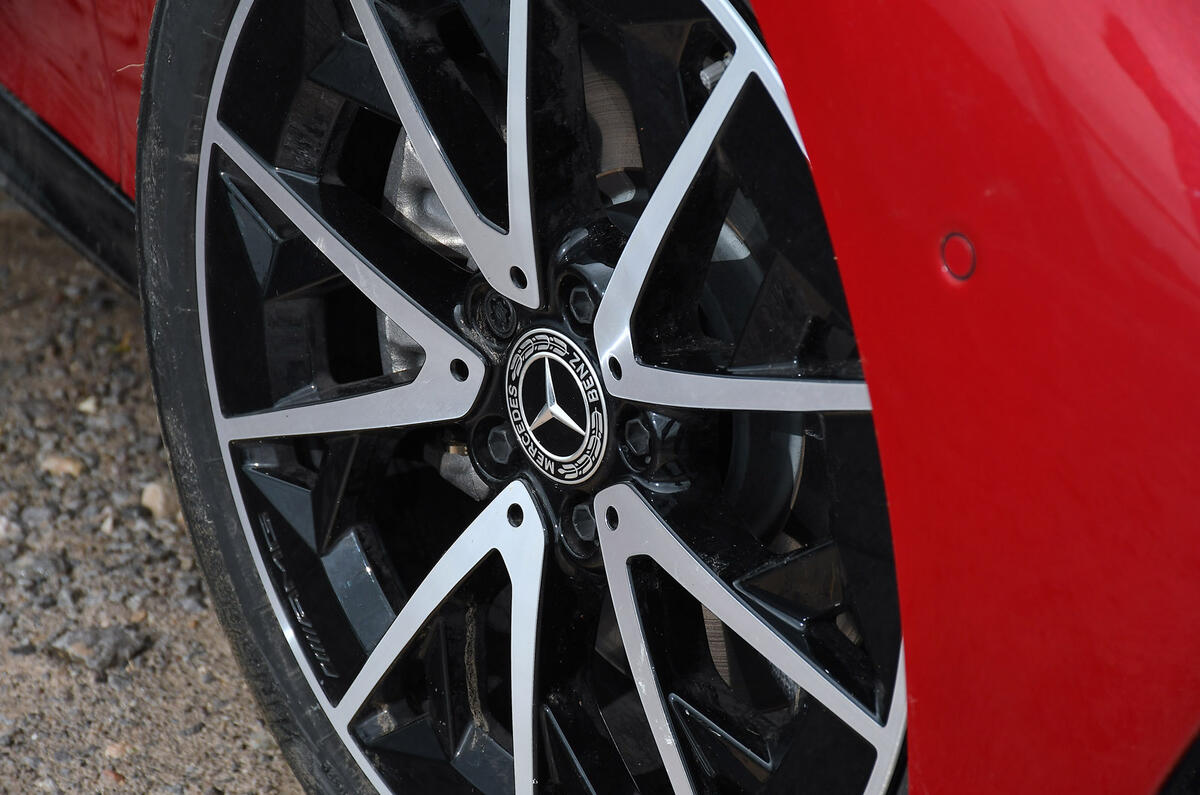
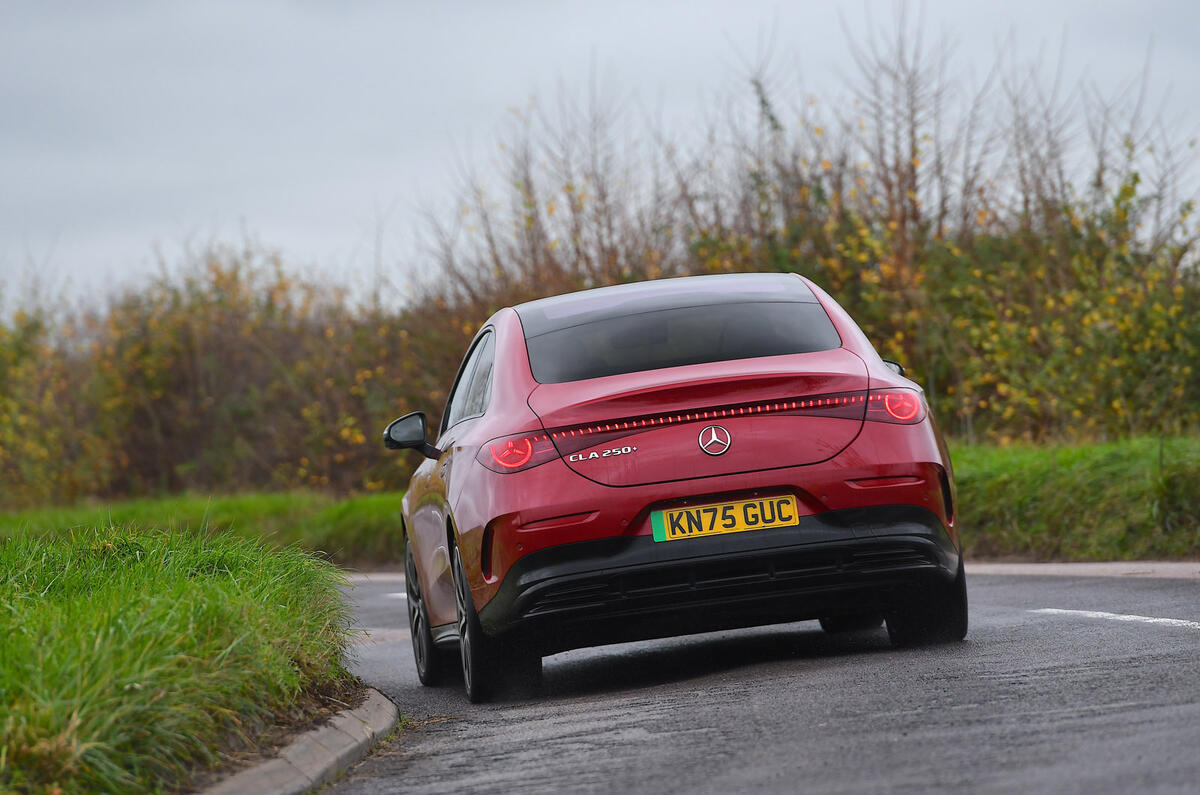
Despite looking less overtly aero-optimised, drag-reducing measures are still a big part of the CLA’s design. At the front, the ‘grille’ is of course closed off on the EV (it becomes an actual air intake on the hybrids) and the joins between headlights and body panels are sealed as much as possible. Suspension components have their own covers to stop them disturbing the airflow. Just how slippery the CLA is does depend on the version you pick. The most optimised version, with aerodynamic 17in wheels and flush door handles, achieves a Cd of 0.21. This particular spec doesn’t exist in the UK and the more popular AMG Line cars, with slightly more open 19in wheels, will be closer to 0.23.

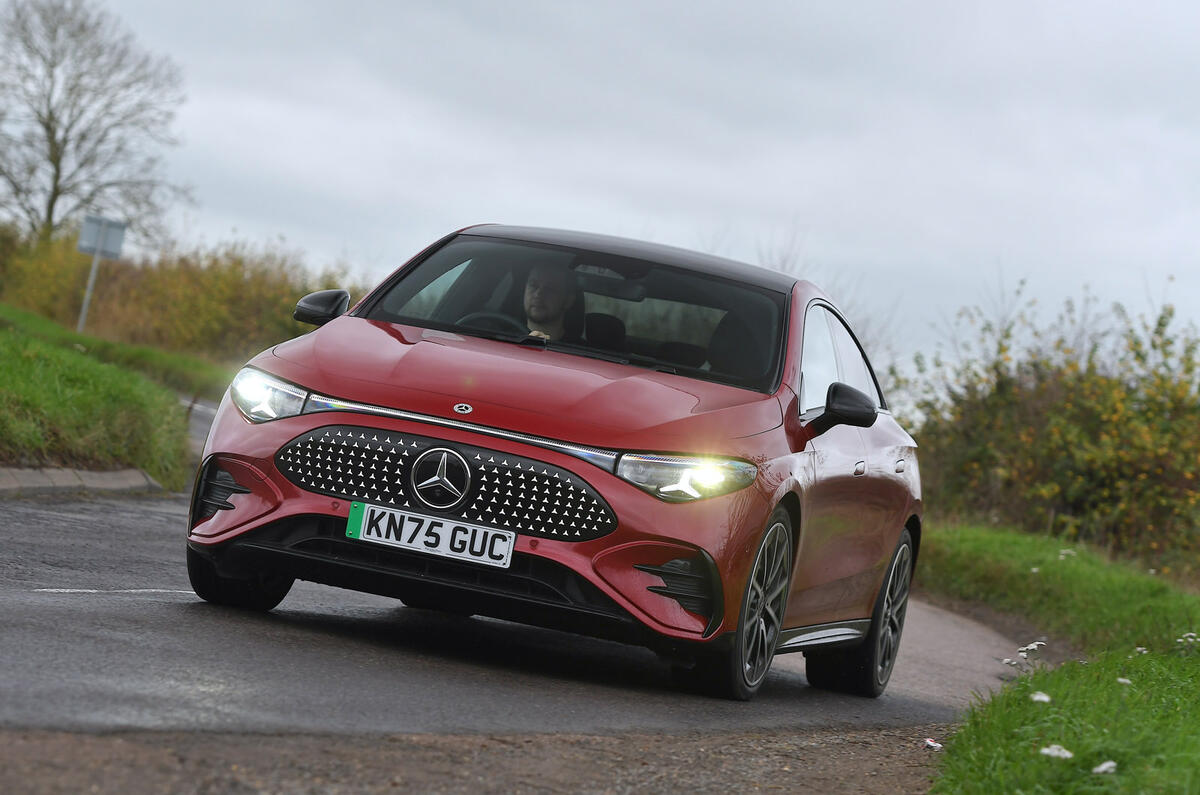
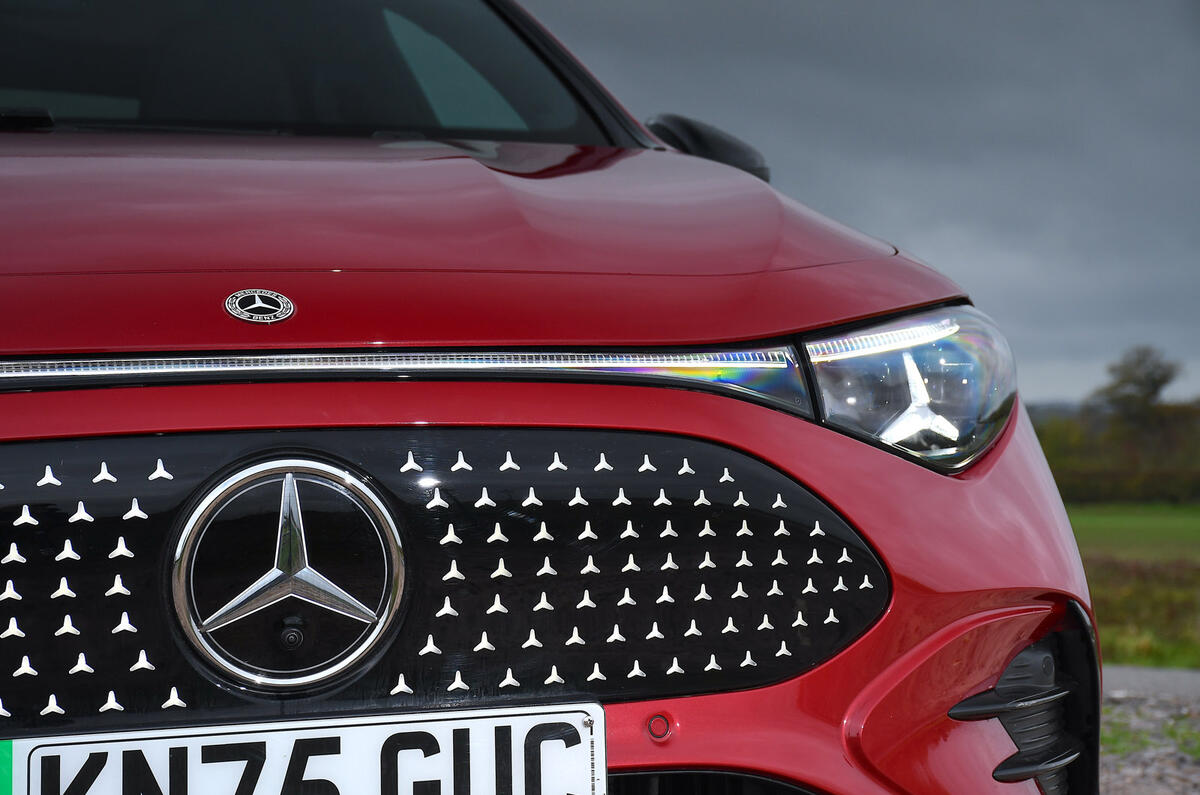
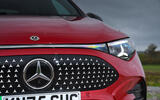
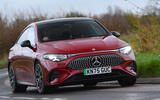
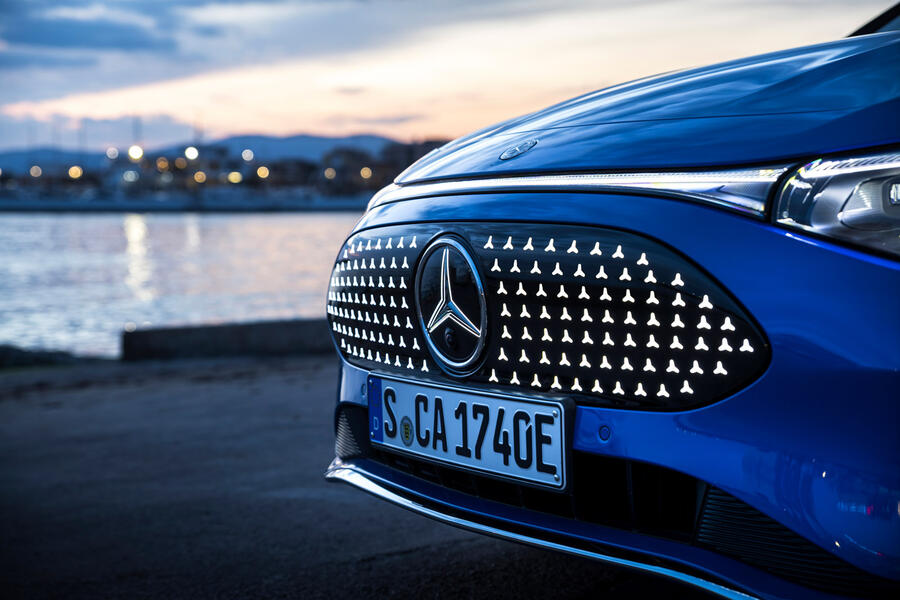
Faux grille contains 142 light-up stars, not counting the big one in the middle and the ones in the headlights. Testers’ opinions were divided, but the effect at night is striking. Hybrid CLA gets a real but similarly star-festooned grille.

On the drivetrain side, the CLA gets a new generation of batteries. It is being launched with an 85kWh (usable capacity; Mercedes refuses to disclose total capacity) nickel-manganese-cobalt pack that uses less cobalt and has much-improved energy density compared with previous generations. Mercedes quotes 680Wh/l rather than the more common Wh/kg, but it does seem to compare favourably with Tesla.

In the latter metric, it might not be so impressive, given the CLA 250+ we weighed tipped at 2029kg on our scales, which is similar to the Hyundai Ioniq 6 but significantly more than even the dual-motor Tesla Model 3, which we weighed at 1846kg.

The CLA’s efficiency party trick is its rear motor, which drives through a two-speed automatic transmission. First gear uses an 11.0:1 ratio, which is similar to the Ioniq 6’s 10.1:1, whereas second gear is much longer, at 5.0:1, to make it more efficient at motorway speeds. For comparison, the Tesla Model 3 uses a single ratio of 9.0:1.

As regards the wider derivative range: the CLA 250+ is now joined by the CLA 200, which uses a 58kWh battery. That won’t be much lighter given it uses a lithium-iron-phosphate pack, which tend to be less energy dense. Both battery options use 800V architecture, to allow the bigger pack to charge at up to 320kW and the smaller one at up to 200kW.

And at the other end of things, there is also now the CLA 350 4Matic, which adds an additional motor on the front axle, for a total output of 349bhp; and 0-62mph in around 5.0sec. Unusually, this is also a permanent magnet synchronous motor, albeit with a disconnect clutch. Most dual-motor EVs use an asynchronous unit as the secondary drive motor because they are cheaper and cause less drag when not in use. However, synchronous ones are more efficient when in use, and the disconnect clutch entirely removes any drag when it is not.

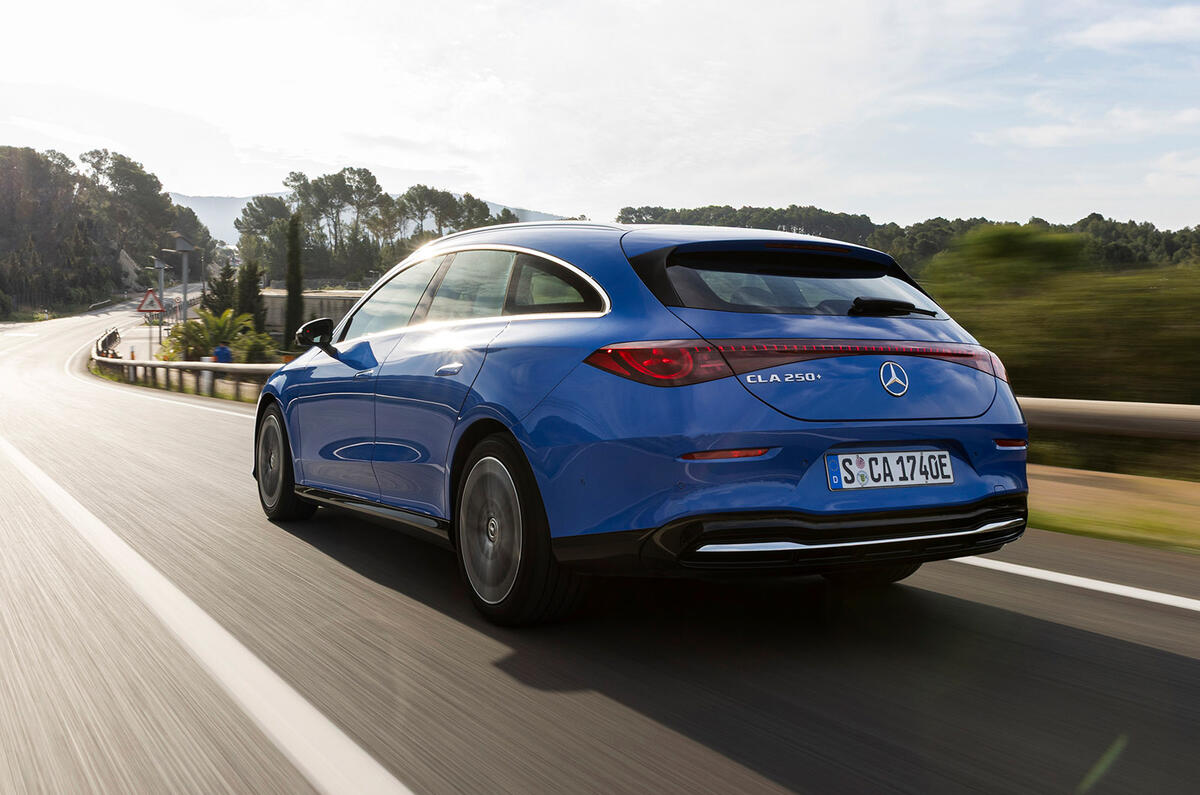
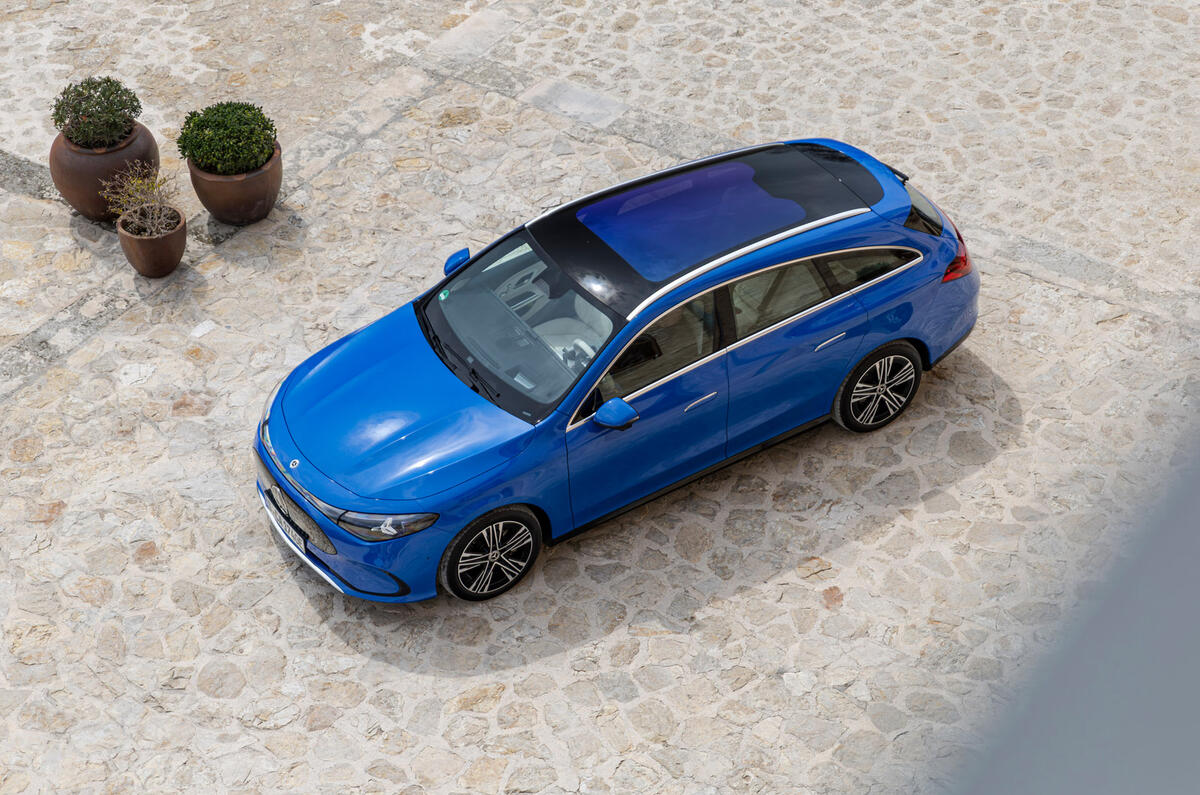
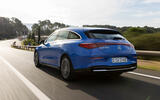
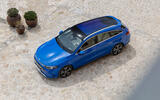
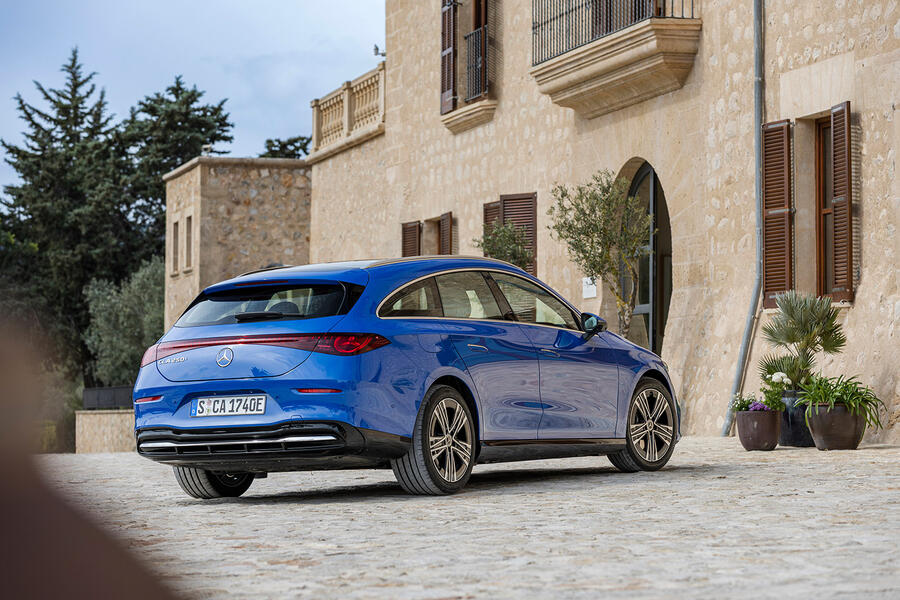
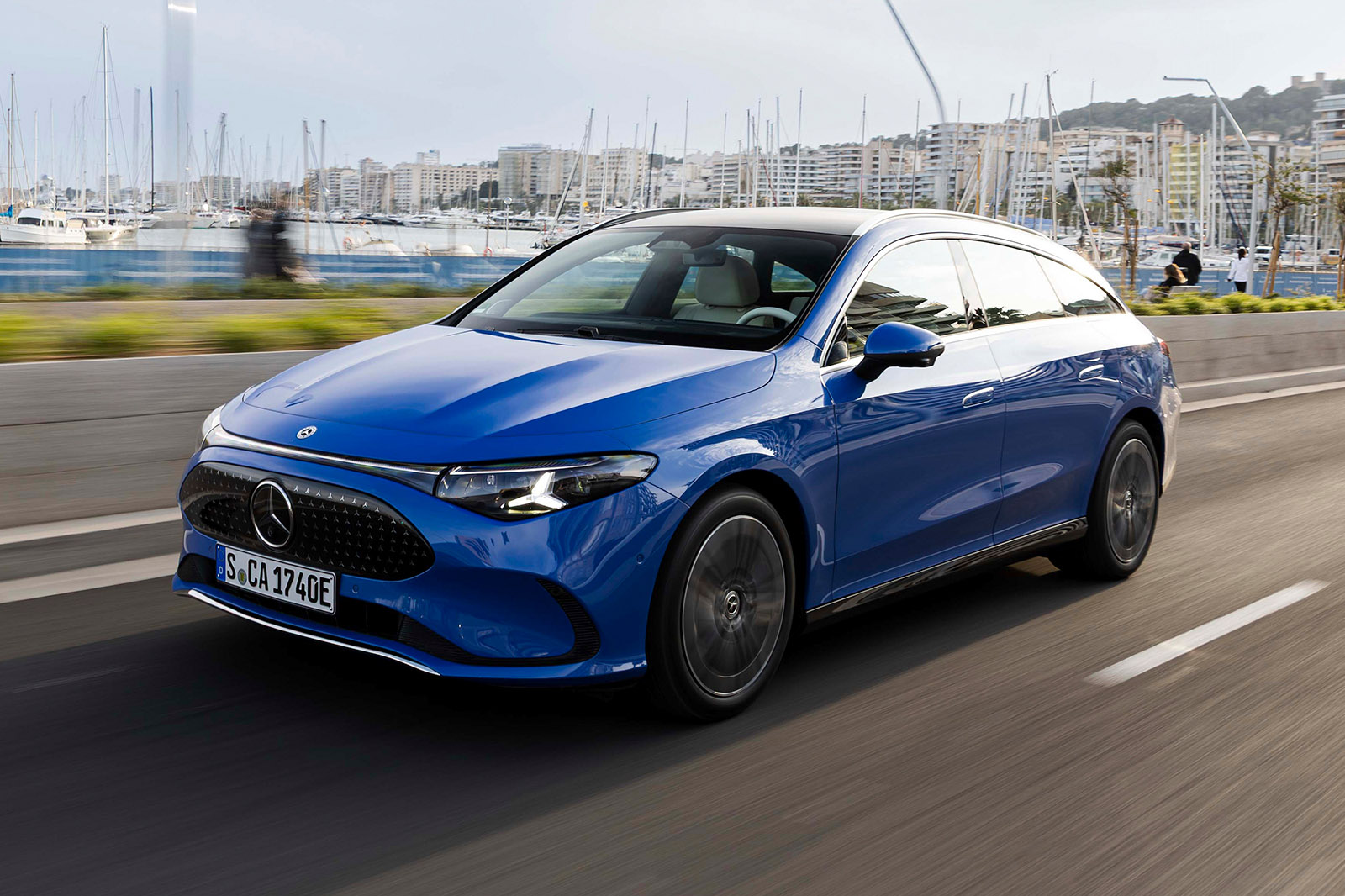
And while we're on the topic of drag: tou might imagine that an elegant Shooting Brake body, wrapped around the same chassis that the saloon uses, ought to result in a more aerodynamic, longer-range EV. Well, not the one that's just been added to the CLA range.

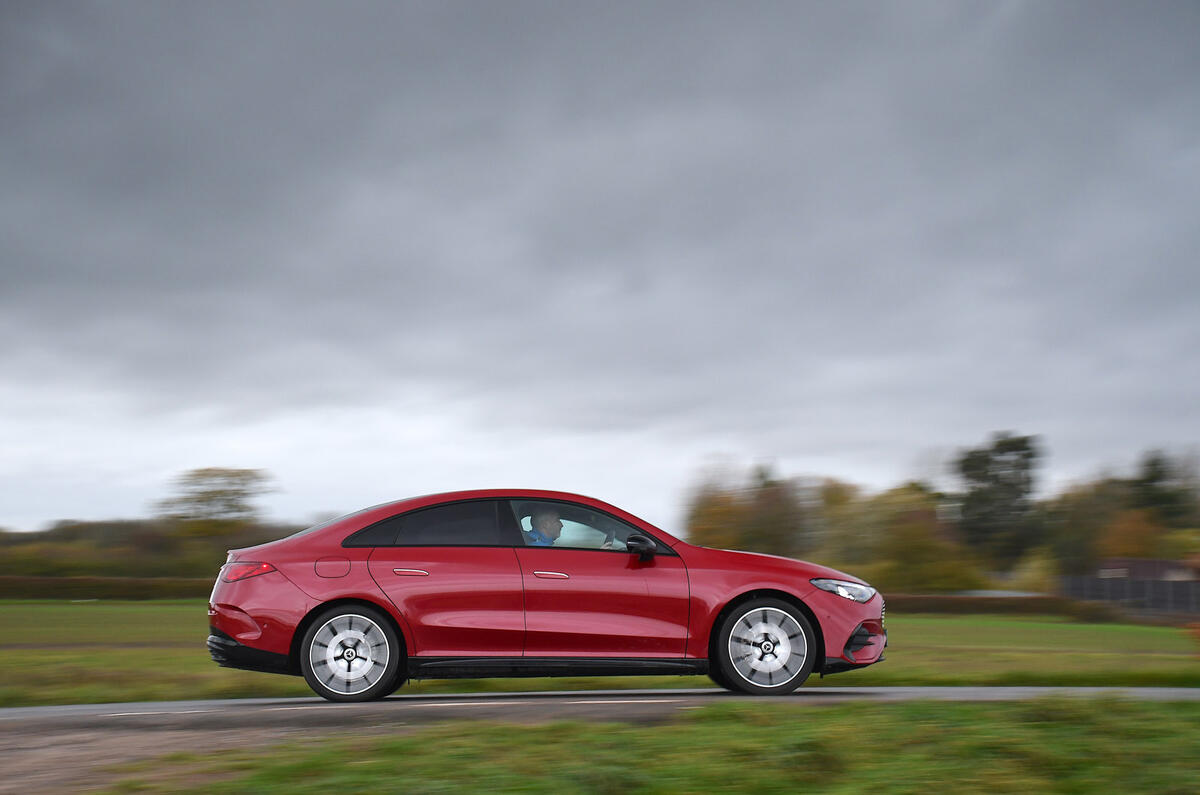
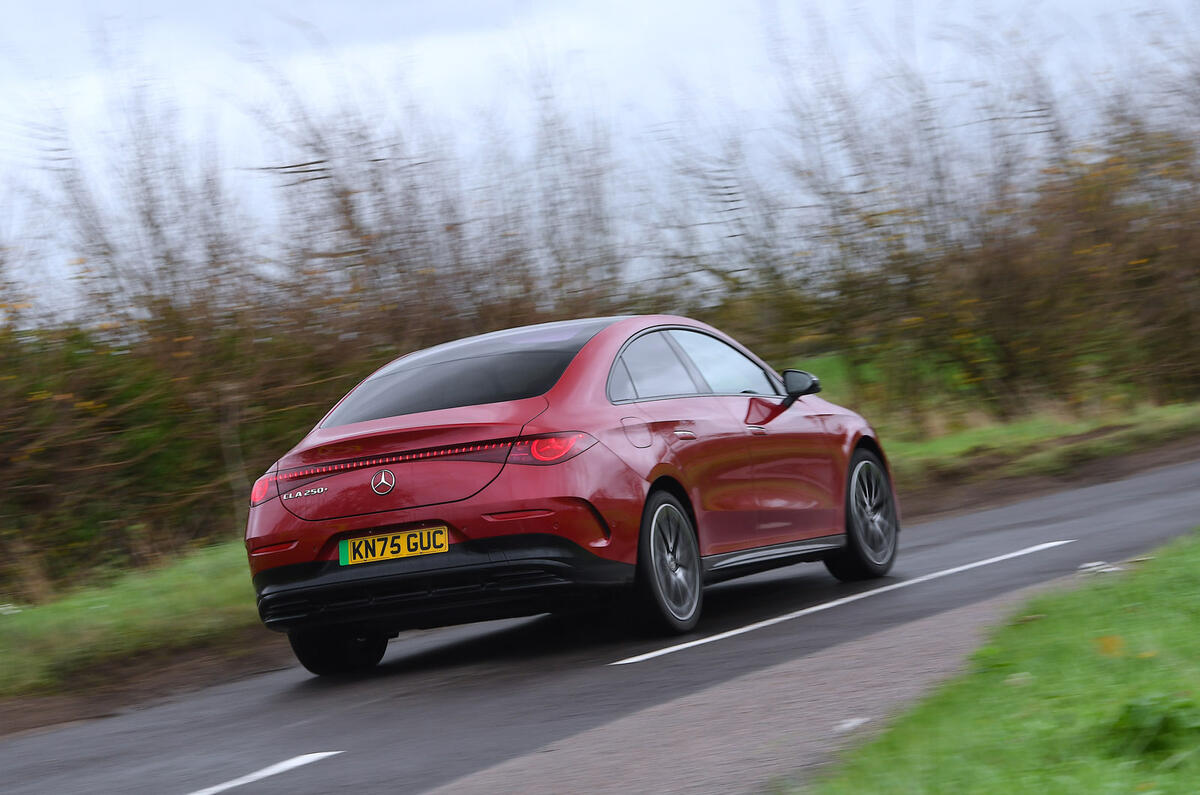
The car has precisely the same major exterior dimensions as the saloon, right down to the rear overhang (often where ‘wagon’ versions differ). That means it’s a little bit longer overall than the last-gen CLA, with a wheelbase stretched by some 61mm.

INTERIOR

8
07 Mercedes Benz CLA EV 2026 Autocar road test review interior

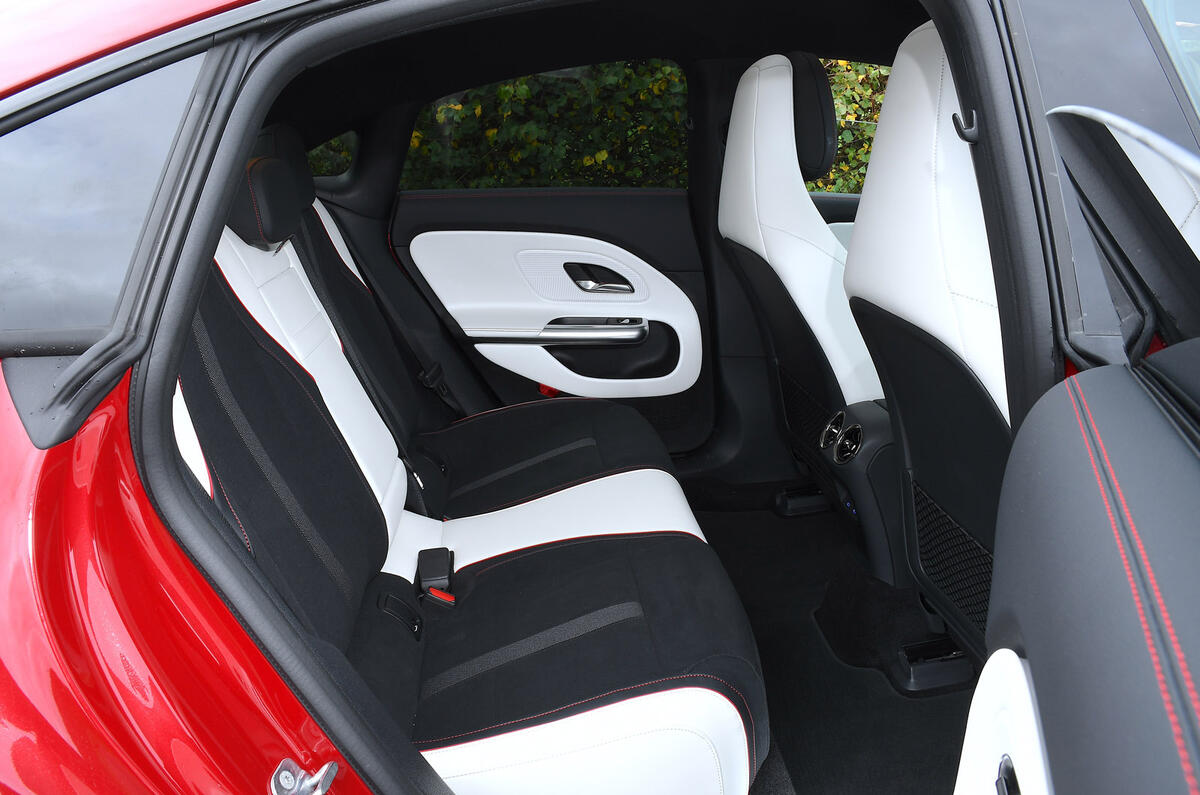
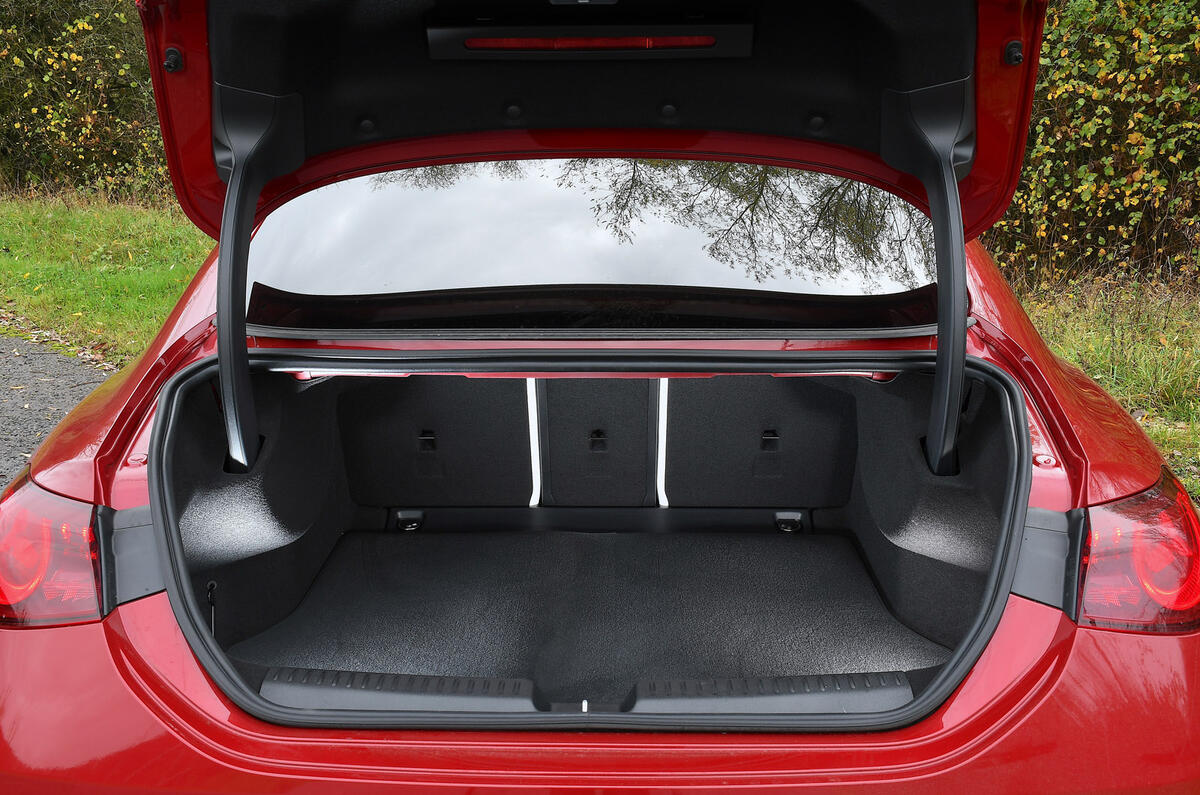
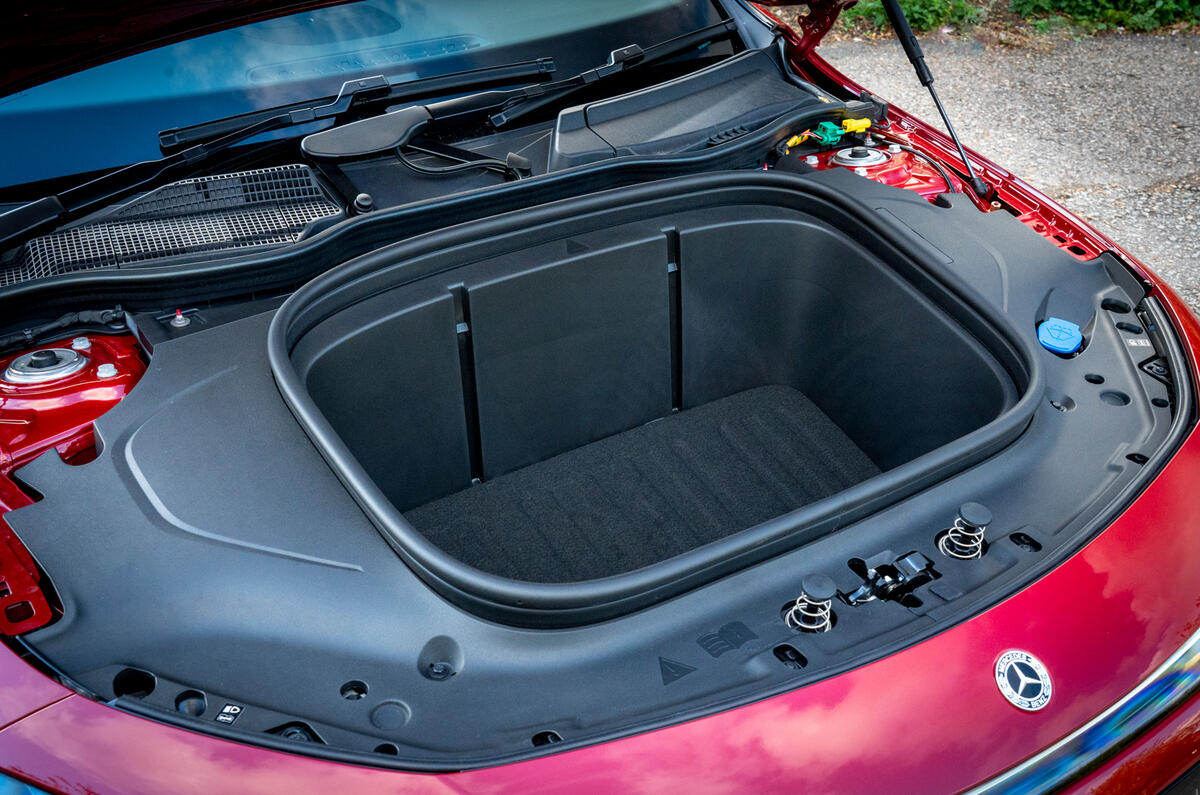
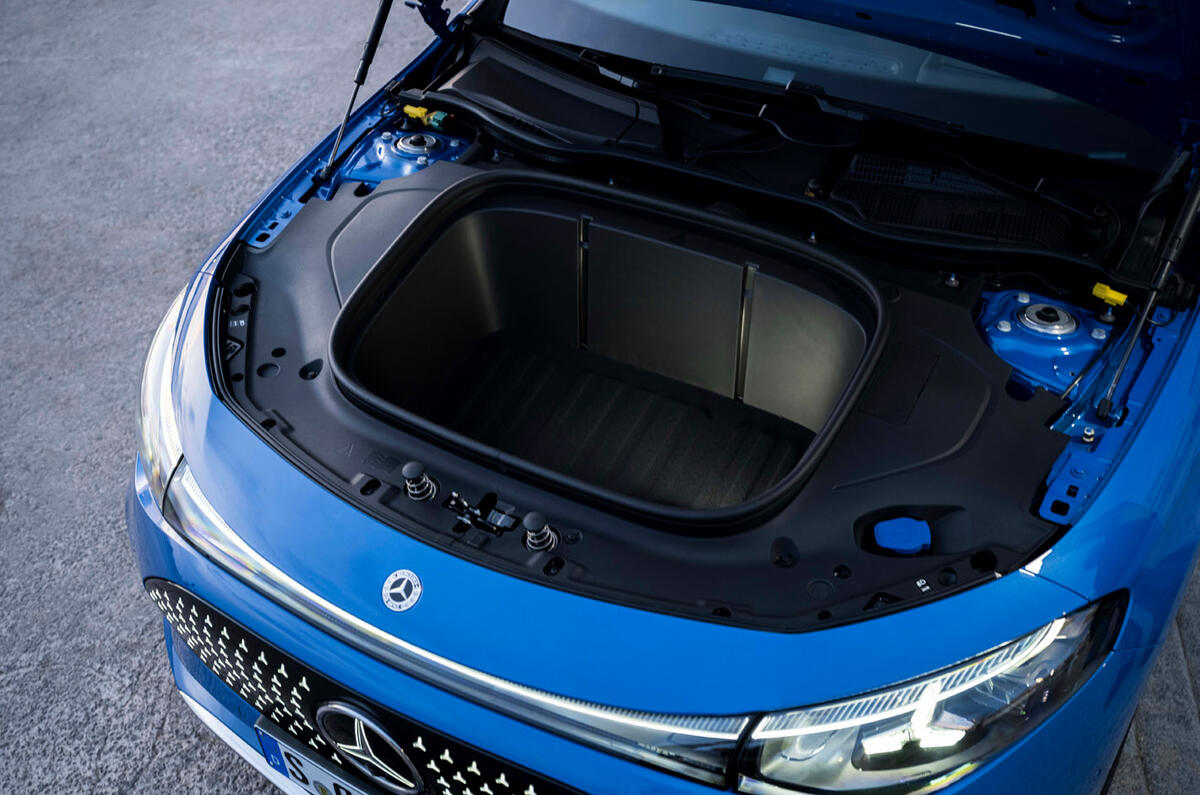
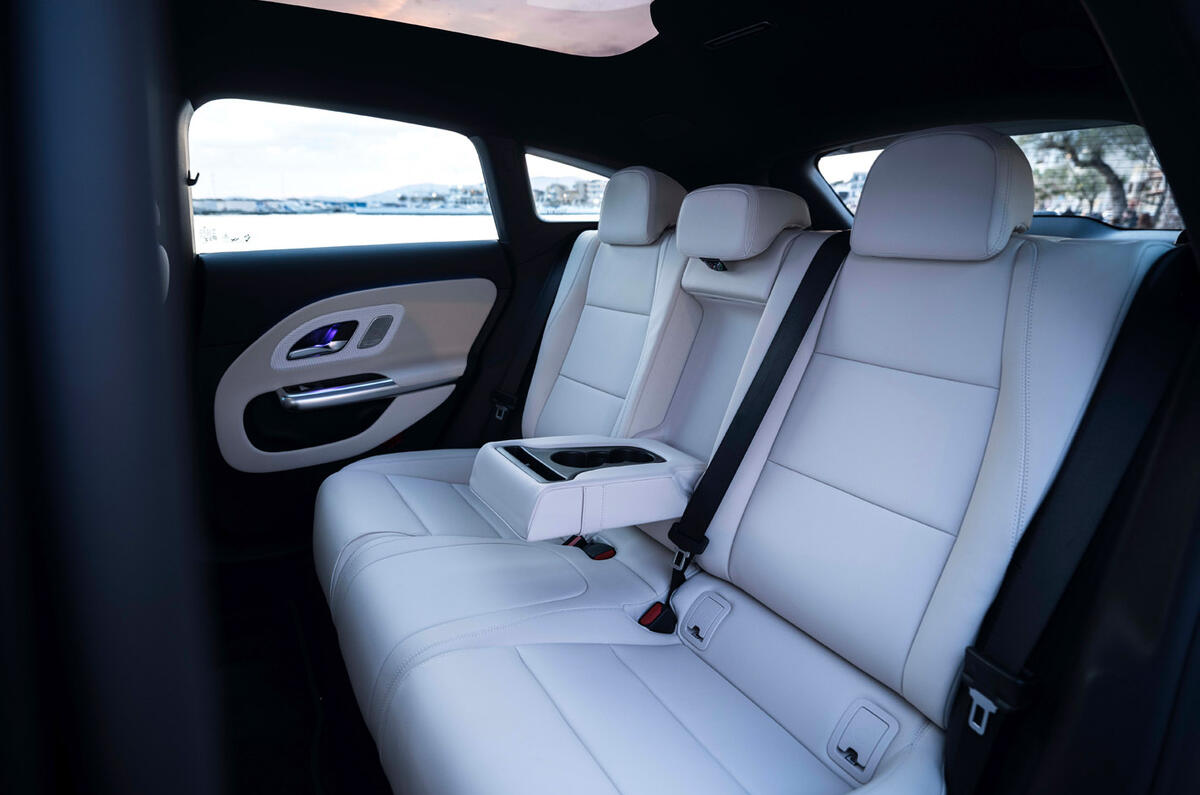
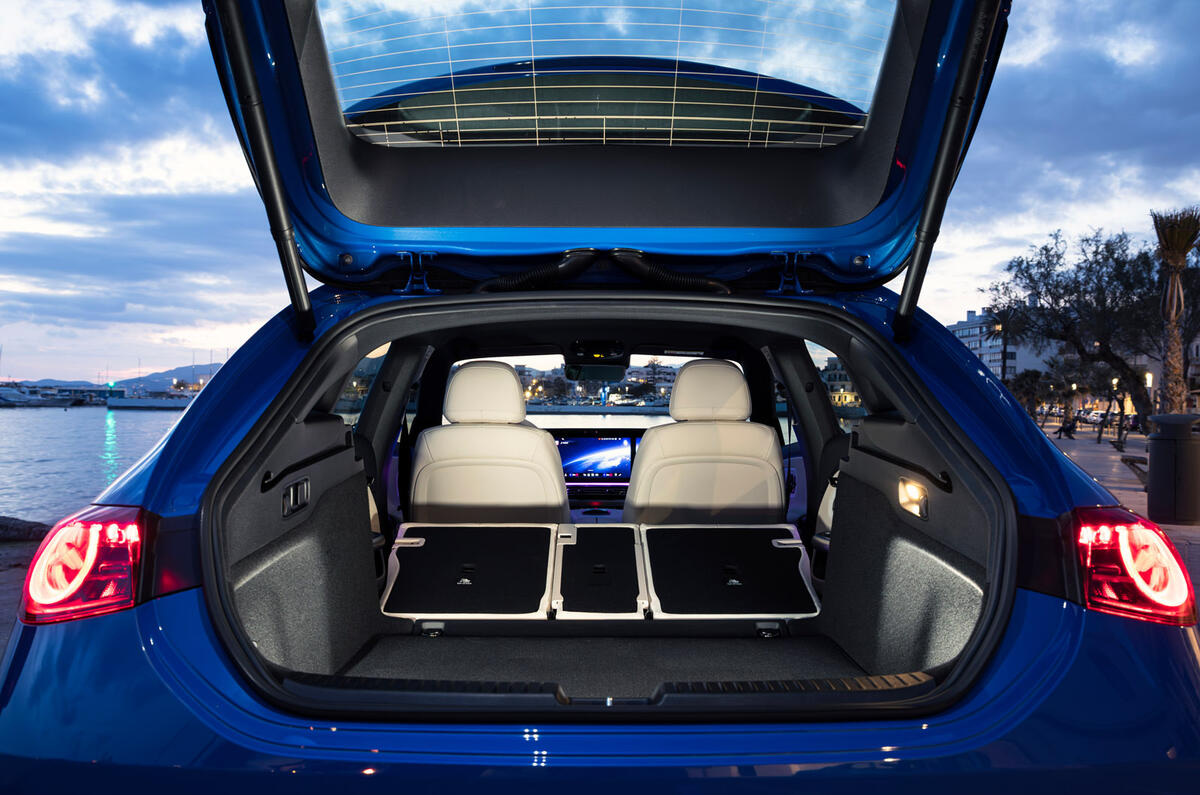
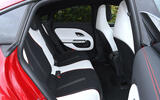
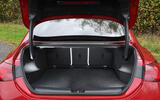
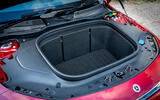
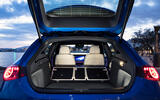
Quite why the growth spurt that the CLA has just had doesn't result in bigger second-row quarters (one of the predecessor model's conspicuous failings) - or a bigger boot in the case of the Shooting Brake version (also slightly smaller than the last CLA offered; an only moderately large 455 lites vs 485-) - we can only assume has something to do with electrification.

In the Shooting Brake, at least, a standard panoramic glass roof does deliver a modest gain on second-row headroom, Mercedes would counter. And yet to sit in the back of it still isn’t to be as comfortable as in a Tesla Model 3, a VW ID7, or an MG IM5. Leg-, knee- and underseat footroom will be tight for any average-height adult traveller, and access remains a squeeze.
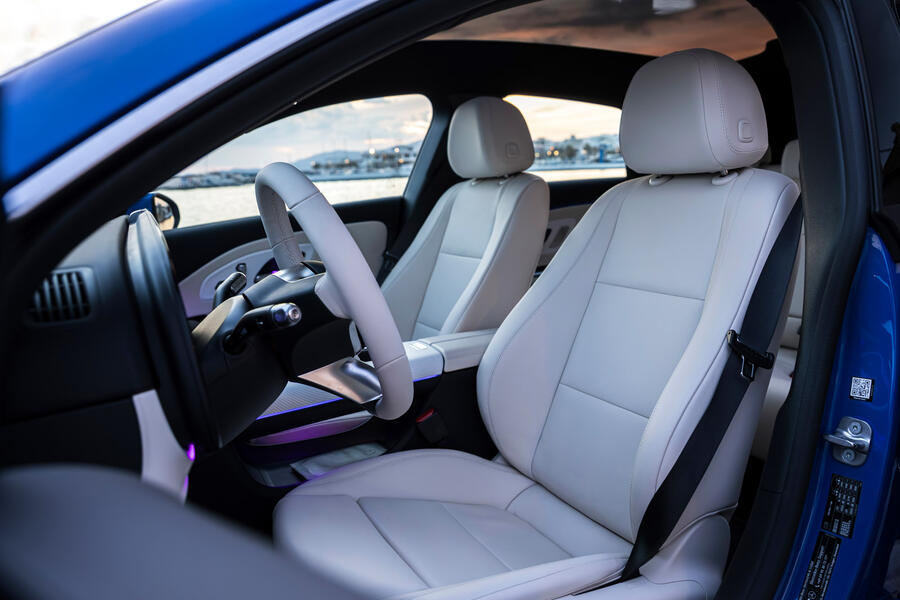
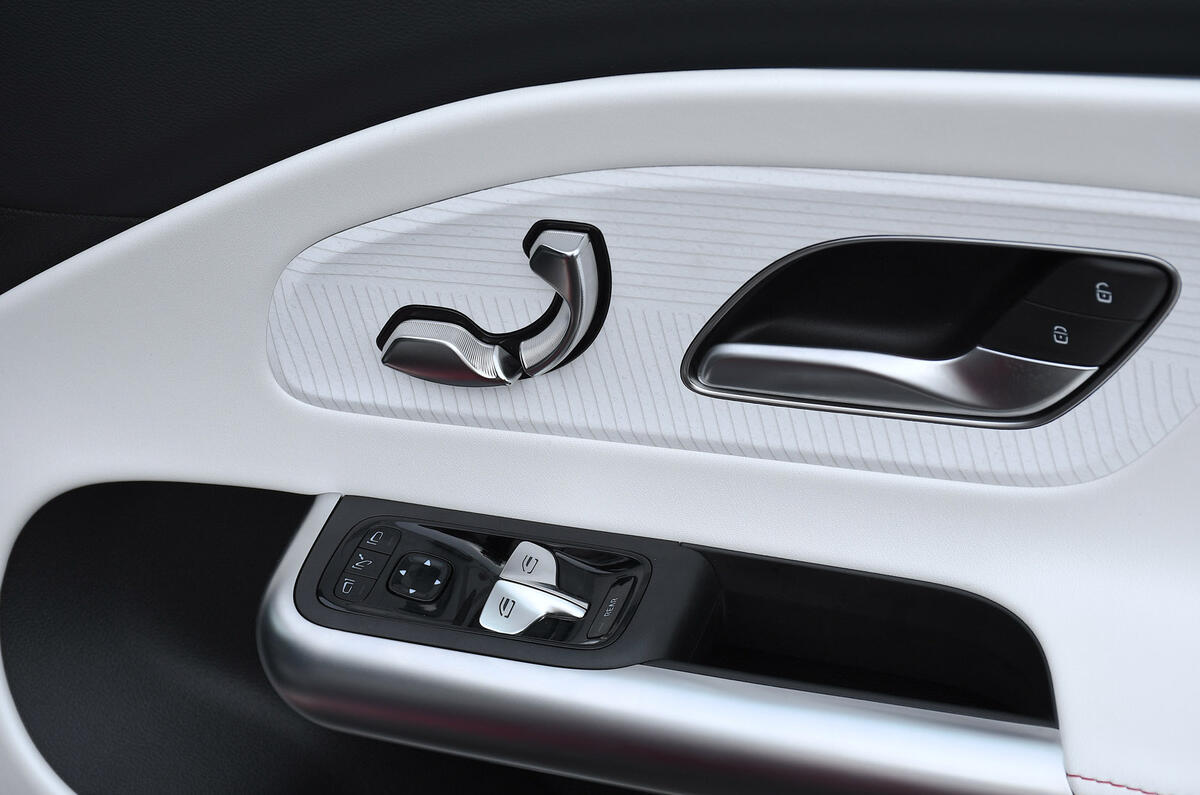
Mercedes has followed VW and Volvo in giving you only two window switches in this four-door car. You press a button to make them control the rear windows. Some people get quite vexed about this but I actually like it because it stops me accidentally opening the rear windows.

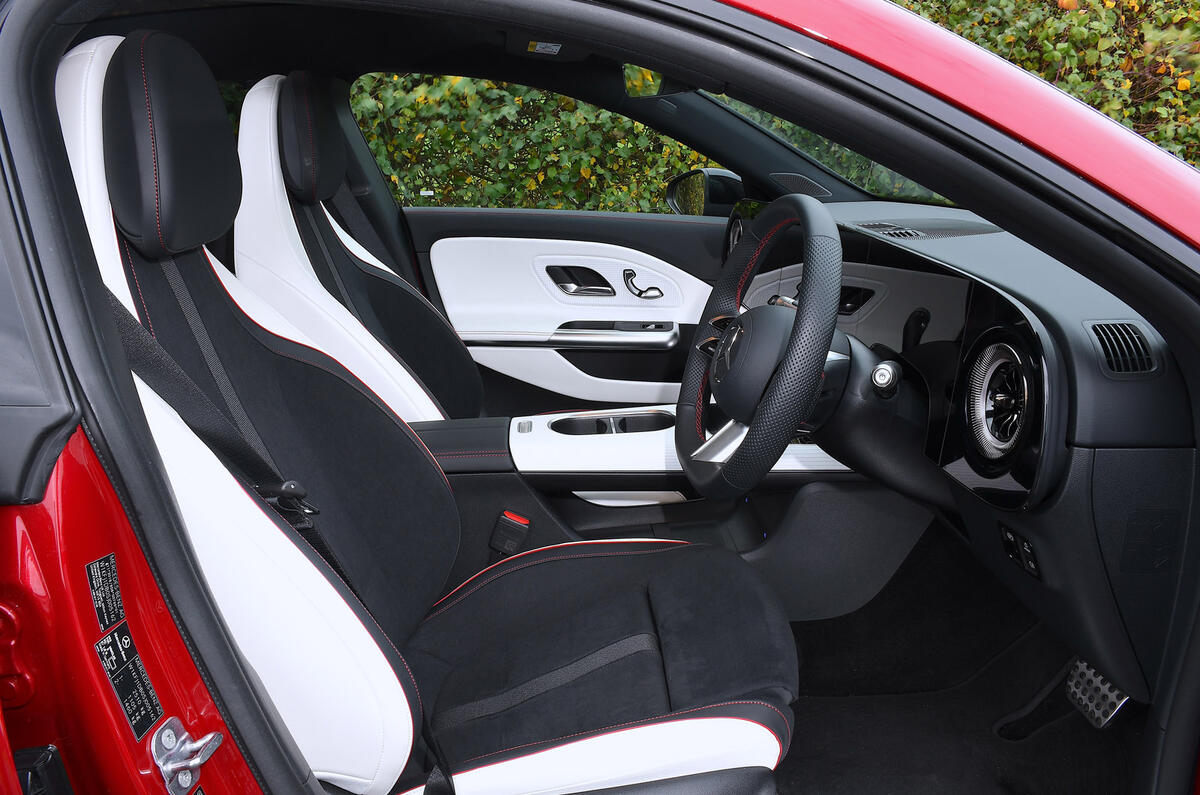
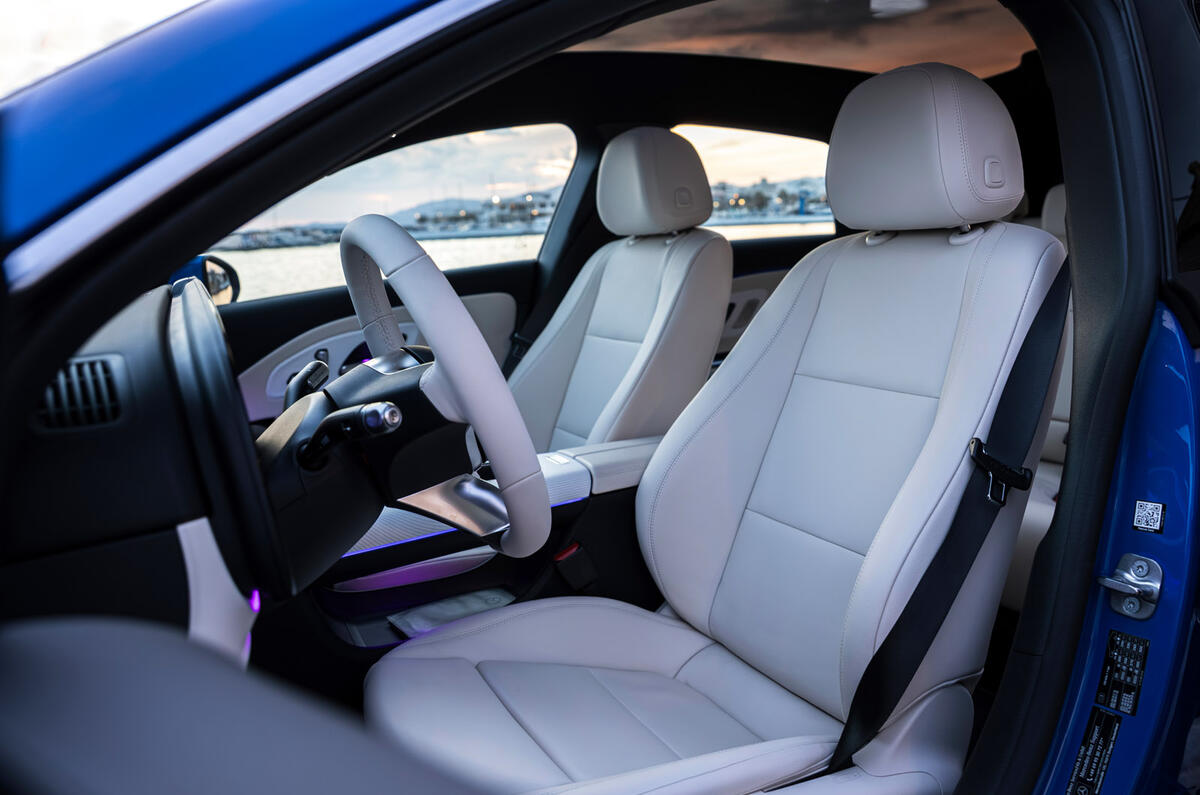
Up front, spaciousness is better. There’s further proof that Mercedes’ new ‘MMA’ platform (which somehow gives the cars built on it more of a fighty, aggressive vibe than otherwise suits them) doesn’t make for the most convincing, traditional Mercedes cabin quality. Then again, the company’s smaller models have never really felt quite as solidly appointed and expensively finished as their larger counterparts.

There are simply too many shiny mouldings and glossy-smudgey, creaky plastic fixtures for the CLA to really seem classy or luxurious; or even much different than the modern techno-premium brand norm. The plain truth us, brands that focus on a less chintzy, high-gloss look, and a more consistently expensive tactile feel, do it better these days. 

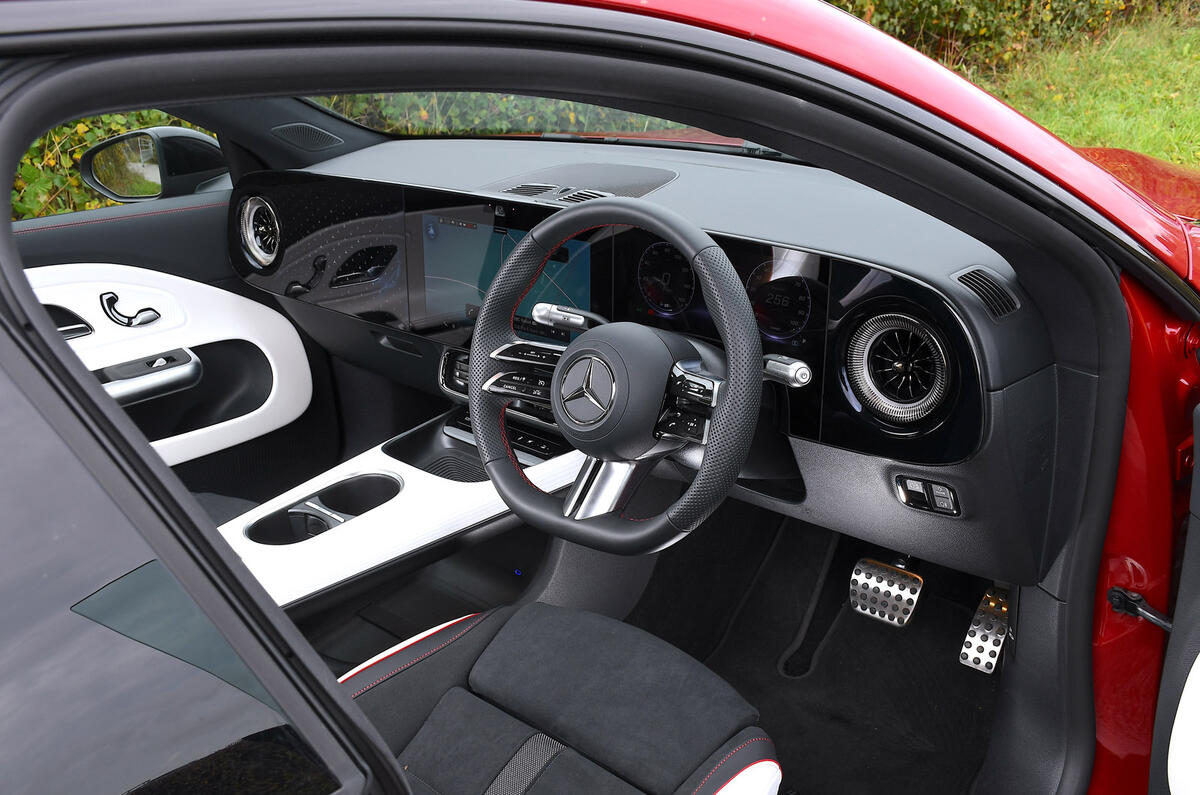
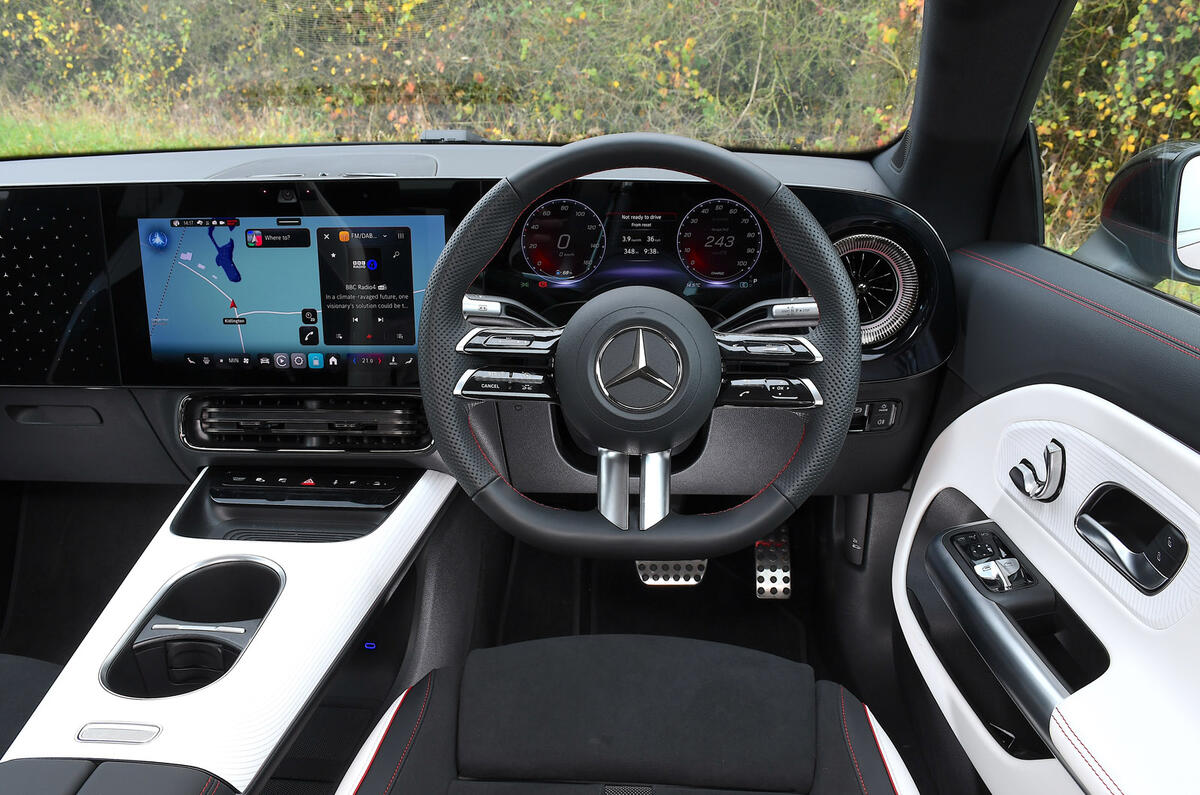
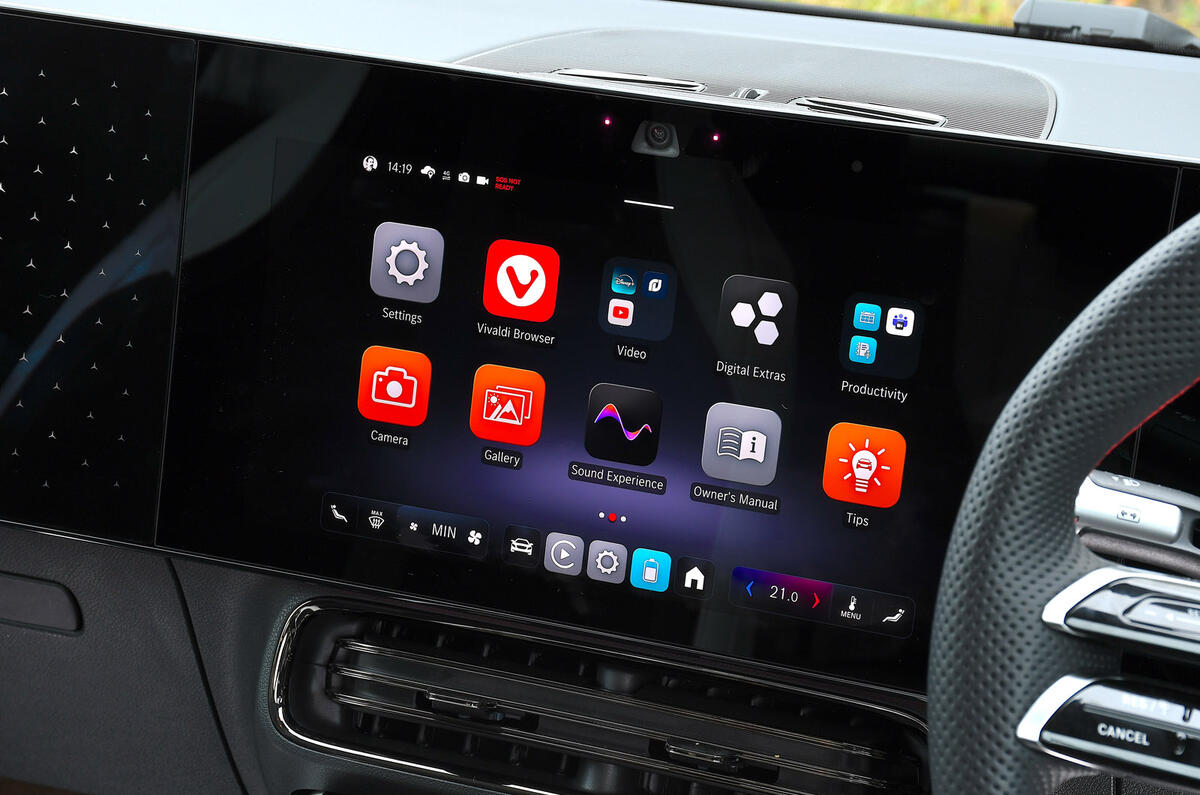
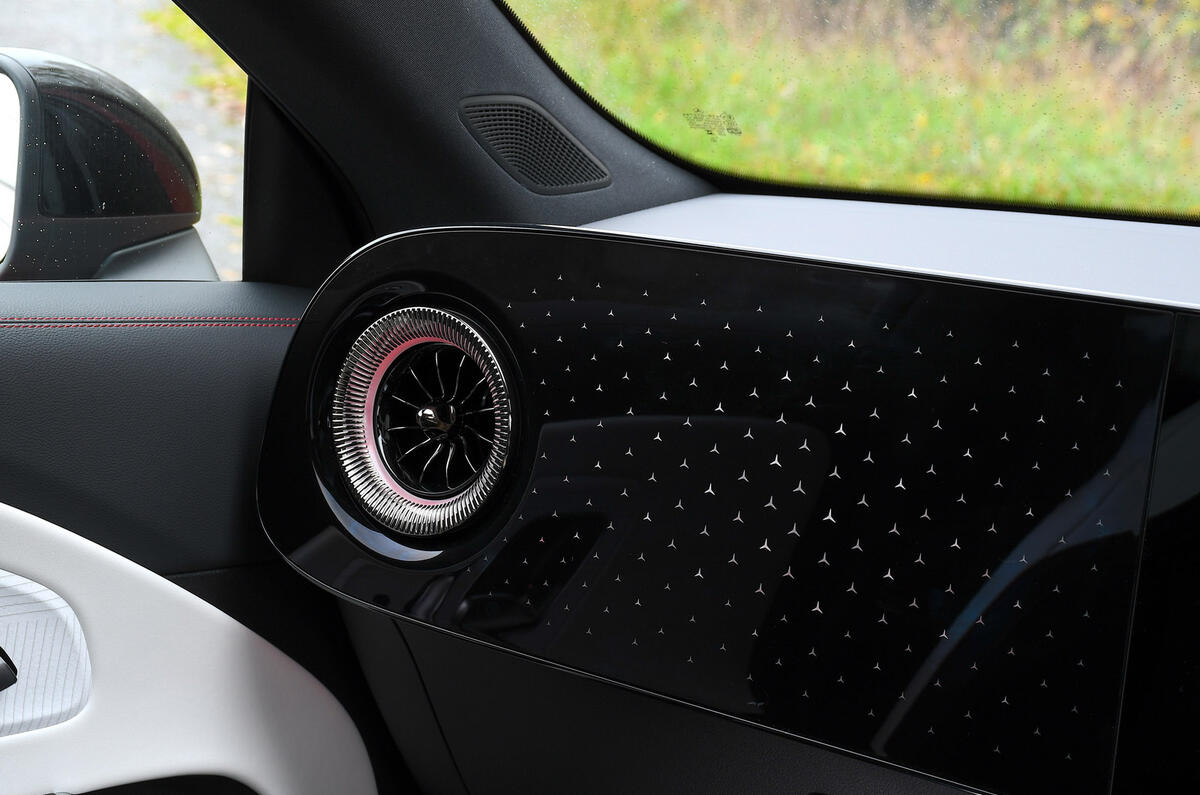
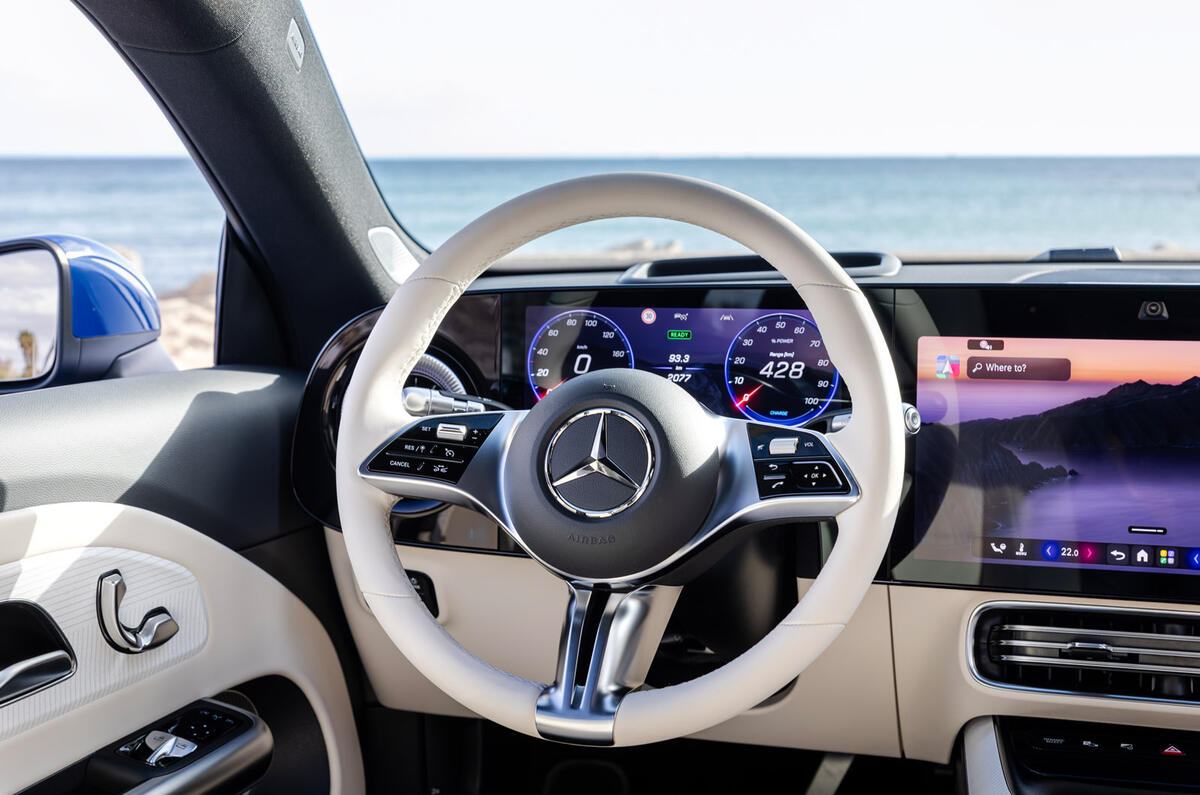
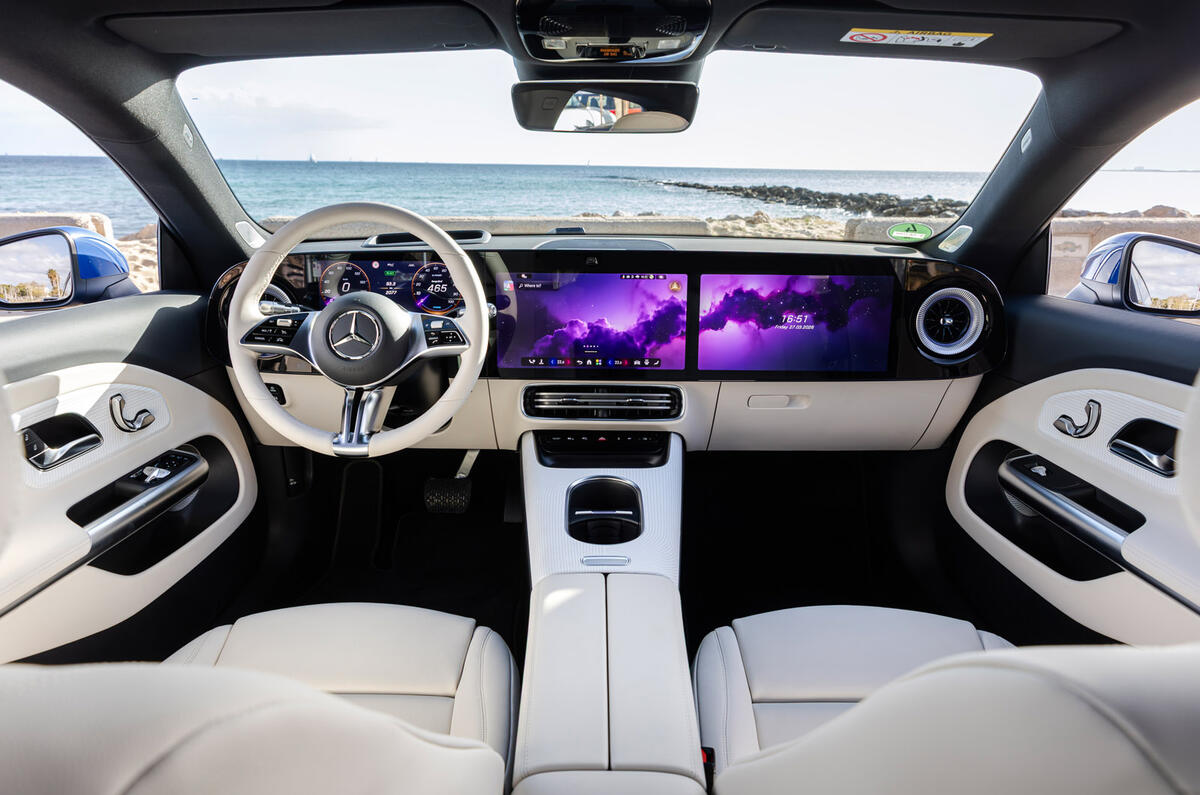
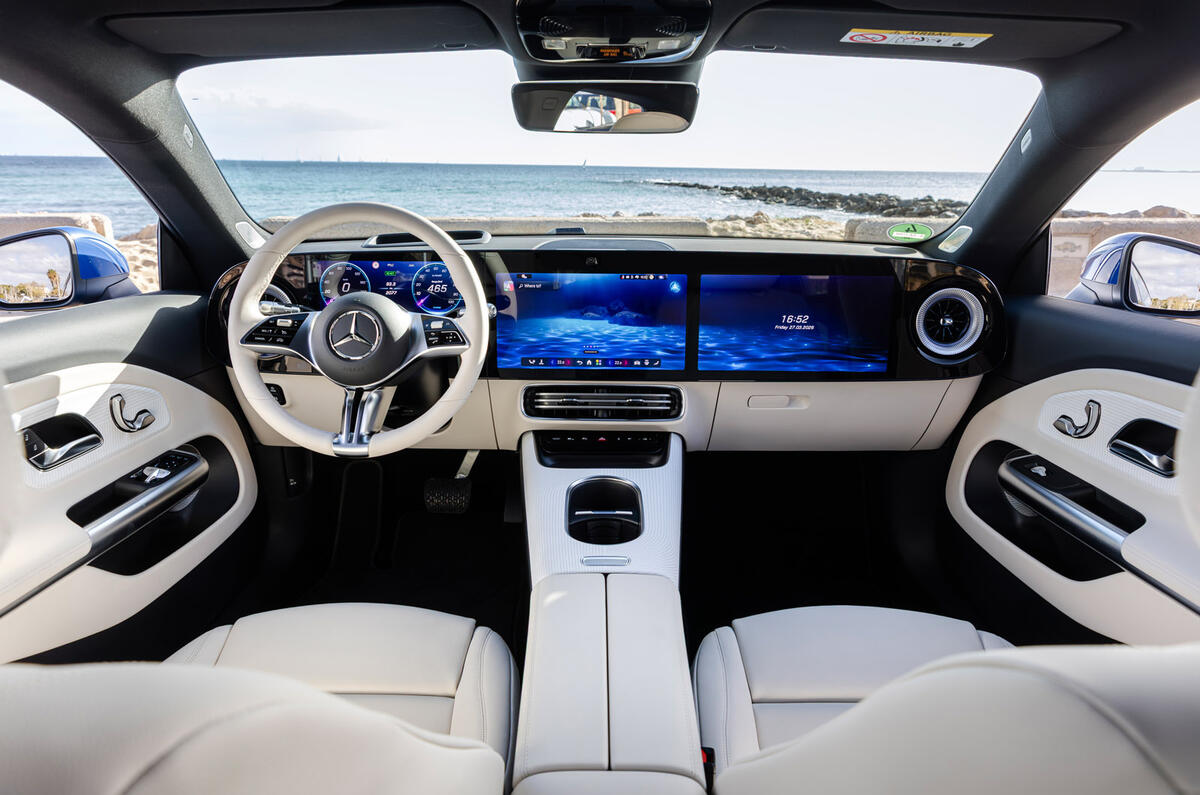
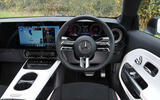
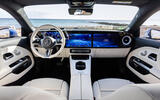
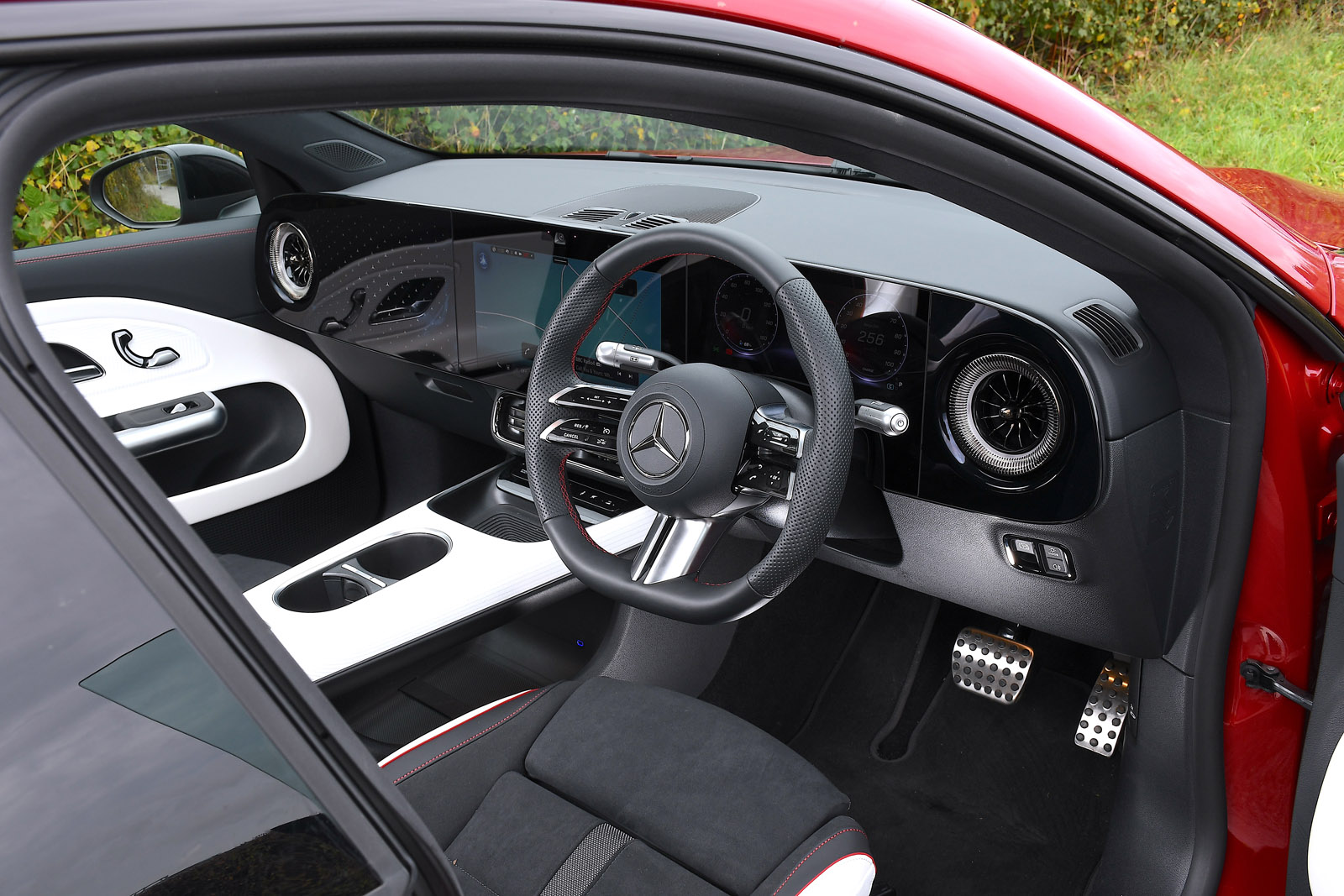
But there is certainly tech. Mercedes’ ‘MBUX Superscreen’ dashboard (standard on AMG Line Premium & Premium Plus models) puts a seconary 14in touchscreen display in front of the passenger, in addition to the identically sized one in the middle of the fascia. You can stream media on it; browse the web; and play video games. None of what you see is made invisible to the driver sitting next to you, though - which is mildly concerning from a distraction point of view.

While some other manufacturers are slowly revising their touchscreen-dominant strategies, Mercedes is ploughing on full steam ahead. As on other Mercedes, the approach is at least relatively cohesive here. The CLA's startlingly vertical fascia and relatively short dashboard are unusual, and call forth a 1950s vision of the future.

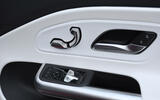
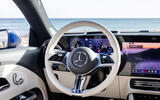
While Mercedes largely pulls off its wilfully modern design, it has gone too far in stripping away physical controls. Even compared with other recent Mercedes, the CLA has lost its buttons for the heated seats and lumbar support, and neither is especially easy to access in the touchscreen either. Meanwhile, the touch-sensitive controls on the steering wheel are not the worst of their kind but have outstayed their welcome.

Nonetheless, there is plenty to like about the CLA’s interior. The touchscreen generally works intuitively, with the maps, media and essential vehicle controls all accessible directly from the home screen. The built-in navigation uses Google data, so it’s very aware of traffic conditions and will even warn you of potholes (we found it quite accurate). It gives you pretty good tools to find a fast charger, though it’s not infallible and misses some compatible chargers. The AI-assisted voice control is one of the best around, if no substitute for proper buttons. Switching in and out of smartphone mirroring is quick and easy, though Apple CarPlay did drop out occasionally, before reconnecting automatically.

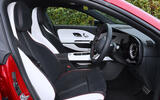
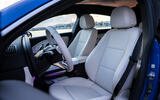
Despite the sizeable battery, the CLA doesn’t give the driver the feeling of sitting on top of the car, and there is plenty of adjustment in the seat and steering column to find a comfortable driving position. The seats themselves are excellent as well, with softer padding than most Mercedes seats but plenty of support. We can’t help regretting the dearth of upholstery options, though. Even on Premium Edition+ trim, you’re limited to faux leather and microsuede in somewhat garish colours, whereas German buyers can spec black or brown leather. There is a good amount of interior storage, with generous cupholders and a dual-level centre console.

ENGINES & PERFORMANCE

8
Mercedfes CLA shooting breake review 2026 001

Doing a full-throttle acceleration run in the CLA 250+ saloon was an unusual experience for an EV. With its 268bhp, the 250+ is about averagely powerful for the class. After all, it’s not meant as a performance model and it doesn’t have a launch control function. In fact, it somehow feels slightly slower than it really is. It reaches 60mph a few tenths behind the Volkswagen ID 7. Shortly after that, there’s a slight hesitation as it shifts to its second gear – an operation that is less instant than it is in the Porsche Taycan. With second gear engaged, it subjectively seems to get a second wind. In reality, the data shows that it loses some accelerative force compared with first gear but maintains its acceleration better than rivals. It reaches 110mph slightly sooner than the ID 7.
Look closely at the data, and you will notice that up to 70mph our test car was actually slightly faster with battery charge below 10% than with it over 90%. This was due to getting a better getaway, but it does show clearly that as far as UK road speeds are concerned, it doesn’t lose any performance at a low state of charge whatsoever, which is impressive.

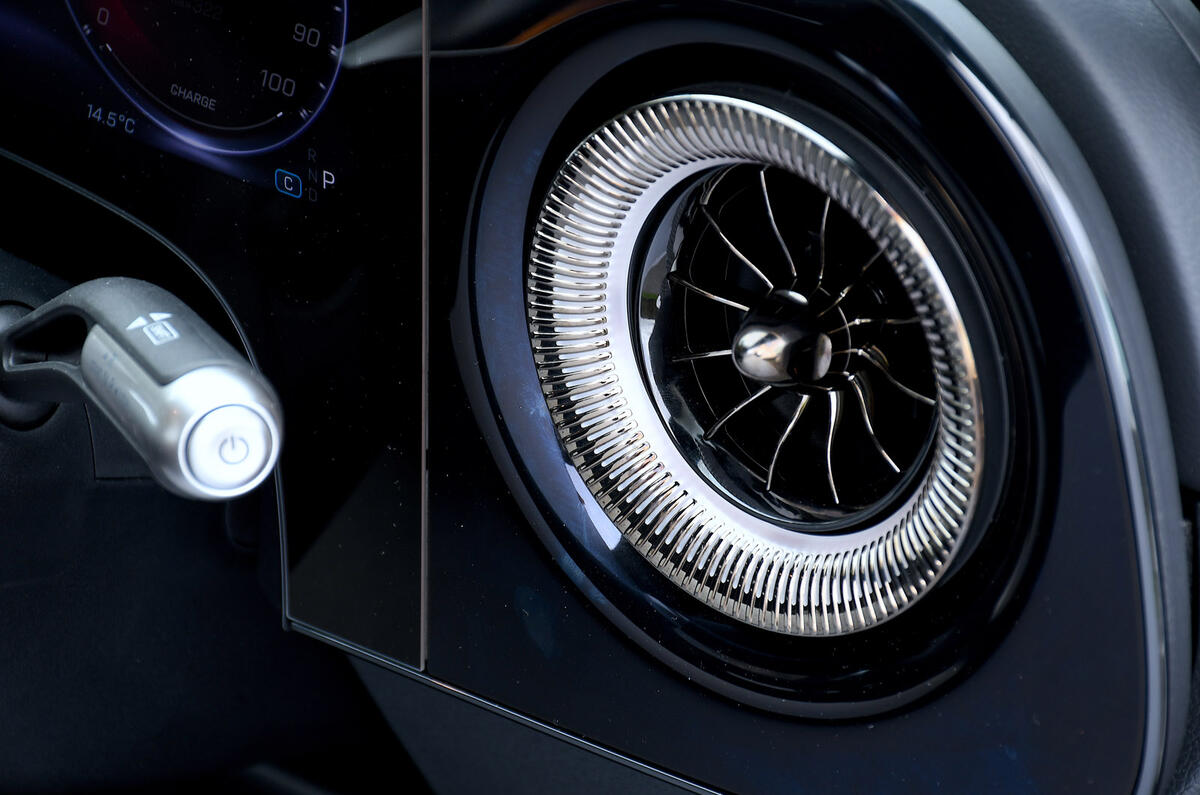
Left column stalk controls lights and wipers but is intuitive and has good haptics. Right stalk is for the drive selection and regen, but annoyingly, the button on the end turns the car completely off, instead of putting it Park.

Just as impressive is the CLA’s general drivability. There are no paddles to control the regenerative braking; instead you push and pull the drive selector stalk. This gives you the choice of a freewheeling mode, a one-pedal mode, a few regen strengths in between and an adaptive mode. Most testers preferred the freewheeling setting, because in combination with the very progressive brake pedal it makes the CLA deeply relaxing and intuitive to drive. Some testers found the one-pedal mode a little too fierce.

While on the subject of the drive selector, we do have an unusual complaint. There is no Park mode. Instead, the button at the end of the stalk turns the car on and off. If you instinctively try to put it in Park (for instance, when pulling over to look at your phone), this will kill some of the infotainment functions, and cycle all the ADAS features that legally need to default to on, which is irritating and unnecessary. You can, of course, put it in Neutral and engage the handbrake, but that’s unintuitive and fiddly.

Performance testing also uncovered one of the CLA’s most disappointing attributes. In the dry, its stopping distances are unremarkable if unusually variable. However, it needed 64.3m to stop from 70mph in the wet. When you consider that most cars, regardless of weight, need around 55m (Kia EV3: 50.5m; Volvo XC60 T8: 56.2m), this is unacceptable for a company that prides itself on safety. The Volkswagen ID 7 GTX recorded a similar stopping distance (62.8m), so it’s not entirely unusual - but if Mercedes has fitted tyres that compromise wet braking for efficiency to this degree, we would argue it was the wrong choice.

The only other CLA powertrain derivative we've tested is the 350 4Matic. Twin-motor derivatives of EVs like this have often come over as unusually irrational propositions these last fives years or so, in obliging people to pay more for heavier cars with less electric range, which only really pay you back with what can seem like a pretty superflous performance level. The CLA 350 4Matic, however, doesn’t suffer in the same way.

Mercedes claims that the additional motor on the front axle, and its associated ballast (as little as 33kg, depending on optional specification), only costs between 15- and 20 miles of range on the WLTP cycle. Our test car indicated a real-world, mixed-road 375 miles of range on a full charge. That’d drop a bit in quicker motorway use - but you could still expect 300 miles even there, which is commendable enough.

The car doesn’t feel fast enough to be a typical range-topping Mercedes performance derivative (we’d expect an AMG version to fill that gap), but it certainly addresses the slightly disinterested-feeling performance level of the regular 250+ version. It’s brisk but not excessive. The work of the front-mounted motor also helps to cover for the interruption in power delivery you can sense in the lesser version when it’s shifting gears.

RIDE & HANDLING

8
18 Mercedes Benz CLA EV 2026 Autocar road test review front cornering

The CLA’s chassis conjures Mercedes of old in some ways, in that it is quite light on whiz-bang ‘features’ – lacking any form of active suspension or four-wheel or variable-ratio steering (though other cars on the MMA platform, such as the GLB SUV, do have adaptive dampers) – but it manages to feel very cohesive all the same. It’s the sort of set-up that could only have come from a car maker with over a century of experience in tuning such things. At the rear is the expected multi-link, while at the front there’s a variation of a MacPherson strut. Mercedes calls it a three-link as the tie rod adds more support than usual. Dampers are simple passive items.

Nevertheless, Mercedes has struck a particularly pleasant balance of ride and handling. The suspension doesn’t completely iron out the bigger bumps like some air-sprung systems but is settled and just lets you know what’s going on underwheel. If it were any softer, it might risk becoming floaty. Equally, high-frequency impacts are reduced to blunt thumps. Smaller wheels with taller tyres might make those even less noticeable, but we wouldn’t expect miracles from the 18in wheels. It’s fairly quiet at motorway speed too.

The CLA has pop-out door handles, but unlike those in the latest Audis, Volvos and Teslas, they use cables to unlatch the door because Mercedes doesn’t trust purely electronic mechanisms to still work in the event that a freak accident takes out the 12V power. That seems sensible to me, though they didn't always pop out when I expected them to during our test.

Point the CLA at a corner, and it makes the most of its rear-drive layout. The steering is nicely uncorrupted, intuitively geared and weights up a little as you load up the chassis. It initially turns in quite keenly, but if you’re really pushing it, you soon run into the limits of those economy-focused tyres. In Germany, it’s possible to spec ‘sport’ tyres, which might just tip the CLA into sports saloon territory and shorten that wet braking distance. There is initially little sense of rear-drive balance, as the stability control is very conservative. Switch to the ‘off’ mode (which isn’t fully off), and the CLA will rotate quite progressively on the accelerator. On both the wet and dry handling tracks, the alliance of a powerful rear motor and quite a rear-heavy weight balance made the CLA amusingly adjustable.

As regards the pricier 350 4Matic version; there's more impressive news. A nicely fluent, supple and well-isolated ride to enjoy, for a start; as well as fairly nonchalant yet effective body control, and precise, agile and intuitive handling that allows the CLA to flow along a fast mountain road rather agreeably. Just as in the 250+, you can use the car’s drive selector column shifter, pushed backwards and forwards rather than up or down, to manage motor regen manually as you drive, if you like.

Finally, a brief note on the assisted driving systems. Mercedes-Benz basically invented adaptive cruise control with the S-Class of the early 2000s, and still has one of the best such systems. Except, it doesn’t seem to have fitted it to the CLA. The system is less confident than on other Mercedes, and it more regularly slows down for traffic that isn’t there. The undertaking prevention also can’t be disabled. Although our test car supposedly had matrix LED headlights, they did not seem to work – instead simply activating and deactivating the high beam as necessary. On the mandatory safety features front, it’s better news. The lane keep assist and driver monitoring are a bit of a faff to disable but generally unintrusive, while the speed limit warning is better than most and very easy to turn off.

MPG & RUNNING COSTS

8
01 Mercedes Benz CLA EV 2026 Autocar road test review Front driving lead

At £45,615, the entry-level Sport trim is priced in line with a Long Range Single Motor Model 3, though the Tesla is much more generously equipped as standard. However, the Sport is the version we would recommend, since the smaller wheels might just improve the ride further and net you a few more miles of range. It also comes with normal rather than the flush door handles of our test car, which didn’t always pop out when we expected them to. Whichever spec you choose, though, the Tesla is much cheaper on PCP finance. Compared with other rivals, the Mercedes is fairly decent value.

Despite being the second-highest trim level, our test car didn’t have a powered bootlid, but the springs are strong enough that the lid leaps up when you press the button. I prefer it this way because it’s quicker. The lack of a heated steering wheel is an issue, though.

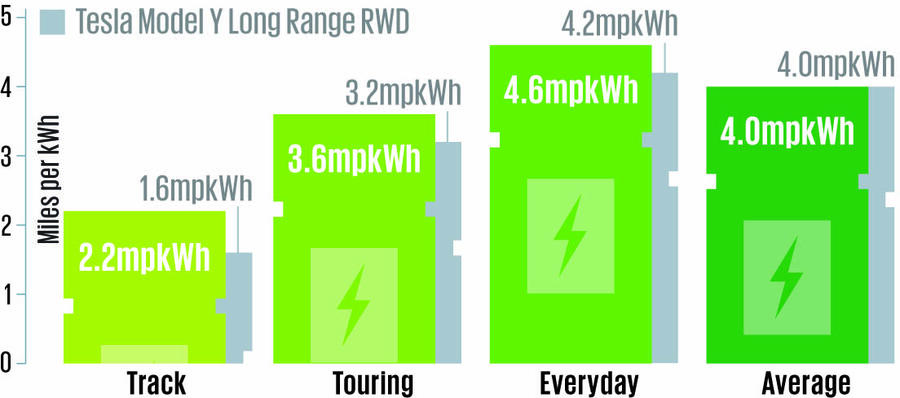
So what of that much-vaunted range and efficiency? There’s no doubt that the CLA performed very well – 3.6mpkWh on our touring test (which tends to be more pessimistic than regular motorway driving) and 4.6mpkWh on the ‘everyday’ test are among the best figures we have recorded. But given all of its tech, we expected it to really outshine the Teslas, though; and it's a telling measure of how efficient the Model 3 continues to be that it didn't. 

The better news for CLA owners may be that you can go for the twin-motor 350 4Matic model and not suffer too much on inefficiency. On a preliminary test in Spain, our 350 test car suggested it would cover a range of 350- to 375 miles in mixed used; dropping to 300- at exclusively motorway pace. So it really isn't a lot less usable on range than the 250+ version.

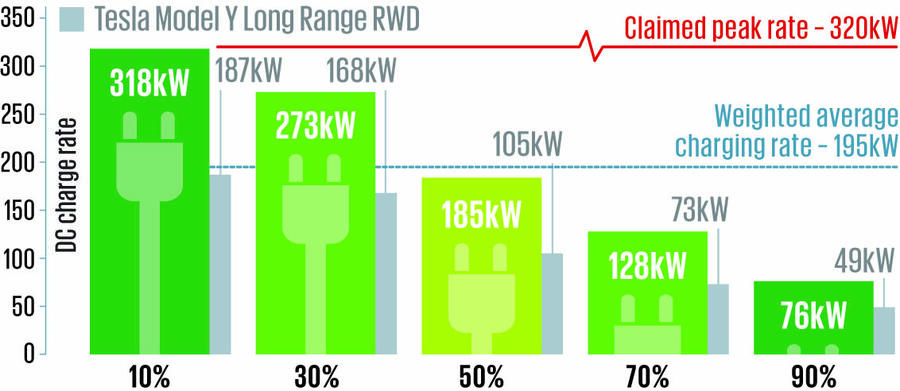
The car tells a similar story on rapid charging as it did on efficiency. A weighted average of 195kW and a (very brief) peak of 330kW are undoubtedly impressive, but equally it’s not the leap that we hoped for. For reference, we recorded 180kW from the Hyundai Ioniq 6 two years ago. It was a little disappointing how quickly the CLA’s charging speed dropped off.

The biggest potential hiccup of all is that, as standard, the CLA won't take a DC rapid charge from an older-tech-style, 50-100kW, 400-volt rapid charging post; a result, it's claimed, of the fact that it has an 800v electrical architecture, and a charging system optimised for that rating.

You may decide that doesn't matter to you; especially if you never need to use those older rapid chargers (which tend to be the unreliable ones anyway, of course). But Mercedes will now include a converter to deal with the problem; but only at a cost of £850. It's a conspicuous cash grab from the company, and a little strange given that it's a move without precedent among other EVs that we know of.

VERDICT

8
20 Mercedes Benz CLA EV 2026 Autocar road test review front static

Following a group test and a road test, we are thoroughly impressed with the new CLA. It’s very pleasant and enjoyable to drive thanks to its balanced suspension, configurable drivetrain and comfortable driving position. It’s also at the forefront of EV tech, being among the fastest-charging cars and having a long range that’s a result of clever energy usage instead of brute force.

Moving up the showroom range, there's more to like. As electric driving experiences go, the CLA 350 4Matic’s does feel assuredly ‘premium’; but it can be relaxing too, and doesn’t gesture at a level of driver appeal that is ultimately unfulfilled. If more upper-tier EVs can hit a similarly mature, well-balanced positiioning, you’d say brands like Mercedes should have a better chance of selling a few more of them; and customers should see more sense in spending extra on a car that delivers more upside than down-.

There are various ‘digital soundscape’ engine noises here. One sounds a bit like a wood-chipper; another like some fairytale magic tinkling carriage. They do, at least, help you to judge your prevailing road speed, and sound different under power than during regen.

Zooming out a bit, of course, the simpler Tesla Model 3 still matches the CLA for efficiency, which might surprise some people; and at the same time, the CLA's lack of physical controls, and the tyres’ poor wet performance, are regrettable.

This new CLA is a step rather than a leap forward for European EVs. It’s a very appealing car, but will need continuous development if it’s not to be left behind in the coming years.

Illya Verpraet

Illya Verpraet Road Tester Autocar
Title: Road Tester

As a road tester, Illya drives everything from superminis to supercars, and writes reviews and comparison tests, while also managing the magazine’s Drives section. Much of his time is spent wrangling the data logger and wielding the tape measure to gather the data for Autocar’s in-depth instrumented road tests.

He loves cars that are fun and usable on the road – whether piston-powered or electric – or just cars that are very fit for purpose. When not in test cars, he drives an R53-generation Mini Cooper S or a 1990 BMW 325i Touring.