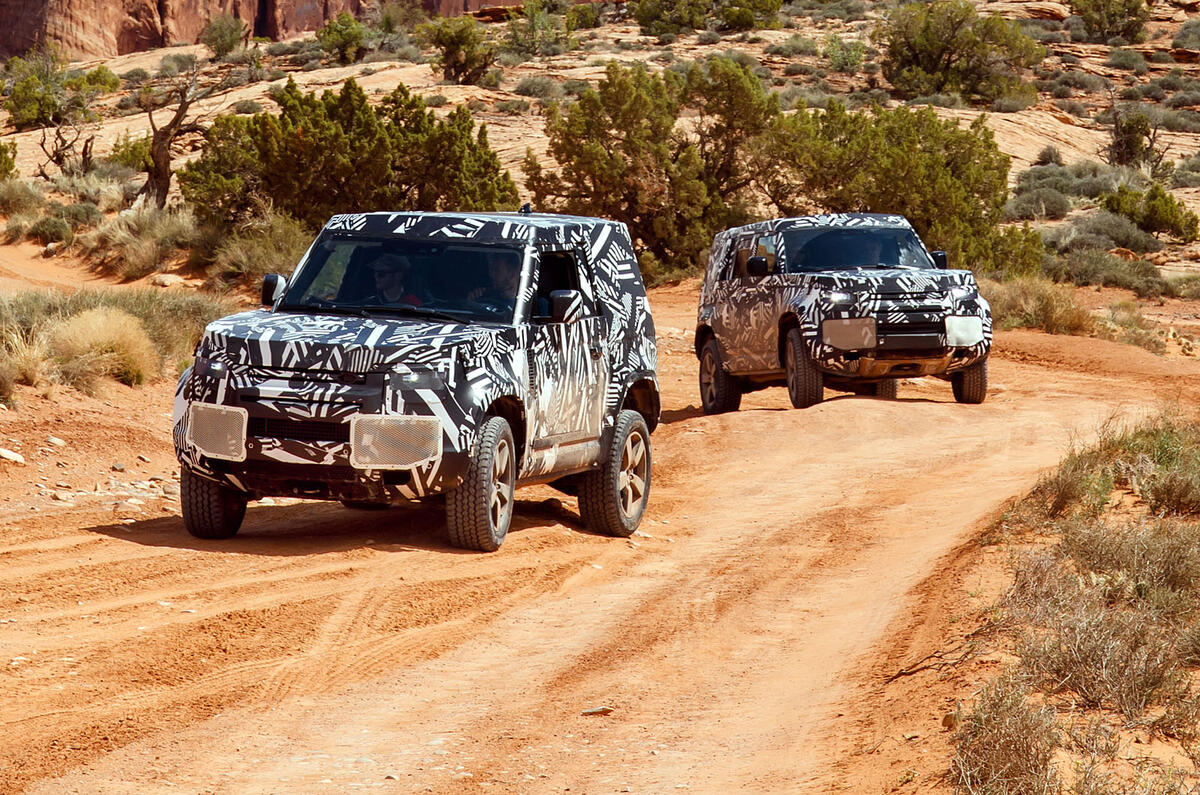

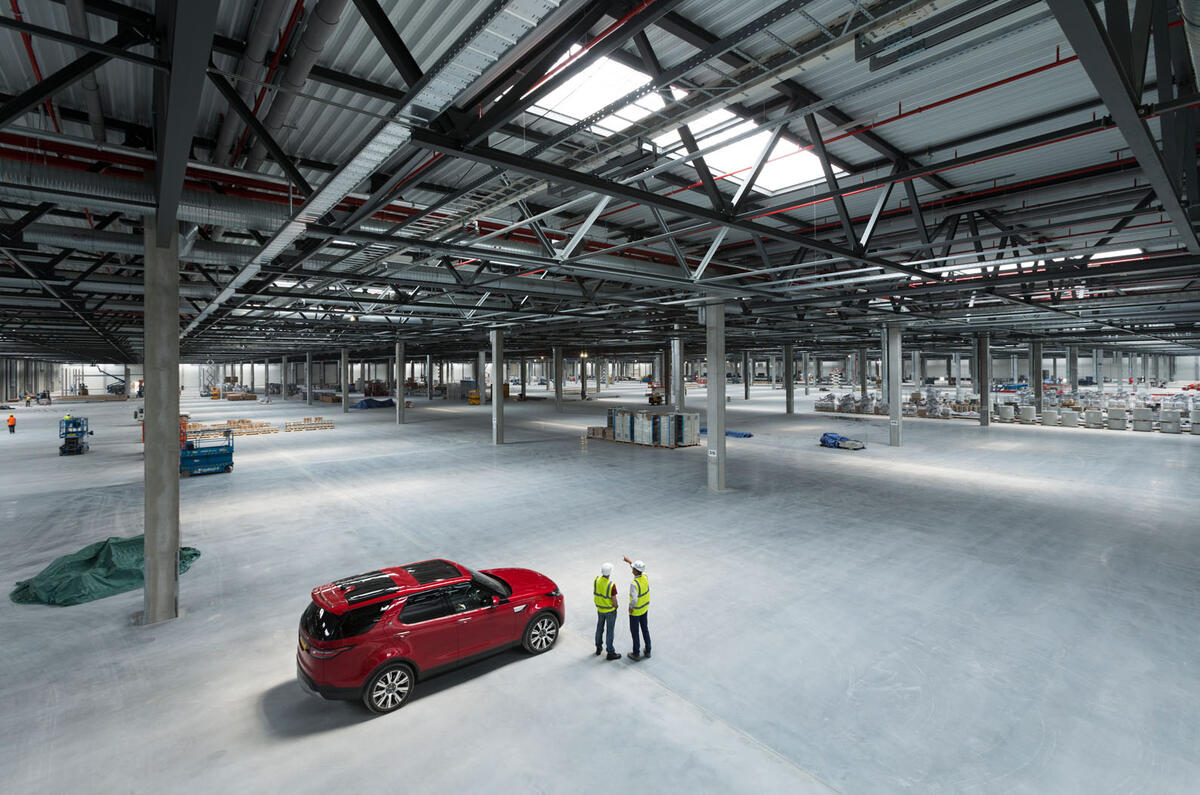



It’s official: the new Land Rover Defender will be built in Slovakia, and not Solihull.
That won’t really be much of a surprise to Autocar readers: it’s long been expected that the revived rugged off-roader would be produced alongside the Land Rover Discovery at Jaguar Land Rover’s recently opened £1 billion Slovakian plant. But the confirmation still sparked headlines in the national media.
Let’s leave aside the politics of that decision for now (I’m sure the word ‘Brexit’ may have appeared in wider news coverage of the story). Because the news prompted someone to ask me an interesting question: will the new Defender still be seen as a British car?
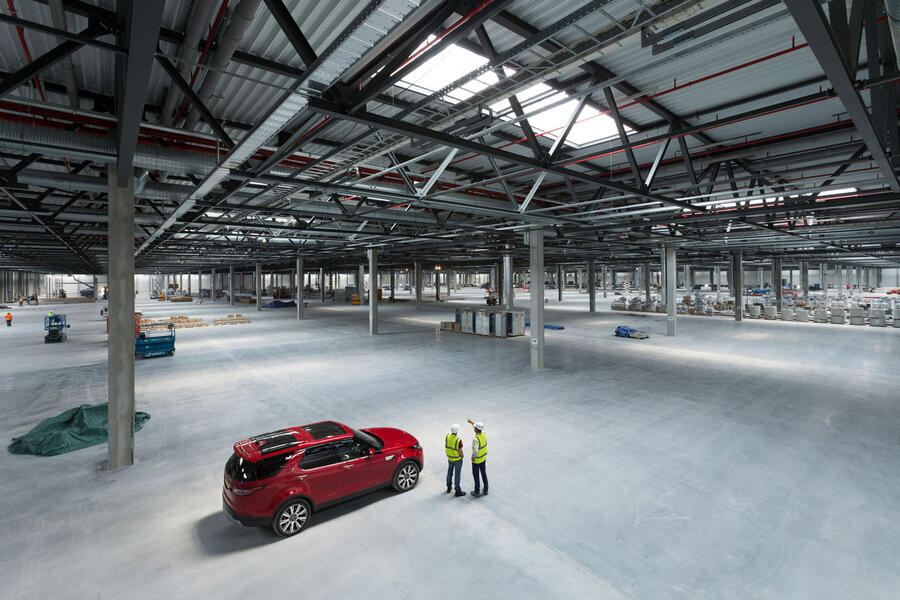
My instant response was that, yes, of course it will. Land Rover is based in Britain, and the new Defender has been designed, developed and engineered in Britain. Its engines will be built in Britain. And it’s the latest version of a model that has a long, proud and very British heritage.
In my mind, it will still feel British, even if it is built in Slovakia, and even though Land Rover is owned by an Indian company.
It’s all about perception: the reality is that cars don’t really have a singular nationality any more.
Car firms are now sprawling global operations, with design, engineering and production facilities in numerous countries on multiple continents. Parts and powertrains for a single car can be designed by a multinational team of engineers in one country, made in another, and assembled into a finished machine in yet another.