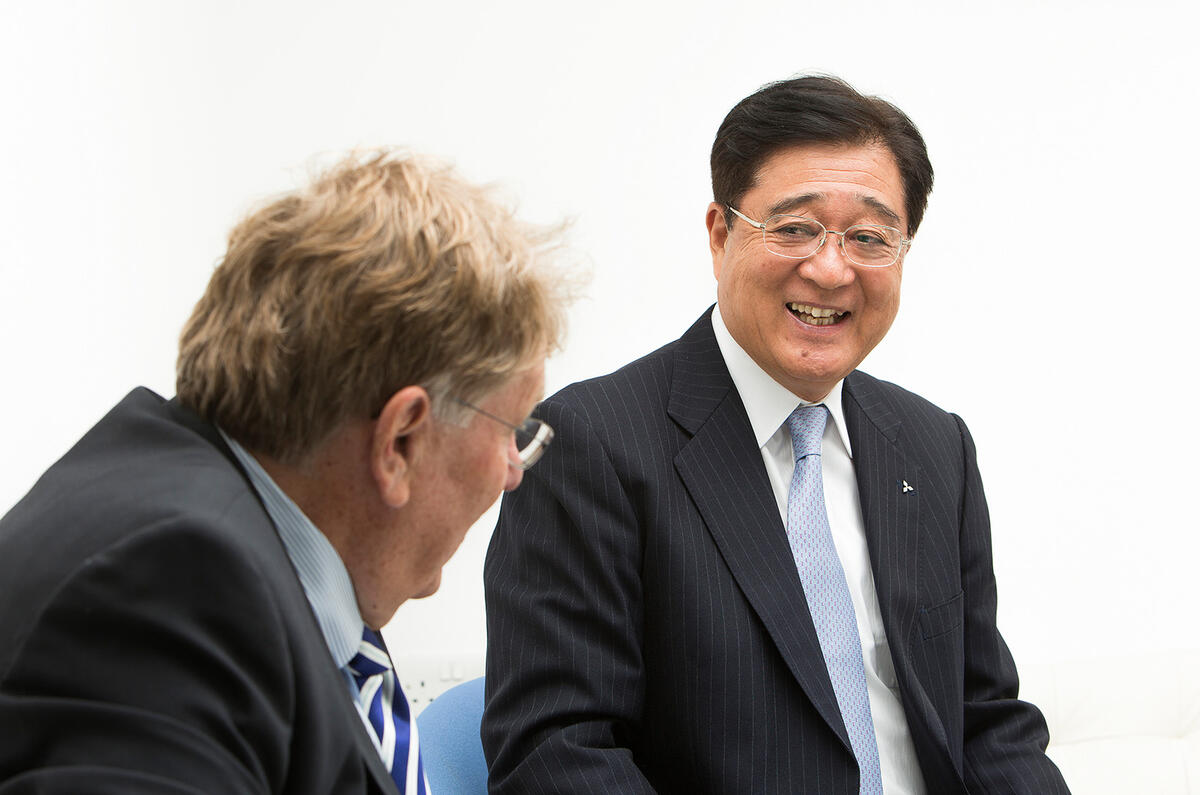
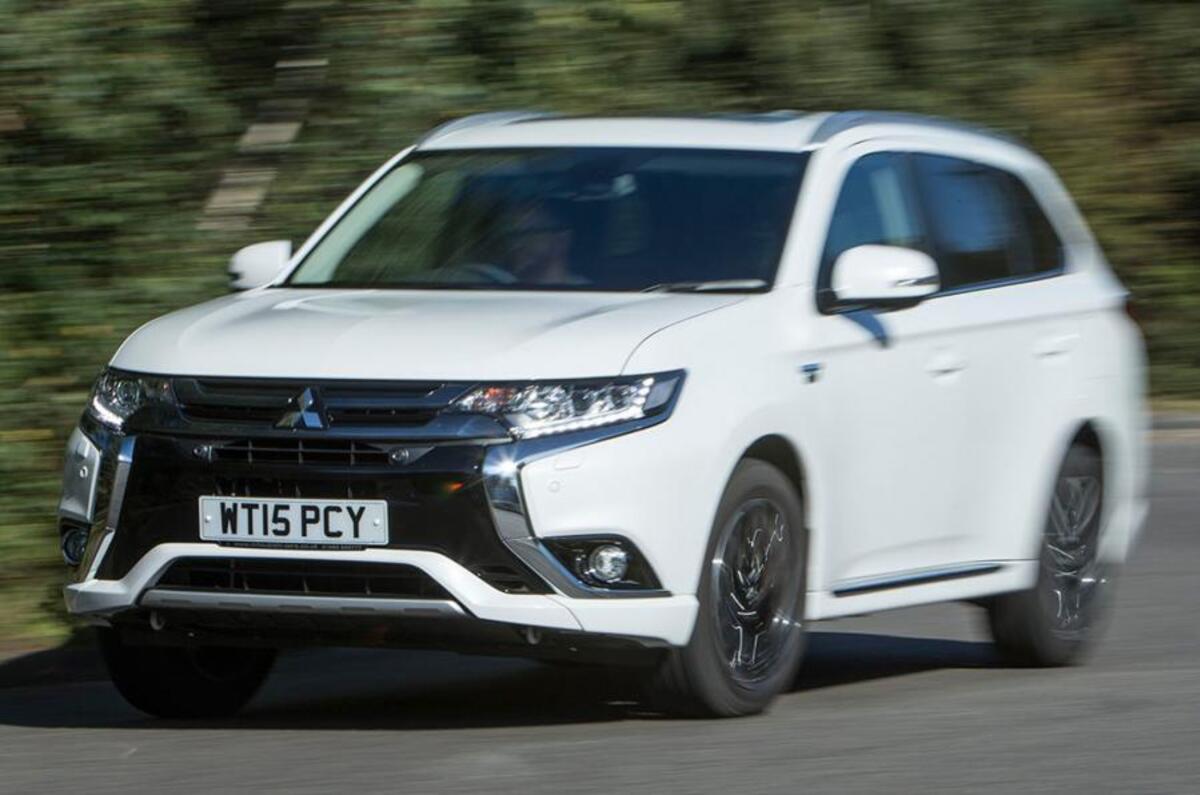

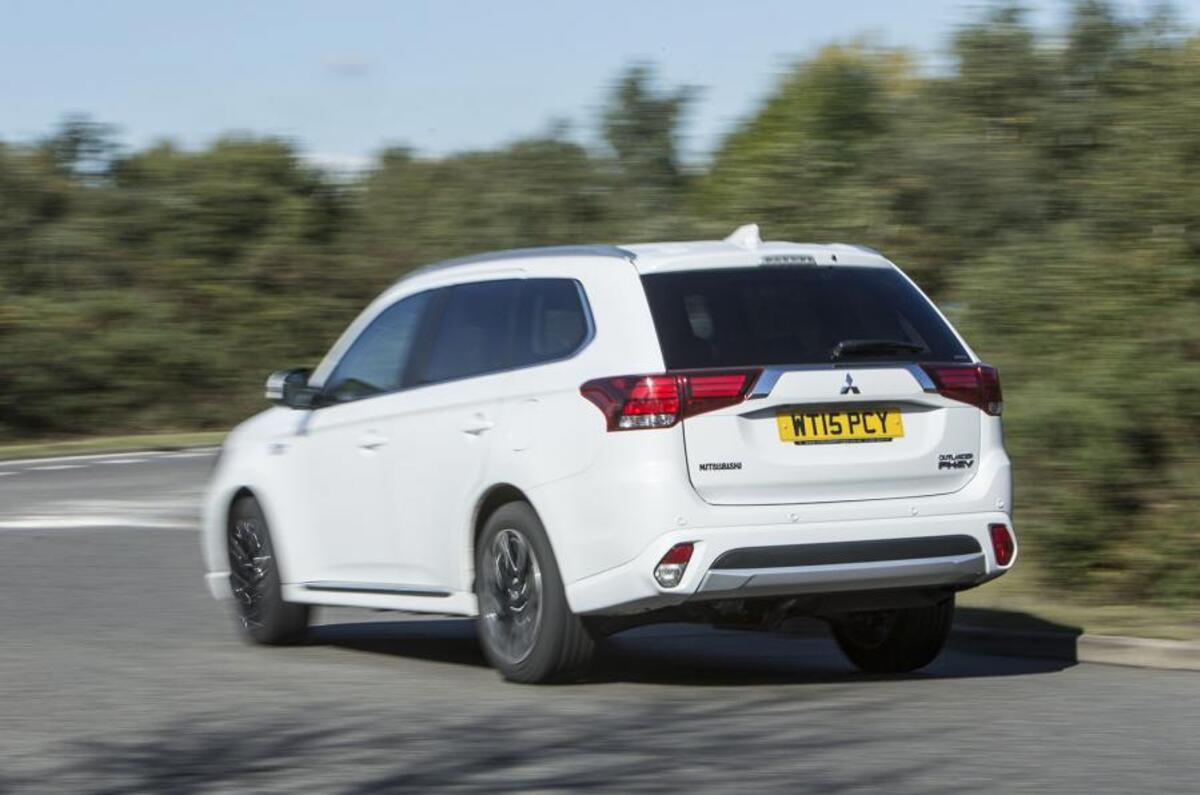
Mr. Mitsubishi is in town to say thank you. Osamu Masuko, chairman and CEO of Mitsubishi Motors since last June, has arrived at Heathrow and will soon head 100 miles west down the M4 to the headquarters of his UK importer in Cirencester, Gloucestershire, to congratulate bosses and staff on a key role in establishing the Mitsubishi Outlander plug-in hybrid SUV as Europe’s best-selling electric car.
The Outlander PHEV’s success, Masuko admits, is a considerable surprise. When the Outlander first hit the market last year, it caught a freakish groundswell of interest in SUVs and plug-in hybrids that encouraged the local importer to take a bold but well-informed gamble and place an uncharacteristically large forward order.
Customers came running. The result was a mighty upswing in 2014 volume that has increased further this year. First-half UK sales easily beat 7000 units, more than doubling those of the Nissan Leaf and beating the BMW i3 six to one. “I am here to thank everyone,” says Masuko-san, “and also to make it clear that we have high expectations for the future.” It’s a familiar message to those who are successful in business: bigger sales breed bigger targets.
The UK strength has already added lustre to Mitsubishi’s recently announced plan to build a five-strong range of green, mostly plug-in SUVs by 2020, which Masuko obligingly sketches for me on paper.
This is Mitsubishi’s future, he believes, now that battery costs are falling as efficiency rises. Others are reading the same signs, however, and Masuko sees the next phase as coping with increasing competition. “We know a fight is coming,” he says, “but the fact that the technology is spreading fast is very positive. It will become a major technology for the future, not a novelty. By 2020 European CO2 regulations will be much tougher, but we already have one car to answer the new regs and more coming. This is our strength.”
Masuko says Mitsubishi’s pre-eminence in PHEV technology is already lifting its brand image. “Some of our new customers are quite different from our traditional buyers,” he notes. “They are coming from premium cars, which means we’re expanding our target customer base.”
What about the fabled Mitsubishi Evo, the super-fast 4x4 Lancer saloon that was a staple model for so long? Masuko agrees the car did plenty for the brand in its day, but “considering the environmental impact and the modest sales volume, it wouldn’t be right to develop this car today”.
Better, evidently, to concentrate on a high-performance version of the Outlander PHEV, the hybrid 4x4 rally car that had its most recent outing in Portugal in October. Using plug-in technology to deliver high performance has plenty of appeal, Masuko admits, but it’s hard, and he won’t confirm plans for a production model.
Mitsubishi has no ambition to be a big volume manufacturer, Masuko insists, although it does intend to maintain a presence in the highly competitive supermini sector by replacing the lacklustre Mirage, whose replacement will feature an electrified model in its line-up.
“We must keep building our brand image rather than chasing volume,” he says. “Adequate pricing is more important than sheer numbers. We see from our home market that the population is ageing, so we can’t expect a big upsurge in demand – and there are similar trends in Europe.
The best path is to concentrate on selling cars that use specialised technologies others don’t have. It’s okay to have just one or two of these, as long as they deliver a useful result and you apply them at a high level. This is the way to survive and succeed.”

Mitsubishi UK boss Lance Bradley on why he took a risk on the Outlander PHEV
Lance Bradley is famous in Japan. Inside Mitsubishi’s headquarters, anyway. As boss of the company’s UK business, he’s the bloke who took a risk on importing the pioneering Outlander PHEV in big numbers - and first demonstrated that car companies in the UK could be successful with plug-in hybrids.
Bradley, who arrived at Mitsubishi from Ford in 2000 and took the top UK job six years ago, knew it wouldn’t be easy. “We’d tried the battery-powered i-MiEV in 2009, but the market wasn’t ready for that,” he says. “People had expected to save money, but they didn’t, because it was expensive. Then I drove the Outlander PHEV in Japan and really liked it. People are always polite about new models, of course, but this was different.
“The Outlander PHEV has always been Masuko-san’s baby. We both knew the market that would best demonstrate the plug-in’s potential in Europe was the UK, but it would take good co-operation and good pricing to give it a good start, because we’re still an independent importer. Masuko agreed our pricing strategy: to sell the car at the Outlander diesel’s price, after the government grant for electric vehicles.
“I’ll never forget the reaction of the first journalists [one of whom was Autocar’s Jim Holder] when they drove the PHEV,” he continues. “They thought it was good, but they also knew success would hang on the price. When I told them customers would pay the same price as the diesel, they were open-mouthed. It was a really dramatic moment, and of course it led on to the car’s success. Last year we sold more PHEVs here than they did in Japan.”


Join the debate
Add your comment
Pity it looks like a bathtub
MrJ wrote: Pity it looks like
I think you have it confused with the Evoque convertible. The Mitsubishi looks like a barn on wheels.
The Apprentice wrote: ...
Is this why, when they are in front, you cannot see a thing?
Its a great car, I am
I wonder whether he says the same to the Dutch importer?