Currently reading: How to pay for charging an electric car

Everything you need to know about where to charge an electric car and how to pay for it

The UK has one of the world’s most widespread electric car charging networks, so you’re rarely far from a convenient place to plug in. But paying for it hasn’t always been easy.

Early adopters will have less-than-favourable memories of juggling multiple memberships, glove boxes full of RFID cards and the multitude of smartphone apps and memberships needed to get around the country. 

However, it’s become a lot simpler recently. The Government has clamped down on easy access to public chargers to help drivers switch, and there’s a growing choice of membership schemes that enable them to pay for multiple networks under a single account. 

Read on to find out about the different methods, and how to cut the hassle (and cost) of keeping your EV topped up.


Contactless Payments

Paying for public charging is often as simple as tapping your smartphone or bank card to buy a mid-journey coffee, with no need to sign up for membership beforehand.

Contactless payments became mandatory in November 2024, as part of the Government’s Public Charge Point Regulations. Those rules apply to any newly installed charger at 8kW or faster, and all DC rapid chargers capable of 50kW or more, even if they were already live before that date.

In practice, it means you’re rarely far from a charger that you can access either with a tap of your credit or debit card, or by using Apple Pay or Google Pay on your smartphone. There are almost 30,000 rapid chargers across the UK which accept contactless payments if the nearest slower ones haven’t been upgraded yet.

And, if you’re driving for business, most networks will let you request a receipt online by entering a few details about the charging session. 

However, there is a downside. Contactless might be convenient, but it’s often the priciest way to pay for charging. 

Charging Network Apps

Most charging networks still offer their own apps, which will enable you to enter your bank details then control and pay using your smartphone.

They’re usually free to download and include maps showing where chargers are located, how fast they are and whether they’re available and online. You’ll also get access to some of the legacy chargers that don’t have contactless payments.  

Using apps can be a little fiddlier than tapping a contactless card, as you need to locate the charger and activate it from your phone. However, you’ll get live data about the charging session, the ability to track how much you’ve been spending and options to quickly download receipts for expenses claims if you need them. 

Some networks also offer with discounted rates if they register on an app. Ionity, for example, charges 79p/kWh for app users compared 83p/kWh for contactless payments, and it’s one of several operators (alongside Be.EV, BP Pulse, Fastned, Gridserve and Tesla) offering even lower rates in exchange for a monthly membership fee.

Subscriptions can break even quickly if you’re regularly using the same networks. A Kia EV3 with the longer-range battery would more than cover Gridserve’s £7.99 monthly membership in a single 10-70% rapid charging session. The downside is you’ll still be paying full whack if you plug in elsewhere.  

Back to top

Roaming Apps

Not all apps limit you to a single network. There’s a growing choice of so-called ‘roaming’ providers (sometimes called eMSPs, or electric mobility service providers) that offer the same benefits across multiple operators.

These work similarly to networks’ own apps, including live maps, real-time data about the charging session and the ability to track your spending and download receipts under a single account. However, you won’t necessarily be able to access to the nearest or cheapest chargers if they’re not partnering with that company.

Several roaming services also have membership options with discounted rates, though each works differently. Zapmap offers premium subscribers a 5% discount across its partner networks, while Octopus customers get up to 8% off charging through the Electroverse app, with options to pay directly out of their home energy account.

RFID Cards and Fobs

Membership cards and fobs might seem like an inflexible relic of the early days of EV charging, but they’re still a useful fallback.

These offer some of the ease of contactless payments, and selected membership discounts too. Simply tap the fob on the reader, and it’ll start or stop the charging session, then bill your account. As a bonus, you won’t need to worry about poor coverage, or your phone’s battery running flat.

As a driver, RFID tags offer access to chargers that haven’t been retrofitted with a contactless card reader and don’t work through an app. And yes, there are still a few really early units about that don’t have either. Some (such as Electroverse) work across multiple networks too.

How do you pay to charge an EV abroad?

If you’re heading further from home, then Europe has a fast-growing network of public chargers, and paying for electrons is similar to driving in the UK.

Back to top

The Alternative Fuels Infrastructure Regulation (AFIR) has set out targets to deploy rapid charging hubs close to major routes and urban areas throughout the European Union. Each of these is legally required to offer ad-hoc access – either via a contactless card reader, or a QR code linking drivers to a website for payment.

Beware, though: some banks restrict the amount you’re able to spend in one transaction when using contactless, or when paying with a mobile phone abroad. Some countries will tax you slightly for using contactless.  

The alternative is one of the international roaming providers. Signing up for an account with Octopus Electroverse, Plugsurfing or Shell Recharge opens up access to chargers across the Continent as well as in the UK, and they’ll help you locate somewhere convenient to plug in too.

How much does it cost to charge an electric car?

The cost of charging varies, but as a rule of thumb you’ll pay the most to use the fastest chargers.

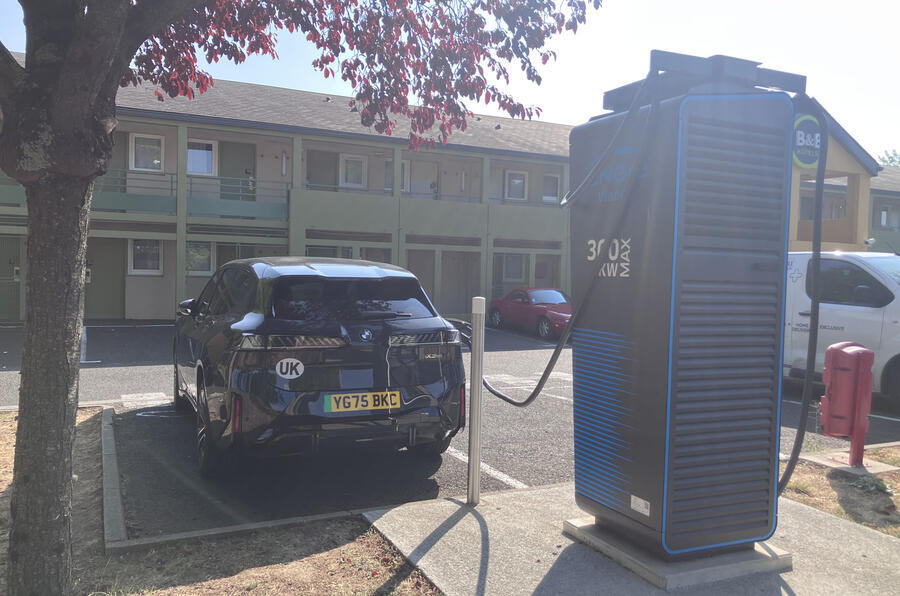
For example, the priciest rapid chargers – the ones you’ll find close to motorways and A-roads – cost over 90p per kilowatt-hour, whereas the latest weighted average for slower AC units is 54p, according to Zapmap.

That’s not just a convenience tax. Powerful chargers are more expensive to buy and install than the slower AC units you’ll find in car parks. If you’re planning a round trip that involves a long stop somewhere, it’s almost always cheaper to leave the car plugged in for a while when you get there, than it is to top up en route. 

Just bear in mind that slower chargers are often located within paid-for car parks, and some have over-stay fees if you hog the charging bays all day.

Shopping around can also help. Tesla has opened selected Supercharger sites to other vehicles, including some located at service stations, and they’re usually much cheaper than other networks. The Tesla smartphone app shows which ones are available for this.

Believe it or not there are also a surprising number of chargers (mostly slower units) that are still free to use. Zapmap has a filter to help find local ones.

Back to top

How can drivers cut the cost of charging an EV?

The most cost-effective way to drive an electric car is by doing as much of your charging as possible at home. Even on a flat-rate tariff, capped by industry regulator Ofgem, that should be half the price (26p per kWh) of plugging into a typical slow public charger. 

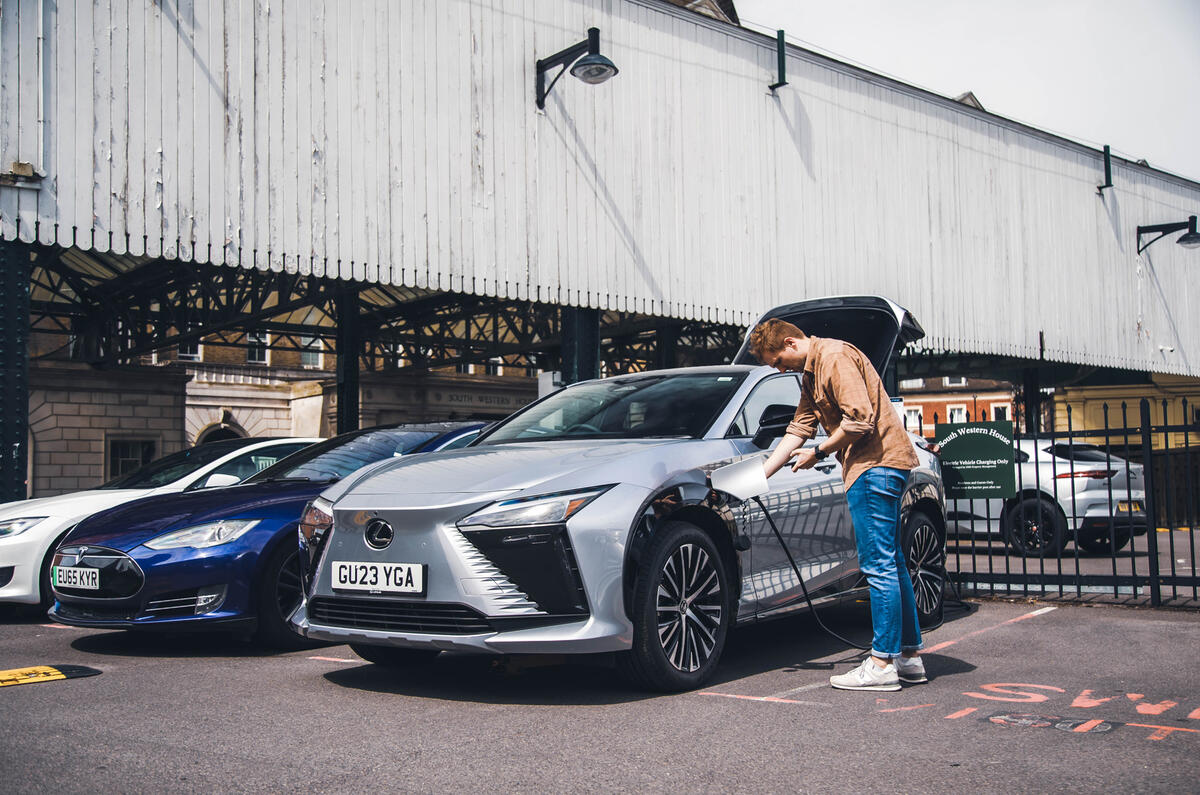
An EV can plug into any three-pin socket, but the safest and most convenient way to take control of your costs is getting a dedicated wallbox. Smart chargers are priced between £500 and £1,500 including installation, they’ll save you dragging cables through open windows and most have a smartphone app for tracking what you’re spending on energy.

Financial support isn’t as generous as it once was. The Government’s Office for Zero Emission vehicles offers grant funding of up to £500 or 75% of the cost to buy and install a home charger. However, it’s only available for flats, rented accommodation and properties without off-street parking. 

If you’re really watching the pennies, then switching to a tariff with cheap overnight electricity rates will take a huge chunk out of your running costs – and help offset any pricey sessions at a rapid charger. 

Tariffs such as Intelligent Octopus Go, for example, offer rates below 7p per kWh between 11:30pm and 5:30am – when there’s extra capacity in the grid. They’ll also offer half-hour discounted rates throughout the day, and some smart chargers will automatically take advantage of those if the car is plugged in. Those rates apply to the whole house, too.

Otherwise, if you’re lucky enough to have chargers at work, then it’s another good way to save money. Some employers offer lower-than-public-network rates for staff, usually by tracking usage through an RFID card and deducting the total from their wages every month. If they offer it for free, then HMRC won’t tax you for the privilege. 


Join our WhatsApp community and be the first to read about the latest news and reviews wowing the car world. Our community is the best, easiest and most direct place to tap into the minds of Autocar, and if you join you’ll also be treated to unique WhatsApp content. You can leave at any time after joining - check our full privacy policy here.