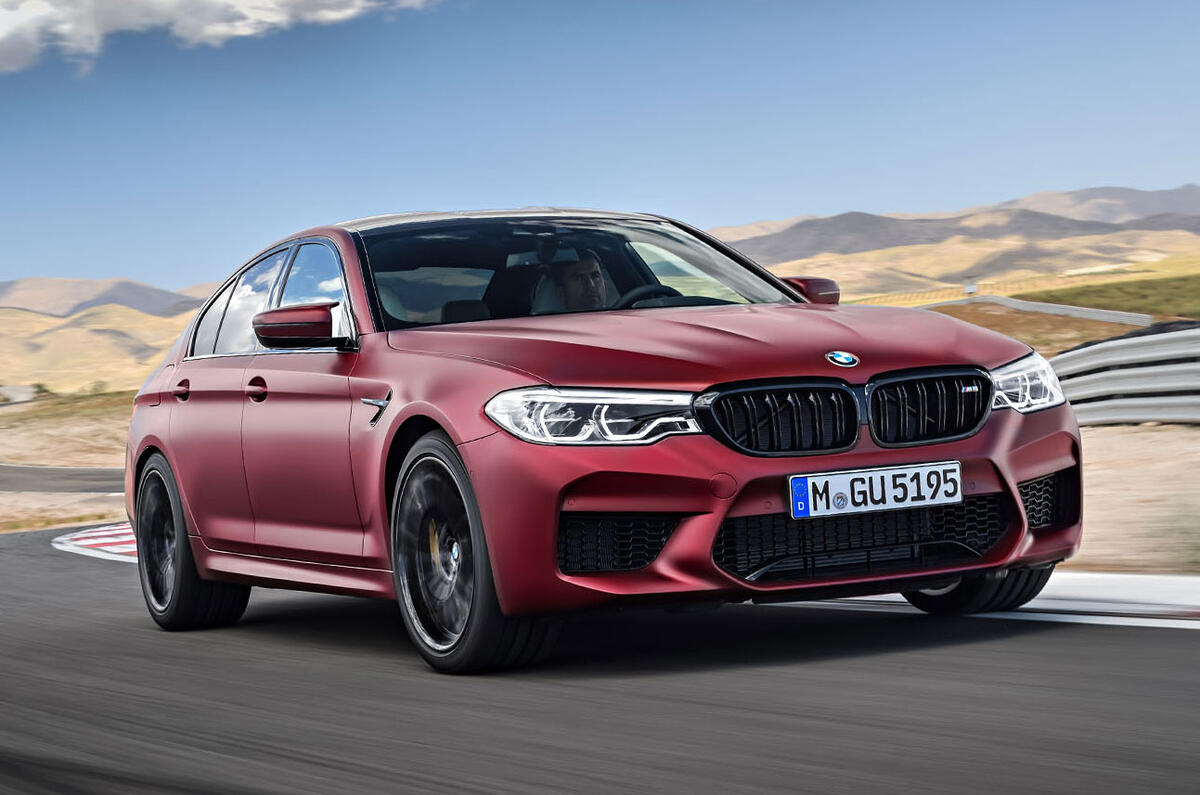
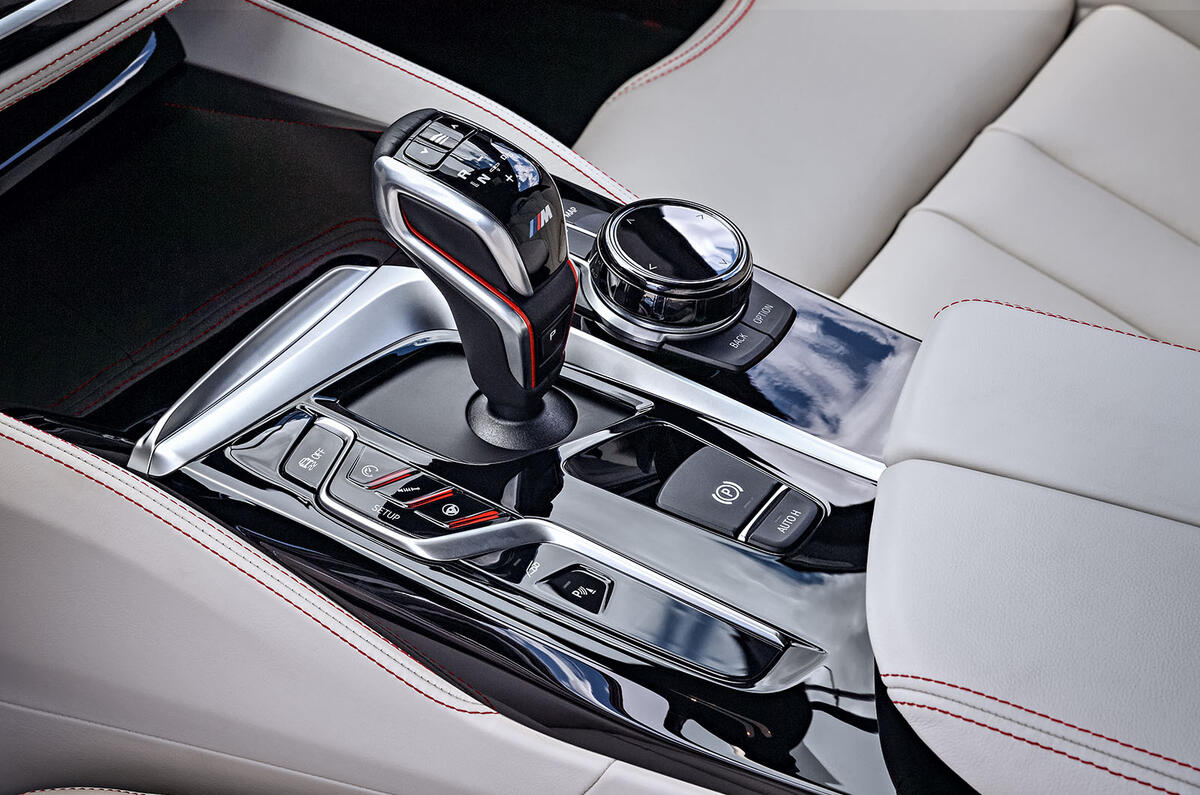



The new BMW M5’s four-wheel-drive system does exactly what a drivetrain like this ought to do to any modern performance car: it broadens the car’s overall dynamic ability and makes its driver appeal more multifaceted without blunting its cutting edge.
The driveline is also clever enough to leave the car’s rear-wheel-drive handling purity intact when you want it to be, having a ‘2WD’ mode that totally disconnects the car’s front driveshafts. But during a fairly short track drive I had in a prototype earlier this year, the M5’s handling was at its dynamic best when the car was driven in ‘4WD Sport’ mode, where it blended throttle adjustability with traction and stability very effectively indeed.
New BMW M5 revealed: full tech specs of 592bhp super saloon
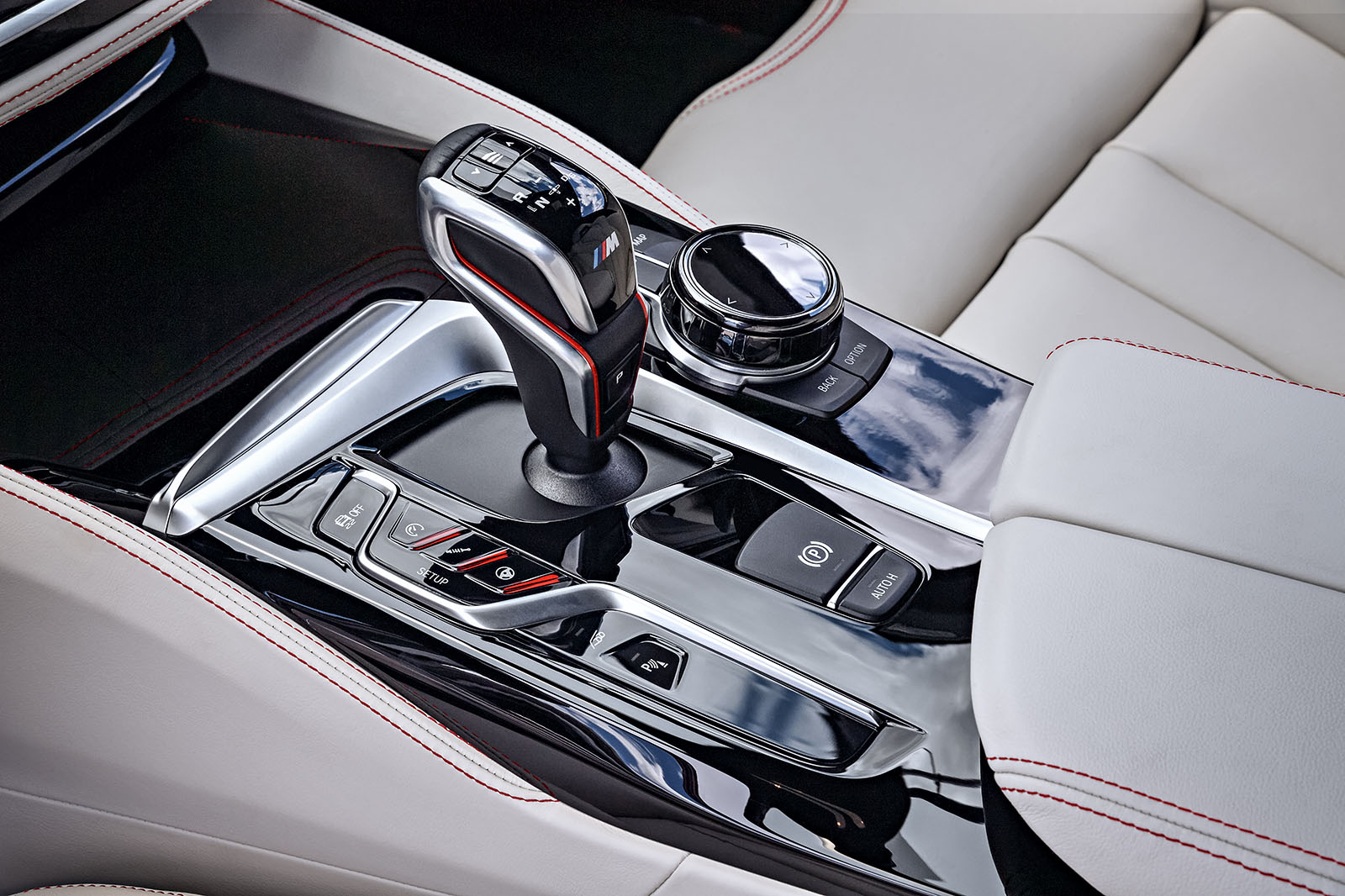
That speaks volumes about M division’s tuning of the car’s driveline and electronic stability control systems — and also about the processing power of the latter, which also sets the new M5 apart.
An electronic ‘chassis brain’, positioned just behind the nearside front wheel on the underside of the car, keeps tabs on the state and function of the stability control system, four-wheel-drive system and torque vectoring active rear differential. It can overrule the controller of each, according to what it thinks the driver is trying to achieve with the car. It has something called ‘feed-forwards logic’, all the rage in electronic stability control circles, which allows it to recognise patterns and trends in the various live data feeds available to it and thereby govern the car’s handling more proactively than reactively.
In short, this is stability and traction control in a whole new dimension — and, boy, can you tell.
More content:
2018 BMW M5 prototype review: super saloon goes four-wheel drive
In pictures: Autocar's history of the BMW M5