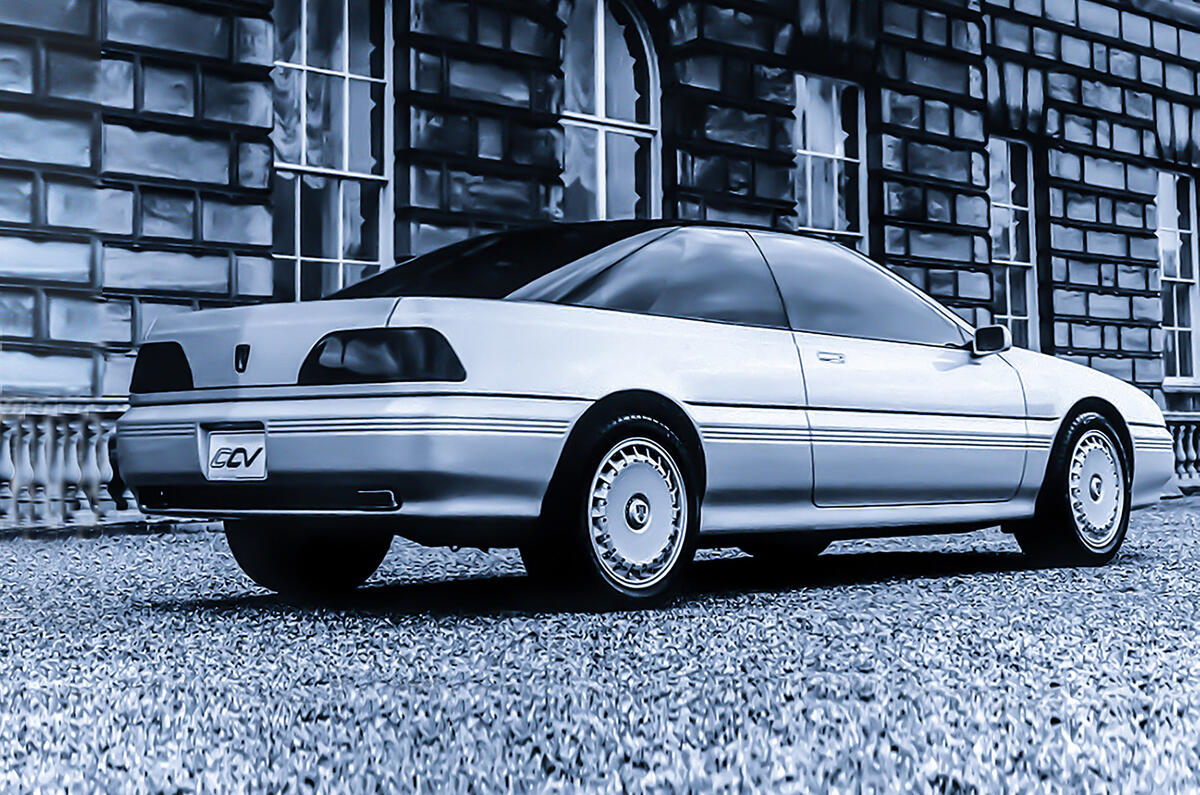
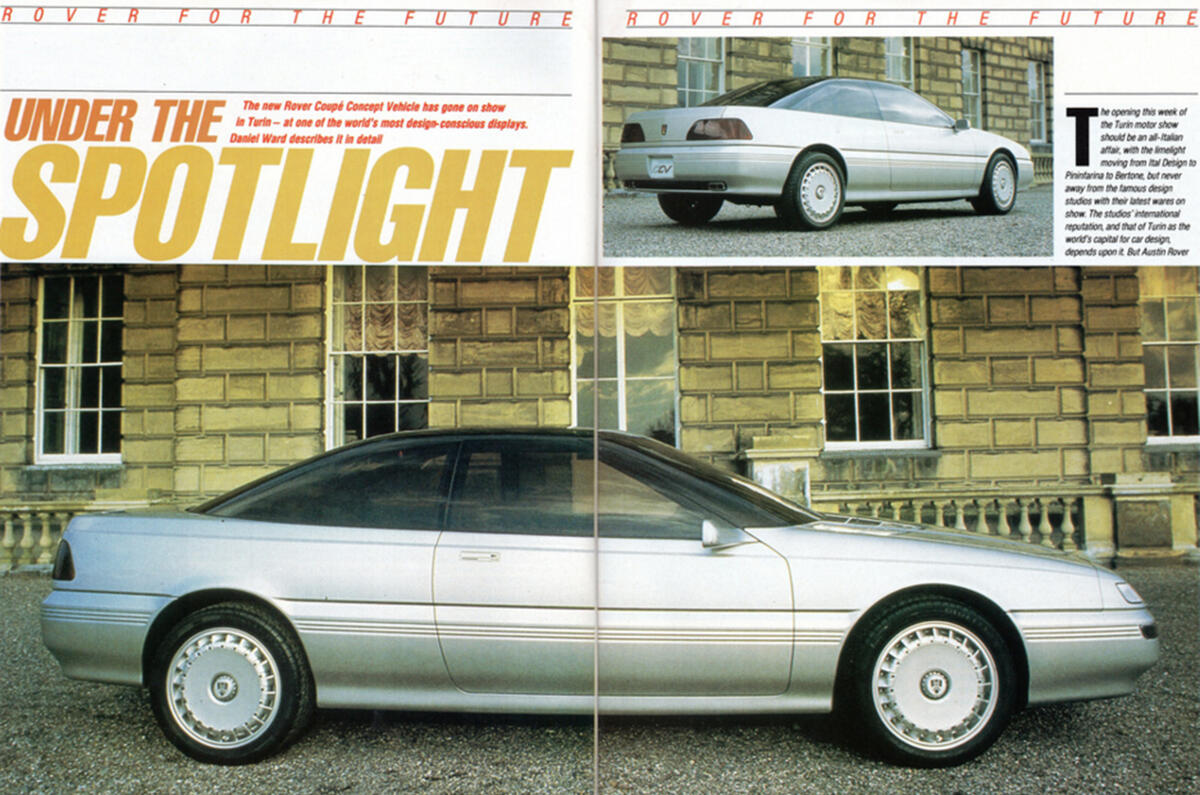

Buoyed by the positive reaction to the MG EX-E concept car at the 1985 Frankfurt motor show, the Austin Rover Group was encouraged to follow it up with the similarly forward-looking Rover CCV just six months later.
Whereas the EX-E was a design exercise, the CCV was much more likely to make production as part of the car group’s plans to crack the US market with the Sterling brand. Sterling’s first offering was to be a rebadged Rover 800 saloon, raising the possibility of a production version of the CCV coupé being built off the same floorpan.
In Autocar’s sister publication, Motor, Daniel Ward wrote: “Americans don’t like hatchbacks, so the five-door 800 won’t be going across the Atlantic a year after the saloon, yet the new dealers – no matter how enthusiastic about the 800 – will want other Sterling models in the showroom. What better than a classy, elegant coupé to reinforce the image for combining modern design and traditional British car luxury?”
To emphasise Austin Rover’s developing confidence in its designs, the CCV was unveiled at the Turin motor show, in the heartland of styling studios such as Pininfarina and Bertone.
The concept – created under Roy Axe, Austin Rover’s director of design – was well advanced, as Ward explained: “The coupé is no hurried lash-up job, as it was clearly the sleek shape I saw hidden under wraps at Austin Rover’s Canley design centre more than two years ago.”
The CCV retained the normal-length floorpan of the 800, giving it a relatively long wheelbase. In spite of the coupé styling, the design team was adamant that normal-height adults should be able to sit in the rear in comfort.
A drag coefficient of 0.27 would have been, Rover’s designers argued, perfectly achievable when the glassfibre design prototype was made in production steel with all its mechanical parts and cooling systems.
The prototype’s large glazed roof was made from ceramic-coated polycarbonate and helped to keep the airflow smooth. “Such an uncompromising design is a favourite with designers – Giugiaro’s Lotus Etna has a similar cabin section – but no one has put one into production,” Ward explained.
The headlights – super-slim by the standards of the day – were another highlight. “Their advantage is that the designer is not forced to compromise the low profile of the car’s nose in order to accommodate the lamps but the considerable cost and complication of pop-up lamps is avoided,” said Ward.
Disappointingly, the CCV didn’t make production in the shape of anything as exciting as the sleek concept. Instead, it whimpered out as the comparatively conservative Rover 800 Coupé in 1992, by which point Austin Rover had withdrawn from the US market.
Previous Throwback Thursdays