Currently reading: 12 Horrid Soviet Bombers that menaced the West

12 Horrid Soviet Bombers that menaced the West

NATO air planners looking east during the Cold War faced a vast, intimidating armada of bombers and attack aircraft.

With superior numbers, the Soviet Union and the other Warsaw Pact nations brandished a massive hammer of both nuclear and ‘conventional’ destructive force. Here are 12 Soviet combat aircraft that kept NATO awake at night:


12: Sukhoi ‘Fitter’ series
 Sukhoi ‘Fitter’ series

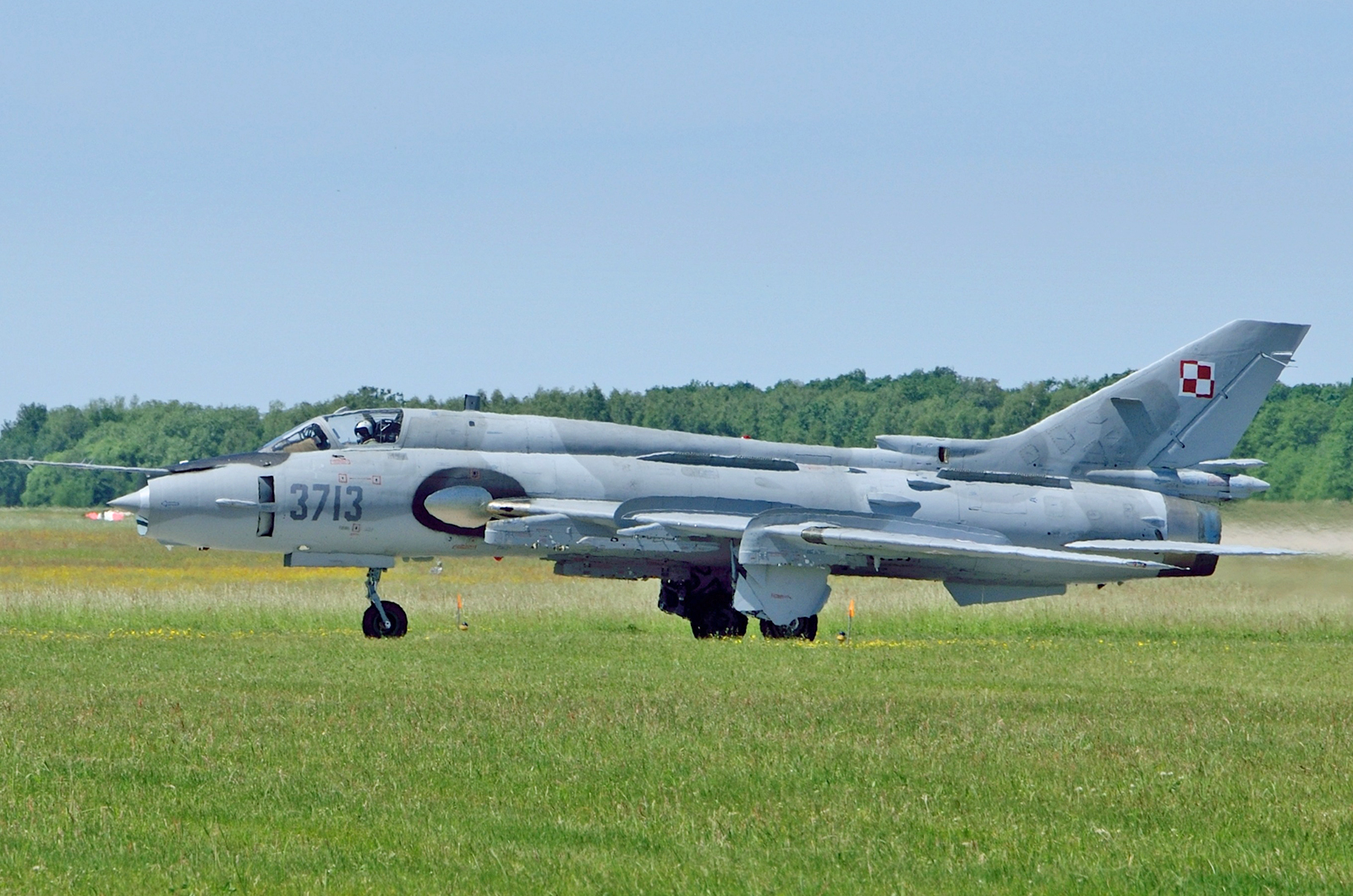
The supersonic single-engined Sukhoi Su-7 (codename: ‘Fitter’) was a brutally fast attack aircraft. Relatively easy and inexpensive to manufacture, it provided ‘air mass’ but was flawed; most worrying for Soviet planners was its small payload, range, and long runway requirements.

A long runway requirement made an aircraft vulnerable, as airfields were primary targets for any aggressor. Various efforts were made, including the installation of a new undercarriage and the use of RATO (rocket-assisted take-off), but something more radical was needed.

The next-generation Fitter, the Su-17, featured a variable geometry outer (‘swing’) wing section, which dramatically reduced field length requirements and improved range. The aircraft would later gain a more powerful engine, better sensors and targeting equipment and new weapons.

The result was a fast, potent attack aircraft. It was widely exported as the Su-20 and Su-22. The Su-17 was the primary tactical fighter-bomber during the Soviet occupation of Afghanistan. It remains in service in limited numbers with a small number of air forces.


11: Mikoyan-Gurevich MiG-27 ‘Flogger’
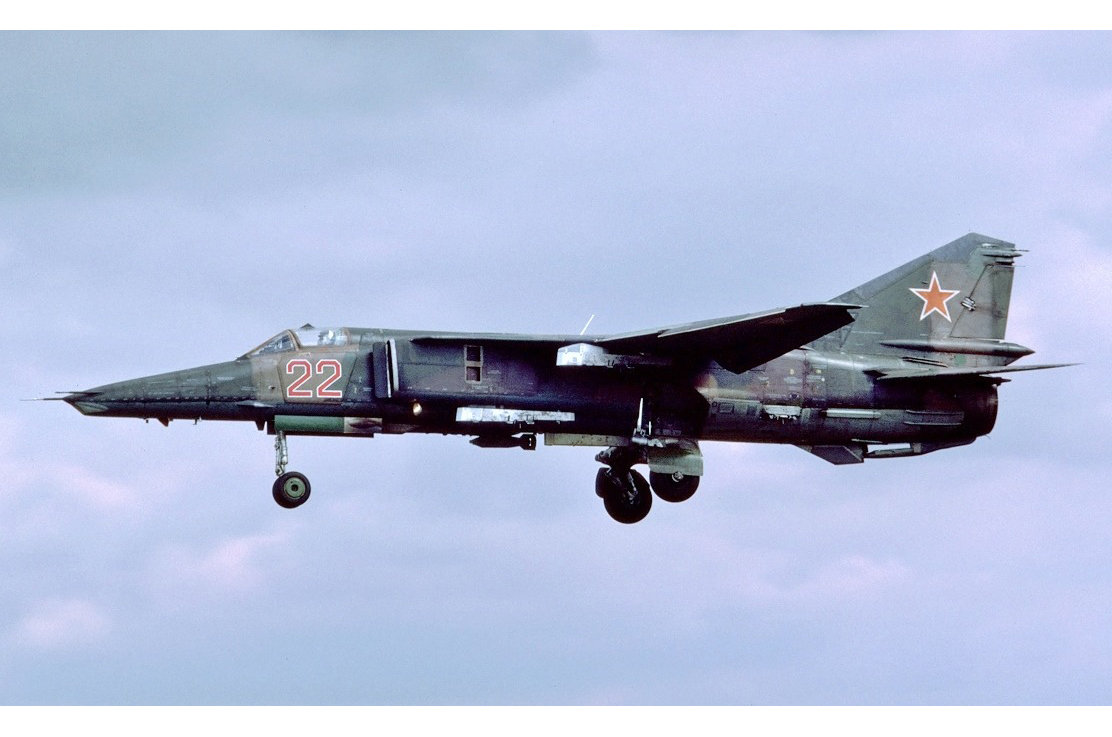
 Mikoyan-Gurevich MiG-27 ‘Flogger’

With breathtaking performance and carrying the most powerful aircraft gun fitted to a supersonic aircraft, the MiG-27 was a fast fighter-bomber based on the MiG-23 fighter (via the MiG-23B attack series). Compared to the fighter Floggers, the MiG-27 was heavily armoured, lacked a radar, and had a distinctive ‘duck-nose’.

When the author spoke to former Indian Air Force pilot Anshuman Mainkar, he noted, “She was very fast at low levels, and her ability to hold steady was superb. With wings swept back fully and speeds exceeding 1000 km/h at low levels, the wings waggled and the noise and vibrations that set in gave an impression of a banshee just freed, screaming with abandon.”

It was powered by a single R-29-B-300 turbojet, rated at 25,400 lbf (113 kN) with afterburner. It was an unforgiving and sometimes dangerous machine, as Mainkar put it. “In my opinion, it is the only fighter which has ‘engine explosion’ as a standard aircraft emergency.”

Back to top

Though not as fast as the fighter Floggers, the MiG-27 kept much of the Floggers’ famed acceleration and extremely high speed at low altitude. It could carry up to 4000 kg (8818 lb) of offensive weapons, including free-fall bombs and guided missiles.


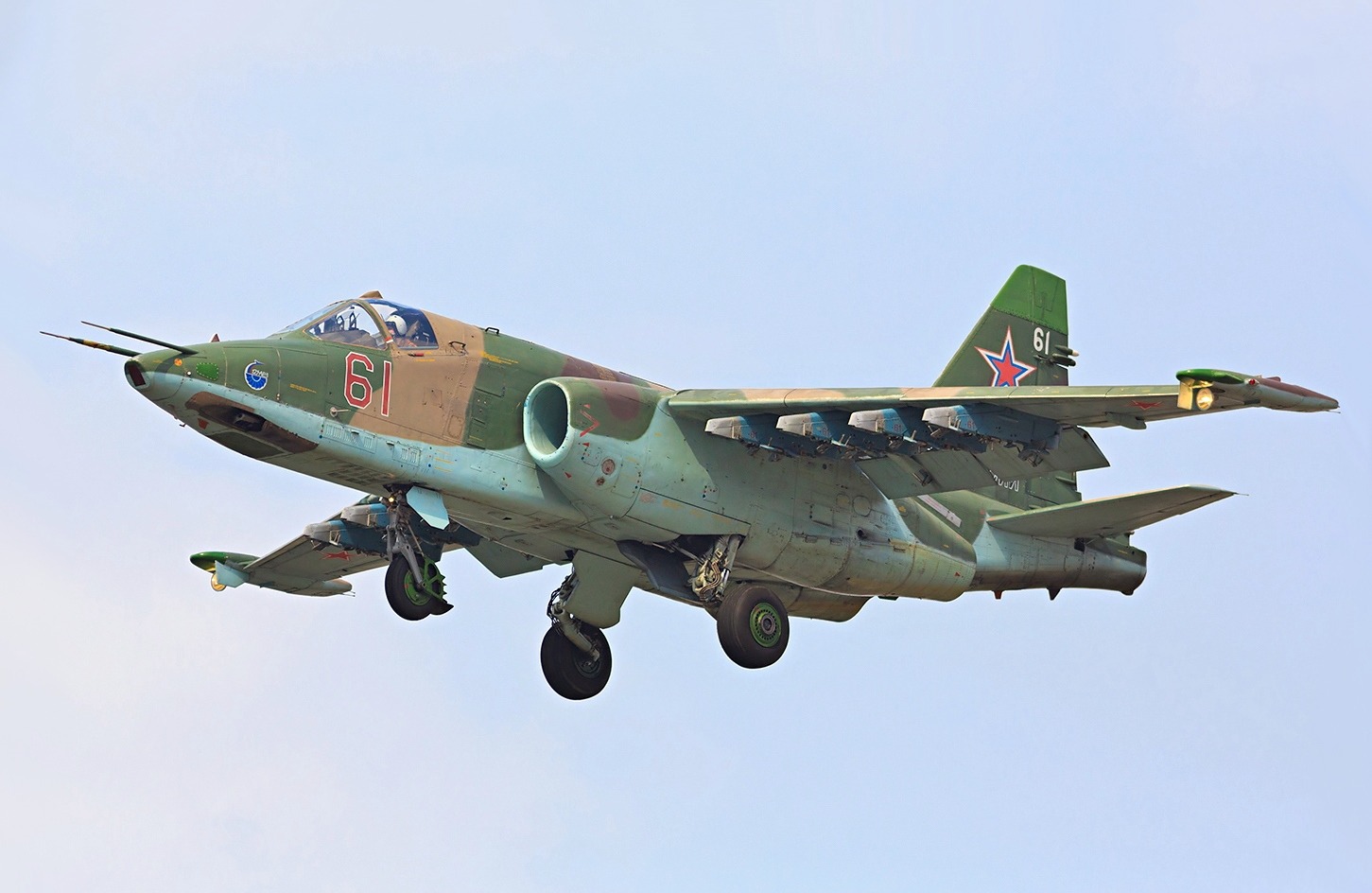
10: Sukhoi Su-25 ‘Frogfoot’

 Sukhoi Su-25 ‘Frogfoot’

During the Great Patriotic War, the rugged Ilyushin Il-2 ‘Sturmovik’ ground attack aircraft proved hugely important; it became as significant to the Soviet mythology of the war as the Spitfire is to the British. The Soviets revived the concept of a battlefield support aircraft in the 1960s with the Sukhoi Su-25.

It first flew in 1975, though it is commonly said to be based on the US Northrop A-9 (loser to the A-10 Thunderbolt II in a USAF contest), but this is unlikely to be the case; all that is shared is a superficial similarity in configuration. The design prioritised armour and weapons carriage over high speed.

The Su-25 features a powerful gun, the 30 mm dual-barrelled GSh-30-2 autocannon, which was developed specifically for the aircraft. This utilises the Gast principle: two barrels are operated by a single mechanism, with the recoil from firing one barrel loading and charging the second. It can carry up to 4340 kg (9568 lb) of guided and unguided weapons.

A combat evaluation of the Su-25 came in 1980, during the war in Afghanistan. Formal deployment started in 1981, where the Su-25 proved formidable. The use of US-supplied Stinger missiles led to a period of vulnerability for the Su-25, necessitating upgrades.


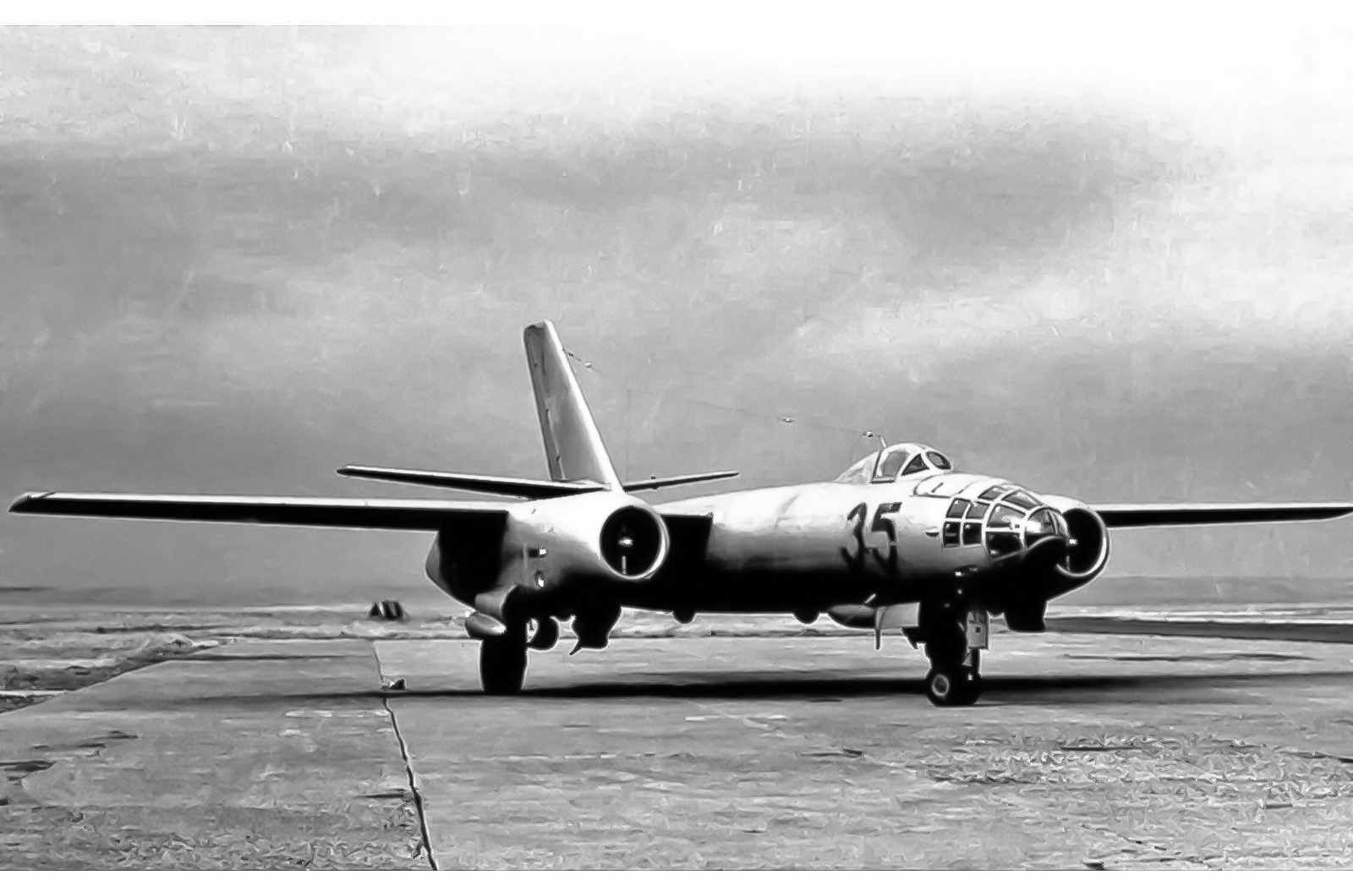
9: Ilyushin Il-28 ‘Beagle’

 Ilyushin Il-28 ‘Beagle’

Following its first flight in 1948, over 6630 Il-28s (NATO code name: Beagle) were manufactured, a vast force; it was the first successful Soviet jet bomber to reach mass production. It was powered by two Klimov VK-1 turbojets, each producing about 6,000 lbf of thrust, derived from the British Rolls-Royce Nene.

As a twin-engined medium jet bomber, it was broadly comparable to the British English Electric Canberra. In most metrics, including top speed, ceiling, range, and bombload, the Il-28 was inferior to the Canberra; however, in terms of ease and cost of manufacture, the Il-28 was superior, and it served in far greater numbers.

Back to top

The Il-28 bomber saw extensive wartime service across the globe. Deployed by over 20 nations, it fought in the Biafran and the North Yemen Civil wars. Used in air raids from Africa to Asia, it faced combat from RAF strikes to Saudi interceptions and remained active in Cold War conflicts.

It was widely exported to Warsaw Pact and allied nations — including China (as the H-5), Egypt, Poland, Czechoslovakia, and North Korea. Though retired by the USSR in the 1980s, some aircraft (like China’s H-5 versions) remained in service into the 21st century, marking over 50 years of operational use.


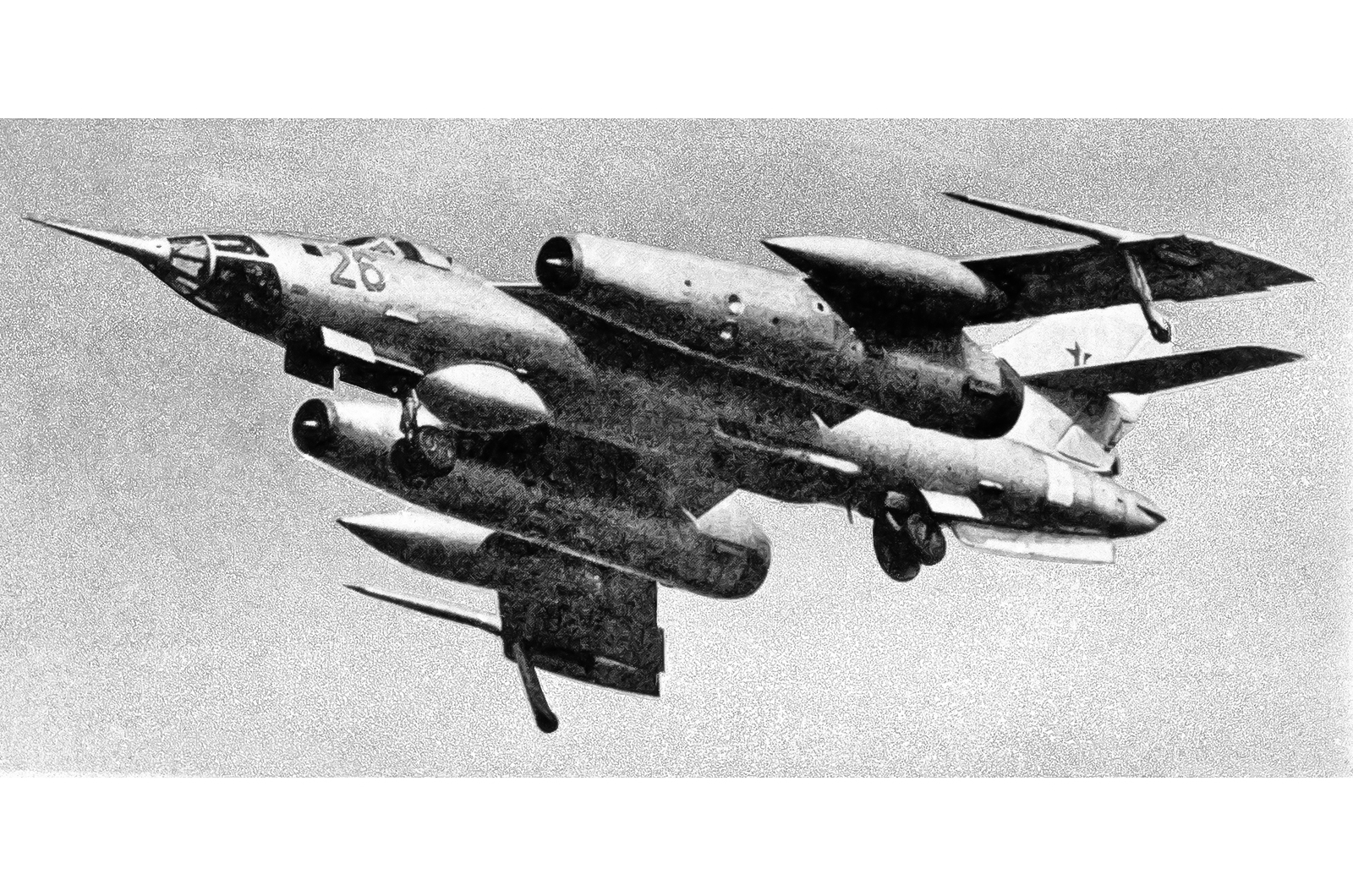
8: Yakovlev Yak-28

 Yakovlev Yak-28

The Yakovlev design bureau had proven itself with its fighters during the Great Patriotic War, and in the post-war era with the moderately successful Yak-25 ‘Flashlight’ (and later the Yak-25RV ‘Mandrake' high-altitude reconnaissance aircraft). The Yak-26 was an unsuccessful bomber derivative of the Yak-25.

Fitting the rather poor Yak-26 with larger more powerful Tumansky R-11 engines and a new wing of sharper sweep resulted in the excellent Yak-28. This twin-engined supersonic tactical aircraft, which first flew on 5 March 1958 and entered service in the early sixties, proved incredibly adaptable and served in almost every conceivable role. In the bomber role, it was assigned the NATO codename ‘Brewer’.

As well as a tactical bomber, it was modified to serve in the reconnaissance, electronic warfare and even, quite notably, in the interceptor roles (as the ‘Firebar’). Such was the versatility of the Yak-25 family that it required no less than six NATO-codenames including a slew of Brewer subvariants (Brewer-A onwards) and ‘Maestro’ (for the Yak-28U trainer).

Yak-28s were deployed to forward bases in East Germany as part of Soviet shows of force during the Berlin standoff, but they did not engage in combat. During the invasion to suppress the Prague Spring, Yak-28s flew reconnaissance and patrol missions over Czechoslovakia. These were non-combat operations, primarily aimed at monitoring troop movements and intimidation.


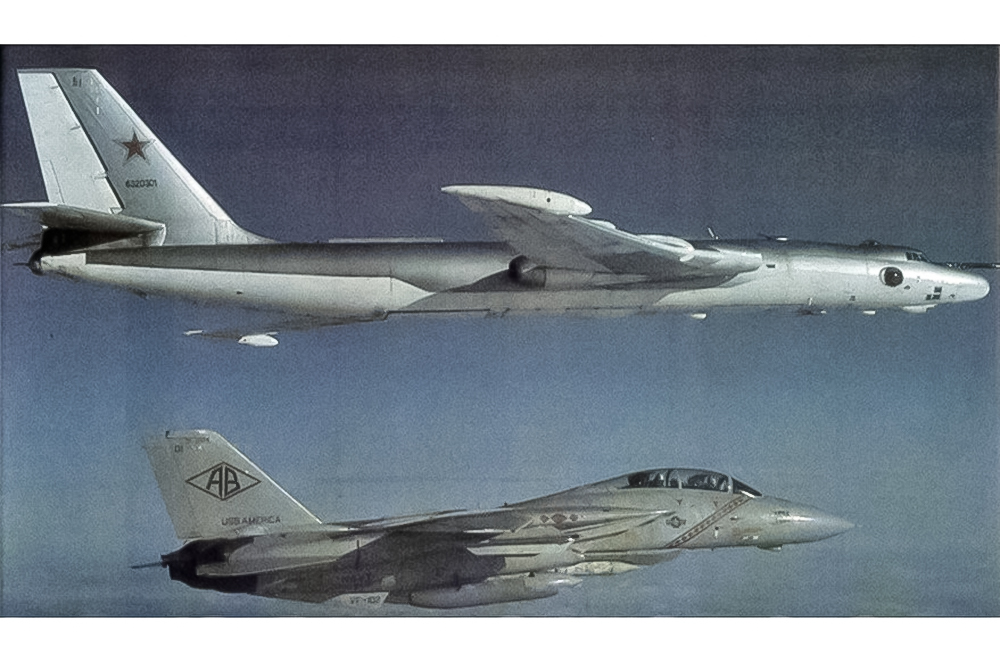
7: Myasishchev M-4/3M ‘Bison’

 Myasishchev M-4/3M ‘Bison’

Back to top

The vulnerability of the American B-29 Superfortress in the Korean War made it clear that the piston-engined bomber could not survive against the new generation of high-performance jet fighters. A fast and very long-ranged bomber requirement was drawn up, one so demanding it was likely impossible with Soviet technology to answer without an overly large aircraft.

Myasishchev’s four-engined bomber (NATO codename: Bison-A) failed to meet range requirements: it would not have been able to fly to North America and return. The 3M (NATO code-name: Bison-B) was an attempt to solve the range limitations with an in-flight refuelling capability and less thirsty (Dobrynin VM-7) engines.

It still didn’t solve the issue totally, and it was a failure in the nuclear bomber role with only a small number serving in this role. However, the improvements made for a potent aircraft for other missions, it was fast and with a large bombload and well suited to the maritime patrol role.

Modifications across its life enabled Bisons to launch a variety of long-range air-to-surface missiles.  The ‘Bison’ could carry up to 17,727 kg (39,000 lb) of bombs, and the fastest variants could exceed 600mph.  Including prototypes, 125 aircraft were manufactured.


6: Tupolev Tu-4 ‘Bull’

 Tupolev Tu-4 ‘Bull’

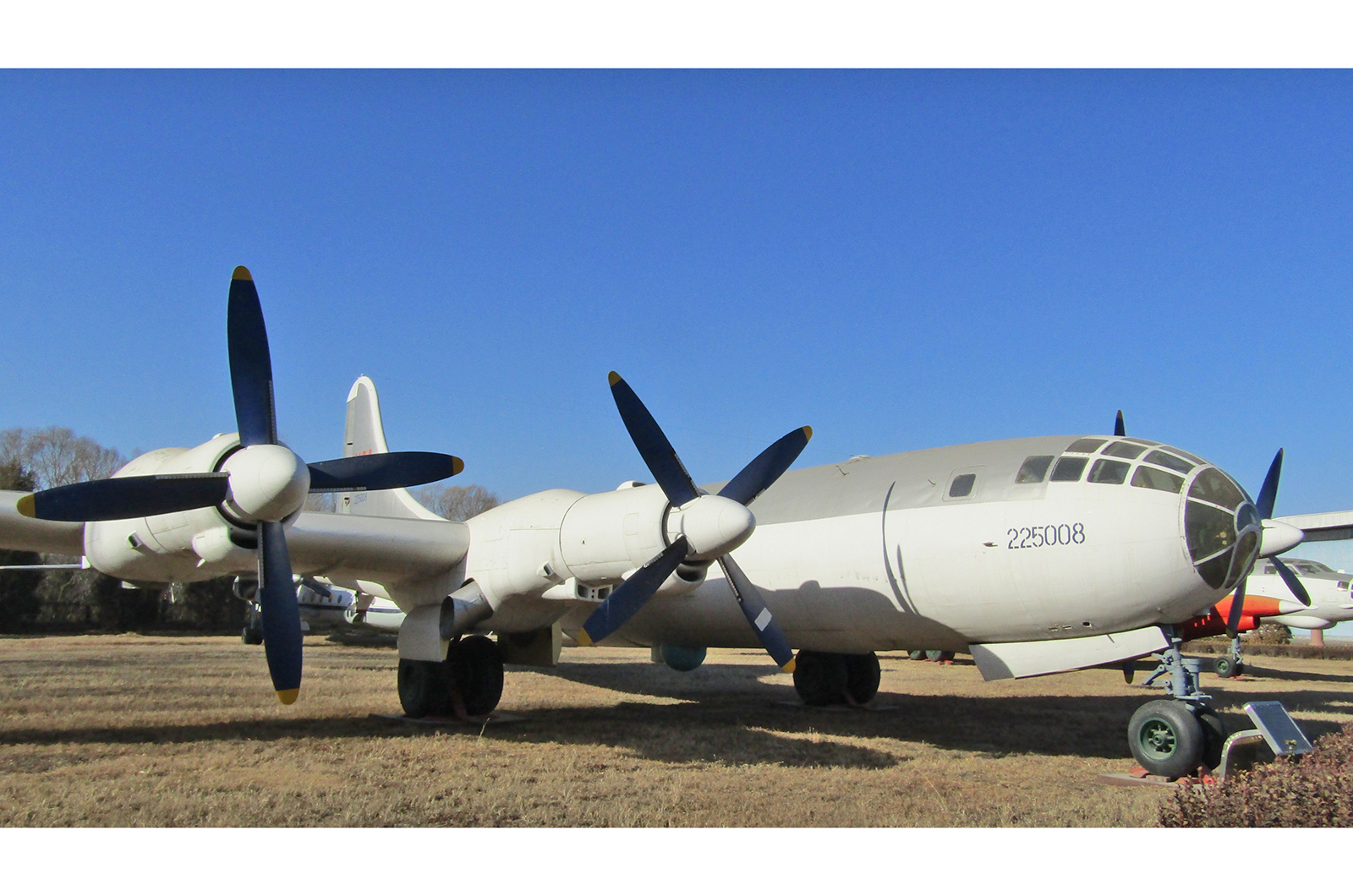
Four USAAF B-29s crashed in the Soviet Union returning from attacks on Japan during 1944. Realising the Soviet Union was behind in heavy bombers, Stalin ordered a ‘reverse engineering’ of the B-29. Reverse engineering the modern and extremely complex B-29 Superfortress was in itself a hugely impressive feat. The resultant Tu-4 first flew in 1947.

When the Tu-4 (later given the NATO code name ‘Bull’) became the first Soviet aircraft to drop a mass-produced nuclear weapon, it leapfrogged the USSR into the atomic superpower league. With the potential to reach the United States, albeit one-way, the Tu-4 was a sobering prospect in the newly frosty Cold War.

Better protected than the B-29, the Bull boasted a defensive armament of ten Nudelman-Suranov NS-23 autocannons. Its offensive load was around 8181 kg (18,000 lb) of bombs.  A massive total of 847 Tu-4s were built. British and US interceptor crews practised how to attack Tu-4s using their own B-29s.

Back to top

5: Tupolev Tu-16 ‘Badger’

 Tupolev Tu-16 ‘Badger’

The Tu-16 (NATO codename: ‘Badger’) was a medium bomber that first flew in 1952. Notably, for an aircraft of comparable size to the British Valiant bomber, it was powered by only two engines. In later variants, the two huge Mikulin AM-3 M-500 each generated up to 21,000Ibf (93.2 kilonewtons) of thrust.

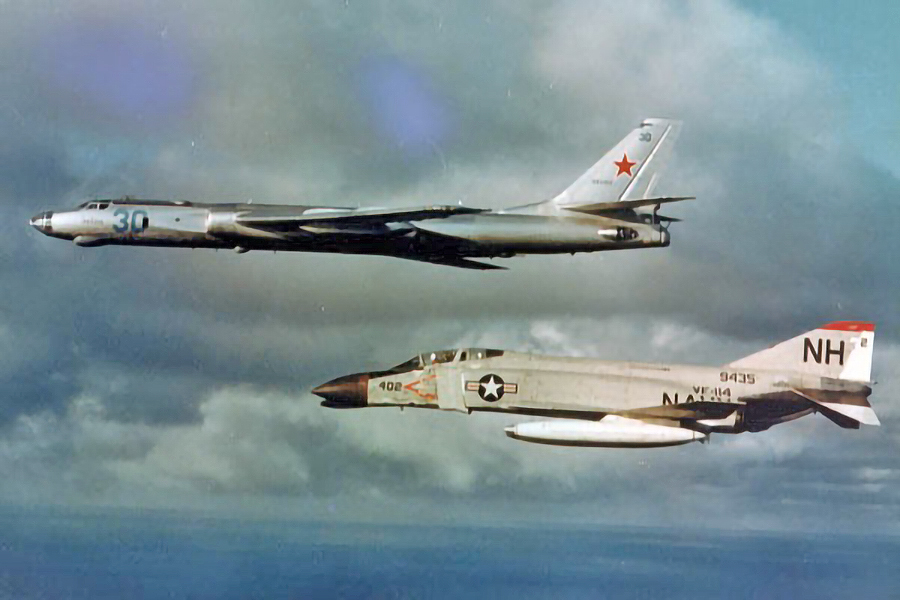
Like most Soviet bombers, it initially failed to meet ambitious range requirements; however, it excelled in most other respects. It first served in the conventional bombing role before assuming the deterrent role with the Tu-16A variant. In this photo we see a Tu-16 being shadowed by an American Phantom II.

Defensive armament consisted of six 23-mm Afanasev Makorov AM-23 cannons, with an offensive load of up to 9000 kg. Weapon options included the enormous K-10S anti-shipping missile, which could be fitted with a nuclear warhead. The Tu-16 was the most important Soviet bomber from the late 1950s until the mid-1960s.

It served in myriad roles, including nuclear bomber, maritime strike, airborne refuelling, ELINT and even search and rescue - it was even somewhat bizarrely used as a plane for carrying mail. An impressive total of 1507 aircraft were produced (excluding H-6 production). It remains in service today in China as the radically updated H-6K.  In this photo we see a Tu-16 being shadowed by an American F-8H Crusader.


4: Tupolev Tu-95 ‘Bear’

 Tupolev Tu-95 ‘Bear’

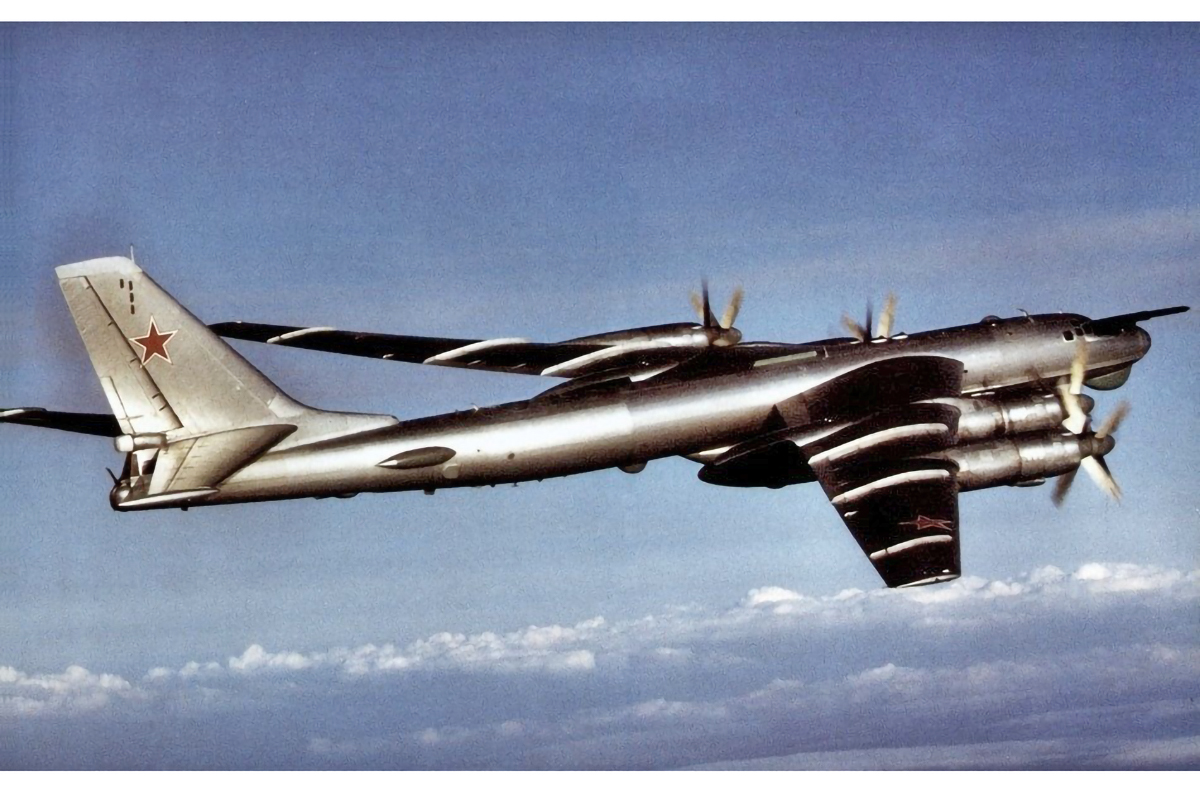
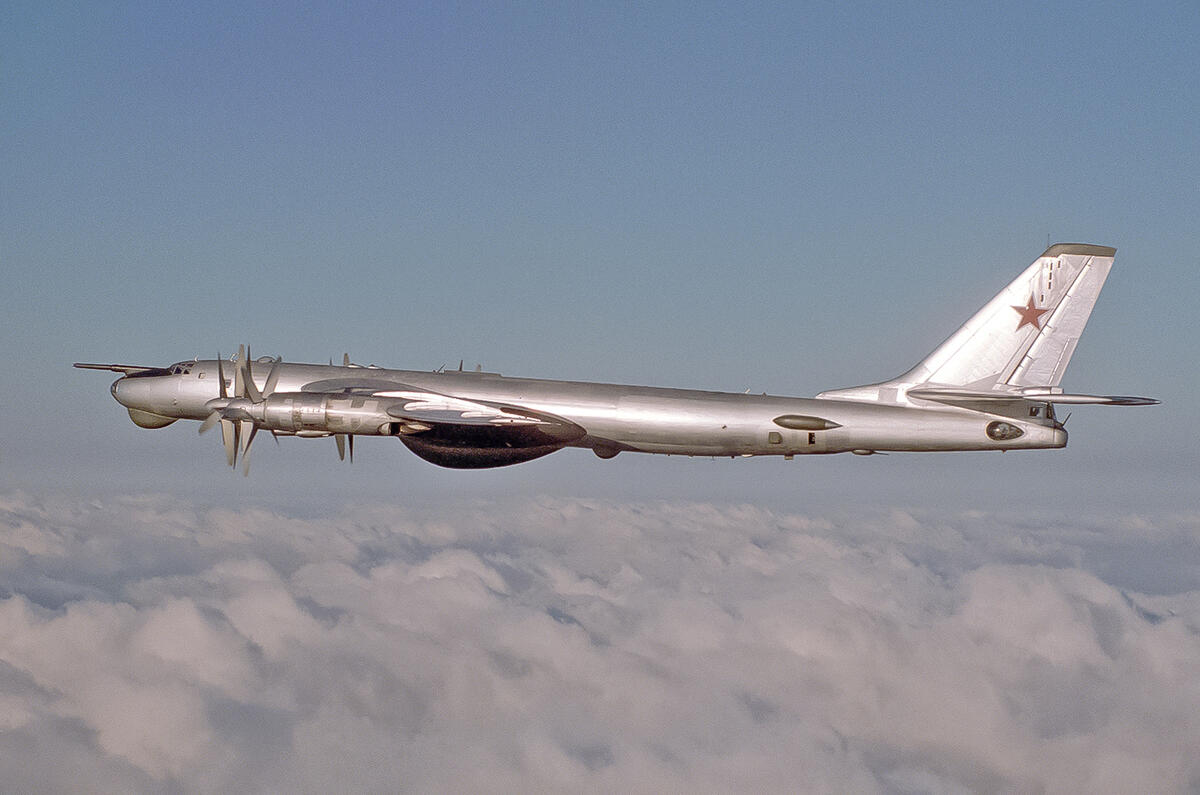
It is quite possible that a current Tu-95 pilot’s grandfather may have also flown the plane. A tiny number of military aircraft types that first flew in the early 1950s remain in active service today; the B-52 bomber and C-130 transport spring to mind for the Americans, and for the Soviets and then Russians, the utterly distinctive and horrendously loud 'Bear'.

This large strategic bomber is known for its combination of sharply swept-back wings and four gargantuan NK-12 turboprop engines with contra-rotating propellers, which makes the plane extremely loud. The turboprop powerplant was chosen as, at the time of the aircraft's conception, Soviet jet engines could not offer the fuel efficiency required for strategic range.

Back to top

Though it does not have pure jet engines, the Tu-95 is extremely fast; at 575 mph (925 km/h), it’s the second fastest propeller-driven aircraft (after the Avanti business-aircraft). Other family members included the Tu-142 maritime patrol aircraft, Tu-114 airliner and Tu-116 VIP transport aircraft.

Developed primarily for the grim nuclear task, the Tu-95 delivered the most destructive bomb of the Cold War, the apocalyptic 50-megaton AN602 'Tsar' bomb. Tested on 30 October 1961, this horrific device created a fire 8 kilometres wide and a mushroom cloud 7.8 times higher than Mount Everest.


3: Tupolev Tu-160 ‘Blackjack’

 Tupolev Tu-160 ‘Blackjack’

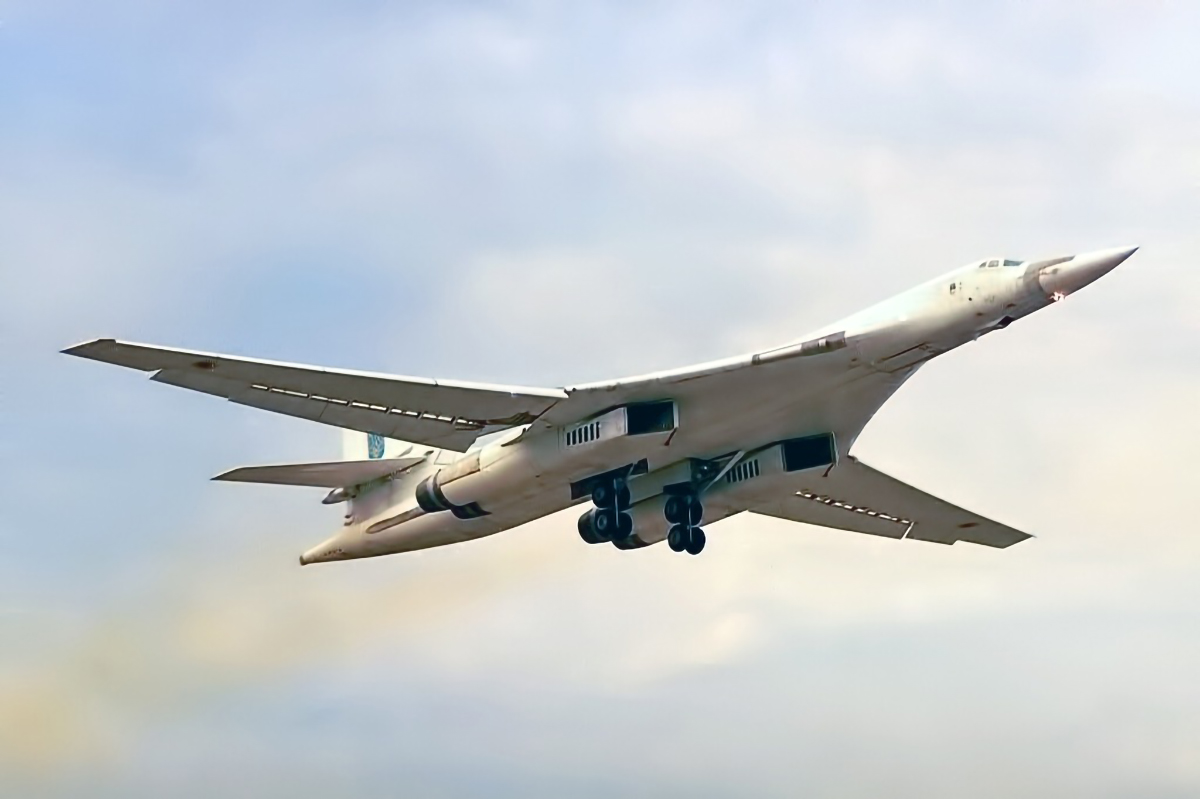
The heaviest combat aircraft to ever enter service, the Tupolev Tu-160 is a large supersonic variable-sweep (‘swing’) wing strategic bomber. On a variable geometry wing aircraft, the wing sweep can be adjusted in flight to best suit the speed of the aircraft. Wings are set fully forward for take-off and landing, and fully back for supersonic flight.

It is similar in configuration to the US Rockwell B-1B bomber, but is far larger and far faster (the faster and less stealthy B-1A never entered service). The Tu-160 has a blended wing-body configuration, which offers both a reduction of radar cross-section and aerodynamic advantages.

The Tu-160 has a maximum take-off weight of 275,000 kg (606,271 lb), the same weight as over four fully loaded wartime Lancaster bombers. It has a top speed of Mach 2.05, making it faster (by around 190mph or 305km/h) than the fastest operational carrier fighter in the US Navy today.

The Tu-160 (NATO reporting name: Blackjack) first flew on 18 December 1981 and entered operational service in 1987. Because of its service entry date, it was not around for a great deal of time with the Soviet Air Force; it served for only four years before the nation it was conceived to fight for ended. 41 have been built, and in 2021 went back into production for the Russian air force.


2: Tupolev Tu-22 ‘Blinder’ & Tu-22M ‘Backfire’

 Tupolev Tu-22 ‘Blinder’ & Tu-22M ‘Backfire’

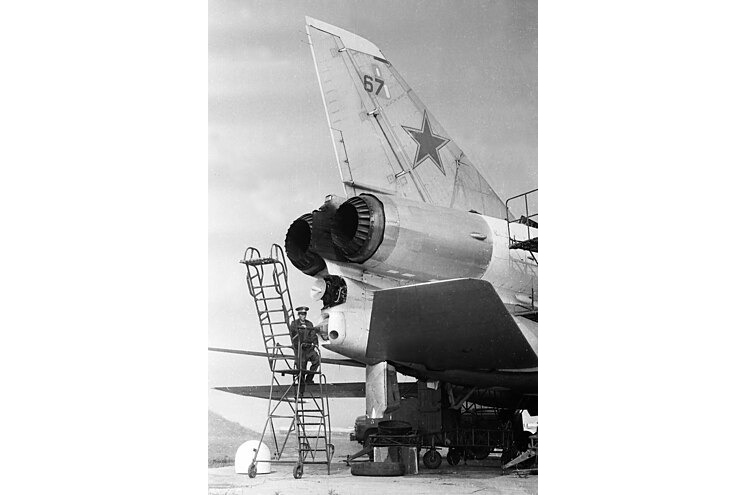
The Tu-22 was a bomber of unorthodox configuration, with the two engines mounted below the tail, that entered service in 1962. It was beset with design issues and was considered a challenging and dangerous aircraft to fly. It did, however, offer a supersonic top speed.

Back to top

Among the most exciting roles the Tu-22 (in particular, the Tu-22K) was tasked with was the destruction of US aircraft carrier groups, a daunting mission they trained for in earnest. It was planned that these well-defended targets would be overwhelmed by 24-30 missile-launching Tu-22Rs, supported by Tu-22P jamming aircraft.

Ironing out the many flaws of the Tu-22 led to the virtual redesign that was the Tu-22M. To save face, it retained the same Tu-22 designation. The new design relocated the engines and air intakes (which were later modified again), along with a host of other improvements.

The Tu-22M features a variable geometry (‘swing’) wing and is faster and longer than the Tu-22; its weight increased by two tonnes. Unusually, for an aircraft that first flew in 1969, the Tu-22M kept a defensive tail gun. Fast, long-ranged, and heavily armed, the Tu-22M was a formidable machine that remains in service today in updated forms.


1: Sukhoi Su-24 ‘Fencer’

 Sukhoi Su-24 ‘Fencer’

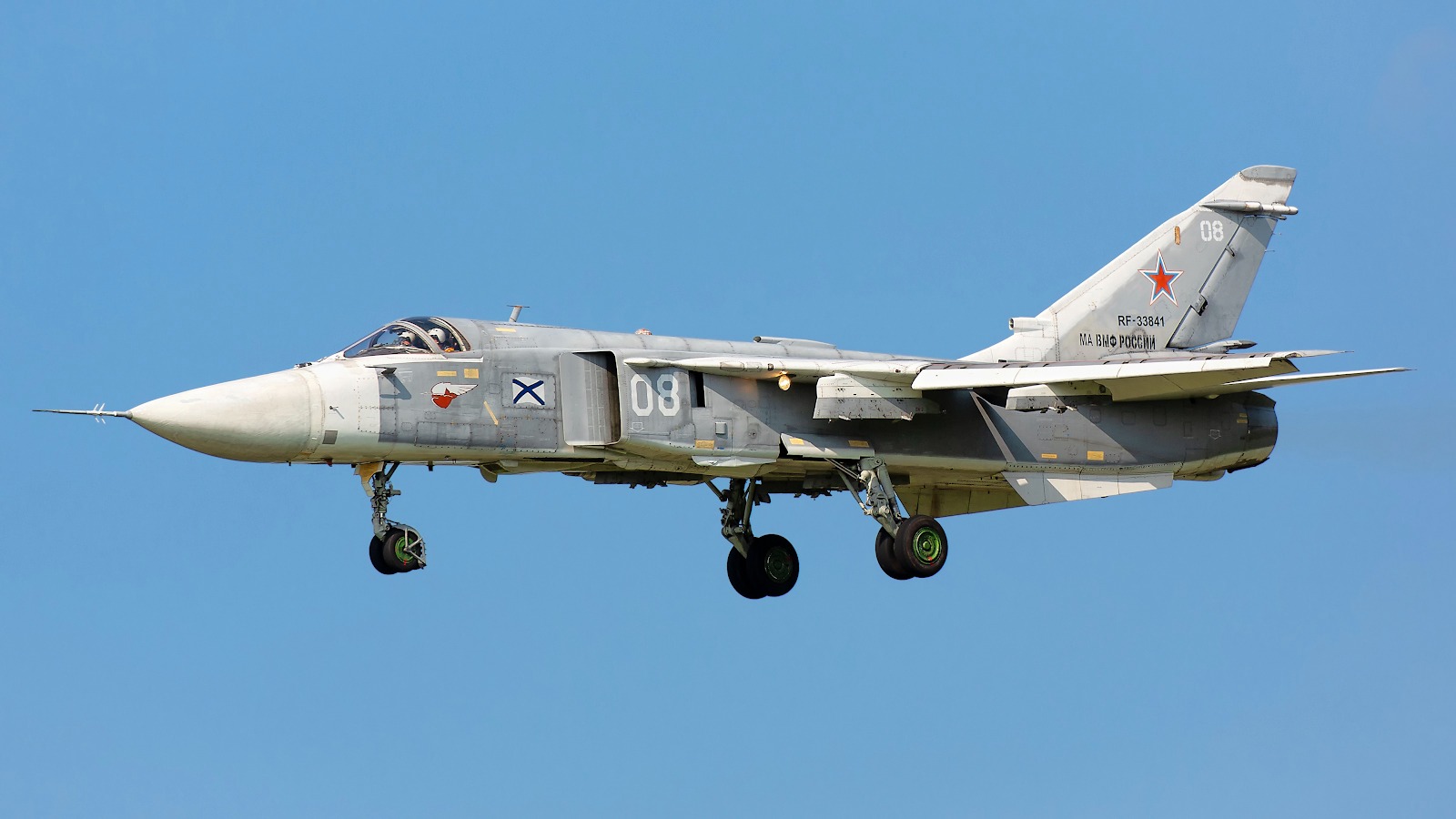
Starting life as the rather exotic T-6, complete with lift jets and a fixed delta wing with downturned tips, by the time the Sukhoi Su-24 design was completed, it was a variable-geometry (swing-) wing design with side-by-side seating optimised for the long-range low-level penetration attack role.

The Su-24 introduced automatic terrain-following radar to Soviet air power, allowing for very fast and low penetrations of hostile airspace to minimise the risk of radar detection. The Su-24 was comparable to the US General Dynamics F-111 (and somewhat bigger than the European Panavia Tornado IDS).

At maximum load-out, the Su-24 weighs approximately 43,755 kg (96,463 lb). It can carry up to 8000 kg (17,635 lb) of weapons on its nine hardpoints. It also boasts tremendous firepower from its internal 23-mm Gryazev-Shipunov GSh-6-23M ‘Gatling-style’ rotary cannon.

The Su-24 first flew in 1974, and around 1400 were manufactured. Various Su-24 variants were created for electronic warfare, reconnaissance and maritime attack. Unlike the F-111 and Tornado, the Su-24 uses a turbojet rather than a turbofan engine.

Follow Joe Coles on Substack, Twitter X  or Blue Sky. His superb Hush-Kit Book of Warplanes is available here.

If you enjoyed this story, please click the Follow button above to see more like it from Autocar

Photo Licence: https://creativecommons.org/licenses/by/4.0/deed.en


Join our WhatsApp community and be the first to read about the latest news and reviews wowing the car world. Our community is the best, easiest and most direct place to tap into the minds of Autocar, and if you join you’ll also be treated to unique WhatsApp content. You can leave at any time after joining - check our full privacy policy here.

Add a comment…