

Although ‘range anxiety’ might seem like a dated concept in the era of the 500-mile-plus electric car, there’s still good sense in wringing extra mileage out of a full charge.
With high energy prices at home and especially on the road, efficient driving can make a big difference to your running costs, and you’ll spend less time on mid-journey top-ups. It’s a win-win.
Whether you’re shopping for your next EV or looking to get a bit more out of the one you have, here are a few simple steps to eke as many miles as possible out of your battery.
Check the spec
As electric cars have become more competitive and found a wider audience, manufacturers have offered a much wider choice of models for different needs and budgets. It pays to be picky if range is your priority.
Battery capacity is the most important factor to look for: generally speaking, the larger it is the farther you’ll go on a full charge. However, some cars (such as the Polestar 3) reserve their largest packs for versions with all-wheel drive, which blunts efficiency slightly and means you’re not getting the full benefit of those extra electrons.
Trim levels matter, too. All versions of the Hyundai Kona Electric have the same 65.4kWh battery, but only the Advance has 17in wheels. They offer a 37-mile range advantage (319 miles total) compared with the 19s fitted to other trims.
Plan your route
It’s not just a question of how far you go in your EV, it’s also how you get there. They offer the longest range on flowing A-roads and in stop-start city traffic, where they’ve got plenty of opportunities for regenerative braking to top up the battery. Unlike a petrol or diesel car, they’re at their least efficient on the motorway, where they’re running at a constant high speed.
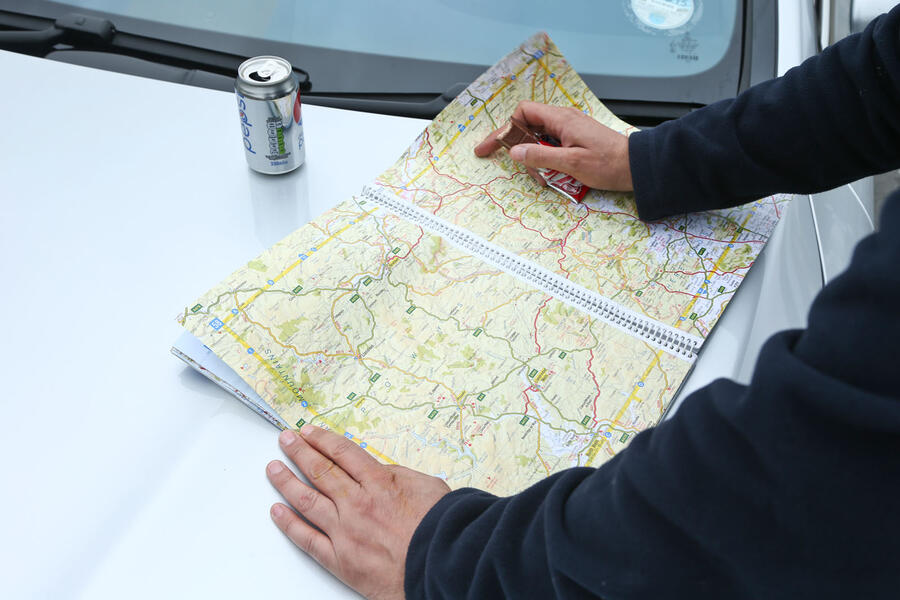
Route planning is a great way to wring more kilometres from every kilowatt-hour, but you won’t need to spend hours poring over a road atlas. Most sat-navs can calculate efficient routes in seconds, and Google Maps can also plot EV-specific journeys if it’s set up in your profile. Sure, it’ll take a bit longer getting from A to B, but the trade-off might be spending less time at a charger en route.
Pre-journey checks
Mass is always the enemy of efficiency, so make sure your EV is as light as possible. We’re not condoning anything as extreme as stripping out the seats and sound deadening, but it’s worth making sure the boot isn’t full of clutter before setting off.
Slippery aerodynamics also help, so always remove roof racks and bike holders when not in use. And, believe it or not, a clean car will scythe through the air with less drag than a dirty one, so frequent washing and waxing is a sensible move.
Pre-conditioning
One of the biggest perks of driving an EV is being able to pre-programme (and remotely activate) the climate control features from the comfort of your armchair. It’s especially useful when the weather is coldest, become you’ll come out to a pre-warmed cabin and de-iced windows when you’re ready to leave.
From a range preservation perspective, it’s best to do this when the car is plugged in and charging. Warming and cooling uses a lot of energy, and most cars will draw thier pre-conditioning power from the mains if that's available. As a bonus, this also brings the battery pack up to its ideal operating temperature before you set off, which again offers an efficiency boost.