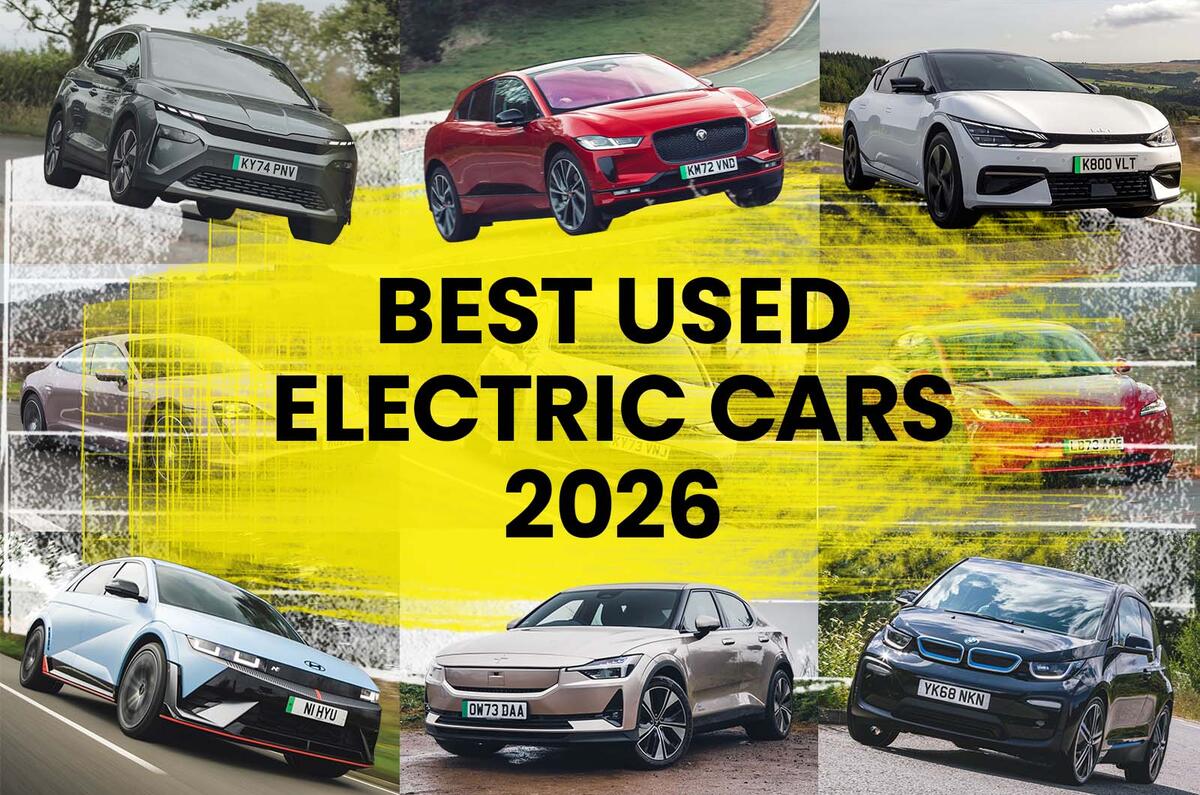
Currently reading: The best used electric cars bargains to snap up now
UP NEXT

Used electric cars are approaching price parity with used ICE cars, which means now is the time to buy one

In the not-so-distant past, used electric cars failed to strike a chord with consumers, due to unpredictable depreciation and concerns about battery health. 

Now, however, used EV sales are on an upward trajectory, and for those who want to go electric on a budget, there’s no better time to snag a bargain. 

According to the Society of Motor Manufacturers and Traders (SMMT), used EV sales surged by 67% in the second quarter of this year, with more than 110,000 charging hands. That’s the biggest jump in second hand EV sales since 2024. 

Used EV are also showing signs of prices stability compared with used petrol and diesel cars – and while they’re not yet on a par, it seems like a great time to make the switch. 

Car makers have spent the last few years flooding the market with new and improved EVs, which means the classifieds are now packed with a diverse range of choice.

Factor in the major strides in battery technology and charging infrastructure and range anxiety is quickly becoming a thing of the past.

Buying a used EV also means you can save money on running costs; charging an EV is much cheaper than refilling an ICE car with petrol or diesel, particularly if you can charge at home. 

Whether you need an efficient family SUV with a real-world range of more than 300 miles or a diminutive hatchback for inner-city jaunts, finding a used EV that fits your needs is easier than ever. 

But which used EVs are actually worth your money? Our expert team of road testers have compiled a list of the very best on sale, taking into account real-world range, efficiency, practicality, price, charging capability and long-term reliability. 

At a glance...

Model Best for... Starting Used Price Real-World Range Max Charging Speed
Polestar 2 Best overall used EV £15,000 230–290 miles 150kW
Porsche Taycan Sports car dynamics and performance £28,000 210–260 miles 270kW
Tesla Model 3 Long-distance range and charging network £9000 220–310 miles 250kW
Skoda Elroq Modern compact family versatility £21,000 210–320 miles 175kW
Cupra Born Driver engagement and practicality £11,000 180–290 miles 135kW

The best used electric cars

We think the Polestar 2 is the best used EV overall. This handsome, practical liftback is great to drive, while its real-world range and efficiency give it plenty of long-distance versatility.

If you’re after something more engaging, the Porsche Taycan is an excellent choice, not just for its incisive handling and whipcrack performance, but also for its surprisingly accessible second-hand price tag.

For those who need an EV with a versatile edge, the Skoda Enyaq and Kia EV6 have enough space, pace, range and rational charm to fit seamlessly into family life.

https://images.cdn.autocar.co.uk/
  • Design9
  • Interior8
  • Performance8
  • Ride & Handling8
  • Costs9

Best for: Daily life

The Polestar 2 has been a hit from the moment it arrived, thanks to its understated Swedish style, fastback practicality, decent efficiency and slick dynamics.

We would recommend both the Long Range Dual Motor and Long Range Single Motor variants, but if range is your priority, it’s the latter that you should seek out. 

The cabin feels premium and, to operate, the car is as intuitive as any EV I’ve driven.

Initially it had front-wheel drive and a 75kWh battery; then a facelift in 2023 gave it a 79kWh battery and more efficient rear-wheel drive, for a WLTP range of 406 miles. 

Prices for a used Long Range Dual Motor start at around £15,000, but stretching your budget to £22,000–£25,000 will secure a nearly new or ultra-low-mileage example.

If you want to spend even less, Standard Range Single Motor cars start from as little as £12,000.

Buy it if…Skip it if…
You want a handsome, well-built liftback with an impressive real-world rangeYou regularly carry taller passengers in the back who need more space
You prefer a classy, Scandinavian-style interior layoutYou prefer a plush, wafting ride quality over a firm chassis
Back to top
https://images.cdn.autocar.co.uk/
  • Design9
  • Interior9
  • Performance10
  • Ride & Handling10
  • Costs9

Best for: Handling and performance

Few cars have been hit as hard by the slump in used EV prices as the Taycan, with examples of the Porsche losing more than half their value over the course of three years. No wonder used buyers are rubbing their hands with glee. 

That’s because the sleek German sports saloon remains as remarkable as it has always been, especially with prices starting at around £28,000.

Porsche's development don Andreas Preuninger likes a car with just enough power to spin up its driven rear axle but not so much as to dominate its character. That’s precisely how the Performance Plus Taycan feels: enlivened by power but not ruled by it.

No EV is as good to drive: it has sharp, engaging handling and a scorching turn of pace, even in relatively modest 4S guise, which packs ‘just’ 563bhp. 

When new, it had a claimed range of 288 miles and in real-world use you can expect an easy 250 miles, while an 80% charge using a 350kW charger takes less than half an hour.

Some owners have reported the odd electrical glitch and there has been the occasional battery failure, but the eight-year/100,000-mile warranty means you shouldn’t be hit with any big bills yet.

Buy it if…Skip it if…
You want sports car handling and supercar levels of performanceYou are operating on a tight budget for long-term servicing and maintenance
You make frequent long trips and need ultra-rapid charging capabilityYou need more rear space and a larger boot

Find Porsche Taycan 2019-2024 deals with Autocar

https://images.cdn.autocar.co.uk/
  • Design8
  • Interior7
  • Performance9
  • Ride & Handling8
  • Costs9

Best for: Range and efficiency

Tesla has been suffering recently. Sales have been on the slide and the company felt forced to launch a line-up of stripped-out, lower-priced versions of the Model 3 saloon and Model Y SUV.

These problems shouldn’t worry buyers on the lookout for used examples, though, because the previous popularity of the Model 3 means there’s plenty of examples to choose from.

There’s a real sense of agility – you might call it nervousness until you get used to It – and body roll is controlled well, so the Model 3 exhibits an alert keenness to its handling.

Moreover, with its expertise in battery technology and motor efficiency, the American EVs offer some of the best range-per-pound ratios out there.

As long as you can live without the sleeker looks of the ‘Highland’ facelift from 2023, Standard Range cars cost from as little as £9000 - although we would stretch to the extra £1500-£2000 or so the Long Range car demands, because it gets you a claimed 348 miles (just over 300 miles in reality) between charges.

Not only that, but also Tesla's Superchargers remain a benchmark for public rapid-charging convenience, speed and reliability.

And while the Model 3 isn’t the most thrilling car to drive, it’s composed, capable and comfortable.

Buy it if…Skip it if…
You want an excellent range and access to the best public charging network goingYou dislike controlling almost all secondary driving controls through a touchscreen
You love high-tech, minimalist cabins packed with technology and featuresYou prefer a softer suspension set-up as opposed to a firm ride

Find Tesla Model 3 2017-2023 deals with Autocar

Back to top
https://images.cdn.autocar.co.uk/
  • Design8
  • Interior9
  • Performance9
  • Ride & Handling8
  • Costs9

Best for: Families

The Skoda Elroq is an impressive compact electric car that brings all the goodness and completeness of the Enyaq in a stylish and desirable package. 

Its pleasant road manners, intuitive cabin and high level of practicality (the boot is among the largest in the class) give it bags of appeal, as does its classless, understated character.

The Elroq is clearly the kind of car that’s at its best when just getting on with the nuts and bolts of everyday motoring.

It doesn't compromise on the essentials either, with excellent efficiency, range, drivability and comfort. 

Used prices start from around £21,000 for the entry-level, 232-mile 55 SE model, but we would at least find the extra cash for the more usable 60, which you can get in more generously equipped SE L and Edition trims. 

A top-spec 85 model will cost you from around £27,000, which is excellent value for money, considering it will cover 270-300 miles in the real world. During testing of the 85, it achieved an impressive everyday efficiency of 4.8mpkWh. 

Buy it if…Skip it if…
You want a modern, compact family SUV with clever storage and strong battery efficiencyYou are seeking a more engaging driving experience
You're looking for nearly-new EV with plenty of remaining manufacturer warrantyYou can afford only the base model, as it doesn't have many creature comforts

Find Skoda Elroq deals with Autocar

https://images.cdn.autocar.co.uk/
  • Design8
  • Interior9
  • Performance8
  • Ride & Handling9
  • Costs8

Best for: Style, fun and everyday usabilty

At first it was easy to cast aspersions at the Cupra Born, given its links to the Volkswagen ID 3, but the Spanish brand’s electric hatchback turned out to be a far more appealing proposition.

With bolder styling, richer cabin materials and a fun, engaging drive, the Born is a car more complete product that can now be had for as little as £11,000.

Even on the road, the Born shows the beginnings of throttle adjustability, gently rotating on the throttle out of corners and tucking its nose in following a lift in a fast corner.

Such a budget will limit you to the 264-mile, 58kWh model, so we would find a bit more cash and buy a 77kWh version.

These start from around £15,000, with the higher trim V3 variants costing a bit more at around £17,000.

In real-world driving, the Born should return between 3.4-3.8mpkWh, giving a 77kWh model a range of around 260-290 miles. 

Range and efficiency aren't Born's main drawcards, however: it’s the way it drives that really sets it apart. Its rear-wheel-drive set-up gives it real poise and balance through corners, with the ride and handling to satisfy keener drivers. 

Buy it if…Skip it if…
You want a practical hathback that's agile and fun to driveYou dislike touch-sensitive controls and prefer traditional physical buttons and switches
You want striking styling and a premium cabin feel for as little as £11,000You do frequent motorway trips
Back to top
https://images.cdn.autocar.co.uk/
  • Design8
  • Interior8
  • Performance10
  • Ride & Handling9
  • Costs9

Best for: Sports car thrills 

Hyundai’s first electric N-badged performance car was a watershed moment, proving that EVs could be fun to drive. 

We assumed that its synthesised exhaust note and fake gearshifts would just be gimmicks, but instead these turned out to be excellent innovations that gave it real character on a twisty B-road, adding genuine engagement and emotion to the drive.

The Ioniq 5 N turns in beautifully, its nose flat and its steering accurate, and seems to load up its steering and suspension with a natural ease no matter how ham-fisted the driver.

Yes, it's heavy and has a lot of software to contend with, but this is a proper driver’s car with an impressive dynamic edge.

With 641bhp and 549lb ft of torque, the dual-motor Ioniq 5 N has a ferocious turn of pace, dispatching 0-60mph in 3.5sec. 

Performance does come at a cost of range: during our testing, the Ioniq 5 N could manage only 230 miles on a charge. 

A brand new example costs £65,800, but you can get a used one with around 20,000 miles under its belt for less than £45,000. 

Buy it if…Skip it if…
You want an EV that authentically captures the gearshifts and sound of a ICE sports carYou want an affordable electric crossover for low-cost daily commuting
You want track-ready chassis hardware in a practical, spacious packageYou prefer a soft, comfortable ride over a firm suspension set-up

Find Hyundai Ioniq 5 N deals with Autocar

https://images.cdn.autocar.co.uk/
  • Design8
  • Interior9
  • Performance8
  • Ride & Handling8
  • Costs9

Best for: Space and practicality

Practical, rangey and easy to live with, the Skoda Enyaq is a well-rounded car that also offere excellent value for money in what is one of the most competitive EV segements.

While many EVs in this list standout for one particular reason, the Enyaq impresses in several key areas. 

The ‘engine start’ button is largely redundant, as the car senses someone in the driver’s seat and will move off when put in ‘D’. Annoyingly, leaning over to get something from the passenger footwell can turn the car off (not once moving, of course).

You will likely be drawn to its roomy and logically configured cabin, confidence-inspiring drive (thanks to its medium-firm set-up) and broad mix of batteries and trims. 

Around £10,000 (or slightly less for a well-used, high-mileage example) will get you into a 60 model with a 58kWh battery and a 250-mile range. 

You're better off spending £2000-£3000 more on an 80 model, however, as it has a real world range closer to 300 miles, making it a more competent companion for longer motorway trips.

Its 201bhp motor is brisk, too, providing more than enough zip, even if the performance fails to drum up much by way of entertainment. 

Buy it if…Skip it if…
You need maximum cabin space, a large boot and everyday family practicalityYou want a more engaging, driver-focused feel
You want a comfortable ride quality that swallows up long motorway journeys without fussYou prefer sleek, low-slung hatchbacks over a high-riding, boxy SUVs

Find Hyundai Ioniq 5 N deals with Autocar

Back to top
https://images.cdn.autocar.co.uk/
  • Design8
  • Interior8
  • Performance7
  • Ride & Handling8
  • Costs8

Best for: Well-rounded appeal

The EV6 is great to drive and has the potential to charge much faster than the Polestar 2, and there’s also the peace of mind offered by Kia's seven-year warranty to consider. 

Despite its sleek coupé-inspired lines, the EV6 is a big car, yet it doesn’t offer huge practicality advantages over the more compact Polestar. It just edges its rival for handling fun, however, especially in its lighter rear-wheel-drive forms. 

It’s quick enough to keep you interested in a straight line but it’s also enjoyable in corners, with fine roadholding, good body control and a clear rear-drive dynamic vibe.

A recent facelift has helped soften values of earlier versions: three-year-old Air variants now cost from around £18,000.

For the best value and range, we reckon you need to stick with the 74kWh RWD versions, which will give a real-world range of roughly 240 miles, depending on the conditions.

Buy it if…Skip it if…
You want smart-looking crossover that offers ultra-fast rapid charging speedsYou need a square, boxy boot layout with low loading lip for bulky cargo
You want a sharp, agile handling balance without giving up family versatilityYou're looking for maximum rear head room for tall adult passengers
https://images.cdn.autocar.co.uk/
  • Design9
  • Interior9
  • Performance9
  • Ride & Handling8
  • Costs7

Best for: Luxury appeal

It seems odd that Jaguar is no longer with us (temporarily at least), especially when you consider the I-Pace was a luxury EV pioneer.

In fact, it has been around long enough now that values of this fast and fleet-footed big cat have now dropped to as little as £8500.

The brake calibration here is conspicuously good, not least in how it lessens the regenerative effect when you roll off the brake pedal and onto the throttle.

For that outlay, you get a muscular 395bhp dual-motor, four-wheel-drive set-up, plus a hefty 90kWh battery that will give you a slightly disappointing usable range of around 250 miles (295 miles is claimed).

The upside is stonking straight-line pace and typical Jaguar dynamics that manage to blend invigorating handling with hushed refinement and a plush ride.

The I-Pace is also spacious and retains the British brand’s delightfully upper-crust interior ambience. 

Buy it if…Skip it if…
You want a plush, leather-lined cabin with serious badge prestige for less than £10,000You do frequent motorway stops and require rapid public charging speeds
You want a fine-handling electric crossover engineered for twisty roadsYou want a more modern electric crossover with more up-to-date interior tech
Back to top

10. BMW i3

7
https://images.cdn.autocar.co.uk/
  • Design9
  • Interior8
  • Performance8
  • Ride & Handling8
  • Costs7

Best for: City driving

Arguably ahead of its time, the innovative BMW i3 is an EV that’s as interesting to own as it is cheap to run. 

Underpinned by strong and light carbonfibre architecture and clad in distinctive composite bodywork, the i3 is surprisingly light for an EV (it tips the scales at less than 1200kg). 

Yes, the steering wheel has a blue line running round it. No, it's not naff. It's not Tron light bike cool, either. But in a climate of recycled chic, it chimes.

Its rear-mounted 168bhp motor serves up zippy performance while the skinny-tyred handling has enough baked-in BMW driver appeal to keep things fun.

Then there’s the boldly styled and neatly packaged interior, which is crammed with sustainably sourced materials. 

This pioneering approach to the car’s design and engineering means it already has the makings of a modern classic, while prices starting at just over £4000 make it an affordable choice too. 

The only downside is that the small 21.5kWh battery on early cars means a realistic range of only 80 miles or so (BMW claimed 100 miles).

Buy it if…Skip it if…
You want an innovative carbon-chassis city car with a tiny turning circle for under £10,000You frequently drive long motorway distances or need quick public charging
You want a futuristic interior that still feels modern and premium todayYou require comfortable five-passenger seating and a large boot

Read our BMW i3 review

Find BMW i3 2013-2022 deals with Autocar

HOW TO CHOOSE THE BEST USED ELECTRIC CAR

When choosing a used electric car, you need to scrupulously consider several key factors to ensure you buy an EV that best meets your needs, 

Here’s what to look for:

Battery health and warranty

Why it matters: The battery is the most expensive component to replace, and its health directly dictates the car's range and future value.

  • Prioritise cars that are still within the manufacturer’s battery warranty, which typically lasts eight years or 100,000 miles and guarantees the battery will retain at least 70% of its original capacity.
  • Always ask the seller for a battery state of health (SoH) report. If one isn't available, the car’s onboard software might display it, or negotiate a third-party diagnostic check into the deal. 
  • Beware of early models (such as the Nissan Leaf and Renault Zoe) that were sold with a leased battery, meaning a mandatory monthly fee is payable on top of your finance.

Charging standard and speed

Why it matters: Older cars may use less common connectors or charge too slowly to be practical for long journeys.

  • Always make sure that you’re buying an EV with a modern connector type. CCS is pretty much the go-to connector type, but older Japanese EVs used Chademo connectors, chargers for which are increasingly rare in Britain.
  • Even on older cars, a rapid DC charging speed of 50kW or more will make motorway stops practical. Lower charging speeds will mean very long waits.
  • Make sure your EV is compatible with the UK-standard Type 2 AC connector for home and public slow charging.

Real-world range

Why it matters: The official range figure is rarely achievable in daily driving, especially in winter or at motorway speeds.

  • Look up real-world range for the specific battery capacity of the model you're interested in. 
  • For inner-city driving, a real-world range of 100-150 miles should be enough and means you can save money by opting for a smaller-battery model.

Service history and condition

Why it matters: While maintenance is lower than for a petrol or diesel car, a good history is still crucial for an EV.

  • Ensure there's a complete service history, including any software updates performed by the dealer, as these often fix minor electrical or battery issues.
  • Check the condition of the tyres (EVs are heavy and can wear them quickly) and the 12V auxiliary battery, which can cause random electrical faults in older EVs.

HOW WE TESTED AND SELECTED

When reviewing the best used electric cars, we focused on the key factors that will influence a prospective buyer of a used EV, such as long-term value, real-world range, reliability, battery health and cabin technology. 

Here’s what we assessed…

Value and depreciation 

We evaluated the total cost of ownership based on current used market prices, expected future depreciation and running costs. We also considered the age and cost of common maintenance items like tyres and brakes.

Battery health and warranty 

We researched known battery degradation rates for different models and looked for evidence of cars with batteries that are susceptible to degrading faster than others. We also checked the transferability of the manufacturer's eight-year battery warranty. 

Charging usability 

We assessed the car's maximum AC and DC charging speeds and how well they hold up against modern standards. Crucially, we checked the charging connector type to ensure a high level of public charger compatibility.

Real-world range 

Official WLTP figures of electric cars can be optimistic. We compared these claims to established real-world range data from our own testing. 

Reliability and technology 

We researched common issues and model-specific faults beyond the battery, such as software glitches, infotainment responsiveness and build quality concerns.

FAQs

What do I need to look out for when buying a used electric car?

There are several key parts of an EV that you will need to check before you signed on the dotted line, the most notable being the battery. The pack itself can lose around 2% of its capacity each year, so in order to guage the health of the battery, make sure the car is fully charged and compare it to the claimed figure. It might read a little lower than you expect if you're looking to buy an EV in winter.  Check the charging ports and the Type 2 cable that comes with the car – if you have any doubts, plug it into a charger to make sure its in good working order.  Always take an EV on a test drive and listen out for any unusal noises coming from the brakes or suspension. Buying a car with a full service history and a warranty is a good idea, too.   

Should you buy a used electric car from a dealer or private seller?

There is no harm in buying a used EV from a private seller, especially if the car has been well-maintained and comes with a full service history. If it's only a few years old then it might still have some time left on its original dealer warranty, too.  That being said, an EV is a specialist vehicle and its best to go down the dealer route, particularly if you're buying an electric car for the first time.  Moreover, there are a growing number electric car dealerships that will inspect the car for any isuses and provide a warranty as part of the sale. 

How long do batteries last in electric cars?

Generally speaking, an electric car's battery should last for as long as the rest of the car. Just like the battery in your mobile phone or laptop, they degrade over time. The cells should still provide around 70% of there capacity even after 200,000 miles, which is the sort of mileage most cars barely reach, whether they're ICE or EV. 

How can I look after the battery in my electric car?

There are a number of ways to preserve the battery in an EV, the easiest being how you charge and discharge the pack itself.  Keeping the battery level above 20% and charging it up to no more than 80% is one of the best ways to maintain the battery. Using a slow charger at home as opposed to a more powerful DC rapid charger on the public network will also help prolong the life of the battery. Plugging into a rapid charger ups the temperature which over time can damage the cells.   

Join our WhatsApp community and be the first to read about the latest news and reviews wowing the car world. Our community is the best, easiest and most direct place to tap into the minds of Autocar, and if you join you’ll also be treated to unique WhatsApp content. You can leave at any time after joining - check our full privacy policy here.

Sam Phillips

Sam Phillips
Title: Senior Staff Writer

Sam joined the Autocar team in summer 2024 and has been a contributor since 2021. He is tasked with writing used reviews and first drives as well as updating top 10s and evergreen content on the Autocar website. 

He previously led sister-title Move Electric, which covers the entire spectrum of electric vehicles, from cars to boats – and even trucks. He is an expert in new car news, used cars, electric cars, microbility, classic cars and motorsport. 

Sam graduated from Nottingham Trent University in 2021 with a BA in Journalism. In his final year he produced an in-depth feature on the automotive industry’s transition to electric cars and interviewed a number of leading experts to assess our readiness for the impending ban on the sale of petrol and diesel cars.