
Currently reading: Full details on radical 'saloon' successor to Range Rover Velar

Velar will be reborn as a rakish crossover to rival BMW iX3 and Mercedes-Benz GLC

Range Rover is poised to unwrap one of its most crucial models in years as it looks to take on the BMW iX3, Mercedes-Benz GLC and Volvo EX60 with a sleek new electric SUV that will replace the Velar and the brand has confirmed a combustion version will follow.

The upcoming crossover is at an advanced stage of testing and is tipped for a debut within the next six months.

It will arrive as part of a wave of models that will end a long period of new-product drought for JLR, which has not launched an all-new model since the Range Rover Sport in 2022.

The company's focus for now is on the long-awaited Range Rover Electric and Jaguar Type 01 flagships, both of which will be revealed by the end of the year.

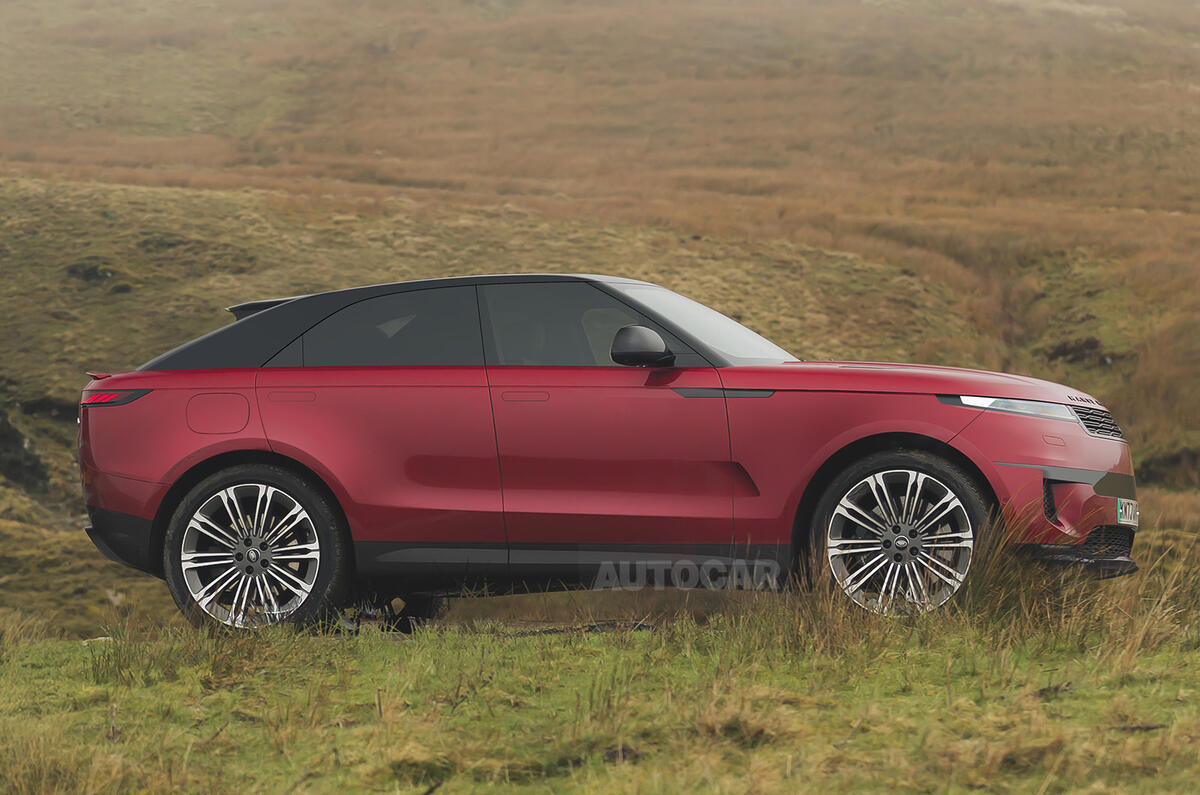
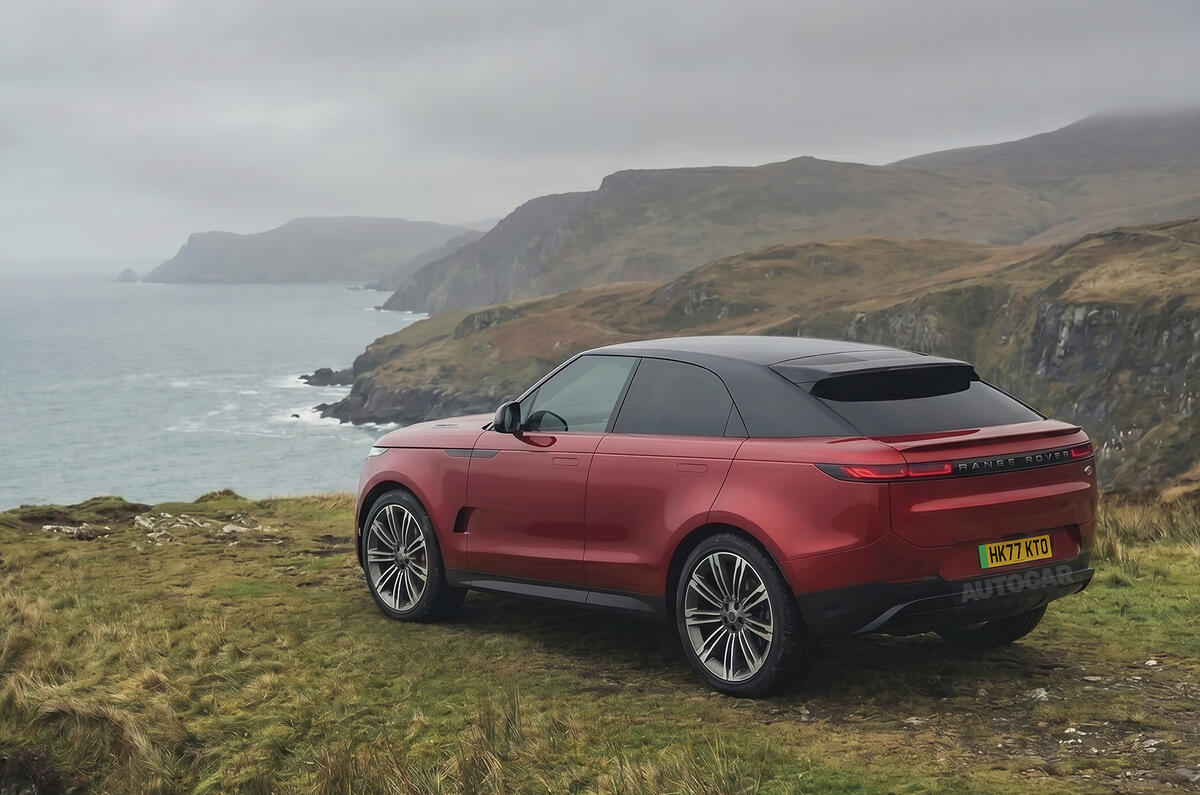
JLR will then move to introduce more volume-oriented electric models, including the rakish new iX3-rivalling crossover and a chunky entry-level 4x4 known as Defender Sport (pictured in Autocar's artist impression, below). 
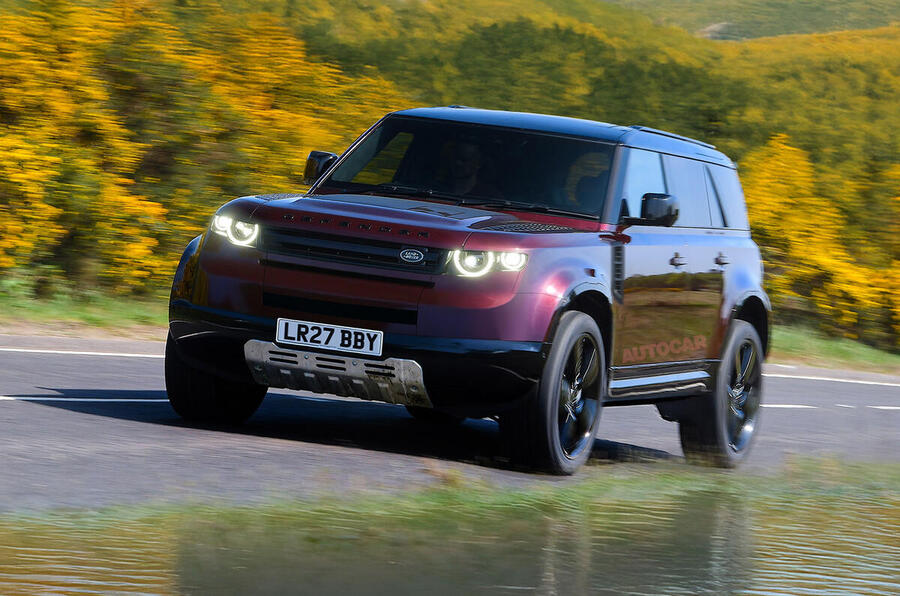
They will be the first models based on JLR's new EMA platform, which had been planned as an electric-only architecture.

However, it has since been confirmed that it will also be compatible with hybrid powertrains as part of an effort to offer more choice across the JLR portfolio.

The company said last week that while future Jaguars will be all-electric and the full-size Range Rover models will offer the choice of ICE and electric power, the first EMA car - confirmed as the smaller Range Rover crossover - "is planned to provide flexibility in the future through a full hybrid electric vehicle propulsion offering".

The hybrid powertrain is said to be a "unique new addition to JLR's propulsion portfolio", suggesting it will be unrelated to the ICE powerplants it currently offers across its range.

The Range Rover crossover will be followed by a "new model from the Defender family". This will be the long-awaited Defender Sport, which will also offer hybrid and electric power.

JLR said the move recognises that global demand still exists for combustion engine-based drivetrains, and it marks a return to an earlier plan to offer the EMA as a multi-fuel platform.

It remains to be seen if the firm will offer the smaller cars with a range-extender system, as had originally been mooted.

Range Rover goes saloon
Back to top

The crossover is among the last of the models to be shaped under the stewardship of former JLR design boss Gerry McGovern.

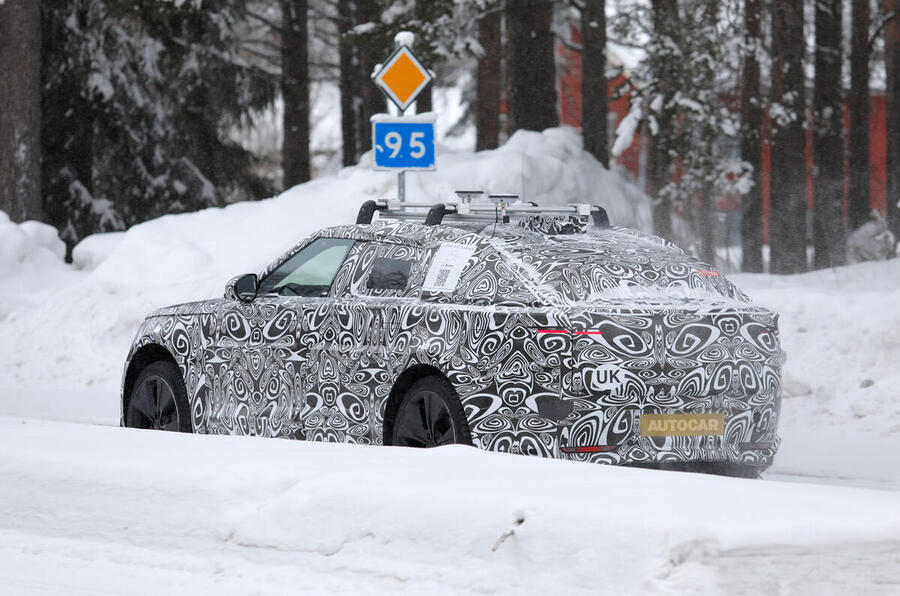
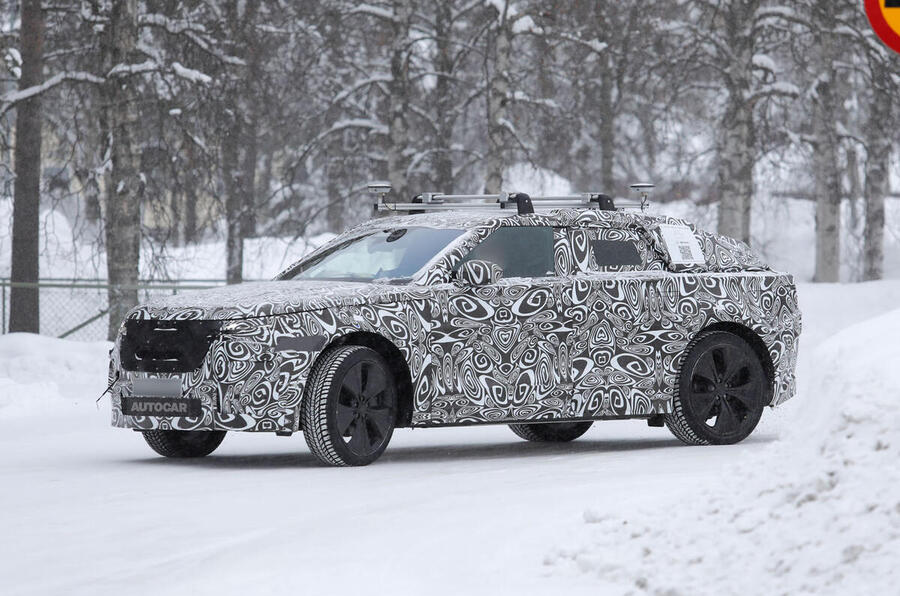
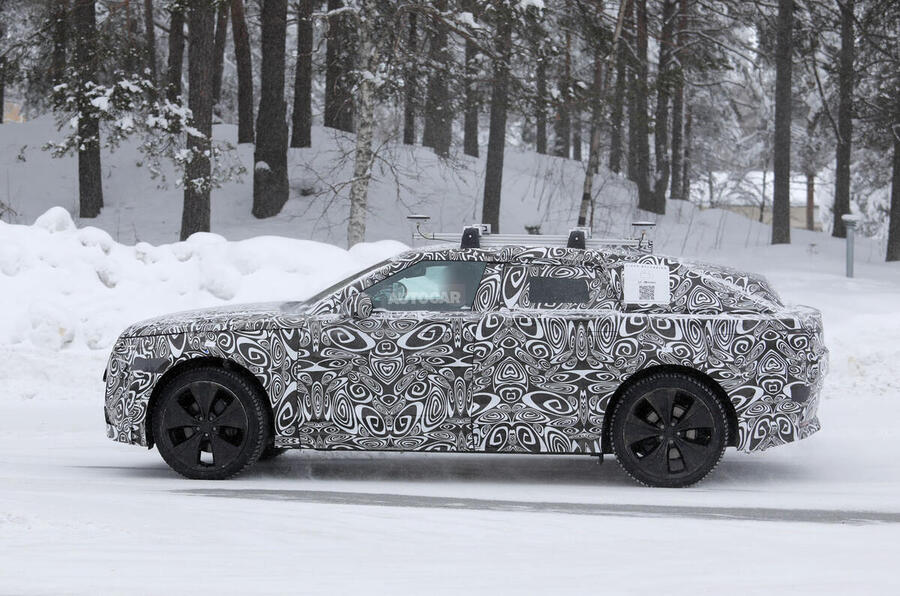
It will represent a dramatic break from Land Rover and Range Rover by eschewing a traditional high-riding, two-box SUV silhouette. Instead, it adopts a sleeker and more rakish look that appears to ride closer to the ground and has the air of a saloon car - similar to the Polestar 4 and DS N°8 in profile.

Its roofline is sharply angled down to the rear, where a small, saloon-style deck extends out of the back and around the sides to give a muscular look to the rear haunches.

Prototypes seen testing have had their rear decks camouflaged, suggesting the new SUV will forgo a traditional rear screen in favour of a digital rear-view camera, like the Jaguar Type 01.

The arrangement boosts rear-seat head room because it does away with the bulky header rail that's needed with a glass pane. JLR has yet to comment on the design of its new model, but the bold shape will help to distinguish it from its range-mates.

This is in line with the company's push to segregate more categorically its various model families, in this case by emphasising a greater focus on long-distance refinement than outright utility or off-road capability.

Back to top

The move to a 'segment-straddling' bodystyle could also help the model compete more effectively in a segment in which many rivals field a technically identical saloon and SUV, such as the BMW i3 and iX3, the Mercedes GLC and C-Class EVs and the Audi A6 and Q6 E-tron.

Despite having a silhouette and footprint that are similar to the current Velar's, however, it is not yet confirmed whether the new model will use that name, as has been widely speculated.

JLR is working to build its best-performing and longest-standing nameplates - Discovery, Range Rover, Defender and Jaguar - into brands in their own right, and it will begin to introduce distinct, stand-alone model lines under each of those four banners.

It is not yet clear, however, how 'Velar', which has only been used for a production car since 2018, fits into that strategy.

How it can win

The new mid-sized Range Rover crossover is set to become one of JLR's best-sellers and certainly one of its most popular EVs in the medium terrm, along with the smaller and possibly cheaper Defender Sport. But it will need to be suitably technically equipped if it is to compete with its German and Swedish rivals.

The BMW, Volvo and Mercedes each offer a maximum range of around 500 miles in their longest-legged forms, and they are capable of charging at well over 300kW, which significantly enhances their appeal as long-distance executive models.

JLR has not yet released the specifications of any of its EMA-based models, but it is likely to equip the EV architecture with the same 800V hardware that is said to allow the larger electric Range Rover to top up as quickly as the fastest-charging EVs on sale.

It is not yet known if the smaller Range Rover EV, which is thought to be roughly as long as the current combustion Velar, at 4.8m, could take the same substantial 118kWh battery pack as its bigger sibling.

However, the EMA is understood to have been engineered as an 'electric-first' architecture.

Back to top

So while the full-fat Range Rover's MLA platform was designed to be multi-fuel from the beginning, with provision for an ICE drivetrain in the chassis, it's possible that more cells could fit into a smaller wheelbase on an EMA-based model. For reference, the iX3 and EX60 both pack more than 110kWh of capacity in their longest-range forms.

It is unclear if JLR, which is synonymous with 4x4 drivetrains, will equip this road-focused model with a cheaper and more efficient single-motor arrangement.

The firm has sold two-wheel-drive options since 2010, but only on the entry-level Freelander and Evoque models.

Production plan

The EV's batteries will come from the £4 billion Somerset battery factory currently being built by Tata-owned Agratas and which will produce units for JLR and other customers.

The facility is due to open next year, following a series of delays, and has a targeted outright capacity equivalent to 500,000 EV batteries per year. It will supply JLR's production lines in Solihull, where the firm will build the Range Rover and Jaguar EVs, and Halewood, where the new mid-sized SUV is due to be built.

The Merseyside site currently produces the Discovery Sport and Evoque, but it is undergoing a £500 million makeover so it can manufacture EVs.

The Velar-sized SUV and Defender Sport are due to be the first, and they could in time replace the petrol-engined crossovers, which are seven and eight years old respectively.

However, JLR has already said Halewood will remain capable of building pure-combustion and hybrid models alongside their electric counterparts.

So the latest announcement that the EMA can accommodate hybrids suggests that EV and HEV versions of the new 'Velar and Defender Sport will be built in sequence there.

The business case

JLR's incoming rakish SUV will be the first all-new model released under the stewardship of PB Balaji, whose appointment as JLR CEO last year was seen as an attempt by parent company Tata-where he had previously been finance boss - to take a tighter grip on the reins of its highly profitable British subsidiary.

Back to top

Automotive industry newcomer Balaji faces a tough task in steering JLR through the innumerable global headwinds currently battering the automotive Industry.

The company is recovering from the crippling cyber attack that knocked out all of its production lines for several weeks last year, and JLR is still grappling with the challenges of import tariffs in the crucial US market, intense competition in China and the forthcoming imposition of new 'Made in Europe' rules that could threaten the viability of UK-built cars in the EU.

Introducing a new car with higher volume potential than the upmarket Range Rover and Defender models will be pivotal in helping the firm to preserve its market share while navigating these choppy waters. But it will be just as important in boosting JLR's electric vehicle mix in a market that so far has been lukewarm to full-blown electric luxury cars.

The electric version of the Velar-sized SUV will arrive around the same time as the electric Range Rover and Range Rover Sport, as well as Jaguar's long-awaited Type 01 GT.

But while those three will be priced above £100k and pitched into the luxury sector, this smaller new entrant has a crucial role to play in stealing sales from the likes of the BMW IX3, Volvo EX60 and Mercedes GLC Electric.

Unlike those rivals, JLR's new mid-sized SUV does not have to take the role of playing the electric alternative to a combustion-powered best-seller: the current Velar outsold only the ageing Discovery and Discovery Sport last year in Land Rover showrooms, but the model will be vital in maintaining the brand's footprint in a key segment as it transitions to electric power.

Faltering demand for electric luxury models worldwide has prompted many marques- including Aston Martin, Bentley, Lotus and Porsche - to delay or scale back their plans to electrify their line-ups fully in recent years.

JLR itself is bringing its flagship Jaguar and Range Rover EVs to market later than planned partly, it is understood, in anticipation of the market picking up.

Electric powertrains are, however, proving far more popular lower down the pricing scale in the premium sector, where large-capacity engines and thrilling exhaust notes have traditionally been less central to a car's appeal.

Back to top

Indeed, BMW has already added a second shift at the IX3 factory in Hungary to cater to soaring demand: the EV notched up just over 10,000 sales in its first two months.

Volvo, meanwhile, also boosted output following strong demand for the EX60, and Mercedes took more GLC orders in the first three months of production than for any of its previous EVs. 

Join our WhatsApp community and be the first to read about the latest news and reviews wowing the car world. Our community is the best, easiest and most direct place to tap into the minds of Autocar, and if you join you’ll also be treated to unique WhatsApp content. You can leave at any time after joining - check our full privacy policy here.

Felix Page

Felix Page
Title: Deputy editor

Felix is Autocar's deputy editor, responsible for leading the brand's agenda-shaping coverage across all facets of the global automotive industry - both in print and online.

He has interviewed the most powerful and widely respected people in motoring, covered the reveals and launches of today's most important cars, and broken some of the biggest automotive stories of the last few years.