Currently reading: Best £20k electric car showdown: Renault 5 vs Fiat Grande Panda

Fiat's new Grande Panda spreads cheer wherever it goes — but it will take more than just vibes to beat the Renault 5

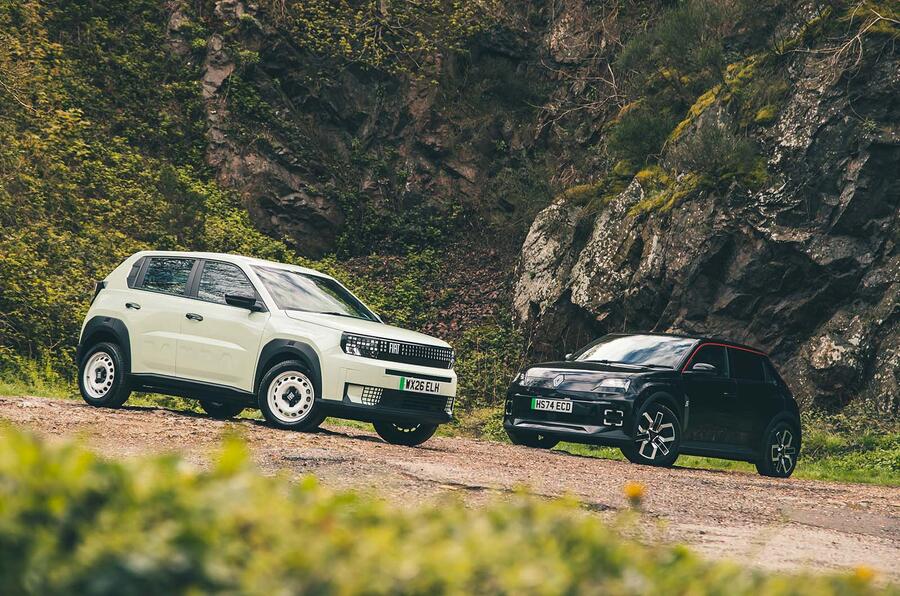
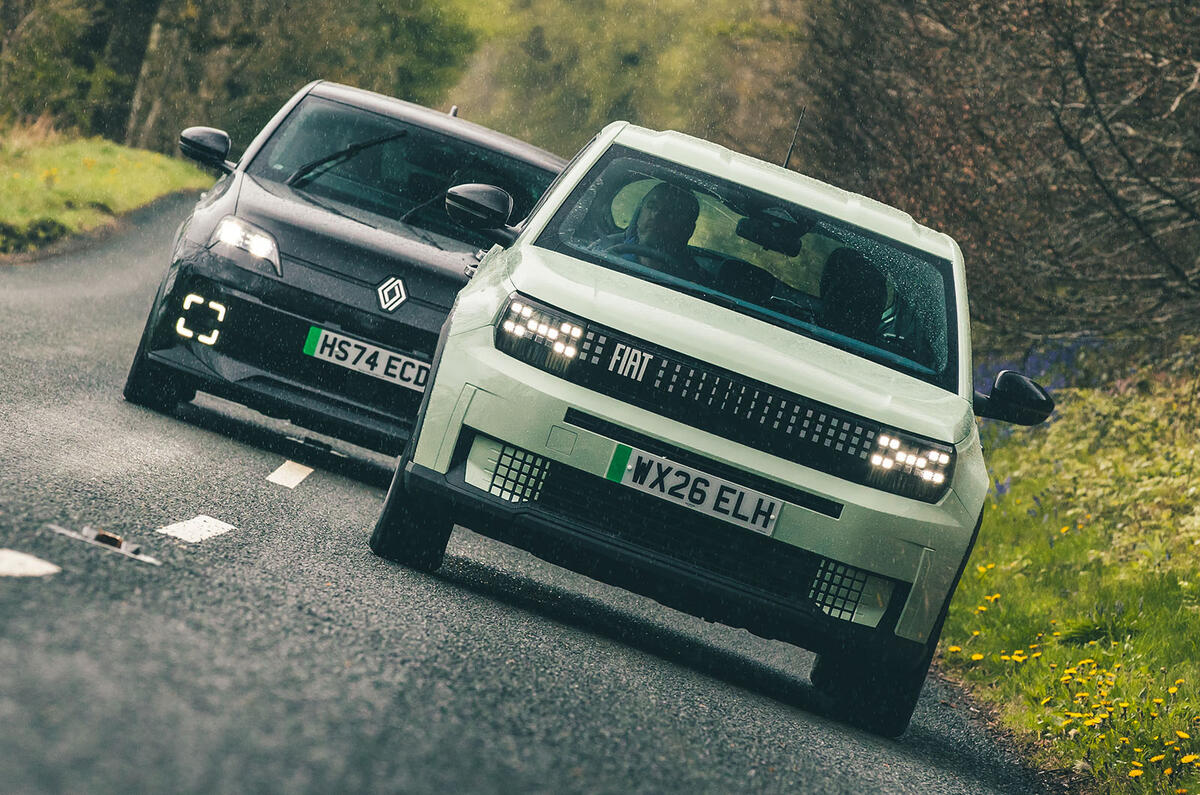
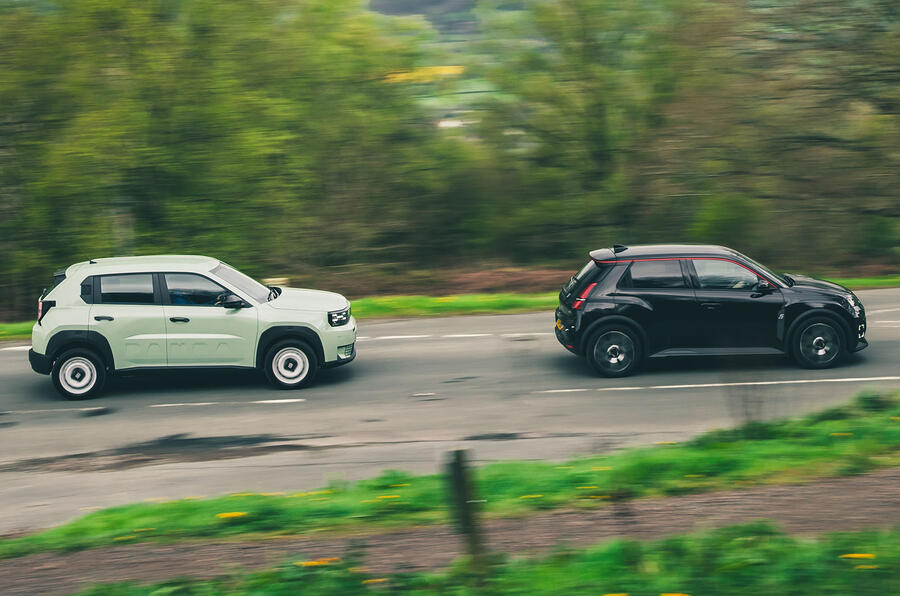
Don't panic. Yes, you are looking at a Fiat Panda and a Renault 5, but no, you haven't fallen down a wormhole and been dumped into the early 1980s.

The names may be those of familiar old stagers, but this pair of bang-up-to-date EVs represent Europe's most convincing fightback yet against the wave of ever-hotter, low-cost competition from China.

Yet there's more to this duo than eye-catching price tags and wallet-friendly finance deals. Much, much more. You see, both the 5 and the Panda were designed by teams who reckoned that if the established European brands are to have a future, they need to look to the past. In fact, it's no surprise that both cars feature the creative input of François Leboine, current design boss at Fiat and previously part of Renault's advanced vehicle design team at the time the reborn 5 was being formed.
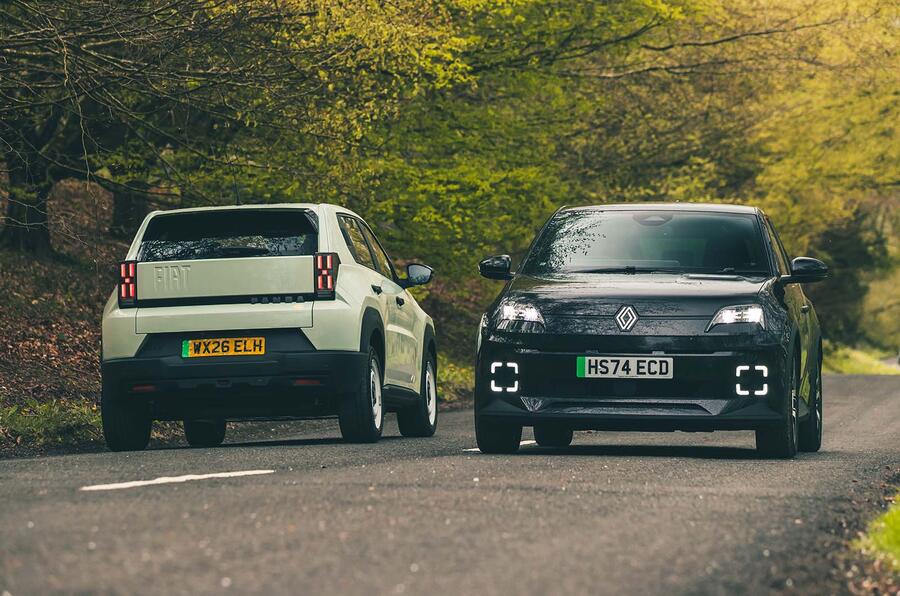
And the parallels don't end there, because each of these contenders is aimed at a similar audience, takes up roughly the same space on the road, travels a similar distance on a charge and in entry-level guise, as tested here, is priced within a biscuit of the other. Yet after spending time with our new-wave nostalgics, we have also found some crucial differences, both in design intent and driving dynamics. Which approach is better? Well, that's where it gets complicated.

We're already very familiar with the reborn 5, which has become a firm favourite here at Autocar. Even now, a year or so after its launch, the retro-infused Renault has the power to stop traffic and start conversations. It's not just the car's futuristic yet familiar lines: it's also the neat details such as the illuminated '5' in the bonnet that doubles as a battery charge indicator and the subtly flared wheel arches that evoke the wild, mid-engined, Group B rallying 5 Turbo.

And yet today, when the minty fresh (both in its newness and its eye-catching hue) Panda rolls up to our road test rendezvous, the Renault's power to distract is instantly sapped. The new Fiat is a bigger car than its predecessor (it's a Grande Panda now - geddit?), graduating from the city car class to the supermini sector, but the square-rigged influence of the Giorgetto Giugiaro-penned original is clear to see.
Advertisement

Read our review

Car review

Supermini-sized ‘utility’ EV offers retro cheeriness at a very low price

Back to top

That 1980 icon's looks were the result of an obsessively rational pursuit of low production costs, the car's simple panel pressings and flat glass helping to make it easier and cheaper to build than contemporary rivals. This new Panda was also conceived with a beady eye on the bottom line, but the cost savings have been achieved through the modern-day expedient of hardware sharing: it sits on Stellantis's Smart Car platform, which also underpins the new Citroën C3, Citroën C3 Aircross and Vauxhall Frontera.

While the 5 aims for a certain suave sophistication, the Panda is out-and-out fun in its approach. Everywhere you look there's a design flourish that captivates or an Easter egg ready to be found, from the large 'PANDA' script stamped into its flanks through to numerous appearances of Fiat's old diagonal four-bar logo and our entry-level Pop version's steel wheels.

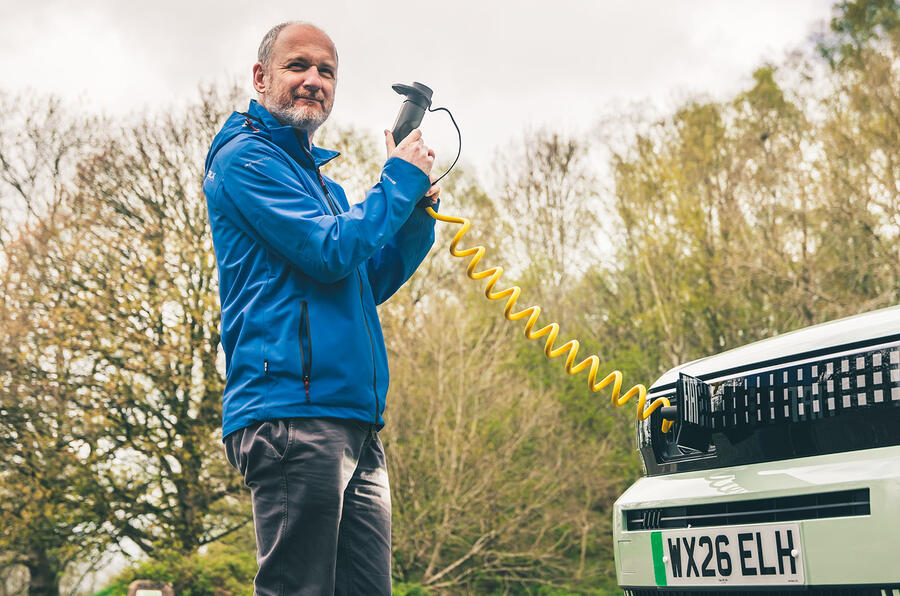
Highlights include the holographic badges in the C-pillars, the pixelated LED headlamps and the 3D tail-lights that appear to be housed in a Perspex display case. Or how about the neat, retractable charging cable hidden in the front grille? Whichever way you look at it, the Panda effortlessly mixes the clever and the cool.

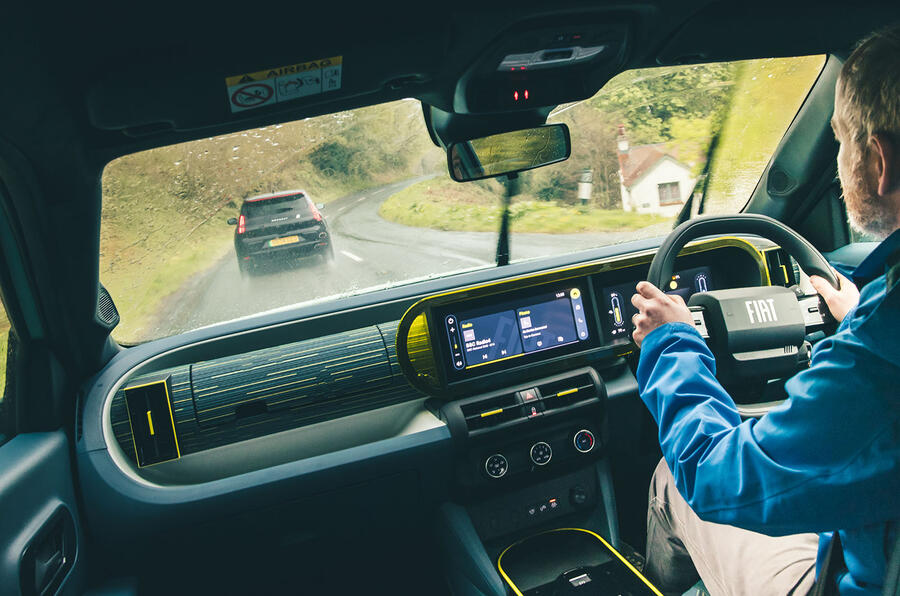
Fiat's designers have kept the creativity coming inside, where the Panda melds form and function to excellent effect. Jump behind the wheel and you're greeted by a neat digital instrument display and infotainment touchscreen that are framed within an evocation of the old Lingotto factory's rooftop test track. Finished in a translucent yellow plastic, it glows pleasingly when backlit by the sun. Embossed 'Panda' badges are everywhere, while the word 'ciao' is stamped on the inside of the tailgate.

Back to top

It's colourful too, from the blue plastic trim for the dashboard and doors (made from recycled drinks containers) to the natty fabric covering the glovebox. Combined with the large windows, this creates a bright and cheery ambience.

What it can't match is the 5's premium feel and sense of solidity - although it feels robust enough. It's all so easy to use, too, with physical controls for frequently used functions and straightforward infotainment that syncs seamlessly with your phone.

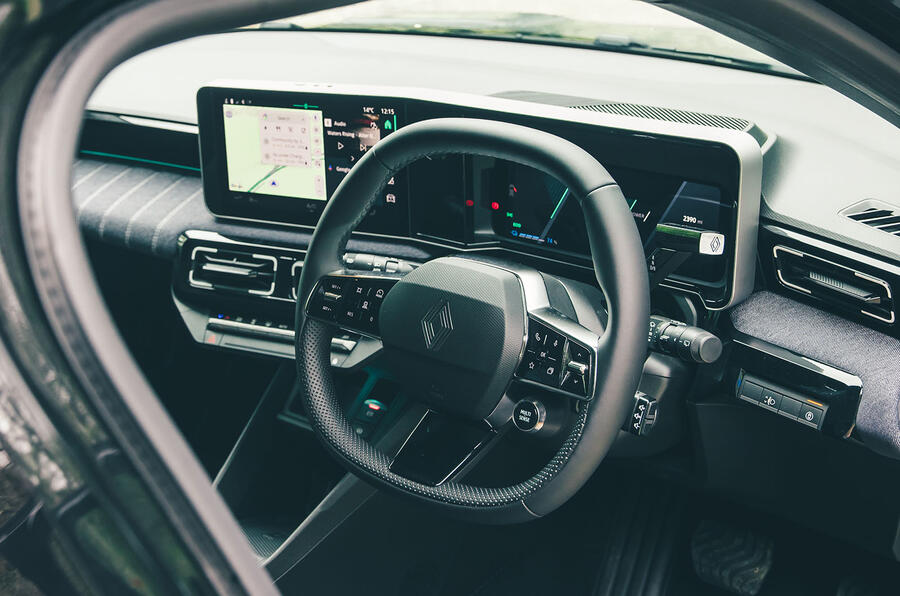
Stick your head into the 5 and it all seems a little sombre at first, but even in entry-level Evolution guise its richer materials and a more expensive-looking digital display give it a classier atmosphere. This is a cooler and more cosseting environment - an upmarket counterpoint to the Panda's airy feel and funky charm. There are some nods to its ancestor (the stitched dashtop matching the ribbed moulding of the original), but the 5, slathered in soft-touch materials, feels a more grown-up proposition.

Whichever way you cut it, the Panda is the more practical machine. For starters, there's more space for those sitting in the back. The 5's more cramped rear compartment is compounded by smaller side windows and dark trim that combine to create a sense of claustrophobia. Fiat's designers have also put more thought into storage, dotting handy cubbies, trays and compartments around the Panda's cabin; Renault's lot force you to leave more of your stuff in trouser pockets.

The Panda's 361-litre load area sticks the boot into the 5 for carrying capacity, holding a handy 35-litre advantage. Both benefit from a 60/40-split folding rear bench but are also hobbled by high load lips. Yet in the final reckoning, the Panda is the more roomy and versatile option overall. This is a car that could just about pass muster as your only set of family wheels.

Settle yourself behind the wheel and prepare to go for a drive and the tables turn. You sit lower in the 5 and it's easier to find the perfect seating position; the Panda's driver is a little more perched, its smattering of rugged SUV exterior cues carrying over to a raised driving position. The 5 isn't without its flaws, though: if you manage to operate the column-mounted gear selector without setting the wipers flailing, then kudos to you.

Back to top

The 5's more upmarket visual and tactile vibe translates to the initial driving experience. With its multi-link rear axle and greater use of sound- deadening, it has a greater sense of plushness from the get-go.

In truth, there's little in it for outright ride quality between the pair, each dealing with bigger long-wave undulations with a nicely damped waft yet exhibiting some brittleness over more challenging torn and twisted surfaces, of which there are many here in the Malvern Hills. Yet in the 5, nastier impacts are more muted, while it rounds the edges of the sharper impacts better than the Panda. The 5 is a more hushed cruiser overall, insulating its occupants more effectively from wind and road noise. But while the Panda is a more obtrusive companion, it's far from wearing and, range aside, neither car should dissuade you from embarking on long-haul excursions.

It's in more dynamic situations that the 5 gets to put some distance - literally - between itself and the Fiat. While its 118bhp motor is just 7bhp up on the Panda's, the fractionally lighter and much torquier 5 responds more crisply to its accelerator (the Panda is a little sluggish when first moving away), while ramping up through the driver modes to Sport results in ever-increasing urgency to the requests of your right foot. It's no surprise to find the 5's claimed 0-62mph time of 9.0sec is a couple of seconds faster than the Panda's, even if both have more than enough urge for everyday use.

Back to top

The Panda's less racy remit is highlighted by its shortage of adjustable drive settings (there's just a Comfort button that adds a syrupy response to the accelerator) and lack of adjustment for the regenerative braking. On the plus side, the default set-up offers such a natural off-throttle retardation calibration that you rarely miss the 5's scope for manual fine-tuning.

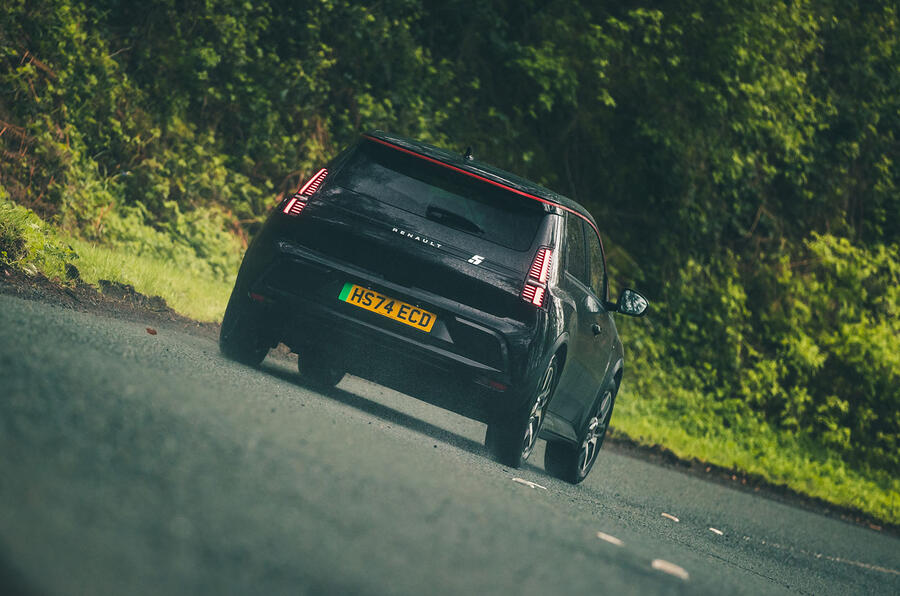
The 5 also feels fleeter of foot through the corners, even if its light steering's sensitivity away from the straight-ahead means delicacy is needed for smooth progress (the brake pedal requires an equally soft touch). 

Of course, the upshot is that the 5 feels alive when pushing on, darting towards the apex with greater alacrity and proving keener to subtly tighten its line with a lift of the throttle. There's real warm-hatch energy to the French car and, in many respects, it's a more satisfying steer than its hotter sibling, the Alpine A290.

Yet the Panda isn't without driver appeal. Its steering is more naturally paced and has greater reassuring heft, while its wider tyres (205-section, compared with 195-section on the 5) means it actually clings on harder and corners with the same even-keeled poise. It's not quite as biddable or nimble but, like all the best small Italian and French machinery, it can cover ground deceptively quickly, resulting in surprising point-to-point pace.

Back to top

Totting up the scores at the end of a hard day's evaluation it quickly becomes clear that this pair are pretty much tied on points. Yet despite being so closely matched, the 5 and Panda actually have quite different characters.

The 5 is a more engaging driver's car, faster and more agile, and for people like us that counts for rather a lot. Yet for all its style, verve and upmarket allure, it's a less versatile small car - one that, like the original BMW Mini of 2000, is an object of desire as much as one of utility. For many that will be just fine, but the Panda proves that it's possible to be both charming and useful.

No, it's not quite as clear-sighted in its logic as some of Fiat's greatest pint-sized hits, and some of the design flourishes are just a little try-hard, but the Panda is a car that makes you grin just by being in its presence, while its thoughtful packaging allows it to just about fulfil the role of a larger car, much like the Uno did in the 1980s and first-generation Punto did in the 1990s.

Ultimately, each of our contenders oozes the sort of star quality that makes them difficult to resist. Yet in the final reckoning, the Panda's panache, purposefulness and price give it the win by the width of a single strand of spaghetto. Forza, Fiat - bravissimo!

  FIAT GRANDE PANDA ELECTRIC POP RENAULT 5 E-TECH URBAN RANGE EVOLUTION
Rating 4.5 stars 4.5 stars
Price £20,995 £21,495
Engine Permanent magnet synchronous motor Permanent magnet synchronous motor
Power 111bhp 118bhp
Torque 90lb ft 166lb ft
Kerb weight 1532kg 1463kg
0-62mph 11.0sec 9.0sec
Top speed 82mph 93mph
Battery 43.8kWh (usable) 40.0kWh (usable)
Range (WLTP) 199 miles 192 miles
Economy (test) 3.8mpkWh 4.0mpkWh

Plug and play

Both of these cars favour a relatively small battery (40kWh for the 5 and 44kWh for the Panda), which result in similar WLTP ranges (the Panda's 199 miles pipping the 5's by seven miles). On a relatively mild spring day, each car reckoned somewhere around 185 miles was possible on a nearly full charge. We also saw economy figures that hovered around the 4.0mpkWh mark when they were driven swiftly but sensibly (the 5 earns efficiency bonus points for its standard heat pump).

Back to top

The Panda's novel retractable charging lead is limited to battery replenishment at 7kW, but there's also a standard charging port at the rear of the car capable of 100kW. By contrast, the Renault maxes out at 80kW, but its smaller battery means that a 20-80% charge likewise takes around 30 minutes.

Join our WhatsApp community and be the first to read about the latest news and reviews wowing the car world. Our community is the best, easiest and most direct place to tap into the minds of Autocar, and if you join you’ll also be treated to unique WhatsApp content. You can leave at any time after joining - check our full privacy policy here.

James Disdale

James Disdale
Title: Special correspondent

James is a special correspondent for Autocar, which means he turns his hand to pretty much anything, including delivering first drive verdicts, gathering together group tests, formulating features and keeping Autocar.co.uk topped-up with the latest news and reviews. He also co-hosts the odd podcast and occasional video with Autocar’s esteemed Editor-at-large, Matt Prior.

For more than a decade and a half James has been writing about cars, in which time he has driven pretty much everything from humble hatchbacks to the highest of high performance machines. Having started his automotive career on, ahem, another weekly automotive magazine, he rose through the ranks and spent many years running that title’s road test desk. This was followed by a stint doing the same job for monthly title, evo, before starting a freelance career in 2019. The less said about his wilderness, post-university years selling mobile phones and insurance, the better.