Currently reading: Volvo quit estates, but you don't have to - bag a V90 for £8k

This is a traditional family car a sleek design twist — and it's reliable too, if you choose the right one

Think of a large family estate car. You're picturing a Volvo, aren't you?

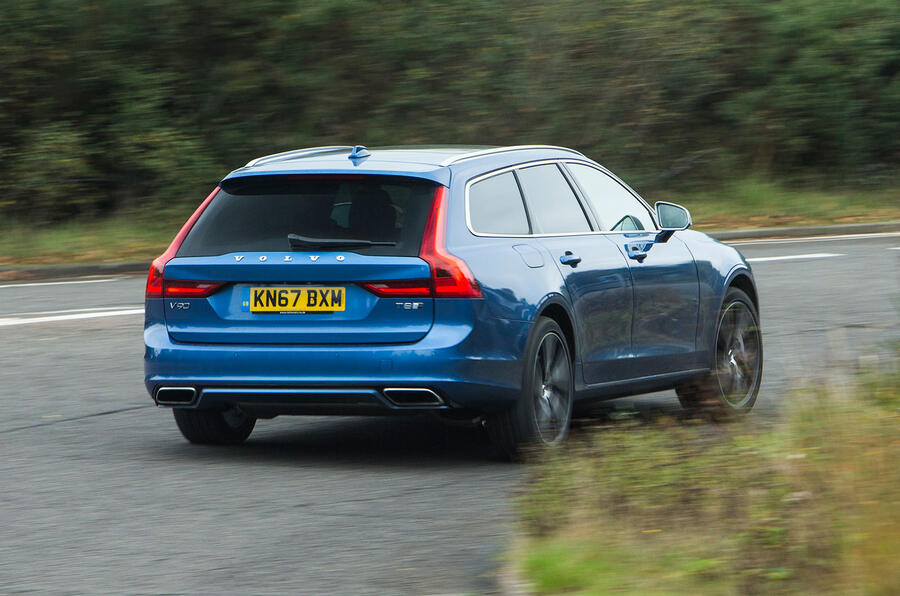
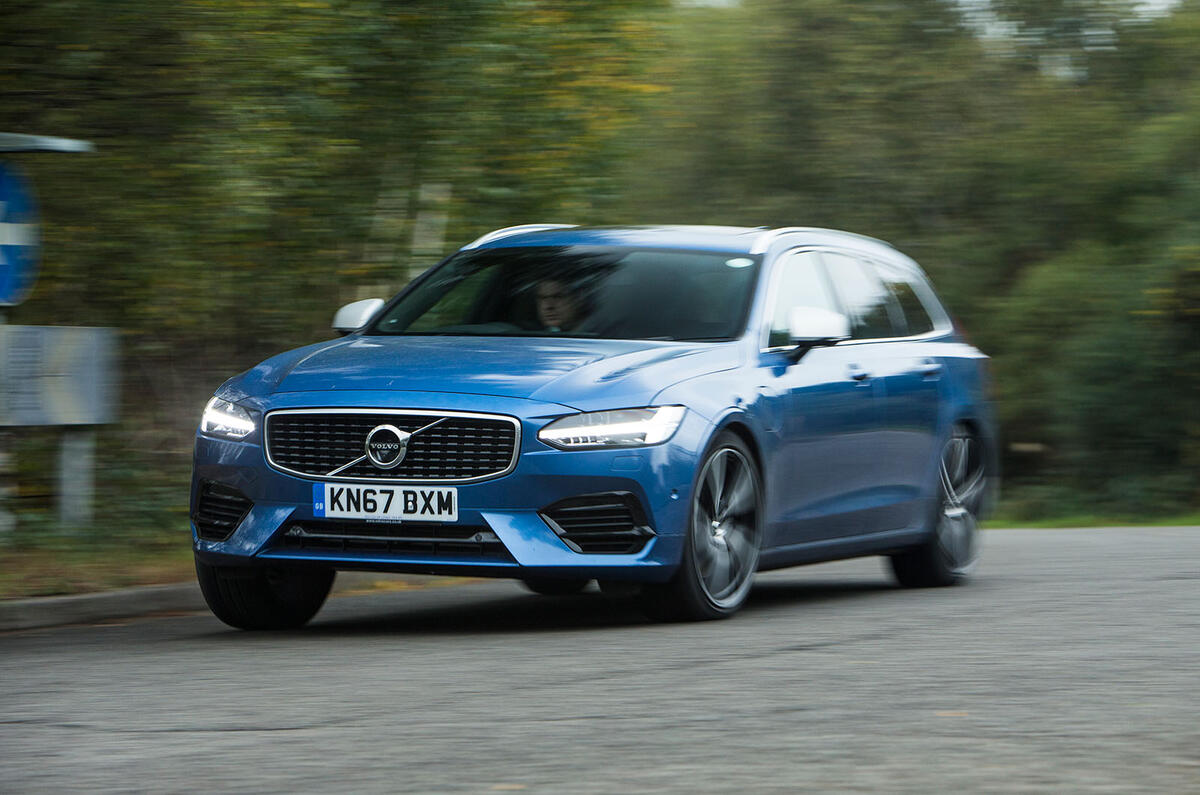
Although the XC90 is the Volvo de choix for big families these days, the more traditional V90 estate still holds massive appeal, having only recently bowed out of production after nearly a decade. And not just because it's one of the prettiest wagons around.

The second car to use Volvo's then-newfangled SPA platform, it arrived as a long, low and sculptural model like no Volvo estate before it - and its strong Scandi-chic design still looks clean and fresh today.
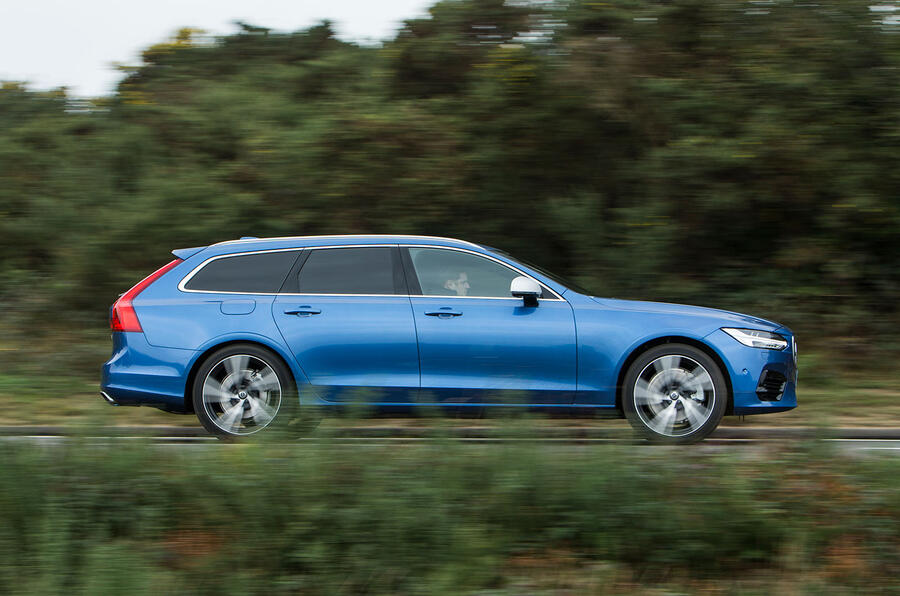
The by-product of its added kerb appeal is that it is not quite as utilitarian and practical as its breeze-block forebears - the sloping rear screen precludes the fitment of a third row of seats, for example - but the boot is still a competitive 560 litres, even in the PHEV, and four occupants have plenty of space (although a fifth makes it tighter).

For outright space, the Skoda Superb, Volkswagen Passat and Mercedes E-Class have it beat, but if you're looking for something that's in equal parts stylish, relaxing and practical, the V90 should be right up the top of your list with the Audi A6, BMW 5 Series and Jaguar XF.

The interior is family-friendly but still very stylish. All the materials look and feel expensive, and the 9.0in portrait touchscreen still looks modern, even if it can be laggy, which is grating because of the dearth of physical controls.
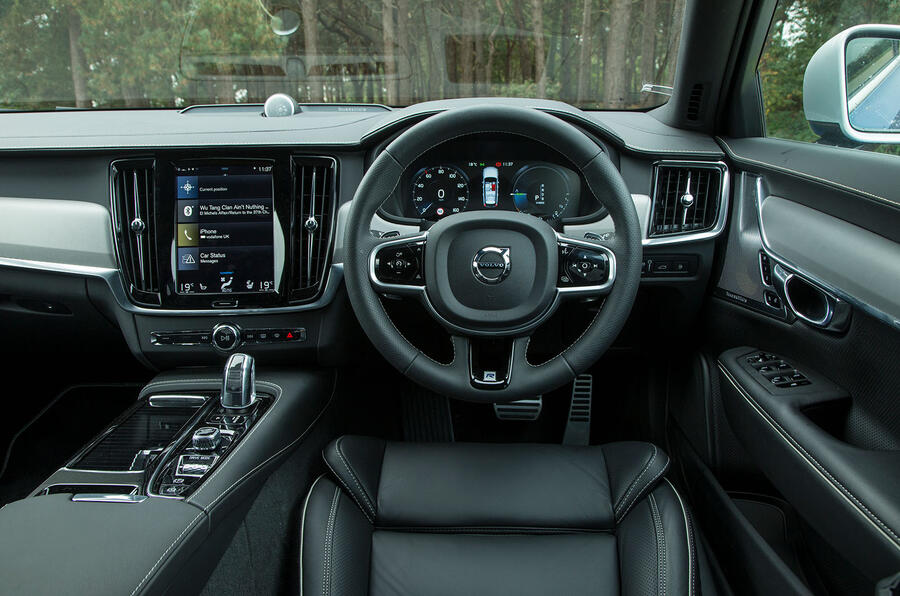
Equipment is generous. Even entry-level Momentum trim has LED headlights, heated leather seats, sat-nav, Bluetooth, adaptive cruise control, lane keep assist and DAB radio. On top of that, it has a powered bootlid, keyless start and rear parking sensors.

Advertisement

Read our review

Car review

Plush, PHEV-only Swedish estate sticks by its tried-and-trusted morals against a tidal wave of SUVs

Back to top

Used Inscription cars cost about 10% more than like-for-like Momentum models and get extra interior lighting, nappa leather seats and a larger, 12.3in digital instrument cluster, plus electric front seats and bigger alloys.

R-Design models have held their value best and offer firmer suspension for a sportier drive - but bear in mind that the V90 is very much a wafty and hushed cruiser, especially on adaptive dampers, and the R-Design's big wheels and stiffer dampers do unsettle the ride.

Handling is good across the board, though. The V90 has an encouraging level of body control for its size and supple set-up so can be briskly hustled along a twisty road.

All powertrains are based around a 2.0-litre engine, initially the 187bhp T4 petrol or D4 diesel, the 232bhp D5 or 247bhp T5, or the top-link 306bhp T6. The highest-power petrol and diesel came with four-wheel drive, but they have a poorer reliability record, so we would recommend the torquey D4 (expect mid-40s to the gallon) or pokey T5 (around 30mpg). The T4 is gutless and no more efficient than a T5.

All V90s are automatic, which is generally fine but early cars can be a bit jerky and hesitant.

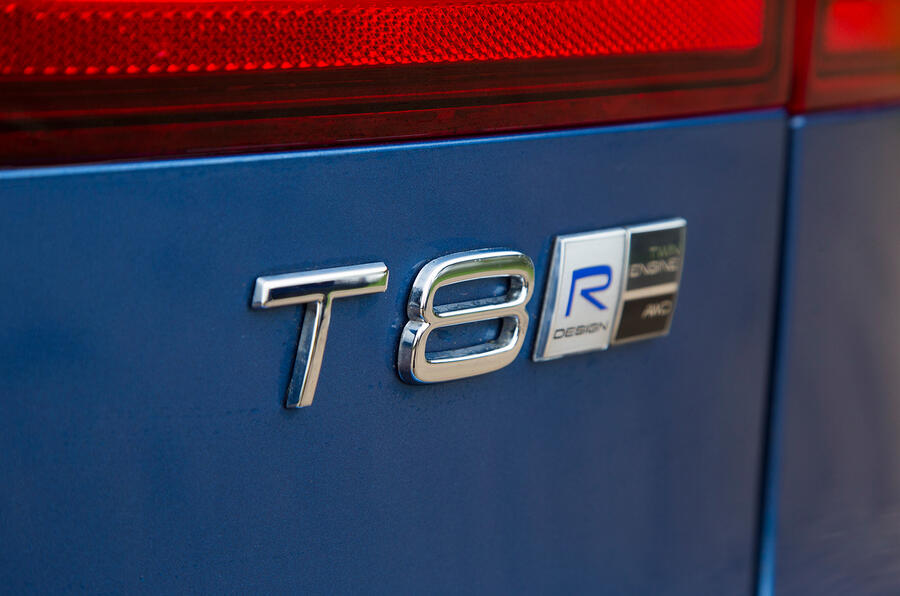
If you have a home charger and are tempted by the blisteringly quick 401bhp T8 PHEV, note that there are well-documented problems and you'll get only 20 miles of EV running on a good day.

Back to top

The V90 is a useful tow car, with the D5 and T6 rated for 2200kg and even the PHEVs being capable of pulling 2100kg. It's a workhorse, then, like all good Volvo estates have been, but with the tech and panache to slip into premium exec duties effortlessly. What more can you ask of a car that starts at £8k?

What to look out for

Engine: The high-output D5 (later B5) and T6 (later B6) use Volvo's PowerPulse compressed air system to spool the turbos quickly, reducing lag. Failure of the air compressor or associated hoses in this system is an occasional fault, leading to a loss of immediate performance, and can be expensive to fix.

Electric motor: Owners of plug-in hybrid T8s have reported a systemic issue with the 'ERAD', or EV motor, on the rear axle. These often fail after the warranty expires and £10,000 should be budgeted to fix it. So have it thoroughly checked out before purchase.

Suspension: Higher trims often feature rear or full air suspension. While it provides a superb, floaty ride and self-levelling, the air springs and compressors are prone to leaks and failure over time. Look for the car sitting unevenly when parked, and check for suspension warning messages on the dash. Volvo refuses to cover the system in extended warranties.

Body: The optional panoramic sunroof's drain tubes can become clogged with debris, causing water to accumulate and potentially leak into the cabin or damage the electronic modules located near the headliner.

Back to top

Infotainment: The touchscreen has a tendency to lag and there are very few buttons to fall back on. Total crashes are usually solved by turning it off and on again. V90s from 2016 and 2017 need a 3G sim to offer wi-fi. Coverage will soon end, so if this bothers you, choose a newer model.

Also worth knowing

The V90 was facelifted in 2020 with some small but important changes. The petrol Ts and Ds became Bs, with the addition of mild-hybrid technology, which doesn't make the world of difference to economy or performance but it's nice to have if your budget stretches.

The hybrid line-up expanded, with a new 335bhp T6 offering a claimed 35 miles of EV range initially, before being upgraded with a new battery to 53 miles in 2022. The T8 also received this and a bump in power to 449bhp. Note that without any electrical assistance, the PHEVs will struggle to break 35mpg.

Core, Plus and Ultimate replaced the previous trim levels.

How much to spend 

£8000-£12,999 Cars with over 100k miles and some with more than double that.

£13,000-£19,999 A range of pre-facelifted cars, from Momentums with average miles to top-spec, low-mile T8s.

£20,000-£32,999 A wide choice of facelifted models, including the last of the mild-hybrid petrols and diesels.

£33,000-£55,000 Plug-in hybrids from the last few years of production.

An owner's view

Sarah Hughes: "I ran a D4 R-Design for three years and 60,000 miles. For a car of its size, the economy was strong, hitting high-40s on a motorway run. The comfort is the biggest selling point: I've never sat in a better seat. The Pilot Assist [adaptive cruise and steering] made motorway journeys easy and the overall interior design and quality are hard to beat. Nothing broke, although the Sensus infotainment did occasionally have a 'Matrix moment' where it just froze and needed a restart to clear. My biggest gripe was the gearbox; it was often dim-witted and hesitant when pulling away."

Join our WhatsApp community and be the first to read about the latest news and reviews wowing the car world. Our community is the best, easiest and most direct place to tap into the minds of Autocar, and if you join you’ll also be treated to unique WhatsApp content. You can leave at any time after joining - check our full privacy policy here.

Alex Wolstenholme

Alex Wolstenholme
Title: Editorial Assistant

Alex joined Haymarket, the publisher of Autocar, in 2023. A car fanatic, he loves to delve into the spec-sheet, especially when it concerns something obscure or quirky. He currently drives a 2007 Alpina D3 estate and a 2004 Alpina Roadster S. 

In his current position, as an editorial assistant, Alex mainly assists in managing Autocar's presence online, but also writes features and reviews for the magazine.