From £36,2458

Even in its twilight years can Hyundai’s best seller outgun its rivals?

The best-selling Hyundai Tucson has been treated to a revised hybrid system for 2026, before it’s replaced by an all-new model within the year. 

It has been six years since the current fourth-generation car went on sale and boosted the Hyundai Motor Group’s positioning to the fourth-biggest manufacturer in the world.

Despite the thousands on the road with it, and the years we've had to get used to it, the Tucson still stands out

Big-name rivals - such as the Volkswagen Tiguan, Ford Kuga and Honda CR-V - have been humbled by a model that offers more style, technology and ease of use for less money. 

It has been representative of Hyundai’s product improvement, resulting in better and better cars across its conventional line-up and success in identifying growing segments, such as family SUVs and crossovers, and pitching models into them with not just aggressive pricing but also genuine quality and ability. 

For 2024, the Tucson was given a mid-life facelift aimed primarily at improving the usability of its interior while retaining that eye-catching exterior styling. A minor 2026 update has left everything, bar the self-charging Hybrid, as before.

Hyundai Tucson range at a glance

All of the Tucson’s powertrains are based around a turbocharged 1.6-litre ‘Gamma’ four-cylinder petrol engine. It’s worth mentioning that in the previous generation it suffered from a poor reliability record, but it has been continually revised since. 

Advertisement
Back to top

The range opens with a 147bhp pure-petrol engine paired with a six-speed manual gearbox, followed by a 48V 147bhp mild-hybrid mated to a seven-speed dual-clutch automatic ’box. 

The 236bhp Hybrid is next in line (212bhp before ‘26), followed by a 249bhp plug-in hybrid with up to 44 miles of electric range. Both are paired to a six-speed automatic gearbox. 

Four-wheel drive is only available on the Hybrid and PHEV. Previously, a higher-powered mild-hybrid was offered with four-wheel drive. 

Currently, the Tucson is available in five trim levels: Advance, Premium, N-Line, N-Line S and Ultimate.

Premium and N-Line, and Ultimate and N-Line S are roughly equivalent in terms of spec, with N-Line only adding a racier bodykit and sporty interior touches but no mechanical changes. 


DESIGN & STYLING

8
2 hyundai tucson n line 31

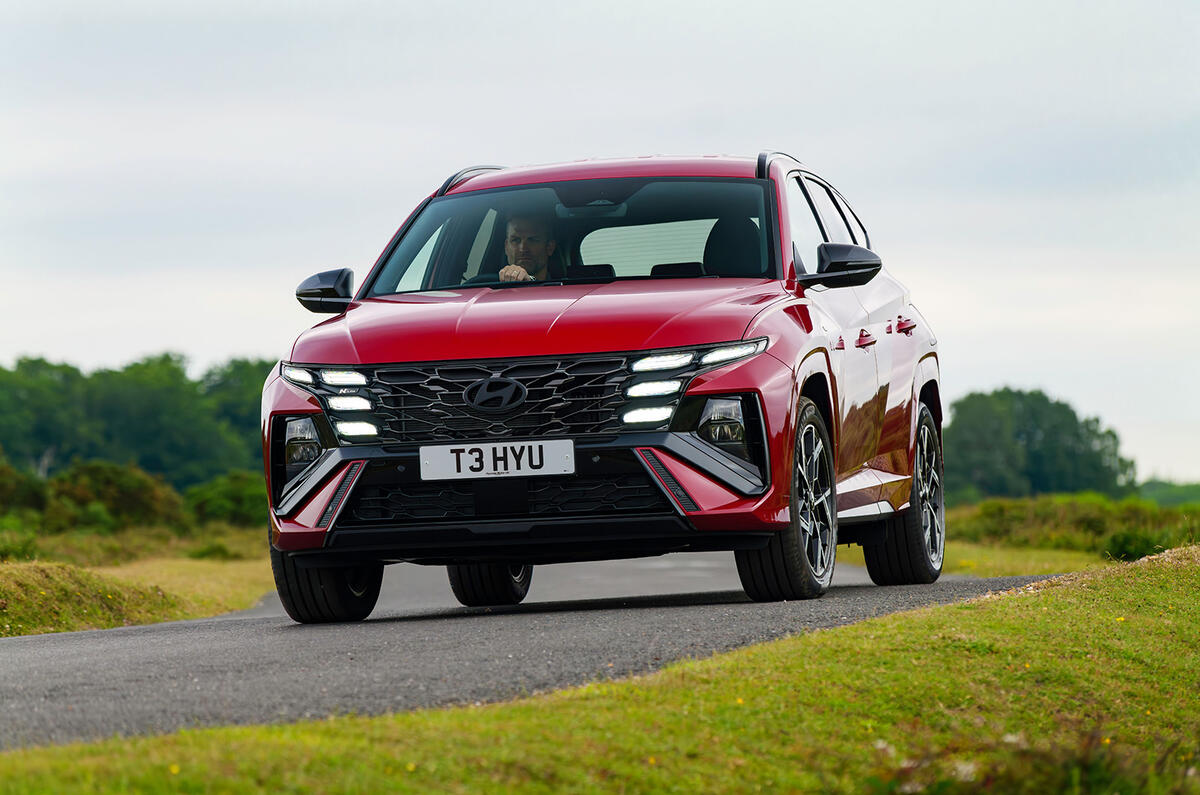
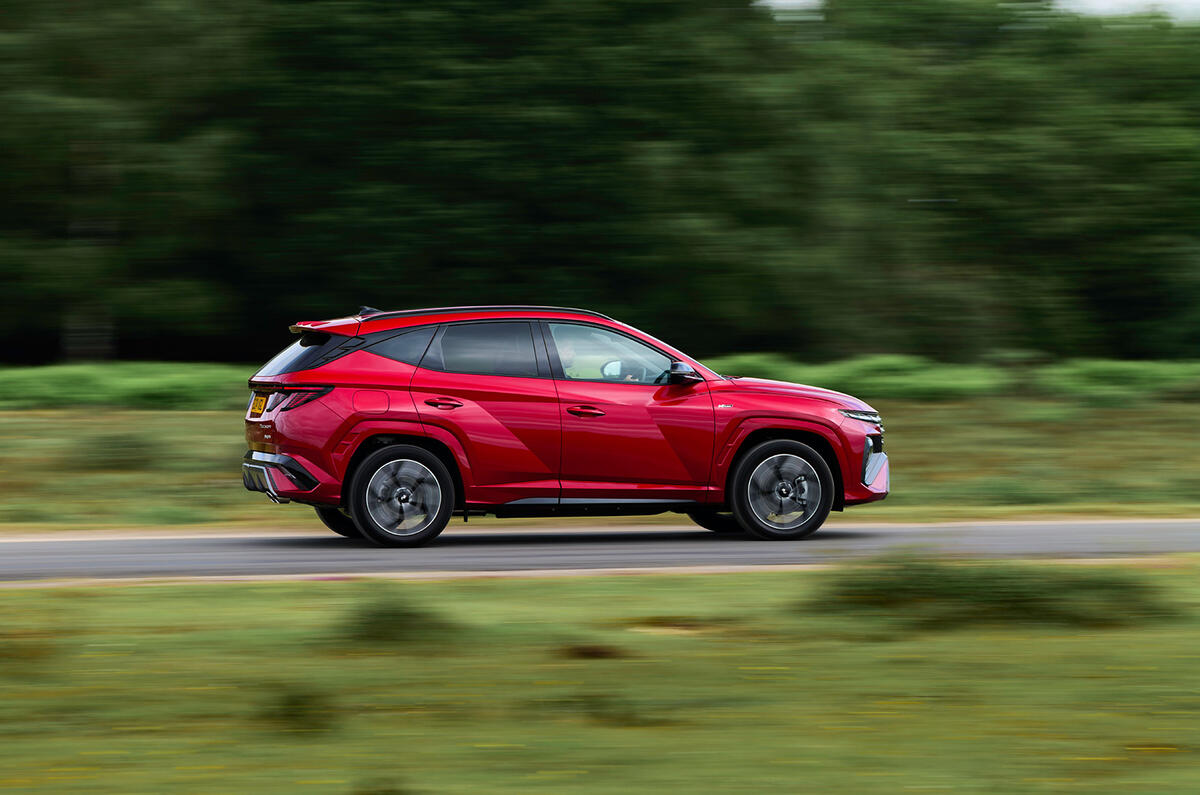
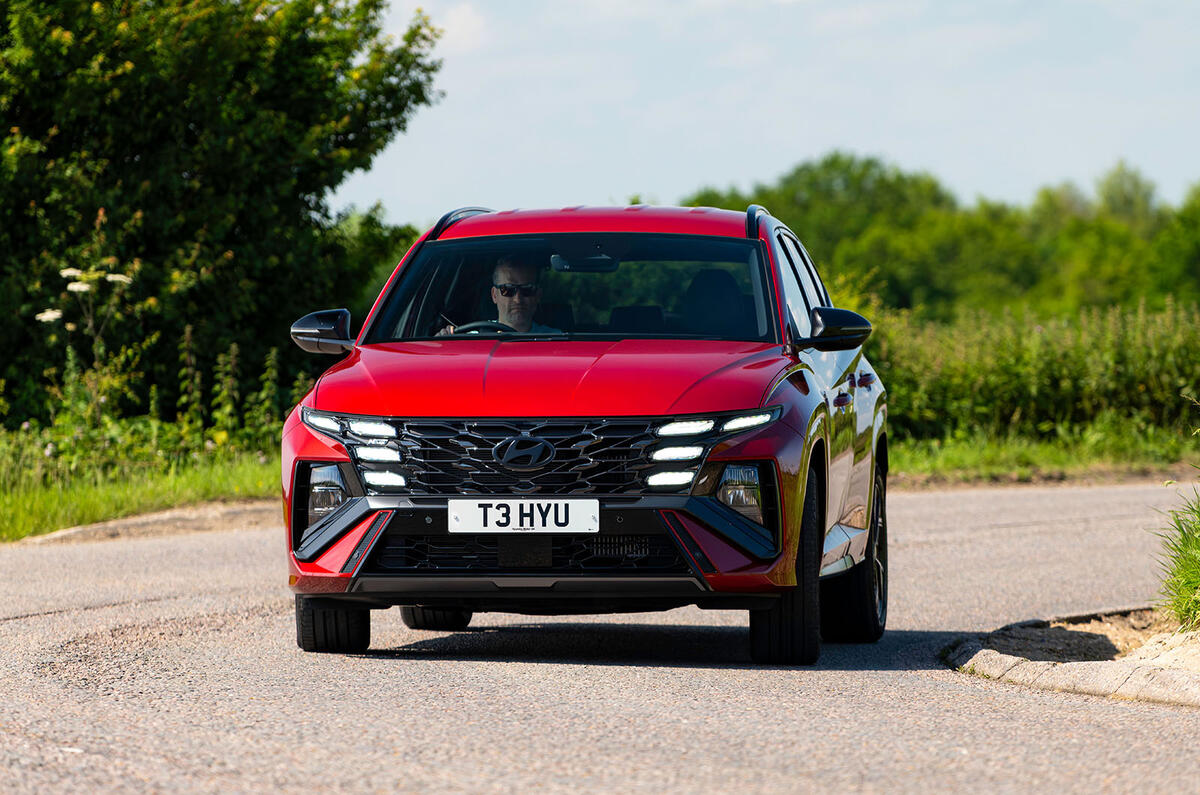
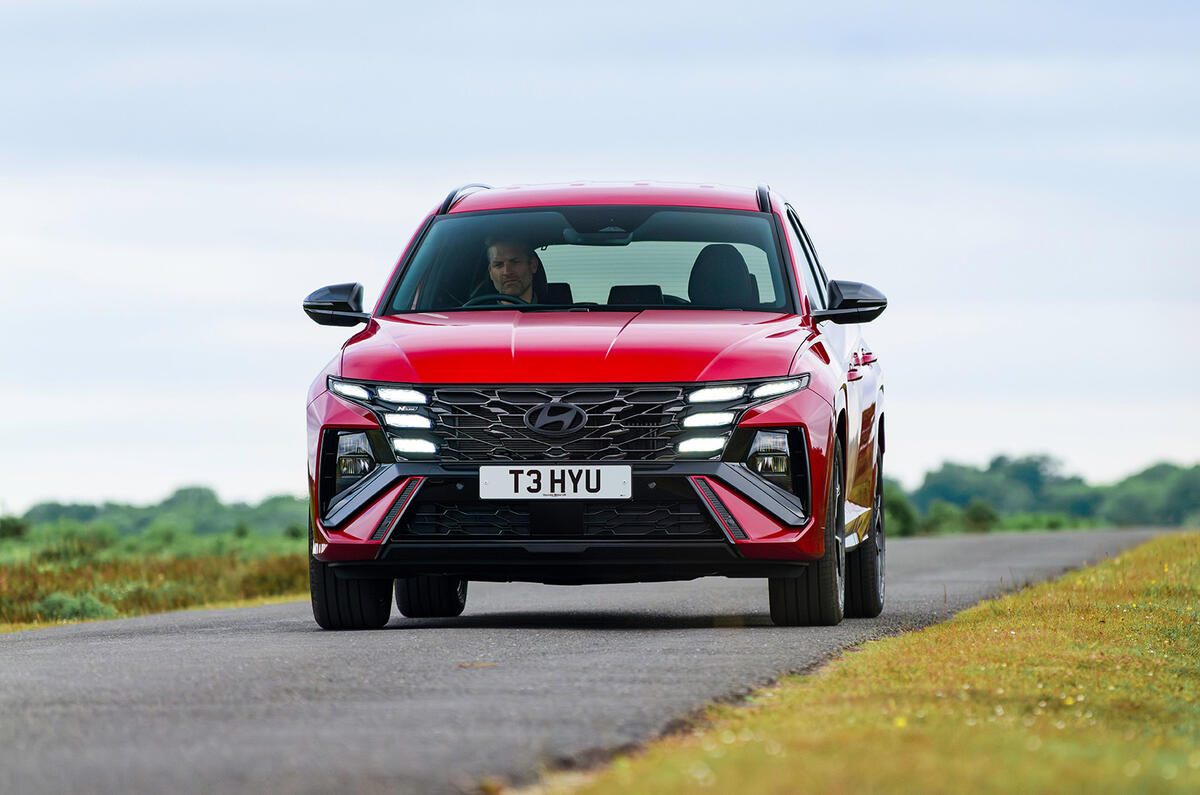
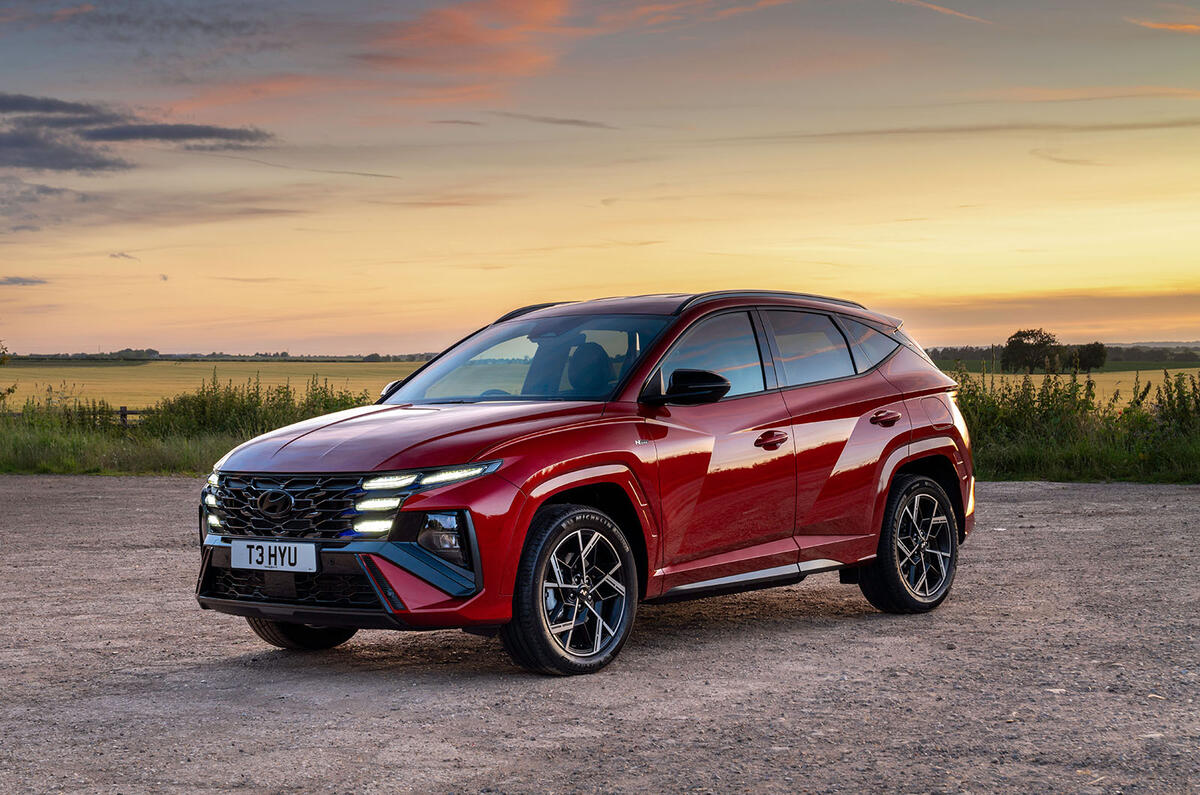
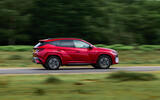
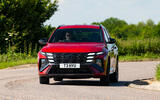
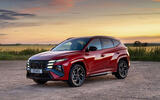
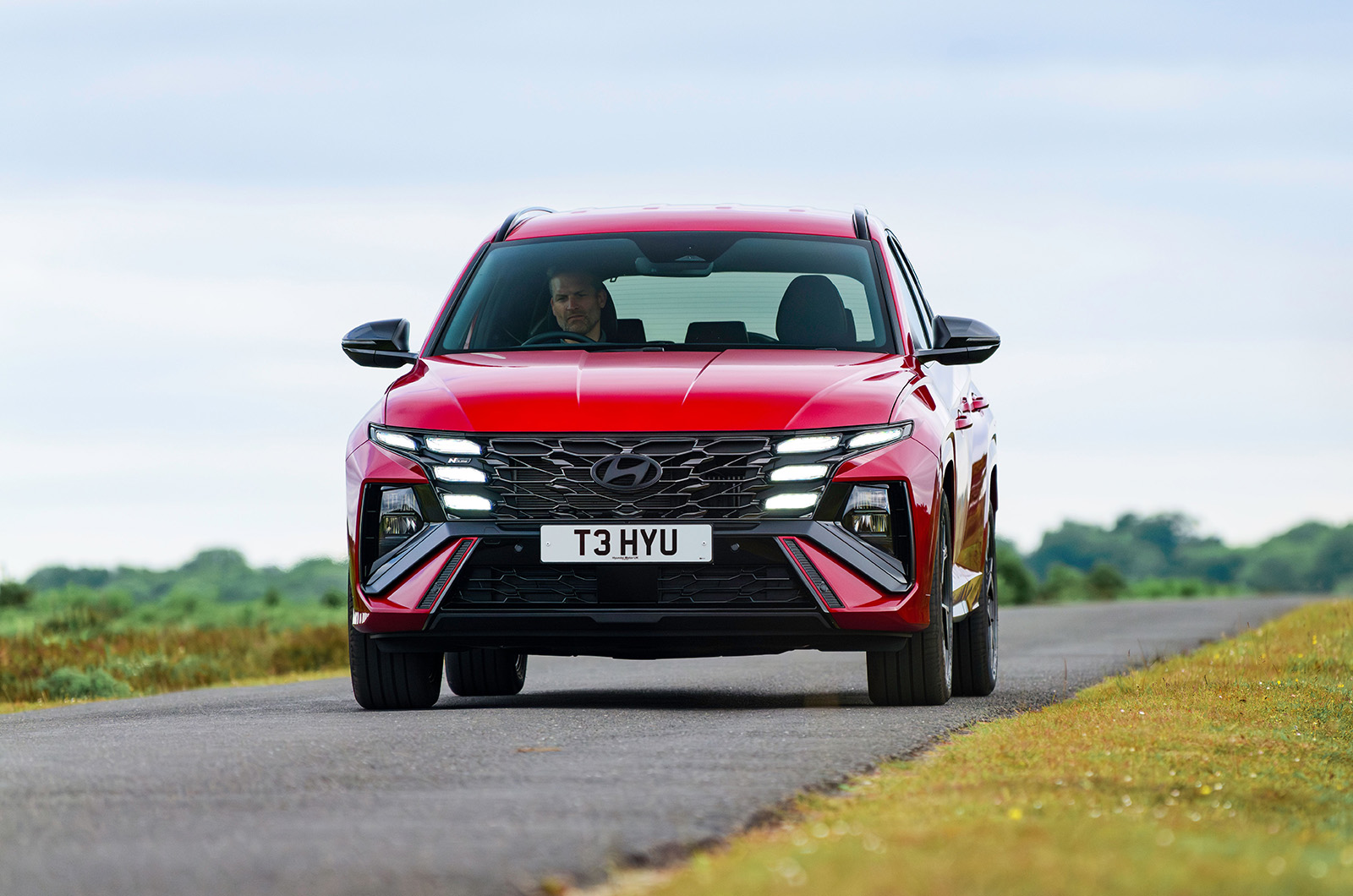
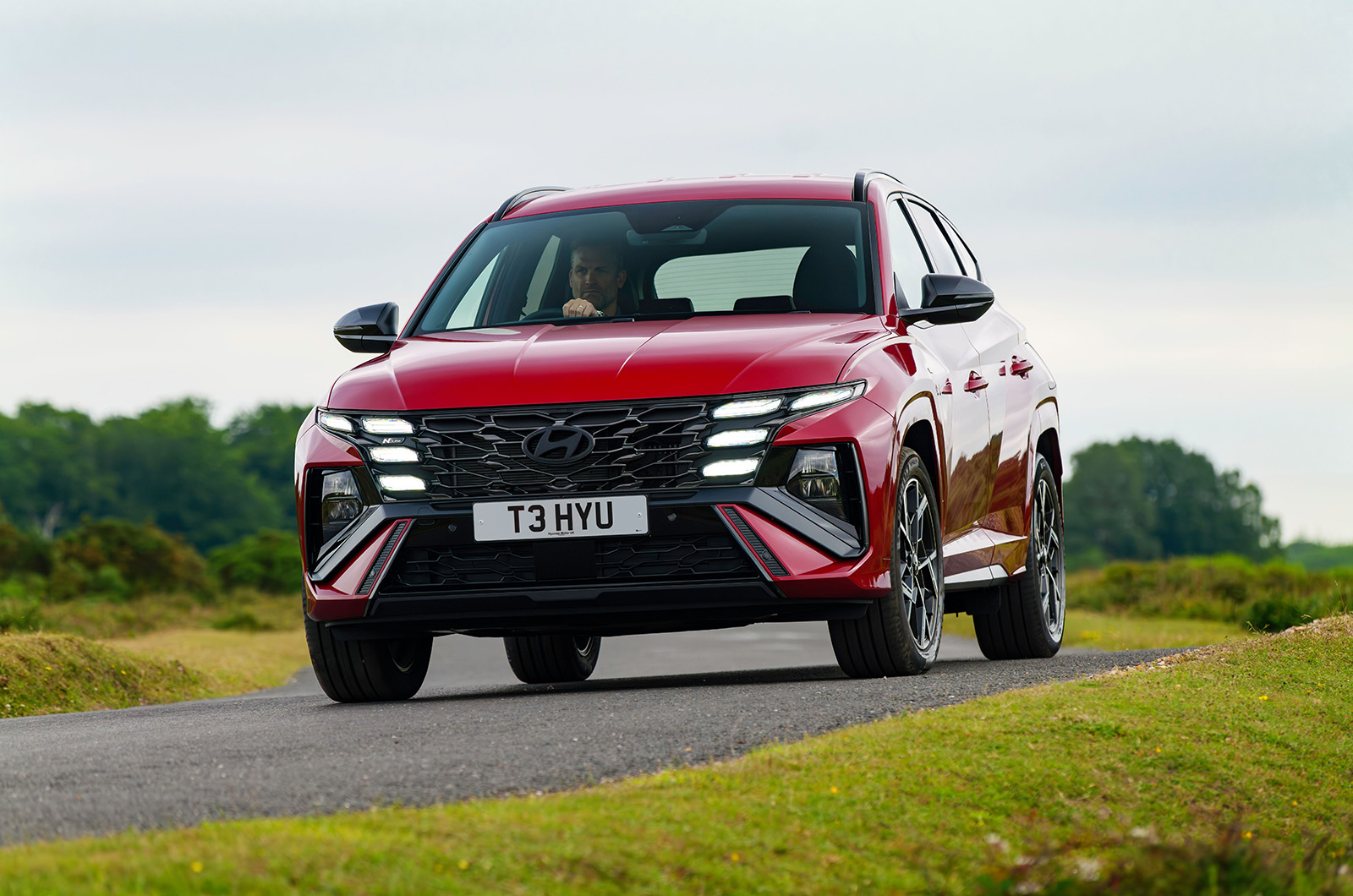
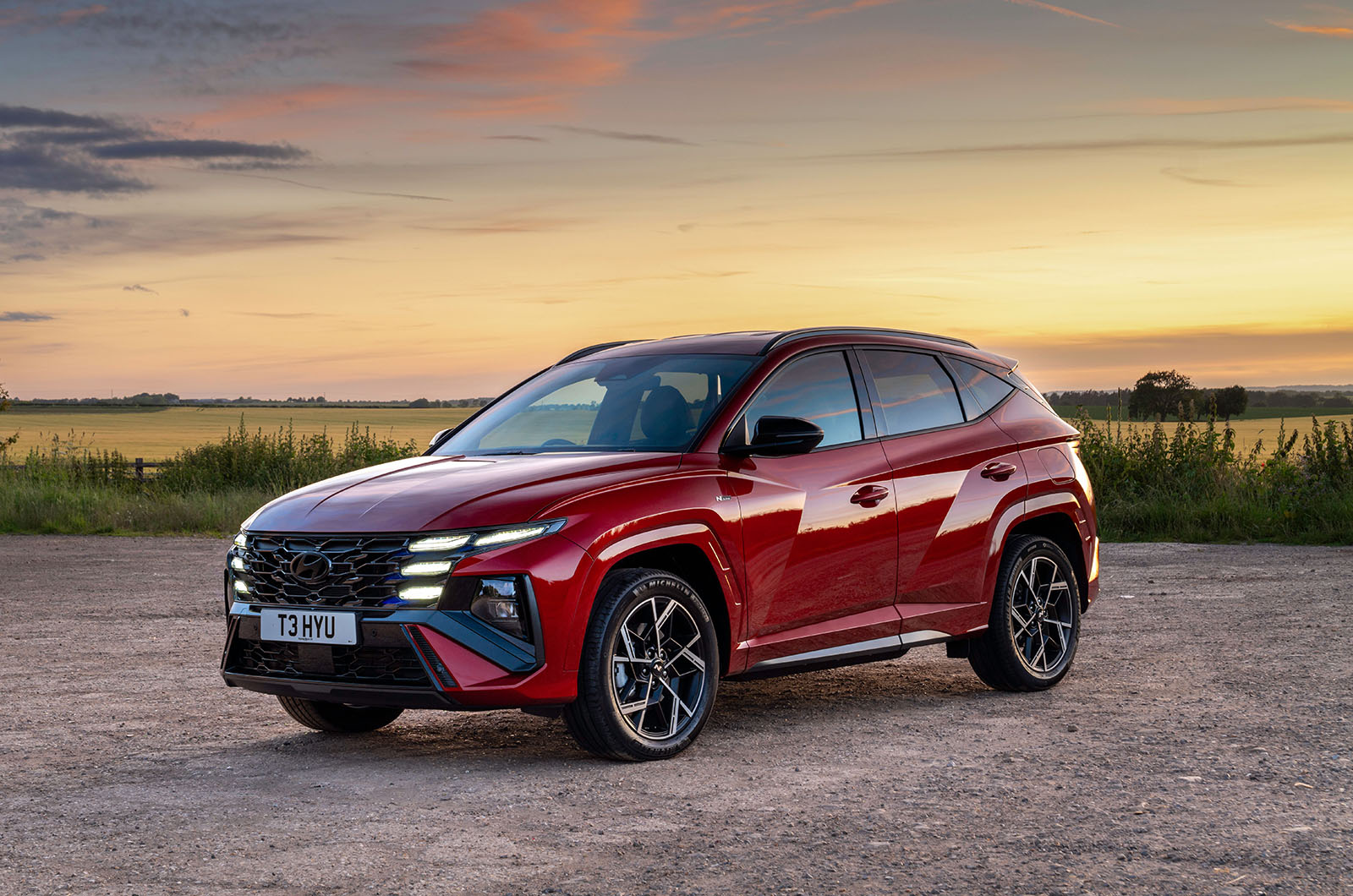
This Tuscon was launched into a world where a new family SUV was released seemingly every week, but even today its striking looks stand out from the crowd. 

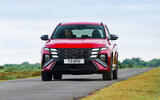
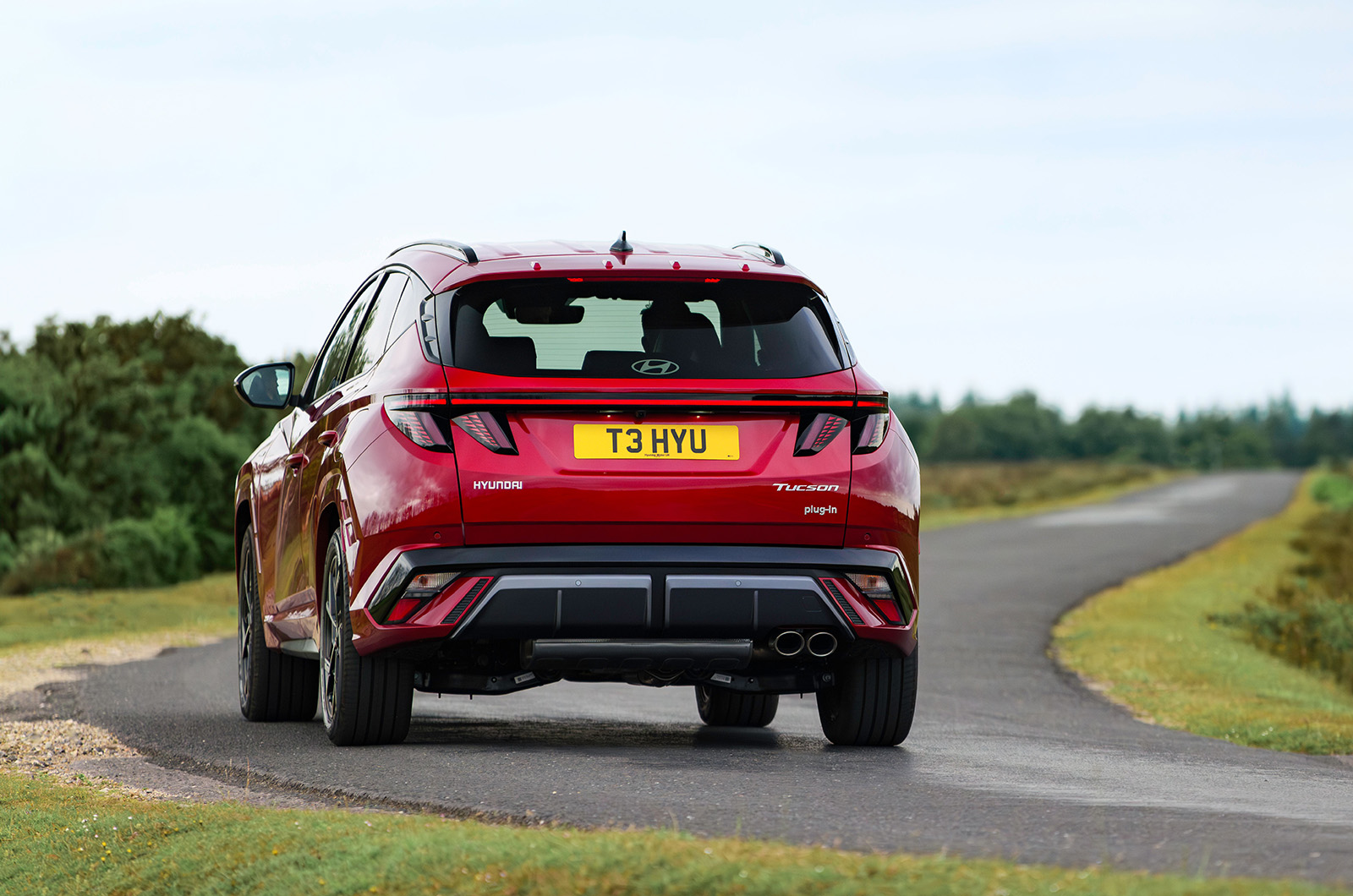
In the 2024 update, Hyundai's designers squared off the Tucson’s dramatic grille, added larger headlights and fitted new skidplates at the front and the rear. 

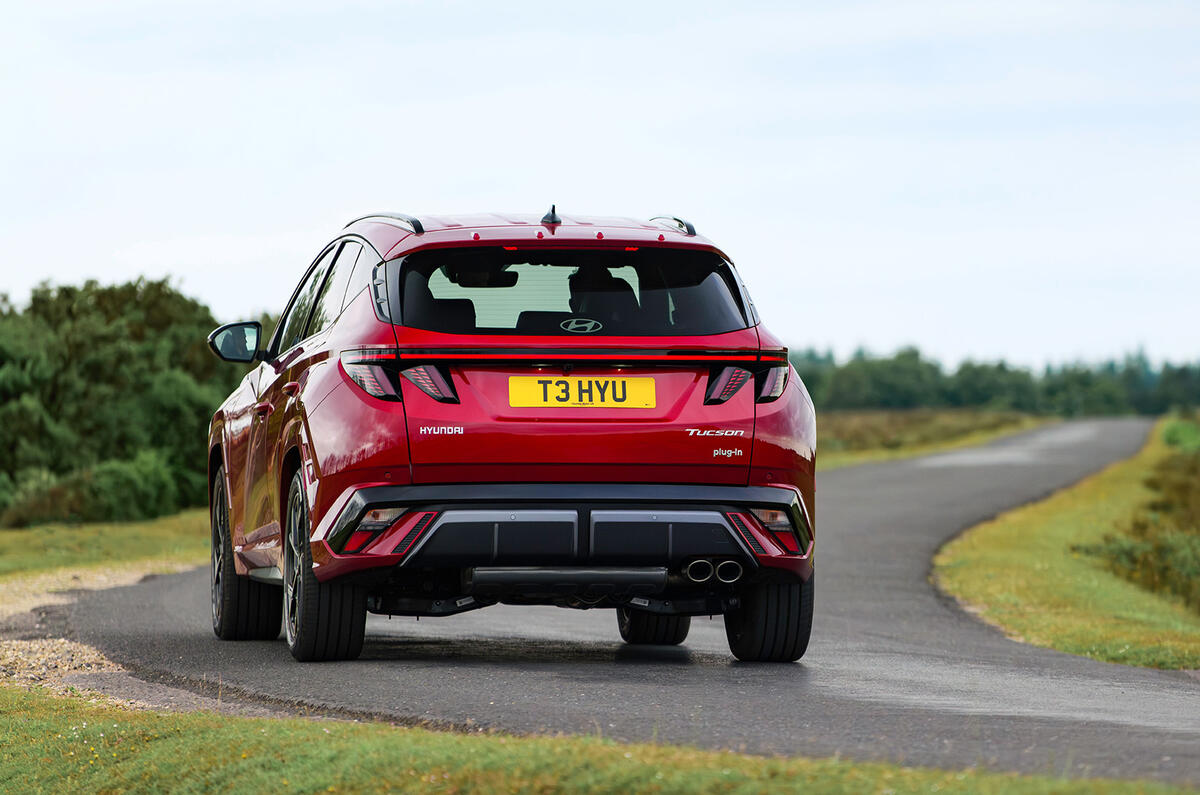
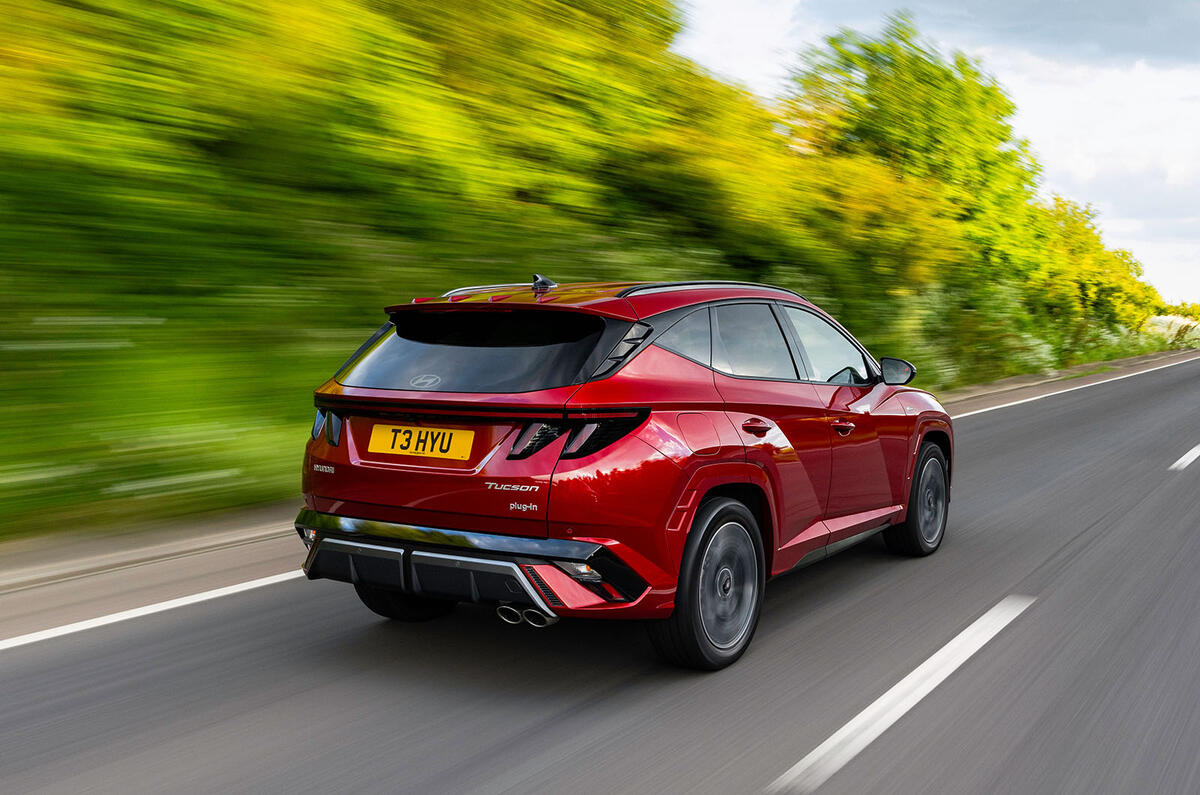
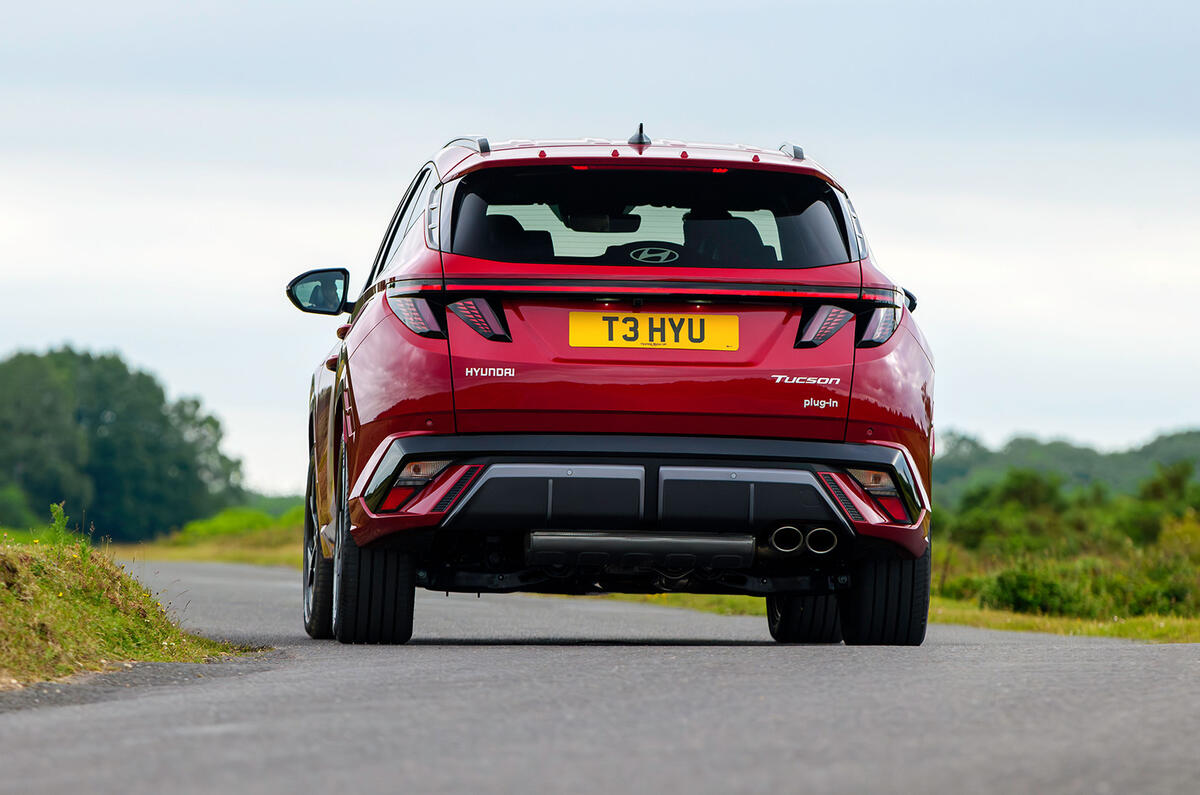
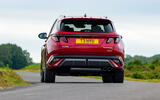
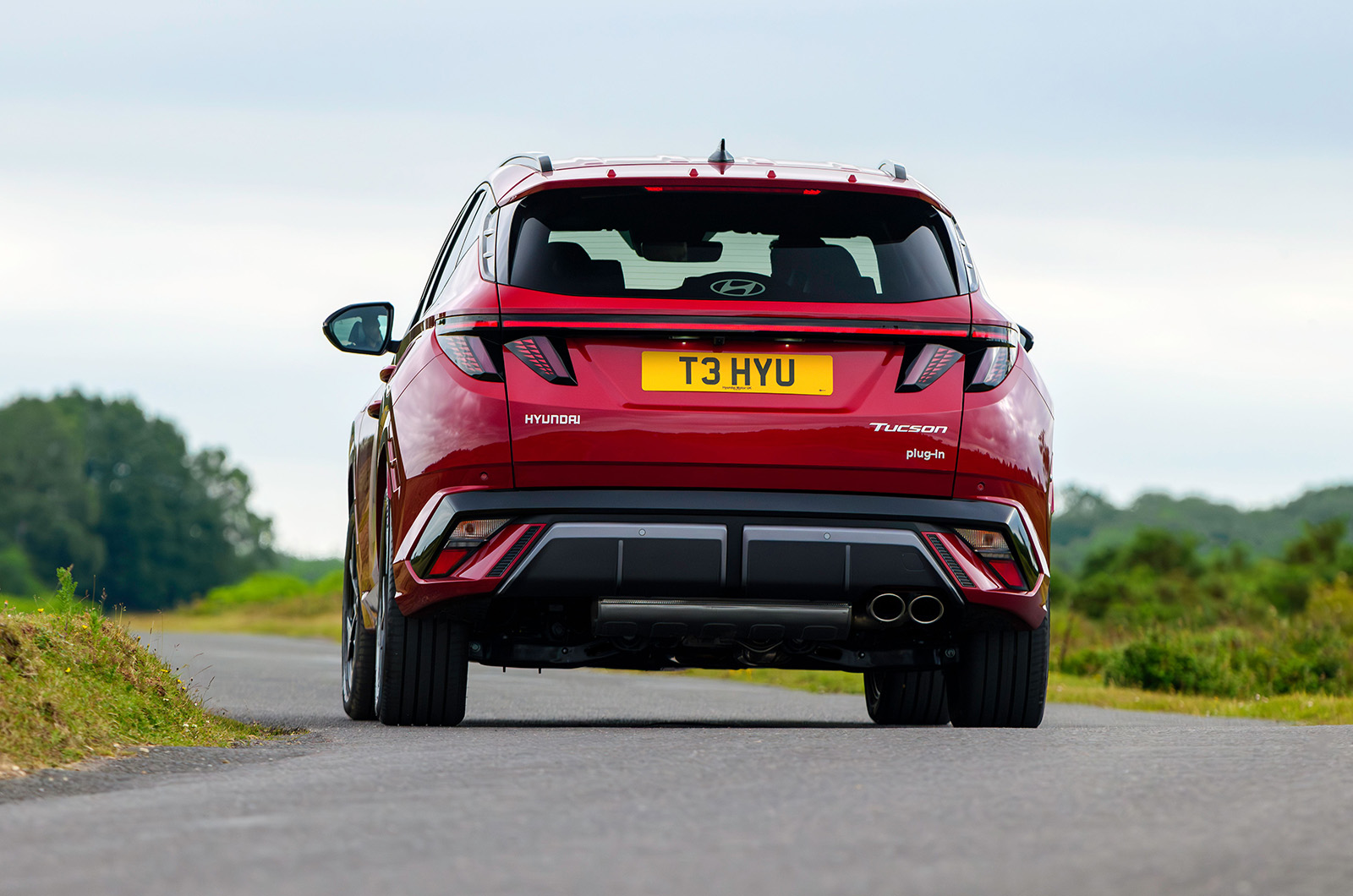
As is the trend these days, a prominent light bar runs across the Tucson’s tailgate. It looks smart, particularly with those new rear light clusters and their wing-like detailing.

At 4.5m long and 1.85m wide, it remains compact enough to be manoeuvrable and simple to park. That said, the curvaceous nature of its design means that there are some significant blind spots, and the corners can be hard to judge. Luckily, all Tucsons get front and rear parking sensors, while Premium adds a reversing camera and top-level trims boast a 360-degree camera. 

The new car, when it arrives on our shores in early 2027, will be larger and boxier, with a design more similar to that of the Santa Fe than the Kona

For now, the Hybrid model has been revised. On paper, the differences are boosts of 24bhp and 13lb ft, up to 236bhp and 258lb ft, and another mile per gallon or so, reaching a maximum of 50.4 in base Advance trim or 48.7 in our Ultimate test car - according to official tests.

INTERIOR

9
Hyundai UK media event   Luc Lacey   Alex 0215 Hyundai Luc Lacey

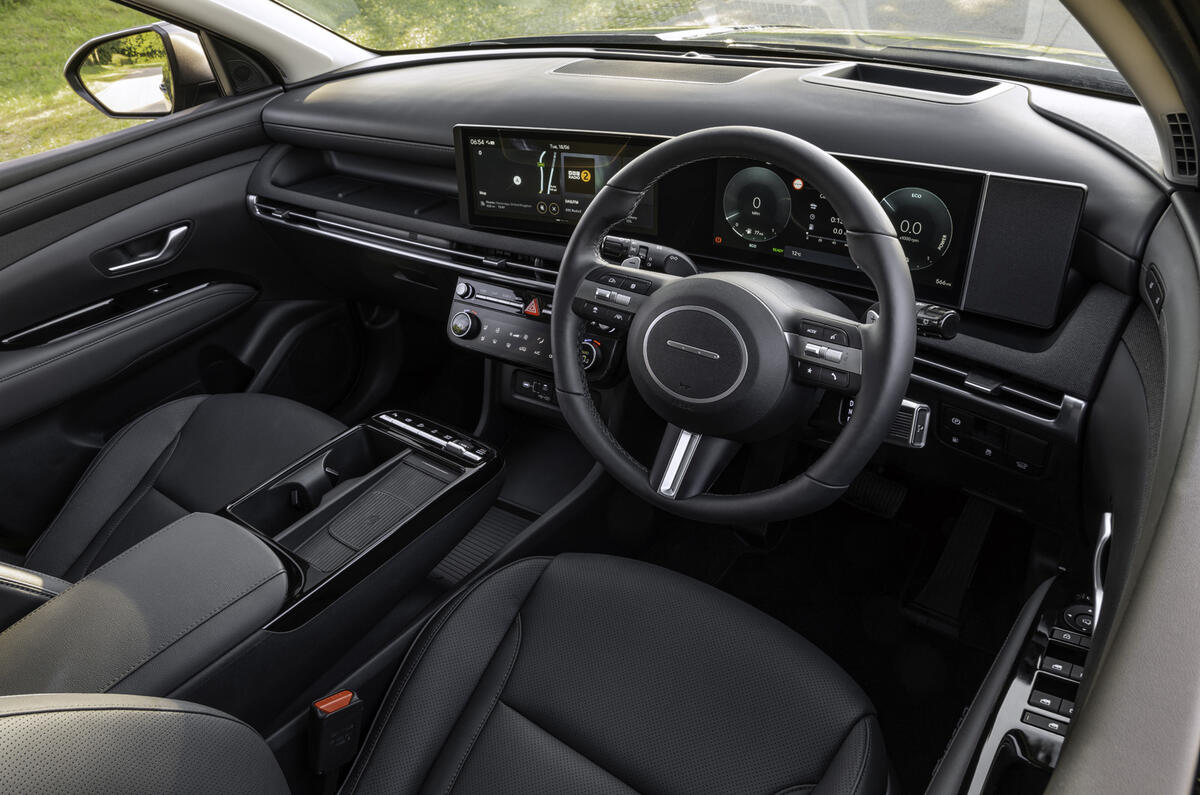
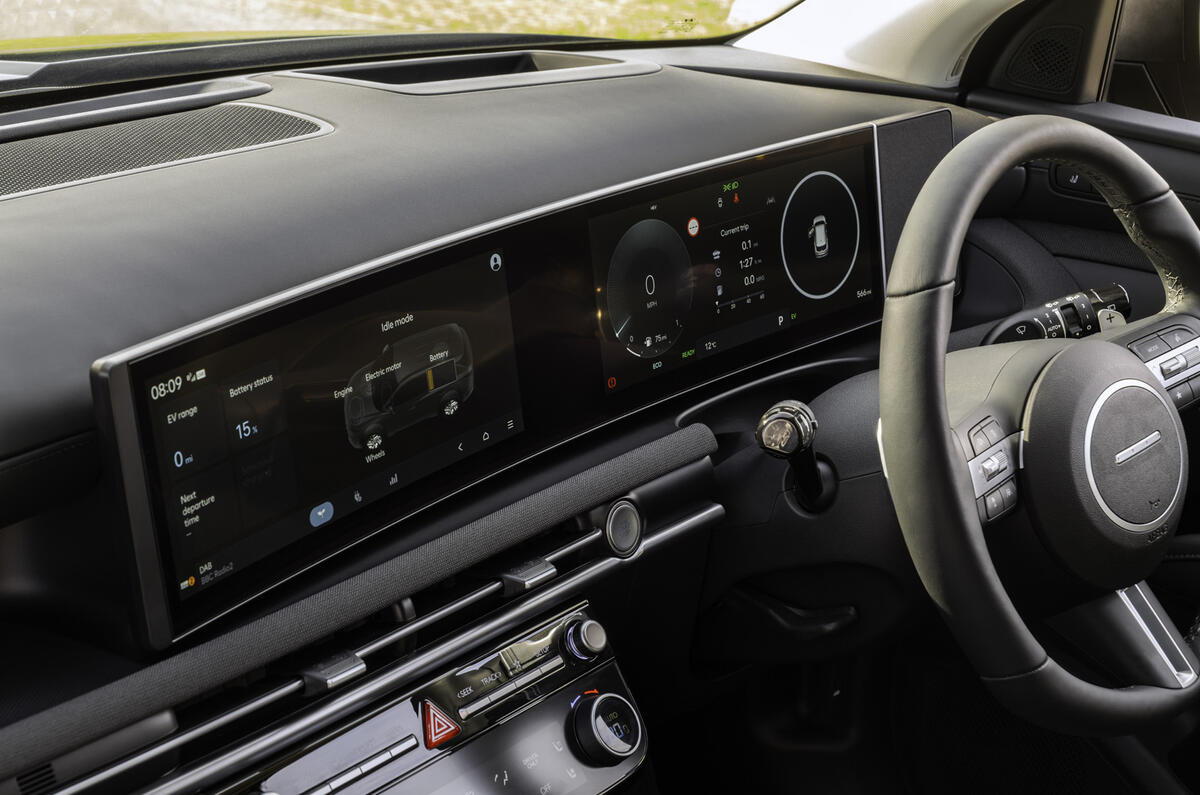
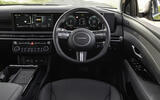
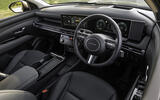
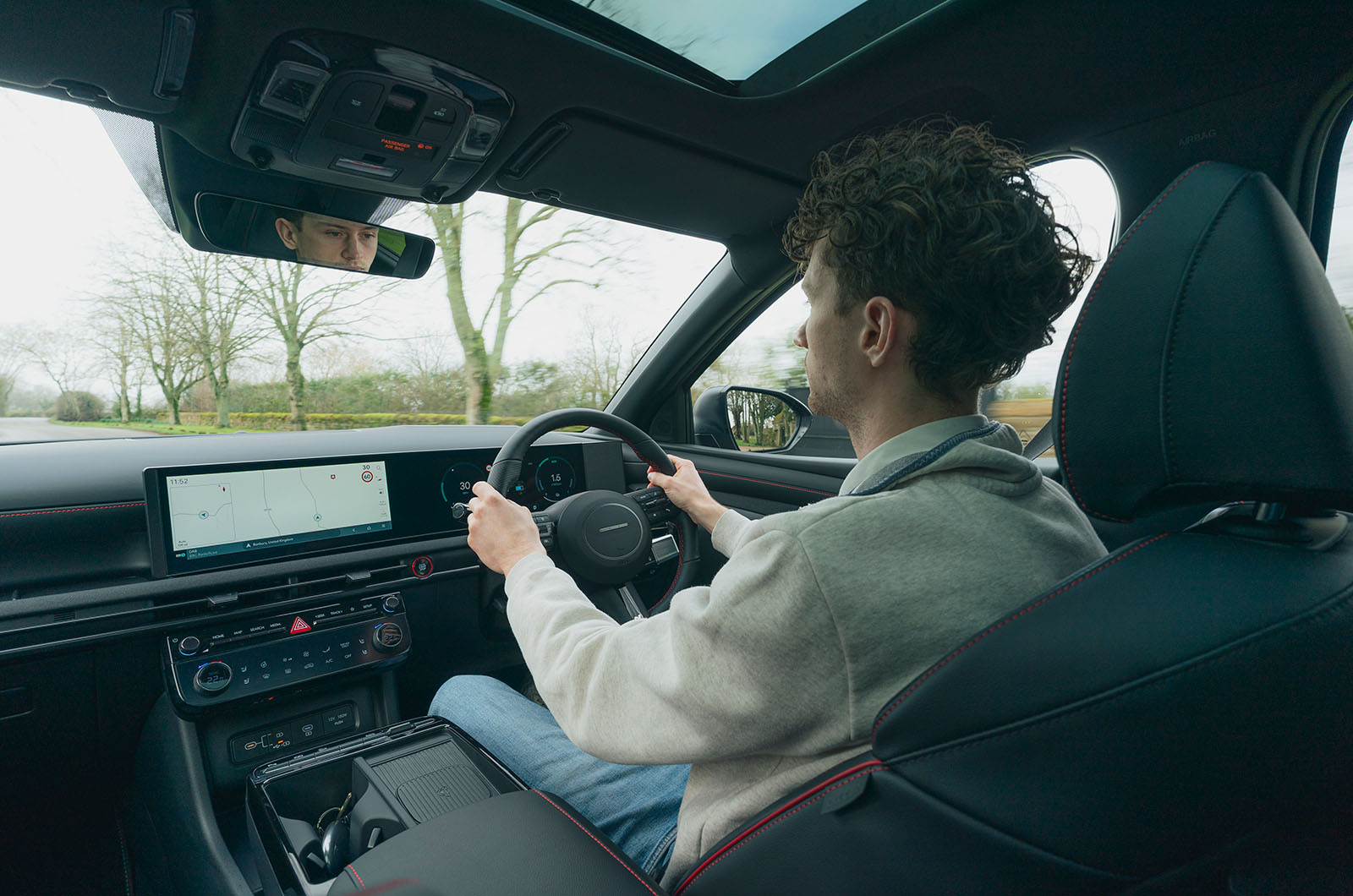
The Tucson’s interior has always been admirably designed and striking as the exterior, but some key changes were introduced in 2024. 

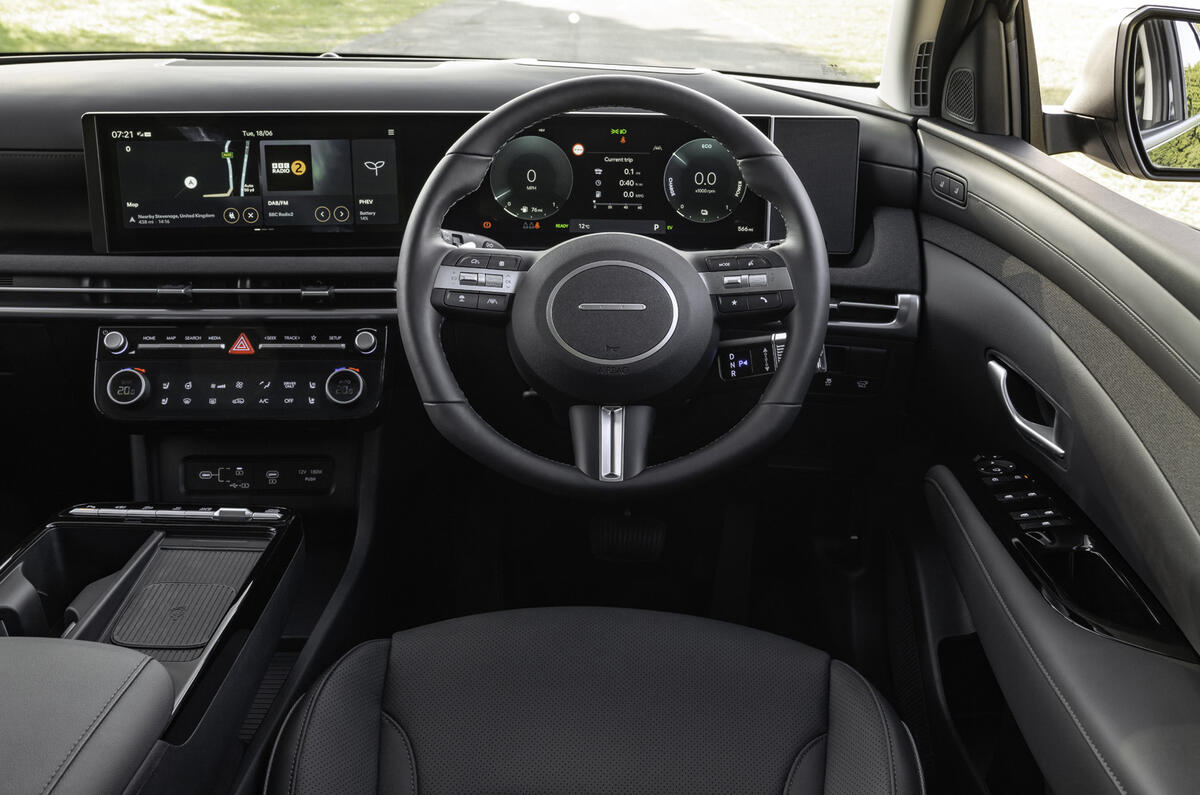
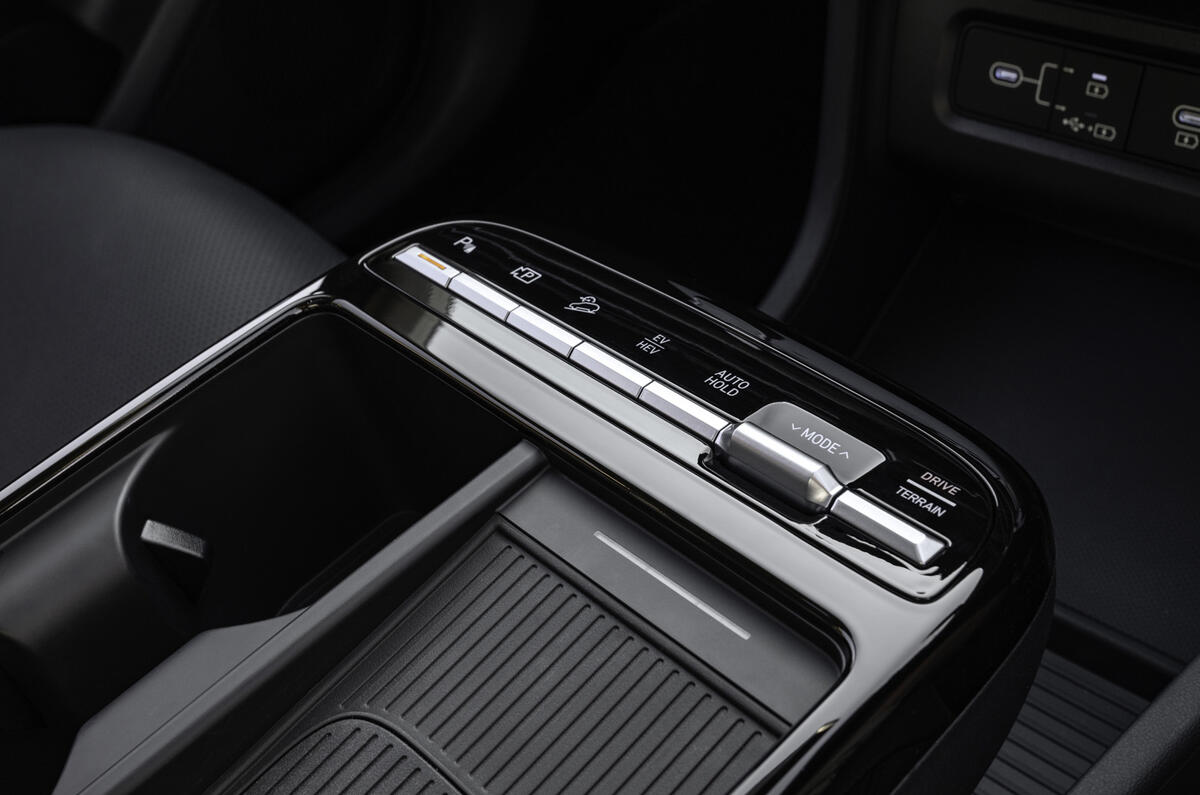
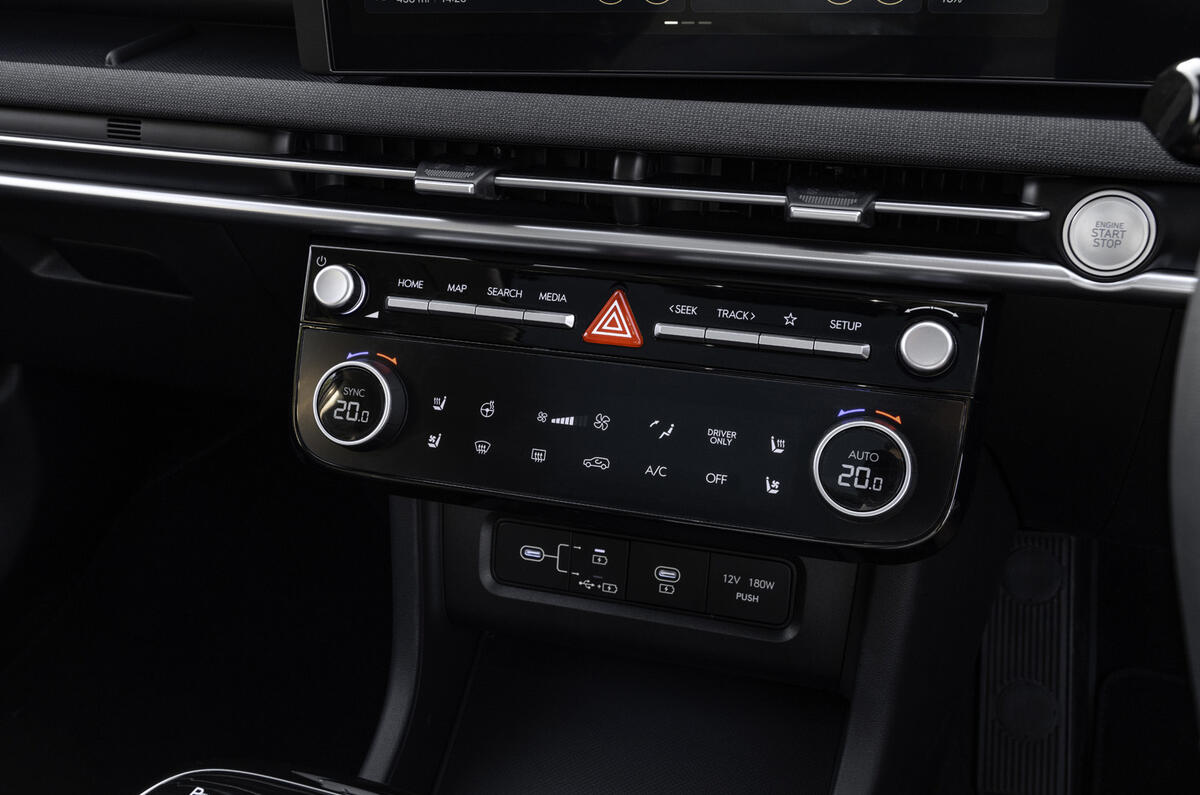
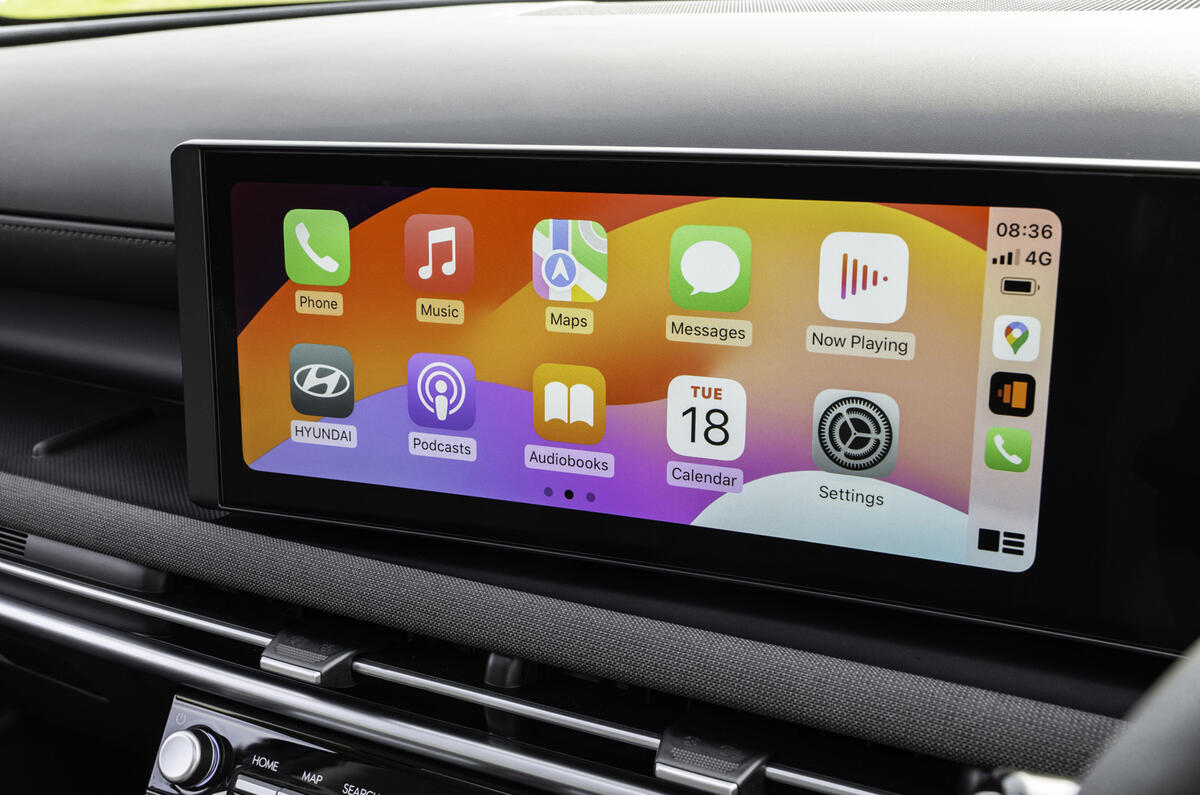
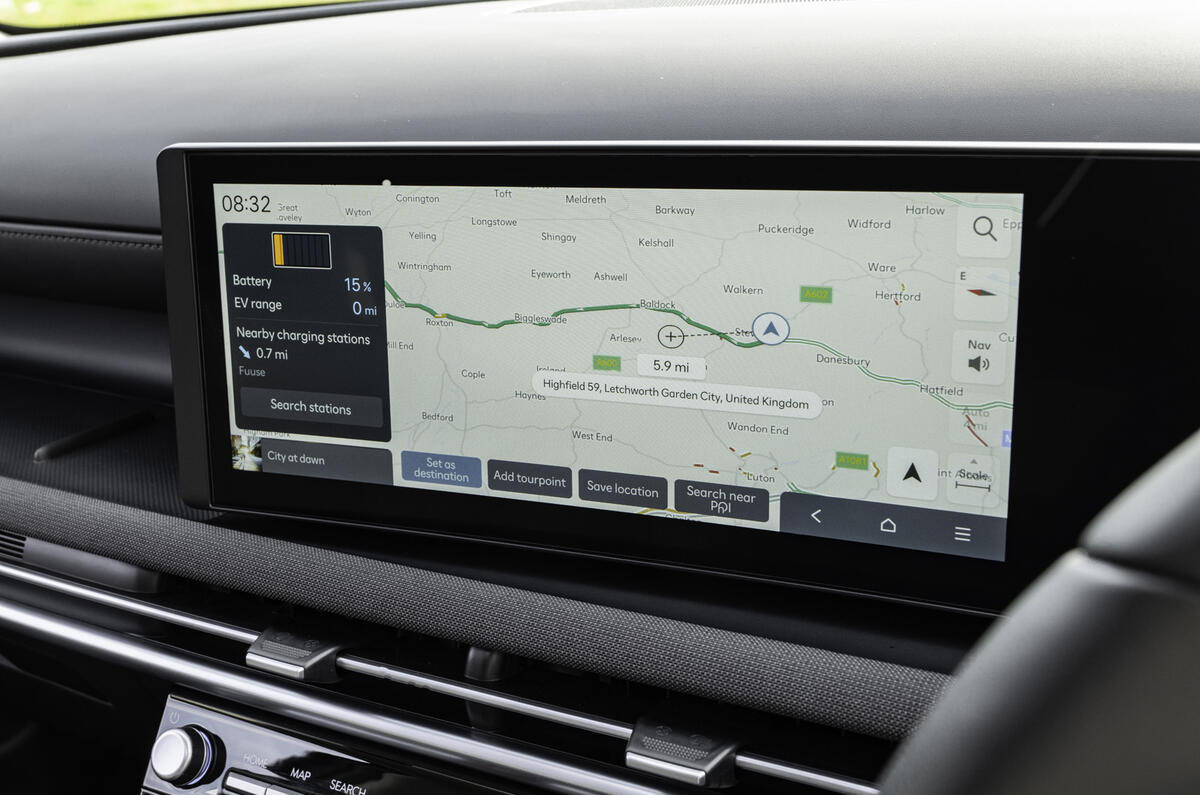
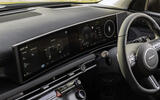
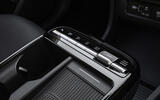
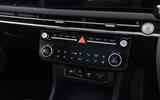
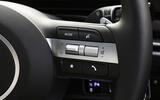
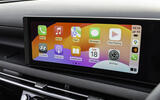
It gained a new dashboard and infotainment system, which is much tidier and more practical than the previous one, and a new storage compartment above the glovebox. Most usefully, significantly more buttons for key tasks like turning the heated seats on were added. 

Despite being well-established, Hyundai still likes to disrupt the market. This interior is leagues better than the Ford Kuga's in almost every way.

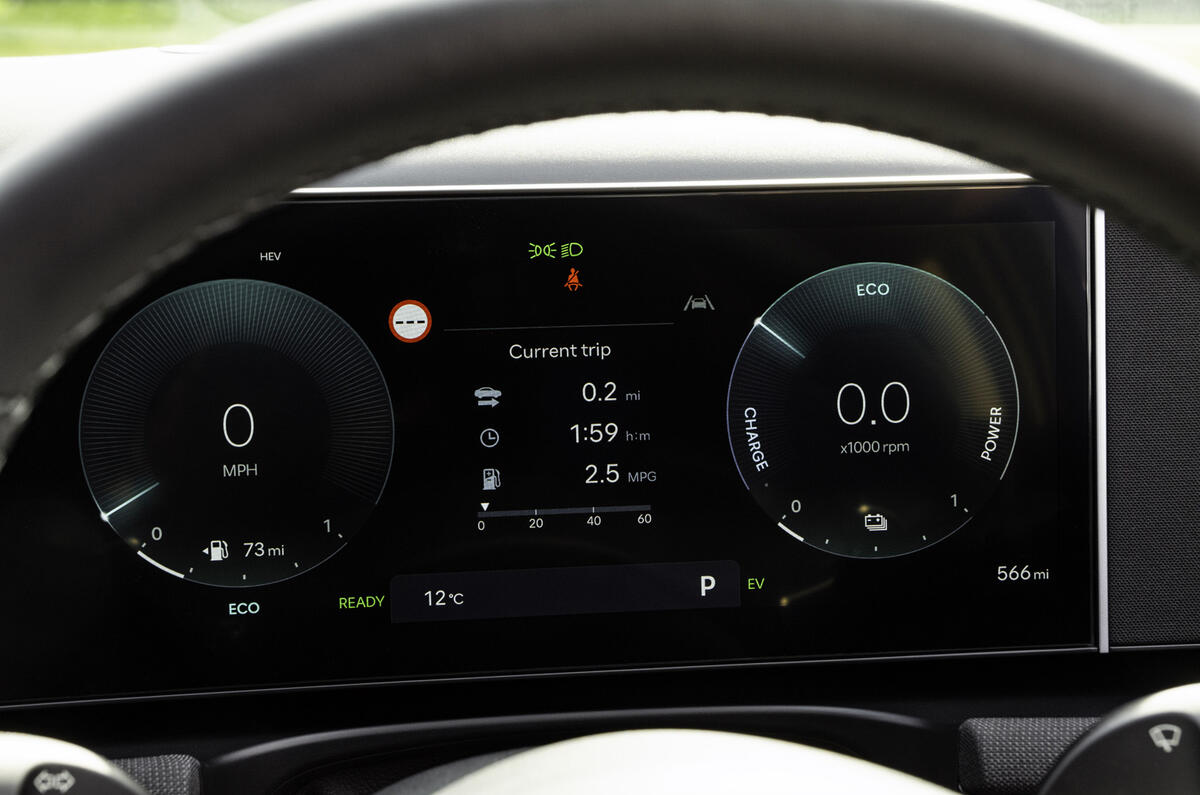
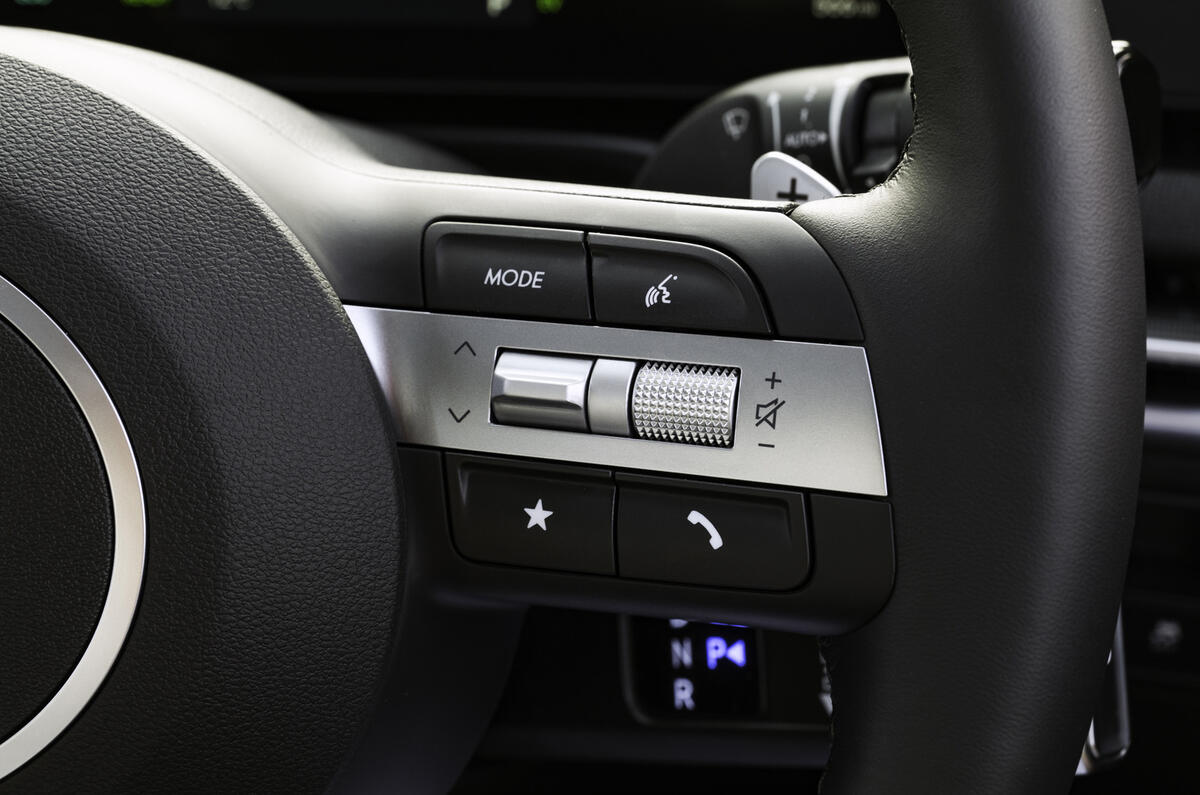
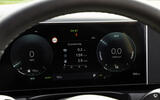
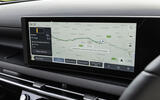
The interior is still up there with those of more expensive premium rivals: the dual 12.3in screens are modern-looking, crisp and reasonably intuitive, and the rest of the controls are excellent, thanks to an array of easy-to-reach buttons allowing you to adjust the temperature and change the powertrain settings and ADAS functions without taking your eyes off the road.

Material quality is particularly impressive, with even the base-spec Advance getting fabric on the dash and door cards to help lift the ambience, alongside other well-chosen textures and colours. All the controls have a lovely weight and feel, which wouldn’t be out of place in a much more expensive car. 

In fact, this is an interior that puts a Mercedes GLA, BMW X1 and Range Rover Evoque to shame. 

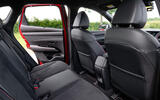
The front seats are broad and comfortable, and they are positioned high for a great view out, but there’s still plenty of head room and a general feeling of airiness.

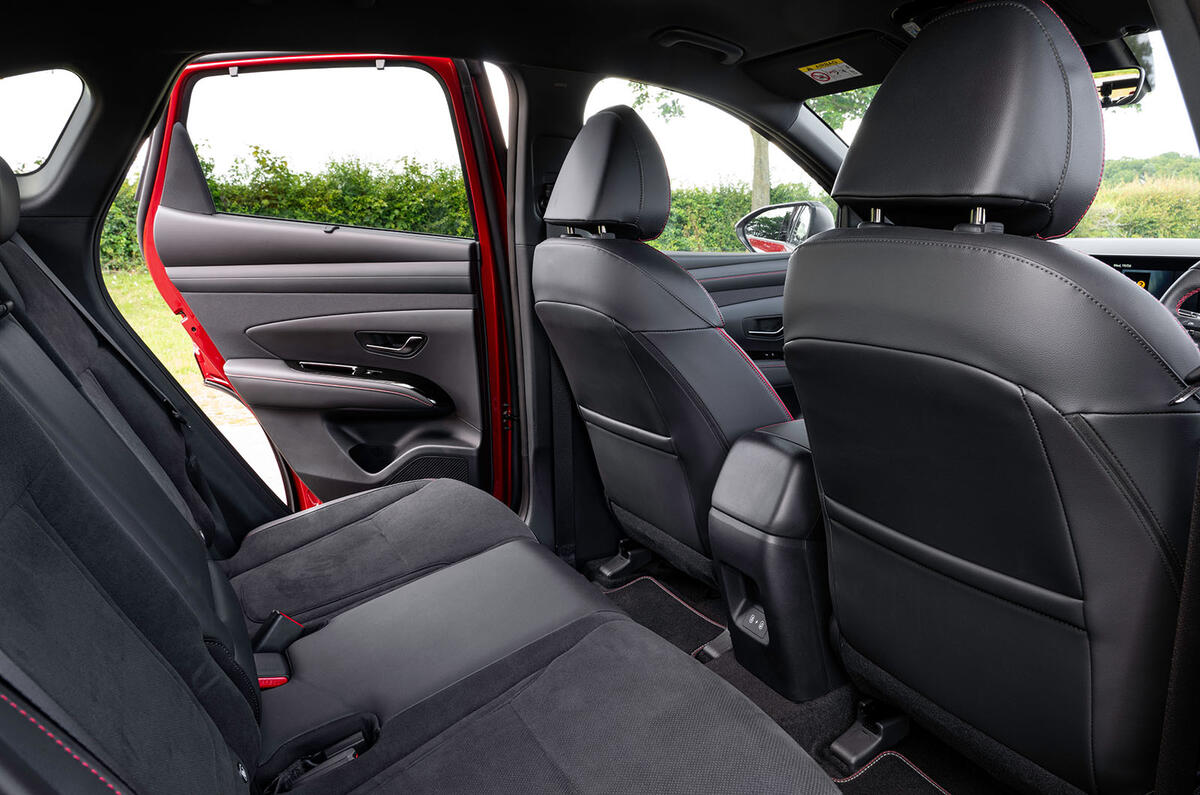
In the back, passenger room is good but not great (tall adults will fit, but without loads of spare knee and head room), although the bench does have various stages of reclination and splits 40/20/40.

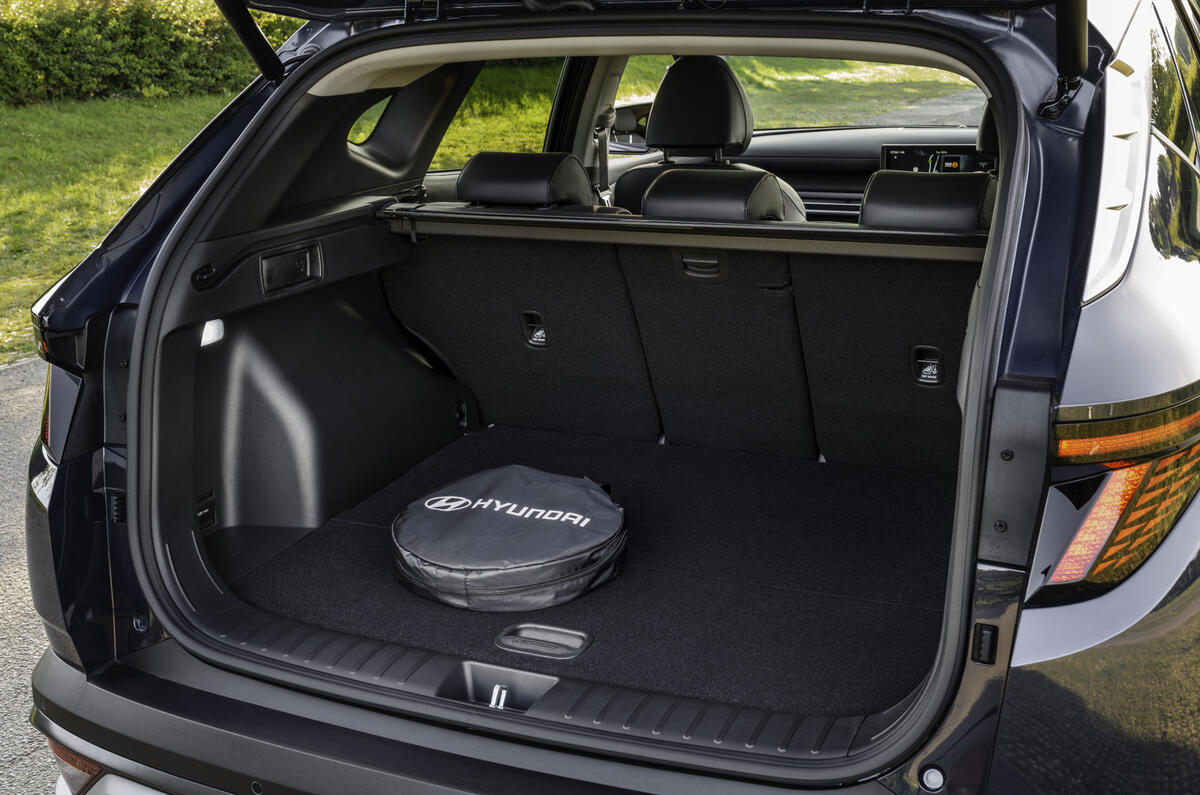
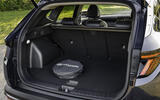
Behind all of that is a competitively sized 616-litre boot with a broad opening and largely plastic but durable-looking sides, although a few extra hooks and catches wouldn’t hurt. It’s long and shallow in shape, more akin to an estate than many SUVs.

ENGINES & PERFORMANCE

7
7 hyundai tucson n line 26

The self-charging Hybrid is the big seller within the range, so that’s the one we’re focusing on. It starts at a little over £36,000, so about £3000 more than the manual petrol, or £1500 more than the mild-hybrid. 

The plug-in hybrid starts at £39,500 and is best suited to company car drivers because of its 14% benefit in kind rating, which is half that of the other powertrain options. However, because of its middling 44-mile all-electric range, rivals like the Volkswagen Tiguan eHybrid and Renault Rafale are worth a look - both can do more than 65 miles on a charge, saving on fuel and BIK bills. 

I ended up leaving the paddle shifters alone during quicker driving. They’re just a bit too slow. It seems this is a feature aimed more at those with things to tow, which is fine.

Despite a range of updates in 2026 focused on improving efficiency and driveability, the powertrain remains the Tucson Hybrid’s only real weak point. 

Over a rural test route it averaged just 40mpg, having barely managed 35mpg on the motorway (the engine is turning at 2400rpm at a little over 70mph). It certainly won’t impress anyone coming out of a diesel.

Speaking of which, the Skoda Karoq, Volkswagen Tiguan and Mazda CX-60, which is admittedly more expensive, still offer punchy and frugal diesel options. 

Also, the throttle calibration invites too much torque from the electric motor within the first quarter of pedal travel, so it’s far too easy to spin the wheels in the damp and cause unpleasant tramping.

The system is at least smooth and well-integrated once on the move, if a little gruff when cold – an improvement from before. Overall, though, a Honda Z-RV will be smoother and more efficient more of the time. 

Performance is adequate: it doesn’t have the vigour you might expect from the headline power figure but never feels short of grunt. We recorded a 7.6sec 0-62mph time on Millbrook’s damp one-mile straight.

Overall, the Hybrid isn’t worth the extra outlay over the standard manual petrol, but if you’re looking for a little extra performance and an automatic gearbox, it’s a more manageable step up from the mild hybrid. 

In PHEV guise, the Tucson produces 247bhp and 271lb ft, but this increase in power is also impacted by an increased kerb weight of 1924kg. Its 8.1sec sprint from 0-62mph is respectable, and you will notice the PHEV’s strong, motor-enabled throttle response and smooth power delivery. 

The brakes provide decent stopping power and pedal feel, with the Tucson needing a reasonable 54.1m to come to a standstill from 70mph.

There are steering-wheel paddles on Tuscons with automatic gearboxes, but they’re a little slow on the uptake and will only really be useful for those towing.

Hybrid and PHEV cars in top-spec N-Line S and Ultimate trims are available with with four-wheel drive, but it does further rob from the efficiency of the set-up.  

RIDE & HANDLING

9
8 hyundai tucson n line 33

On the move, the cabin remains an impressively comfortable environment.
Only on coarse surfaces do you get intrusion in the form of road noise, and even on Ultimate cars there’s plenty of tyre sidewall, which contributes to the feeling that the Tucson Hybrid flattens the road beneath you. It is disturbed only by big imperfections such as potholes – and even those are handled with minimal fuss.

Good steering helps engender confidence in the Tucson’s ability to corner in a competent manner, with decent grip and controlled transfer of weight.

The supple ride comes at the expense of a little body control: there’s a tendency for the body to sway over poorly laid, undulating surfaces and roll into corners more quickly than you might expect. At least the reasonably communicative steering conveys what’s going on. 

Overall it feels like a larger and more luxurious car than it really is, mostly for the good. For the average family, a little roll will be a willing sacrifice for comfort, and this isn’t a sports car: it encourages and rewards smooth and steady driving with a fair dose of relaxation in return.

Not even the ADAS can ruin the zen-like feeling: the systems are relatively unobtrusive and easy to turn off.

It’s worth pointing out that in earlier cars we experienced a firmer suspension set-up, which inspired more confidence through fast-flowing corners but made it a less relaxing environment when you weren’t pushing on. The facelift marks a sensible trade-off considering the family duties this car will probably be assigned to. 

Comfort and isolation

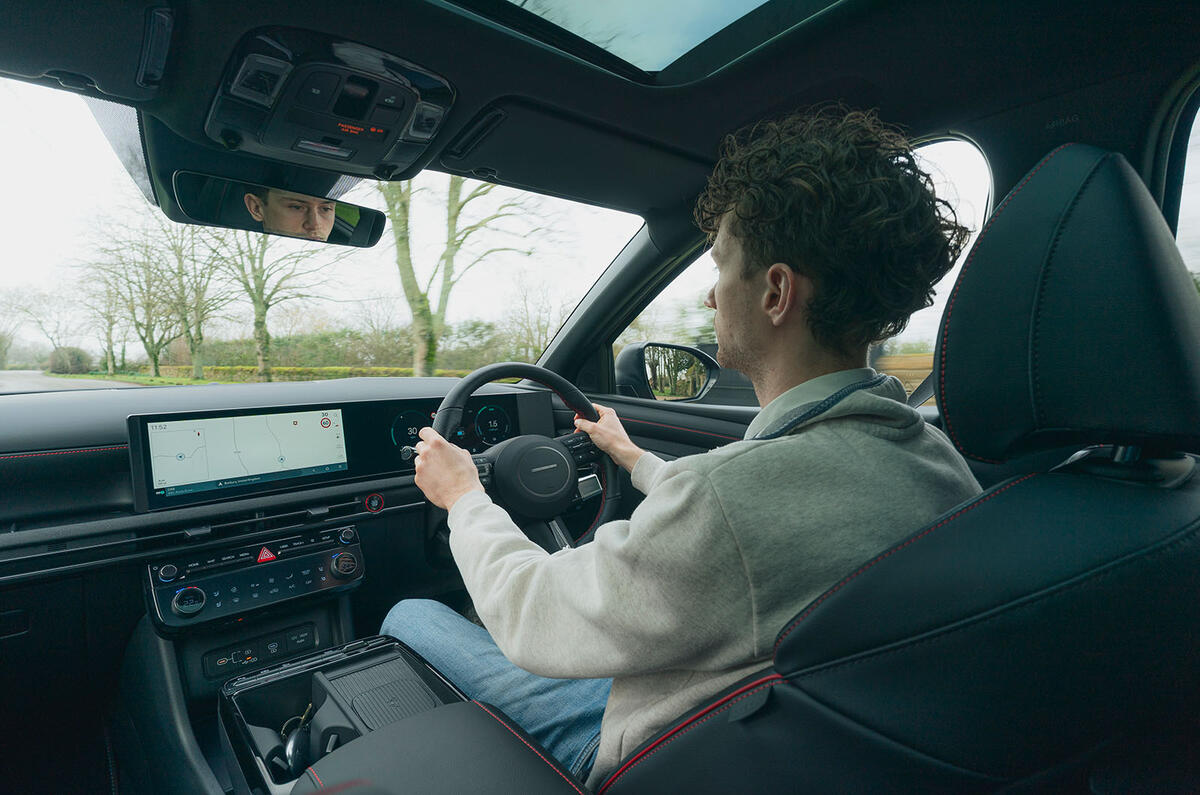
Credit to Hyundai: it has near as dammit nailed the Tucson’s driving position. The front chairs err on the firmer side of things but provide good support for your thighs and torso, while excellent adjustability in the seat base allows you to position yourself just so. It would be perfect if the steering wheel extended into the cabin a little further.    

With a taller hip point, visibility is good enough for trundling around town or sitting on the motorway, although the fairly steeply raked A-pillars that lend the Tucson its swept-back looks can slightly obscure your line of sight during cornering.

At a cruise, the cabin is generally pretty isolated, save for some wind whistle around the large door mirrors, and although road roar is present, it’s far from a grating experience.

We recorded 67dB of cabin noise at 70mph, a figure that stacks up well against 68dB readings taken in 2.0 TDI versions of the Audi Q5 and Volkswagen Tiguan a few years back.

Reassuringly, Hyundai chose to fit the same supple suspension setup in N-Line cars, so you can have the sporty look without a firm ride. 

MPG & RUNNING COSTS

7
1 hyundai tucson n line 27

The Tucson's larger range-mate, the seven-seat Santa Fe, never feels like more than a jumped-up mild hybrid (and struggles to put serious daylight between itself and conventionally powered rivals in terms of fuel consumption), but the 400kg-lighter Tucson fares considerably better. 

That said, 40mpg (expect 10% better in town and 10% worse on the motorway) isn’t up to the class best in 2025. 

Hyundai's seven-year warranty remains a big selling point for private buyers.

With sufficient charge in the drive battery, it’s possible to move away from a standstill on electric power alone, but petrol power will pretty soon have to join in. The 1.49kWh pack is bigger than the 2025 Toyota RAV4 hybrid’s 1.1kWh battery (the RAV4 has now gone plug-in hybrid only), but it was a more efficient powertrain overall.

The Nissan Qashqai E-Power, Renault Austral and Dacia Bigster will all be more efficient, actually. 

The Tucson PHEV has the potential to return better fuel consumption figures, but that will require regular charging in order to achieve it. The petrol and mild-hybrid versions are less efficient, but not by a wide margin, and £3000 buys you a lot of fuel. 

Priced at just over £33,000, the Tucson significantly undercuts rivals including the Ford Kuga and the Volkswagen Tiguan. Compare it with the CR-V in PHEV guise and it’s almost a staggering £15,000 cheaper.

The price is even more impressive when you take into account premium SUVs like the BMW X1, Range Rover Evoque and Mercedes GLA, which are far more expensive, are less well equipped and have a worse interior. 

Standard equipment in the Tucson is really rather good. Entry-level Advance models get 17in wheels, LED headlights, front and rear parking sensors, ambient lighting and keyless entry. 

Premium cars gain larger 18in wheels, scuff plates, leather and cloth seats, wireless phone charging, heated seats in the front and back, plus more advanced safety equipment such as adaptive cruise control and junction turning warning. 

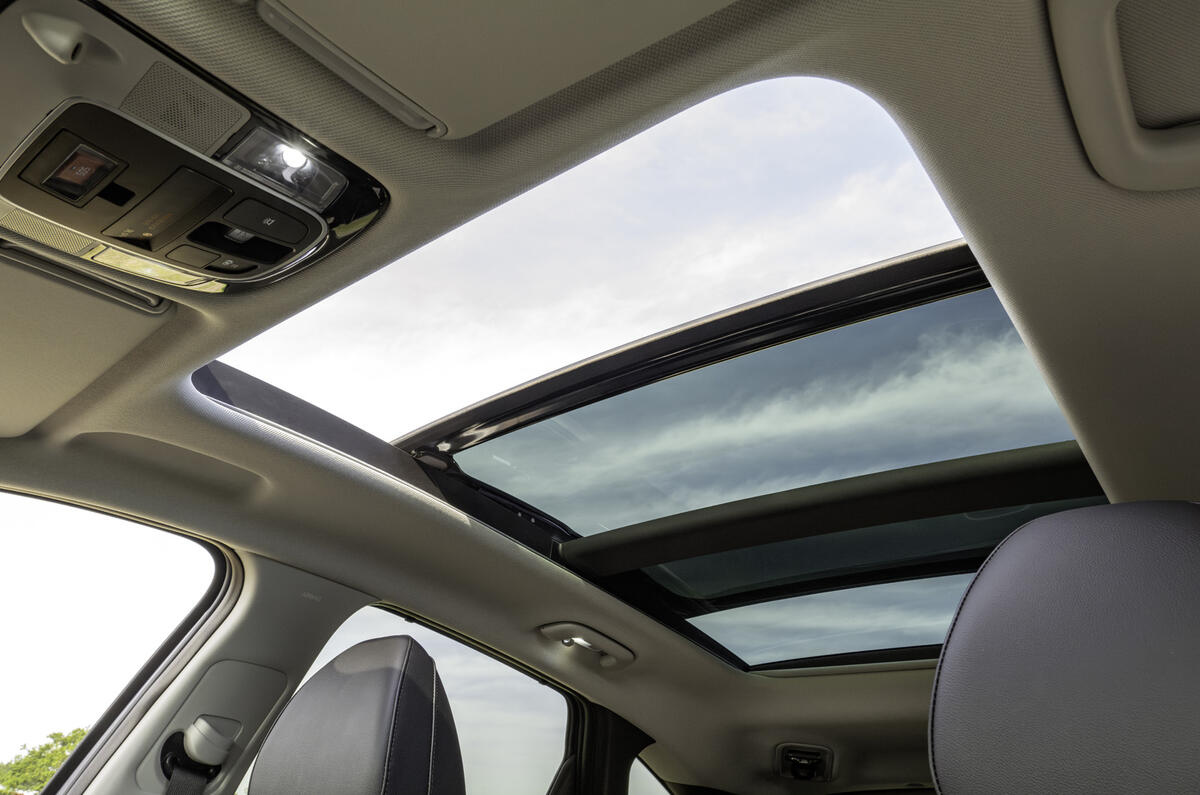
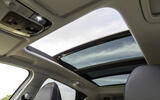
N-Line cars get more aggressive styling, 19in wheels, red detailing and N Line seats. N-Line S, meanwhile gets electric seats with ventilation functions, a panoramic sunroof, blind spot monitoring and more powerful LED headlights.

If you choose Ultimate trim, there are the same upgrades that the N-Line S receives, but with full-leather seats and the option of a lovely light interior. 

Be warned about the £40,000 luxury car threshold, which takes the yearly tax bill for vehicle excise duty from £195 to £620 for the first five years. You can max out the petrol and mild hybrid in Ultimate or N-Line S trim for less than the threshold, but top trims of the Hybrid and PHEV will break above it.  

VERDICT

8
9 hyundai tucson n line 5

The arrival of the Mk4 Tucson felt like a significant milestone in Hyundai’s story – and it is such a significant one that six years on the model remains a contender for class honours. 

Its bold, dashing exterior still stands out against many of its rivals, while the interior is a smart and functional place to sit, with swathes of premium materials that really push the model upmarket. 

The Tucson drives like a big car, for good and bad, so families conscious of running costs and value should remember Hyundai still sells the i30 hatch and estate.

Its ride and comfort are also strong points, while its handling feels well-matched to British roads. 

Of course, the Tucson isn’t perfect. Most obviously, the powertrains on offer feel a little behind the pace. 

But that’s one, albeit important, complaint about what is still an otherwise very sensible and recommendable family SUV. 

Take into account a reasonable list price, strong residual values and very competitive monthly deals, and it becomes obvious why it remains so popular. 

Chinese alternatives like the Jaecoo 7, MG HS and BYD Seal-U might be gaining traction, and premium badges hold a strong appeal with the market, but the Tucson remains a top-seller, and a better car than almost all of its rivals. 

Alex Wolstenholme

Alex Wolstenholme
Title: Editorial Assistant

Alex joined Haymarket, the publisher of Autocar, in 2023. A car fanatic, he loves to delve into the spec-sheet, especially when it concerns something obscure or quirky. He currently drives a 2007 Alpina D3 estate but is often seen in his mum's Ford Fiesta (much to her annoyance). 

In his current position, as an editorial assistant, Alex mainly assists in managing Autocar's presence on MSN, but also writes features for the magazine.

Matt Prior

Matt Prior
Title: Editor-at-large

Matt is Autocar’s lead features writer and presenter, is the main face of Autocar’s YouTube channel, presents the My Week In Cars podcast and has written his weekly column, Tester’s Notes, since 2013.

Matt is an automotive engineer who has been writing and talking about cars since 1997. He joined Autocar in 2005 as deputy road test editor, prior to which he was road test editor and world rally editor for Channel 4’s automotive website, 4Car. 

Into all things engineering and automotive from any era, Matt is as comfortable regularly contributing to sibling titles Move Electric and Classic & Sports Car as he is writing for Autocar. He has a racing licence, and some malfunctioning classic cars and motorbikes.