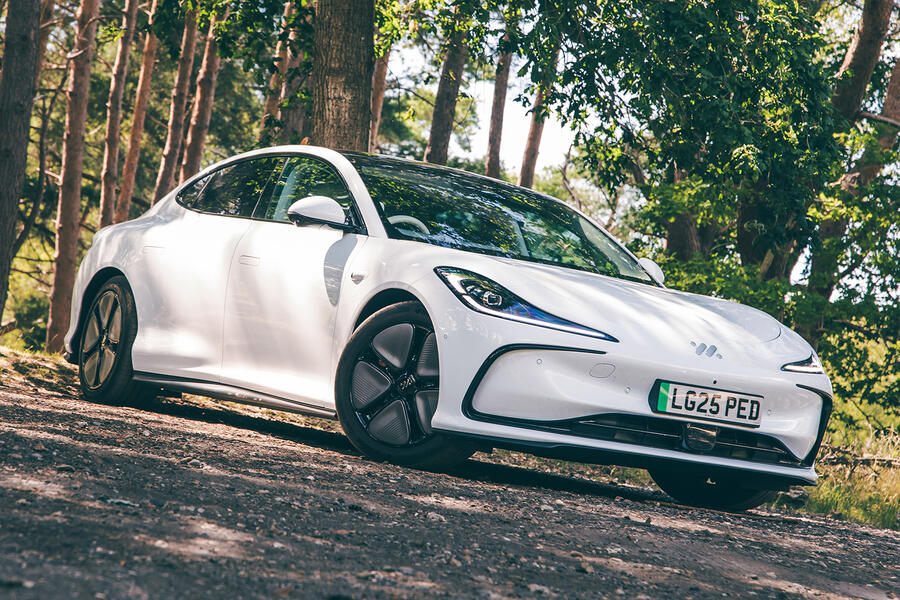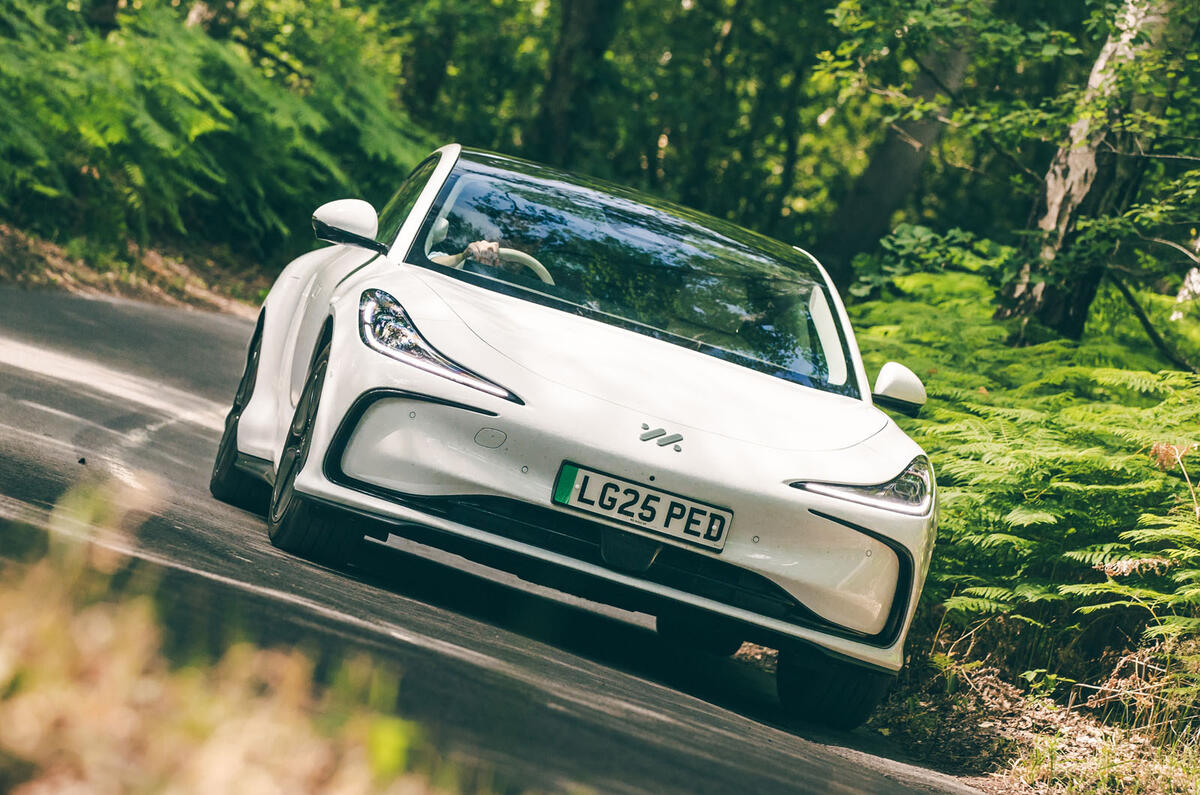
A 441-mile range, 400kW charging and priced to match a Model 3, the IM5 has plenty of appeal

It has almost become the norm for a Chinese car conglomerate to launch a new car brand in the UK, then follow it up with another a few months later. Chery launched Jaecoo and Omoda last year, then decided it also wanted to market Chery-badged cars here too, and it will soon add the Lepas budget brand to its offering.

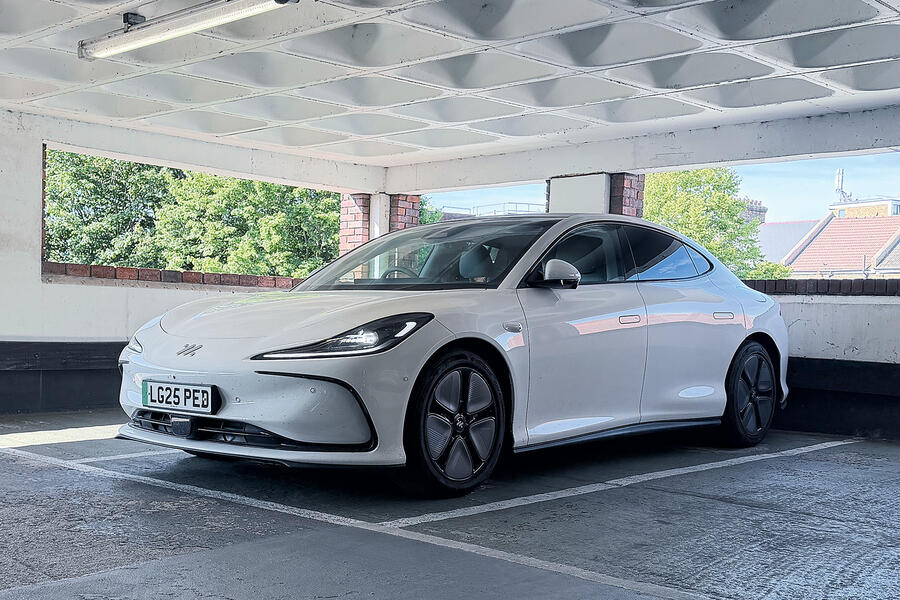
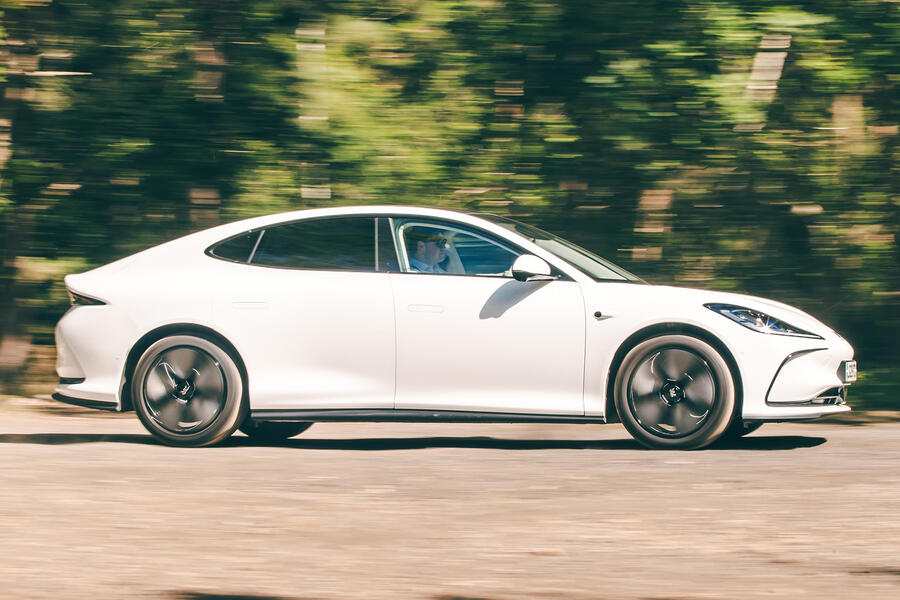
MG has followed suit, but rather than bring a wallet-pleasing SAIC sibling firm to British shores, it has brought over one that can take it into the premium-executive space: IM, which stands for ‘Intelligence in Motion’. Leading that charge is the IM5, a low-slung hatchback-cum-saloon that’s priced to rival the Tesla Model 3 but offers a comparable amount of space to the Volkswagen ID 7.

Having already put the IM5 through the rigours of a group test, in which it finished a frustrated third behind the omnipresent Model 3 and sleek new Mercedes-Benz CLA Electric, we’ve taken custody of this Long Range model to see if IM’s take on the electric saloon can win us over in daily use.
Prices for the entry-level Standard Range model start from £39,950, while my Long Range version costs a few grand more at £45,495. Option ticking was a brief exercise. The Frozen White paint comes as standard, as does the white interior, which certainly looks more elegant than the grey alternative. IM charges just £545 for a range of exterior colour finishes, whereas you can pay anything from £1300 right up to £2000 if you want your Model 3 in anything other than grey.

All in, our new IM5 doesn’t cost a dime more than its initial list price, and it’s just £500 dearer than Tesla’s equivalent Long Range Rear-Wheel Drive Model 3 – although that does beat the IM5’s WLTP range by around 25 miles. Yet the IM5’s near-five-metre length means the ID 7 is a closer rival, and that costs around £10,000 more.

Back to top

The IM5 packs more technical punches when it comes to hardware. It pairs a 96.5kWh (usable) nickel-manganese-cobalt battery with an 800V electric architecture. That means it will suck in electrons at a peak rate of 396kW, so I should be able to zap the battery from 10-80% in around 17 minutes.

I shouldn’t need to top up too regularly, though, because the IM5 has an official range of up to 441 miles and promises around 4.0mpkWh on average. Its rear-mounted electric motor makes 402bhp and 368lb ft of torque for a 4.9sec 0-62mph time.

I’ve already covered a few hundred miles in this IM5, and it’s brisk enough to entertain without the stomach-churning, whip-crack theatrics of its 700bhp dual-motor Performance sibling. It has a relaxed gait and has so far proved to be a hushed motorway cruiser.

That said, the 4931mm-long IM5 also seems to be at home in the urban sprawl of west London. As standard it gets rear-wheel steering, which imbues it with a surprising degree of agility in town – but more on that another time.

When we group tested the IM5 against its closest rivals, contributor James Disdale flagged that on worn surfaces it starts to feel “jittery and unsettled”. I’m inclined to agree, so I’m nervous to see whether the IM5’s low-speed rolling refinement will start to grate over the course of our time with it.

Back to top

That being said, there is comfort to be found here, not least inside the IM5’s cabin, which feels undeniably premium. The white synthetic leather that covers most of its innards is soft and refined; the electrically adjustable seats are deep, plush and very comfortable; and there are only a few cheaper fixtures and fittings on the doors and low down by your feet.

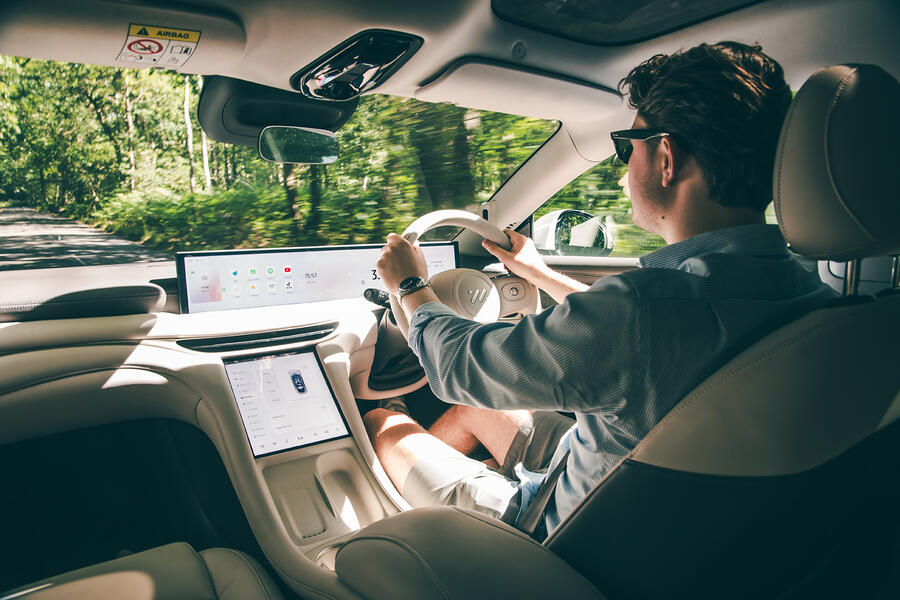
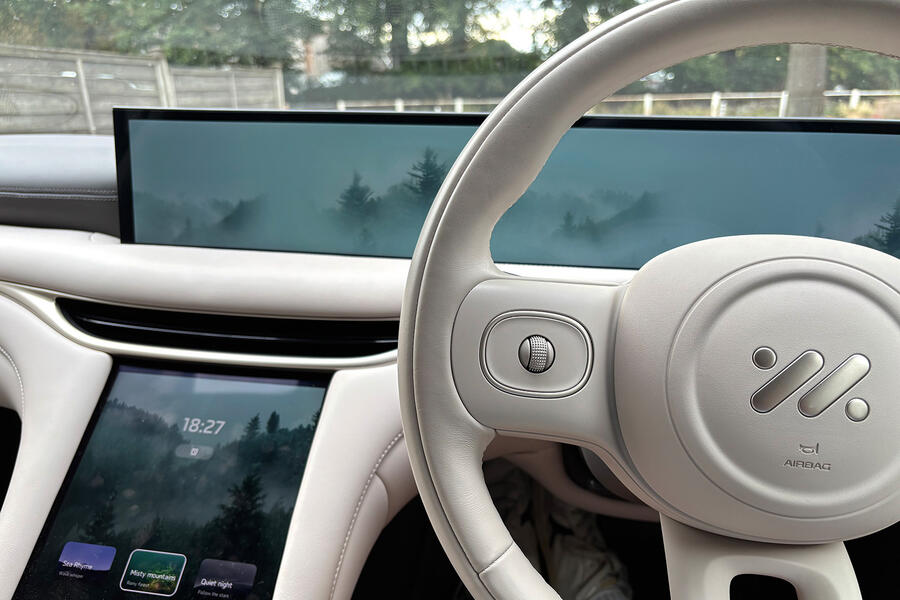
It’s all very minimalist and screen-heavy, mind: clearly a lot of inspiration was taken from its Tesla rival. Sitting proudly in the dashboard is a huge, 26.3in screen: half of it controls the infotainment, while the other half acts as a digital instrument cluster.

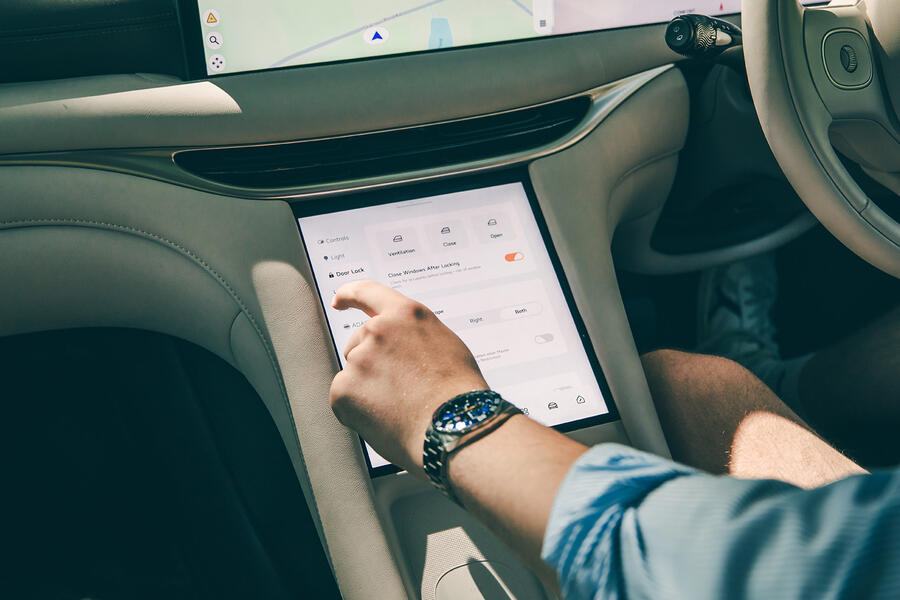
Then there’s a 10.5in control screen in the sloping central column for control of all the various functions, such as the climate. It means there isn’t much by way of physical switchgear to operate the car’s controls, so I’m intrigued to see what impact that’s going to have on usability.

The bigger challenge for the IM5 is to prove that it has the polish to make it a more compelling alternative to a Model 3 and that the high-tech cabin and jittery ride are things I can happily live with every single day.

Update 2: Pre-conditioning prevents meltdown

MG’s iSmart phone app offers a number of handy functions, and during the summer when temperatures soared well above 30 degrees, I made use of its pre-conditioning tool almost every time I drove. After leaving my IM5 baking in 32deg C sunshine while I sweltered at Brooklands, climbing inside a pre-cooled cabin for my journey home was a welcome solace. 

Back to top

Update 3: Range anxiety? What range anxiety?

I was a little sceptical about welcoming an electric car onto my driveway, having not driven one for some time. It’s only natural to feel a bit of hesitation when swapping mpg for mpkWh and petrol forecourts for charging stations.

Happily, though, all my fears have proven unwarranted, because the sleek MG IM5 has slotted into life rather seamlessly, demonstrating its worth as a comfortable, rangy and amiable electric saloon.

As someone who covers mostly long distances, I have been impressed by the IM5’s decent real-world range and more so by its charging speeds. With 80% charge in its battery the MG typically offers around 370 miles of range, although I did manage to give myself some self-inflicted anxiety on a 150-mile round trip to Oxfordshire.

Confident that I could cover the journey with 180 miles of indicated range available, I struck out west along the M4 and then up the A34 to my destination at Mollie’s Diner (drop in for a chicken burger if you’re passing). I arrived on track having used 76 miles of range, with a healthy 3.8mpkWh on the trip computer – impressive considering the air-con was blasting cool air the entire way.

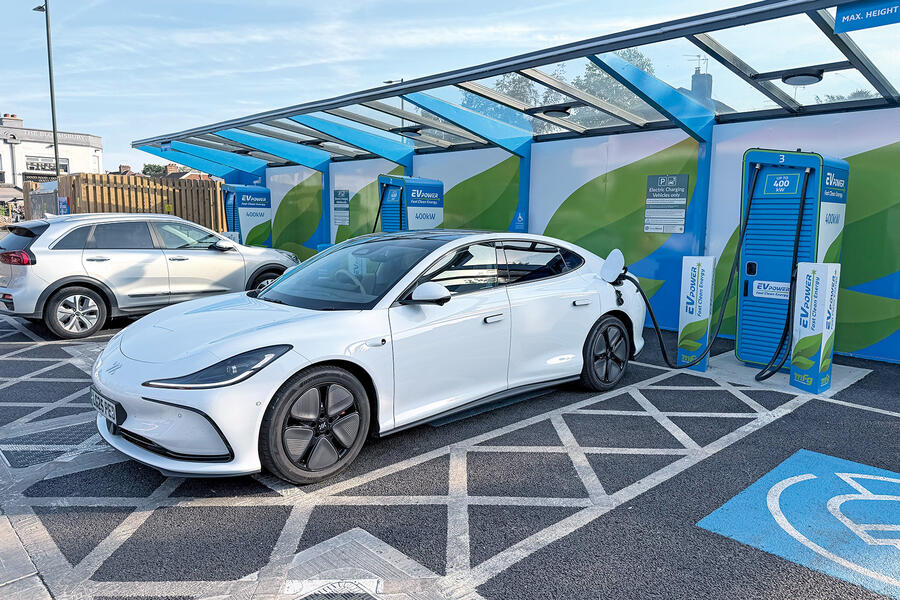
However, sustained 70mph cruising on the return leg down the M40 started to deplete my range. The trip computer said I was averaging around 3.8mpkWh, but some post-trip calculations showed the true figure was closer to 3.4mpkWh. I could have stopped at some services on the M40 to top up the battery, but I’d earmarked a set of 400kW MFG chargers close to Autocar HQ in Twickenham, wanting to test the IM5’s 396kW claimed charging capability.

Back to top

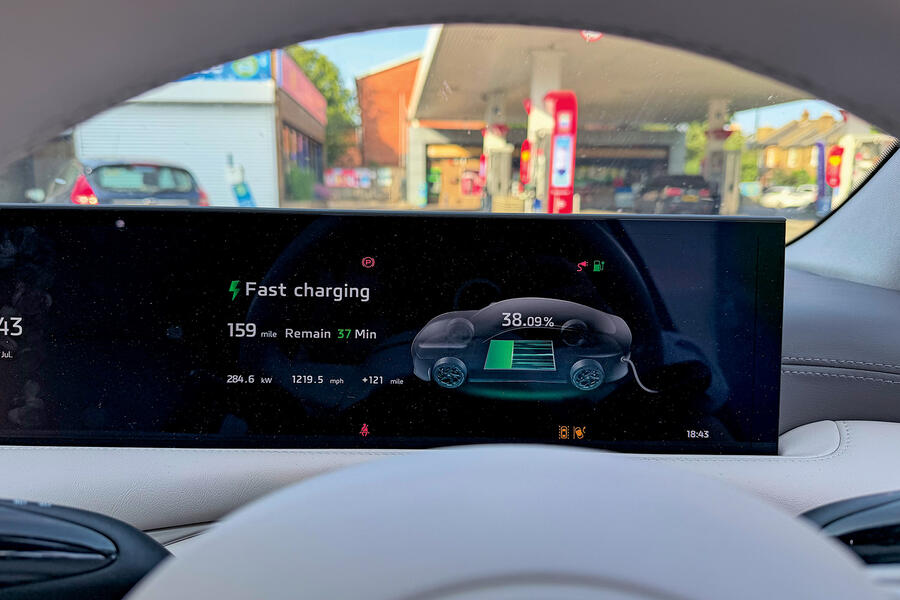
The blue and green MFG charging points were a welcome sight. I had turned the air-con off in a bid to preserve the range, and I parked up with just 4% of battery life and 19 miles to spare. Once hooked up to the 400kW charger, the MG began sucking in electrons at a rapid pace, peaking at 357kW. It started to tail off after hitting 50%, dropping to around 156kW, but in just 17 minutes the range had been boosted to 296 miles.

Better still, the ultra-rapid MFG chargers were surprisingly cheap, at 59p per kWh, costing me just under £40 in total. I would have paid more to fill up my now-departed Mk3 Ford Focus, although that would have covered more like 450 miles on a tank of fuel.

Still, having the ability to top up the battery in such a short amount of time has certainly helped me gel quickly with the IM5 – but it’s not without its quirks. Even if I set the car to charge to 100%, it can sometimes stop before its target limit. During one session at a Shell Recharge it mysteriously stopped charging at 86%.

I have also learned that some chargers simply won’t connect to the IM5 if the car is still switched on. Like many modern EVs, the MG starts up when you put your foot on the brake pedal and turns off when you lock it. But there’s a catch: if you lock the car, it locks the charging port, so to actually get a charge going you have to dive into the touchscreen and manually turn the car off first.

Back to top

Some charge stations will connect even if the car is still turned on, which is a bit confusing, but I’m glad I’ve discovered the IM5’s charging nuances early on.

Update 4: The trials and tribulations of driver attention monitors

The driver attention monitor in my IM5 is fast becoming its least desirable feature. Because of the interior’s lack of physical controls, basic adjustments via the central touchscreen require a longer glance away from the road. Naturally this triggers plenty of infuriating bings and bongs telling me to keep my eyes on the road. Even if I turn it off, it will occasionally berate me for not looking ahead.

To make matters worse, whenever I wear sunglasses the system will panic and ping an error message because it can’t detect my eyes. I’m constantly having to hammer the ‘OK’ button on the steering wheel to restore peace. 

Update 5: Some much needed R&R

Modern EVs are packed with quirky features to help pass the time at a charging point, and the IM5 is no exception – especially if you need some much-needed R&R after a long journey. Activate Scene mode, press the Nap button and the central screen is transformed into a calming animation of the sea, with the gentle sound of waves rolling through the speakers.

The seat also slides backwards and reclines for a more relaxed seating position. If the sea theme isn’t to your liking, you can swap to ‘Misty mountain’ instead, which displays a rainforest graphic, with the sound of rainfall in the background. How very soothing. 

Back to top

Update 6: IM5 earns ‘city car;’ badge

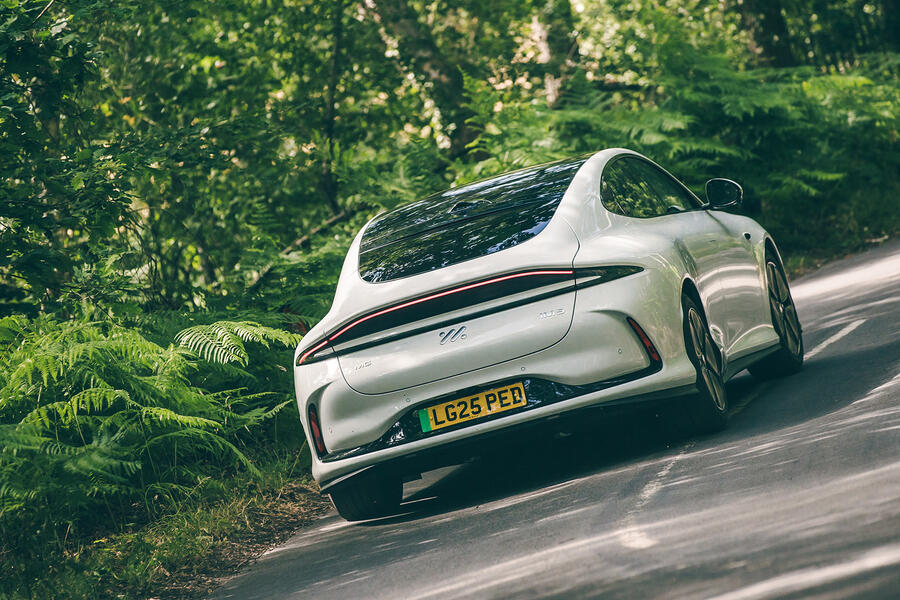
What’s the best car for driving around London? Smaller is invariably better, so I’d usually pick a supermini like a Renault Clio or Suzuki Swift: compact and at home on narrow cut-throughs and in tight car parks. So what is it like to pilot a near-five-metre electric saloon with a rear windscreen the size of a helmet visor around the city? Surprisingly stress-free, actually.

The MG IM5 has proven to be as care-free around west London as it has been trundling along the M1, despite its incongruous footprint. At 4931mm in length and 1960mm wide, the IM5 is longer than a Polestar 3 and wider than a BMW i7 – intimidating on paper but not in reality, thanks to standard rear-wheel steering. Counter-steered rear wheels in effect shrink the wheelbase at low speeds, making the IM5 agreeably wieldy in town.

The set-up is particularly handy in the tight multi-storey car park at Autocar HQ. Its narrow ramps and small spaces were designed for Mk1 Ford Fiestas and Austin Metros, yet the IM5 has no trouble slicing up and down them. The nine cameras dotted around its swooping exterior also help; I particularly like the ‘curbside’ angle, which gives an excellent view in parallel parking.

The extremities are tricky to place, though: curved front wheel arches mean the front end drops out of sight and rear visibility is non-existent through the narrow screen. The rear-view camera helps, but the tiny rear window smacks of an afterthought.

Back to top

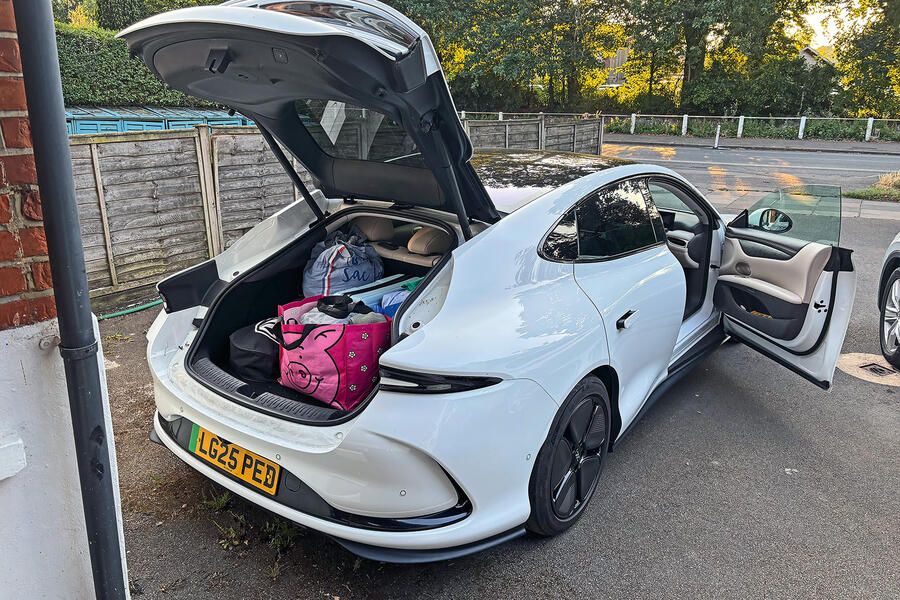
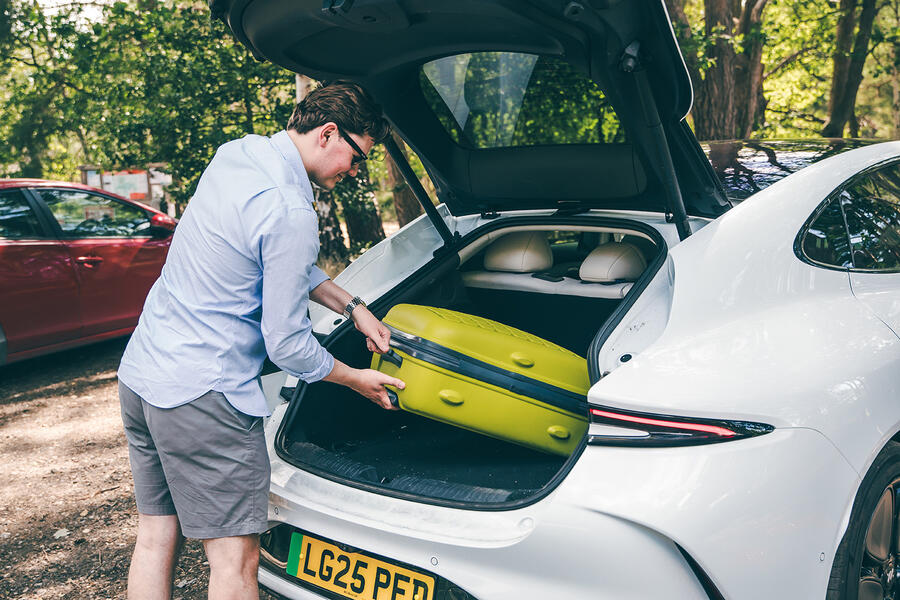
The boot isn’t huge, either, compared with Volkswagen’s ID 7. MG quotes a 457-litre capacity, and while it’s fairly deep, its aperture is narrow – and the steeply raked rear prevents you from stacking luggage too high. On a recent trip to see my parents, several boot-bound items had to be moved to the back seats.

On the subject of rear seats, the IM5’s are comfortable, with good knee room and ample head room, even with that sloping roofline. The only downside is that you can’t slide your feet under the seats in front, because of the underfloor battery, which means your knees are quite perched – but the large panoramic roof, plush carpets and lounge-like ambience take your mind off it.

As a long-distance electric saloon that doubles as a surprisingly nimble town car, the IM5 continues to impress.

Update 7: Is it really that similar to a Tesla Model 3?

Car design has changed dramatically over the past few decades. In the 1990s it was all about smooth lines, with cab-forward silhouettes dominating the automotive scene. These were followed by more complex designs, featuring defined body lines and smaller glass areas, as showcased by the ‘Flame Surfacing’ of Chris Bangle’s early-2000s BMWs.

Then, in the 2010s, large front grilles, LED headlights and sharper creases became the norm – and, inside, physical switchgear slowly gave way to minimalism and touchscreens. I think it’s fair to say that car design has never been so radical, transformative and, above all, divisive as it is in 2026. You only need to look at the Jaguar Type 01 and the Ferrari Luce to see that.

Back to top

Bespoke electric platforms have enabled car makers to improve cabin space and create sleek, fastback silhouettes to optimise aerodynamic efficiency. Such EV trademarks can clearly be found on our MG IM5, with its long swooping body and expansive proportions.

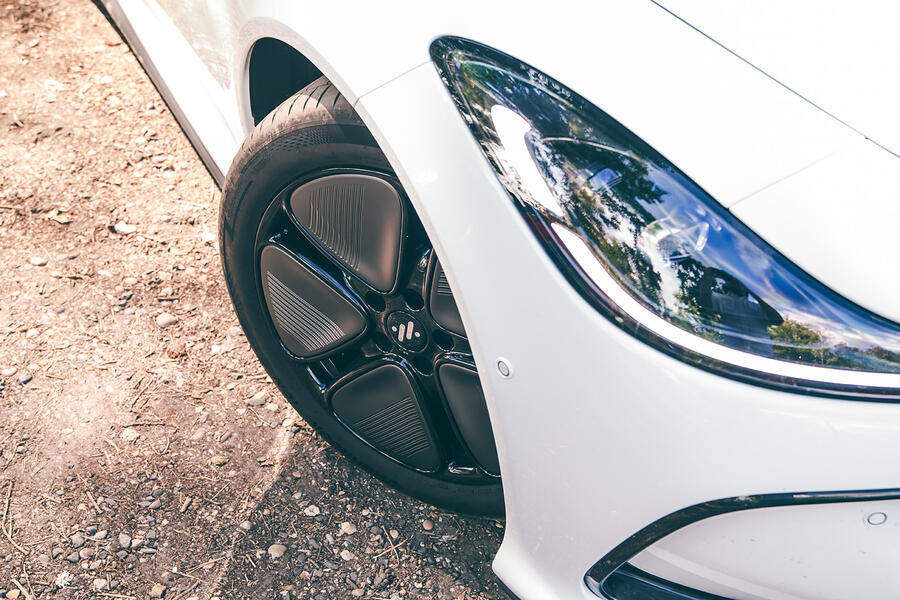
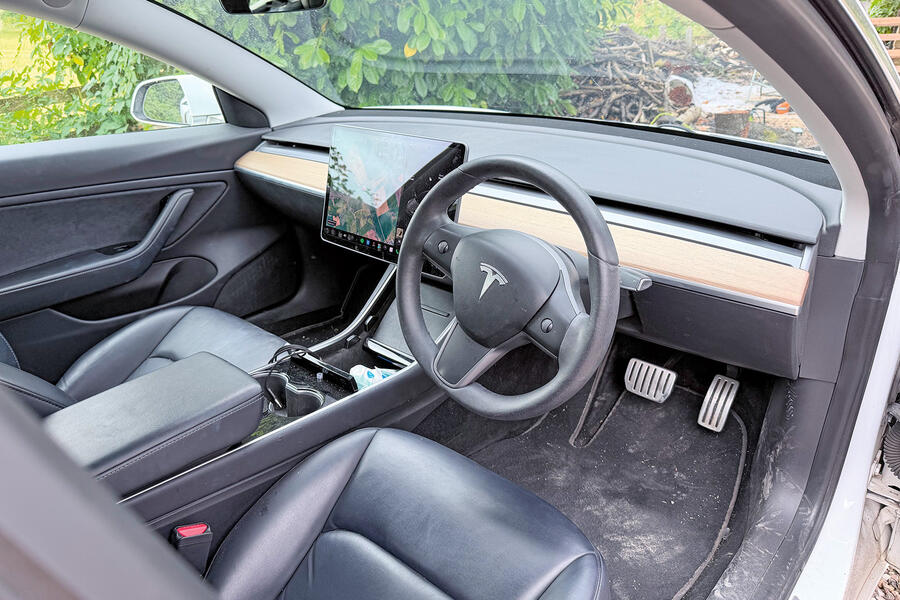
It might come as a surprise to learn that the IM5’s aesthetic was overseen by Slovakian designer Jozef Kabaň, a former Skoda and BMW studio chief and the man who styled the bullish Bugatti Veyron. Look closely at the IM5, however, and it’s clear where Kabaň and his colleagues gained inspiration for its design, with similar minimalist styling to the Tesla Model 3.

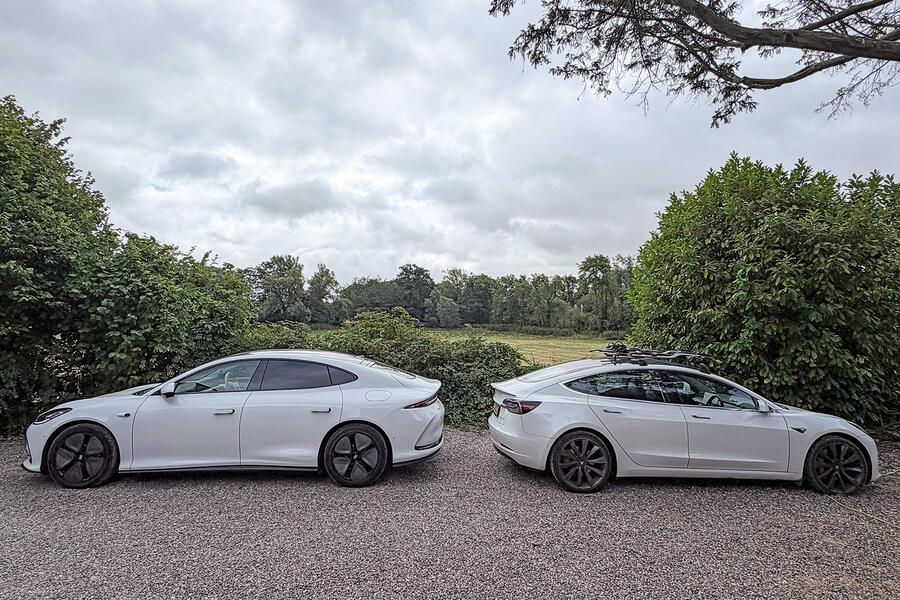
Several people have commented on its likeness to the ubiquitous electric saloon, so I decided to put this to the test by comparing the IM5 with my neighbour’s pre-facelift Model 3 Performance. Parked tail to tail, the resemblance between the two is clear to see, but there’s no denying that each still has its own identity.

For a start, the Chinese car has a much larger footprint and longer wheelbase that positions it above the American car, making it a closer rival to the Volkswagen ID 7 or BMW i5. The Tesla is more compact, but both have a similar teardrop, cab-backward roofline that sweeps neatly all the way to the bootlid.

On the IM5’s rear, I can’t help drawing a comparison to the Aston Martin DBX; even the rear light bar looks similar to that of Gaydon’s hot SUV. And while the Model 3 sports a more defined look, via sharper swage lines, the IM5 opts for softer surfaces and a smoother beltline, which is what most sets it apart.

Back to top

As is the way with modern EVs, both use flush-fitting electronic door handles. Of all the things to come out of the EV revolution, this is one of the most annoying. In fact, you don’t even pull the IM5’s handles; you slide your hand behind the handle and it pops open automatically. The Tesla’s door handles feel more natural, but both cars would benefit from a normal pull mechanism.

Technology abounds inside both cars, and it’s interesting to see how MG has taken a similar approach to Tesla. Take the side-facing cameras: the IM5’s design is different to the Model 3’s, but its placement and function is much the same, helping the driver by creating a 360deg view of the car.

Inside, the IM5 adopts the same button-less, screen-heavy layout as the Model 3. It features a huge 26.3in display that incorporates both the digital instrument display and infotainment screen – but also a 10.5in touch-operated control panel for hopping between functions.

I’m not sure that this makes the MG any more slick to use than the Tesla, which has just one large 15in display. Happily it’s responsive and graphically sharp, but there are far too many sub-menus to deal with – and I’ve counted a total of just 11 physical buttons inside the car.

As a result, usability isn’t great, but the IM5 certainly feels a bit more refined and upmarket than its rival – although the current Model 3 is a step ahead of its predecessor in terms of perceived quality. While the IM5 leans heavily on the minimalist playbook pioneered by the trailblazing Model 3, there’s no doubt that its bolder proportions, softer lines and greater refinement help give it a character of its own in a highly congested corner of the market.

Back to top

Final report: Can the competitively priced IM5 lure buyers from Tesla and VW?

When I took custody of our MG IM5 Long Range in the summer, it appeared a compelling proposition on paper: a 400kW rapid-charging speed, a 441-mile range and yet ‘only’ a £45,000 price. So, after a few months together, do I feel this Chinese newcomer is compelling enough on the road to challenge the Tesla Model 3 and Volkswagen ID 7? I’ll return to that question in a moment.

One thing that became clear early on is that the IM5 feels at home on the motorway, its comfortable seats and hushed cabin making the EV ideal for long-distance cruising. On a number of occasions it was tasked with carrying me to new car launches and from west London up to my parents’ home in the Midlands, demonstrating all the refinement and space to match that of the higher-priced VW.

However, it never shone in terms of driver appeal or engagement. The steering was precise, but its lack of weight and communication meant I never felt compelled to hustle it down a B-road. At least its rear-wheel steering was a godsend for navigating Autocar’s intimidating old multi-storey car park.

Ride quality was also a mixed bag. The IM5 really settled down on smooth Tarmac and traversed larger lumps and bumps without fuss, but it struggled to iron out consistent imperfections on the pockmarked urban roads near my home.

Back to top

I was sceptical about running an EV without the benefit of a home charger, but the IM5’s ultra-rapid charging speeds meant I had little to worry about (except the bills). Most of my top-ups were completed seamlessly at my local Sainsbury’s 180-300kW devices – hence the steep fuel costs (see right) – while I did my weekly shopping.

After resolving a few initial connectivity issues, these chargers worked reliably, as did the 400kW devices near the office, which on one occasion topped up the battery from 4-70% in just 17 minutes.

Using public chargers wasn’t very cost-effective, of course, with a 10-80% charge typically setting me back about £45-£55, but such rapid-charging capability is a real game-changer. It easily eclipses the peak rates of the ID 7 (175kW), Model 3 (250kW) and even the Mercedes-Benz CLA Electric (320kW).

I did expect a bit more by way of efficiency, however. The trip computer was often quite optimistic, suggesting the IM5 was averaging close to 4.0mpkWh. On one slog up north, it claimed an average of 3.8mpkWh and 141 miles of range used, but in reality it ate through 165 miles, achieving 3.3mpkWh. A 357-mile real-world range isn’t bad, but it is quite a bit down on the official figure of 441 miles. The Model 3 is certainly more sensible managing its electrons, easily returning a touring efficiency of 4.0mpkWh.

Back to top

Switching the IM5’s digital instrument display from its WLTP range to the ‘Dynamic’ readout did help me gauge its true mileage capabilities, even if they were more modest than I’d expected.

I had few qualms about the IM5’s cabin, which hit all the premium high notes and featured a good mix of soft-touch materials. There was more than enough room for taller adults in the back and the boot was big enough to carry all my girlfriend’s paraphernalia. However, the steep angle of the hatchback bootlid did mean I couldn’t stack things on top of one another inside.

Living with the IM5 every day revealed quite a few software-related irritations too. The 10.5in central control panel, which you use to hop between various functions, was mired by too many sub-menus. Having to adjust the door mirrors and steering wheel using the spoke-mounted scrollers was a chore and could only really be done when the car was stationary.

The ADAS were fairly easy to tame, although MG’s shortcut for turning them off wasn’t that effective. I assumed that pressing the left-hand steering wheel button would mute the various functions, but instead it just opened the ADAS menu, meaning I still had to turn the various nannies off via the lower of the two central touchscreens.

Back to top

I did get into a rhythm with it over time, but bigger icons, fewer sub-menus and some extra physical controls would go a long way to improving interior usability. Back to the opening question, then: can the competitively priced IM5 lure buyers from Tesla and VW?

On reflection, I feel conflicted. The IM5’s ultra-fast charging, upmarket cabin and long-distance comfort make it a tempting choice, but it’s not the most interesting electric saloon to live with and its usability issues can really grate. Of course, the Model 3 and ID 7 aren’t dripping with character themselves but, all things considered, they’re more complete in a rational sense.

The Model 3 offers far superior efficiency and day-to-day usability, while the ID 7 counters with its impressively composed ride, intuitive user interface and long real-world range.

MG’s first flagship EV is perfectly sensible and capable, but ironing out its usability niggles and adding more polish and character would give it a much better chance of disturbing the established order.

TEST DATA: MG IM5 100 LONG RANGE
MILEAGE
At start 7700
At end 8723
PRICES
List price new £45,495
List price now £45,495
Price as tested £45,495
OPTIONS
Options None
ECONOMY AND RANGE
Claimed range 441 miles
Battery 100/96.5kWh (total/usable)
Test average 3.7mpkWh
Test best 3.8mpkWh
Test worst 3.5mpkWh
Real-world range 357 miles
Max charge rate 400kW
TECH HIGHLIGHTS
0-62mph 4.9sec
Top speed 137mph
Engine Permanent magnet synchronous motor
Max power 402bhp
Max torque 368lb ft
Gearbox 1-spd reduction gear, RWD
Boot 457 litres
Wheels 19in, alloy
Tyres 275/40 R19, Hankook iOn Evo
Kerb weight 2210kg
SERVICE AND RUNNING COSTS
Contract hire rate £428 pcm
CO2 0g/km
Service costs None
Other costs None
Fuel costs £250.60
Running costs including fuel £250.60
Cost per mile 24 pence
Faults None

Sam Phillips

Sam Phillips
Title: Senior Staff Writer

Sam joined the Autocar team in summer 2024 and has been a contributor since 2021. He is tasked with writing used reviews and first drives as well as updating top 10s and evergreen content on the Autocar website. 

He previously led sister-title Move Electric, which covers the entire spectrum of electric vehicles, from cars to boats – and even trucks. He is an expert in new car news, used cars, electric cars, microbility, classic cars and motorsport. 

Sam graduated from Nottingham Trent University in 2021 with a BA in Journalism. In his final year he produced an in-depth feature on the automotive industry’s transition to electric cars and interviewed a number of leading experts to assess our readiness for the impending ban on the sale of petrol and diesel cars.