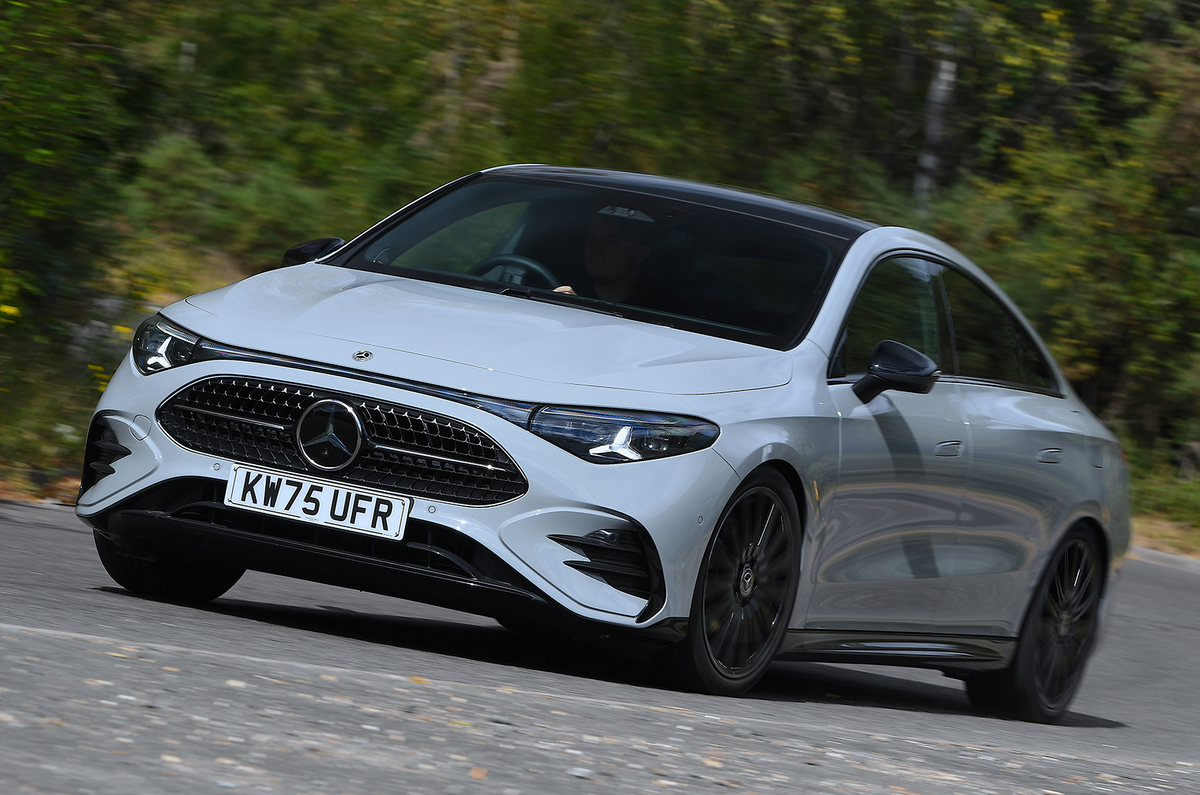
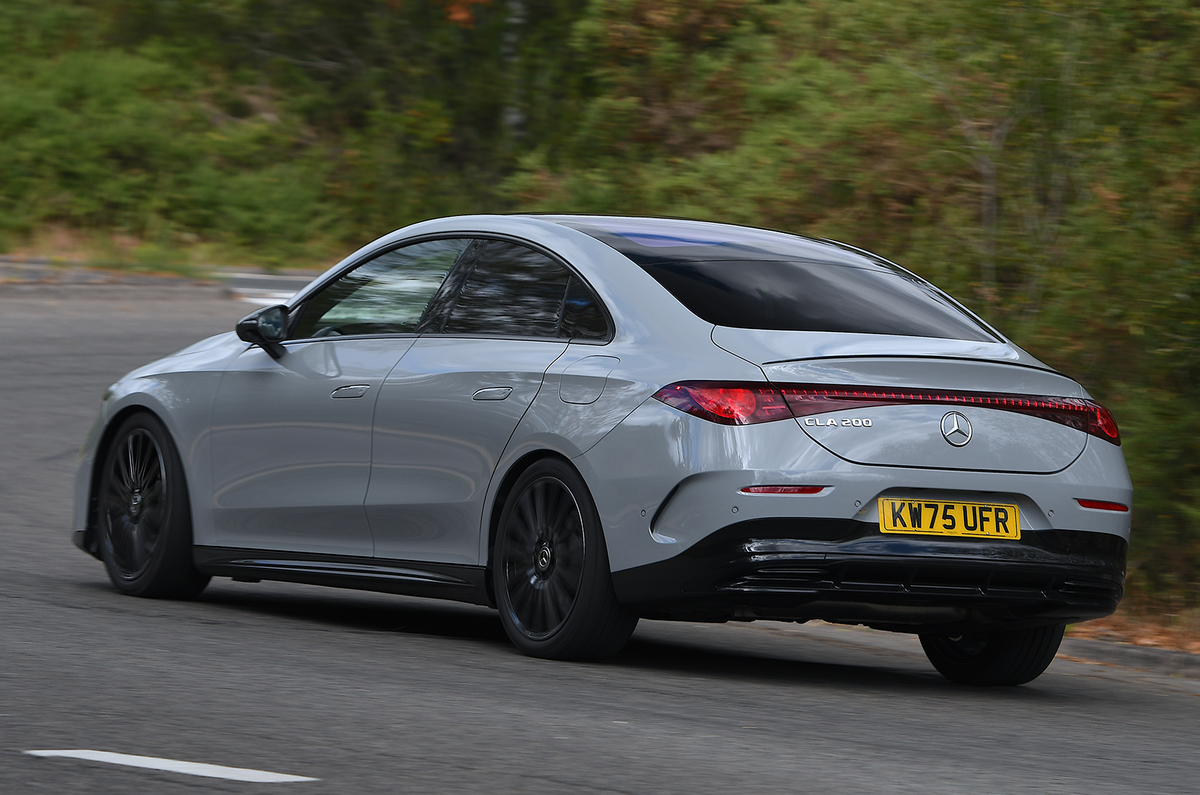
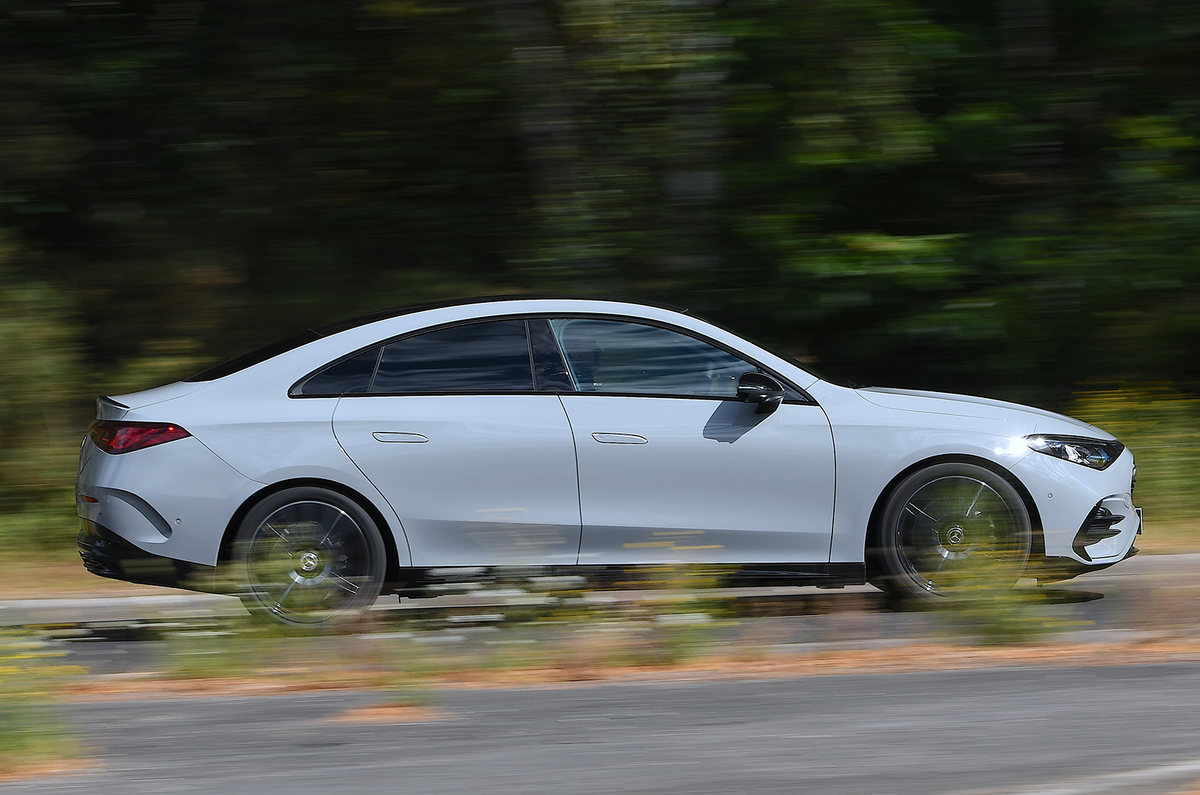
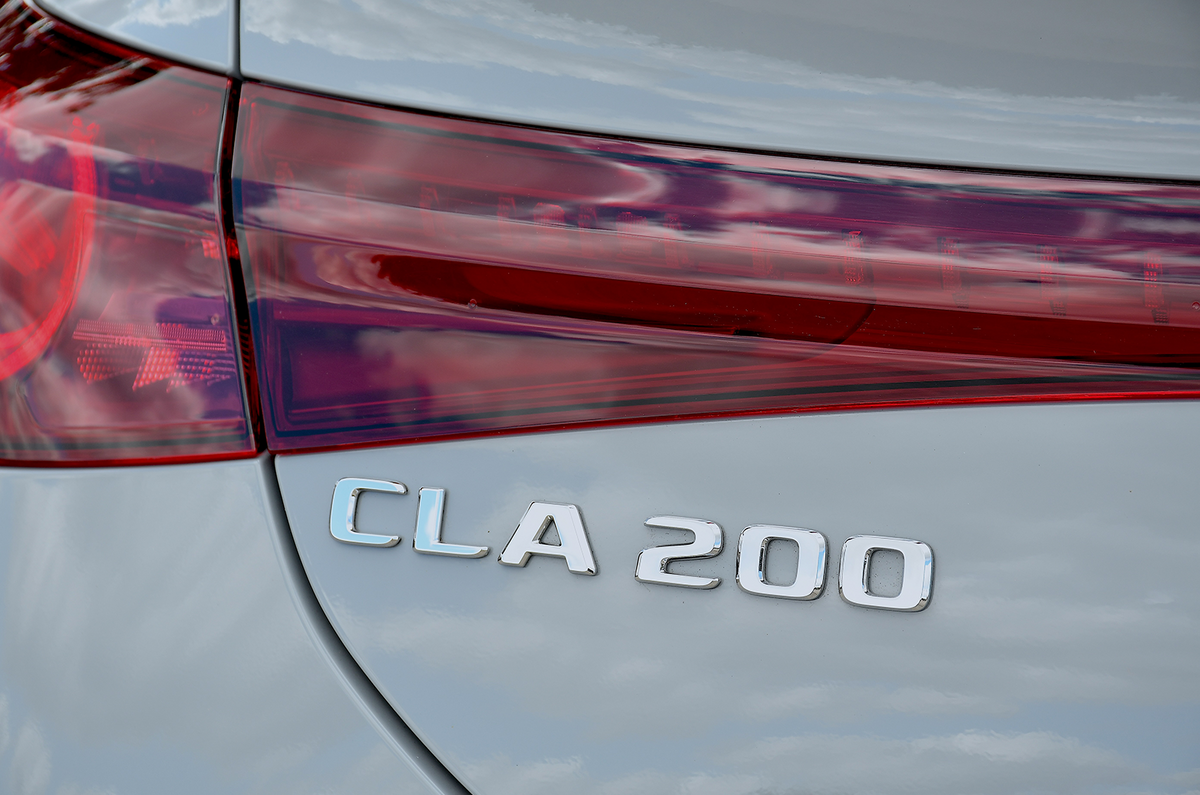
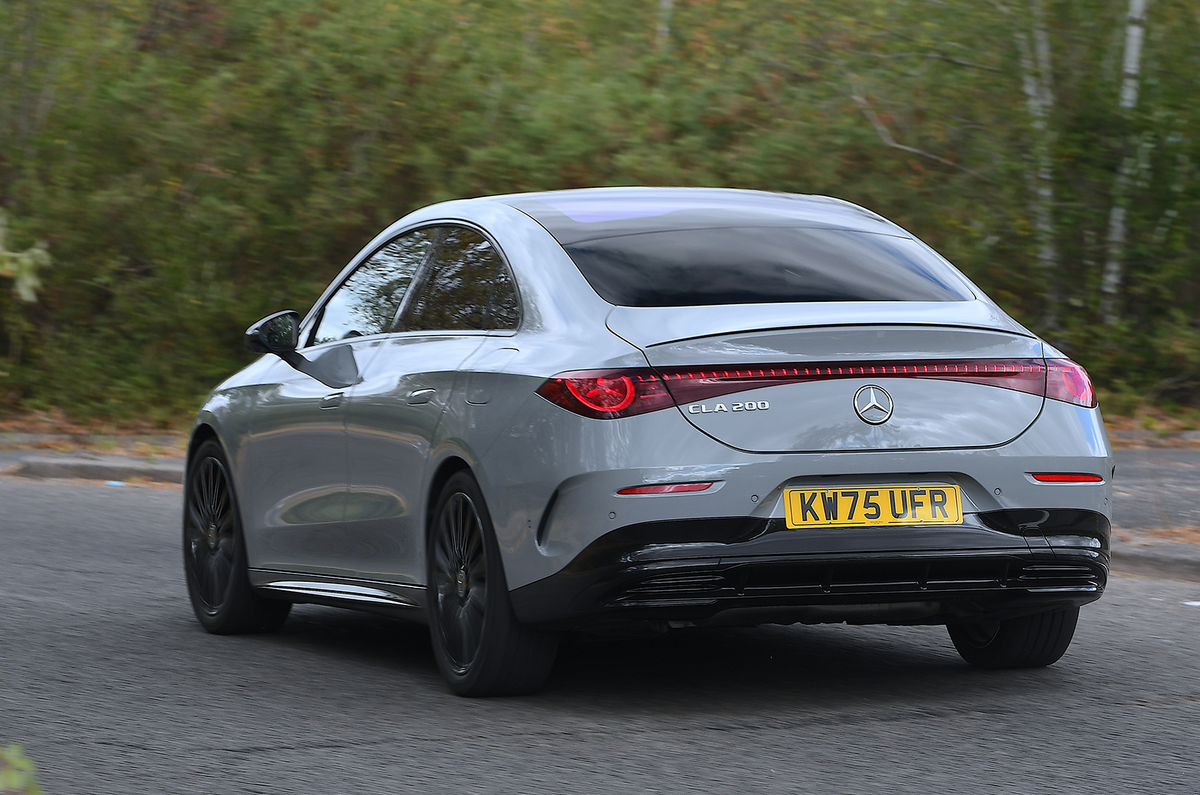
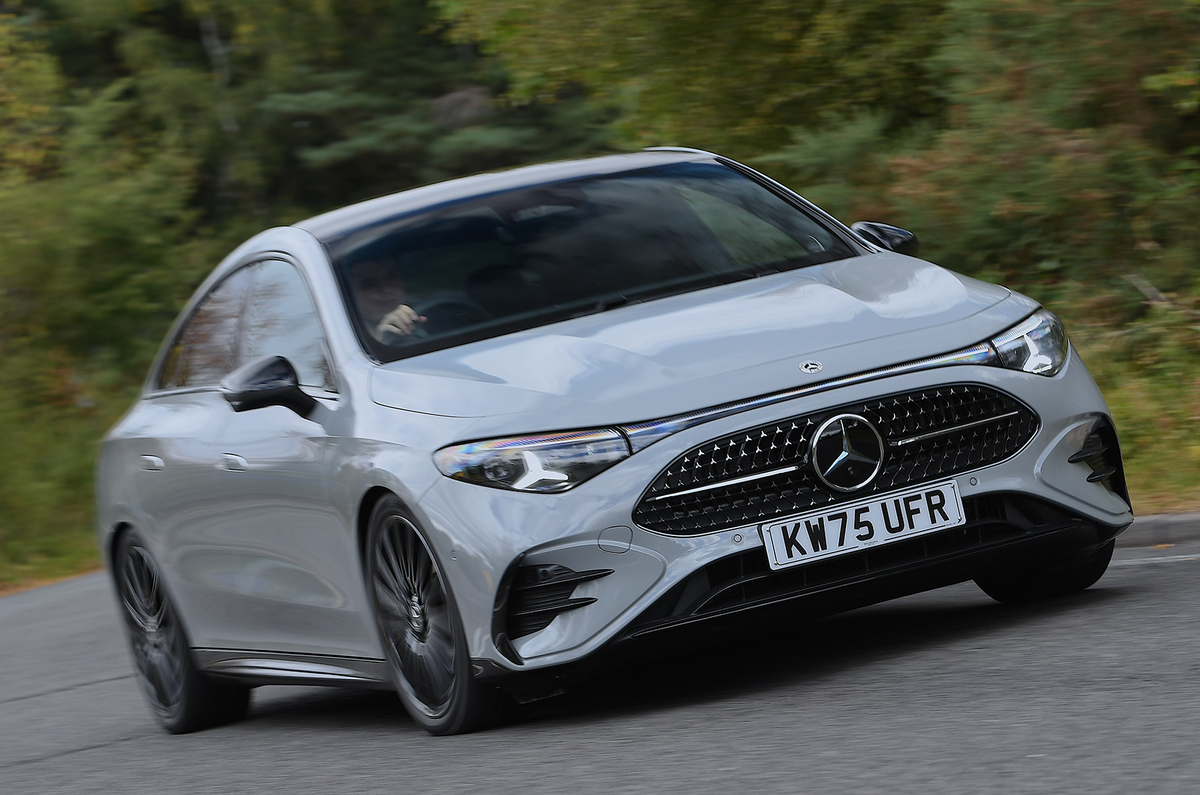
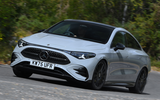
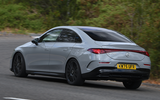
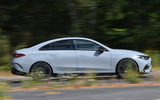
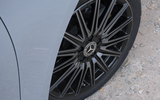
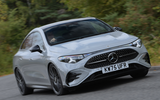
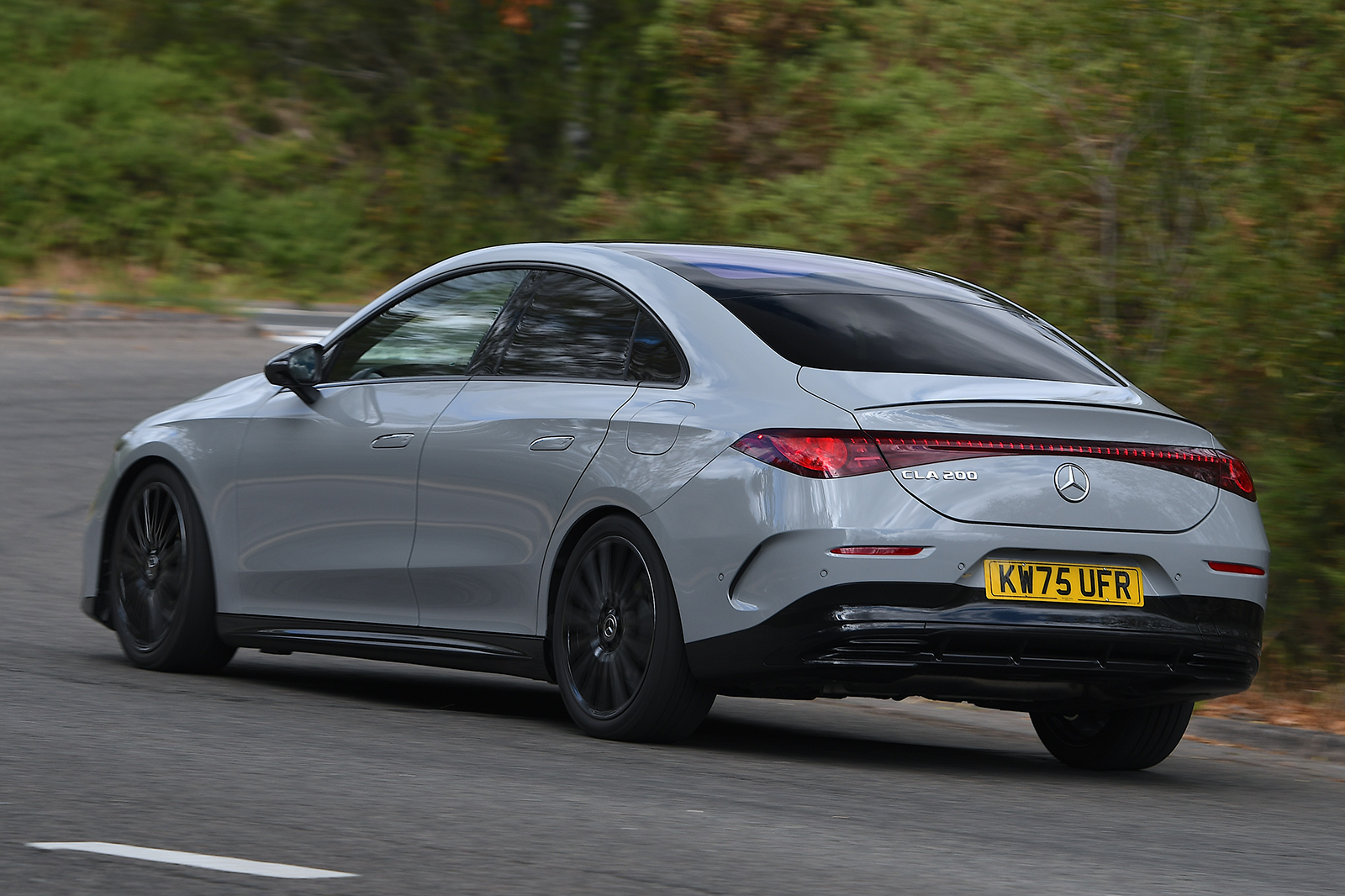
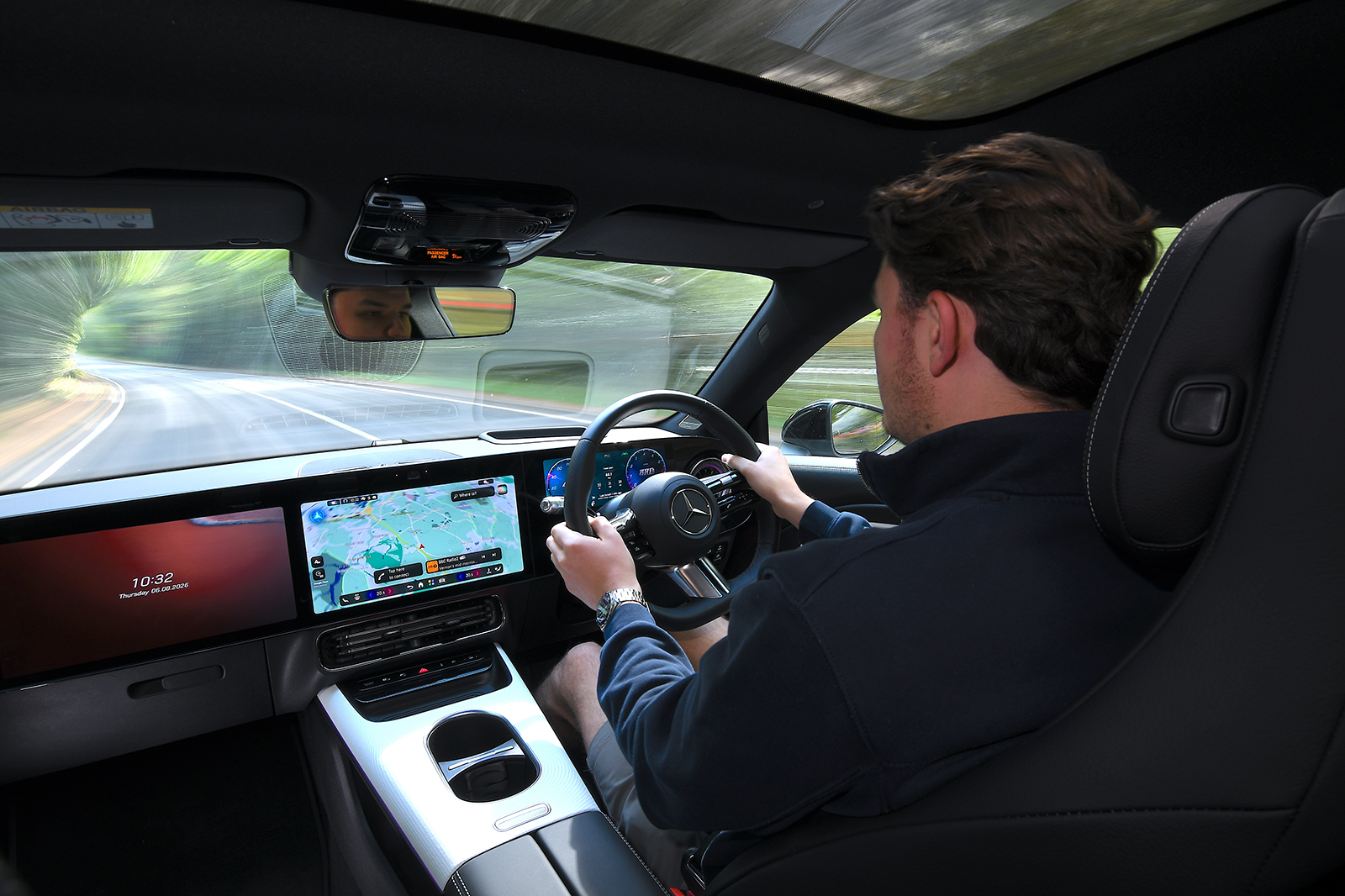
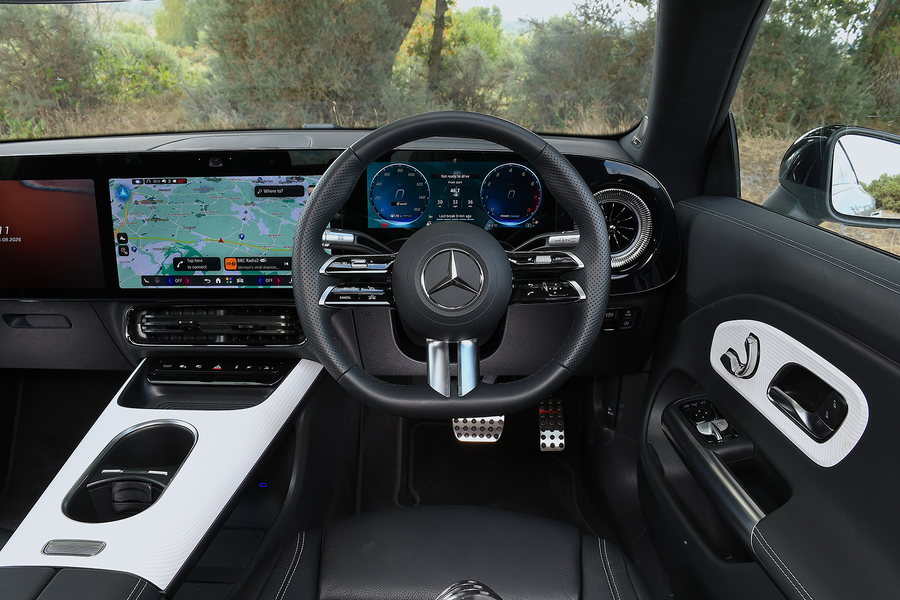
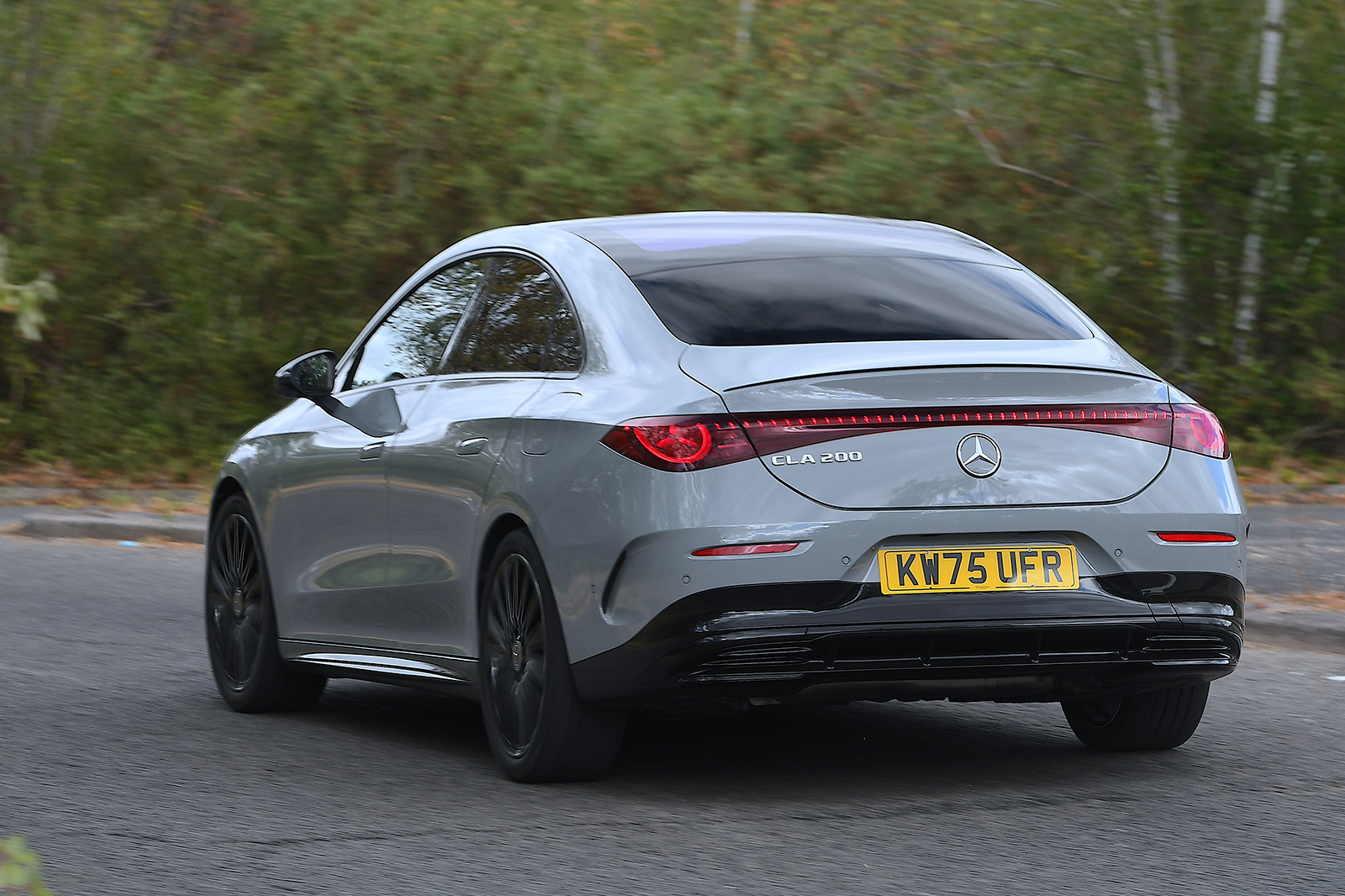
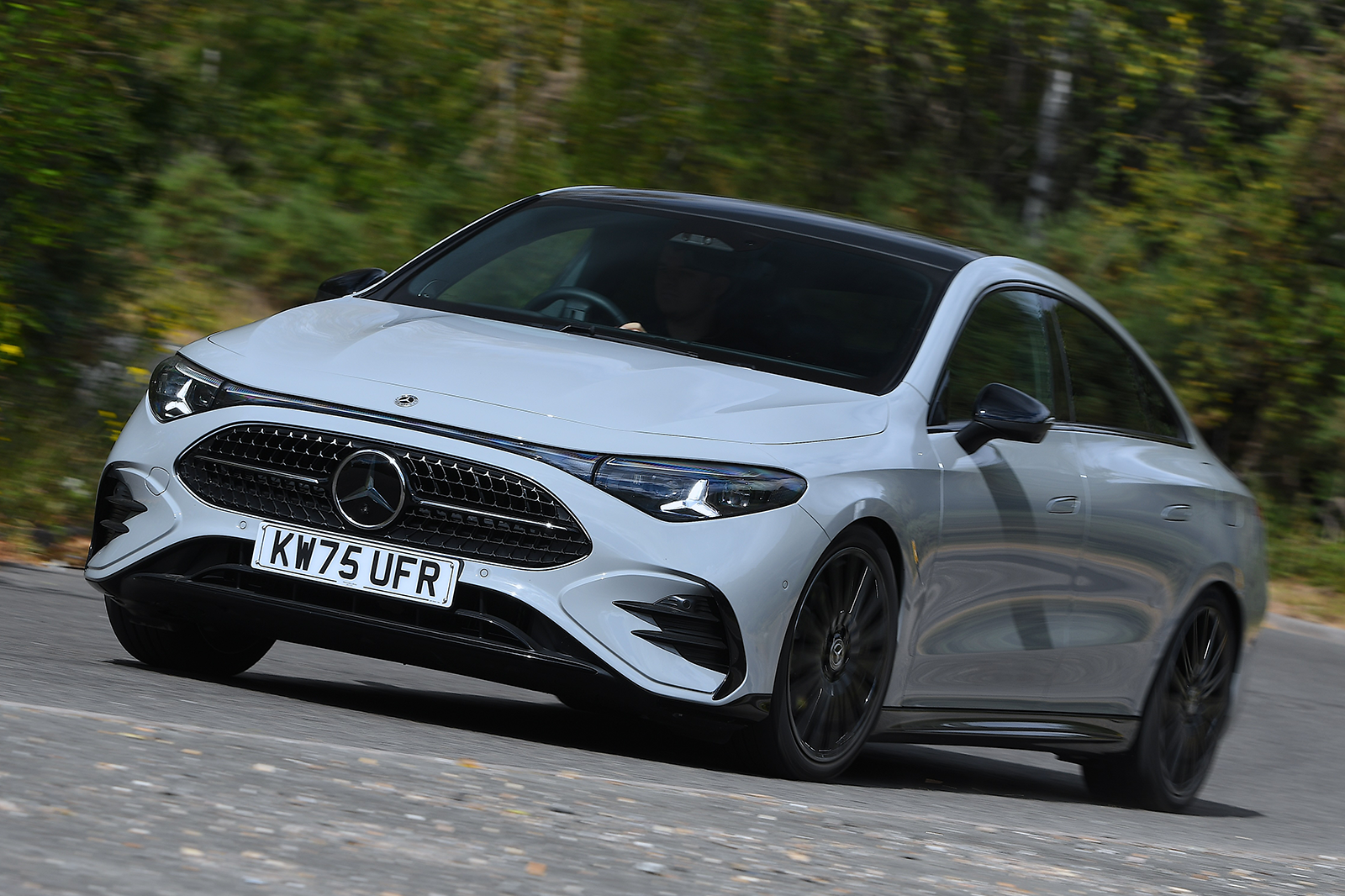
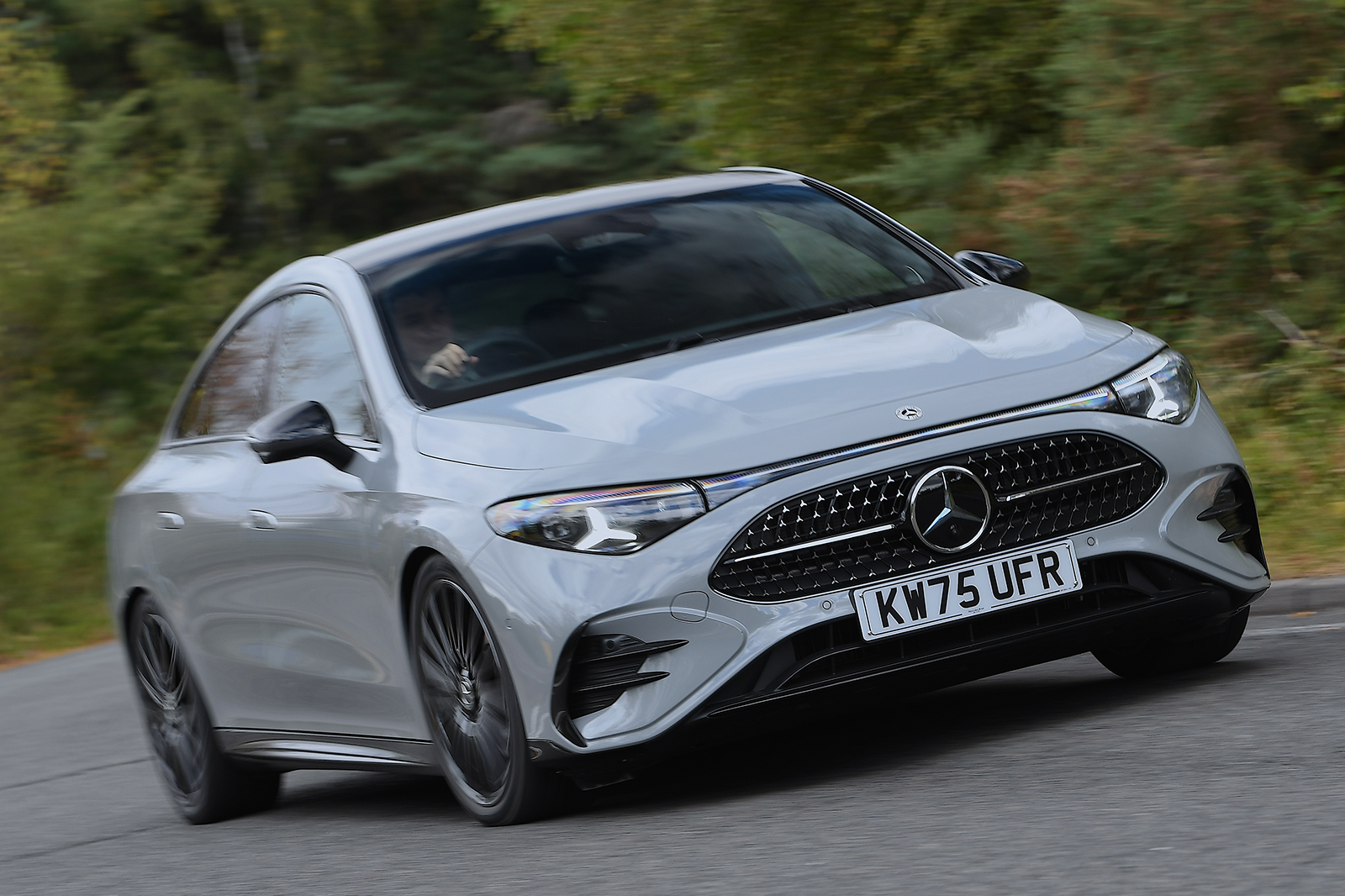
Powering the CLA is a 1.5-litre four-cylinder turbo petrol engine, a gearbox-integrated 30bhp electric motor and a tiny (1.3kWh) battery. While the electric CLA has a rear-mounted motor, the hybrid has either front-wheel drive (180 and 200) or four-wheel drive (220).
The motor takes charge at lower speeds, the engine chiming in when more grunt is required. In town the system works well, and you don't notice the handover from electric to petrol power. The accelerator can be sensitive when pulling away from standstill, but power take-up is smooth, progressive and predictable either way.
At higher speeds, however, some limitations emerge. With a modest 161bhp and 184lb ft of torque at its disposal, the CLA 200 takes 8.0sec to travel from 0-62mph, and in the main it feels rather breathless and short of pep under heavy loads.
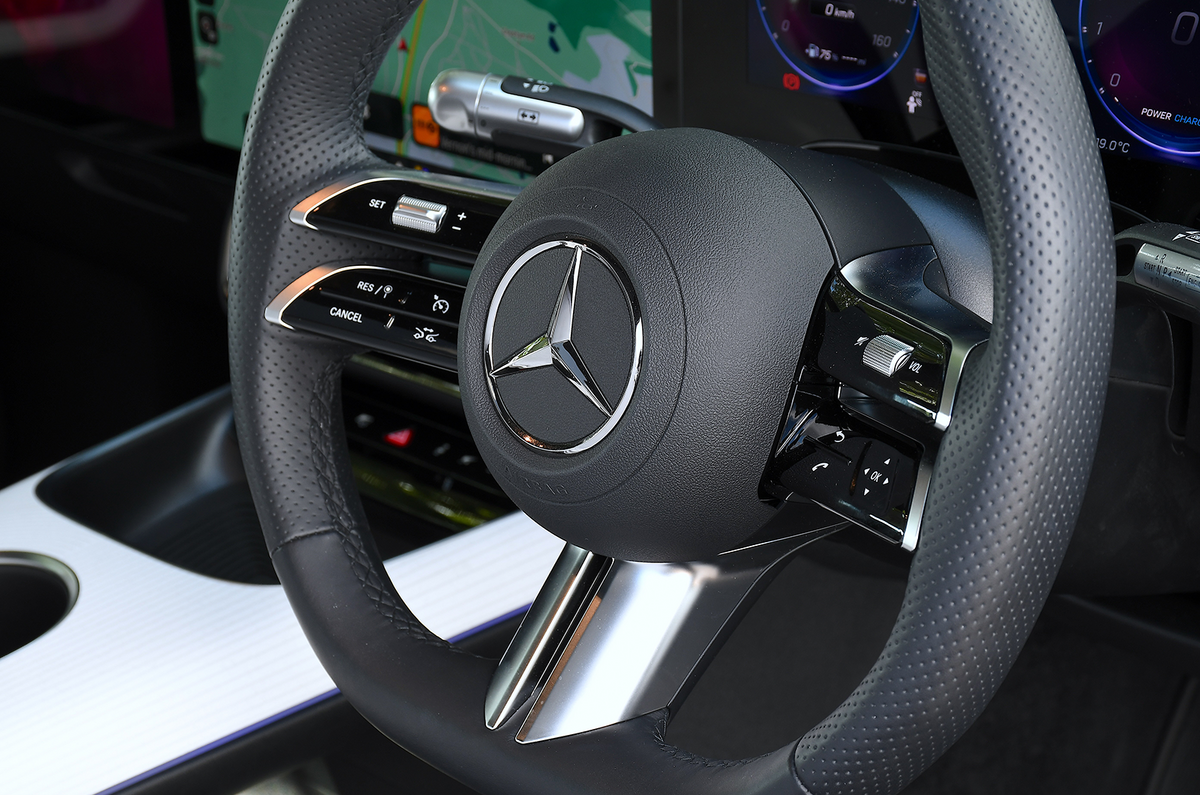
This isn't helped by the languid eight-speed dual-clutch gearbox. Use kickdown on the motorway to exploit a gap and there's a noticeable pause while it finds the right cog. The absence of shift paddles behind the steering wheel makes drivability seem like an afterthought: you can shift up and down using the selector stalk, but it feels contrived and unnatural.
Hard acceleration elicits a lot more noise from the engine, which sounds rather thrashy at higher revs. Wind noise is well isolated but road roar is more noticeable, particularly over coarse motorway surfaces. Another minor gripe is that the brake pedal is quite long and feels spongy.
The CLA 220, meanwhile, brings a slight but tangible increase in grunt, which helped to make the CLA feel more like the downsized executive mile-muncher it wants to be, but all the same it feels like there’s plenty of head room for Mercedes to add some pokier variants that feel a bit more relaxed and effortless when you wind them up.