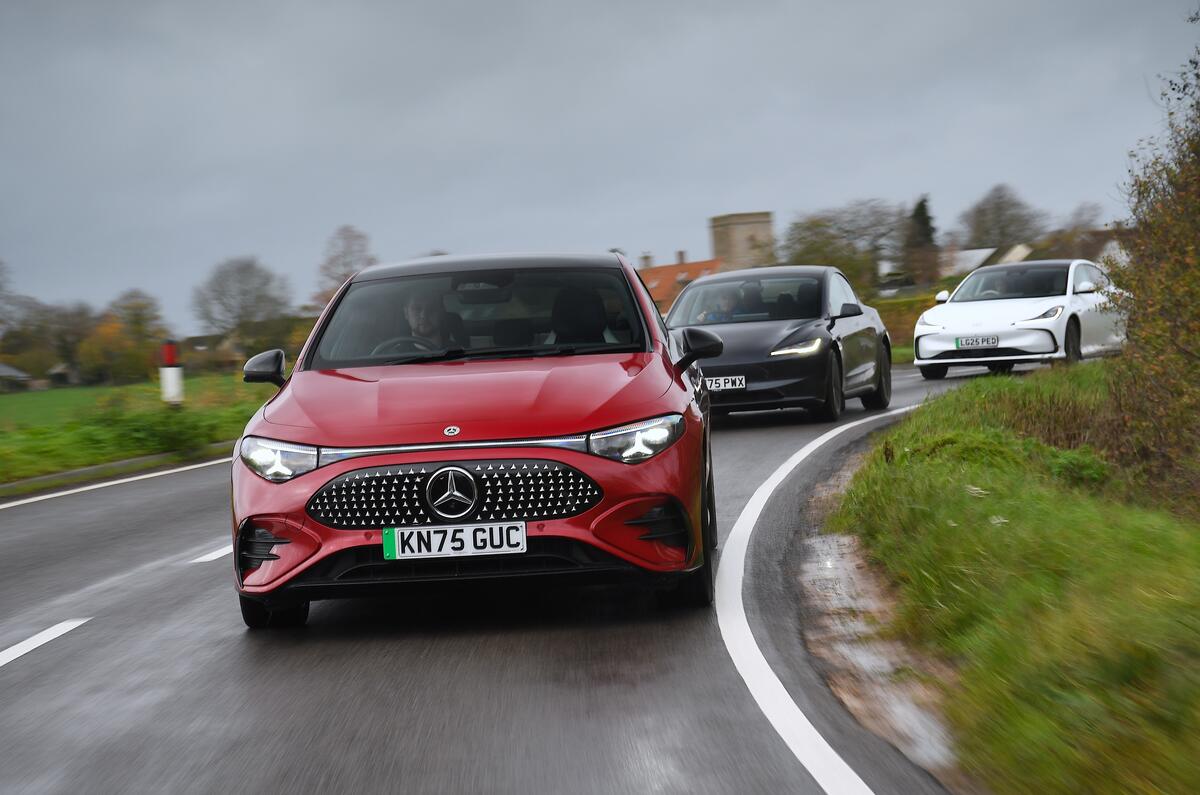



Electric company cars have reached a market share beyond the government’s 80% ZEV mandate target for 2030, according to leasing firms, but they warn that weak retail demand and shifting policies pose longer-term risks for a sector that now owns more than a third of the country’s EVs.
Demand for company cars has surged since ultra-low tax rates for electric cars (EVs) and plug-in hybrids (PHEVs) were reintroduced in 2020.
All company cars are assigned a ‘taxable value’, which is a percentage of the list price weighted on its CO2 emissions, and drivers pay benefit in kind (BIK) on that value at the same rate as their income tax – typically 20% or 40% - although Scotland has different bands.
As EVs are rated at 0g/km CO2, they get the lowest tax rates – currently 4%, compared with at least 25% for the most efficient non-plug-ins. The resulting five-fold reduction in tax bills has made it increasingly attractive to opt back into a company car.
That’s backed up by new data from HMRC showing a 24% rise in company car drivers, to 920,000 people, between 2020/21 and 2024/25. This includes both company car and salary sacrifice schemes, as vehicles under 75g/km are taxed at the same rates in both cases.
It’s such a significant swing that the total tax take has declined significantly, despite the growing number of drivers and rising vehicle prices.
With 75% now driving a PHEV (24%) or EV (51%), the average taxable value of a company car has halved since 2019/20, contributing a combined £3.07 billion in tax revenue – 43% less (£2.36bn) than before the low rates were introduced.
As most of those cars are leased, members of the British Vehicle Rental and Leasing Association (BVRLA) are claiming 90% of company car orders and 47% of their combined business contract hire (BCH) fleet – comprising 948,000 vehicles, and 6.1% larger than in the first quarter of 2025 – are now EVs, according to the industry body’s latest Leasing Outlook report.
Salary sacrifice schemes are also booming, up 165% year on year to 266,816 cars and overtaking personal contract hire (PCH) to become the most popular way for individuals to lease a car. These enable drivers to lease vehicles through their employer, funded by their pre-tax salary and – if it emits 75g/km or less – to pay low-rate BIK on top of the monthly rentals.
It’s estimated that 20-25% of new EVs are leased into salary sacrifice schemes, while leasing firms jointly own an estimated 750,000 of the UK’s two million EVs.
However, BVRLA members are increasingly concerned about the relative lack of support for retail channels. Only 20% of PCH cars are electric, while the organisation says firms are “haemorrhaging” money when three-year-old EVs are remarketed due to weak second-hand demand, exacerbated by aggressive discounts on new cars to meet ZEV mandate targets.
To reduce the need for higher monthly rentals to cover those costs, members are looking to second-life leasing as a way to spread their losses. There are now 20,471 used cars in the BCH fleet (up 50% year on year) and 9140 on salary sacrifice schemes (up 474%).