Currently reading: New BMW i3 rated: EV goes straight to the top of the class

Super new electric 3 Series meets Britain’s shocking old roads

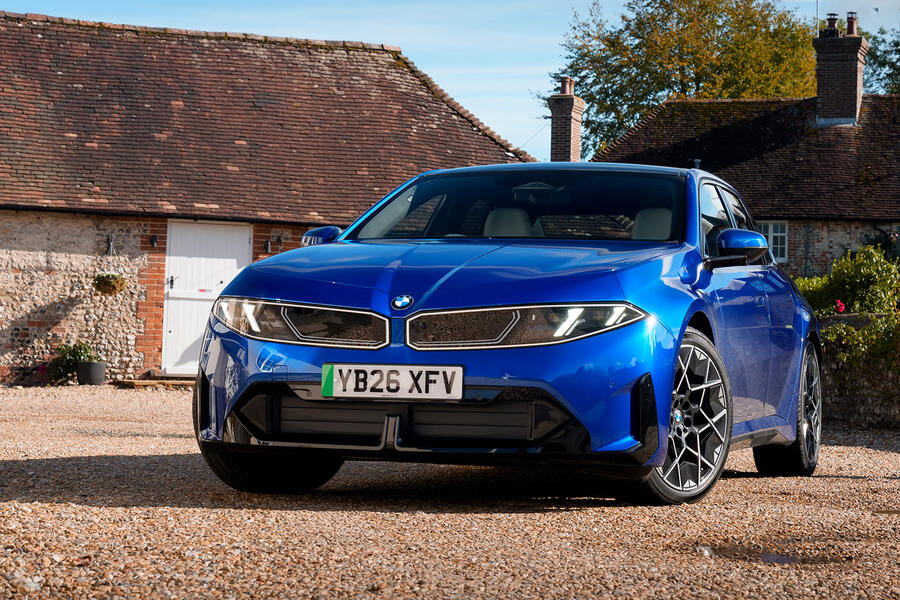
We already know plenty about the eighth-generation BMW 3 Series - even the seminal EV tested here, confusingly called the i3 - because Matt Prior reviewed both petrol and electric versions last week.

However, what he wasn't able to tell you was how the i3 performs on British roads, which the world's best suspension engineers (an unusually large proportion of whom reside in Europe) constantly tell us are quite different in width, surface, layout and quality from those in the other major global markets.

This, indeed, is why BMW UK hastened to stage a separate i3 drive event in Sussex so soon after the main European launch: the 3 Series has always represented the heart of BMW-ness in the UK and the EV version is clearly the way of the future. Its success in our large and important export market is vital.

To recap, the i3 is the second of BMW's Neue Klasse models to reach the UK, after the iX3 SUV. The petrol version that Prior also tested, although it looks very similar, is built on a previous platform. The EV that I drove was officially dubbed the i3 50 xDrive First Edition, that last part referring to an equipment package already sold out.
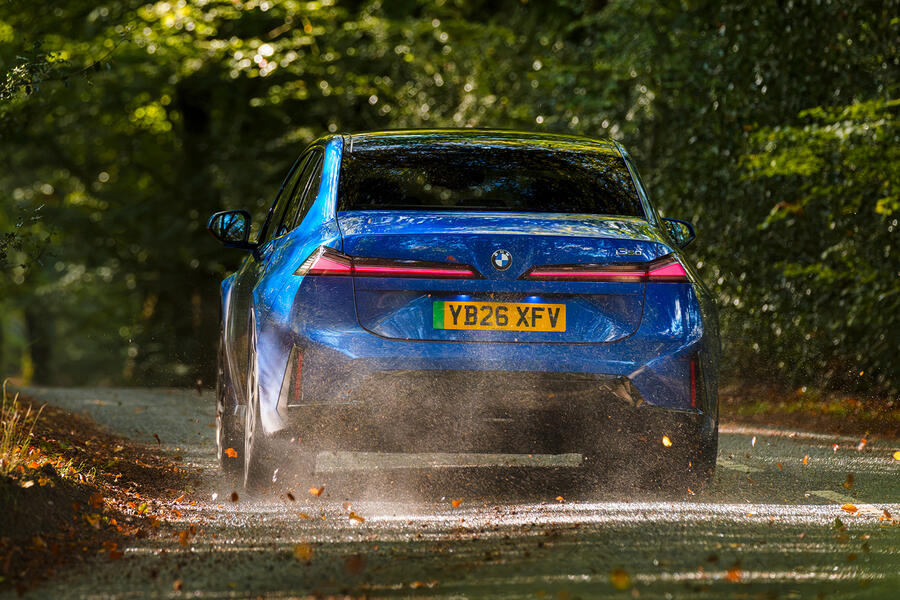
The important thing was that it was a 462bhp four-wheel-drive model riding on the standard 19in wheels, with front- and rear-mounted motors powered by a 108.7kWh battery and capable of both the prodigious WLTP range of 514-566 miles (depending on drive mode) and a 0-62mph sprint time of 4.7sec.

We've already called this car "probably the best way to have electric motoring in a compact executive saloon package", but do the UK's more testing bumps, surfaces and curves make a difference to our view?

The answer is that they do but probably don't change our overall conclusion - which is that the lighter ICE 3 Series, when powered by the still-available 3.0-litre turbo petrol straight six, has a narrow but noticeable margin in agility and driver engagement.

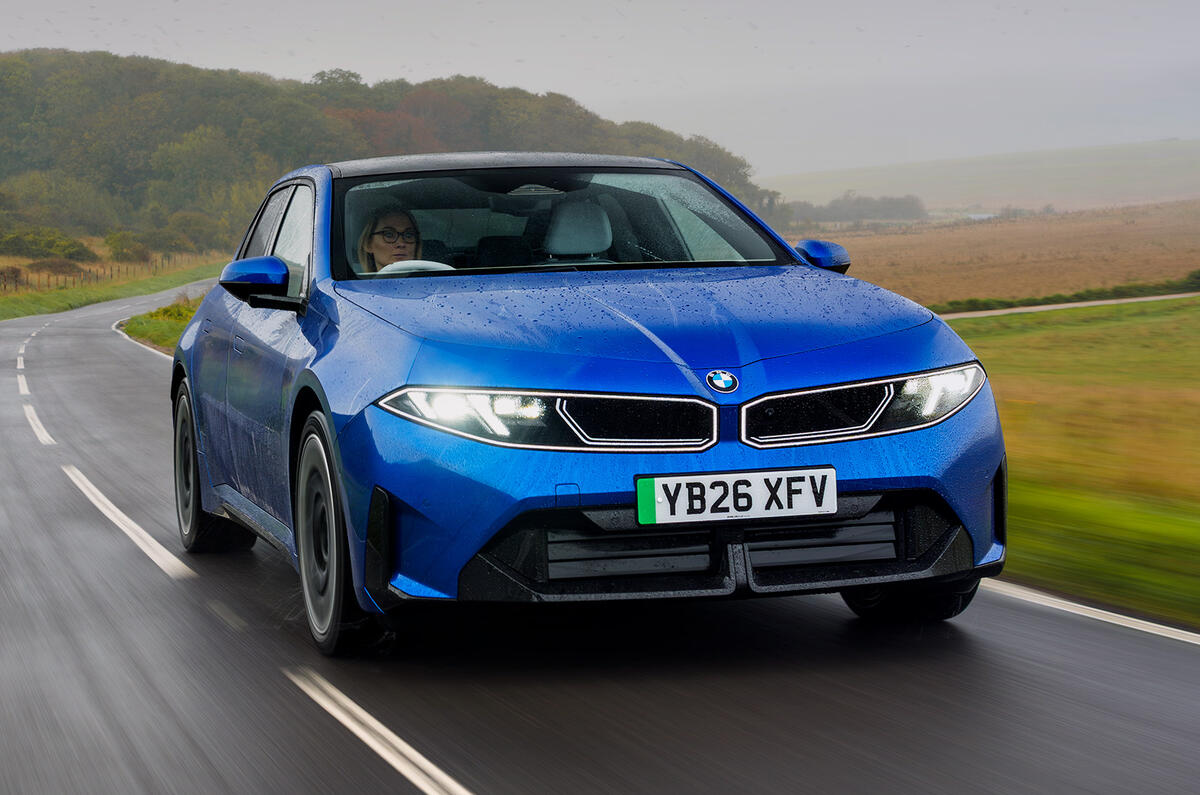
Still, the i3 is an impressive all-rounder on all kinds of UK roads, with a chassis entirely in the usual BMW mould. Its steering is ever-ready to effortlessly add lock and grip in corners that tighten without warning.

That same steering remains smooth and responsive, yet it delivers an enjoyable innate stability that makes driving on long journeys a special pleasure - especially when combined with the quietness and smoothness of the electric powertrain and its low-level road noise.
Back to top

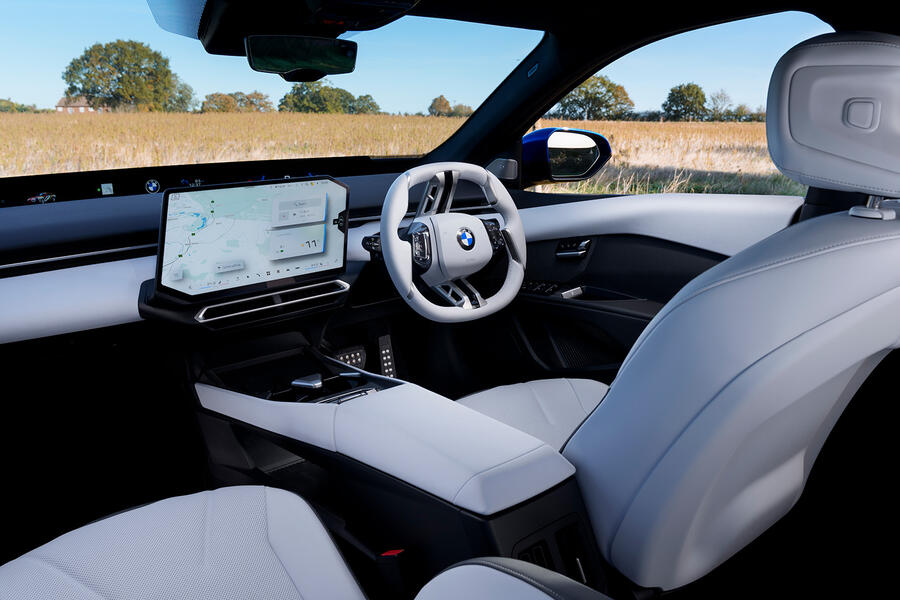
This i3 weighs 2.2 tonnes, which means its weight is better contained than many four-wheel-drive EV's, but you're still conscious of that mass in several modes of driving. When going energetically, you're conscious of it when you pile into slow corners under firm braking. There's some nose dive and you're aware of the mass through the left pedal, even though retardation is progressive and powerful.

You also notice the weight at times in the i3's primary ride. Mostly it's supple and perfectly damped, but on sections of poorly engineered road with low-frequency and high-amplitude bumps - a kind especially prevalent on well-trafficked, relatively narrow roads like the Fosse Way - it can bounce more than ideal.

BMW offers adaptive dampers as a £775 option on M Sport trim, and these are likely to reduce the problem (if it can be fairly called a problem), but for the most part the standard dampers work perfectly well.

The truth about this i3 is that it fits the 3 Series mould perfectly. Its only real drawback is the problem it poses for repeat owners of the quintessential Beemer, who now have to decide whether to stick with petrol power or embrace the future. That's not an easy choice.

Verdict – 4.5 Stars

Goes immediately to the top of the executive EV class. Its biggest rival is its own sibling, the petrol 3 Series

Back to top
  Tech specs
Model BMW i3 50 xDrive M Sport
Verdict Goes immediately to the top of the executive EV class. Its biggest rival is its own sibling, the petrol 3 Series
Price £54,925
Engine Asynchronous motor (front), separately excited synchronous motor (rear)
Power 462bhp
Torque 476lb ft
Gearbox 1-spd reduction gear, 4WD
Kerb weight 2205kg
0-62mph 4.7sec
Top speed 124mph
Battery 113.4/108.7kWh (total/usable)
Range, economy 566 miles, 4.6mpkWh
CO2, tax band 0g/km, 4%
Rivals Mercedes-Benz CLA, Tesla Model 3, Audi A5 E-tron, BYD Seal

Join our WhatsApp community and be the first to read about the latest news and reviews wowing the car world. Our community is the best, easiest and most direct place to tap into the minds of Autocar, and if you join you’ll also be treated to unique WhatsApp content. You can leave at any time after joining - check our full privacy policy here.

Steve Cropley

Steve Cropley Autocar
Title: Editor-in-chief

Steve Cropley is the oldest of Autocar’s editorial team, or the most experienced if you want to be polite about it. He joined over 30 years ago, and has driven many cars and interviewed many people in half a century in the business. 

Cropley, who regards himself as the magazine’s “long stop”, has seen many changes since Autocar was a print-only affair, but claims that in such a fast moving environment he has little appetite for looking back. 

He has been surprised and delighted by the generous reception afforded the My Week In Cars podcast he makes with long suffering colleague Matt Prior, and calls it the most enjoyable part of his working week.