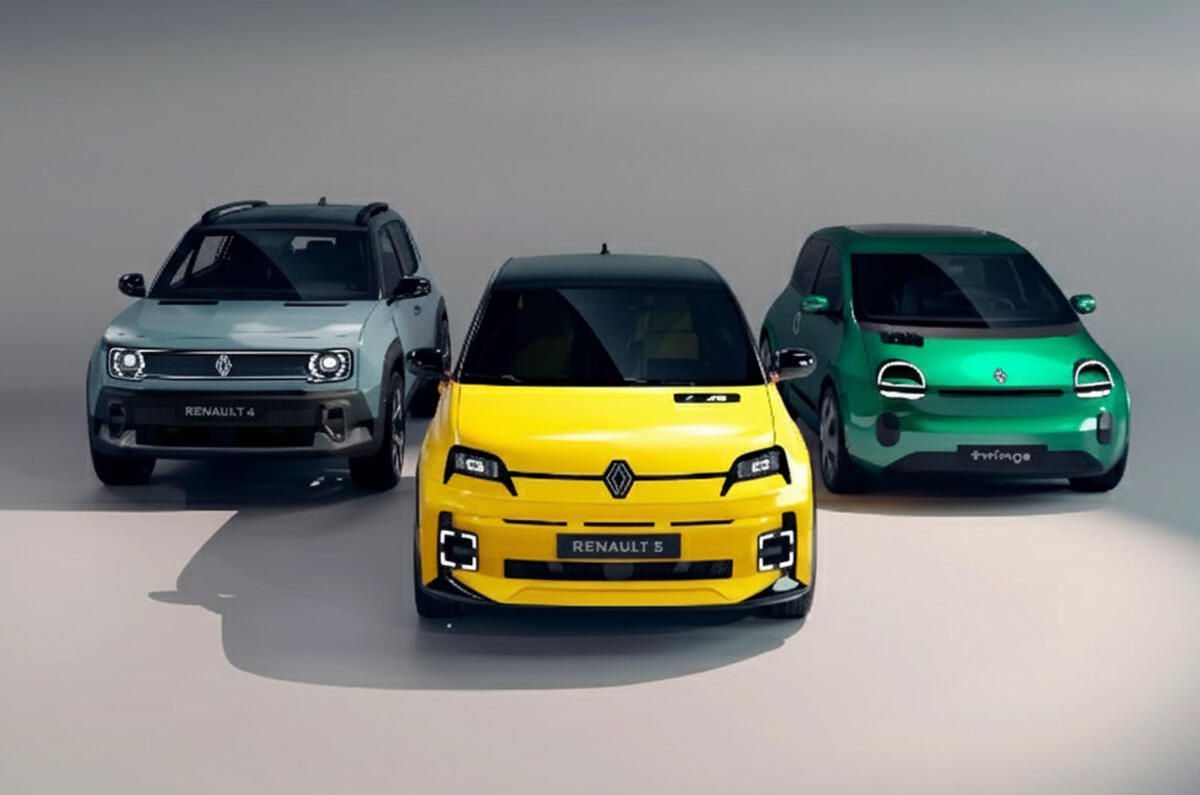

Renault will look to cut the prices of the 4, 5 and new Twingo by up to 15%, rather than create new models, if the European Union’s proposed new E-car category is brought in next month with certain parameters included.
The EU’s proposal is centred around creating a new class of small affordable electric cars – similar to the framework in place for Japan’s kei cars – that are built in Europe for Europe. It claims this would boost EV sales, cement jobs and give the continent’s car makers a weapon against the wave of new state-subsidised Chinese-built EVs that are undercutting legacy brands.
Renault Group boss François Provost told journalists on Thursday that, as part of the new category’s framework, he wants law makers to pause the need to integrate new safety measures for between 10 and 15 years. “If so,” he said, “we can dedicate our engineers to improve [current] cars and decrease the cost, [meaning a] lower price for the customer.”
He added: “I don't ask to remove regulation. No, I just ask to have 10 or 15 years without new regulation. Because today, what is planned by Europe is 107 new regulations on automotive by 2030.”
More generally, the current legislatory approach adds new safety regulations annually, meaning new cars and those already on sale have to be fitted with a host of new technology, which mainly includes ADAS and safety systems, just to stay compliant.
Provost said this is currently one of the single biggest costs to car makers, not just because the tech is expensive but also because “we have to apply the regulation every year” to each car, which means “my engineers will have to change the job [they did the year before] in order to apply the new regulation”.
Asked which type of car should be eligible for the new class, he said the Renault Group’s ideal criteria would include cars that are less than 4.2m in length, produce less than 15 tonnes of CO2 over their lifetime and are built using “local content”, including as batteries.
While the specifics of the category are still under wraps, Provost’s detail of the criteria suggests this could be close to what the EU will bring into force next month because the EU has been in dialogue with Europe’s car makers in drafting the rules.
If so, this would mean the 4, 5 and Twingo will be eligible and “the objective is to decrease the price” of those cars, said Provost, not create new cars for it. This is because, under these criteria, it already targets “the core of the European market” within the A- and B-segments.
Asked how much of a price reduction Renault would look to implement, given the small margins these models already command, Provost said the target for Ampere – Renault’s efficiency arm – was to reduce production costs by 40%. With the new Twingo, it achieved 25%, “so I think we have an additional 10% to 15% which we can borrow” to bring the price down further, while still turning a profit.
While Renault itself wouldn’t create a new model for the segment, sibling brand Dacia could feasibly bring to market a production version of the Hipster – the radical city car concept created to show what a sub-£15,000 EV could offer.